Archive for category The Bible
St Paul’s Pillar, Paphos
Posted by simon peter sutherland in Biblical archaeology, Christianity on November 22, 2012
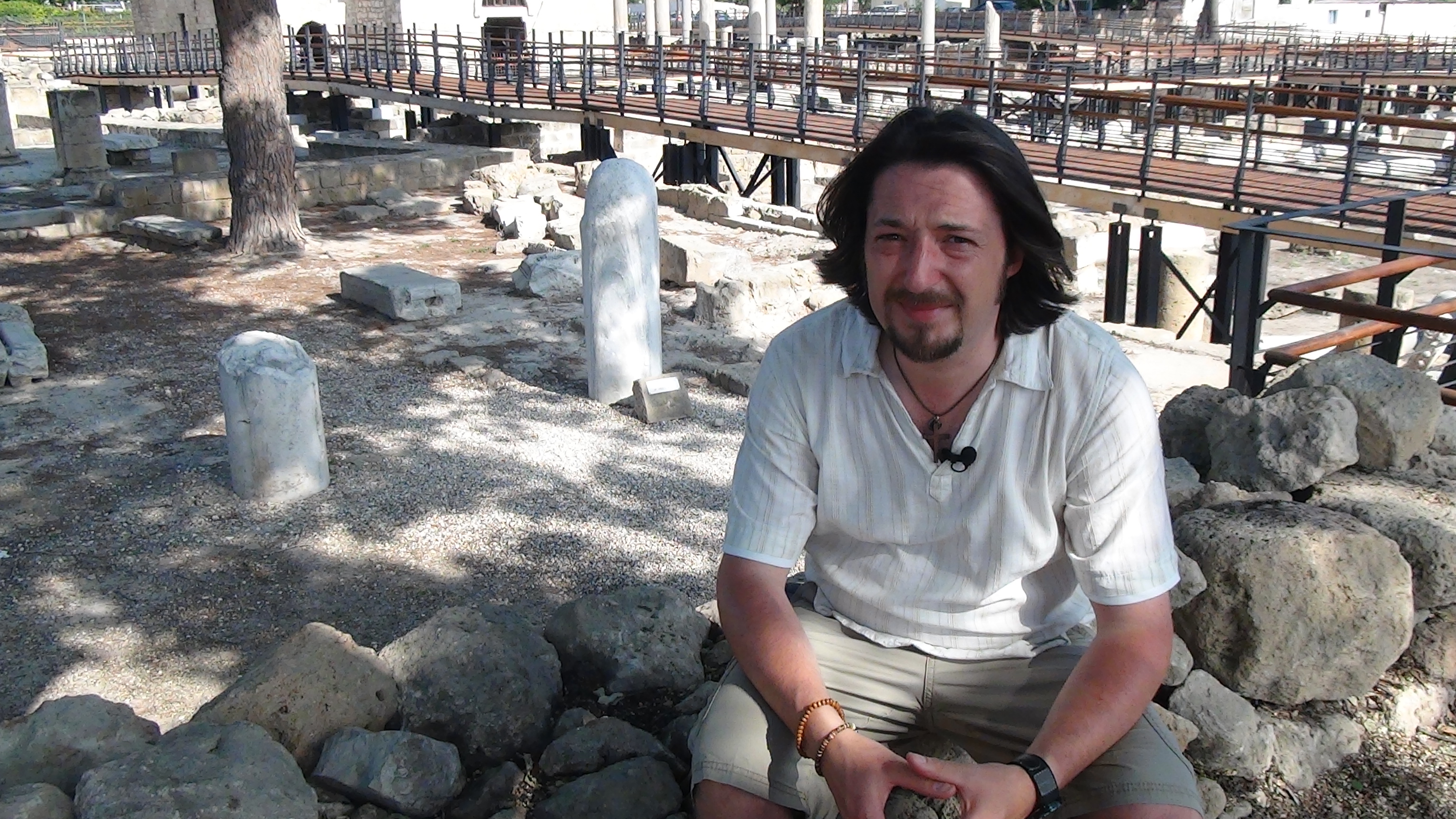 Local legend at Paphos lays claim to a Column known as St Paul’s Pillar upon which it is said that Paul was tied and given the forty lashes minus one by the Jews, in other words he was scourged with 39 lashes, according to the Judaic system.
There is no actual historical evidence for this claim and it is one of those historical legends which could be true, or could be false. However, we do have a reference to Paul being beaten and given the forty lashes minus one for a total of 5 times, according to the composition date of that letter which is believed to have been written sometime around 53-57 AD we could conclude that Paul is referring to this event and since Acts of the Apostles which concludes around the year AD 60 and was most likely written around 60-61 AD, mentions not the events written in 2 Corinthians 11: 24 in AD 53-57, we can conclude that the book of Acts does not contain everything that happened during this period but contains a brief or record of important events that took place. Thus, it is possible that the events Paul writes about 2 Corinthians 11: 24 may include the scourging event at Paphos?
However, which columns or columns that Paul was tied upon, is subject to debate, if it matters, which I think it does from a historical perspective. The problem is that H V. Morton in his 1936 book “In the steps of St Paul” records that he visited Paphos and refers to this area where the Column now stands and concludes the area to be what must have been either a Roman Temple or a market place and refers to the “Two granite columns” and also “a broken Roman pillar surrounded by a whitewashed wall and covered with iron bands to prevent people from chipping off fragments as a cure for malaria. This is called St. Paul’s pillar.” (In the footsteps of St Paul. H V, Morton. Page 140.)
The point being that he adds a photograph in the book of the two larger granite columns and labels them, “St Paul’s Pillars”. I wonder if they too are also connected?
The experience of visiting Biblical sites
Posted by simon peter sutherland in Biblical archaeology, Christianity, The Bible on October 23, 2012
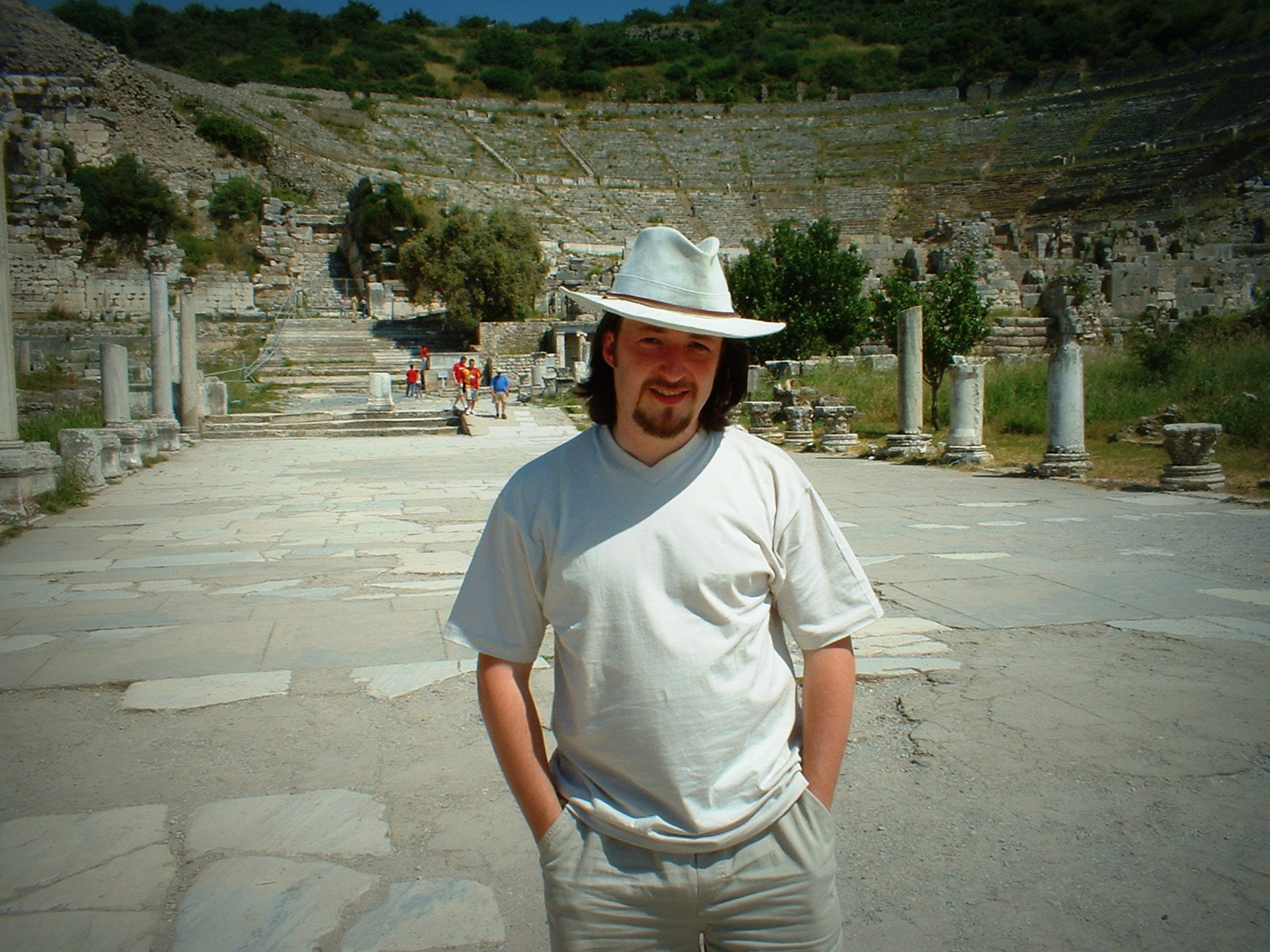 In 2003 I went to the ancient remains of Philippi in Macedonia with my wife. Travelling over from Thassos to Macedonia by ferry we landed at Neapolis (Acts 16: 11) now modern day Kavala and from there we made our way to ancient Philippi, to the Biblical sites such as the market place, as mentioned in Acts 16: 19 and the so-called prison, as mentioned in Acts 16: 24-31 and then onto the river which was just outside Philippi, where Paul baptized Lydia, as mentioned in Acts 16: 13-15.
The whole exprience astounded me and I could not but be amazed that I was actually standing in the places where the events I had read about for so many years actually took place. Places where our Sovereign Lord ordained these events to occur.
The fascination which had birthed within me when I first saw the great Arena in Ephesus on a documentary when I was a child, but I had a slight fear of flying which my wife overcame and so my ambition grew from desire to reality. The ambition within me grew and moved me so strongly that I followed our first journey to Macedonia with many more visits to sites connected with Acts of the Apostles. My wife and I would follow this journey in an adventure over the Mediterranean around Greece, and travels not only to Macedonia, Kavala and Philippi but to Turkey and Ephesus to the locations for the events of Acts 19, and the ancient city to whom Paul wrote the letter of Ephesians. Ephesus is also one of the seven Churches of Revelation.
We also travelled some time later onto Malta to the sites where the events of Acts 27: 39 may have taken place. We journeyed on foot to the sites where the events of Acts 28: 1-10 most likely took place. From then we journed also to Cyprus, and Kition in Larnaka, and then to Paphos and the events of Acts 13: 4-13.
After this glorious time my wife and I had with the Lord and His word, I became passionately drawn to the ancient reality of the original New Testament and its 1st century setting. I began to see how far Christianity had moved away from the authentic gospel and into tradition and doubted very much that Paul would be happy with modern Christianity?
If you have never visited such ancient Biblical sites, then I would highly recomend it. Being amongst the ancient locations gives the believer and critic such a more dynamic understanding of the Biblical narrative and when you are there and reading the text, its like being within the pages.
The Tombs of the Kings and early Christians
Posted by simon peter sutherland in Biblical archaeology, Christianity on October 5, 2012
 At Paphos, Cyprus there stands what is known as ‘The Tombs of the Kings’.
These tombs have a wide variety of historical facts connected to them, and although all of them are of interest, one point of this history stands out to me, that point being the fact that early Christians met in these tombs in ancient times.
At the Tombs of the Kings, early Christians from around the 1st – 4th centuries AD met for worship in singlar tombs around this location and also for protection from the persecution lashed out upon them by the Romans.
It is likely that the early Christians met in one tomb at a time.
Acts 11:19-20 tells us that after Stephen was martyred some Christians travelled to Cyprus and preached to Jews only. In Greco-Roman times Paphos was the island’s capital and it is likely that these Christians travelled there. However, it was not until Paul, Barnabus and Mark visited Paphos, Cyprus as written in Acts 13: 4-13 that the gospel was given to the Gentiles of which Paul, then Saul converted the Roman official.
Some believe that the Roman authorities were angry at Pauls conversion of the Proconsul Sergius Paulus and thus persecuted Christians at Paphos. Thus, it is for this reason that they went just outside the city walls and met in the ancient caves and tombs.
Evidence for this is found in the discoveries of crosses and Frescoes found in the burial chambers, which is regarded as proof that early Christians used these tombs during tribulations prior to the 4th century AD. Persecution of Christians was abolished by Roman Emperor Constantine who made Christianity the religion of Rome in 313 AD.
This short documentary which I made on the matter offers a more visual presentation of this subject of ‘The Tombs of the Kings and early Christians’.
‘Gospel of Jesus’ wife’ papyrus a fake. Vatican claims…
Posted by simon peter sutherland in Biblical archaeology, Christianity, The Bible on September 28, 2012
The academic debate concerning a ancient papyrus that is said may imply that Jesus had a wife has been furthered somewhat by a statement made by Vatican that the Jesus’ wife papyrus is a ‘clumsy fake’.
Although I am a Protestant theologian and rarely take the claims of Rome seriously, I think they got this one right. After all, the Vatican library does boast 75,000 ancient codices, so I think on this, they are more than qualified to make such a statement. And even if many would ignore their claim or redicule the Vatican as the home of a messy religion, such would only be a distraction from the issue at hand.
This matter is concerning the authenticity of a manuscript, not religious debate or morals for that matter, however, back to the topic, here is a link to an article;
http://www.guardian.co.uk/world/2012/sep/28/vatican-denounces-jesus-married-papyrus
The “Wicked Bible” is the one without all the words
Posted by simon peter sutherland in Christianity, Reform, The Bible on September 27, 2012
 A while ago I viewed an ancient Bible known as “The Wicked Bible”.
It was published and printed by Robert Barker, the official printer of the King James Bible in 1631. However, a massive error was made in the print and one word was missed out from the 7th commandment, “Thou shalt not commit adultery” (Exodus 20: 14)
The word in question which was missed out was the word “Not“. Thus the text read, “Thou shalt commit adultery” for which the printer was fined £300 and the run of prints were destroyed and the printers license was taken from him.
Only a few of these Bibles exist today, since they were destroyed. But as I stood looking at this surviving witness to such a massive error, it came to me of how valuable every word of scripture truly is. That if “one dot or tittle” be removed, then it will have devastating eternal effects.
I prayed for the church in England and America while thinking of how far she has fallen today, when the Bibles that so many Christians hold and regard as worthy of being called a Bible, actually have edits and large numbers of texts and words missing from them. And thus so much of today’s church has gotten into bed with a harlot and has committed adultery with her, by embracing many ‘wicked Bibles’.
Seems to me that we not only have individual leaders within the Christian church who are likewise guilty of this sin by accepting edited Bibles, but she is also guilty of adultery too. It is she who so often accepts sins and re-interprets the Bible to comply with modern blasts of wind and thus so often makes herself look like a people pleasing coward in the eyes the world and an adulterous bride through the eyes of her Husband.
Did Jesus have a wife? The Papyrus may well be a fake!
Posted by simon peter sutherland in Christianity, The Bible on September 27, 2012
 Over the years the debate has raged somewhat concerning the question of whether or not Jesus was married. I personally, after reviewing the evidence from the New Testament, historical texts and reliable history see nothing to suggest that Jesus was married.
Recently we have heard of an ancient manuscript which has come to light which may claim that Jesus was married?
The manuscript itself appeared to be 4th century AD? Which if so, could date the composition of the document anywhere up to 300 years after the life of Jesus. Hardly reliable history?
However, after looking at photography of this manuscript, I noticed that something did not appear consistent when compared with other authentic manuscripts. Having viewed authentic manuscripts such as P52. Rylands library papyrus (50-125 AD) also known as “St Johns Fragment” and other ancient Biblical and apocryphal manuscripts at Rylands, I could not help but find the current manuscript which claims that Jesus was married, suspect.
More on that later.
However, Professor Mark Goodacre of Duke University has published an article by Professor Watson on this matter. Here are two links to that article.
http://ntweblog.blogspot.co.uk/2012/09/the-gospel-of-jesus-wife-how-fake.html
Ancient Reservoir from the 1st Temple period found in Jerusalem
Posted by simon peter sutherland in Biblical archaeology on September 7, 2012
Here is a recent article I found from http://www.biblicalarchaeology.org
According to the article “The Israel Antiquities Authority (IAA) and Jerusalem archaeologist Eli Shukron announced the discovery of a large First Temple period reservoir” on 09/06/2012.
This discovery will improve our understanding of the 1st Temple period in Jerusalem.
The gospel of Mary, Papyrus 463 at John Rylands Library
Posted by simon peter sutherland in Christianity, The Bible on July 27, 2012

One of only two Greek fragments of the hugely controversial and so-called ‘Gospel of Mary’ is now on display at Rylands Library, Manchester.
The manuscript itself dates back to the 3rd century AD and is Gnostic in its content and the content is believed by some to have been written by Mary of Magdela. But this is highly improbable since the book itself was most likely composed during the late 2nd century AD, however the manuscript is on display with ancient Mummy portraits and Papyri which is part of an exhibition that is said to be both rare and “ground-breaking”.
The Faces and Voices exhibition is at John Rylands Library, Deansgate, Manchester and is on now until 25 November 2012, so I will no doubt be posting thoughts about the exhibition and the contents during that period.
Two ancient documents and the Shroud of Turin?
Posted by simon peter sutherland in Christianity, The Shroud of Turin on April 25, 2012
 Amongst the vast amount of ancient and early Christian writings from the 1st – 4th centuries, we find large amounts of forgotten books and somewhat un-researched material, all of which give us glues and further insights into the ancient mind and the times in which Jesus and the apostles lived.
Our understanding of the era in which the New Testament was written is growing by the day and our knowledge of the historical reality of the New Testament is unearthed continually.
Some of this knowledge and insight is hugely controversial and what is discovered is so often contrary to what is commonly called knowledge.
The historical theologian likes to see things, to touch the historical artefact, the ancient coin, the fragment of pottery, the ancient nail, the writing upon the ancient temple wall. We want every bit of information we can find. We seek to discover every last word written on every ancient fragment of papyrus and every ancient tablet of stone and document.
One document which has interested me recently is my observation within two ancient texts dating around the 2nd century AD and their referrences to the burial cloth of Christ.
One of these documents is from a text known as “The gospel according to the Hebrews“. The passage which contains a Shroud referrence reads concerning a Gospel which Origen used and records an event concerning Jesus who after His resurrection took His burial cloth to the servant of the [High] Priest, who is named in John 18: 10-11 as Malchus and referred to in Matthew 26: 51, Mark 14: 47, Luke 22: 51 as the man to whom Jesus healed his ear, after it had been cut off by Peter in Gethsemane.
According to the Gospel of the Hebrews, Jesus gave Malchus the Shroud after Jesus’ resurrection.
The text reads follows;
“But when the Lord had given the linen cloth to the servant of the priest, He went and appeared to James”
The Gospel according to the Hebrews. (Found in Jerome, Illustrious men, 2 & Lost Scriptures, Ehrman, Page 16)
Could this text be a referrence to the Shroud of Turin?
The second historical text is from what is called “The Hymn of the pearl”. This text is said to have been written by the apostle Thomas himself and is somewhat mysterious and less direct, maybe even poetical, but nevertheless, a referrence. This work is referred to in the third century Acts of Thomas and the work itself is generally agreed to date to the 2nd century AD.
The text reads as follows;
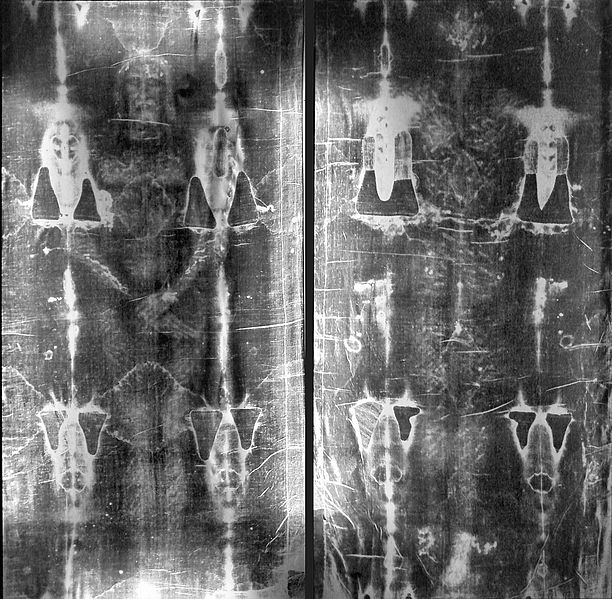 “But, when suddenly I saw my garment reflected as in a mirror, I preceived in it my whole self as well and through it I knew and saw myself. For though we originated from the one and the same we were partially divided, then again we were one, with a single form. The treasurers too who had brought the garment I saw as two beings, but there existed a single form in both, One royal symbol consisting of two halves…And the image of the King of Kings was all over it”
(The Hymn of the Pearl. 76-80, 86. 2nd century AD)
The question is, are these texts historical and very early referrences to the Shroud of Turin?
-
You are currently browsing the archives for the The Bible category.
Simon Peter Sutherland
-

 Simon Peter Sutherland