Archive for category The Roman Catholic Church
Franklin Graham, Co-op live: an altar call and a noisy mass of live music and ‘Christian’ entertainment
Posted by simon peter sutherland in Christianity, Issues with Christianity in England today, The Roman Catholic Church on October 15, 2026
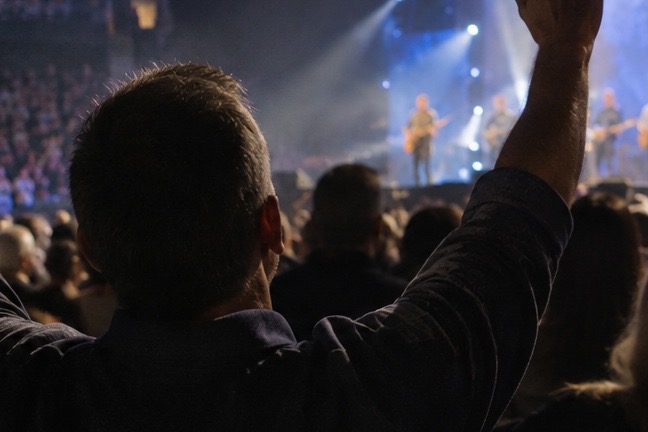
Recently I attended the Franklin Graham event in Manchester. Over the years I have been quite hesitant to involve myself in anything to do with Billy Graham or his crusades since I disagree with the altar call. However I went with an open heart and a genuine willingness to see if the Lord was doing something great.
Whilst I have little doubt about the sincerity of Billy Graham’s mission to evangelise the world, his methods have often left me scratching my head wondering if any of the conversions that took place at his crusades would ever stand the test of time. I’d like to think that some of them have and I hope they continue that way. But that does not mean that I do not have concerns about the way Billy Graham emulated Charles Finney’s appeal for people to make an altar call and repeat a prayer after him.
For those that do not know, the altar call, which is the event where people go up to the front of an arena, church or mission hall, to repeat a prayer, cannot be properly traced in the history of Christianity prior to its popularisation in the 1830’s by Charles Finney, a prominent American evangelist in the 19th century. Although some claim it could have been used a little earlier, this practice become even more common place when it was adopted later on by D. L. Moody, Billy Sunday and later Billy Graham.
Certainly when I came to Christ it was a very quiet and still moment and there was no altar call. That however does not disprove the altar call, but an evangelist of the true gospel needs to have a Biblical proof in order to do things in a Biblical and proper way.
In the Bible there is no such thing as an altar call and people did not repeat any sinners prayer when they came to Christ. The prayers came from the individuals and were not dictated by anyone. They came from the sinner’s heart and cried out to their creator in repentance with no human mediator directing them.
But such was not the case with the altar call at Franklin Graham’s “God loves you” event at the Co-op Live on October 3, 2026. In fact the whole event appeared to be designed purposely just to get multitudes of people off their chairs and down to the designated space at the front to repeat a prayer that had already been written out.
But for me, I have never been to a ‘Christian’ event of this size before and being a singer songwriter and musician myself, I’m familiar with large concerts and that’s exactly what this event appeared to be. For me it appeared like a show. Designed. Engineered. Manufactured. I doubt very much this has anything to do with genuine revival. You could see the designated areas where people would stand at the altar call.
The event basically began as a rock concert. Lights moving around as the people took to their seats. Music playing in the background. Stage layout already designed and instruments set up and sound checked and then the band appears.
I could say a lot more. But as it began I found it to be little more than a noisy mass of live music and distortion. At some points I thought the music was so loud that the speakers were going to blow and fall off. As time went on, the music got louder and different acts came on, and for a while there much of the lyrics had very little to do with praising Christ. There was barely any praise and worship songs until later on. It was very pragmatically designed.
The sad reality is that only a fraction of the evening, 25 minutes or so, was dedicated to Mr Graham’s sermon. This was on Luke 17: 28-30 and on my way out I was listening to what the people were saying and I never heard a single person talk about anything other than the performances of the singers they liked.
This was not all, I was very concerned when Franklin Graham stated “if you prayed that prayer you are forgiven” and he gave them a false assurance of salvation by stating “I don’t know of we will see each other again on this earth” but we will see each other in heaven.
No one can make such a claim to any new convert. It is a false assurance. Hebrews 12: 14 is very clear that every believer must “Pursue peace with all people, and holiness, without which no one will see the Lord:“. Yet people cheered when Mr Graham made that claim of assurance.
As I have stated this event has left me scratching my head. It has left me carefully questioning whether or not I have truly departed from mainstream evangelicalism, or whether or not it has departed from the truth? After all, Franklin Graham has closely linked partnerships to the Roman Catholic Church and quite frankly, I’m just not sure about all of this. I don’t see any justification for an altar call in the New Testament.
Having said that, I sincerely hope that people did come to Christ at this event. But if the organisers of such events truly want people to have a genuine faith that lasts and abides this is not the way to go about it. A better way would be to turn down the music, sing more hymns, preach a timeless and longer sermon and let the Bibles they freely hand out do the work of converting the souls (Psalm 19: 7)
Because quite frankly, a majority of this event was directed by loud music and only a small percentage of the evening was dedicated to the Scriptures. This to me highlights a much bigger issue of how Christianised music has replaced Scripture in people’s hearts. The Bible is clear “faith comes by hearing, and hearing by the word of God.” (Romans 10: 17) It does not say faith comes by listening to music and hearing the gospel that way. By saying that I don’t deny that music can be instrumental in inspiring people to look up to heaven and seek after something more, but it cannot be put in place of Scripture as a means of evangelism.
To which I was happy to witness the workers at the event giving out free Bibles for those who made the call, and I left knowing that the Scripture alone is more than able to bring souls to Christ and justify them freely by faith alone.
New Shroud of Turin “research” article and how it “ties in with the Bible”
Posted by simon peter sutherland in The Roman Catholic Church, The Shroud of Turin on April 30, 2026
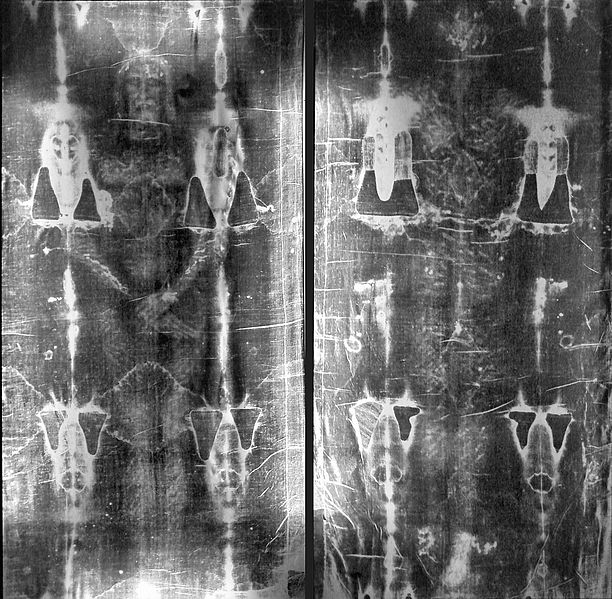
I’ve been reading an article lately about a latest theory on the Shroud of Turin. The article claims the “Christ-like image” may have been caused by “a massive earthquake.”
It goes on to say that the severe earthquake mentioned in Matthew 27: 50-52 was “powerful enough to release radiation that could have imprinted the image of Christ on the shroud.”
The article expresses the opinion that God used “natural means” to form the image, which is not beyond the realm of His character. He rules the winds and the waves, He governs the earth, there is none like Him.
It is possible there may have been multi layers to the purpose of God bringing about an earth quake in the first place.
The article also states “The man of the shroud was not buried in the material for more than a few days”.
I think the image on the Shroud would certainly help prove the resurrection of Christ, if it is genuine, because there is no evidence of a rotting corpse on the cloth. The Shroud shows the image of a man who had recently died when the image was formed, yet if the body had continued to be wrapped within that cloth, it would have decayed and left evidence of the rotting corpse. Which is doesn’t.
This is consistent with Messianic prophesy from Psalm 16: 10, “You will not leave my soul in Sheol, Nor will you allow Your Holy One to see corruption.” (NKJ)
In St Peter’s sermon in Acts 2: 30-32 the apostle says that Jesus fulfilled that prophecy by His resurrection.
I have also seen claims that the Name of Jesus has left an imprint on the cloth which came from an identity label that would have been attached to it after the body was wrapped.
But let’s not say that because it is possible that the Shroud of Turin may well be the burial cloth of Jesus Christ that means the Roman Catholic Church (who possess the artefact) is the true Church of Jesus Christ because it is not. There are plenty of establishments that own and display Biblical artefacts, from museums to libraries, many who are not even remotely Christian.
There is not a shred of evidence for papal authority in the New Testament. Outside of Matthew 16: 13-20, which they twist, Peter himself never mentions himself as a bishop of Rome or a pope. In 1 Peter 1: 1 Peter simply refers to himself as “an apostle”. In 2 Peter 1: 1 he refers to himself as “a bondservant”. If Peter was a pope, he would have mentioned papal authority which he does not. Neither does James, the half brother of Jesus who was a leader of the church in Jerusalem. When the Jerusalem council met it was run by James, Peter and John, not Peter alone (Acts 15: 6-29). Papal authority is not in the Bible. Mark doesn’t mention it, Luke doesn’t mention it, John doesn’t mention it, Paul doesn’t mention it, the author of Hebrews doesn’t mention it.
Scripture is clear that Christ is the rock of His church, not Peter. And if any church is not built on that rock it is not the Church of Jesus Christ, but a house built on sand.
Let us not forget that now is the time to get what we believe right and proper. It’s too late when we die.
Let us not forget that death not something that we should avoid thinking about, is just a sad reality of life. “We are all mortal.” But the man on the Shroud, if he is indeed the Christ, is immortal, because Christ came back to life. Let us follow Jesus Christ not man made religions.
Christian man burned alive in England
Posted by simon peter sutherland in Church of England, Martyr George Marsh, The Roman Catholic Church on April 24, 2026
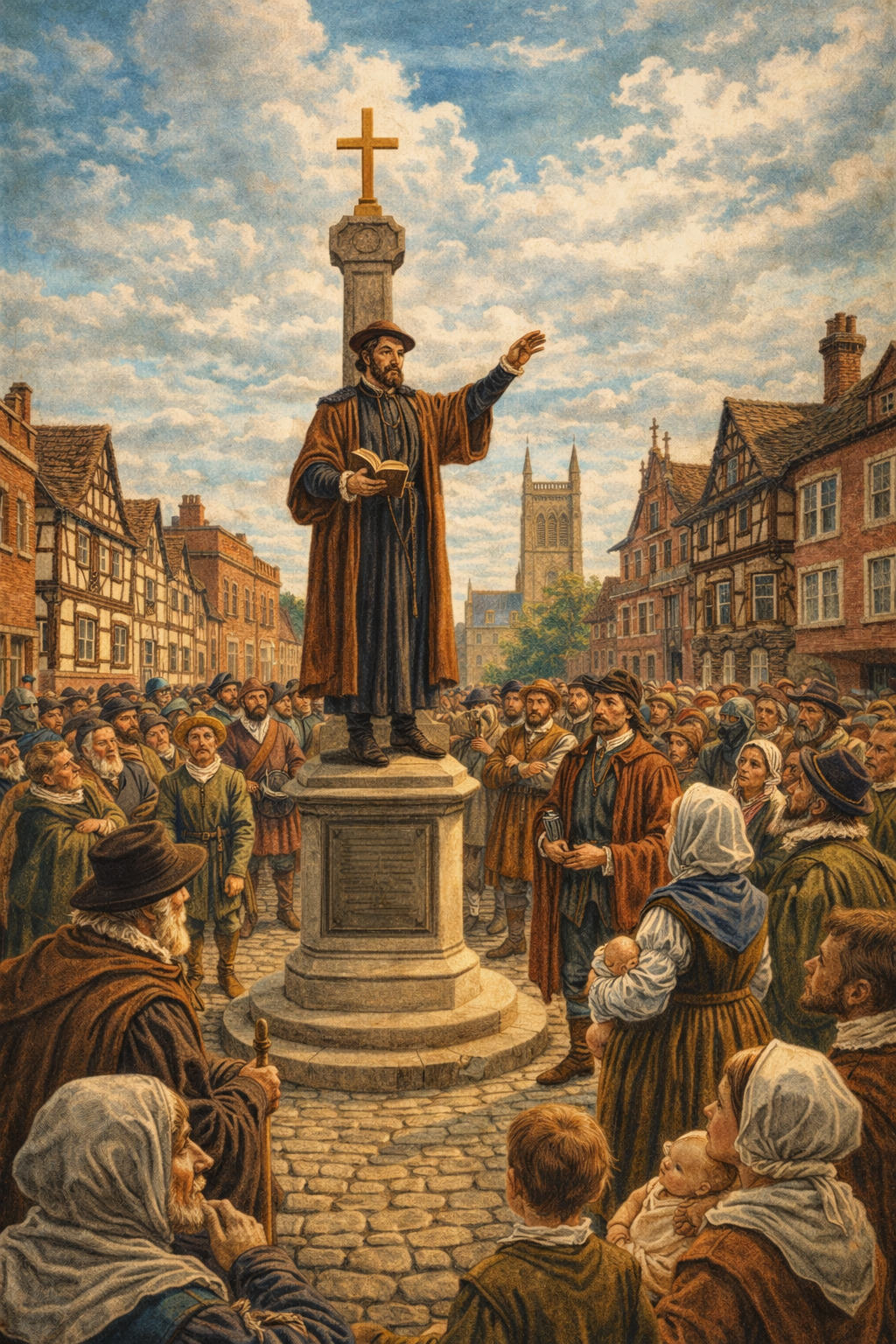
It is true, alarming isn’t it. That one man could be set fire to for preaching and believing something. Well, that is exactly what happened.
On this day, April 24, 1555, George, a farmer from Bolton, was burned alive for believing something different to the Roman Catholic authorities of that time. He had a family too, several children, yet still. They killed him. And for what? Because he preached without a licence and because he refused to submit to the authority of the pope and didn’t believe that Jesus’ flesh and blood could be remade at the mass and eaten like food and drunk like ale.
It’s a sad story and it’s backstory is even sadder. George lost the love of his life, his beloved wife died leaving him lost and alone. Marsh left for Cambridge and there he experienced a new way of life and he became a curate and taught a school. But then, when the monarch died, George was left to face a changing political tide. The dangerous Mary Tudor came to the throne and Marsh was one of many Christians who were hunted down for refusing to submit to her regime and Roman Catholicism.
George revisited his kids in Bolton and a warrant was put out for his arrest and he was taken to Lancaster Castle, and eventually to Chester where he would be burned alive in Boughton, about a mile or so outside the city.
Today his descendants live on and there are a number of memorials to him scattered around the north. In Bolton there is a memorial in the grounds of Deane Church, a memory of him in Smithills Hall, and Lancaster Castle still exists. In Chester there is a plaque to him in St Johns Cathedral and a memorial to him, near his execution site in Boughton. This is near the consecrated ground where his execution took place. A little further on there is a plaque on a wall where his remains were scattered by fellow believers after George was burned.
May this legacy live on.
Is Simon Peter really the rock of the Roman Catholic Church?
Posted by simon peter sutherland in Biblical Scholarship, England issues, The Roman Catholic Church on April 10, 2026
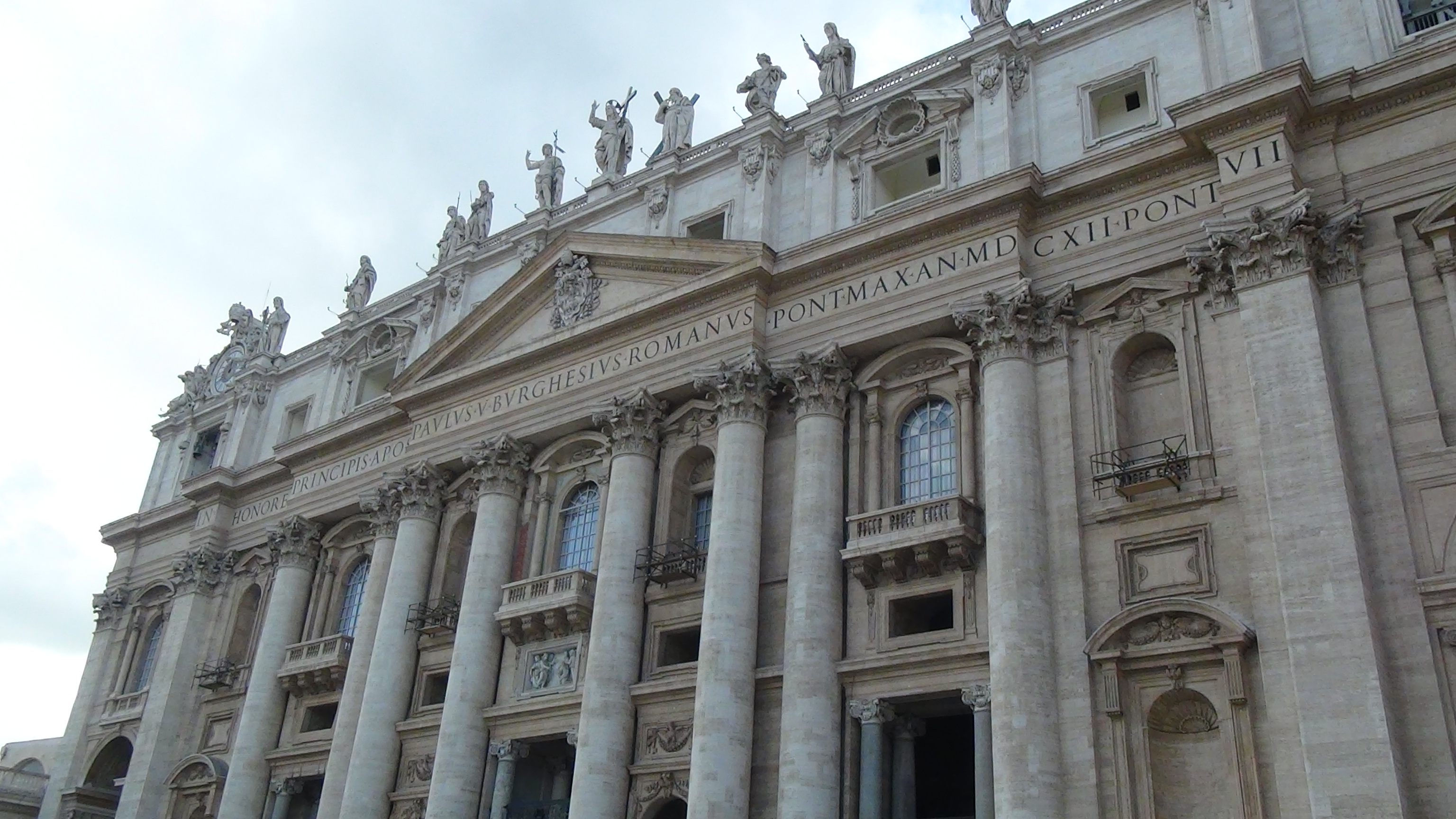
Throughout my youth, my mother always said that I was never deliberately named after St Peter, the apostle of Christ. Although at times I think I was. My mother originally got saved in 1972 after seeing a cross in a window, and when she went home she always said that Jesus appeared to her in the room of the house where my parents lived.
My father became a Christian the following year, in 1973. I was born that very same year.
Over recent years and months I have revisited the locations where these events happened and they have a very close affinity with me and my family. My mother was a very dedicated Christian who spent all of her life testifying about Jesus and singing about Him wherever she could. My dad on the other hand was a preacher, and a fishmonger.
I think some of these influences have impacted me throughout my life.
Like St Peter, I too like to go fishing. Like St Peter, I too believe Jesus Christ is the only way to heaven. Like Peter, I too follow Christ.
For me, I don’t like it when the very true apostle of Christ, who bears the same name as I, is slanderously claimed to be the founder of the singularly most apostate religion to have ever claimed the Name of Christ.
I am speaking of course about the Roman Catholic Church. An establishment that claims Peter was its first pope. This claim of course is absolute nonsense. The Roman Catholic church as it stands today was not even formulated unto 1054 A.D at the Great East West Schism. The facts remain that the early 1st century bishops of Rome had nothing whatsoever to do with modern church of Rome. Today the Vatican is an empire, a political power, a religion that affirms many acts that the Bible speaks against.
But let us look at this claim of St Peter being the rock of the Roman Catholic Church.
The claim itself comes from Matthew 16: 18 where Jesus says to Peter, “I also say to you that you are Peter, and upon this rock I will build My church, and the gates of hell shall not prevail against it.” (NKJV)
Let us imagine for a moment that Peter was the rock that Christ chose to build His church upon, would that mean that church was the Roman Catholic Church? If it were, would that exclude all other churches? Would that mean that Peter was only the rock of Rome, or only those churches the pope has jurisdiction over? Would that exclude the Greeks? Would that exclude the churches that St Paul founded? Or the Church of Jerusalem that was run by James? Would it exclude the church run by Titus on Crete?
The Greek word that Matthew uses to communicate “rock” is Petra, which means “a (mass of) rock, (literally and figuratively): – rock”. (Strongs G4073)
This word can be found in Matthew 7: 24-25, where Jesus says a wise man builds his house upon the rock. Was Jesus talking about Peter here? Was Jesus saying that a wise man builds his house upon St Peter? I don’t think so. When the wise man Jesus is speaking about built his house upon the rock Jesus was talking about the wise man building his faith upon Jesus Christ.
It is more consistent to say that Jesus was building His church upon Peter’s declaration of faith which came from the Father (Matthew 16: 17).
When Jesus says “you are Peter,” (Matthew 16: 18) He is acknowledging Peter as one of His disciples and when He says “and upon this rock I will build My church,” He was saying that like the wise man built His house upon the rock, so also Peter built his house of faith upon a solid foundation, which is the true confession of faith.
This confession of faith has lasted for 2000 years since Jesus said those words and Christ’s church has never gone away.
The reality is that if the Roman Catholic church views Peter as the rock that the church has built itself upon, then it is a house built upon sand and not upon the rock.
Roman Catholic’s may well view Peter as the rock of the Roman Catholic church, but he is not the rock of the body of Christ. Jesus Christ is the rock of the body of Christ, not Peter.
-
You are currently browsing the archives for the The Roman Catholic Church category.
Simon Peter Sutherland
-


