Posts Tagged cyprus
“The Divine Saviour In The Dark Light Of Modern Critical and Sceptical Scholarship” paperback book excerpt
Posted by simon peter sutherland in The Bible, Theology, Biblical archaeology, Documentaries, My books on June 7, 2026
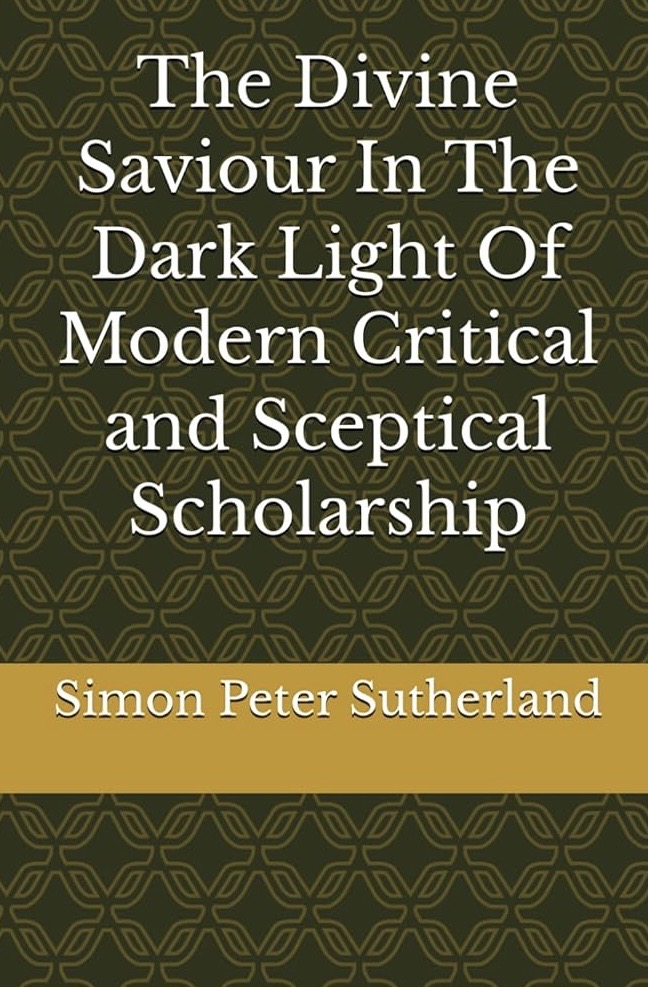
“In 2012 I made the long desired step of making my first Biblically inspired documentary. I had begun a website where I was sharing my views and then we went to Paphos, Cyprus. There I was struck yet again at how historically accurate the Bible was. Here, in these places, the Bible is part of the history and culture of the land. St Paul walked here. My documentary was called “The Apostles at Paphos” and in it I explore the events of Acts 13. This documentary contained my first verbally public criticism of modern critical scholarship and shows why the events of Acts 13 can be verified by archaeological remains in Paphos. My wife and I had already visited Cyprus and my research was entirely independent and self motivated. While others were at the coffee shop, I was visiting an old church and archaeological grounds, and I loved every minute of it. I made notes, recorded details, read the Bible and explored. It was a far cry away from the little boy who was raised up on a council estate who had saved up to buy himself a Bible. O yes, I did it. In 1986, and I still have that Bible and I read from it until the covers came off. As life progressed on I often found myself at loggerheads with wrong concepts and misinterpretations of the Bible in churches. I tried to remain faithful to what is written in Scripture but there is such a thing as false teachers and they don’t care what the Scriptures say. I have preached and taught many times in churches and on more than one occasion I have had to walk away. These circumstances often leave a person feeling drained and anxious, and feelings of despair can try and crush a man when his faith is harassed. I have faced this reality many times and it is a cost of choosing to be loyal to Scripture. There I was with a Bible in one hand and a guitar in the other. O yes, I’m a musician and I made my first official solo album while I was studying for my theology degree. Even while I was trekking through Greek islands like Rhodes and Kos (Acts 21: 1), and Crete (Acts 27: 7-12) in search of St Paul and Titus (Titus 1: 5). I was creating music back in England while editing documentaries I had filmed. It had been a hard creative road and all the while, this book has had rewrite after rewrite, revision upon revision. I have carried it with me at all times, waiting for that final day when I will be happy to release it and see it in print. But as time went on, things began to change. Public awareness began to grow and a certain claim I had made came to pass. In my thesis in 2010 I had claimed that one day Biblical discoveries would be made that confirm the Biblical truth and since then the City of David in Jerusalem has been unearthed. Solomon’s kingdom has been proven. No end of Biblical discoveries have been made. Likewise, public perception and knowledge of the Bible has improved. People are raising public awareness of historical facts and places associated with the Bible. No longer are critical and sceptical university scholars and media barons ruling the roost. It’s Hollywood in your pocket, the days of media outlets and film companies controlling the narrative are over. People can freely watch YouTube videos and read articles that at one time would never have been published or made. We have witnessed the decline of Christianity in Britain, now we are seeing some changes. There is a renewed interest in the faith and Bible sales have increased. So I hope this book inspires and challenges its readers and helps people to have a renewed confidence in the authority and historicity of the Bible. To look beyond ourselves and to the lands in which it was written. Because the most important Book in the world (the Bible) is either entirely true or it is entirely false. In this book I want to communicate that these critical and sceptical scholars are the ones the British media has given rise to since the late 1990’s and early to mid 2000’s. But the battle has been happening a long time before then. The movement goes all the way back to the 18th century. It began quite moderate but, in modern times these scholars have shredded the historicity of the Bible in the minds of many people.”
“The Divine Saviour In The Dark Light Of Modern Critical and Sceptical Scholarship” is available now in paperback from Amazon
The experience of visiting Biblical sites
Posted by simon peter sutherland in Biblical archaeology, Christianity, The Bible on October 23, 2012
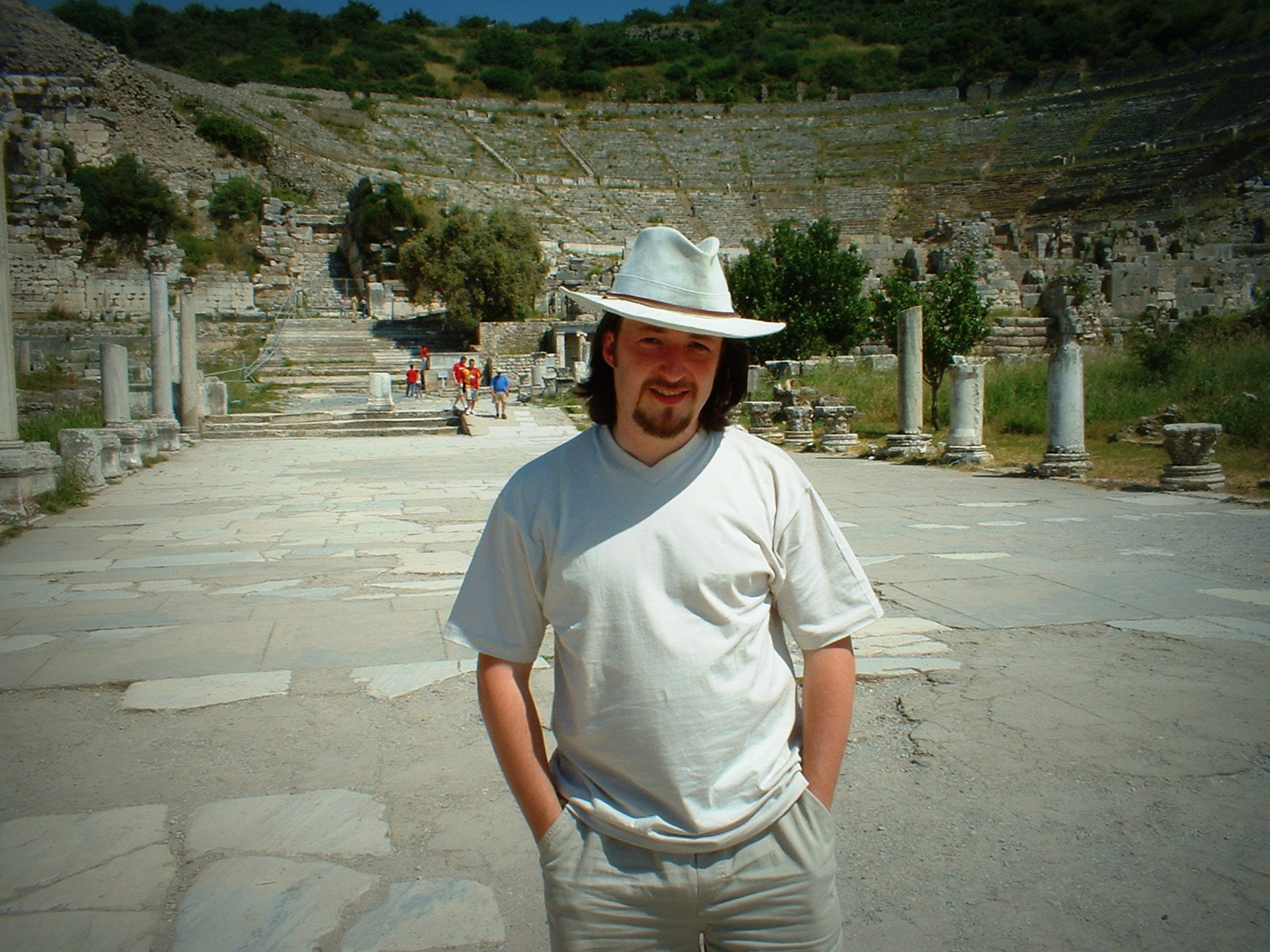 In 2003 I went to the ancient remains of Philippi in Macedonia with my wife. Travelling over from Thassos to Macedonia by ferry we landed at Neapolis (Acts 16: 11) now modern day Kavala and from there we made our way to ancient Philippi, to the Biblical sites such as the market place, as mentioned in Acts 16: 19 and the so-called prison, as mentioned in Acts 16: 24-31 and then onto the river which was just outside Philippi, where Paul baptized Lydia, as mentioned in Acts 16: 13-15.
The whole exprience astounded me and I could not but be amazed that I was actually standing in the places where the events I had read about for so many years actually took place. Places where our Sovereign Lord ordained these events to occur.
The fascination which had birthed within me when I first saw the great Arena in Ephesus on a documentary when I was a child, but I had a slight fear of flying which my wife overcame and so my ambition grew from desire to reality. The ambition within me grew and moved me so strongly that I followed our first journey to Macedonia with many more visits to sites connected with Acts of the Apostles. My wife and I would follow this journey in an adventure over the Mediterranean around Greece, and travels not only to Macedonia, Kavala and Philippi but to Turkey and Ephesus to the locations for the events of Acts 19, and the ancient city to whom Paul wrote the letter of Ephesians. Ephesus is also one of the seven Churches of Revelation.
We also travelled some time later onto Malta to the sites where the events of Acts 27: 39 may have taken place. We journeyed on foot to the sites where the events of Acts 28: 1-10 most likely took place. From then we journed also to Cyprus, and Kition in Larnaka, and then to Paphos and the events of Acts 13: 4-13.
After this glorious time my wife and I had with the Lord and His word, I became passionately drawn to the ancient reality of the original New Testament and its 1st century setting. I began to see how far Christianity had moved away from the authentic gospel and into tradition and doubted very much that Paul would be happy with modern Christianity?
If you have never visited such ancient Biblical sites, then I would highly recomend it. Being amongst the ancient locations gives the believer and critic such a more dynamic understanding of the Biblical narrative and when you are there and reading the text, its like being within the pages.
The Tombs of the Kings and early Christians
Posted by simon peter sutherland in Biblical archaeology, Christianity on October 5, 2012
 At Paphos, Cyprus there stands what is known as ‘The Tombs of the Kings’.
These tombs have a wide variety of historical facts connected to them, and although all of them are of interest, one point of this history stands out to me, that point being the fact that early Christians met in these tombs in ancient times.
At the Tombs of the Kings, early Christians from around the 1st – 4th centuries AD met for worship in singlar tombs around this location and also for protection from the persecution lashed out upon them by the Romans.
It is likely that the early Christians met in one tomb at a time.
Acts 11:19-20 tells us that after Stephen was martyred some Christians travelled to Cyprus and preached to Jews only. In Greco-Roman times Paphos was the island’s capital and it is likely that these Christians travelled there. However, it was not until Paul, Barnabus and Mark visited Paphos, Cyprus as written in Acts 13: 4-13 that the gospel was given to the Gentiles of which Paul, then Saul converted the Roman official.
Some believe that the Roman authorities were angry at Pauls conversion of the Proconsul Sergius Paulus and thus persecuted Christians at Paphos. Thus, it is for this reason that they went just outside the city walls and met in the ancient caves and tombs.
Evidence for this is found in the discoveries of crosses and Frescoes found in the burial chambers, which is regarded as proof that early Christians used these tombs during tribulations prior to the 4th century AD. Persecution of Christians was abolished by Roman Emperor Constantine who made Christianity the religion of Rome in 313 AD.
This short documentary which I made on the matter offers a more visual presentation of this subject of ‘The Tombs of the Kings and early Christians’.
The Experience of Visiting Biblical Sites
Posted by simon peter sutherland in Biblical archaeology, The Bible on October 18, 2011
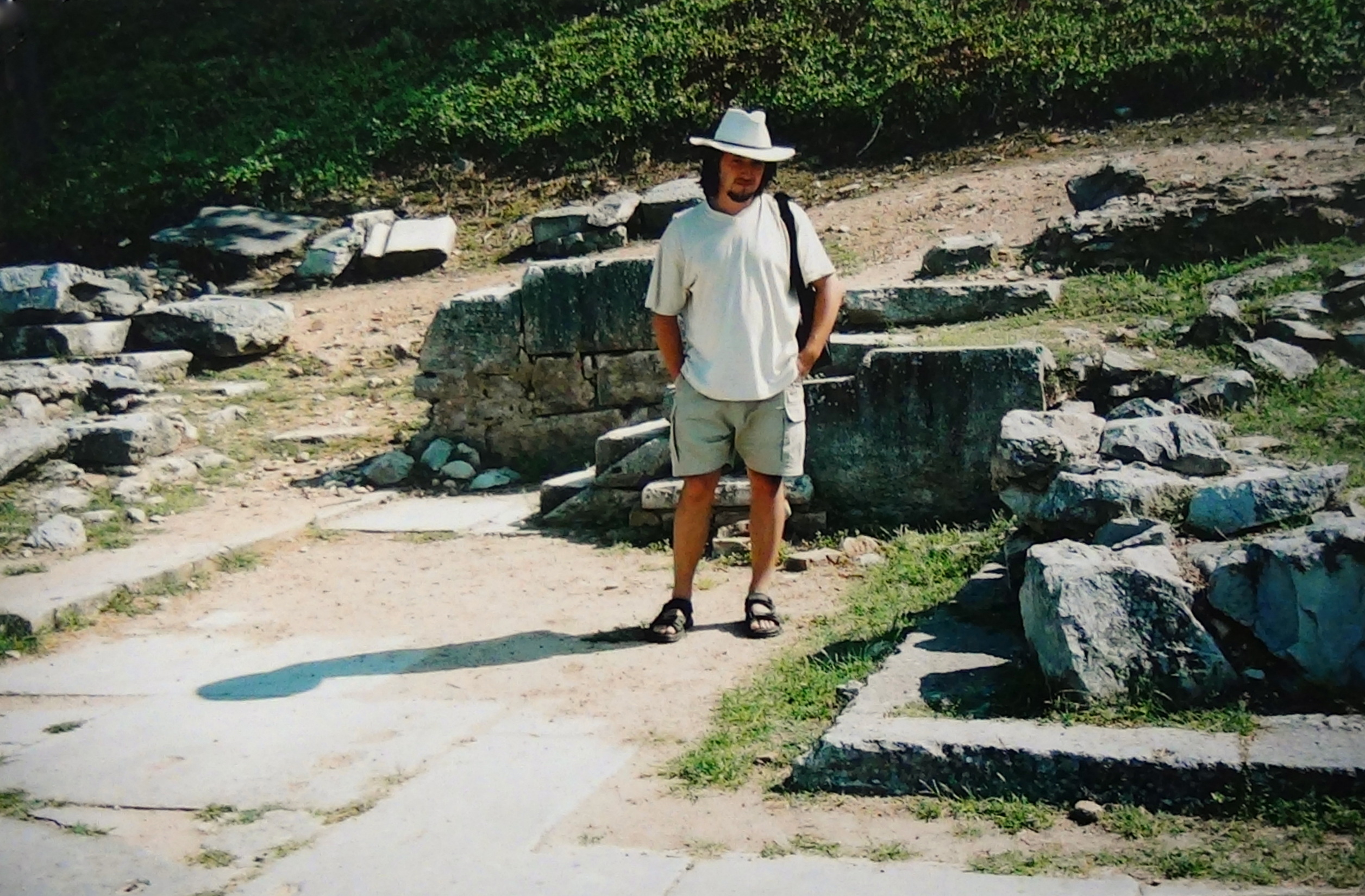
Simon Peter Sutherland at Philippi © 2003/2011
In 2003 I visited the ancient remains of Philippi in Macedonia with my wife. Travelling over from Thassos to Macedonia by ferry we landed at Neapolis (Acts 16: 11) now modern day Kavala and from there to ancient Philippi, to the Biblical sites such as the market place, as mentioned in Acts 16: 19 and the so-called prison, as mentioned in Acts 16: 24-31 and then onto the river which was just outside Philippi, where Paul baptized Lydia, as mentioned in Acts 16: 13-15.
The whole exprience astounded me and I could not but be amazed that I was actually standing in the places where the events I had read about for so many years actually took place. Places where our Sovereign Lord ordained these events to occur.
The fascination which had birthed within me when I first saw the great Arena in Ephesus on a documentary when I was a child, but I had a slight fear of flying which my wife overcame and so my ambition grew from desire to reality. The ambition within me grew and moved me so strongly that I followed our first journey to Macedonia with many more visits to sites connected with Acts of the Apostles. My wife and I would follow this journey in an adventure over the Mediterranean around Greece, and travels not only to Macedonia, Kavala and Philippi but to Ephesus and the events of Acts 19, and the ancient city to whom Paul wrote the letter of Ephesians and one of the seven Churches of Revelation. Then onto Malta to the sites where the events of Acts 27: 39 may have happened, and travels on foot to the sites where the events of Acts 28: 1-10 most likely took place. From then we journed also to Cyprus, and Kition in Larnaka, and then to Paphos and the events of Acts 13: 4-13.
The Tomb of Lazarus, Larnaca © 2003/2011
After this glorious time my wife and I had with the Lord and His word, I became passionately drawn to the ancient reality of the original New Testament and its 1st century setting. I began to see how far Christianity had moved away from the authentic gospel and into tradition and doubted very much that Paul would be happy with modern Christianity. In 2005 my wife Jenny gave birth to our first son, Peter and in 2007 our second son Luke was born and as you can imagine, travelling became more difficult. Now that our children are growing and we can travel once more to the Biblical sites, soon we hope to begin our journeys again. This time, we hope to head to Jerusalem and more of Greece and Rome.
If you have never visited such ancient Biblical sites, then I would highly recomend it. Being amongst the ancient locations gives the believer such a more dynamic understanding of the scriptures and when you are there and reading the text, its like being within the pages.
Simon Peter Sutherland
-


