Archive for category Theology
2017: A year of hope of renewal and Reformation!
Posted by simon peter sutherland in Reform, Theology on April 9, 2017
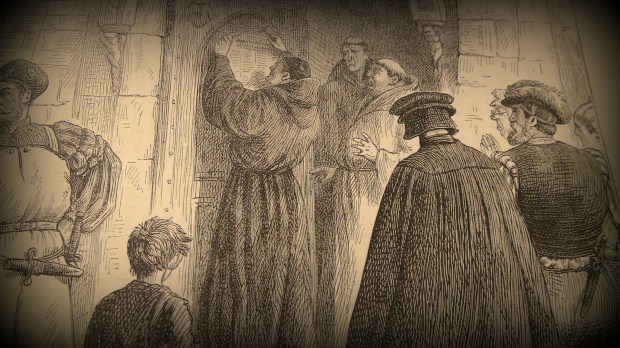
Luther nailing his Thesis to the Church door © 2017 Simon Peter Sutherland
This year, 2017, is the 500th anniversary of the Protestant Reformation.
On the 31st October 1517, Augustinian Monk, Martin Luther nailed his Ninety-Five Thesis to the Church door at Wittenberg.
The Thesis itself was centralised around his criticism of the Roman Catholic Church, the Papacy, Purgatory, and the selling of indulgences.
Today such a move would not seem all that bold, but in his day, the content of Luther’s thesis was one of the most radical criticisms of the Catholic Church that anyone had ever read. It was the dawn of such a bold and impactful move that Luther’s life between 1517-1546 would suffer a great deal of turmoil and tribulation.
In 1521 Luther stood trial at the Diet of Worms and was told to renounce all of his writings by order of Pope Leo X. Luther refused and was excommunicated by the very Church he sought to defend and reform. The Pope put a bounty on his head and Luther was given shelter by Prince Frederick the wise, at the Wartburg Castle.
 Luther had his opponents, but it is always good to have friends in high places!
At the Castle Luther spent his time translating the New Testament from Greek into German. Luther’s New Testament was published and what would follow for Luther would be a life of turmoil, religious intolerance and even war.
Luther wrote: “Be a sinner, and let your sins be strong, but let your trust in Christ be stronger.”.
Luther was no perfect man, but his reformation was a quest for perfection.
Every generation of Christians from the 16th to the 21st century have been inspired or have benefited in some way from the work that Luther began. There were even men who lived centuries prior to Luther who by the same Spirit sought to bring reform and renewal to the Church of their days.
Each quest has been a struggle. But the Word of God cannot be broken!
The Reformation is far from over.
Reform is not a thing of the past, it is an ongoing future. All of us, whether we be preachers or simply Christians have a part to play in the widespread movement of reform.
It is true that complaining is not always a popular thing. Today in our hyper positive thin world, the masses generally like a more positive, uplifting message rather than doom and gloom. But where would we be today if Luther and the Reformers kept silent and looked at the positives rather than the predominant errors of so many Churches?
The sad truth is that there is much to complain about and logic knows that a light does not come on without the negative too. When God said “Let there be light” He was not speaking about the darkness. But after the darkness came the light.
The 16th century Reformation had a saying: ‘Post Tenebrass Lux‘ It was a Latin phrase meaning ‘Light after darkness‘.
Today, the Christian Church in England is in a dark time. There really is no point in ignoring that. Where would we be today if the Reformers had never recognised that the Church was in an age of darkness because they were stooped up in a weak and crowd pleasing positive message? Where would we be if they had never criticised the errors of the Roman Catholic Church? Where would we be if they had looked at the positives of Rome and failed to judge? They would not have hoped for light.
 This year, in 2017 each one of us, wherever we are, can write our ninety-five Thesis and live in hope that the body of Christ is not done for!
Each one of us can stand against the widespread errors and deceitful doctrines of corrupt Churches. Even in the face of danger, excommunication, slander and fear based fundamentalism, each one of us can stand boldly and love our Bibles and say before God and man; ‘my conscience is captive to the Word of God, and to go against conscience is neither right nor safe. Here I stand, I can do no other God help me.‘
Clement of Alexandria on the birth of Jesus at Nisan
Posted by simon peter sutherland in Christmas or Nisan, Theology on March 9, 2017

Gauffered edged Bible © 2017 Simon Peter Sutherland
“Therefore, from the birth of Christ to the death of Commodus are a total of one hundred ninety-four years, one month, and thirteen days. There are those who have calculated not only the year of our Lord’s birth, but also the day. They say that it took place in the twenty-eighth year of Augustus, on the twenty-fifth day of Pachon [May 20] … Others say that He was born on the twenty-fourth or twenty-fifth day of Pharmuthi [April 19 or 20]”
Clement of Alexandria (c. 195)
Following on from my previous post concerning the birth of Jesus and my expressive doubts that the Bible even remotely claims that Jesus was born on December 25th, I continue on with this polemical theme, and in this post, consider a historic claim made by Clement of Alexandria in the 2nd century AD.
For those readers who may never have heard or read anything of Clement of Alexandria, his life is worth looking into. With that in mind permit me to spend a few moments relaying some things concerning his life and work.
Clement of Alexandria was born c. 150 AD in Athens, Greece and is believed to have died in Jerusalem c. 215 or 220 AD. He was a Christian Theologian and is venerated as a ‘Church father’ and his writings provide us with important source material concerning the beliefs and claims of the ante-Nicene Church fathers.

Clement of Alexandria book © 2017 Simon Peter Sutherland
He wrote on such varied ethical topics as eating, drinking, laughter, filthy speaking, clothes, true beauty, ear rings, hair, Government, and behaviour in public baths. He also wrote concerning human arts, the necessity of understanding the Scriptures and Greek Philosophy. Clement wrote concerning the Septuagint and the comparison between the ancient Greeks with the Hebrews. Indeed, much of our understanding of early Christianity and the views of early Christians comes directly from the writings of the early ante-Nicene Church fathers.
A number of Clement’s works have fully survived. Here is a list of three of them.
- The Protrepticus
- The Paedagogus
- The Stromata
On embracing Christianity, Clement travelled extensively over Greece, Italy, and Jerusalem seeking instructions and teaching from “the most eminent teachers” of his day. He was recommended by Alexander, the Bishop of Jerusalem and Origen was one of his pupils. Church historian Eusebius also speaks well of him. Clement taught that Jesus Christ was the personal saviour of men and the living Word of God and he affirmed the Inspiration of the Holy Scriptures.
As part of Clement’s research and historic record of his day, the claim he made that “Others say that He (Jesus) was born on the twenty-fourth or twenty-fifth day of Pharmuthi [April 19 or 20]” may well be the earliest known reference to the actual birth date of Jesus?
It is with all this in mind that when a historic Church father of this calibre made such a historic claim that Jesus was not believed in his day to have been born on December 25th or anywhere near that date but in either April or May, I feel I must point out; it really is irrelevant whether a modern person agrees with Clement or not. He wrote what he wrote regardless!

The Gospel of Luke KJV © 2017 Simon Peter Sutherland
With this in mind it is certainly clear we need no emphasis on ‘historic revisionism’ since it may well be more historically consistent to claim Nisan as Jesus’ birth date rather than December and we can be certain that neither Matthew or Luke made any references to the birth of Jesus as taking place in winter. On the contrary, as I stated in my previous article, “it is more probable that He was born at Nisan which took place in the spring”. And it seems by all accounts that Ecclesiastical history may well affirm this too!
Nisan falls in March-April, and Clement claims Jesus’ birth date as either April 19th or 20th which is almost upon us. So, since this really is not a divisive issue, may I humbly suggest that believers and followers of Jesus Christ consider this history as we approach the coming months and the season of Nisan.
Was Christ born in December or Spring?
Posted by simon peter sutherland in Christmas or Nisan, Theology on December 23, 2016
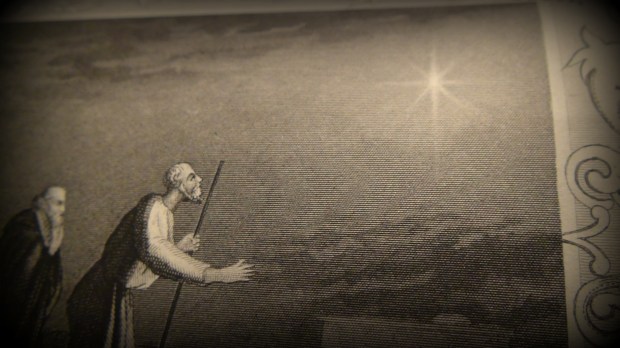
The wise men and the star over Bethlehem © 2016 Simon Peter Sutherland
Every year over the Christmas season I focus my mind distinctly upon the incarnate life of Christ as written in the Gospels. I often read Matthew and Luke’s narrative concerning the birth of Jesus at Bethlehem in the ancient Kingdom of Judah.
Many studies have been done to draw insights out from the Gospels to uncover the facts that surrounded Jesus’ birth. Questions are often asked: was Jesus really born on December 25th? Was He really born in a stable?
Over the many years of my being a Christian and desiring to know more about the incarnate life of Christ, I have approached the narratives from many perspectives and over recent years I have focused on His life from the perspective of Jesus as “the lamb of God” (John 1: 29).
From this perspective everything that Jesus did had to be a complete fulfilment of the requirements laid down by God concerning the sacrificial lambs offered up in the Temple. Lambs were to be perfect and without blemish (Exodus 12: 5, 1 Peter 1: 19) Jesus was perfect being without sin (1 John 3: 5, 2 Corinthians 5: 21, Hebrews 4: 15)
Likewise, the lambs which were reared to be offered up as Temple sacrifices were born in Bethlehem and sure enough, when they were firstborn were ‘wrapped up in swaddling cloths’ as Jesus was for a sign (Luke 2: 12). Yes, Jesus was born with the sacrificial Lambs.
Sadly for many, these points and necessities concerning the sacrificial lambs do not point to Jesus being born in December, but it is more probable that He was born at Nisan which took place in the spring.
Nisan is by far a more significant time since 14 Nisan marks the Fast of the firstborn, Jesus being the ‘firstborn among many brethren’ (Romans 8: 29, Colossians 1: 15) and 15 Nisan marks the birth of Isaac, whom demonstrates as a type or shadow of Christ. 15-21 Nisan marks the Passover when Jesus was crucified as the Passover lamb and 15 marks the Exodus from Egypt, which again was a foreshadow of Christ who delivered His people from the bondage of sin.
Obviously none of this proves that Jesus Christ wasn’t born in December, however if indeed He was born in Nisan it would be far more fitting with Scripture to consider it, since it is also on 17 Nisan that the ark of Noah came to rest upon the mountains of Ararat, which again speaks of Christ who is our eternal rest.

Christmas tree light © 2016 Simon Peter Sutherland
I like and enjoy Christmas and I too have my own traditions. These traditions include reading a fresh the nativity story from the Gospels, putting up the Christmas tree early while watching a Christmas movie and also reading ‘A Christmas Carol’ by Charles Dickens.
Yet even though I like tradition, I refuse to let it override Scripture.
Jesus the “Son of David” and heir to the throne of Israel
Posted by simon peter sutherland in Biblical Scholarship, Theology on December 11, 2015
 Therefore the Lord Himself shall give you a sign, Behold, a virgin shall conceive, and bear a Son, and shall call His name Immanuel.” Isaiah 7: 14
The virgin birth of Jesus Christ has been controversial topic for centuries. In the 2nd century, a Greek philosopher and a critique of Christianity named Celsus, claimed that Jesus was the son of a Roman soldier named Pantera. This claim has sparked debate that Mary was the victim of a rape and that Jesus was the product of that. But the story has very little historic backbone to it.
In 1952, a Bible translation called the Revised Standard Version was published. This translation rendered “a virgin” of Isaiah 7: 14 as “young woman”.
The translation appeared to be in direct contrast to the KJV and caused considerable controversy in its day and gave zest to the King James only movement. One of the arguments presented by critics of the RSV was that the rendering of ‘a virgin’ could be traced back to the oldest translation of the Old Testament known to exist. This translation is the Septuagint (LXX) and is a Greek translation of the Old Testament dating to the 3rd century BC.
likewise, we know the early Church believed Isaiah 7: 14 meant ‘a virgin’ since the ancient Apostles creed, puts the miracle of the Virgin birth this way:
- “Jesus Christ was conceived by the Holy Ghost, and born of the Virgin Mary.”
The problem is that in the RSV, the text of Isaiah can be read to deny the virgin birth, however, Luke’s gospel according to the RSV may not appear to deny the virgin birth, since the claims are quite clear by exposition.
However, for many people today, the virgin birth is about as real as Rudolf pulling Santa’s sleigh, yet these views are nothing new. In fact, when we read the New Testament, we see Joseph and Mary wrestling a little with it too.
In Matthew 1: 20 we read that Joseph “thought about these things” and then had a dream. Clearly he was troubled by the situation and was logical, he must have thought Mary had been unfaithful to him and Matthew recorded that he planned to divorce her quietly (Matthew 1: 19). Likewise Mary’s response to the angel who told her she would give birth to a son was likewise logical and reasonable “how can this be, since I do not know a man” (Luke 1: 34. NKJV). The angel told Mary the miraculous conception would be of “the Holy Spirit” (Luke 1: 35. NKJV). Mary’s question was reasonable and shows that people can reason and ask questions concerning God and faith.
A question I often asked myself when I was a child was; why did the genealogy of Jesus in Matthew’s Gospel go to Joseph? And why do the genealogies of Matthew and Luke differ? Many years later, I learned there is a very distinct reason for the two genealogies. Matthew’s genealogy differs to Luke’s genealogy for very distinct reasons:
Matthew’s genealogy proceeds forwards from Abraham to Joseph. While Luke’s genealogy moves backwards from Jesus to Adam. Matthew’s genealogy represents the legitimate, legal, royal line unto Jesus’ legal father, as in stepfather, while the genealogy of Jesus recorded for us by Luke represents Mary’s lineage.
Matthew’s genealogy represents the legitimate, legal, royal line unto Jesus’ legal father, as in stepfather. The genealogy of Jesus recorded for us by Luke through Mary’s lineage. This connects all the way back to Adam, as needs must to connect Christ as direct decent from Adam that He in the likeness of flesh, might take upon Himself the sins of the world.
Research shows that King Jeconiah is mentioned in Matthew’s genealogy and thus reveals a very distinct reason for the virgin birth.
In Jeremiah 22: 30 the prophet wrote;
- “Thus says the Lord; Write this man down as childless, A man who shall prosper in his days; for none of his descendants shall prosper, Sitting on the throne of David, And ruling anymore in Judah.”
This is the reason why a virgin birth had to happen, because if Jesus had been the actual biological son of Joseph, then Jesus would have been part of this curse and thus could not be King of Israel.
If not for this curse, then Joseph, Jesus’ stepfather would have been the legitimate King of Israel. This is why the Angel referred to Joseph as “Joseph, thou son of David” Matthew 1: 20. The Angel did not refer to Joseph as ‘the’ Son of David, but ‘son of David’. Seventeen verses in the New Testament name Jesus as the Son of David and Matthew recorded that when Jesus rode into Jerusalem on a Donkey, the people hailed “Hosanna to the Son of David” (Matthew 20: 9) Jesus the King was clearly next in line for the throne and Paul also affirmed this claim in Romans 1: 3, 2 Timothy 2: 8.
This curse written by the prophet Jeremiah did not come upon Mary or her descendants because she was not a descendant in the lineage of Jeconiah.
The people of ancient Jerusalem and the Babylonian Kings (the wise men) knew these things and this is why they asked:
- “Where is He who is born King of the Jews”. Matthew 2: 2
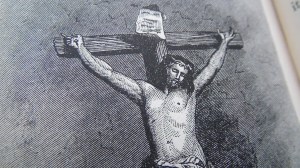
Jesus Christ crucified from a 19th century engraving © 2013/15 Simon Peter Sutherland
The claim to the throne of Jesus as the true King of Israel was known not only by the Jewish people, but by Greeks and by Romans. The Gospels record that the claim of Jesus as King was written by Pontius Pilate and placed upon Jesus’ cross.
- Matthew 27: 37 “This is Jesus the King of the Jews”
- Mark 15: 26 “The King of the Jews”
- Luke 23: 38 “This is the King of the Jews”
- John 19: 19 “Jesus of Nazareth the King of the Jews”
The claim of Jesus as King was written in “Greek, Latin and Hebrew” and in John 18: 34 Jesus questions Pilate on whether or not the claim that He Himself was King came from Pilate or from other people. “Sayest thou this thing of thyself, or did others tell it thee of me?”
That question should be asked by all of us; do we say things about Jesus because others tell us these things or do they come from ourselves? It must be a fact that since Christianity has impacted this world so strongly that every human being must at some point ask the question of who Jesus Christ truly was and is. If He was truly the Son of God, which I believe He was, then He is the most important person who has ever lived or ever will live. And if He wasn’t the Son of God then who was He and how strong a case can be assembled to make each and every individual wage eternity upon their answer?
I believe that Jesus was who He said He was and that is why I hold Him and His commands in such high royal esteem. I believe He is the only way to God and His miracles, healing’s and resurrection stand as firm proofs of that.
The question is; when He returns, will He take the throne in a literal sense?
Richard Baxter 400th anniversary 1615-2015
Posted by simon peter sutherland in Christianity, Theology on November 14, 2015
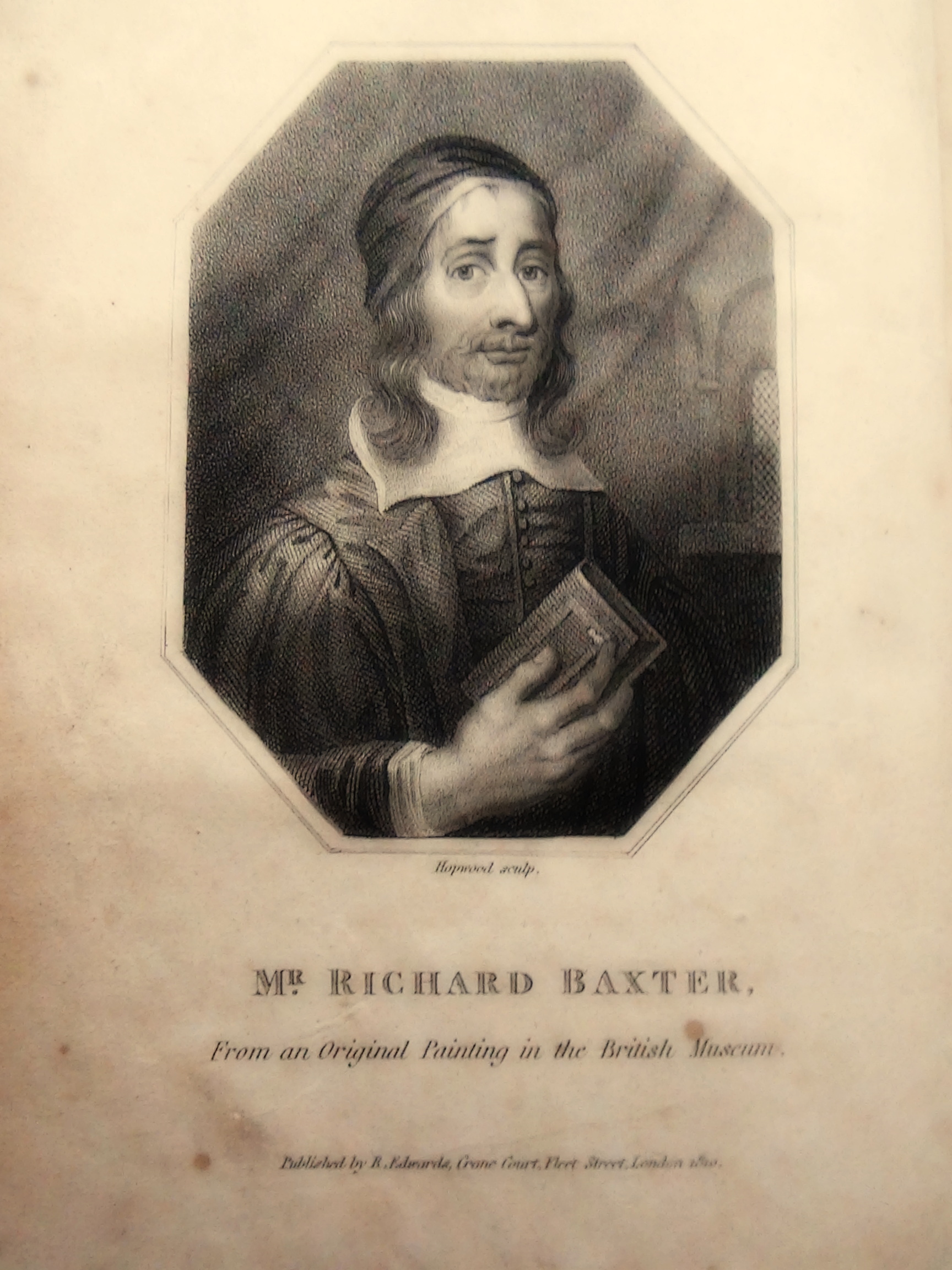
Richard Baxter © 2015 Simon Peter Sutherland
Thursday 12th November 2015 saw the 400th anniversary of 17th century Puritan Theologian, hymn writer and minister Richard Baxter.
Richard Baxter was born on 12th November 1615 and died 8th December 1691. He is famed for being minister at Kidderminster. He was a towering figure in the nonconformist movement. He lived through the English Civil war.
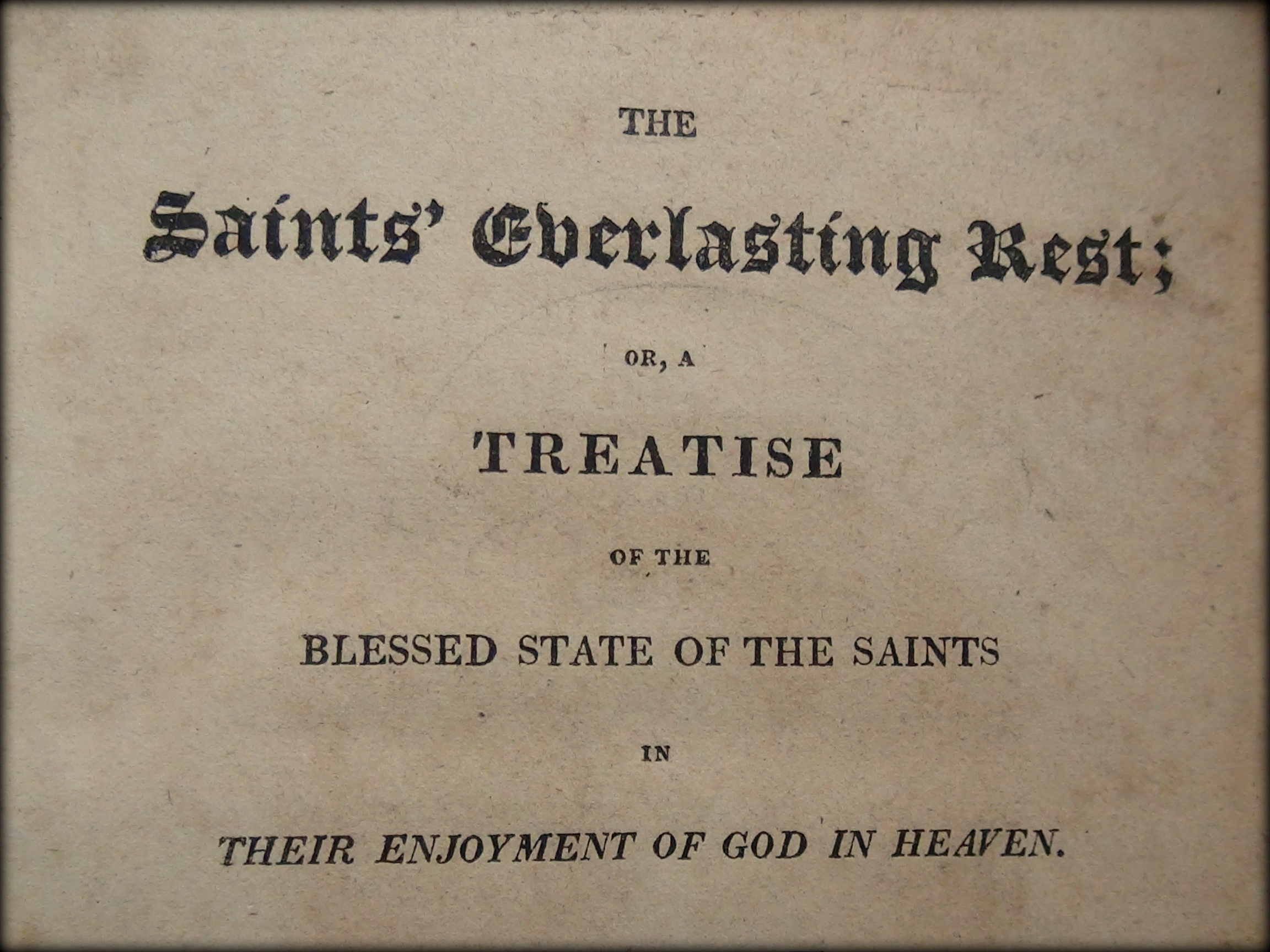
Richard Baxter Saint’s everlasting rest © 2015 Simon Peter Sutherland
He was a great Christian man and a true witness to the life of Christ. He wrote many books, which are still published even to this day and his work “the Saints everlasting rest” is one of my favoured works in all of Christianity.
Baxter interpreted Scripture that Christ died for ‘all mankind’ in the sense of Christ dying for sins, not only for the elect. The substitutionary atonement of Christ was available for all men in Adam, no one was excluded. The atonement was available for all who believe in Jesus Christ and that no man was excluded from believing in Jesus Christ as Saviour and Lord.
Baxter’s Theological position on the universal offering of salvation was not favoured by the majority Calvinists of his day and he ran into conflict with John Owen, the author of ‘the death of death in the death of Christ’. Owen believed that the sacrifice of Christ granted nothing for the none-elect and the doctrine of ‘double predestination’ was a logical conclusion to the doctrines of predestination, election and reprobation.
Baxter believed the doctrine of ‘limited atonement’ in the 5 point Calvinist sense, was inconsistent with the Bible and I agree with Baxter that Christ is available as Saviour for all mankind and I believe the Scriptures affirm this explicitly.
If I had only four books to choose from, my first would obviously be the King James Bible, then the Imitation of Christ by Thomas a Kempis, the third would be the Foxe’s Book of Martyrs and my final would be “Saints everlasting rest” by Richard Baxter. My reason for these choices is that the Bible is the absolute measuring line and rule of faith and practice for any Christian: the ‘Imitation of Christ’ helps me with humility and devotion: The ‘Foxe’s Book of Martyrs’ offers remembrance of our own Christian history, showing us where we have come from proceeding the Apostolic era to the Reformation and the ‘Saints everlasting rest” shows me quite clearly where Christians are going.
When I read ‘Saints everlasting rest’ I look forward to heaven.
I am truly thankful to men like Richard Baxter who stood up for Biblical truth and fell out of favour with many for doing so and I am thankful to God for His outpouring of love upon His people, showing us time and time again the treasures and glorious future He has stored up for those who love Him.
An appeal to 5 point Calvinists in America
Posted by simon peter sutherland in Limited Atonement on April 7, 2014

The Gospel of John in Greek
© 2014 Simon Peter Sutherland
“For the time is come, that judgement must begin at the house of God; and if it first start with us, what shall the end be of them that obey not the gospel of God?. ” 1 Peter 4: 17
Dear brothers and sisters in Christ. The time has come for you to re-examine the Scriptures, and cease to deny those which do not reaffirm your message.
Too long have your teachers embraced a loyalty within their hearts to the Separatist theories and histories which landed on your shores so long ago.
Dear brothers and sisters in Christ, I know you love the Scriptures and are loyal to them, but the reason why some of you wrestle with the Scriptures, is because they speak contrary to some of the doctrines of which you hold dear. It is time for change.
Too long have your teachers upheld Scripture in one place, while denying them in another. I know that they are loyal to the Truth and I know they try and be loyal to Scripture, but they have another love in their hearts. The loyalty to their much loved friends and historical people, has taken the pure milk of the word out of their hearts.
Friends; you need not be loyal to the doctrines upheld by your close friends, pastors, beloved teachers, historical people and their books. Our loyalty is to God alone and the Scriptures which He has set in their place. And if a doctrine has no place in Scripture, it should have no place within our hearts.
On the basis of Scripture and in the quest for Truth, I appeal to you to re-think your position with Scripture and plain reason.
If you open your hearts to what Scripture says, the Scripture will come into you and breathe. But if you shut up your hearts and close your minds, you alone will close them up.
Remember that you who uphold and teach doctrines, will be judged more highly than those who do not . This is why James wrote, “My brethren be not many masters, knowing that we shall receive the greater condemnation” (James 3: 1.)
With that Truth in mind, I urge you for the good of yourselves and all people; be not be like those of old who affirmed Salvation for themselves, while denying it for others. All the while, looking at the decline of your own while denying their Salvation at the same time. For, if this be an untruth, you will receive judgement for teaching it.
I appeal to you who know the Scriptures, to spend some time in the close examination of them once again. For it is the Church which is to be judged by the Scriptures, not the Scriptures by the Church. It is the Body of Christ to whom the message of Salvation has been entrusted. And she cannot be alarmed by her country’s denial of Scripture, while she herself denies them too.
I appeal to you this day, to re-examine the Scriptures and seek the Lord who gave them. To seek the Word of the Prophets and Apostles who wrote them down and sent the Words to you by the Power of the Holy Spirit sent from Heaven.
The Scripture says “Elect according to the foreknowledge of God the Father” 1 Peter 1: 2. Through which is revealed the original purpose of God, to indiscriminately bring Salvation both to Jews and Gentiles, who are elect according to the foreknowledge of God, in which, if it follows that if no man is excluded from calling upon God, Salvation must be ready available for him.
I urge and plead with you to re-examine your hearts and minds and be not like those of old, who were chosen, but in the time of Our Lord did deny salvation for everyone, but themselves alone. They too used Scripture to affirm it.
Brothers and sisters, I plead with you, on behalf of Truth and the souls of those who are perishing and the pure testimony of divine Scripture, ‘gird up the loins of your minds, be sober and repent’. And if you have tasted that the Lord be gracious to you, remember His grace towards others, who were like yourselves, not the people of God, even so should you be merciful, as you yourselves have obtained mercy.
If the doctrine of ‘Limited Atonement’ be true, then it is not a ‘doctrine of Grace’. It is a doctrine of damnation for all those who either cannot, or will not believe in it.
Dearly beloved, judgement is coming, but it will not come until the house of God is set in order first. Time is short, I beseech you, as strangers yet as brothers and sisters, to submit yourselves to every Word of God. And pray, pray, pray.’
Absolute Sanctification?
Posted by simon peter sutherland in Theology on August 13, 2013
 “For by one offering he hath perfected forever them that are sanctified” Hebrews 10: 14
If one were to test and oppose and speak against certain doctrines now preached commonly within Christian circles, often the one or ones who speak out are closed off and rejected by congregations and those in authority of the pulpit. It can be supposed a stepladder towards heresy to question the doctrines and teachings that man has set alongside the teachings of the Bible? But what can every man do but be obedient to God rather than the ministry that is expected of him by the ideals of man and the Orthodox pigeonholed Church? So who are we to obey? Should Christians obey the God of the Bible and the teaching that stands by His word or should we obey man and his interpretations of scripture? The answer is, at least I would like it to be that Christians obey the written word of God and not the impressions of God in the mind. Wishful thinking?
If we do not test all things, we are liable to be led astray and brainwashed into all things. Indeed every singular individual in the Bible is commanded to judge and test all things. At no time is any individual in the Bible commanded to obey the doctrines of the established church regarding interpretations of the scriptures. In 1 Thessalonians 5: 21 we are commanded to “prove all things”. It is with this text that Paul employed the Greek word translated “prove” ‘dokimazō’ meaning to test, approve, discern, and examine (G1384. Strongs). Now if we do not fulfil this commandment for fear of moving away from Orthodox and established doctrines, we are not following God but Vatican type dogma, as many have done so in our past and still do to their own peril. Therefore it is not arrogant or none-humble to test the established teachings of the Church and to refute them, but it is in obedience to the God of the Bible and the love of His commandments.
BEING SANCTIFIED?
If we look at the Bible openly and honestly, we can see that God is in control of salvation and the affairs of men. He gives salvation to whomever He wishes and refuses no one who comes to Him, but gives man the ability to come to Him (John 6: 44. 12: 32). Now if man were capable of sanctifying himself, in other-words making himself holy, there would be no need of Christ. But since Christ has come, we are in need of Gods sanctification. This is a basic Biblical truth. Now, one rather common teaching I seek to mention is based around the doctrine that claims that Disciples of Christ or commonly named ‘Christians’ are not yet completely sanctified but are “being sanctified.” This teaching taught by many is not what the Bible proclaims. For such teachings are based around theological arguments and doctrines which so often today are based upon modern translations of the scriptures in which the translators may have included the teachings of men into the Bible? These teachings are not contained within the authorised King James Version and the best Hebrew and Greek texts. Translations such the NIV, NKJ, NASV all contain the teaching of “being sanctified”. This wording is inaccurate to the original Greek text of Hebrews 10: 14. The teaching of ‘being sanctified’ is an attempt, ‘in my opinion’, to moderate what Christ has done in His people and to deny the Biblical doctrine on ongoing perfection, not sanctification. As stated in Hebrews 10: 14, “For by one offering he hath perfected forever them that are sanctified”
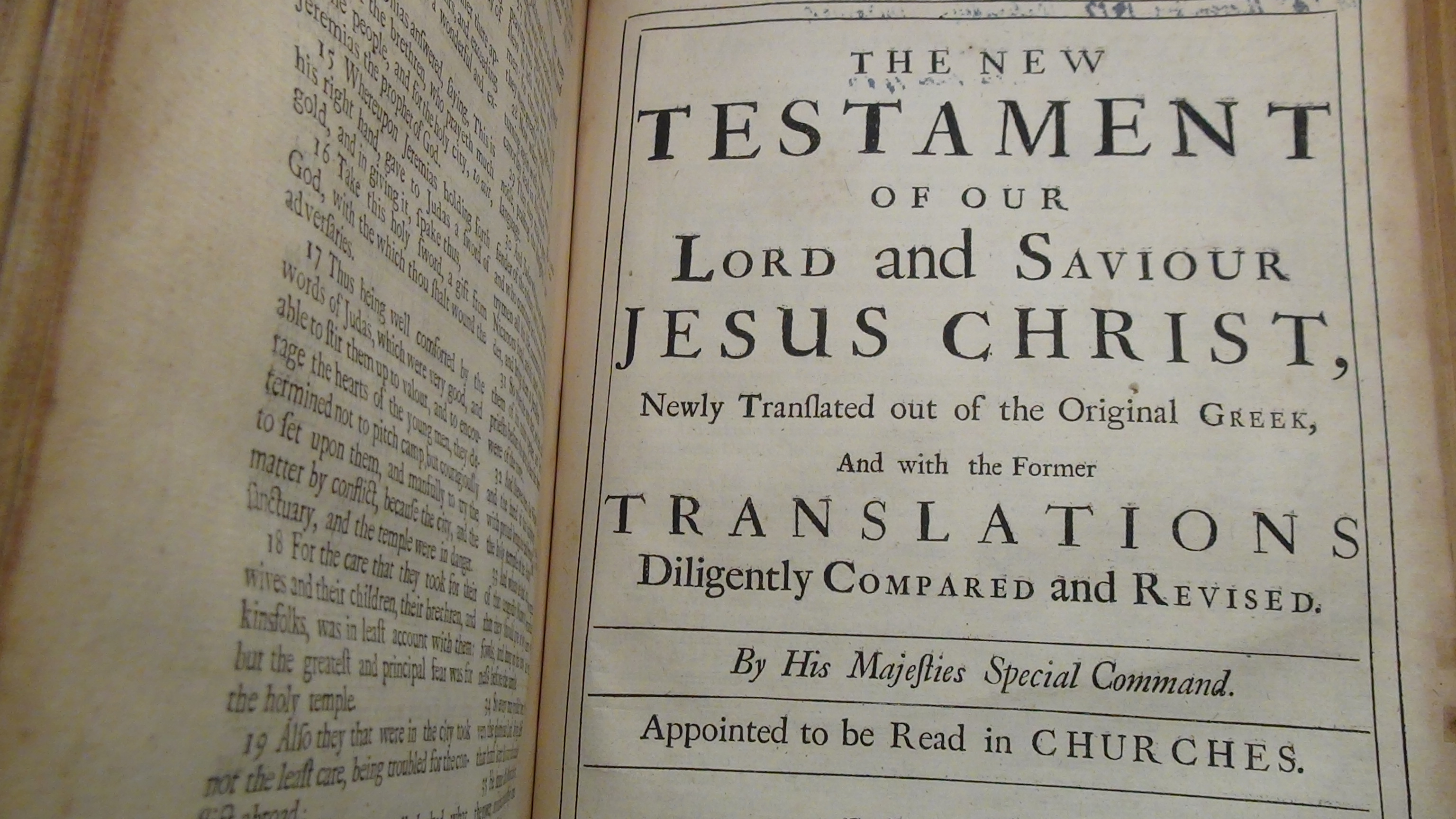 Thus, what does that mean? That He has “perfected forever them that are sanctified” Could that mean that Jesus has perfected Christians and those who are in Christ are sanctified already? Well, we must believe the truth or we will fall into the errors and traditions of men, for we can only rely upon Gods testimony for this truth and not the doctrines and teachings we hold dear. For, in all the times our sanctification is prophesied by the Old Testament prophets, the fulfilment is revealed in the New Testament. Sanctification is at no time referred to as an ongoing process. The moderation as contained in most of today’s translations are weak and therefore unacceptable as final authority. I urge you all to review the following quotations and let the scripture speak for itself.
OLD TESTAMENT
“The tabernacle shall be sanctified by my glory”. Exodus 29: 34
“Before I formed thee (Jeremiah) in the belly I knew thee; and before thou comest forth out of the womb I sanctified thee”. Jeremiah 1: 5
NEW TESTAMENT
“Unto the Church of God which is at Corinth, to them that are Sanctified”. 1 Corinthians 1: 2
“But ye are washed, but ye are sanctified…in the name of the Lord Jesus” 1 Corinthians 6: 11
“For both he that sanctifieth and they who are sanctified are all of one” Hebrews 2: 11
“We are sanctified through the offering of the body of Jesus Christ once for all” Hebrews 10: 10
“For by one offering he hath perfected forever them that are sanctified” Hebrews 10: 14
“Jude, the servant of Jesus Christ…to them that are sanctified, and preserved in Jesus Christ, and called”.
Jude 1
“The Apostles at Paphos” aired on Revelation TV
Posted by simon peter sutherland in Biblical archaeology, The Bible, Theology on March 7, 2013
 Great news!
Thanks to the folks at Revelation TV my first documentary “The Apostles at Paphos” has been aired on Revelation TV, Sky 581, Freesat 692, Freeview HD 228 on Friday 1st March at 8pm and Sunday 3rd March at 3pm and Wednesday 27th March at 10 am.
Keep posted with the Revelation TV listing for further schedule.
Revelation TV play some interesting stuff, so pass it on.
For more information on Revelation TV, visit http://www.revelationtv.com/
The Anchorites Cell
Posted by simon peter sutherland in Christianity, The Bible, Theology on March 5, 2013
 On 22nd January 2013, I attended a lecture at the Manchester Theological Society by Alex Jacob. The lecture was on the topic of Mr Jacobs book “The Case for Enlargement Theology”.
This polemical lecture explored the relationship between Christianity and her mother religion ‘Judaism’.
Although the lecturer did not put too fine a point on it, Alex Jacob briefly refuted the somewhat inconsistent and popular doctrine of ‘Replacement Theology’.
As always, a question and answer period was offered after the lecture. Many at this point made statements rather than ask questions. Cannon Andrew Shanks asked a question and made a rather problematic yet interesting statement during that session. The point was that in his position he would argue that the 21st century person cannot live by the standards set by St Paul since “we are at a different point in history”.
Obviously, if I am taking this point correctly, it would not involve ‘all’ the standards of St Paul, since many of those standards are still relatively common, common sense, but some of them. The question would also be that many Anglican’s claim we should live according to the words of Jesus, which when consistently studied, are not contrary to the letters of St Paul.
However, in the natural and the historical, that is according to the natural man I could be inclined to agree with the statement by Cannon Shanks? But according to the spiritual man, I could not agree. The reason would be according to my knowledge, understanding and experience of the Holy Spirit and His power to cause a man to live not by bread alone (the natural) but by the Spirit and the Word.
That in order to obey the spiritual we must transcend the natural.
However, following from this line of thought, I would like to add that when an interesting comment or point is raised to me, I often ponder it for a long time.
Being a Christian within the 21st century and maybe not even the Christian I would like to be, I struggle with sin. It is an awful and difficult thing in many ways to be a committed Christian and to live in a 21st century city where modern conveniences and fleshly delights are ever before my sin. The question then haunts me like a ghost; How does a Christian live in modern times according to the standards set before us in the New Testament?
The answer must be ever continual flowing grace from God.
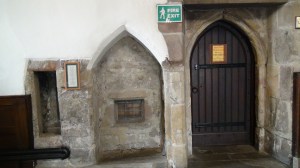 In February I visited the town of Skipton in North Yorkshire with my wife and children and the ancient Holy Trinity Church which dates to around the turn of the 14th century and contains 15th century alterations.
Within the Holy Trinity Church there can be found what is known as “the Anchorites cell”. Apparently this cell dates back to the middle ages and was used by a female Anchorite.
For those who may not know, an Anchorite was a person who withdrew from the world and lived alone in a cell for the rest of that person’s natural life. The word itself stems from the Greek, meaning to withdraw. It is a form of the monastic life.
In the Anchorite cell at Skipton, people were permitted to visit the Anchorite in the cell which was attached to the church. He or she spent the rest of the natural life in this cell in prayer and also offering advice to any visitors.
Food was given through a small window of which the Anchorite had a view of the altar.
The proposed challenge for those today is to spend time apart from the world to meditate and to pray and in this sense the Anchorite’s cell is just as important today as it was in history, only the application is different.
The question is does a person need to cut themselves off from the world in order to live the Godly life? The answer is no. It cannot be yes or there would be no Christian witness in the world. Thus, as the Christian slogan says, be ‘in the world but not of it’ the matter is obviously clear. But even better than that Paul in Romans 12: 2 instructs us be none-conformists in the sense of not conforming to this fleshly world and in Galatians 5: 16 he gives us the means to do this, “walk in the Spirit and you shall not fulfil the lust of the flesh”.
How then do we walk in the spirit? The answer is in the meaning of verse 13, ‘Freedom’ and not the freedom to do as you wish, but freedom within, freedom from sin.
The answer can be found in Jesus, “Look unto me all you who labour and are heavy laden, and I will give you rest” Matthew 11: 28
Look to Jesus wherever you are and not to yourself and you will be delivered from yourself.
The Problem of the Red Heifer
Posted by simon peter sutherland in Christianity, The Bible, Theology on January 18, 2013
 Jews in Israel are now claiming that they are re-building thee 3rd Jewish Temple. This is a huge isssue, since many Biblical scholars and theologians believe that God is going to re-establish His Old Covenant sacrifices when the re-building of the so-called 3rd Jewish temple in Jerusalem is complete.
Many pre-milliennial theologians employ 2 Thessalonians 2: 2-12 to proclaim that antichrist will do this? But the problem is that this re-establishment of old covenant sacrifices is based upon one interpretation of Daniel 9, which claims that Daniel was prophesying that at the end of days, antichrist will set up and image of himself in the new temple at Jerusalem and will briefly put an end to sacrifices which have been re-established by a levitical priesthood.
However, despite the controversy which surrounds escatological interpretations, it is clear that Daniel 9 is a prophesy concerning the coming of Christ, who, according to many modern scholars, put an end to sacrifice and offering in the middle of the Jewish week and not Friday, as many claim to be the day in which Christ was crucified. However, the problem remains that the building of a 3rd temple in Jerusalem is not a mere matter of theological interpretation of the scriptures, or problematic only because the levitical priesthood does not exist anymore and cannot be reinstated by any priesthood, but, it is a problem regarding the Red Heifer.
According to the Bible, the Red Heifer was a bull used by levitical priests in accordance with the Law of Moses as part of the ritual sacrifices for the so-called cleansing of sin. These requirments are found in Numbers 19: 1-22, which is contained in the Bible and in the Torah and cannot be broken by anyone accept God Himself. So the problem remains, that there is no longer a pure Red Heifer anymore. The Red Heifer genetically gained white markings sometime over the last 2000 years or more. The white markings now found on the Red Heifer make it impossble for the laws of purification to be fulfilled according to the word of God. Jewish scholars and pre-millennial theologians have got a problem. Nothing other than a pure Red Heifer at the age of 3 can be a satisfactory offering (Genesis 15: 9)
So until a pure Red Heifer comes along, there is no signal for the end of days and the sooner people realise that the re-building of temple was made complete in the followers of the Lord Jesus, who are the Temple of the Holy Spirit, then the better for all of us.
-
You are currently browsing the archives for the Theology category.
Simon Peter Sutherland
-

 Simon Peter Sutherland