Archive for category The Bible
Absolute Sanctification?
Posted by simon peter sutherland in Theology on August 13, 2013
 “For by one offering he hath perfected forever them that are sanctified” Hebrews 10: 14
If one were to test and oppose and speak against certain doctrines now preached commonly within Christian circles, often the one or ones who speak out are closed off and rejected by congregations and those in authority of the pulpit. It can be supposed a stepladder towards heresy to question the doctrines and teachings that man has set alongside the teachings of the Bible? But what can every man do but be obedient to God rather than the ministry that is expected of him by the ideals of man and the Orthodox pigeonholed Church? So who are we to obey? Should Christians obey the God of the Bible and the teaching that stands by His word or should we obey man and his interpretations of scripture? The answer is, at least I would like it to be that Christians obey the written word of God and not the impressions of God in the mind. Wishful thinking?
If we do not test all things, we are liable to be led astray and brainwashed into all things. Indeed every singular individual in the Bible is commanded to judge and test all things. At no time is any individual in the Bible commanded to obey the doctrines of the established church regarding interpretations of the scriptures. In 1 Thessalonians 5: 21 we are commanded to “prove all things”. It is with this text that Paul employed the Greek word translated “prove” ‘dokimazō’ meaning to test, approve, discern, and examine (G1384. Strongs). Now if we do not fulfil this commandment for fear of moving away from Orthodox and established doctrines, we are not following God but Vatican type dogma, as many have done so in our past and still do to their own peril. Therefore it is not arrogant or none-humble to test the established teachings of the Church and to refute them, but it is in obedience to the God of the Bible and the love of His commandments.
BEING SANCTIFIED?
If we look at the Bible openly and honestly, we can see that God is in control of salvation and the affairs of men. He gives salvation to whomever He wishes and refuses no one who comes to Him, but gives man the ability to come to Him (John 6: 44. 12: 32). Now if man were capable of sanctifying himself, in other-words making himself holy, there would be no need of Christ. But since Christ has come, we are in need of Gods sanctification. This is a basic Biblical truth. Now, one rather common teaching I seek to mention is based around the doctrine that claims that Disciples of Christ or commonly named ‘Christians’ are not yet completely sanctified but are “being sanctified.” This teaching taught by many is not what the Bible proclaims. For such teachings are based around theological arguments and doctrines which so often today are based upon modern translations of the scriptures in which the translators may have included the teachings of men into the Bible? These teachings are not contained within the authorised King James Version and the best Hebrew and Greek texts. Translations such the NIV, NKJ, NASV all contain the teaching of “being sanctified”. This wording is inaccurate to the original Greek text of Hebrews 10: 14. The teaching of ‘being sanctified’ is an attempt, ‘in my opinion’, to moderate what Christ has done in His people and to deny the Biblical doctrine on ongoing perfection, not sanctification. As stated in Hebrews 10: 14, “For by one offering he hath perfected forever them that are sanctified”
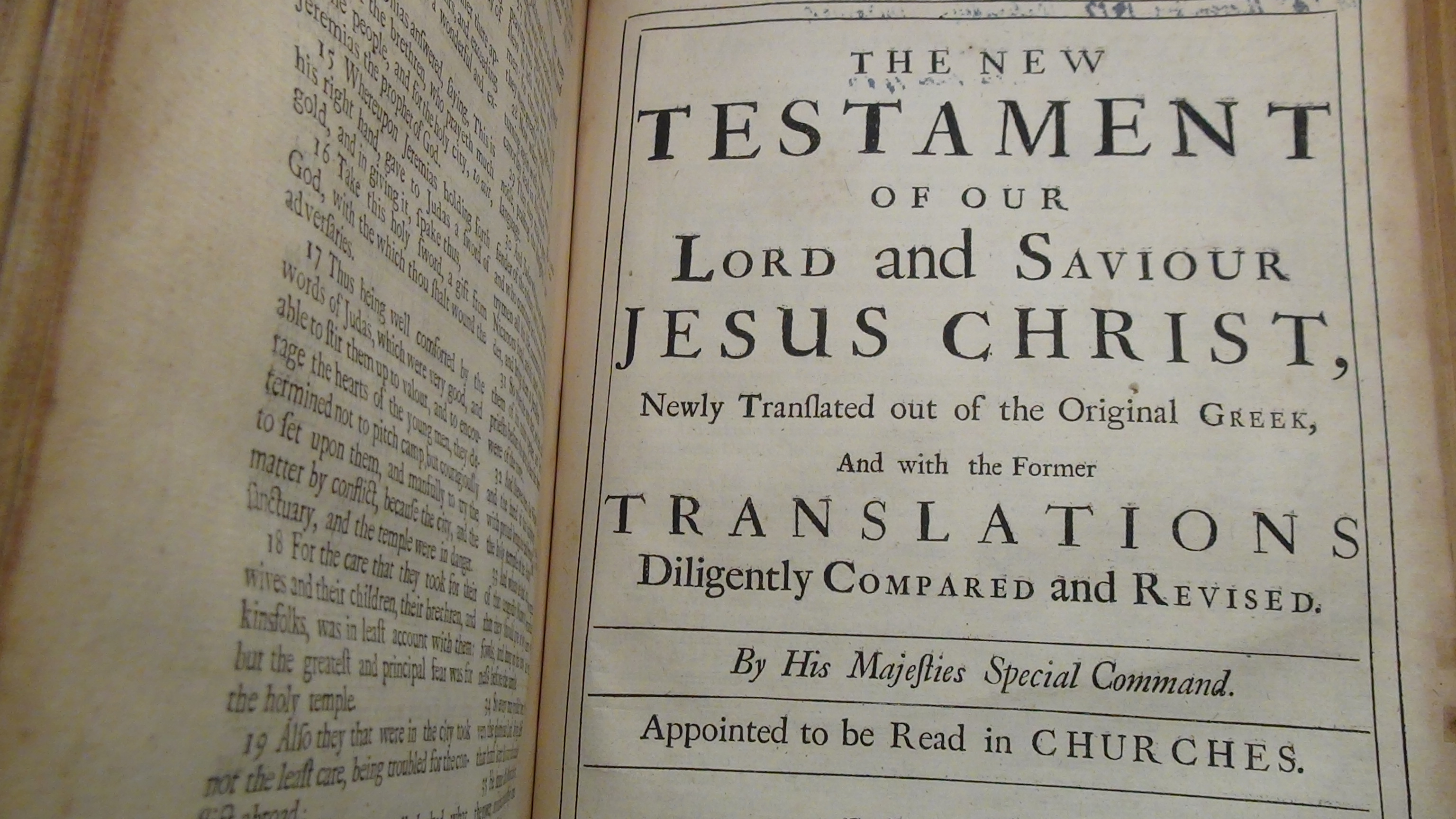 Thus, what does that mean? That He has “perfected forever them that are sanctified” Could that mean that Jesus has perfected Christians and those who are in Christ are sanctified already? Well, we must believe the truth or we will fall into the errors and traditions of men, for we can only rely upon Gods testimony for this truth and not the doctrines and teachings we hold dear. For, in all the times our sanctification is prophesied by the Old Testament prophets, the fulfilment is revealed in the New Testament. Sanctification is at no time referred to as an ongoing process. The moderation as contained in most of today’s translations are weak and therefore unacceptable as final authority. I urge you all to review the following quotations and let the scripture speak for itself.
OLD TESTAMENT
“The tabernacle shall be sanctified by my glory”. Exodus 29: 34
“Before I formed thee (Jeremiah) in the belly I knew thee; and before thou comest forth out of the womb I sanctified thee”. Jeremiah 1: 5
NEW TESTAMENT
“Unto the Church of God which is at Corinth, to them that are Sanctified”. 1 Corinthians 1: 2
“But ye are washed, but ye are sanctified…in the name of the Lord Jesus” 1 Corinthians 6: 11
“For both he that sanctifieth and they who are sanctified are all of one” Hebrews 2: 11
“We are sanctified through the offering of the body of Jesus Christ once for all” Hebrews 10: 10
“For by one offering he hath perfected forever them that are sanctified” Hebrews 10: 14
“Jude, the servant of Jesus Christ…to them that are sanctified, and preserved in Jesus Christ, and called”.
Jude 1
The Most Dangerous Man in Tudor England. William Tyndale BBC Two
Posted by simon peter sutherland in Christianity, The Bible, The influence of film on June 10, 2013
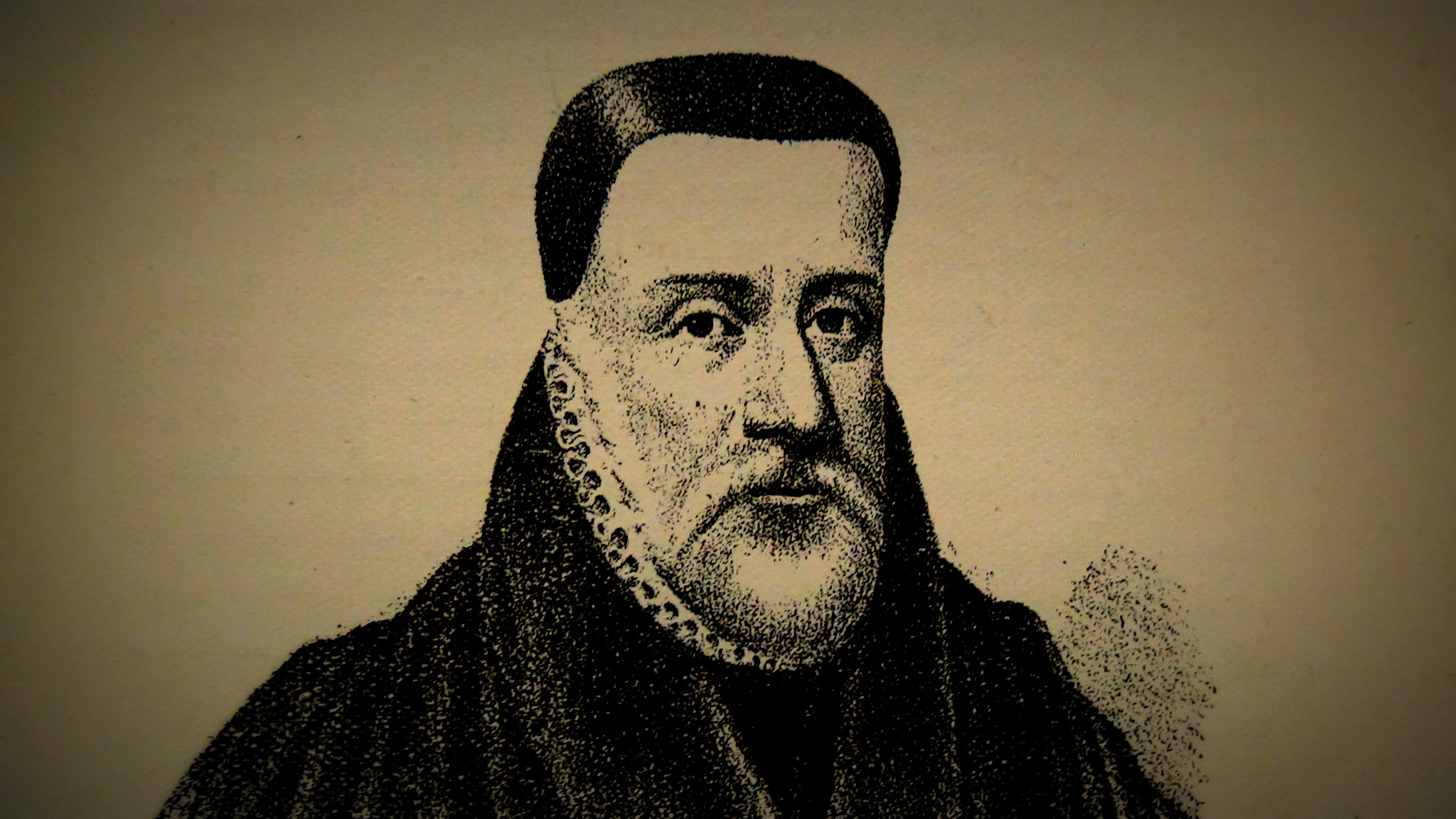
William Tyndale
© 2013 Simon Peter Sutherland
On Thursday 7th June at 9pm the BBC broadcast a new documentary on William Tyndale. This documentary was written and presented by Melvyn Bragg.
I was in Scotland that day and I was unsure if I was going to be able to catch the film. I am glad I did.
But such is not always the case.
These days when it comes to Christianised documentaries by the BBC, I often roll my eyes or become irritated by the constant errors and prejudice the documentaries manifest. So often the BBC presents far fetched and somewhat speculative scholarship and narrow minded claims against Christian Truths and Truth in general. But such was not the case with “The Most Dangerous man in Tudor England”. In fact, in my view this was better than ten years worth of BBC documentaries and BBC films rolled into one.
I enjoy researching the life and works of Tyndale and after a number of years research into his New Testament with many actual original prints of the Tyndale New Testament and his writings at Chethams Library and John Rylands Library, I can say Melvyn Bragg presented an honest, none-prejudice telling of the life of England’s greatest Biblical Scholar.
 William Tyndale wrote some outstanding Theological works and I think, his New Testament is the most outstanding English translation of the New Testament ever.
What I would say is that if any viewers or my readers are unaware of the life and teachings of William Tyndale and of his translation, then look him up, research him from his actual writings and of course his translation.
And to the BBC, please, in the spirit of accuracy, lets have a little less prejudice and more Truth.
May the God of William Tyndale, the Salvation of our Lord Jesus Christ and the fellowship of the Holy Spirit be with Melvyn Bragg and with you all. Amen
Recommended reads:
Tyndales New Testament. 1534 edition (modern spelling by David Daniell)
Works of William Tyndale. 2 Volumes
The Obedience of a Christian man by William Tyndale
William Tyndale. A Biography by David Daniell
Also you can find my William Tyndale Facebook @ https://www.facebook.com/pages/The-Life-and-Teachings-of-William-Tyndale/192363984132613
Archaeology: A secret history – BBC four
Posted by simon peter sutherland in Biblical archaeology, Science and evolution, The influence of film on April 30, 2013
 Well, here we go again. More subtle anti-Creationist, anti-Biblical, evolutionary propaganda from the prejudice BBC.
It seems that every week, more or less, the BBC attempt to brainwash us Brits with more fairy tales about ‘Macro-Eveolution’ in the on going quest to corrupt the foundations of true Christianity in her fundamental reading of the Bible and make all religions equal in error and in truth?
As is said: If Britain does it first, the rest of the world might follow?
The latest quest by the BBC is entitled “Archaeology: A secret history” in which Dr Richard Miles offers us a version of history and archaeology which as it is said, began to prove Biblical truth starting in the 4th century AD with the founder of archaeology, Helena, the 1st Christian Archaeologist. The history soon moves forwards and the quest to prove the Bible got archaeologists into dangerous waters?
Permit me to say as one who has studied these matters, knows the Biblical narrative in its original languages and visited some lands of the Bible, that when the Archeology of the Bible lands is handled correctly, there is no contradition whatsoever between Archaeology and the Biblical narrative. That is unless the evindence is in the hands of the BBC or Israel Finkelstein, Bart Erhman or some other polemic or church conspiracy theorist.
It never ceases to amaze me of how prejudice and narrow minded documentaries can progress, as they work their angled agendas against something by opening rather fairly and then move rather swiftly on to debunking their opponent with a mere majority system of thought. Facts have little to do with it. Opinion more like. Majority opinion.
It so-often starts with creation does it not? With Genesis and so forth. Suddenly the archaeology slips on its own vomit and then dumps on its own dinner by confusing ‘Archaeology’ with ‘Geology’. Which are not the same thing. Similar though they are.
It seems that the misleading title “Archaeology” has now stepped onto new territory and entered into the geological field. A geological field which is often stated as a fact, but is in reality little more than a philosophy. Thats right, a philosophy. An idea. A theory. Not modern at all, but an 18th century philosophy called ‘Uniformitarianism’. In other worlds, an assumption which is believed to have started with James Huttton (1726-1797) and made popular by Darwins apostle, Charles Lyell (1797-1875). Lyells publication “Principles of Geology” (1830) was read by Darwin and thus, the rest is history.
Suddenly the Bible, ancient history, Judaism and so-forth are now proven wrong because a philosophical theory takes centre stage? For Darwinians, Creationism (their enemy) has been the support act while ‘Uniformitarianism’ is the headliner, though under a deceptive new name.
For those who are still in evolutionary ignorance and do not know, permit me to mention what Uniformitarianism is. Uniformitrianism is a philosophical concept which evolutionary science uses to claim that what the earth is doing now it has always done. That is merely an idea, a philosophy, not a fact.
The idea of Uniformitrianism is that the earth was shaped by a series of sudden and violent events is an idea which is not the only conclusion to the evidences we see before us. But it is the more common notion which people tend to follow because ‘Science’ says so. The rest of the world must bow the knee because ‘Science’ says it is a fact. The earth is billions of years old? Those who think otherwise are either uneducated or bias due to religious persuasion and fundamentalism. Wishful thinking.
It seems to me that the only facts which present themselves with documentaries such as “Archaeology: A secret history” and those commonly broadcast by the BCC these days is that they are prejudice towards the Bible and Biblical archaeology are basically uniformitarian in their concepts and believe that the present is the key to the past. How so?
It is for this very reason why the BBC have in the past laid the foundation-stone in this anti-Biblical quest by attacking the historical claims of a worldwide flood. A flood not only written about in Genesis and compiled in the Bible, but written about in Africa, Babylon, China, India, Australia, America, North America, South America and even Greece. These historical accounts cannot be ignored, neither are they going to go away. And the catastrophic consequences of the flood would mean that the present cannot be the key to the past, since the earth’s crust would have changed when the flood resided.
But clearly Dr Richard Miles has concluded otherwise and we sheeple must bow the knee to what the scholars say, because scholarship is always right, right?
Clearly by his employment of ‘Neanderthal’ in his documentary thesis, Dr Miles has concluded that Genus Homo (Neanderthal) is evidence of a common ancestor rather than a common designer. That an ancient and incomplete set of bones which have been reconstructed accordingly is evidence for macro-eveolution?
I think not. If ‘Neanderthal’ is evidence for macro-evolution then I am Jack Benny reborn.
But what does it matter what I think, I’m just some deluded religious nut case with an over literal reading and knowledge of history. I clearly have some issues with the way the world is these days. But if believing that history is history and that there was indeed an ancient flood makes me a fundamentalist nut case, then I am indeed content to be a fundamentalist nutter. But I’ll be damned before I believe in some fairy tale theories about some ancient extinct creatures being our common ancestors. And I would rather lick the dirt than believe the present is the key to understanding the past.
Thus, when history is what we know and have in writing by ancient eye witnesses, with evidence to back them up, are we really going to deny written history and vast amounts of geological evidences because of Charles Lyell’s 19th century agenda to ‘Free science from Moses?’. Are we really going to take the word of orthodox evolutionary scientists without thinking for ourselves?
I don’t know about you folks but I have never believed in fairy tales and I am not into scientific totalitarianism. Neither am I willing to put my trust in evolutionary scientists who present theories as fact, and philosophies as geology when I know they are not speaking the truth.
“The Apostles at Paphos” aired on Revelation TV
Posted by simon peter sutherland in Biblical archaeology, The Bible, Theology on March 7, 2013
 Great news!
Thanks to the folks at Revelation TV my first documentary “The Apostles at Paphos” has been aired on Revelation TV, Sky 581, Freesat 692, Freeview HD 228 on Friday 1st March at 8pm and Sunday 3rd March at 3pm and Wednesday 27th March at 10 am.
Keep posted with the Revelation TV listing for further schedule.
Revelation TV play some interesting stuff, so pass it on.
For more information on Revelation TV, visit http://www.revelationtv.com/
The Anchorites Cell
Posted by simon peter sutherland in Christianity, The Bible, Theology on March 5, 2013
 On 22nd January 2013, I attended a lecture at the Manchester Theological Society by Alex Jacob. The lecture was on the topic of Mr Jacobs book “The Case for Enlargement Theology”.
This polemical lecture explored the relationship between Christianity and her mother religion ‘Judaism’.
Although the lecturer did not put too fine a point on it, Alex Jacob briefly refuted the somewhat inconsistent and popular doctrine of ‘Replacement Theology’.
As always, a question and answer period was offered after the lecture. Many at this point made statements rather than ask questions. Cannon Andrew Shanks asked a question and made a rather problematic yet interesting statement during that session. The point was that in his position he would argue that the 21st century person cannot live by the standards set by St Paul since “we are at a different point in history”.
Obviously, if I am taking this point correctly, it would not involve ‘all’ the standards of St Paul, since many of those standards are still relatively common, common sense, but some of them. The question would also be that many Anglican’s claim we should live according to the words of Jesus, which when consistently studied, are not contrary to the letters of St Paul.
However, in the natural and the historical, that is according to the natural man I could be inclined to agree with the statement by Cannon Shanks? But according to the spiritual man, I could not agree. The reason would be according to my knowledge, understanding and experience of the Holy Spirit and His power to cause a man to live not by bread alone (the natural) but by the Spirit and the Word.
That in order to obey the spiritual we must transcend the natural.
However, following from this line of thought, I would like to add that when an interesting comment or point is raised to me, I often ponder it for a long time.
Being a Christian within the 21st century and maybe not even the Christian I would like to be, I struggle with sin. It is an awful and difficult thing in many ways to be a committed Christian and to live in a 21st century city where modern conveniences and fleshly delights are ever before my sin. The question then haunts me like a ghost; How does a Christian live in modern times according to the standards set before us in the New Testament?
The answer must be ever continual flowing grace from God.
 In February I visited the town of Skipton in North Yorkshire with my wife and children and the ancient Holy Trinity Church which dates to around the turn of the 14th century and contains 15th century alterations.
Within the Holy Trinity Church there can be found what is known as “the Anchorites cell”. Apparently this cell dates back to the middle ages and was used by a female Anchorite.
For those who may not know, an Anchorite was a person who withdrew from the world and lived alone in a cell for the rest of that person’s natural life. The word itself stems from the Greek, meaning to withdraw. It is a form of the monastic life.
In the Anchorite cell at Skipton, people were permitted to visit the Anchorite in the cell which was attached to the church. He or she spent the rest of the natural life in this cell in prayer and also offering advice to any visitors.
Food was given through a small window of which the Anchorite had a view of the altar.
The proposed challenge for those today is to spend time apart from the world to meditate and to pray and in this sense the Anchorite’s cell is just as important today as it was in history, only the application is different.
The question is does a person need to cut themselves off from the world in order to live the Godly life? The answer is no. It cannot be yes or there would be no Christian witness in the world. Thus, as the Christian slogan says, be ‘in the world but not of it’ the matter is obviously clear. But even better than that Paul in Romans 12: 2 instructs us be none-conformists in the sense of not conforming to this fleshly world and in Galatians 5: 16 he gives us the means to do this, “walk in the Spirit and you shall not fulfil the lust of the flesh”.
How then do we walk in the spirit? The answer is in the meaning of verse 13, ‘Freedom’ and not the freedom to do as you wish, but freedom within, freedom from sin.
The answer can be found in Jesus, “Look unto me all you who labour and are heavy laden, and I will give you rest” Matthew 11: 28
Look to Jesus wherever you are and not to yourself and you will be delivered from yourself.
The Problem of the Red Heifer
Posted by simon peter sutherland in Christianity, The Bible, Theology on January 18, 2013
 Jews in Israel are now claiming that they are re-building thee 3rd Jewish Temple. This is a huge isssue, since many Biblical scholars and theologians believe that God is going to re-establish His Old Covenant sacrifices when the re-building of the so-called 3rd Jewish temple in Jerusalem is complete.
Many pre-milliennial theologians employ 2 Thessalonians 2: 2-12 to proclaim that antichrist will do this? But the problem is that this re-establishment of old covenant sacrifices is based upon one interpretation of Daniel 9, which claims that Daniel was prophesying that at the end of days, antichrist will set up and image of himself in the new temple at Jerusalem and will briefly put an end to sacrifices which have been re-established by a levitical priesthood.
However, despite the controversy which surrounds escatological interpretations, it is clear that Daniel 9 is a prophesy concerning the coming of Christ, who, according to many modern scholars, put an end to sacrifice and offering in the middle of the Jewish week and not Friday, as many claim to be the day in which Christ was crucified. However, the problem remains that the building of a 3rd temple in Jerusalem is not a mere matter of theological interpretation of the scriptures, or problematic only because the levitical priesthood does not exist anymore and cannot be reinstated by any priesthood, but, it is a problem regarding the Red Heifer.
According to the Bible, the Red Heifer was a bull used by levitical priests in accordance with the Law of Moses as part of the ritual sacrifices for the so-called cleansing of sin. These requirments are found in Numbers 19: 1-22, which is contained in the Bible and in the Torah and cannot be broken by anyone accept God Himself. So the problem remains, that there is no longer a pure Red Heifer anymore. The Red Heifer genetically gained white markings sometime over the last 2000 years or more. The white markings now found on the Red Heifer make it impossble for the laws of purification to be fulfilled according to the word of God. Jewish scholars and pre-millennial theologians have got a problem. Nothing other than a pure Red Heifer at the age of 3 can be a satisfactory offering (Genesis 15: 9)
So until a pure Red Heifer comes along, there is no signal for the end of days and the sooner people realise that the re-building of temple was made complete in the followers of the Lord Jesus, who are the Temple of the Holy Spirit, then the better for all of us.
The words of the oldest New Testament fragment
Posted by simon peter sutherland in Christianity, The Bible, Theology on January 17, 2013
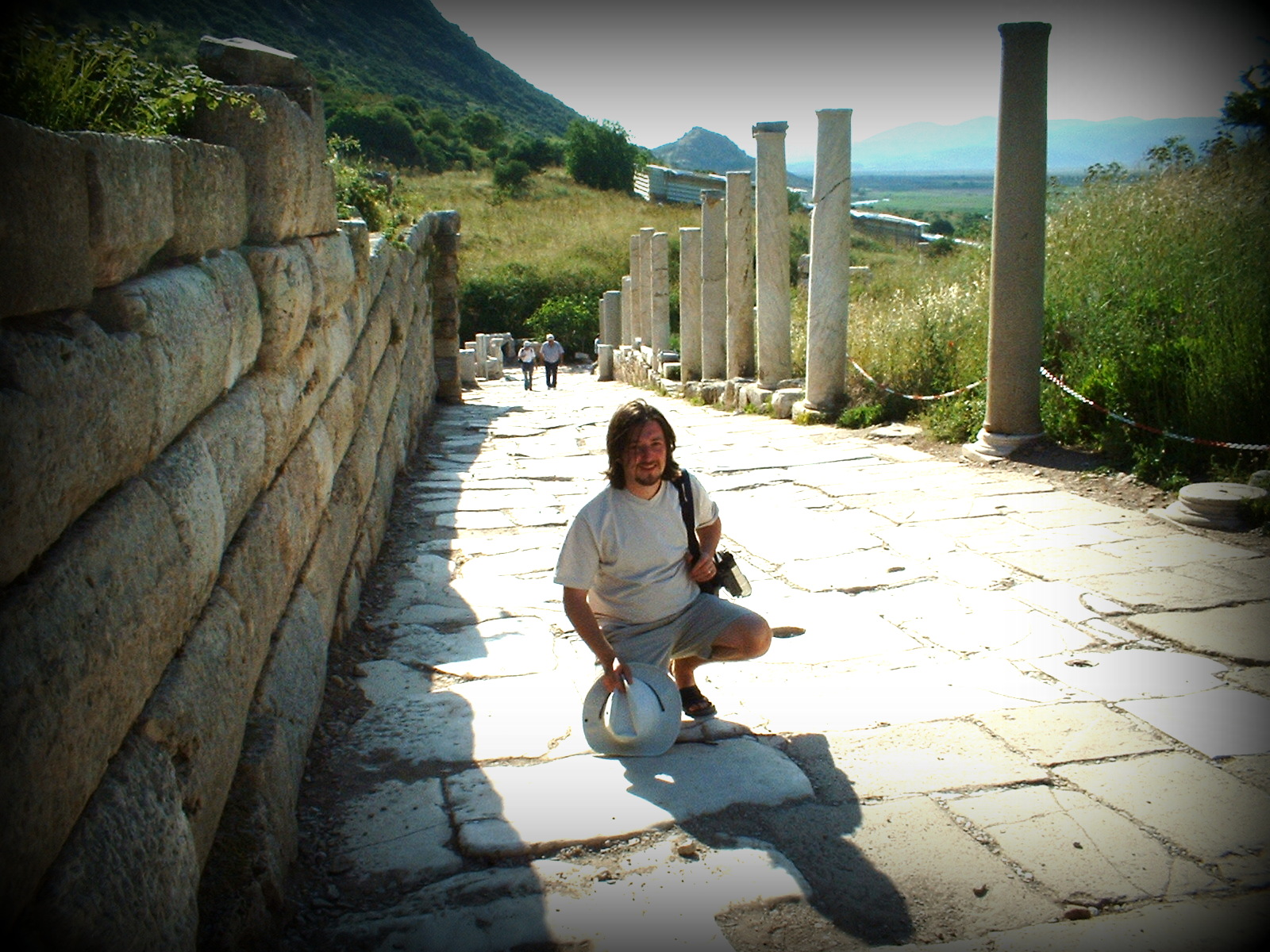
Simon Peter Sutherland at Ephesus
© 2004/2013 Simon Peter Sutherland
In John Rylands Library, Manchester UK, we have the oldest fragment of the New Testament to date. During an age of critical modern scholarship and its heavy critique of Biblical texts, we have a great testimony in direct contrast to many critical claims of modern textual scholars.
Many claim that the New Testament accounts were written much later than they actually were, and when I see this fragment as I do on a regular basis, its surviving words never cease to amaze me. They are a pure testimony to the reality of the absolute identity of Jesus Christ, son of God, who was and is, and is to come, “The Truth”. Not ‘A’ truth, but ‘The’ Truth.
The Greek fragment, of John 18: 31-33, on the recto reads as follows;
“the Jews, “For us it is not permitted to kill
anyone,” so that the word of Jesus might be fulfilled, which he
spoke signifying what kind of death he was going to
to die. Entered therefore again into the Praeto-
rium Pilate and summoned Jesus
and he said to him, “Thou art king of the
Jews?”
The Greek fragment of John 18: 37-38, on the verso reads as follows,
“a King I am. For this I have been born
and (for this) I have come into the world so that I would
testify to the truth. Everyone who is of the truth
hears of me my voice.” Said to him
Pilate, “What is truth?” and this
having said, again he went out unto the Jews
and said to them, “I find not one
fault in him.”
Is it not amazing that the oldest fragment in the world of the New Testament, dated possibly earlier than 100 AD and no later than 150 AD, speaks of such a great testimony to the word of God? Jesus said, “Heaven and earth shall pass away, but my words shall not pass away.” Matthew 24: 35.
This is certainly true.
On reading old books and Bibles
Posted by simon peter sutherland in Christianity, The Bible on January 17, 2013
 Old bibles truly bless me, they are so full of age and character and records of past lives. Many old Bibles contain much hand written history of times gone by, where people have lived and died, loved and lost and lives have been changed by the scriptures and their brief histories written down within the old pages.
Old books and history can help us reflect upon our own mortality, indeed it helps me and forever reminds me that one day all of us will die. Each of us will lose our earthly lives but for those who belong to Jesus, each of us will win a much better one. This is not morbid in my eyes, but a demonstration of true glory. For the true Christian who departs this life, will be within a life that has no end.
Thomas a Kempis, an early author who wrote one very old book named, ‘The Imitation of Christ’ said, “Very quickly there will be an end of thee here, look what will become of thee in another world. To-day a man is here; to-morrow he hath disappeared” (Book 1. Chapter 23) Such a touching verse, and one worthy of the memory. No one knows the hour when we will depart this life for our venture into the next, be it heaven or hell?
So next time you see an old book, or see a grave, remember that one day, you will be history, you will go the same way. And if you have ever seen a man die, remember that you must pass the same way. Therefore, think upon these things daily and remember yourself, that you may be remembered.
William Tyndales “Congregation”
Posted by simon peter sutherland in Bible translation, The Bible on January 16, 2013
“Thou art Peter and upon this rock will I build my congregation” Matthew 16: 18. Coverdale Bible. 1537
Matthew 16: 18 as translated in most Bibles is an over literal reading. Willaim Tyndale in his 1526 New Testament used the word ‘Congregation‘ in translation of of the Greek “Ekklesia“.
It is this exact term which is likely that Myles Coverdale employed this word and translation from Tyndale. The Greek ‘ekklēsia‘ holds the meaning of ‘assembly‘ and it is likely that Tyndale translated this word correctly, even more so than many other translations.
This wording is not contained in many translations, but it is in the Tyndale NT, The Coverdale Bible and the Bishops Bible.
Even in such texts as Revelation 2: 9, where the Greek ‘sunagoge‘ is used, Tyndale employs the same word ‘Congregation‘. Which no doubt has many complications for the established ‘Church’. For, in Tyndales understanding, the congregation is the Church and her leadership and not the established order of the Clergy or Kings.
Is there any wonder why the established ‘state’ church burned his translation?
The doctrine of ‘Double Predestination’ condemned “anathema” @ The Council of Orange
Posted by simon peter sutherland in Christianity, The Bible, Theology on January 15, 2013
 Research through the ancient creeds of Christendom from the first few centuries of the Christian Church always proves interesting.
I have long held to some early church statements concerning my personal faith and regard many of them as very Biblical and foundational.
Some early church creeds are not like the more modern creeds such as the “Synod at Dort” and the “Westminister confession of faith” which go beyond the foundations of the faith and into varying debatable and maybe even none essential doctrines.
However, much of what I find in these early creeds of Christendom are totally contrary to the many doctrines found in the church today, including a popular and growing doctrine which is logically connected to the hardcore Calvinistic doctrine of “Double Predestination”.
The Council of Orange dating to 529 AD says the following; “We not only do not believe that any are foreordained to evil by the power of God, but even state with utter abhorrennce that if there are those who want to believe so evil a thing, they are anathema” (The Council of Orange. Conlclusion. 529 AD)
The problem today is that many young Theologians who are influenced by the revival of Puritan books such as Owens “Death of Death” and some Calvinistic/reformed doctrinal books, are embracing doctrines which are not quite right, yet sound right when connected to other doctrines and certain passages of scripture.
Thus, in my posting this text, I would like to add that if any of my readers or your friends and fellow Christians hold to this doctrine condemned at Orange then you would be wise to re-think yourself. As written in scripture; “Take heed unto thyself and unto doctrine; for in doing this thou shalt both save thyself and them that hear thee” 1 Timothy 4: 16
-
You are currently browsing the archives for the The Bible category.
Simon Peter Sutherland
-

 Simon Peter Sutherland