Archive for category Christianity
The gospel of Mary, Papyrus 463 at John Rylands Library
Posted by simon peter sutherland in Christianity, The Bible on July 27, 2012

One of only two Greek fragments of the hugely controversial and so-called ‘Gospel of Mary’ is now on display at Rylands Library, Manchester.
The manuscript itself dates back to the 3rd century AD and is Gnostic in its content and the content is believed by some to have been written by Mary of Magdela. But this is highly improbable since the book itself was most likely composed during the late 2nd century AD, however the manuscript is on display with ancient Mummy portraits and Papyri which is part of an exhibition that is said to be both rare and “ground-breaking”.
The Faces and Voices exhibition is at John Rylands Library, Deansgate, Manchester and is on now until 25 November 2012, so I will no doubt be posting thoughts about the exhibition and the contents during that period.
Two ancient documents and the Shroud of Turin?
Posted by simon peter sutherland in Christianity, The Shroud of Turin on April 25, 2012
 Amongst the vast amount of ancient and early Christian writings from the 1st – 4th centuries, we find large amounts of forgotten books and somewhat un-researched material, all of which give us glues and further insights into the ancient mind and the times in which Jesus and the apostles lived.
Our understanding of the era in which the New Testament was written is growing by the day and our knowledge of the historical reality of the New Testament is unearthed continually.
Some of this knowledge and insight is hugely controversial and what is discovered is so often contrary to what is commonly called knowledge.
The historical theologian likes to see things, to touch the historical artefact, the ancient coin, the fragment of pottery, the ancient nail, the writing upon the ancient temple wall. We want every bit of information we can find. We seek to discover every last word written on every ancient fragment of papyrus and every ancient tablet of stone and document.
One document which has interested me recently is my observation within two ancient texts dating around the 2nd century AD and their referrences to the burial cloth of Christ.
One of these documents is from a text known as “The gospel according to the Hebrews“. The passage which contains a Shroud referrence reads concerning a Gospel which Origen used and records an event concerning Jesus who after His resurrection took His burial cloth to the servant of the [High] Priest, who is named in John 18: 10-11 as Malchus and referred to in Matthew 26: 51, Mark 14: 47, Luke 22: 51 as the man to whom Jesus healed his ear, after it had been cut off by Peter in Gethsemane.
According to the Gospel of the Hebrews, Jesus gave Malchus the Shroud after Jesus’ resurrection.
The text reads follows;
“But when the Lord had given the linen cloth to the servant of the priest, He went and appeared to James”
The Gospel according to the Hebrews. (Found in Jerome, Illustrious men, 2 & Lost Scriptures, Ehrman, Page 16)
Could this text be a referrence to the Shroud of Turin?
The second historical text is from what is called “The Hymn of the pearl”. This text is said to have been written by the apostle Thomas himself and is somewhat mysterious and less direct, maybe even poetical, but nevertheless, a referrence. This work is referred to in the third century Acts of Thomas and the work itself is generally agreed to date to the 2nd century AD.
The text reads as follows;
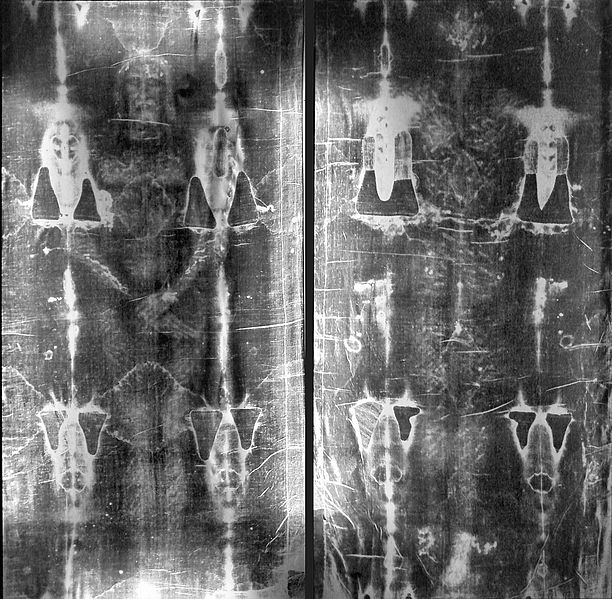 “But, when suddenly I saw my garment reflected as in a mirror, I preceived in it my whole self as well and through it I knew and saw myself. For though we originated from the one and the same we were partially divided, then again we were one, with a single form. The treasurers too who had brought the garment I saw as two beings, but there existed a single form in both, One royal symbol consisting of two halves…And the image of the King of Kings was all over it”
(The Hymn of the Pearl. 76-80, 86. 2nd century AD)
The question is, are these texts historical and very early referrences to the Shroud of Turin?
Pontius Pilate coin found on the Shroud of Turin
Posted by simon peter sutherland in Biblical archaeology, Christianity, The Bible, The Shroud of Turin on April 24, 2012
 Whatever one might think concerning the Shroud of Turin, few can deny that it is one of the most fascinating and controversial relics in Christianity.
Its origin and authenticity has been a topic of debate for centuries. We even find John Calvin debating the Shroud of Turin in the 16th century.
Today however, it is a very common to dismiss the Shroud of Turin as a proven fake, since many say that Carbon Dating has proven the Shroud cannot be the burial cloth of Christ? The problem is however, that the Carbon dating is simply not consistent with what we know about the Shroud. The carbon dating simply contradicts the overwhelming evidence found upon the Shroud which dates the cloth to 1st century Israel.
Thus, there is a vast amount of evidence found upon the Shroud that more than suggest that the cloth is from 1st century Jerusalem. The evidence itself all of which has been found upon the Shroud absolutely contradicts the carbon dating and thus puts the dating results seriously in question and when the fact becomes known that the area from which the sample of the Shroud was taken and used for the carbon dating process had been handled consistently since the 16th century, then the accuracy of the carbon dating results becomes even more seriously in question.
The problem is that there are many finds upon the Shroud of Turin which clearly date or link the burial cloth to 1st century Israel and Jerusalem combined.
These finds include Pollen and dirt from Jerusalem, Roman Flagrum and Crucifixion wounds upon the body, burial consistency with Jewish custom, fibers, blood, 1st century stitching etc which experts have all found upon the Shroud of Turin.
While these finds and are commonly known, what is less commonly known about the Shroud of Turin is that recent finds have shown that the man on the Shroud has coins upon his eyes.
Researchers Dr Robert Bucklin and Professor Alan Whanger, have 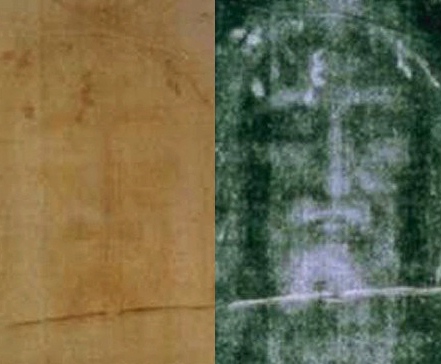 pointed out that there are round coin like objects placed over the corner of the eyes of the man on the Shroud. The coin upon the left eye is clearly visible and when the image of the Shroud is enlarged, the image reveals that one of the coins is in fact what is known as a Pontius Pilate Lepton.
These coins are only small and are almost 2000 years old and the coin seen on the left eye of the man were minted in Jerusalem in AD 30 by Pontius Pilate. These coins also confirm Pilate as Prefect, and this complies with the Biblical account that Jesus was condemned under Pontius Pilate.
It is also worth noting that it is said that it was a Jewish custom to place small coins over the eyes of a dead body to keep the eyelids closed.
Thus, the Pontius Pilate coin found upon the eyes of the man on the Shroud is an astounding find and one that cannot be ignored and not only does the Pontius Pilate coin directly link the Shroud of Turin to 1st century Jerusalem, but the coins reveal that the image was formed when the man on the Shroud was lying down. Otherwise the coins could not remain upon the dead man.
The coins found on the Shroud are consistent with the coins produced by Pilate in AD 30.
Details of the Pontius Pilate coin is as follows:
* Coin: Prutah
* Minted: Jerusalem ~ AD 30
* Identification: “Liz”
Whatever the conlusions are to this find, it cannot be rightly denied that the Shroud of Turin contains images of Poltius Pilate coins over the left eye of the man on the Shroud and no one can deny that few, had knowledge of these coins until more recent days.
The fact remains that these coins change a great deal of what we know about the Shroud of Turin and the question remains, is this the face of Jesus?
Is the Shroud evidence for the resurrection of Jesus?
Could the Shroud of Turin truly be the burial cloth of Jesus?
What makes the Apostles Creed so special?
Posted by simon peter sutherland in Christianity, Theology on February 17, 2012
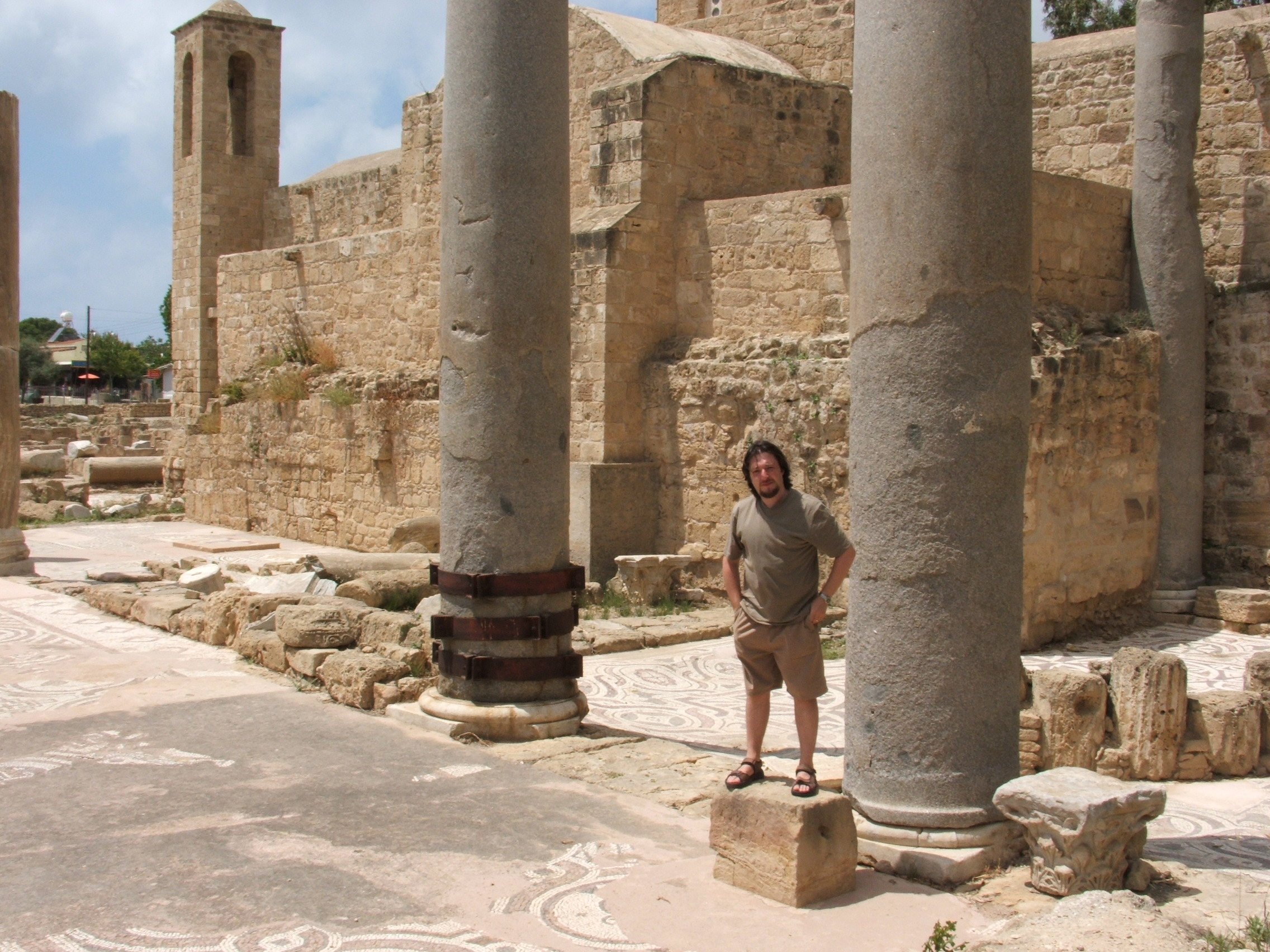 I hold to the Apostles Creed. Not to the point where I would re-interpret scripture to fit with the creed, but that I think the creed agrees with scripture.
It is said that the Apostles Creed was written by each member of the 12 Apostles, excluding Judas but including Matthias? The creed would read as follows:
1. Peter. “I believe in God the Father Almighty”
2. John. “Maker of heave and earth”
3. James. “And in Jesus Christ His only son”
4. Andrew. “Who was conceived by the Holy Ghost, born of the Virgin Mary”
5. Philip. “Suffered under Pontius Pilate, was crucified, dead and buried”
6. Thomas. “He descended into hell, the third day He rose again from the dead”
7. Bartholomew. “He ascended into heaven, sitteth at the right hand of God the Father Almighty”
8. Matthew. “From thence He shall come to judge the quick and the dead”
9. James, the son of Alpheus. “I believe in the Holy Ghost, the Holy Church”
10. Simon the Zealot. “The Communion of the saints, the forgiveness of sins”
11. Jude, the brother of James. “The resurrection of the body”
12. Matthias. “Life everlasting. Amen”
What I admire about the Apostles creed is firstly that it is very old, not that that is anything to go by for many heresies are very old, but that the Apostles Creed is distinctly an early church document. It is not modernized or over indulgent in varying doctrines addressing issues of their day, on the contrary, the Creed addresses issues which are yet to come, so in fact the creed is very modern. It has an almost timeless feel to the creed and even sounds up-to-date when read today. But more than all of that, the creed is all about Jesus and what He has done. Something that so many creeds and statements of faith are not centralized upon.
I understand the issues with the Apostles Creed and the arguments which are propagated against its authenticity, but aside from that, it is the content which is more important than the author or authors. As with Theologica Germanica, which was written by an anonymous author and admired by Luther but rejected by Calvin. My point being that a work must be judged by the truth and not merely by the author.
Thus, the creed begins with God and moves to creation and concludes with re-creation in the resurrection of Christ and the resurrection of all people from the dead. This resurrection will occur when Jesus returns and the end of time begins.
Let us look for a brief moment at 12 sections of this creed.
1) “I believe in God the Father Almighty”
2) “Maker of heaven and earth”
3) “And in Jesus Christ His only Son our Lord”
4) “Who was conceived by the Holy Ghost, born of the Virgin Mary”
5) “Suffered under Pontius Pilate, was crucified, dead, and buried”
6) “He descended into hell, the third day He rose again from the dead”
7) “He ascended into heaven, sitteth on the right hand of God the Father Almighty”
8) “From thence He shall come to judge the quick and the dead.”
9) “I believe in the Holy Ghost”
10) “The holy ‘Universal’ Church, the Communion of Saints”
11) “The Forgiveness of sins”
12) “The Resurrection of the body, and the Life everlasting.”
“Amen.”
Note that the creed begins with “I believe”. This points to the creed being a very personal creed when spoken by the individual. The creed does not say “We believe” which can often cause believers to hide amongst fellow believers. Also, what I think makes the apostles creed so special and different to many creeds of Christendom is that this creed unites Christians and does not divide them. So many other creeds of Christendom promote divisive doctrines which are not essential to the Christian faith, but are subject to interpretation. But what I love about the Apostles Creed is that if a room were to be graced with the presence of 12 true Christians they would all no doubt agree with all but point 6. However, I would agree with the creed on point 6 and have given my reasons why in an article published on my enjoyingtheology website.
Cut and paste this link to read the article: http://www.enjoyingtheology.com/Descentofchrist.html
But I suppose the thing which makes the Apostles creed so distinct and excellent, is that it binds together and does not destroy. And most of all, it is about Jesus and what He has done for us.
Martin Luther and the Christmas tree
Posted by simon peter sutherland in Christianity, Christmas on December 13, 2011

Christmas tree light © 2016 Simon Peter Sutherland
Christians are divided over issues concerning the Christmas tree. Many regard the tree as part of a pagan celebration and not Christian.
Some Christians also claim that Jeremiah 10: 1-10 speaks against the Christmas tree? But I doubt that the text is speaking of anything like that, for the context of Jeremiah’s passage speaks more against the idol worship that then existed and cannot rightly be connected to a mere celebration of Christmas which did not begin until many centuries later.
There is a 16th or a 17th century claim made by the early Lutheran church that the Protestant reformer Martin Luther was the first one to come up with the idea of having a Christmas tree in the home.
The story goes like this; Luther was one day in the woods and he saw the trees amongst the snow and thought it would be a good idea to cut down a tree and put candles on it to remind people of Christ’s birth?
The story itself has no actual historical evidence to support it, but really, I don’t see what evidence a person can find for such a claim. What would it matter anyway?
I think what I personally see from the Christmas tree is a reminder of Christ, who is the light of the world, crucified on a tree (1 Peter 2: 24) and that all His people who are crucified with Him and have died to self and are the light of the world (Matthew 5: 14)
That is what I see when I look at the Christmas tree, just a simple reminder of what Christians should be and a simple reminder of Christ who died for us.
70 ancient Messianic books found in Jordan
Posted by simon peter sutherland in Biblical archaeology, Christianity, The Bible on December 13, 2011
Earlier this year we read about one of the most important finds since the Dead Sea Scrolls and in Christian history, this find is said to have been discovered in Israel. 70 ancient Christian books written on metal and bound with wire are said to contain some outstanding writings and images concerning Jesus Christ, The Messiah, including an image of may be the earliest image of Christ, and of a T shaped cross, and an empty tomb and a crucifixion which took place outside the city walls of ancient Jerusalem.
If these books are authentic, then we are looking at what may well be the earliest works from the time of the apostles.
We are still awaiting updates for this account, but let us see what 2012 brings?
Click the link to find out more:
Jerusalem: The making of a Holy City – BBC Four – A critique
Posted by simon peter sutherland in Christianity, Issues with Christianity in England today, The Bible on December 9, 2011
 On Thurday 8th December 2011, BBC Four aired a documentary “Jerusalem: The making of a Holy City” 1. Wellspring of holiness.
In this documentary, author and historian Simon Sebag Montefiore offered a chronological history of Jerusalem beginning with the Canaanites, moving through to the life of Jesus and the destruction of Jerusalem in AD 70 and concluding at the 7th century AD.
Despite the obvious conclusion that these documentaries are well produced and present splendid location footage, the problem I find with so many documentaries such as this is that the presenters often refer to selective scholars and archaeologists such as the likes of ‘Israel Finkelstein and so often offer no contrasting objection to ‘Finkelstein’ and his claims concerning King David and the historical accuracy of the Old Testament. I often find that the claims made in documentaries such as this leave the learned mind wondering, “Where on earth did he get that conclusion from?”
One of the main problems I found with this documentary, for all its research and location footage, it apparently lacked in a major way concerning details of the life of Jesus.
For example, at around 40 minutes into the documentary, the life of Jesus came into the script and the presenter claimed that Jesus never said He was the Messiah. I found this to be deeply problematic since Mark 14: 61-62 records that when Jesus was asked by Caiaphas the High Priest if He was the Messiah/Christ, Jesus replied, “I am” (Mark 14: 61-62)
Thus, the claim that Jesus never said He was the Messiah which can be found at; 41 minutes, 1-22 seconds, is a distinct error and one that makes me wonder if these types of documentaries are very honest with themselves?
Likewise, the author also appeared to deny the Virgin birth when he claimed that Joseph was Jesus’ father. This can be found at; 40 minutes, 1-20 seconds, which is contrary to the synoptic gospels, which makes me wonder, what Jesus is being presented here? And what source is being followed?
It don’t want to appear over critical here, but claims such as these only fuel wrong concepts into the minds of the viewing public who’s knowledge and reading of the Bible is already in decline.
I often suspect that so many documentaries which are aired on screen today are more concerned with a political agenda rather than truth and textual knowledge of source material. But whatever the agenda and whatever the source, it certainly is not entirely authentic nor does it offer any absolute integrity towards the cannonical gospels.
Simon Peter Sutherland (B.Th, Th. M)
The star of Bethlehem: The Star and the glory
Posted by simon peter sutherland in Christianity, The Bible, Theology on November 26, 2011
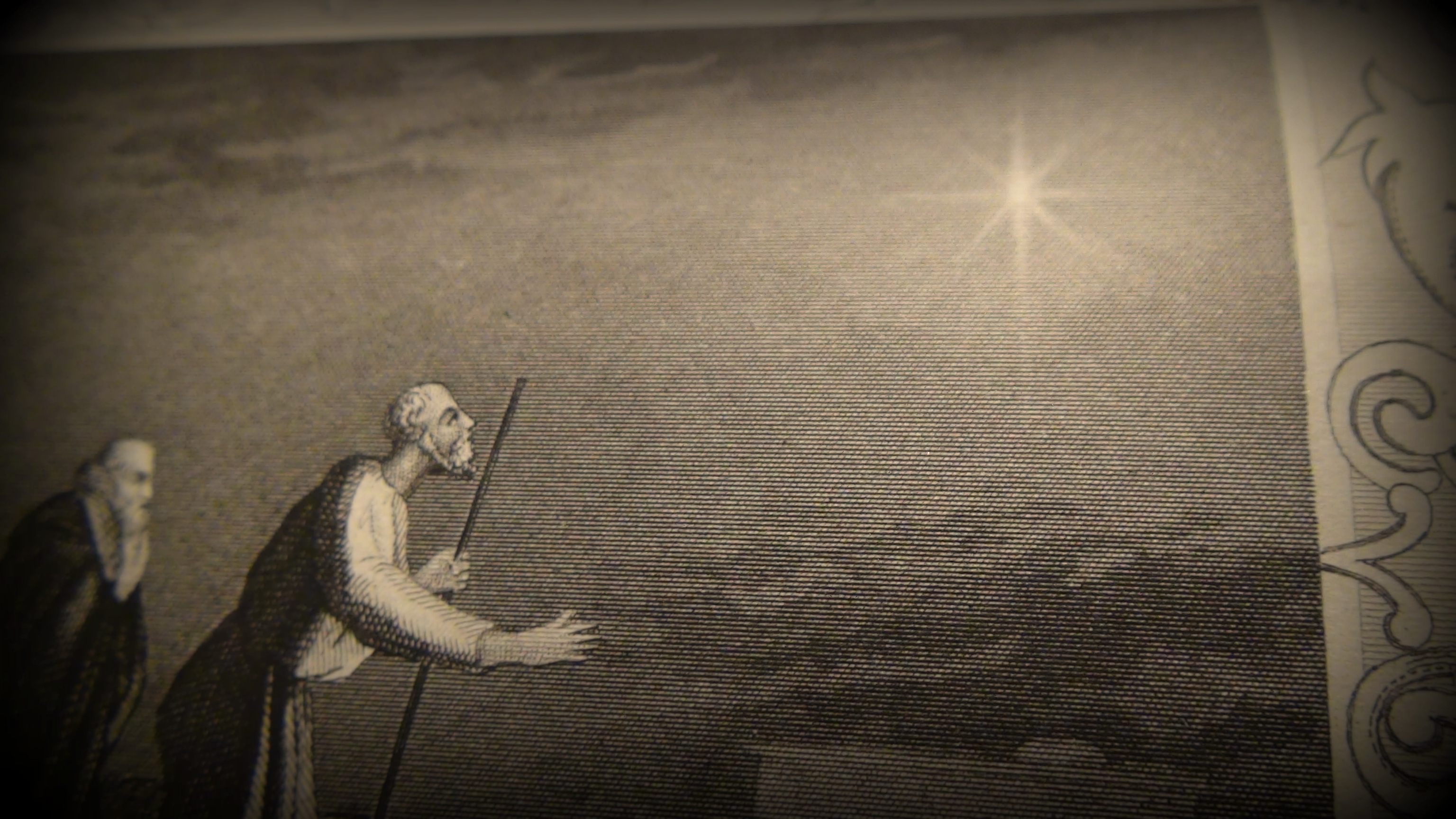
The wise men and the star over Bethlehem © 2016 Simon Peter Sutherland
“The people who walked in darkness have seen a great light” Isaiah 9: 2
One thing that strikes me about what is commonly called, ‘the Nativity story’ is how much of it is so often only recalled or referred to at Christmas time. Yet the above text demonstrates that the coming of Jesus and His incarnate birth is the light and life of all Christians for all seasons and times of the year. That charity towards man and the celebration of the birth of the incarnate Jesus should continue throughout the life of the Christian, not only at Christmas.
In the classic 1951 Alistair Sim version of ‘A Christmas Carol’ the so-called spirit of Christmas present when referring to the child born in Bethlehem makes a profound statement that, “He (Jesus) does not live in men’s hearts only one day of the year, but in all the days of the year”. Clearly this cannot be said of those outside of Christ but of those who are In Christ, the body whom is the Church. But this great light would as soon be put out by worldly hands as swiftly as it were revealed by heavenly hands. This is stated in the gospels. Herod when he gave out the command to slaughter all the children in Bethlehem (Matthew 2: 16) sought to put out the great light because he was not of the light. And many more would continue to do the same thing and put out the light of the gospel and let the darkness rule.
The given Isaiah text states that those “who walked in darkness have seen a great light”. Jesus being the light of the world cannot be denied as to whom the text is referring. Jesus is the light that shines in the darkness and those whom the Lord chooses to reveal His light to, can see the light. Those whom He chooses not to acknowledge, cannot see the light.
The familiar text states that ‘the wise men’ who came from the East saw a star in the East and came to Judea because they knew the meaning of the prophetic scriptures that would have included Micah 5: 2 (Matthew 2: 6) and maybe other texts that are no longer available to us? They knew that once this sign of the star appeared in the heavens, then the Messiah was soon to be born.
ASTROLOGERS OR PRIESTS?
Many believe the wise men to have been ‘Magi’ which could mean ‘astrologers’, but such views only present one side of the coin, for, astrology is not the only meaning being the word ‘Magi’ but the word is also an ancient word for ‘wisdom’. In other words the term ‘wise men’ literally means ‘they were wise’ and clearly this wisdom came from God. The translators are correct when they translate the Greek ‘Magi’ as ‘Wise men’. Solomon was a wise man, and full of Godly wisdom. Thus, it could have been that the wise men were indeed ‘Wise men’ in other words ‘Priests’ who knew the Word of God and the correct interpretation of His word. Thus, they clearly knew the Lord and must have been drawn to Christ by the father, for Jesus said, “No one can come to me unless the father draws him” this was the case with the Magi, who were drawn by the father and guided by His light unto the baby Christ.
But, what actually was this light? Was it a star? A sign? An angel? Was it the glory of the Lord? Or was it more than one?
Well, before I get to my points, permit me to make a few distinctions first. Now then, if we were to review the scriptures through un-regenerate eyes, we would not be able to believe in the Virgin Birth or the miracles that surrounded Jesus’ birth. This is why so many deny and reject the virgin birth, because they do not know Christ, and have a false god in their heads who is not capable of doing such a thing and therefore has no Glory. But we who have seen the light believe it and know how wonderful and powerful the Lord really is. It is a mere plaything for Him to create the world in the beginning and to re-create the world at the incarnation of Christ, and if there was no virgin birth then the truth is erased and Christ is not Christ and the glory of God is removed. But we know that such is not possible, and yet sadly all too often we the church are often guilty of removing the glory of God and replacing it with our own sad opinions and objective arguments. The star of Bethlehem is such an example of how Christendom does not give glory to God and is not very well understood by modern scholars and ministers and Christians alike. Many merely look at the star of Bethlehem as an actual star and although there is evidence for an actual star over in the East around 7BC, the actual reality of Matthews narrative has become somewhat shrouded in myth and Christmas card images.
Now then, since the rise of the modern scholarship movement in the 17th century we have read and heard many claims in relation to the truth of scripture and many denials of plain Biblical truth due to over emphasis on intellectual reasoning by many who clearly do not have Christ within them but have more imagination than Godliness? Many modern scholars over emphasise intellectual explaination of certain Biblical statements when they search through astrology and the history of the stars of 2000 years ago, when they need not search the sky if only they were permitted to see the glory of the Lord and interpret certain passages correctly, which is not often the case. But, since many may not be permitted to see His glory, the problem sits within the lap of the church when ministers and commentators embrace the views and opinions of the unregenerate regarding matters of Biblical truth. The fact that historical commentators within Christendom have always believed that the star of Bethlehem was not an actual star, but rather an angel or
the Glory of the Lord is clear evidence of how modern scholarship has crept into the church and the ideas of the reprobate have been embraced by too many Christians.
It is only since the rise and influence of the modern scholarship movement that many have embraced the view that the Old Testament prophecies and the synoptic nativity texts are communicating an actual star appeared over Bethlehem, and many do not even question these claims?
TWO OBJECTIONS
Now, evidence contrary the many claims of modern scholarship regarding the star of Bethlehem can be found within the text of the New Testament and the Old Testament. And speaking within the context of the Synoptic gospels there are far too many details given to us by Matthew that do not match up with the idea that the light over Bethlehem at the birth of Jesus was an actual star in the heavens.
The following contains some points and objections to the star theory:
1. An actual star is much too large to direct anyone to a house and then rest over that place as described to us in Matthew 2: 9.
2. Why did the star that the wise men saw in the East suddenly seem to re-appear in Israel? (Matthew 2: 9)
Regarding objection 2 many think the star followed the Wise men from the East, but it did not. It only re-appeared when the wise men set off from Herod’s palace unto Bethlehem. Thus, the light they saw when heading from Jerusalem to Bethlehem was only in appearance like that of which they saw in the East, but in actual fact both of them may have been the same light, but it could be that the light they saw in the East was a star, but what they saw in Judea was not a star but rather an angel arrayed with the Glory of the Lord.
Regarding objection 1, permit me to state that a star does not go before people as a guide which could guide them to a house. A star is much too large to do that, and would merely stay in the night sky and appear to be over a massive area and not a tiny town such as ancient Bethlehem. However, there is a clear and more Biblical understanding and one that fits the context and the meaning with more clarity and truth. This understanding is to be found in an angelic appearance which was arrayed with the glory of the Lord. This is a far more Biblically accurate statement that angels arrayed with the glory of the Lord do guide the Lords people throughout the scriptures. Remember when the Children of Israel were guided out of Egypt into the promise land. That was Christ, who guided them. Remember when Paul met with a great light on the road to Damascus, well that light was Christ (Acts 9: 1-7).
Thus, it is more accurate to suggest that the light that guided the Magi to the baby Christ was like that of the light which went before the children of Israel to guide them out of slavery and into the promise land (Exodus 13: 21) But do I say this without Biblical evidence? No, for the entire life of Moses speaks wonders of typological referrences to the life of Christ.
TEN CHRISTOLOGICAL TYPES IN THE LIFE OF MOSES
The following Biblical evidence demonstrates the life of Moses as a type of the life of Christ, far too distinct to deny, unless you are a hyper critical sceptic? Here are 10 interesting types for the life of Christ being seen as typology within the life of Moses.
1. Moses was born an Israelite. Christ was born an Israelite.
2. The King of Egypt felt his kingdom threatened by the large number of Israelites and so ordered all new-born male children to be killed. (Exodus 1: 8-22). Moses’ however was not killed but was hidden in Egypt in an ark in the river. (Exodus 2: 1-3). King Herod also felt his kingdom threatened by the birth of the messiah, and so ordered all the new-born male children to be slaughtered. Christ however was not killed but was hidden in Egypt. (Matthew 2: 1-18).
3. Moses had a mother but no mention of an earthly father, he was adopted by Pharaohs daughter. (Exodus 2: 10). Christ had a mother but no earthly father, He was adopted by Joseph. (Matthew 1: 19-21).
4. Scripture tells us very little about the childhood of Moses. Scripture tells us very little about the childhood of Christ.
5. The Israelites were in slavery to the labour of Pharaoh and Moses delivered them out of the hand of slavery. The children of God were in slavery to sin and death, Christ delivered them out of the hand of both.
Pharaoh sought to kill Moses. (Exodus 2: 15). The Jewish priests sought to kill Christ.
6. Moses walked with the Israelites through the waters of the Red sea to get to the promise land. Christ walked with the nations through the waters of baptism to get to the promised land of salvation.
7. Moses was appointed to die before his people arrived at the promise land. (Deuteronomy 34: 5). Christ was appointed to die before His people arrived at the promised salvation.
8. Michael the archangel disputed with Satan over the body of Moses. (Jude verse 9). Joseph of Arimathea disputed with Pilate over the body of Jesus. (John 19: 38).
9. The body of Moses was buried and no one has ever found his body for he was buried by God. (Deuteronomy 34: 5-6). The body of Jesus was laid in a tomb and no one has ever found His body for He ascended into heaven.
10. Moses appeared alive again after his death on the mount of transfiguration with Christ. Christ appeared alive again after his death and resurrection with His disciples.
Thus it is clear that the life of Moses testifies to the very life of Christ, and that of His incarnate birth. So we can connect the two events and say that what the wise men saw was not a planet but the Lord Himself who is the light of the world, guiding them into the promise land of salvation. For, “The people who walked in darkness have seen a great light” Isaiah 9: 2. Thus, we could claim that the light was in fact an angel of the Lord or the light was the Lord Himself.
It is clear either way that what the text is attempting to communicate is that the star was a great light that merely stood way up in the sky over the area where the house was, and since even the lowest appearance of a star would cover a wide area and not a single house, let us not claim that the scriptures present unreal tales of fantasy and not reality. The actual reality of the text cannot be presenting a case for a literal astrological star over the sky of Bethlehem, but an angelic manifestation arrayed with the glory of the Lord.
I repeat my objection once again when I point out that what the wise men saw in the east suddenly vanished and then re-appeared in Judea when the wise men were nearing Bethlehem and this fact is made clear in Matthew 2: 9,
“And behold the star that they had seen in the east went before them”
In other words if they had seen the star guiding them from the moment they first saw the light in the east until their journey was completed by their arrival in Judea, why then does Matthew employ the term “And behold”? The text implies that they had seen His star in the East, but have not seen it again until it re-appeared in Judea when the neared Bethlehem. Thus, if the star was a literal star in the heavens which remained in clear view, then why did Herod or other people not see it and come to the place where Christ was, for such a supernova would be visible to all of Judea. A proper reading of Matthew 2: 2 reveals this truth so clearly.
BUT WHAT DOES IT SAY IN THE GREEK?
No doubt many will add the question: “What does it say in the Greek?” or “Of what importance is this to us is it anyway, if it was a star then so be it, but if not, what matter is it? When what really matters is that Christ was born” Well yes that is true, but we are missing something that is vital and important and that is the ‘Glory of God’. For it is clear that what really appeared was the Glory of the Lord, that “shone round about them” (Luke 2: 9) Thus, in order to get to the glory, let us look further into this and see what we can find within Greek text of the gospel of Matthew.
Firstly the Greek ‘Aster’ translated star can be taken literally or figuratively and means a strown over the sky. It need not be taken as a literal star but as a Christ type light of the world. Christ said, “I am the light of the world and he who follows me shall not walk in darkness, but have the light of life” (John 8: 12) and if you compare this to Matthew 2: 9 and Isaiah 9: 2 the similarities can be staggering. It is clear that the light is of Christ and He has made Himself known to His people. In Revelation 22: 16 Christ is referred to as “the bright and morning star”. Thus, Christ is not a literal star and the prophetic text “a star shall come out of Jacob” Numbers 24: 17 confirms the connection, since the Hebrew of this text can be used figuratively of a prince or a blazing light and in this light we can connect it absolutely to Christ for in Isaiah 9: 6 He is referred to as “Prince of peace“. Thus, the true meaning of the star or light over Bethlehem is nothing to do with star gazing or astrology but is all about either an angel of Christ guiding the Lords people to the promise salvation being arrayed with the glory of Christ or the text is communicating that the light was the Lord Himself? We cannot be sure, but what we can be sure of is that the light was the light of the Lords glory which was shinning like the sun and full of power and beauty and spendour. Just as it was with the shepherds when “The glory of the Lord shone round about them“ Luke 2: 9 so it was when the Magi were guided by the Lord to the baby Jesus, the glory of the Lord shone in the heavens. How wonderful is that?
CONCLUSION
So then, in conclusion to this I would like to add that this article is not written for controversy or to argue that I am right and so many are wrong, it is not anything like that, I have written this article for the glory of God. For, if we do not give the Lord glory and deny His glory a place in our understandings and ideas, then we are wrong. For we are His people and we seek His glory. And if we embrace the ideas and views of those who are scholars of the Bible yet have not the Holy Spirit living within them, then we lose the Glory of Christ and miss the whole point of this given text. Sure, His creation speaks of His glory and the stars in the heavens are part of that, but I am certain that this is not what the text is communicating. The text is all about the glory of Christ.
So then, In conclusion I would like to add the following word that, you who belong to Christ are the light of the world. You are His people, so “let your light shine before men, so that they may see your good works and glorify your father in heaven” (Matthew 5: 16) for, all the children of God, are truly the light of the world, as Jesus said, “You are the light of the world” (Matthew 5: 14).
Thus, in closing I would like to add with the warmest of love for the Lords people, a word of advice: Seek the Lord and follow His light. If you walk, follow His light. If you travel, follow His light. If you read scripture and desire to teach souls from His word, search for His glory and His light and spirit will guide you and then you will know His true peace and good will. As it is written, “Glory to God in the highest, and on earth peace, good will toward men.” Luke 2: 14
May the light of the Lord be with you always!
ADVOCACY by Alec Sutherland (1938-1999)
Posted by simon peter sutherland in Alec Sutherland (1938-1999), Christianity, Theology on November 24, 2011

Holy Bible © 2013 Simon Peter Sutherland
Today is the 12th anniversary of the death of my father, Alec Sutherland.
My father spent some periods of his life as a minister and preacher. Sometime ago I came upon some of his theological notes and writings. I transcribed all of these these writings and have now decided on the anniversary of his death to put his writings on the internet. This little article he wrote is called “Aduocy”.
Hope its a blessing
Simon Peter Sutherland
ADVOCACY
There are two sides to every truth
HEBREWS 8: 12, 10: 16-17
“Whenever the child of God draws near to the father on the ground of the blood, he is met with grace and no more remembrance is made of his sins. Remember, these are called the Elect. This has been confirmed by oath as well as promise, for God has sworn (Hebrews 6: 17).
So the true believer has this double assurance, absolute satisfaction has been made for sin, for all who have truly repented and believed in the Lord Jesus and has been born again of the Holy Spirit, and is in-dwelt of the same spirit. They therefore are dead to sin and dead to the Law; its curse has been met. It no longer has dominion over them. So there is no longer any condemnation to those who are IN CHRIST (Romans 8: 1). While Jesus assures that we shall not perish, and assures us that sin will not be laid to our charge, as to condemn us. We still need to confess and judge and put away sin. For while the judge will not condemn, the Father will not show us His favour if we grieve the Holy Spirit. Fellowship is broken, communion needs to be restored and parental forgiveness received for this is promised (1 John 1: 9). Justification and parental forgiveness, a judge cannot forgive, he must be satisfied if he is to acquit the offender. This has been done for every believer. The Earth having been satisfied in the cross of Christ, justifies freely all who believe in Jesus (Romans 3: 24). But a Father can forgive. The child who offends does not appear before a judge who must condemn, but before a loving father who forgives on true repentance and confession. Justification is once for all. Forgiveness as often as the need is felt.
We must make our election and calling sure, for if we are not true believers our sins are still on us. True believers rejoice in the Salvation and walk with Christ. Forward into every life of Christ, onward to completion in Him. Cherishing blessings and possessing them as promised according to his riches in Christ, “who satisfieth thy mouth with good things so that thy youth is renewed like the Eagles” Psalm 103: 5).
Alec Sutherland
1938-1999
Genesis 1: 27 and the new wave of gender-inclusive Bible translations
Posted by simon peter sutherland in Christianity, England issues, Theology on November 13, 2011

Bible trodden under foot © 2014 Simon Peter Sutherland
On November 10th 2011 I attended a lecture at Manchester Cathedral During this lecture John Parry made mention of gender-inclusive translations of the Bible and how he supports this idea.
This is not a new idea or a ‘new thing’ or exclusive to Mr Parry and his teachings, for many Christians today support new translations of the Bible which are re-worded to fit with gender-inclusive language.
However, for those who do not know what gender-inclusive language is within a Biblical translation context, it reveals itself as a modern scholarship idea created through the root of feminism and employed by some theologians and so-called Christians who seek to appeal to the modern world by arguing that God is neither male nor female?
I marvel that anyone can make this claim and believe in the God of the Bible. Yet, today there are a number of translations which have employed this use of language and no doubt many more will come. Concerning this issue, I see no need to move into a review or exploration of the many arguments which are used to support gender-inclusive language for Bible translations, for, it is an accepted Christian truth that the Bible is the Word of God, therefore, let us go to the Bible first and see if gender-inclusive language would translate the Bible correctly? Firstly, there is not a single passage in the Bible which claims that God is neither male nor female. If God were neither male nor female, He would therefore be sexless and the entire Bible and its revelation of God would be fundamentally different. He absolutely reveals Himself in scripture in a masculine context.
Genesis 1 contains the Biblical account of Gods creation of the universe and of the life of man and beast. Verse 27 of that chapter says this, “So God created man in his own image, in the image of God created He him; male and female created He them.” (KJV)
The New King James version translates this text a little clearer and reads as follows: “So God created man in His own image, in the image of God He created him, male and female He created them”. This text presents a clear case and absolute confirmation that the creation of Adam and the creation of Eve were not one and the same event. There were two events and not one single event and the text shows this.
The Biblical account claims that in the image of God, God created Adam and He created him male, thus God is male. The text makes this point very clear. That “in the image of God He created him, male and female He created them”. The text distinguishes the two points of the creation of Humans, that in the image of God, God created Adam first, that He created Him male, the text then adds that in the image of man God created woman. The text distinguishes this by saying that God created Adam first, the then moves to say, “male and female He created them”. The text is very clear on this. When the Bible says, “God created man in His own image” the Hebrew word employed in this passage is literally “Adam”. That is an important fundamental point to distinguish.
I would further argue that Genesis 2 acts as a kind of commentary or expounding of Genesis 1. I say this for a reason. Genesis 2: 7 reads as follows; “And the LORD God formed man of the dust of the ground, and breathed into his nostrils the breath of life; and man became a living soul.”
Thus, the creation of Eve does not fit the context of this verse and was thus was not created out of the dust of the ground, but from Adams rib. Adam was created out of the dust of the earth, not Eve. Thus, she was not created first and therefore, not created in the image of God, but of Adam.
Paul affirms this in 1 Timothy 2: 12-13 in his argument against female teachers within the Body of Christ and what could be seen as Paul writing against feminism? Paul says thus; “I do not permit a woman to teach, or to have authority over the man, but to be in silence.” Paul continues with this theme and gives his reason from out of the scriptures; “For Adam was first formed, then Eve.”
He then goes on to argue that “And Adam was not deceived, but the woman being deceived was in the transgression.” (1 Timothy 2: 14) Paul is clearly writing within an ancient context and also warning future generations that the modern feminist movement is directly in line with what happened back in Eden, that because of woman, men are denying Gods word in favour of the deception of satan.
Further evidence that God created woman after Adam can be found in Genesis 2:18. The text reads as follows; “And the LORD God said, It is not good that the man should be alone; I will make ‘him’ an help meet for ‘him”. This text confirms that the Genesis account is claiming that Adam was formed first.
Genesis 2:21-22 likewise reads; “And the LORD God caused a deep sleep to fall upon Adam, and he slept: and he took one of his ribs, and closed up the flesh instead thereof; And the rib, which the LORD God had taken from man, made he a woman, and brought her unto the man.”
The Bible is very clear that God created Adam first and Eve was created from Adam, no one can rightly argue against the fact that the Bible makes this claim and if any so-called Christian chooses to ignore this or hate that fact that both I and the Bible do say this, then I fail to see why you would call yourself a Christian, since you clearly do not believe what the Bible says?
Now a person could argue that God does not have gender, yet this claim also would be very weak and not in line with the entire Biblical text. God has always revealed Himself male, this can be consistently seen in throughout the Old and New Testaments. God appeared to Abraham as a male (Genesis 18) He appeared to Moses in a masculine way (Exodus 3) He is consistently named in scripture as “He”. Search the scriptures for yourself and see if it is not so?
Likewise, I would also point out a very Christian fundamental truth. That truth would be found in the birth, life, death and resurrection of Jesus Himself, who was born of a virgin, conceived by the Holy Spirit and live as a man and died as a man. If God is neither male nor female, then how do we account for Mary’s conception?
How do we account for Christ being a man? Is He is not the very image of God? Was He not conceived in a masculine way? How then can anyone argue that God is not male?
The answer my friend, is blowing in the wind, and I would plead with the church as did Paul when he warned us not to not be blown this way or that because of changing winds of doctrine, (Ephesians 4: 14).
I leave you once again with the text of Genesis 1: 27, “So God created man in his own image, in the image of God created He him; male and female created He them.” KJV
I ask every individual believer and Christian alike who reads this article, to look to Christ my brethren, bind yourself to Him and He will show you more clearly than I can, that He is who He is (Exodus 3: 14).
I would further add and plead with the Body of Christ that you must not deny the Word of God and forsake His testimony in favour of men and modern winds and an ever changing world. Be faithful to Him and His word and know His love and blessing which are given to those who love Him and keep His word (Exodus 20: 5-6) lest you make God angry and find yourself cast out of His garden and left to wonder through the world.
-
You are currently browsing the archives for the Christianity category.
Simon Peter Sutherland
-

 Simon Peter Sutherland