The 500th Anniversary of the Tyndale New Testament
Posted by simon peter sutherland in Church of England, The Bible on March 10, 2025
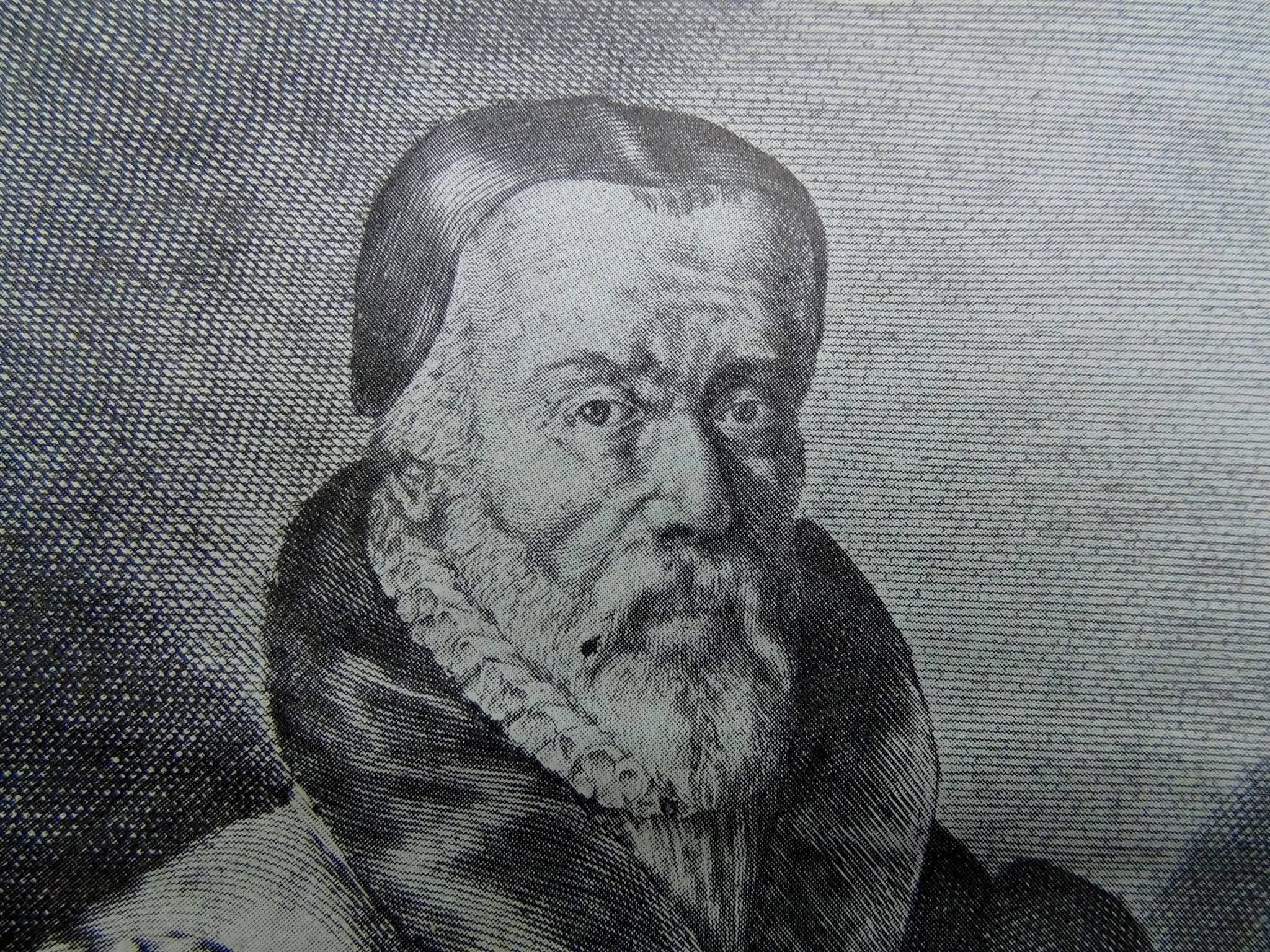
2025 marks the 500th Anniversary of the very first Tyndale New Testament to have ever been published.
In 1524 William Tyndale had been self exiled from England where he headed for Germany and began translating his New Testament into English. It was there where Peter Quentell published his groundbreaking and monumental New Testament.
For those who may not know, William Tyndale (c 1494-1536) was an English priest and scholar and the very first person to translate the New Testament into English from the original Greek. Tyndale was educated at Oxford and Cambridge and became a chaplain in Little Sudbury. There he ran into conflict with a Roman Catholic priest and Tyndale left for London and eventually for Europe and Cologne. His aim of translating the New Testament into English was fulfilled in 1525 and 1526, and his greatest revision was accomplished in 1534. In 1536 he was executed for his faith in Vilvoorde. But his work did not end there. His translation became the bedrock of all English Bibles from the 16th century and even to the present day.
The Tyndale New Testament would impact, influence and formulate the English language more than any works of English literature apart from Shakespeare.
It is still quoted even today, and for many Christians around the world his work can be appreciated through his undeniable influence in the pages of the King James Bible. A staggering 93 per cent of the New Testament (in the KJV) is the work of Tyndale. The Old Testament is about 85 per cent.
Melvyn Bragg writes, “Shakespeare quotes from the Bible about 1,350 times. These quotations are from the Bibles he heard and read – the Great Bible, the Matthew Bible and probably the Geneva Bible – all of which were Tyndale in disguise.” (William Tyndale A very brief history. Melvyn Bragg. P. 89).
In 2017 I had the pleasure of meeting Melvyn Bragg and as he handed me a copy of his biography on William Tyndale I thanked him for his documentary on “The Most Dangerous Man in Tudor England”. This was an excellent film and the BBC would do well to broadcast it again this year for the anniversary.
Likewise churches up and down the country would do well to remember Tyndale this year and start using either his New Testament or the King James Version once again.
I am not a King James onlyist but I believe the Church of England made a big mistake when it removed the King James Version from all services. It makes no sense to me that such a great and monumental translation should be abandoned and replaced with the extremely inferior NIV translation. I believe the King James Version should be regularly used, even if for special occasions or seasons. And where has the abandonment of old English translations got the Church? It has fallen into disrepair and apostasy and utter chaos, and her identity is lost. No wonder, it is because they removed the great translation.
But let us ask, what version has translated Genesis 1: 1 better than Tyndale? Read for yourselves his opening lines,
“In the beginning God created the heaven and the earth. The world was void and empty; and darkness was upon the deep and the spirit of God moved upon the water.”
And who can forget the beauty of the Lords Prayer.
19th century English hymn discovered
Posted by simon peter sutherland in Hymns, Music, Theology on January 16, 2025

The tradition of composing Christian hymns goes back centuries and back in times of antiquity ministers of local churches actually wrote their own hymns for their own congregations. For example, John Newton wrote Amazing Grace while he was minister at Olney and that hymn was first sung in that place.
Such is the case with an original handwritten hymn I have discovered.
The hymn is written in English on a small piece of paper and dates to 1842 and likely originated in Wales. Written by a minister for Sunday school teachers the author based this hymn on John 21: 17 and 1 Corinthians 9: 27. The word “castaway” is used repeatedly in the hymn and is likely based upon the King James Version of Paul’s letter. In this Scripture the apostle advocates a strict subjection of his own body, lest after preaching to others he himself “should be a castaway”.
The sad reality is that this passage of Scripture has been abused. But such is not the case with this hymn. It is a sad reflection and is written out of deep concern, by a minister, for his Sunday school teachers. The Wesleyan interpretation of Scripture implies the hymn most likely has its origins in that denomination and it is not found in any Wesleyan hymn books. So it appears to have never been published. The hymn does not have a tune, which is normal since many hymns in those days did not have accompanying melodies. Many congregations used the popular tunes of the day to sing the words. Such would have been the case with this hymn.
I’ll post more about it as time goes on and research continues, but in the meantime, if anyone knows of any hymns from this era that contain references to 1 Corinthians 9: 27, please feel free to get in touch.
The Promise of God for all mankind
Posted by simon peter sutherland in Census of Luke, Christmas, Christmas or Nisan, Documentaries, Eschatology, Theology on December 18, 2024

Many years ago, when I was a boy, I was asked what my favourite New Testament Gospel was, and I replied “Luke’s Gospel”. For me, I think that claim still stands. The Gospel According to St. Luke is still my favourite of the four Gospels.
Luke’s Gospel gives us the greatest account of Christ’s birth. I say this because I believe chapters 1 & 2 contain the actual words of Mary herself given to St Luke. Luke’s Gospel gives us the reference to the census of Quirinus. I have discussed this census in a previous article showing that it may have been referenced in the Mausoleum of Augustus on the funerary Res Gestae Divi Augusti in Rome.
Luke was a very reliable historian as my documentaries have shown. In Kos and the Gospel According to St. Luke I demonstrate elements of his accuracy by visiting the Greek island of Kos and discuss how he interviewed surviving witnesses to the life of Jesus Christ. Luke references his accuracy himself in Luke 1: 1-4 and Luke’s desire was for the Roman official (Theophilus) “to “know the certainty of those things in which you were instructed.”
Luke follows up his Gospel with part two (Acts of the Apostles) and those who know it are assured of the certainty of the events that happened.
As previously mentioned “I believe chapters 1 & 2” of Luke’s Gospel “contain the actual words of Mary herself given to Luke.” The nativity account contains elements of feminine Greek and in Mary’s account of the angelic announcement of Christ’s birth the angel says to Mary “behold you will conceive in your womb and bring forth a Son, and shall call His name Jesus. He shall be great, and will be called the Son of the Highest; and the Lord God will give Him the throne of His father David. And He will reign over the house of Jacob forever, and of His kingdom there will be no end.” (Luke 1: 31-32. NKJV)
This statement concerning the kingdom of Christ and Him being given the throne of David was not some reference to a futuristic kingdom that Jesus sets up when He returns to earth at the second coming. Luke tells us that this kingdom was established during the life, death, resurrection and ascension of Jesus Christ and was revealed to the people of Judea and Jerusalem by St Peter in his sermon contained in Acts 2: 14-39.
In Acts 2: 30-31 Peter says “Therefore, being a prophet, and knowing that God had sword with an oath to him that of the fruit of his body, according to the flesh, He would raise up the Christ to sit on his throne, he forseeing this, spoke concerning the resurrection of the Christ, that His soul was not left in Hades, nor did His flesh see corruption” and in verse 32 Peter states that the things which they saw when the Holy Spirit came on the Day of Pentecost (Acts 2: 1) is what they “now see and hear.”
The important point to note here is that the promise made to Mary in Luke 1: 32-33 has been fulfilled for all mankind. God in Christ Jesus has set up His kingdom and it has no end and as Peter stated to the people in Judea and Jerusalem, “the promise is to you and to your children, and to all who are afar off, as many as the Lord our God will call.” (Acts 2: 39)
This Christmas remember what Christ has done for us and for all mankind. Let us turn our backs upon the things of this world and whatever you do keep your eyes upon Christ, and know that He is our Saviour, and our God, if we believe in Him and receive forgiveness for our sins and make Him Lord of our lives.
This is Reformation day 2024
Posted by simon peter sutherland in Church of England, Reform, Reformation 2017, The Bible on October 31, 2024
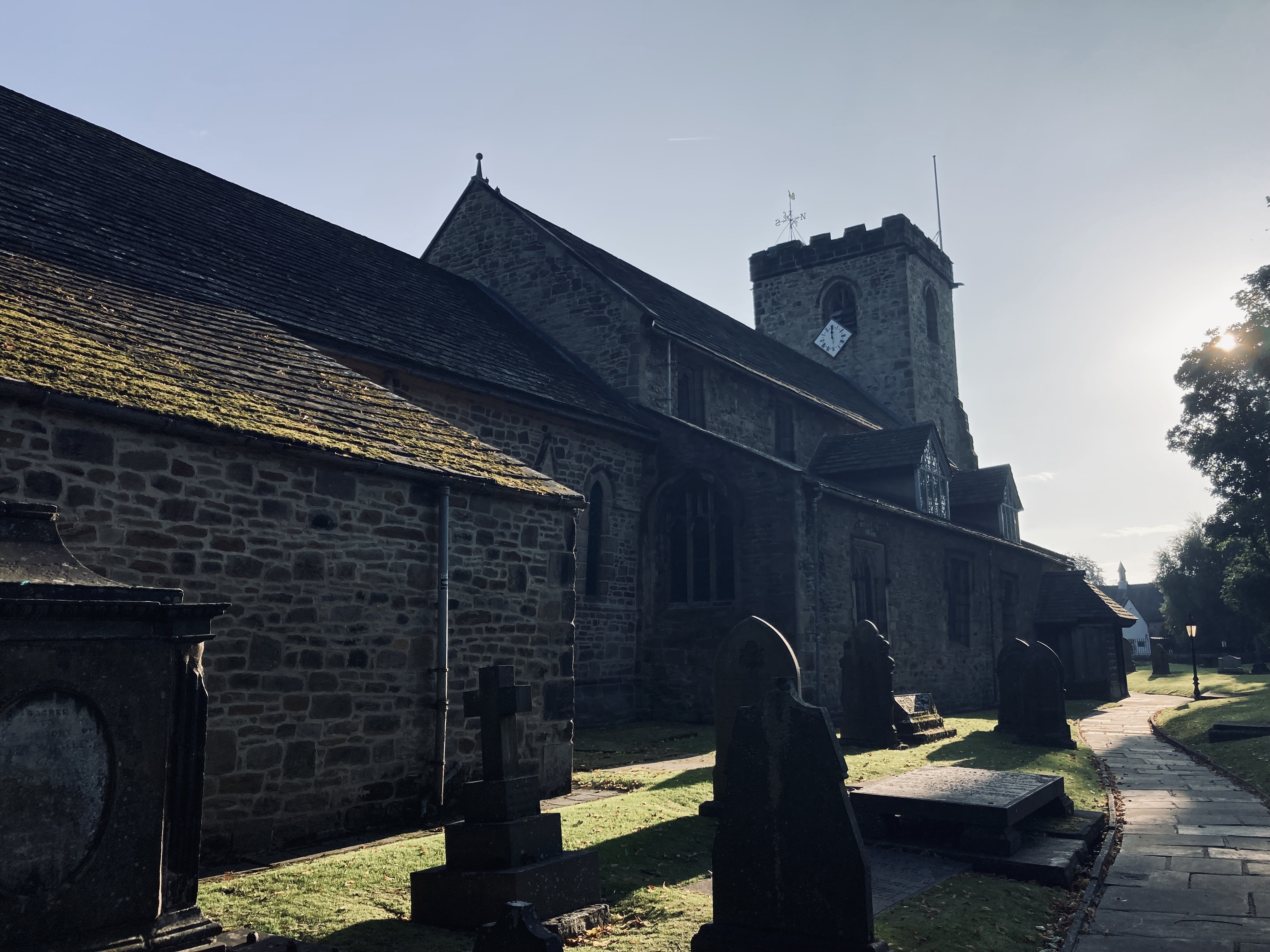 In a previous article back in 2017 I wrote about what the reformation has given us. I listed the reformation benefits we have received in society and in the church and these include the New Testament in Greek, the English New Testament, the complete English Bible including chapter and verse numbers, the freedom to interpret the Bible for ourselves. Freedom to challenge tyranny. The establishment of hymnbooks, Christian music, religious liberty, freedom of speech, and since many abolitionists were theologically reformed we have received the abolition of the slave trade. The list could go on to reveal 100 facts associated with the reformation. This is because the idea of reform is very Biblical. The Bible gives us accounts of how God has been making His plan for this world throughout history and in the Bible we read of those happenings unfolding. It is simply the greatest Book that has ever been written.
Throughout Scripture we see the Lord speaking through His people to bring about change and reformation among those who professed to be the children of God. We read of how the original plan for man in Eden was to dwell in paradise, but Adam chose his own way and fell, because of sin and the story continues of how God was bringing about a restoration of His original plan but man failed almost every time. Because of this God sent His prophets to bring about a reformation to inspire the people of God to repent and turn back to Him because they have lost the way.
In Jeremiah 7: 2 we read of how the prophet says “Hear the word of the Lord” and in verse 3 “Amend your ways and your doings, and I will cause you to dwell in this place.” (NKJV) Here the prophet was talking to the people of ancient Israel and his words speak just as powerfully today as they did back then. In verses 4 and 8 he warns the people that they are trusting in lying words that cannot profit them. The prophet said all this because people were living lives that were contrary to the Will of the God they claimed to believe in and follow (verse 9) and then they would go to the temple and say they were delivered to do abominations (verse 10).
As the Biblical stories continue the prophets foretell the coming of Christ who is the way to restoration and eternal life and without Him there is no hope.
Fast forward hundreds of years throughout church history (not the Bible) and we see the same scenario, man falls and continues in his sinful ways. Man fails to live up to the standards of the Almighty, and God (by His Holy Spirit) stirs His obedient people to speak out and stand fast for the faith.
In the 16th century, a German priest by the name of Martin Luther had been stirred up by the corruption he had seen in the church of that time, and he was absolutely appalled when the priests were selling indulgences to the poor to raise money for the building of St Peter’s Basilica in Rome. Luther saw how crooked this practice was and on October 31, 1517 he is believed to have nailed his 95 thesis on the door of the castle church in Wittenberg. In this document Luther addressed his points of concern and wanted to debate them. Luther’s protest was genuine and the document didn’t stay nailed to the door for very long, locals got hold of the document and it was printed and circulated. Word got back to Rome and Luther would be summoned and eventually stand trial and be excommunicated. Although it affected him mentally Luther spent his time in isolation while translating the New Testament into German. It was a powerful act of defiance to the established church that then existed. This translation would impact the German language in the same way Tyndale’s New Testament would impact the English language. But it would not stop there, church after church would eventually spring up and Luther’s daringly powerful act had started a reformation that could not be undone. It inspired generations all over the world.
Luther’s actions would change the face of history forever. This is because the word reformation is by definition the act of bringing about improvement and change for the better in political, religious or social matters. This is what Luther did. Because of Martin Luther millions of people worship in churches inspired by his reformation. Oddly enough, the Church of England is one of them. I say oddly enough because Henry V111 was opposed to Luther and Tyndale yet still the reformed influence spread.
The Church of England was founded in 597 AD however in 1534 there was a big split and the church separated from Rome and the Pope. This move was undoubtedly the right and Biblical thing to do since Rome was denying the text of the Bible in favour of the authority of the Pope. Not much has changed. Today if not for the reformation few would have the nerve to change or challenge anything or progress our nation to becoming a more decent, fair and just society.
Yet today, it doesn’t feel like the world is becoming any better since we are living in perilous times. The world appears to have become a very dark and cynical place. The church appears to be no better. At least when you look to the bishops for guidance. Few know which way to turn and our nation (here in England) has forgotten the reformation. Rather than celebrate the very act of reformation day, many people choose to promote halloween and follow evil and death rather than life, it seems more commercial than right. Likewise, the church has fallen further into apostasy in an attempt to appease and please the world and keep itself relevant.
Yet we should not be surprised at this, the Bible got it right all along, as it is written, “This is the judgement: the light has come into the world, but men loved darkness rather than light” (John 3: 19)
But for all the church’s attempts to please men, it is not working. Reform is ongoing and will continue and no matter which way people turn the Bible will never cease to be the final authority for all genuine Christians.
There are no two ways about it, if you follow Christ you will live for eternity and if you sow corruption you will reap it. So too will those who profess Christ in one breath while denying Him in another, those leaders will not escape the judgement. They too will pay a much higher price and receive a greater judgement than those they have lead astray (James 3: 1)
It has been said if you marry the spirit of the age, you will soon find yourself divorced by it. So too will the church that follows the world rather than the text of the Bible. If you fail to stand as Luther did in good conscience and Godly conviction, God will never use you in the future and your memory will be forgotten. Darkness will follow you all the days of your life. You will return to the dust from which you came.
Amyraldism calmly considered
Posted by simon peter sutherland in "Calvinism", Theology on October 25, 2024

Over the years I have expressed my deepest concerns relating to a doctrine known as ‘Limited Atonement’. This 5 Point Calvinist theory claims that Jesus Christ did not die for all mankind but only for the elect. If Christ died for all mankind (they say) then no one should be in hell for whom Christ died, thus He didn’t die for all, He died only for those whom the Father had given Him. Believing that Christ died for all (they say) is universalism.
I disagree with these claims entirely. There is no Scriptural proof that the sacrificial offering of Jesus Christ on the cross automatically saves anyone. No one is saved by the cross of Christ alone since believers are saved by grace alone through faith (Ephesians 2: 8) so faith is the means by which we are saved and there is no Scriptural evidence that Jesus purchased our faith at the cross.
A person can argue that faith or salvation is a gift of God (ibid) and I wouldn’t disagree but there is no suggestion that faith or salvation (as a gift) is limited only to those whom God has predestined and chosen. For me, this claim is more systematic than Scriptural and retains some serious Biblical inconsistencies. For me, and for J. C. Ryle, the doctrine of Limited Atonement is inconsistent with the Bible and some theologians who propagate it are more systematic than the Bible they represent. Yet many proponents of the ‘Calvinist’ teaching actually reverse the truth by claiming that those who don’t believe in the 5 Point Calvinist interpretation of ‘Limited Atonement’ are the ones who are inconsistent. This is untrue. For me, and for many Christians, the New Testament is extremely clear that Christ died for all mankind and to deny that fact can be dangerous. The reason I say this is because a person is putting argumentation above Scripture, thus leaving room for any persuasive argument to be believed, even if it contradicts Scripture. Yet many 5 Point Calvinists claim that their beliefs are the pure teachings of Scripture and they wait patiently for others to catch up and be persuaded.
Obviously I’m not one of those who have been persuaded and if a doctrine cannot be consistently proven by all Scripture, I’m not obligated to believe it. So for me, I have reached an opposite conclusion to the 5 Points of Calvinism. For me, I am actually very uncertain if 5 Point Calvinism is even accurate to the teachings of the man it is named after. There are times when I find it very doubtful that Calvin ever taught the same version of limited atonement that modern 5 point Calvinists teach? I haven’t found the majority of 16th century reformers affirming it either.
For me, Calvinism (as it is nicknamed today) is little more than Owenism. By “Owenism” I am referring to puritan John Owen (1616-1683). A man who, in 1648 published a book called “The Death of Death in the Death of Christ”. In this book Owen affirms the doctrine of Limited Atonement in no uncertain terms. The book blends in perfectly with the doctrines affirmed in England during the times of the Westminster Confession of Faith. Like the Westminster Confession, Owens theology offers no salvation for the none elect, they are utterly doomed. Born to be damned and to enter hell for disbelief in a Saviour who did not die for them to begin with.
It is an awfully distasteful doctrine and one that should be spat out.
Having read Calvin, and studied many other 16th reformers, I have been (over the past few years) somewhat pleasantly surprised to learn of the 17th century man named Moses Amyraut (1596-1664) a French reformed theologian who noticed the inconsistencies of Calvinist theology and propagated moderations. Like Richard Baxter, John Bunyan and Richard Horne, the believer can be blessed by the challenges presented by Moses Amyraut who find themselves troubled when ‘Calvinists’ deny the exceedingly clear Biblical statements that Christ died for the sins of the whole world.
Amyraut challenged Calvinians and presented a view that is much more conceivable than Limited Atonement and taught that Christ did in fact die for the whole world but God in His foreknowledge knew those who would believe in Jesus Christ and elected them based upon that foreknowledge. This is entirely consistent with Romans 8: 29 “For whom He foreknew, He also predestined to be conformed to the image of His Son,”. Note that St Paul presents foreknowledge prior to predestination. Thus preserving the doctrine of unconditional election while not excluding anyone from receiving Christ.
For me, if Christ died only for the elect the great commission is null and void and the gospel should not be preached or offered to “every creature” (Mark 16: 15) and Acts 17: 30-31 makes no sense. Why would God command all men to repent (as Paul proclaimed in Athens) if man was incapable of doing so because he is not elect? Why would the great commission be offered to every creature if salvation was not available for every creature?
The logical conclusion is that salvation is offered to all because it is available for all and I am very pleased to know that reformed theology does not exclusively belong to the limited atoners. Lutherans, Calvinists, Anglicans, Arminians, all fit into this broad theology labelled ‘Reformed’.
I remain convinced that if any person merely read the Bible for itself, without feeling pressured to read other books and listen to preachers rhetoric, no one would ever discover such a harsh and uncaring doctrine as Limited Atonement.
Did Martin Luther believe in Limited Atonement?
Posted by simon peter sutherland in Reform, Theology on October 15, 2024
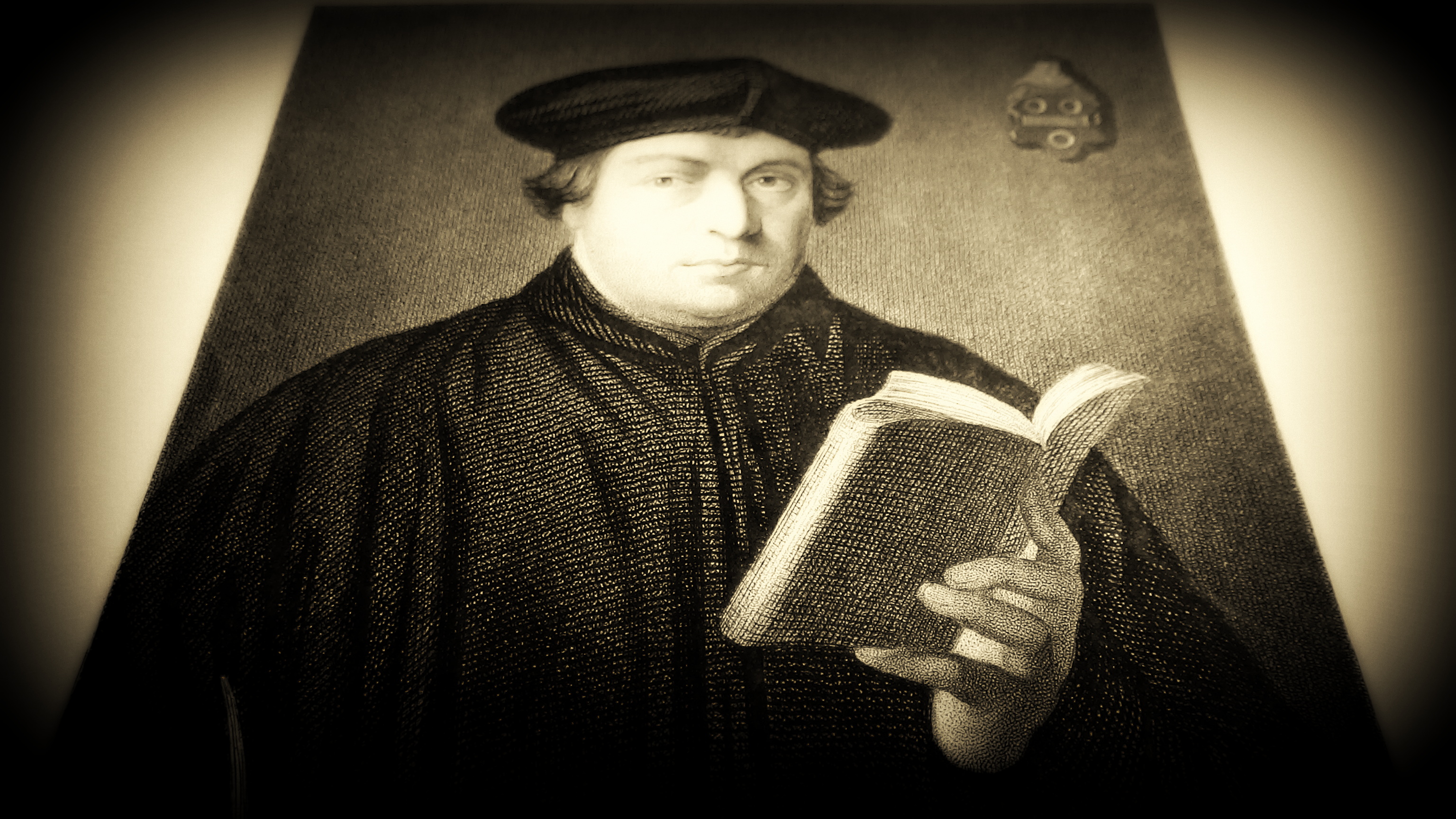
On 31st October 2024, it will be Reformation Day. This event is a public holiday in 5 states in Germany but in the UK Reformation Day is largely forgotten and replaced with Halloween. With this in mind I’m minded to write something about it.
For those who may not know Reformation Day is an anniversary of the day (October 31, 1517) when Martin Luther (1483-1546) nailed his ninety five thesis to the church door in Wittenberg. Back then the church was like our church is today, apostate and in desperate need of reform. Priests and Popes were corrupting the church and few had the nerve to stand up to them. But Luther, God bless him, stood strong and famously nailed his thesis to the church door and the sound of his hammer echoed through the chambers of the establishment.
Recently I watched the 2003 film Luther starring Joseph Fiennes and it has brought back a lot of fond memories for me. That film was very influential when I first began studying Luther and reading his books and autobiographies about him. I’d recommend people view that film and read his books rather than waste their time with all that Halloween nonsense.
But as the saying goes ‘nobody’s perfect’ and the same can be said for Luther. For me Martin was far from perfect, and that’s the point. Reformers do not need to be perfect humans they just need to have faith and believe the Bible. There are times when I really agree with Luther and think that he has been misrepresented by many people. For me, a great deal of these misunderstandings stem from cherry picking sections of Luther quotes without really considering the possibility that he might have changed his mind later on.
While in discussion recently it came up of how Luther and Calvin would have agreed with each other over doctrine and this brings me to the main point of this article. My discussion was in response to the Calvinistic interpretation of Predestination which logically affirms the doctrine of Limited Atonement. As always I make my point that there are differences of opinion concerning the meaning of Predestination and the 16th century reformers didn’t all agree with the Calvinism of that century. For me, Calvin is a little like Luther sometimes in that he might have changed his mind at times. For me, Calvin reads as though he did believe in Limited Atonement and certainly Predestination, while other times he appears to believe that Christ died for all mankind. These views can be found in Calvin’s Commentaries.
Yet there are times, (certainly in Luther’s books) where Martin appears to believe that Christ died for all, yet other times he implies all means the elect? This would imply that he didn’t believe Christ died for all, so there’s certainly conflict in understanding his position. This brings me to the answer of my own title: Did Martin Luther believe in Limited Atonement? Well, the answer is yes and no, I don’t think he did and other times I’m not so sure, here’s why.
While at Wittenburg in 1515, Martin Luther began to lecture from the New Testament and from Paul’s epistle to the Romans. It was during Luther’s studies for these lectures that he famously found that salvation is by grace alone and through faith.
In the popular modern versions of Luther’s commentary on Romans, such as J. Theodore Mueller’s translation, certain beliefs and passages have been omitted from the publications to avoid confusion with Luther’s actual beliefs. For, his beliefs often changed and improved with his knowledge of scripture. In his lectures on Romans and 9: 20-21 Luther says this:
“God will have all men to be saved” (1 Timothy 2: 4), and he gave his Son for us men, and he created man for the sake of eternal life. And likewise: Everything is there for man’s sake and he is there for God’s sake in order that he may enjoy him, etc. But this objection {to God’s sovereignty in salvation} and others like it can be just as easily be refuted as the first one: because all these sayings must be understood only with respect to the elect, as the apostle says in 2 Timothy 2: 10, “All for the elect.” Christ did not die for absolutely all, for he says: “This is my blood which is shed for you” (Luke 22: 20) and “for many” (Mark 14: 24) – he did not say: for all- “to the remission of sins” (Matthew 26: 28) (Martin Luther, Lectures on Romans, translated and edited by Wilhelm Pauck. Philadelphia: The Westminster Press, 1961. P 252)
The question remains for my readers: Did Luther believe in Limited Atonement or did he believe Jesus died for all mankind? Decide for yourselves. I think he may have originally believed in Limited Atonement (in 1515) and changed his mind later on.
Has the third Book of Mary Jones been found?
Posted by simon peter sutherland in Mary Jones, The Welsh Bible on October 9, 2024

On September 21, the original Mary Jones Bible was displayed in Bala (Wales) for an anniversary event. I visited the exhibition and that Bible is one of three which Thomas Charles gave to Mary Jones on her famous walk in 1800.
For those who may not know, the Bible I’m referring to is a Welsh translation dating to 1799 and was once owned by Mary Jones (1784-1864). Mary’s story is legendary and tells how she saved pennies and farthings for six years and walked 26 miles to buy herself a Bible in her heart language. Amazingly this Bible was collected in the 19th century and is still preserved and contains her actual handwriting in English. These are the words she wrote in her Bible;
“Mary Jones was
born 16th December 1784
I bought this in the 16th year
of my age. I am daughter
of Jacob Jones and Mary Jones
his wife. The Lord May
give me grace today.
Mary Jones his the True
owner of this Bible
Bought in the Year
1800 Age 16”
Mary’s English is slightly broken in this text and demonstrates that her choice of language (at the time of writing) was in fact English. She never wrote this account in Welsh. This could be due to the fact that in those centuries the Welsh language was being suppressed and children were subject to a punishment known as the “Welsh Not”. This meant that any child who spoke Welsh in school was at risk of being beaten. It’s horrific! However there is no evidence that Mary Jones was ever subject to the “Welsh Not” since she was educated in schools run by Thomas Charles, who was an advocate of both English and Welsh languages. Bala at the time of Mary Jones was bilingual. So on the basis of that we do not need to assume that the third Book of Mary Jones had to be in Welsh. This is where the rubber hits the road.
Some think that Mary Jones only got one Bible on her trip to Bala, others claim she only got two, yet Mary Jones herself said she actually attained three Books from Thomas Charles. In her own words Mary put her story this way;
“I came to Bala and trembling, knocked on the door of Mr Charles’ house. I asked for Mr Charles and was told he was in his study at the back of the house. I was allowed to go to him and he told me the Bibles had not arrived. I started to cry because I did not know where to stay. He sent me to an old servant of his who had a house at the bottom of the garden, until the Bibles came. When they came, Mr Charles gave me three for the money that is for the price of one.” (The World of Mary Jones by Sara Eade. P. 14)
This account was written out in 1864 by Lizzie Rowlands (nee Jones) who interviewed Mary Jones when she was older. I believe the account is accurate since Mary’s use of language (in this text and the writing in her Bible) blend perfectly and you can hear her choice of wording within both accounts.
Other versions of the story, including the 1882 book “The Story of Mary Jones and her Bible” only mention one Bible but they are based upon much later traditions, and are often fictionalised versions aimed for Sunday schools. They cannot be taken as literal history. It is Mary’s own testimony which should be the basis for historical fact.
Two of these Bibles have been officially accounted for and I believe we can now compliment her story with the discovery of a third Book.
This third Book I believe is a 1787 Book of Common Prayer and Psalms twice signed by Mary Jones. Research has been done and the signatures match to those in her Bible.
But why would the third Book be a Book of Common Prayer and Psalms rather than just a standard Welsh Bible? Well, it should be noted that 18th century Bibles were not like the Bibles of today. In our tradition we open the Bible at Genesis and close it with Revelation, but the bound Bibles Mary Jones knew opened with the Book of Common Prayer, and contained the Apocrypha and also an extra version of the Psalms translated by Edmund Prys. So it is probable that Mary Jones would have viewed the Book of Common Prayer as a volume of the Bible, or at least a part of the bound versions she knew. After all the 1717 Bible she learned to read from at the farmhouse opens with the Book of Common Prayer and contains an extra version of the Psalms. I know this because I have viewed and handled it. I’ve handled them all.
Today, the original 1799 Mary Jones Bible is in Cambridge, while the second Bible is in Aberystwyth and the third has been a mystery since the 19th century. So the question remains: Has the third Book of Mary Jones been found?
Yes, I believe it has been found and characteristics match the Bible she owned. Likewise, it makes sense to me that Mary Jones would have had an English Book of Common Prayer since she loved the Psalms and Thomas Charles was an advocate of both Welsh and English languages and when Mary arrived in Bala (to buy a Bible) Mr Charles is said to have given her one of his own copies. Being an ex Church of England minister Mr Charles would have had a Book of Common Prayer in English and he was certainly an advocate of it, so for me, it seems like this part of the story contains an element of truth though it has been mixed up a little in the fictional versions. Likewise it is a fact that a majority of Bibles from the late 1600’s through to the establishment of the British and Foreign Bible Society in 1804 contained the Book of Common Prayer and Psalms. So for Mary Jones, she wouldn’t have known anything else so it would have been seen as part of the collected volume.
It seems very fitting to me that she would have had an English Book of Common Prayer and Psalms since Mary Jones loved them both.
Hymn stories: All Hail the Power of Jesus’ Name
Posted by simon peter sutherland in Hymns, Theology on October 3, 2024

Way back in 1838 a railway man James Ellor (1819-1899) brought his local choir a tune. This was called “Diadem” and he had written the tune to be sung with the Edward Perronet hymn “All Hail the Power of Jesus’ Name”.
James Ellor was born in a place called Droylsden in Manchester and was choirmaster at his local Methodist Wesleyan Chapel and is also said to have worked in the hat industry.
Over the last few months I have been fascinated by this great old hymn and have sought to find the location where the hymn tune of this great hymn was first sung. Lo and behold I have found it. After looking through old maps and studying the location and all the related churches in the area I have narrowed the original location down to a site on Market St, Droylsden.
Today the original building is long gone but back in the 1830’s a chapel stood near and in between the location where a Co-operative Hall Wharf (dating to 1876) and an industrial building (dating to 1911) now stand. Thankfully, a local church meet very close to precise location so someone is still doing the Lords work there and there’s a tram stop near should anyone wish to visit. After all it is a very special hymn and should never be forgotten.
Today a number of versions of the hymn continue to be sung, and especially in America. This seems very fitting since James Ellor emigrated to America in 1843 where he returned to his trade a hat maker. So let us remember the words of this great hymn from the Methodist Hymn Book,
”Let every tribe and every tongue before Him prostrate fall, And shout in universal song The crowned Lord of all.
O that with yonder sacred throng We at His feet may fall, Join in the everlasting song, And crown Him Lord of all!”
I think all Christians everywhere, can agree with those great words. I know I can.
Was Saint Paul shipwrecked on Kefalonia?
Posted by simon peter sutherland in Bible translation, Biblical archaeology, Documentaries on August 9, 2024

In my new documentary I close the episode with a reference to the shipwreck of Paul on the island of Melite. The central theme of the documentary focuses upon the life and ministry of Saint Titus on Crete and concludes with a reference to the epic journey of Paul who was shipwrecked on his way to Rome. It’s a passionate and dynamic narrative to say the least.
I refer to the island as Melite for a distinct reason, this is the greek word Luke uses in Acts 28: 1.
Most English Bibles translate Melite as “Malta“, however for textual and geographical reasons I do not believe the translations are correct here. Malta is way off the map for the actual island Luke was writing about and is not in the Adriatic sea as Luke clearly states it was in Acts 27: 27.
However many people believe Malta is the island where Paul was shipwrecked and I have visited St Paul’s Bay myself and the little church is one of my favourite places on earth. However, over recent years and after studying old maps I have come to conclude that Malta is not the location of Acts 28 and have narrowed down two or three possible locations where the shipwreck could have taken place.
In a recent article published by Eric Metaxas it is claimed that “Paul was shipwrecked on Kefalonia, not Malta” and evidences are given to support that claim. I am familiar with the opinions that are expressed in the article and locals on Kefalonia claim Paul was shipwrecked at Pessada. This is the location in the closing scene of my film and in the photo above. It should be noted there are archaeological remains present at that place which cannot be denied.
But is it true? Was Saint Paul shipwrecked on Kefalonia? It would be great if it is true, it’s a beautiful island with a wealth of Christian history. However, it should be pointed out that if it is true and Paul was not shipwrecked on Malta, serious concerns are raised regarding the accuracy of English Bibles.
But did it really happen this way? Was Paul really shipwrecked on Cephalonia, or someplace else?
This theme has been a long endeavour for me since I first visited Malta in 2005 and I hope to explore this topic in greater detail in the future. Having visited the location of Pessada, Kefalonia, the argument is extremely stimulating and I am continuing my research.
I have written my first hymn
Posted by simon peter sutherland in Hymns, Music, Theology on July 30, 2024

For many years I have been a great lover of wonderful old hymns. Guide Me O, Thou Great Jehovah, The Day Thou Gavest, Lord, is ended and How Great Thou Art. All of these hymns have inspired me greatly throughout my life and I have been a worship leader a number of times and sung many great Christian worship songs.
Last year I read Keith and Kristyn Getty’s book “Sing” and it’s all about Christian music and the value of hymn writing. I was very motivated by this and while revisiting the Greek Island of Kos I wrote my first hymn.
Kos is very important to me as a Christian and I’ve made documentaries about it and explored St. Paul’s connection to the island (Acts 21: 1). It has been a long journey and this has contributed to my writing this song.
The hymn is not presently released but my wife and I have sung it. Jenny has been very instrumental in helping me make my documentaries and I’m very thankful to her and I have faith to believe that the Lord has given me this song as a nice gift and He will use it to His own glory and praise.
I believe the hymn will one day be a blessing to Christian’s everywhere, regardless of denomination or circumstances.
Simon Peter Sutherland
-

 Simon Peter Sutherland