Posts Tagged history
Some recent discoveries that prove the Bible true!
Posted by simon peter sutherland in Biblical archaeology, Biblical Scholarship, My books, The Bible on July 25, 2026

Simon Peter Sutherland writes,
“Biblical archaeology has taken a significant turn over the past few years and today it is not so easy to dismiss the Bible as historically accurate as many modern critical and sceptical scholars have attempted to do. I have highlighted a few of these discoveries below so the reader can research further.
Battle ground of David and Goliath
In 2106 it was announced that archaeologists have found an ancient city where they believe the battle between David and Goliath took place. The site sits in the Elah valley between Sokho and Ezekah, about the border of Philistia and Judah. Western and Southern gates were discovered and olive pits, all perfectly matching to the Biblical account. The city is referenced in 1 Samuel 17: 1-2, 1 Chronicles 4: 31 and Joshua 15: 36.
The City of David found
It has been an archaeological mystery to locate the ancient City of David in Jerusalem. For the last 150 years or so, researchers have been working hard to discover the long lost Biblical city. Recent discoveries however have unveiled important new evidences and brought to light the exact location of the city of David in Jerusalem. But it is highly controversial and politically wrapped up in the Israeli-Palestinian conflict.
2,700 year old inscription
In 2013, archaeological excavations just outside the Capital of the ancient city of David in Jerusalem discovered a ceramic bowl with a Hebrew inscription. This pottery fragment dates to the first Temple period between the 8th and 7th centuries BC. The name on the 348 inscription is similar to the name of Zechariah, 2 Chronicles 20: 14. Confirming once again the historic reliability of the Biblical texts.
2,700 year old seal of the governor
In 2018, archaeologists revealed an ancient clay seal of the governors of Biblical Jerusalem. 1 Kings 10: 15 and 2 Chronicles 9: 14 refer to the ‘governors of the country’. This find was discovered near the Western wall in Jerusalem and archaeologists have agree these claims back up the Biblical accounts that there were governors of the city of Jerusalem.
Temple sifting project
In 2005 an archaeological program began known as the Temple Sifting Project. The program was dedicated to the recovery of artifacts taken from truck loads of top soil taken from the Temple Mount area in Jerusalem, and dumped into the Kidron Valley. Hundreds of artifacts have been sifted out within this program and have been publicly announced. Some of the finds include a Roman arrowhead from the siege of Jerusalem in AD 70 and a 2,600 year old priestly seal from the first Temple period. There is also the only known floor tile from the second Temple.
Locating the Jerusalem temple
It is a common assumption to accept the Temple mount in Jerusalem as the actual historic location for the first and second Temple’s. Yet Jesus said ‘not one stone would be left standing upon another’ (Matthew 24: 2) Yet the Western wall is connected to the Temple mount. The present discussion claims that the Temple mount area is the site of the Roman Antonia Fortress, a military barracks from the New Testament era. The site would later be used for the Temple of Domini from the Crusaders time, which Muslims under Saladin took it and made it into a Mosque. The majority of the walls overlooking the mount of olives date to the Ottoman Empire (1520-1566) with some earlier foundations. The problem being that the original locations were lost because the Jewish people were gone from Jerusalem for a thousand years, they didn’t know the location for the City of David until around 1900. Locals in Jerusalem often think it is a political claim that Temple mount is the actual location of Solomon and Herod’s Temple. Another location has been proposed, which many claim is better, and more consistent with the historic information. A 10th century BC 20 feet tall and 230 feet long wall has been found between the Temple mount and the ancient City of David. Thus, giving a basis for an actual historical framework to be developed for the quest to locate the actual site of the first and second Temple.
Childhood home of Jesus, Nazareth
In 2006, excavation work began underneath the sisters of Nazareth Convent in Nazareth. These excavations revealed a first-century courtyard, tombs and a cistern. The finds are consistent with claims written about in historical documents and the site is now being discussed and reviewed as the possible childhood home of Jesus.
The Nazareth inscription
One very important archaeological testament not so often presented by the so-called ‘academic elite’ is what is known as ‘The Nazareth Inscription’ or ‘The Nazareth Decree’. The tablet itself dates to the 1st century and was written in Koine Greek (The language of the New Testament) and was acquired in the 19th century from Nazareth, the 350 home town of Jesus. This inscription is made of marble and contains a Greek edict from a Caesar. This is what it says;
Edict of Caesar
“It is my decision [concerning] graves and tombs—whoever has made them for the religious observances of parents, or children, or household members—that these remain undisturbed forever. But if anyone legally charges that another person has destroyed, or has in any manner extracted those who have been buried, or has moved with wicked intent those who have been buried to other places, committing a crime against them, or has moved sepulchre-sealing stones, against such a person, I order that a judicial tribunal be created, just as [is done] concerning the gods in human religious observances, even more so will it be obligatory to treat with honour those who have been entombed. You are absolutely not to allow anyone to move [those who have been entombed]. But if [someone does], I wish that [violator] to suffer capital punishment under the title of tomb-breaker.” 584. When this edict is linked up with Matthew 28: 12-13, they match up perfectly.”
Book excerpt: “The Divine Saviour In The Dark Light Of Modern Critical and Sceptical Scholarship” by Simon Peter Sutherland is available now in paperback from Amazon
Remember, remember the 5th of November
Posted by simon peter sutherland in Church of England, Reform on November 5, 2025
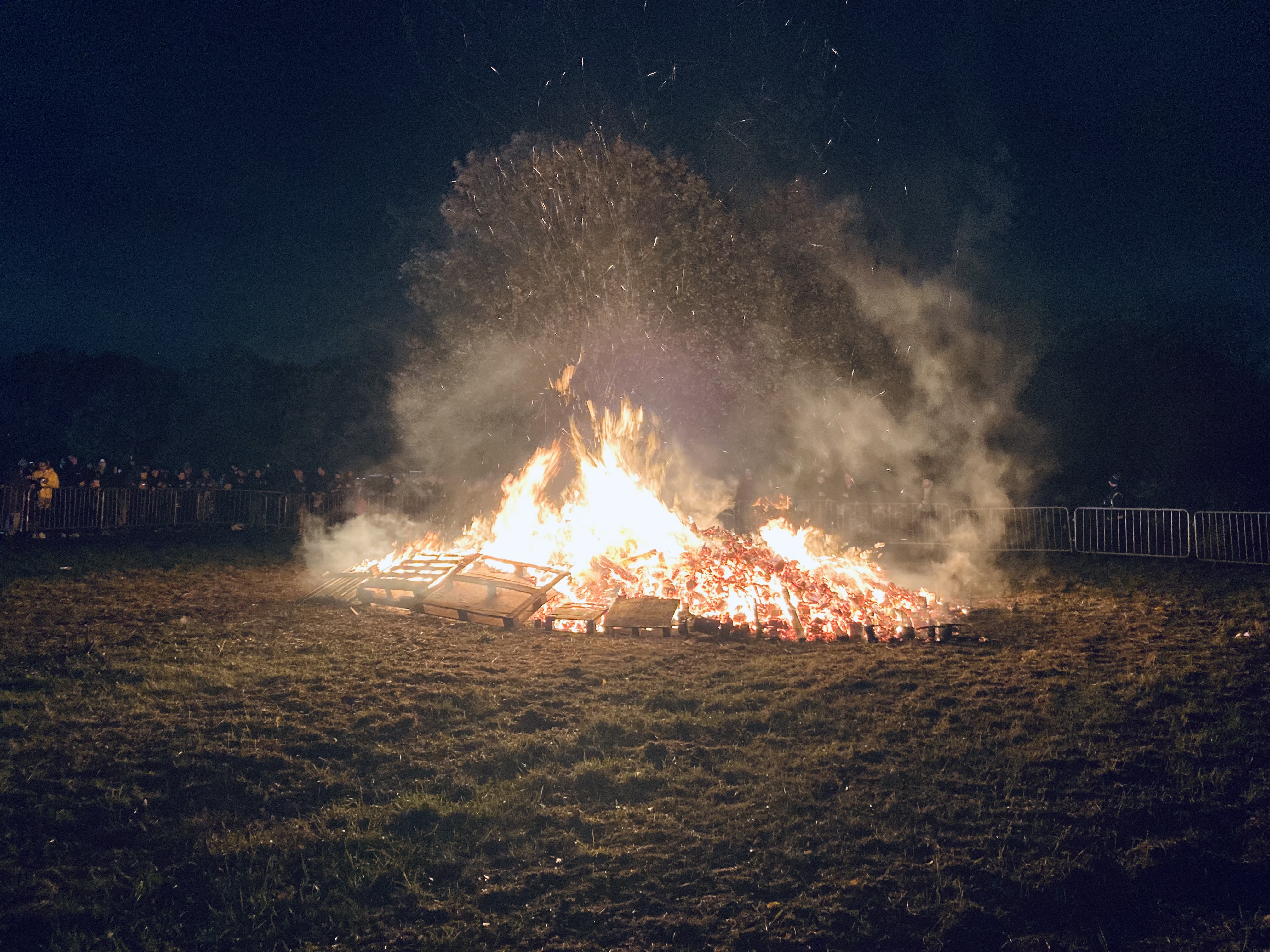
Bonfire night in the UK is traditionally known as Guy Fawkes Night and it is observed on November 5 to commemorate when Guy Fawkes was arrested while trying to blow up the house of Lords so he could establish a Roman Catholic monarch on the throne of England.
These details can be found here.
Fawkes wanted to assassinate James 1 of England and V1 of Scotland because he was a protestant king. The plan was to return the Church of England and this country back into the lair of the pope.
But it never happened.
While at a bonfire this month I reflected on how important it is that England never forgets her own history, especially the reformation and we should never bow the knee to those who seek to destroy the very Christian foundations that have made this country so great. It is true that we have many problems in the UK and I’m sure that in time those problems will be resolved by the grace of God.
Today we are seeing a peaceful revival of Christianity in this country and people are once again exploring Christianity and the Bible and even attending church.
But even though these are positive adventures, we should not ignore the fact that there are some big problems which cannot be overlooked. The established Church of England is in a real mess. Not only has a King of England prayed with the pope for the first time in 500 years, but we also have a first female Archbishop of Canterbury who is a catholic and prays the rosary.
The rosary is traditionally a Roman Catholic devotion and not a Protestant one. It cannot be found in the Bible and it places Mary before Jesus meaning you have to go to her first in order to reach out to Jesus.
Likewise, many Roman Catholics are seeking to overturn the reformation and reunite Anglicans with Rome. “Come home” they continue to say, yet the Roman Catholic Church is not home to me, I say. I am a Christian and not a Roman Catholic. I do not believe the Bible agrees with transubstantiation or Marian devotions or idolatry or prayers to the dead or prayers for the dead.
Let us not forget it was pope Leo X who excommunicated Martin Luther and now pope Leo X1V wants to restore that.
To quote an article I wrote back in 2015, I say it again; “Britain has come a long way since the glorious days of the 16th century, and in many ways both England and Britain are founded upon the principles of the Protestant reformation. Many ideals such as democracy, tolerance and human rights are rooted in the principles of the reformation and the people of Britain should never forget that.
It is a true saying ‘remember, remember, the 5th of November”.
Martyr George Marsh 510th anniversary 2025
Posted by simon peter sutherland in Christianity, Martyr George Marsh, Reformation 2017 on June 26, 2025

2025 marks the 510th anniversary of the birth of Martyr George Marsh.
Marsh was born in Bolton, in 1515 into a family of farmers. He attended Deane Church and had a great zeal for Biblical faith and following the tragic death of his wife he became a curate in the Church of England. Serving under the reign of Edward V1 his ministry was grounded to a holt when the boy king died and Mary Tudor ascended to the throne.
Christians and leaders were hunted down and executed and on April 24th 1555 Marsh was burned alive in Boughton, Chester and his ashes were collected and laid to rest in a nearby leper colony.
His story was collected by John Foxe and included in the Foxe’s Book of Martyrs and his martyrdom became widely known for many centuries.
His story remains of significant importance since it continually reminds us of the evils of bad religion and extremism. Yet Christian’s are still persecuted around the world so mankind hasn’t properly learned the lesson yet. It is for this reason that we must never forget our own history and we must always be aware that religion in the wrong hands can be very dangerous, especially when people get hurt.
George Marsh was a good man, and the Church of England failed to protect and preserve him. They should have embraced his zeal and passion for the truth instead of falling headlong into the bondage of the Roman Catholic Church.
Contrary to popular beliefs Britain has gained an enormous benefit from the cause of the reformation, and I have covered these points in a previous article.
So let us remember George Marsh and the martyrs who gave their lives in the cause of truth.
Today a number of dedicated memorials can be found in his memory in Deane Church grounds, Smithills Hall, St John’s Cathedral and at the site of his execution in Boughton, Chester.
May the memory and legacy of Martyr George Marsh live long.
The 500th Anniversary of the Tyndale New Testament
Posted by simon peter sutherland in Church of England, The Bible on March 10, 2025
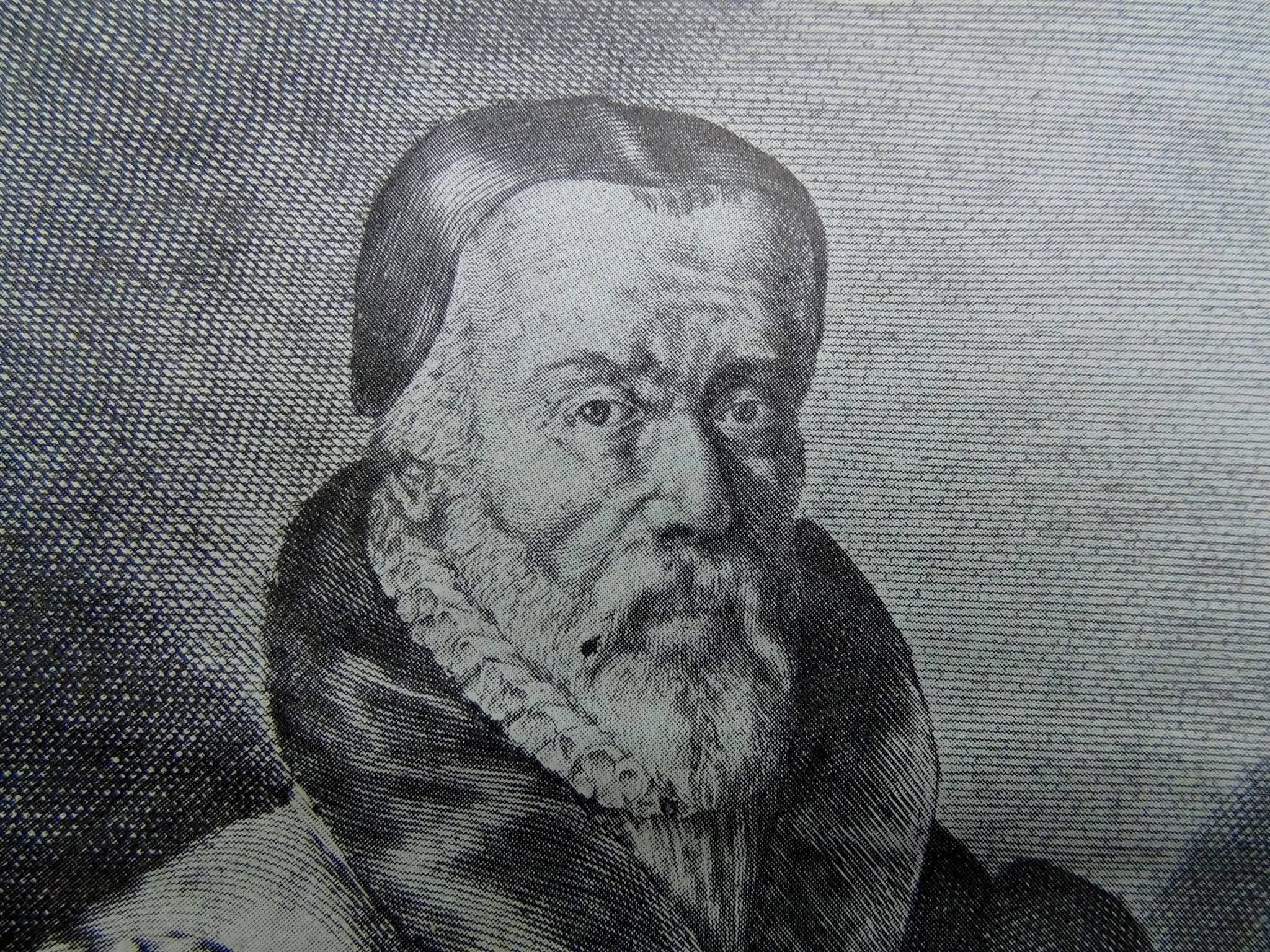
2025 marks the 500th Anniversary of the very first Tyndale New Testament to have ever been published.
In 1524 William Tyndale had been self exiled from England where he headed for Germany and began translating his New Testament into English. It was there where Peter Quentell published his groundbreaking and monumental New Testament.
For those who may not know, William Tyndale (c 1494-1536) was an English priest and scholar and the very first person to translate the New Testament into English from the original Greek. Tyndale was educated at Oxford and Cambridge and became a chaplain in Little Sudbury. There he ran into conflict with a Roman Catholic priest and Tyndale left for London and eventually for Europe and Cologne. His aim of translating the New Testament into English was fulfilled in 1525 and 1526, and his greatest revision was accomplished in 1534. In 1536 he was executed for his faith in Vilvoorde. But his work did not end there. His translation became the bedrock of all English Bibles from the 16th century and even to the present day.
The Tyndale New Testament would impact, influence and formulate the English language more than any works of English literature apart from Shakespeare.
It is still quoted even today, and for many Christians around the world his work can be appreciated through his undeniable influence in the pages of the King James Bible. A staggering 93 per cent of the New Testament (in the KJV) is the work of Tyndale. The Old Testament is about 85 per cent.
Melvyn Bragg writes, “Shakespeare quotes from the Bible about 1,350 times. These quotations are from the Bibles he heard and read – the Great Bible, the Matthew Bible and probably the Geneva Bible – all of which were Tyndale in disguise.” (William Tyndale A very brief history. Melvyn Bragg. P. 89).
In 2017 I had the pleasure of meeting Melvyn Bragg and as he handed me a copy of his biography on William Tyndale I thanked him for his documentary on “The Most Dangerous Man in Tudor England”. This was an excellent film and the BBC would do well to broadcast it again this year for the anniversary.
Likewise churches up and down the country would do well to remember Tyndale this year and start using either his New Testament or the King James Version once again.
I am not a King James onlyist but I believe the Church of England made a big mistake when it removed the King James Version from all services. It makes no sense to me that such a great and monumental translation should be abandoned and replaced with the extremely inferior NIV translation. I believe the King James Version should be regularly used, even if for special occasions or seasons. And where has the abandonment of old English translations got the Church? It has fallen into disrepair and apostasy and utter chaos, and her identity is lost. No wonder, it is because they removed the great translation.
But let us ask, what version has translated Genesis 1: 1 better than Tyndale? Read for yourselves his opening lines,
“In the beginning God created the heaven and the earth. The world was void and empty; and darkness was upon the deep and the spirit of God moved upon the water.”
And who can forget the beauty of the Lords Prayer.
Uncovering the location for the Manchester dwelling house of Thomas Charles
Posted by simon peter sutherland in Historical Manchester, Mary Jones, The Welsh Bible, Theology on April 27, 2024

Finding forgotten locations or places of historic significance is no easy task in our modern world.
Redevelopment, regeneration and expansion comes at a cost as archaeological remains lie beneath the surface.
One of those is a street in Manchester where the “dwelling house” of Thomas Charles once stood.
For those who may not know, Thomas Charles (1755-1814) was a Welsh Calvinistic Methodist from south Wales who spent a lot of his life living and ministering in Bala, North Wales. Thomas Charles was once a Church of England minister who was let down by that denomination and eventually found a home in Bala where he could minister among the Calvinistic Methodists who lived there.
Thomas Charles is the man famously responsible for giving a young Welsh girl called Mary Jones a Bible in 1800. Mary was a poor girl who worked and saved 6 years to purchase her beloved Welsh Bible and walked 26 miles or so, barefoot to buy it. Arriving at the home of Thomas Charles in Bala, Mary would eventually attain her Bible and two others as a gift. Thomas Charles was the man who gave her those Bibles.
Thomas Charles was very inspired by the story of Mary Jones and in 1804 he founded the British and Foreign Bible Society with William Wilberforce. His life and work is a testimony to the grace of God and known throughout the world.
Mr Charles had been gravely ill for many years and a prayer was offered up for him that he might live another 15 years. That prayer was answered. Charles died in 1814 and in his last Will and testament he writes that he is the owner of three properties, two in Bala and one on Hope Street, Manchester.
In his will Mr Charles wrote “I am the owner of the Inheritance of three messauges or dwelling houses with their appurtenances two of them situate in Bala aforesaid and the other in Hope Street in the town of Manchester in the County of Lancaster” (The World of Mary Jones. By Sara Eade. P. 33)

Back then the area of Oldham Street was very important to the Methodist movement and nearby is a place called Hope Street. This is actually the location of one of three houses owned by Thomas Charles.
Hope Street is also very near to where John Wesley preached.
I have located the site of that property and have examined a map dating to 1819. There is however no blue plaque to his memory or any acknowledgement of this great man’s connection to Manchester.
Yet there are plenty of other plaques scattered around the city.
In St Anne’s Square there is a blue plaque to Robert Owen (1771-1858) a Welsh entrepreneur and social reformer who lived in Manchester for 12 years.
On Bow Lane there is a blue plaque to Ernest Jones (1819-1868) who practiced a law chamber here between c 1863 – 1869.
There is a plaque to Elizabeth Raffald (1733-1781) outside Marks and Spencers who established a cookery school, shop and domestic service agency near the site.
Indeed, there are different colour plaques scattered all around the city and as a native I have visited these places for myself and once realised it isn’t difficult to find yourself lost in the history of this city.
Manchester is the birthplace of poet John Byrom, the author of the classic hymn “Christians Awake”. The city has a very significant Wesleyan history. Oldham Street has a blue plaque which tells of how Wesley opened a chapel here in 1781.
It is clearly a city packed with history and sure enough there had been a Welsh settlement in Manchester since the 16th century.
We have a great deal here, from a Roman settlement to the location of an ancient castle. A historic Cathedral. The oldest public library in the English speaking world. Significant Tudor and Christian history also plays an important role in Manchester’s history, including the life of Protestant martyr John Bradford (1510-1555).
Surely it is time to honour this great man and have a commemorative plaque put up on Hope Street.
Simon Peter Sutherland
-


