“In Search of Saint Titus and Paul on Crete”
Posted by simon peter sutherland in Biblical archaeology, Documentaries on June 26, 2024
Great news, my long awaited documentary “In Search of Saint Titus and Paul on Crete” is now available on YouTube.
In this documentary I explore Paul’s Epistle to Titus and its connections to passages in Acts of the Apostles. I visit Fair Havens, Gortyna, and Heraklion and a few other places, all in search of Saint Titus and Paul.
This documentary marks my ten year quest to uncover St Paul’s associations with the Greek Islands and I hope it is a blessing to you.
My quest to find the lost Bible of George Marsh
Posted by simon peter sutherland in Martyr George Marsh, Theology, William Tyndale on May 3, 2024
In my previous article concerning my quest to uncover the home and Bible of George Marsh I mention his Bible in passing. I mention how I have examined a Marsh family Bible in Bolton Library and how an old newspaper article suggests his Bible was seen in Bolton in the 1850’s.
My research revealed the Marsh family Bible in Bolton cannot be the Bible that once belonged to George Marsh (1515-1555) since it outdates him by 11 years. A Bible that belonged to him would need to have been printed prior to his imprisonment in 1554 and his execution in 1555. In my opinion he would have likely used the Tyndale New Testament for his own personal reading and (as a matter of fact) a reformed Church of England cleric would have used the Great Bible for ministry at that time.
I have examined the Scripture quotes in the pastoral letters of George Marsh and in the book of Martyrs and they appear to be influenced by both Tyndale and Great Bible translations. This is an immensely important observation.
I believe any Tyndale New Testament that once belonged to George Marsh would have been burned with him in Boughton, Chester in 1555. In those days condemned reformers who used the Tyndale New Testament were paraded around a city with Tyndale’s New Testament hung about their necks. In the Book of Martyrs the last reference to George Marsh having his Bible was when he held it up before being burned. Foxe writes how Marsh was offered a pardon and he refused it on the condition that it would “pluck him from God”.
This New Testament I believe was burned with him.
However, the Bible I believe he used in his public ministry was not taken with him so it may have been left at the last place he ministered before his arrest. This would imply his Bible remained in and around the areas of Bolton and Bury in Lancashire.
The question is, has this Bible been found? Or is there something more?
As I have previously stated, my quest to uncover his Bible began after I made my documentary about him. I believe it is possible that the Bible people believed (in the 19th century) to have been his may have been identified? However I also believe it is possible the Marsh family Bible in Bolton library may also be the Bible people thought was his?
I am also aware that reformers and puritans once gathered in the area of Rivington Pike to read George Marsh’s letters. This could also be an important factor in the quest. But where all this will lead, only time will tell.
Either way, a Bible that once belonged to this great man, would be of enormous spiritual significance in our time.
Uncovering the location for the Manchester dwelling house of Thomas Charles
Posted by simon peter sutherland in Historical Manchester, Mary Jones, The Welsh Bible, Theology on April 27, 2024

Finding forgotten locations or places of historic significance is no easy task in our modern world.
Redevelopment, regeneration and expansion comes at a cost as archaeological remains lie beneath the surface.
One of those is a street in Manchester where the “dwelling house” of Thomas Charles once stood.
For those who may not know, Thomas Charles (1755-1814) was a Welsh Calvinistic Methodist from south Wales who spent a lot of his life living and ministering in Bala, North Wales. Thomas Charles was once a Church of England minister who was let down by that denomination and eventually found a home in Bala where he could minister among the Calvinistic Methodists who lived there.
Thomas Charles is the man famously responsible for giving a young Welsh girl called Mary Jones a Bible in 1800. Mary was a poor girl who worked and saved 6 years to purchase her beloved Welsh Bible and walked 26 miles or so, barefoot to buy it. Arriving at the home of Thomas Charles in Bala, Mary would eventually attain her Bible and two others as a gift. Thomas Charles was the man who gave her those Bibles.
Thomas Charles was very inspired by the story of Mary Jones and in 1804 he founded the British and Foreign Bible Society with William Wilberforce. His life and work is a testimony to the grace of God and known throughout the world.
Mr Charles had been gravely ill for many years and a prayer was offered up for him that he might live another 15 years. That prayer was answered. Charles died in 1814 and in his last Will and testament he writes that he is the owner of three properties, two in Bala and one on Hope Street, Manchester.
In his will Mr Charles wrote “I am the owner of the Inheritance of three messauges or dwelling houses with their appurtenances two of them situate in Bala aforesaid and the other in Hope Street in the town of Manchester in the County of Lancaster” (The World of Mary Jones. By Sara Eade. P. 33)

Back then the area of Oldham Street was very important to the Methodist movement and nearby is a place called Hope Street. This is actually the location of one of three houses owned by Thomas Charles.
Hope Street is also very near to where John Wesley preached.
I have located the site of that property and have examined a map dating to 1819. There is however no blue plaque to his memory or any acknowledgement of this great man’s connection to Manchester.
Yet there are plenty of other plaques scattered around the city.
In St Anne’s Square there is a blue plaque to Robert Owen (1771-1858) a Welsh entrepreneur and social reformer who lived in Manchester for 12 years.
On Bow Lane there is a blue plaque to Ernest Jones (1819-1868) who practiced a law chamber here between c 1863 – 1869.
There is a plaque to Elizabeth Raffald (1733-1781) outside Marks and Spencers who established a cookery school, shop and domestic service agency near the site.
Indeed, there are different colour plaques scattered all around the city and as a native I have visited these places for myself and once realised it isn’t difficult to find yourself lost in the history of this city.
Manchester is the birthplace of poet John Byrom, the author of the classic hymn “Christians Awake”. The city has a very significant Wesleyan history. Oldham Street has a blue plaque which tells of how Wesley opened a chapel here in 1781.
It is clearly a city packed with history and sure enough there had been a Welsh settlement in Manchester since the 16th century.
We have a great deal here, from a Roman settlement to the location of an ancient castle. A historic Cathedral. The oldest public library in the English speaking world. Significant Tudor and Christian history also plays an important role in Manchester’s history, including the life of Protestant martyr John Bradford (1510-1555).
Surely it is time to honour this great man and have a commemorative plaque put up on Hope Street.
My quest to uncover the home and Bible of Martyr George Marsh
Posted by simon peter sutherland in Documentaries, Martyr George Marsh on April 24, 2024

“the righteous shall be in everlasting remembrance.” (Psalm 112: 6. KJV)
In the 16th century a farmer from Deane (Bolton) by the name of George Marsh became a curate in the Church of England and was accused of heresy and condemned at the consistory court in Chester Cathedral. Marsh was burned at the stake in Chester on April 24, 1555.
Today marks the 469th anniversary of his death.
My documentary about George Marsh has been seen by many people and has helped raise awareness of his story, even Chester town Crier gave it the thumbs up.
It was a film that took me a while to make. After learning about Marsh at Smithills Hall I had been fascinated to discover how his story was in the Book of Martyrs. Yet when I looked for the narrative in printed copies, I found that many modern versions had edited him out. This inspired me to want to know more about him. So I looked to see if any documentaries had been made and there hadn’t.
In John Rylands Library and Chetham’s Library I read through original 16th century prints of the Book of Martyrs and sure enough, his story was there. After repeatedly reading it and anything I could find about him, it was as though the story came alive to me and I couldn’t shake it off.
Before long I knew a film needed to be made about George Marsh. At that time I wasn’t a documentary maker although I had had some ambitions to become one. After a number of failed attempts to get a Marsh documentary made I decided to film it myself.
After all documentaries and films won’t make themselves.
I continued researching and in June 2012 I was ready to began filming at Chetham’s Library.
I had no budget or agenda so this allowed for freedom. I repeatedly visited Deane Church, and Smithills Hall and the story utterly consumed me.
Despite many obstacles I completed the documentary in 2013. However the journey was not over. While filming I had learned about a possible location for where Marsh lived. Later I learned about a Marsh family Bible in Bolton Library rumoured to be his. So I viewed both the farm and the Bible at different times. Sadly my research revealed the Marsh family Bible could not have actually belonged to George Marsh since it dates to 1566. However after reading an old newspaper article I was set yet again on another journey, this time to find his Bible. I knew it was rumoured to have been seen in Deane in the 1850’s.
Suddenly I found myself on two separate journeys, the quest to find George Marsh’s Bible and the quest to find George Marsh’s farm.
As my research progressed another Bible turned up and a number of proposed locations for the Marsh farm. However I was unable to reach any conclusive proofs for either. So the location of George Marsh’s farm became an unsolved mystery. The Bible ongoing.
Last night however I felt compelled to revisit the area and it brought back a lot of memories. So I came up with the idea to write an appeal to see if anyone has any further insight into the location of the George Marsh farm?
Over the years I have been regularly contacted by Marsh descendants, many of whom find references to George Marsh in ancestral documents. So I appeal to anyone with insight to help locate the Marsh farm.
The area at Broadgate farm is the strongest suggestion in my opinion and where my instinct has led me. The site is situated up and beyond Deane church, overlooking a lake.
I may never know for sure since I haven’t yet found any absolute proof that George Marsh lived at Broadgate Farm but information may yet be out there. If anyone does have any insight, either through ancestral research or further source information please feel free to get in touch.
It is likely that George Marsh’s farm was either a medieval timber structure or a 16th century building.
The Resurrection of Christ did happen
Posted by simon peter sutherland in Christianity, The Bible on March 31, 2024
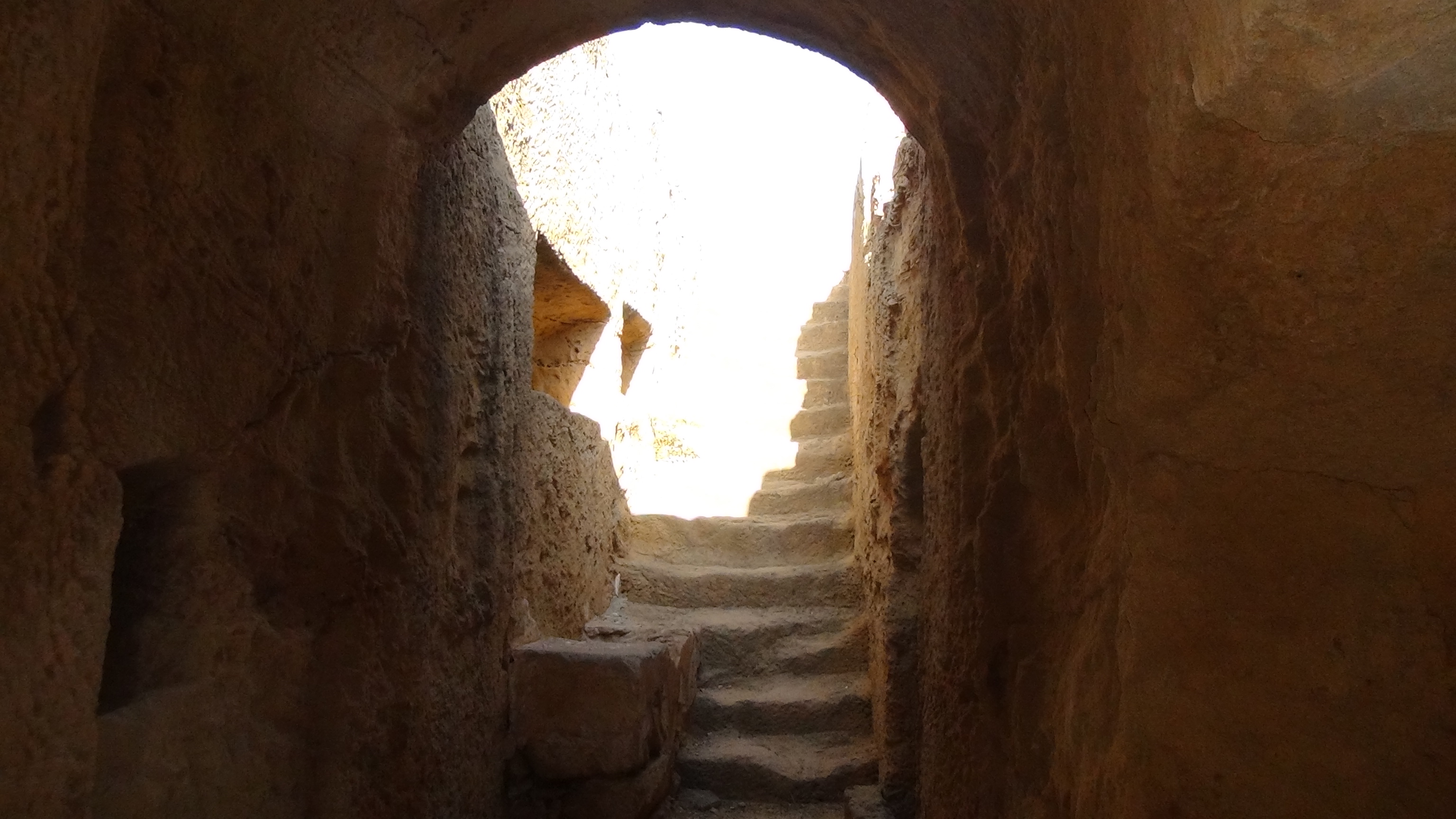
Over Easter I have posted a number of articles surrounding the crucifixion of Christ. These have been on the Titulus Crucis, the universal offing of Christ, and the case for Christ’s crucifixion on a Thursday.
This post on Easter Sunday relates to Paul’s statement that the resurrection of Christ was witnessed by 500 people at one time. This statement can be found in 1 Corinthians 15: 1-8 (NKJV).
“Moreover brethren, I declare to you the gospel which I preached to you, which also you received and in which you stand, by which also you are saved, if you hold fast that word which I preached to you – unless you believed in vain.
For I delivered to you first of all that which I also received: that Christ died for our sins according to the Scriptures, and that He was buried, and that He rose again the third day according to the Scriptures, and that He was seen by Cephas, then by the twelve. After that He was seen by over five hundred brethren at once, of whom the greater part remain to the present, but some have fallen asleep. After that He was seen by James, then by all the apostles. Then last of all He was seen by me also, as by one born out of due time.”
This letter is generally believed to have been written about 53-57 AD.
As I have previously stated, “This claim is extraordinary. Some may say ‘well, that’s just what the Bible says...’ as though the resurrection of Jesus is just a claim made in the Bible alone and that the Bible is just another religious book. But the problem is, even if the entire New Testament, or the individual writings were not part of the Bible, the letter of Paul to the Corinthians would still be extant. Even as a singular document, Corinthians would still stand as a historical source by itself.”
We can be certain that the resurrection of Christ is an absolute fact and the stone was rolled away, not by the Romans, or by early Christians, but by an angel of the Lord (Matthew 28: 2-4)
Wherever you are this Easter, whatever you are going through, remember that Jesus Christ died for your sin and that He rose again for your justification.
Was Jesus crucified on Good Friday?
Posted by simon peter sutherland in Christianity, The Bible on March 30, 2024

I have been very reflective lately concerning the importance of Easter and I like many have been observing this important Christian festival.
I like Good Friday, and yesterday I was minded to post an article on the topic ‘Was Jesus crucified on a Friday?’ I wanted to present my thoughts concerning the historic perspective of the crucifixion day rather than the traditional day celebrated by the church.
For many believers and unbelievers it is automatically assumed that Jesus was crucified on a Friday and I don’t want to be insensitive to believers who might want to remember Good Friday as the day our Lord was crucified. I too hold Good Friday in regard. However I have decided to mention a few reasons why I believe it is more likely that Jesus was crucified in the middle of the week either on a Wednesday or a Thursday.
Here are my reasons;
- Mark 15: 42 places the evening of the crucifixion at the beginning of preparation day, “the day before the Sabbath” (NKJV).
- Luke 23; 54 places the burial of Jesus on preparation day with the Sabbath drawing near.
- John 19: 42 also places the laying of Jesus in the tomb on preparation day.
- Matthew 27: 62 places the gathering of the chief priests and the Pharisees on “the next day” after the crucifixion on “the Day of Preparation” (NKJV).
It is important to note that the event of the crucifixion and death of Jesus had already taken place at the point we meet these verses. This means a whole day had gone by where Jesus faced a series of trials leading to His crucifixion and death, and in the Jewish calendar the day begins at sunset, as stated in Genesis 1: 5 “the evening and the morning were the first day.“.
In contrast to our western minds when a new day begins at midnight, the new day in Biblical Israel began at sunset. This means the preparation day began on Thursday evening, meaning that Jesus had been crucified earlier on that day.
Likewise, in Matthew 12: 40 Jesus prophesies that “as Jonah was three days and three nights in the belly of the great fish, so will the Son of Man be three days and three nights in the heart of the earth.” (NKJV)
I have looked at many arguments concerning this and there seems to be no way around it; no matter how we look at it, Friday to Sunday does not give us three days and three nights. On the contrary, it would be more fitting to say this;
- Thursday evening to Friday evening gives us one day and one night.
- Friday evening to Saturday evening gives us one day and one night.
- A Saturday evening to a Sunday morning gives us one night and a morning.
Thus multiplied together gives us a period of three days and three nights, leaving Jesus rising from the tomb on the third day being a Sunday morning. Luke 24: 1 places the first sighting of the resurrection of Christ on “the first day of the week, very early in the morning,”
If Jesus was crucified on a Wednesday, that would give us even more time, and perhaps too many days. However, if Jesus had been crucified on a Friday, that would only give us a Friday and Saturday evening being only two nights and would not answer the statements made that Jesus was laid in the tomb as the Preparation Day was approaching and just begun.
In order to believe that Jesus was crucified on a Friday one would have to interpret Matthew 12: 40 in a metaphorical or symbolic sense and not literal.
I hope these thoughts give you pause for reflection during this important festival when we remember what Christ has done for us.
Christ died for all mankind, even Judas!
Posted by simon peter sutherland in "Calvinism", Limited Atonement, Theology on March 28, 2024

Over the last 20 years I have been in a continuous and sporadic confrontation with the 5 Point Calvinist view of Limited Atonement. I have read books, articles, listened to sermons, debates and had many conversations with a number of believers who hold to the the view that Christ did not die for the whole world but only for His elect.
I reject that viewpoint.
In the Bible there many verses that state that Jesus Christ died for all, yet according to many 5 Point Calvinists, this word all, does not always mean all. Fair point, there are times when all does not mean all. Does that observation however mean that Jesus Christ did not die for the whole of mankind? No, it does not.
At this stage, there is little point my listing the considerable amount of New Testament verses which are believed to affirm that Jesus died for all mankind, since 5 Point Calvinists differ to the plain interpretation of these passages. So I will focus upon one passage and work my way from there.
In Matthew 26: 17-30 Jesus celebrates the Passover with His disciples and institutes the Lord’s supper. Those who were present were the 12 disciples. This includes, Peter, James, John, Andrew, Philip, Judas Iscariot, Judas Thaddeus, Matthew, Thomas, James (son of Alpheus), Bartholomew, and Simon the zealot.
The feast took place on the evening of the first day of the feast of Unleavened Bread (Matthew 26: 17). Verse 20 says “When evening had come, He sat down with the twelve.” Then Jesus refers to the one who will betray Him (verse 21) and the disciples are exceedingly sorrowful and they ask the question “Lord, is it I?” (verse 22) Then Jesus responds by saying “He who dipped his hand with Me in the dish will betray Me.” (verse 23) He then goes on to say “woe to that man by whom the Son of Man is betrayed! It would have been good for that man if he had not been born.” (verse 24)
Then Jesus takes the bread, blesses and breaks it and gives it to His disciples saying “Take, eat; this is My body.” (verse 26) We assume all 12 disciples ate the bread at this point. Then in verses 27-28 Jesus takes the cup and says “Drink from it, all of you. For this is My blood of the new covenant, which is shed for many for the remission of sins.“
This word translated many is is described by Greek scholars as meaning what it says on the tin, a large number. There is basically no limitation to that word. The word “shed” describes a pouring out in a sacrificial sense and is steeped in Old Testament knowledge. He means that without this shedding of blood there is no remission of sin or sins.
When you consider the unmoveable fact that Judas was present when Jesus said that and when He offered all 12 disciples to eat and drink this Passover, we cannot but assume that He said this to all 12 disciples including Judas.
Thus, if Limited Atonement were true as is stated in the 5 Points of Calvinism, then Christ only died for His elect who would believe in Him and be saved. This would exclude Judas. Yet here in Matthew 26: 17-30 we see the exact opposite. We see Jesus offering Himself to all 12 disciples, including Judas, yet Judas betrayed Him.
It is my belief that had Judas repented, He may have been saved? But he did not. This however does not mean that Christ did not die for him or for the rest of mankind, it merely means that all do not receive Him.
Dwell upon these thoughts this Easter as we remember what Christ has done for us and all who believe in Him and keep His commandments.
Is the Titulus Crucis authentic?
Posted by simon peter sutherland in Biblical archaeology on March 22, 2024
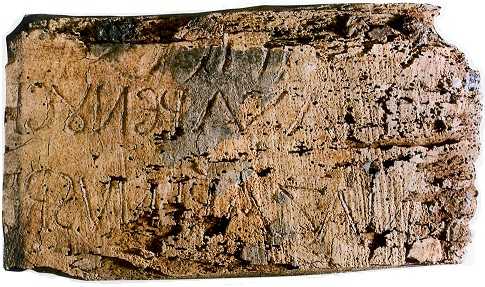
In the Church of Santa Croce in Gerusalemme, Rome, is an artefact known as the Titulus Crucis.
Titulus Crucis is Latin for title of the cross and the item in focus is a piece of wood which is claimed by some to be the actual sign placed on the cross above Jesus’ head 2000 years ago and it may well be? It certainly seems consistent with the gospels to me.
In the gospel of Luke 23: 38 this title was written in Greek, Latin and Hebrew and reads,
“THIS IS THE KING OF THE JEWS”
In the gospel of John 19: 19 the title is written in Hebrew, Greek and Latin and reads,
“JESUS OF NAZARETH, THE KING OF THE JEWS”
The Titulus Crucis is written in Hebrew, Greek and Latin. I have viewed this item a number of times and I am fascinated by it.
The story goes that in the 4th century Helena (mother of Emperor Constantine) travelled to Jerusalem to discover the items associated with the life of Christ and she famously found the true cross and the nails and the Titulus Crucis. This history is attested to by Ambrose (c. 339-397) and Chrysostom (died 407)
Likewise a pilgrim named Egeria travelled to Jerusalem about 381/2-384 and wrote about seeing this item in a chapel and the writings of Egeria are considered very reliable.
The story goes that Helena kept a section of the Titulus in her own private chapel and in later centuries the item was thought to be lost until it was rediscovered above the altar.
I have visited Helena’s chapel a number of times and I have spent considerable time looking at the Titulus Crucis in another room and even though I am not a Roman Catholic nor have any part in that religion, nor do I consider the early Roman Church to be the same religion, I view this item as sacred. I do not know of any evidence to make me consider it to be a forgery.
In contrast to the accounts in Matthew 27: 37, Mark 15: 26, Luke 23: 38 and John 19: 19 the Titulus Crucis does not read as though it has been copied from the four gospels but has its own character.
In my opinion Matthew’s gospel was originally written in Hebrew whereas a version of Luke was written to a Roman official in Latin and John in Greek. For these reasons I believe it is possible that Matthew was quoting the Hebrew line of text, Mark the Greek line of text and Luke the Latin line of text and John the Greek line of text. This accounts for the minor differences in all four gospels.
Matthew 27: 37 reads “THIS IS JESUS THE KING OF THE JEWS.”
Mark 15: 26 reads “THE KING OF THE JEWS.”
Luke 23: 38 reads “THIS IS THE KING OF THE JEWS.”
John 19: 19 reads “JESUS OF NAZARETH THE KING OF THE JEWS.”
When viewed from this perspective I believe there is no contradiction in the gospels. Each author was writing from a specific section of the title and from the perspective of their intended audience.
Likewise I am of the opinion that the original title may have been highlighted in some way to make it more readable for the passers by, and this item is believed to have been covered in white chalk and the carved out text to have been painted black.
When I have looked closely at the item it is very clear that the carved writing is rugged and unique, and to me the writing reflects the urgency and controversy of the moment as implied by the context of John 19: 19 where John writes that “Pilate wrote a title and put it on the cross.”
For me this is a very important observation.
The rock that became a mountain
Posted by simon peter sutherland in Theology on January 31, 2024

Over recent times it is difficult for many people to see what is happening to Christianity and faith all around the world. For many it seems like Christianity is under attack.
We read of Christians being persecuted around the world. We read news of a Christian singer being told she could not sing Christian music in public. We read of controversy surrounding street preachers. We read of Churches closing, and we know of the difficulties that the Church of England is facing. It is quite probable that Christianity is the most persecuted religion in the world.
So what on earth is going on?
The simple answer is that I believe God is doing a great work in our time.
I believe the Bible teaches that persecution often brings widespread apostasy and at the same time persecution is a sure sign that the Kingdom of Christ is growing.
In the book of Daniel 2: 35 we read a prophecy concerning the Kingdom of Christ and how a stone that smote an image “became a great mountain”. That rock that became a mountain is the Kingdom of Christ who promised He would build His Church and the gates of hell will not prevail against it (Matthew 16: 18)
When Jesus promised He would build His church He did not claim it would always be a towering structure. When He used the word build, He implied a continuing structure that can be extended. As a CofE minister said a while ago, ‘The Kingdom grows one soul at a time’.
I believe the Christian church in the uk has hit one of the most challenging times in the history of Christianity and I believe we will get through it.
As John Gill rightly stated in his commentary on Daniel 2: 35 “Christ’s kingdom, from small beginnings, has increased, and will more and more, until the whole earth is subject to it: this began to have its accomplishment in the first times of the Gospel, especially when the Roman empire, as Pagan, was destroyed by Constantine, and the kingdom of Christ was set up in it; and it received a further accomplishment at the time of the Reformation, when Rome Papal had a deadly blow given it, and the Gospel of Christ was spread in several nations and kingdoms; but it will receive its full accomplishment when both the eastern and western antichrists shall be destroyed, and the kingdoms of this world shall become the Lord’s and his Christ’s, Rev 11:15.”
In Isaiah 2: 2 the prophet wrote these words, “it shall come to pass in the last days, that the mountain of the Lord’s house shall be established in the top of the mountains, and shall be exalted above the hills; and all the nations shall flow unto it.”
Be strong and the next time you see a tiny rock, turn around, lift up your eyes unto the hills and remember the rock that became a mountain. The implication is, it’s unmoveable.
William Tyndale’s military translation of Luke 2: 13
Posted by simon peter sutherland in Christmas, Church of England, The Bible, Theology on December 23, 2023
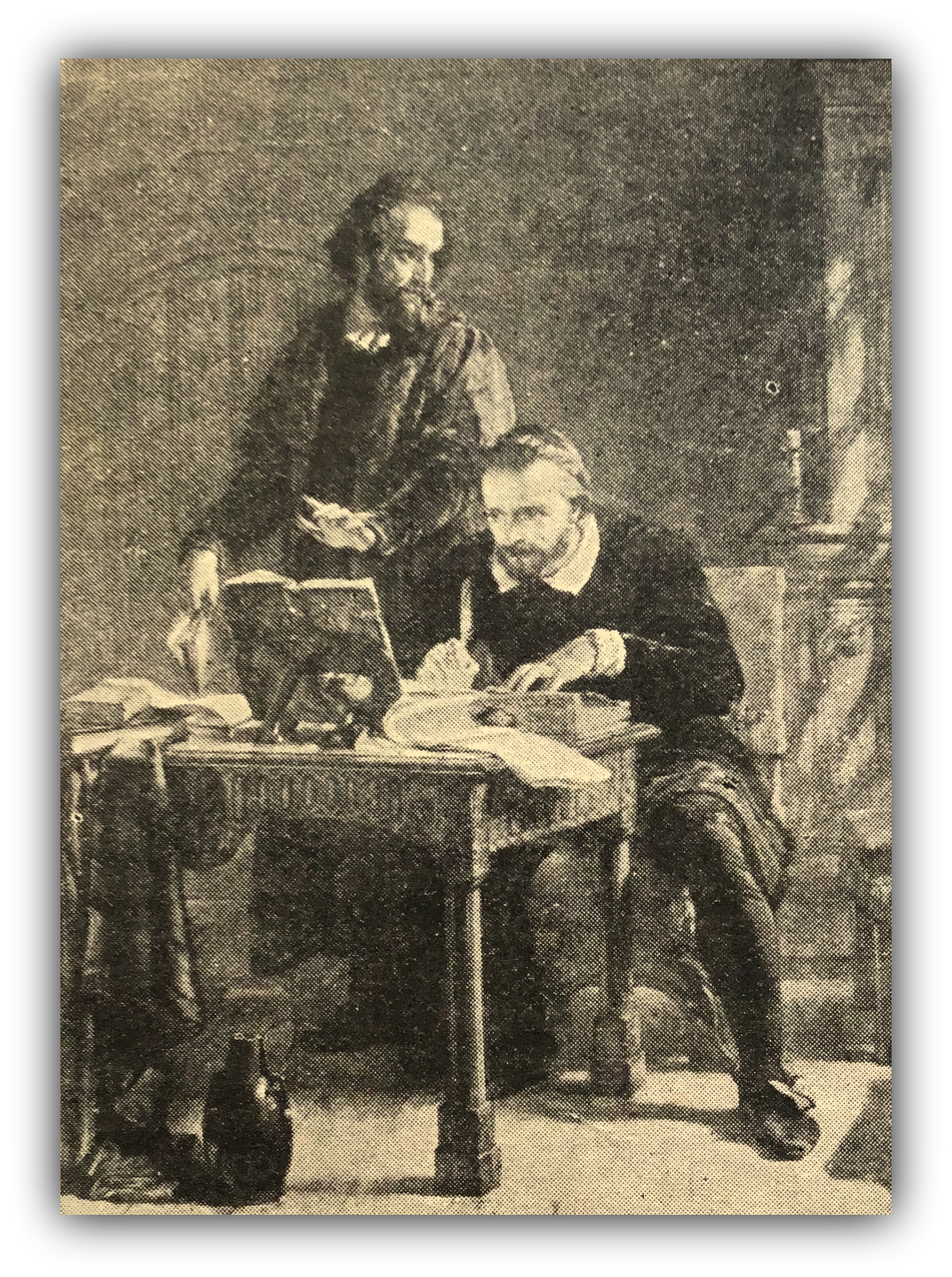
At this time of year it is a regular feature to hear passages from Luke’s gospel read aloud. Most of the time these days it is read from the NIV, ESV or some other modern translation. Yet with these translations we often miss so much.
For me personally, I’m traditional I like old Bible translations. For me, few modern translations read like authoritative Scripture. Tyndale’s 16th century translation however is a whole different ball game. It is one of the greatest English translations ever produced. No other translation has so impacted the English language as his.
And in his 1534 New Testament, Tyndale translates Luke 2: 8-13 this way,
“And there were in the same region shepherds abiding in the field and watching their flock by night. And lo: the angel of the Lord stood hard by them, and the brightness of the Lord shone round about them, and they were sore afraid. But the angel said unto them: Be not afraid. For behold, I bring you tidings of great joy that shall come to all people: for unto you is born this day in the city of David, a saviour which is Christ the Lord. And take this for a sign: ye shall find the child swaddled and laid in a manger. And straightway there was with angel a multitude of heavenly soldiers, lauding God and saying: Glory to God on high, and peace on the earth: and unto men rejoicing.”
(TYNDALE’S NEW TESTAMENT, 1534. The Gospel of St Luke. Chapter Two. A modern-spelling edition by David Daniell)
Note here something very distinct. In verse 13 Tyndale employs a military translation of the word normally translated “host”. Tyndale uses the English word “soldiers”.
This word is also used in the 1599 Geneva Bible, no doubt borrowing the idea from Tyndale. This is very interesting because it can be verified by the Greek.
According to Strongs (G4756) the Greek word means “an army; from the base of G4766, as encamped”. This is intriguing since the angelic reference is figuratively used. According to John Gill, the size of the multitude could be “innumerable; there are thousands, ten thousands, and ten thousand times ten thousand of them.”
It is quite spectacular to imagine thousands of soldiers declaring “peace on earth”, and good will.
Translations such as the KJV, RSV, NIV, ESV, ASV, use the word “host” which I think is found wanting. Tyndale’s military imagery is much more profound and demonstrative of the conflict between man and God being resolved in the life, death and resurrection of Jesus Christ. This is the heart of the Christmas story and although we often see the nativity story in a sweet fashion it is not so sweet. Jesus Christ was born to die and His enemies would one day take those hands and feet and pierce them with Roman nails.
What began with good news, of peace on earth and good will to all men concluded with Christ’s death making permanent satisfaction for sin and justification by His resurrection.
Recently while reflecting on the permanency of the gospel I was standing looking out at the vast open sky. The clouds, stars and the moon were all clearly visible. Down on earth people were going about there busy business and doing their thing, but the moon remained, unmoveable and unchanged. The gospel is like that, it does not and cannot change. It abides. The world changes, people change but the word of the Lord does not change. Likewise, the God who inspired it does not change either. He remains, He will not break His promises and regardless of the whims and babblings of this world, the Scripture cannot be broken.
This Christmas, remember the truth of the gospel and if you follow Christ remember that there is a multitude of heavenly soldiers on your side and if God is with you who can be against you?
Simon Peter Sutherland
-

 Simon Peter Sutherland