I believe the Virgin Mary was not sinless
Posted by simon peter sutherland in Census of Luke, Christmas, Theology on December 4, 2023

Recently I went to see the new movie Journey to Bethlehem. A musical inspired by the events surrounding the birth of Jesus.
Mary does sing in Luke 1: 46-55.
While I found the movie entertaining and enjoyable to watch, I didn’t agree with it all but I came to notice the very distinct representation of Mary as human, not sinless. As some of you may know the Roman Catholic Church upholds a doctrine that claims Mary was not subject to original sin. Although I don’t particularly have a problem with believing that Mary did not practice sin, I do have a problem with the false claim that Mary was sinless.
While there are complexities within the doctrines upheld within Roman Catholicism, Eastern and Oriental Orthodoxy, it should be stated that there is not a single verse in the Bible that claims Mary was “sinless”. In Luke 1: 47 Mary sings ‘my spirit rejoices in God my Saviour’.
If Mary was “sinless” she would not need a Saviour.
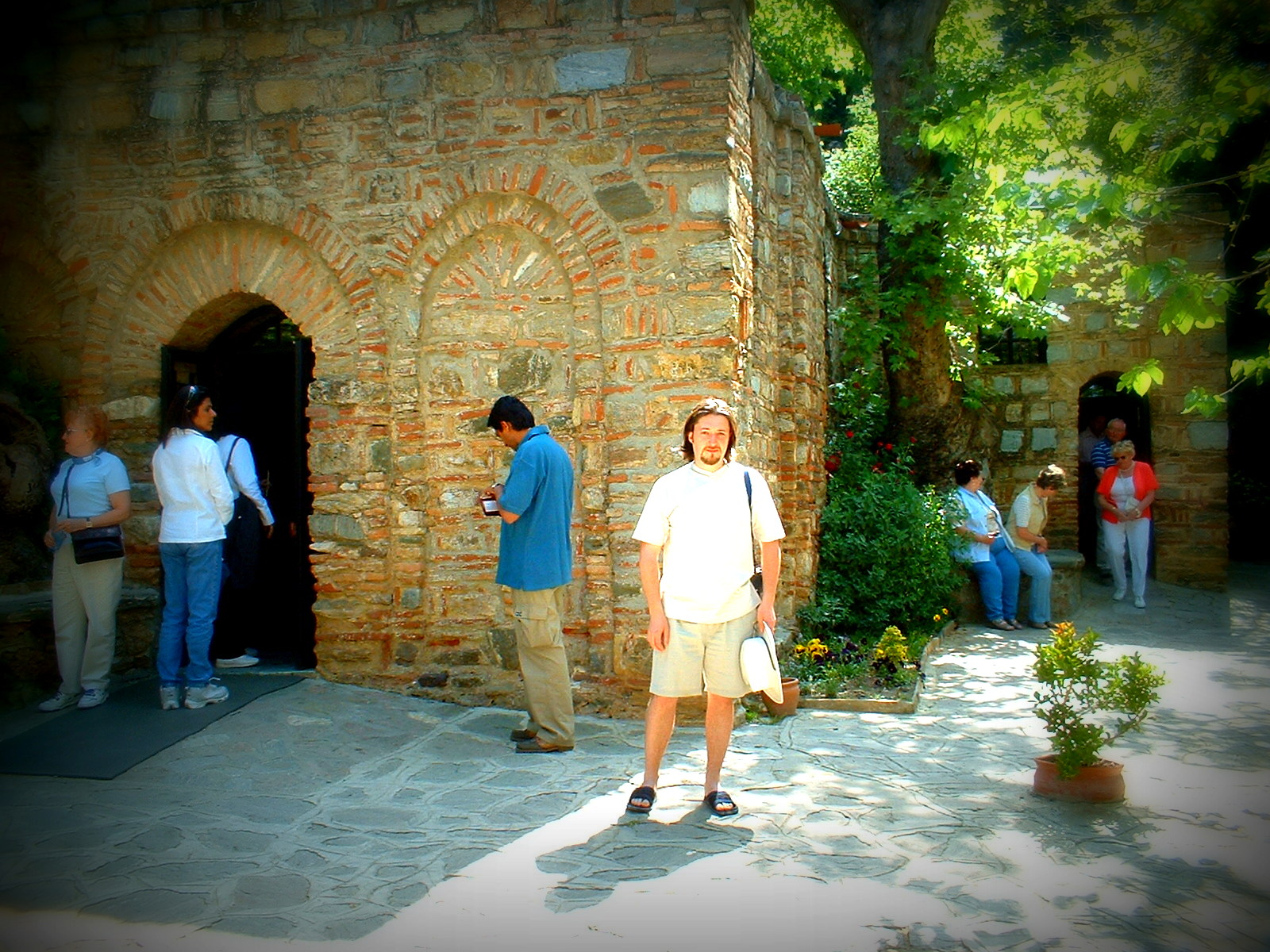
Many years ago I visited Ephesus and also the house of the virgin Mary. This house is way up in the mountains and was discovered in the 19th century and is believed to be the place where the Apostle John took Mary as instructed by Jesus in John 19: 25-27.
I like many people sat and pondered upon what the mother of Jesus may have been like. What did Mary look like, how did she talk, what stories could she tell?
Luke 2: 19 says that Mary cherished her memories and stored them in her heart, so I assume Luke’s gospel tells us all we need to know. That being said I understand the nativity texts in Luke contain feminine uses of Greek meaning that many verses could actually contain her own hand written testimony. Thus her own statement in Luke 1: 47 affirmed that Mary was not without original sin.
Likewise 1 John 1: 8 states that ‘if we say that we have no sin, we deceive ourselves and the truth is not in us‘ and that verse does not exclude Mary. After all it was written by the man who Jesus gave instructions to take Mary into his own home so Mary may have even read the letter when John wrote it. After all, John is believed to have been an older man when he wrote his letter, so Mary would have still been present with him as instructed by Christ.
I believe this point and Luke 1: 47 disproves the false claims of Roman Catholicism.
My ancestor Private James Smithies claimed he met Napoleon and turned his back on him
Posted by simon peter sutherland in ancestry, Scotland on November 23, 2023

In 2020 I published a post concerning my discoveries relating to my Sutherland ancestors. This has taken me through the pages of history through the Highlands of Scotland to the advancement of the Sutherland railway, the Disruption of 1843, the Battle of Culloden and down through the Scottish reformation and the ancient Kings of Scotland to William Sutherland, the son in law of Robert the Bruce.
On my mothers side however, there is an entirely different story.
Many years ago I met my grandfather and he was in the Navy during WW2. However, it wasn’t until recent years when I decided to investigate the history I found that my mothers bloodline directly descends from the Smithies of Middleton and a certain Private James Smithies (1787-1868). His father William Smithies (1753-1844) is my sixth great grandfather and his brother Richard Smithies (1780-1856) is my 5th great grandfather.
James Smithies was born in Tongue, Lancashire, in 1787 and in 1804 he ran away from home to enlist and became a Private in the 1st Royal Dragoons between 1807-15. To my amazement I found that James wrote an important memoir of his life and times in the Napoleonic wars. The memoir is published under the title “Adventurous Pursuits of a Peninsular War Waterloo Veteran”. In this book he claims to have met Napoleon.
Details concerning his life are well documented, and he writes that Napoleon “paid a visit to the English soldiers who were his prisoners” and came and spoke to most of them, “but when he offered me his hand” (James Smithies writes) “I cursed him, and (showing him my wounded hand), said that but for him I should not have been hurt in that manner. I refused his proffered hand, and turned my back on him.” James goes on to say that Napoleon seemed to think his dignity had been “insulted” and gave James a “scornful look” that he said he “shall never forget.” (P. 69)
Turning his back on Napoleon was a very daring thing to do.
James Smithies had seen his friends nose and one side of his face cut off in battle and often told his shocking stories around the old pubs in Middleton and he also wrote songs and sang them. His songs are written in his memoir.
These are the horrors of war.
James Smithies was a very strong minded person who fought for what he believed in and it was a very unique moment for me to visit his gravestone and uncover this ancestral connection. James Smithies was my 5th great grand uncle.
Why are false teachers “twice dead” in Jude?
Posted by simon peter sutherland in "Calvinism", Church of England, Theology on November 16, 2023

The Epistle of Jude is one of the most important New Testament letters to read during times of great apostasy. Jude gives a strong message to believers that we are compelled to contend for the faith. When false teachers usurp their own authority and the Spirit of truth is attacked, never fear, the Epistle of Jude will always be there to help you out.
The Epistle was traditionally written by Jude the half brother of Jesus, who found himself in a situation where men were professing the faith but their lifestyles were not measuring up with scriptural morals. As a result Jude labels these men as ungodly because they were abusing the grace of God as a licence to sin. Jude became a sharp opponent even though they descended from the same religious tradition as he.
In his introduction the Jude refers to himself as a brother of James, and swiftly presents Old Testament examples of men who had fallen from grace. Jude does not want his readers to be deceived by these men so he informs the readers that they were ordained to condemnation long ago (verse 4). In verses 7-16 he writes about sin and judgment as a reminder that actions have consequences.
It is here in verse 12 where the words “twice dead” become intriguing. But what does it mean to be twice dead?
Essentially the context is that these false teachers were once dead in sin but had (at some point) been made alive in Christ, but now because they have fallen away and apostatised, they are dead again, thus “twice dead“. Essentially, these people fell away from the faith, abandoned good doctrine and became dead in sin again. Jude 12 is a proof text that affirms people can indeed walk away from their salvation, abandon the truth and be eternally lost.
According to Strongs (G1364) the Greek word translated twice means ‘again‘. It speaks of a repeated occurance.
Reading Luther’s commentary here can be useful since he rightly understood this passage to symbolically refer to false teachers as fruitless trees, “they make the claim and show as if they were Christian bishops, while neither the word nor the work of Christian bishops is there, but all dead at the root.”
Very fitting to our present age!
Adam Clarke’s commentary is also useful since he understood this term to refer to believers who had apostatised and lost the grace they had received and became fruitless and twice dead,
“First, naturally and practically dead in sin, from which they had been revived by the preaching and grace of the Gospel. Secondly, dead by backsliding or apostasy from the true faith, by which they lost the grace they had before received; and now likely to continue in that death, because plucked up from the roots, their roots of faith and love being no longer fixed in Christ Jesus.”
Again, very fitting!
As John Wesley rightly stated, “These are spots – Blemishes. In your feasts of love – Anciently observed in all the churches. Feeding themselves without fear – Without any fear of God, or jealousy over themselves. Twice dead – In sin, first by nature, and afterwards by apostasy. Plucked up by the roots – And so incapable of ever reviving.”
The lesson is this, if like me you are a Christian who is devastated by the level of widespread apostasy that we are all having to face, don’t lose heart and don’t waste your time talking to dead people who won’t listen to the things that you are saying, they can’t hear you. They may be twice dead.
Instead listen to the Word of God and let the Text speak to you. Remember, if a sermoniser or bishop says anything that is contrary to the Bible those words have no authority whatsoever. The bishop, or priest is merely echo chambering his own words into the air.
The wrecking ball of Premillennialism
Posted by simon peter sutherland in Eschatology, Theology on October 17, 2023

In 2020 I published an article concerning my moving toward the eschatological challenge and in my previous article I mentioned that I am a “free thinking Amillennialist”. For some that statement may leave some unanswered questions in mind? So I thought I’d give a little backstory.
When I was a boy, growing up in church, we didn’t hear much about the end times. I knew about the book of Revelation but I left it alone. Often images would provoke fear and I would see publications of Billy Graham and other preachers saying the end is nigh.
Growing up in the Salvation Army there was no mention of eschatology until my family went to an evangelical church and were suddenly presented with premillennialism. We were told about the rapture and the Antichrist and often fearful things would escape any pause for freedom of thought. Preachers would say Antichrist is going to come and sign a peace treaty in Israel and a great tribulation would begin. We will all be raptured they would say.
There was never any explanation of the complexities of interpreting Scripture or any reference to different views, it was all presented as though all Christian’s are obligated to believe this.
Some years later I read the book of Revelation for myself and I began to enquire what it was all about. Who were the seven churches John was writing to? Where was Patmos? Where is Ephesus? In 2004 I visited Ephesus for myself and by that time I had already begun to see that the seven churches of Revelation were actual historic 1st century churches. None of which exist today. Then I asked myself, why would a man on Patmos write to people in seven churches 2000 years ago about events that were to happen thousands of years later after they were all dead?
Revelation 1: 1 was a wrecking ball for me and here John already lays the foundation, “The revelation of Jesus Christ, which God gave him, to show His servants things which must shortly come to pass;”
Note how he says “things which must shortly come to pass” a clear reference to the 1st century when Revelation was first written.
Then I read Revelation 1: 19, “Write the things which you have seen, and the things which are, and things which will take place after this.”
To me, these verses were a wrecking ball for all I had been taught and showed me that John was not writing to 1st century people about events that would take place thousands of years off in the future but about events that would ‘shortly take place’ at the time of writing.
John was writing to 1st century Christian’s warning them about events that they would have to face in their own lifetime.
Imagine if you were in a war and writing to fellow Christians to warn them about events that were about to shortly come to pass, would you want them to think you were writing about future events that would occur thousands of years later? What would be the point of that? The warning would make no sense.
As I explored I learned that the ancient world loved puzzles and used a lot of symbolism and references to the Old Testament. Then I learned that there are different interpretations of the book of Revelation but I had only been presented with one view. Every Christian I knew was a Premillennialist and they all told me that there would be a rapture and one person would be taken and the other left. Yet as I began to explore I found that the very idea of a premillennial rapture was an 18th-19th century invention and the passages used to justify these rapture theories are more contextually related to the destruction of Jerusalem in AD 70 rather than the end of the world. Paul in 1 Thessalonians 4: 13-18 was writing about an entirely different subject than Jesus was communicating in Matthew 24: 40. When Jesus said “Then two men will be in the field: one will be taken and the other left.” He was talking about Jews being taken into Roman captivity in AD70 and not individuals being raptured up into heaven thousands of years later. The reason many people fail to recognise that is because the preachers already read the rapture into it.
In my opinion, Premillennialism is not a solid contextually verifiable interpretation of the Bible passages it claims to represent. It often takes scriptures way out of context and assumes an interpretation of them as the passages are being read. It ignores the basic meaning of Scripture and fails to reconsider what those passages would have meant to the original writers and 1st century readers.
For this and numerous historic and contextual reasons I have, over this lengthy journey, decided that the A-millennial position is the most reliable and historically correct interpretation of the book of Revelation. The title isn’t perfect and doesn’t perfectly communicate my understanding 100% but unlike premillennialism it realises the implications of Acts 2: 32-36 correctly and does not assume the reign of Christ to begin after His glorious return, but realises that He is reigning from heaven now and has been since His incarnation on earth. Peters sermon in Acts 2 is explicitly clear on that and his words leave nowhere for the premillennial to go.
Though I respect that many godly Christians believe wholeheartedly in premillennialism, I am content to say that I do not. I am happy to know that after such a long and often conflicting journey, I am content to say that I have arrived at my destination and am in good company.
There will be peace in Israel, someday
Posted by simon peter sutherland in Eschatology, Theology on October 14, 2023

Over these last few days the Middle East has been weighing heavy on many minds. The holy lands are literally the very landscape of the Bible, so as a Christian, Jerusalem and Galilee are very dear to me. Yet I have never been there.
I have wanted to visit the holy lands for many years, but somehow it has never happened for me. Nevertheless, I have nearly taken that adventurous journey a number of times.
When I was in Cyprus and filming for the Apostles at Paphos, I had no idea if my film project would ever be completed. It was my first documentary and Jerusalem was weighing continuously on my mind. I was very close to taking a voyage over to Israel but I decided I would rather continue filming. So I sat in Paphos and wrote down how Jerusalem holds me captive, and I am in chains to her.
Continuously visiting the site of St Paul’s Pillar was a series of wonderful experiences and as I sat in Agia Kyriaki church, I was met by an elderly lady who was sweeping the floor. She was full of character and was very kind to me and while sweeping the lady began quoting “Our Father, who is in heaven…” and was clearly troubled by world events and said that the Lord’s Prayer means “we have a father, that God is our Father, and people say there is only One God, and yet everyone is fighting and killing one another. If there is One God, why do people fight?”
“Religion” she said “Religion, that’s the problem!”
It was one of those moments that can be remembered for a lifetime.
Someday I know there will be peace in Jerusalem, someday they will lay down their arms and there will be no more wars, no more trouble, no more killings. I know this is true because I am a Christian and it is in the Bible.
In the Book of Revelation John was on the Isle of Patmos and wrote to seven churches in Asia Minor, Ephesus, Smyrna, Pergamos, Thyatira, Sardis, Philadelphia, and Laodicea. All of these congregations were 1st century churches and no longer exist. But John wrote to them during a time of Roman persecution and in chapter 21 mentions his vision of the New Jerusalem. It was a very striking and hopeful thing to do.
As a free thinking Amillennialist I believe the millennial reign of Christ began at the Life, death, resurrection and ascension of Jesus Christ and continued on through the church age. There may be golden eras of Christianity in the future and therein peace may be found. However, I believe there will never be absolute universal peace on this earth until Christ returns when the last enemy to be destroyed is death (1 Corinthians 15: 20-28) Meanwhile peace can be attained individually for those who believe in Jesus Christ and outside of Him no true peace can be found.
In Revelation 21: 1-4 John wrote:
“I saw a new heaven and a new earth: for the first heaven and the first earth were passed away; and there was no more sea. And I John saw the holy city, new Jerusalem, coming down from God out of heaven, prepared as a bride adorned for her husband. And I heard a great voice out of heaven saying, Behold, the tabernacle of God is with men, and he will dwell with them, and they shall be his people, and God himself shall be with them, and be their God. And God shall wipe away all tears from their eyes; and there shall be no more death, neither sorrow, nor crying, neither shall there be any more pain: for the former things are passed away.”
Those who do not believe in Jesus Christ have no hope in anything but themselves. Kings, rulers, politicians, cannot effect global world peace. All of us who know and trust in Jesus Christ recognise our human limitations and know that someday, somehow, by the power of God, there will be absolute peace on earth. But until that day comes, we strive for peace, we hope for peace, we work for peace, we live for peace, we pray for peace and we say as did John “Amen. Come Lord, Jesus” (Revelation 22: 20)
Visiting the home of Mary Jones
Posted by simon peter sutherland in Mary Jones, The Bible, The Welsh Bible on September 29, 2023
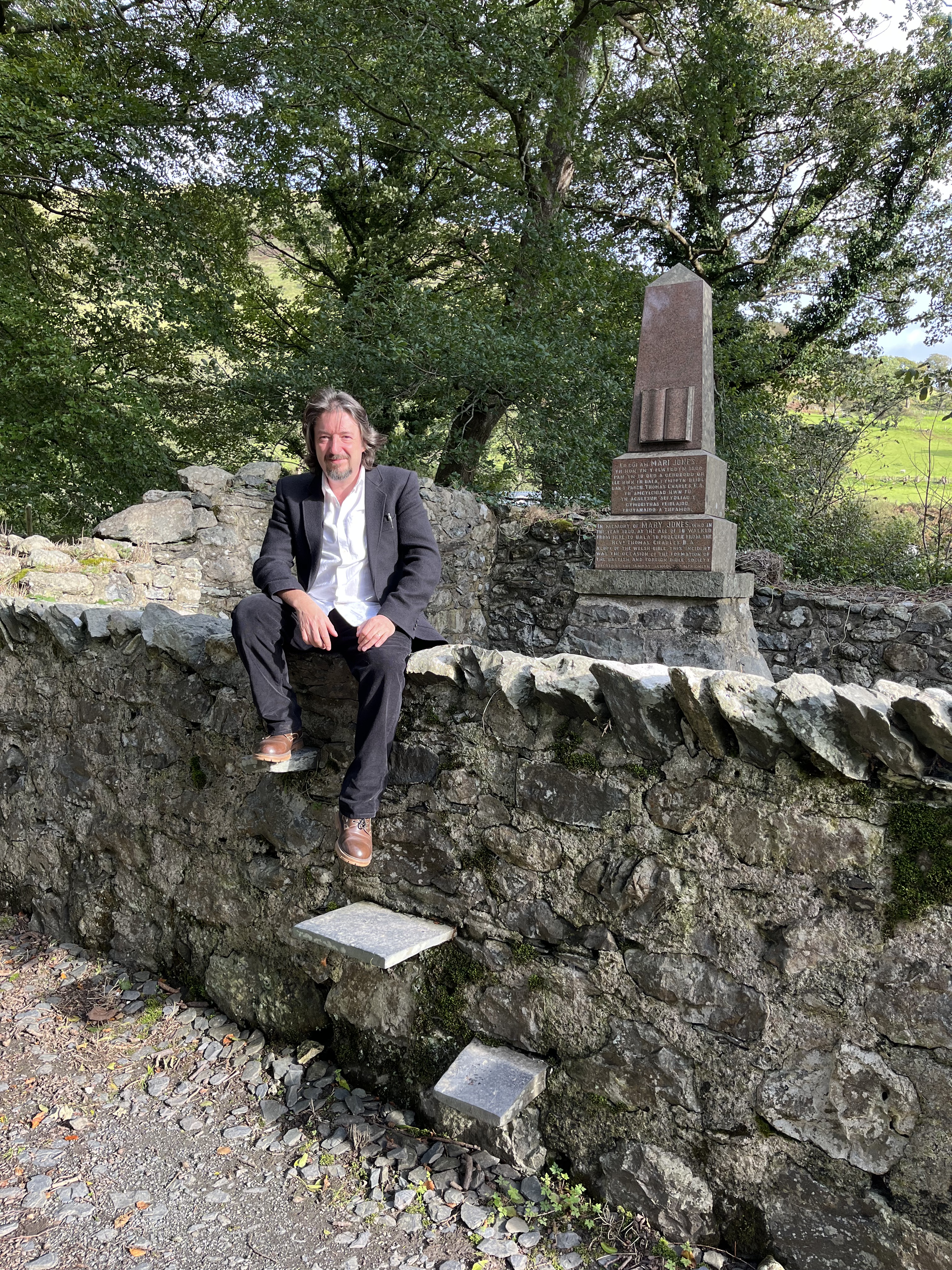
Recently I visited the home of Mary Jones (1784-1864) in Llanfihangel-y-Pennant, Wales.
As mentioned in a previous post I have visited places associated with the story of Mary Jones and her Bible over the past few years.
My intrigue in this historic story is continuing to broaden.
On this leg of my journey we returned to Bala and to the grave of Thomas Charles eventually making our way to the home of Mary Jones.
It was from Llanfihangel-y-Pennant that Mary worked and saved for around six years to buy her Bible. From this house (known locally as Tyn-y-ddol) Mary set off on her voyage to walk around 26 miles across the Welsh countryside to get her Welsh Bible from Thomas Charles. The story is legendary!
For me however, visiting this house is like being on a Protestant pilgrimage. It’s a beautiful little place and there’s a local church where the parents of Mary Jones are buried. Contrary to the published Sunday school versions of the story Mary’s father had died long before she got her Bible. Jacob Jones died in “1789” and his gravestone confirms this. At that time Mary Jones would have been about 4 years old.
Nevertheless the story is true in it’s essence and it’s impact on history is incredible.
The Sentencing of George Marsh
Posted by simon peter sutherland in Church of England, Martyr George Marsh on September 12, 2023
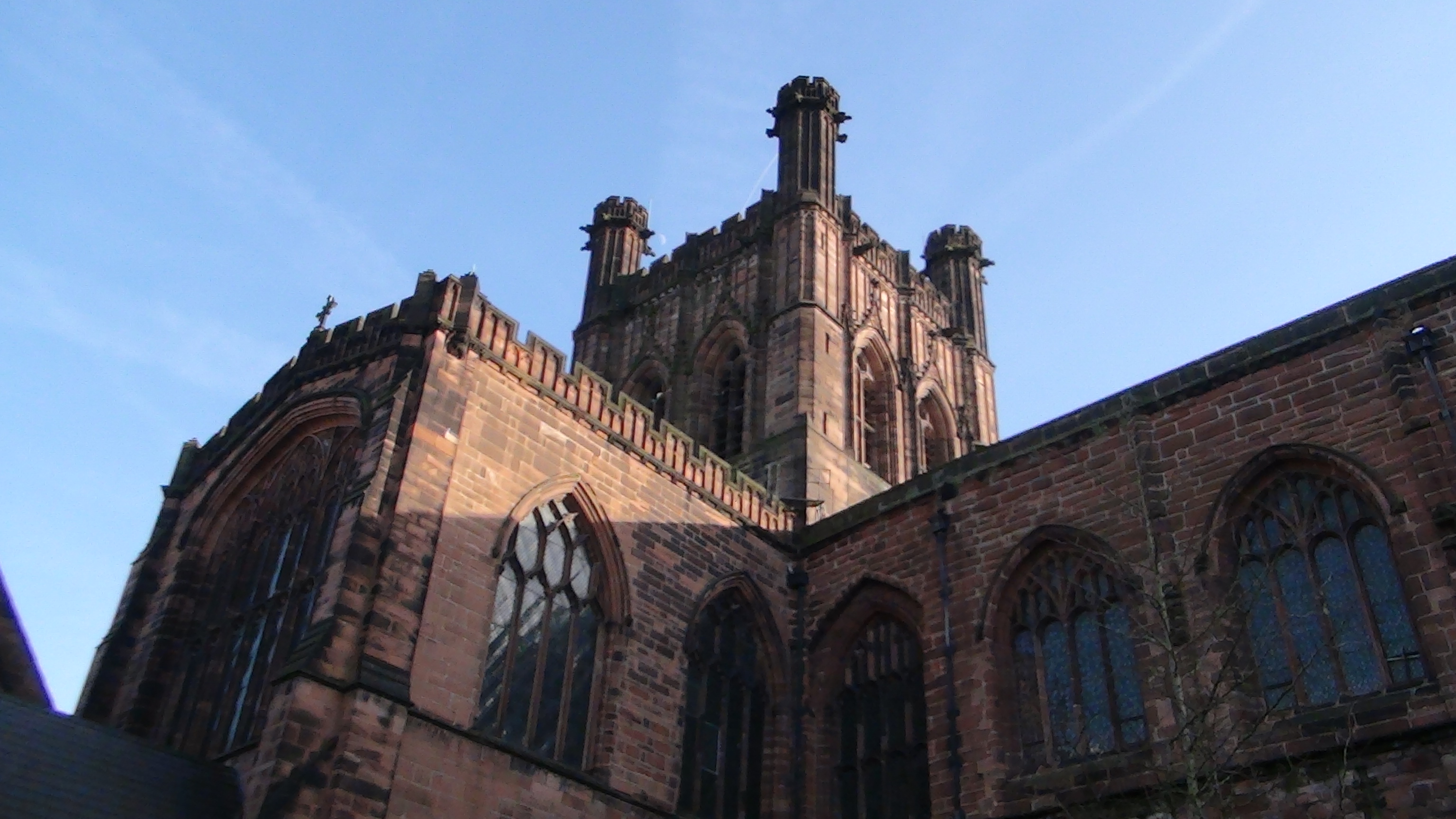
In 2015 Chester Cathedral put on a series of “scheduled short re-enactments” of the trial of George Marsh. These took place in the Consistory Court between 10th – 12th September.
The play was called “The Sentencing of George Marsh” and was performed exactly eight years ago.
At the Cathedral that day one of the ministers prayed a long prayer and remembered Marsh and all those who have suffered for the sake of the gospel, and for all those who are still suffering for the sake of the gospel. The minister read out the Lords Prayer and the re-enactment began. The beat of the drum sounded and the actors walked up the central aisle. As the telling of the story began the narrator explained how George Marsh was born in Deane and how he was accused of heresy. It was the Bishop of this very Cathedral (George Cotes) who had Marsh executed.
The Sentencing of George Marsh did not re-enact the burning and Marsh kept his Book in his hand throughout the trial.
It was a fitting re-enactment in memory of Marsh and I viewed it as a real breakthrough. To my knowledge no such acknowledgement had ever been done before. For me, to hear the prayer and watch the re-enactment was very significant and showed me how the Church of England can recant its failings in future years. It was a hopeful moment.
Hymn stories: Here is Love Vast as the Ocean
Posted by simon peter sutherland in Hymns, The Welsh Bible, Theology on August 22, 2023

Here is Love Vast as the Ocean is undoubtedly one of the greatest hymns ever written. For many Christians it communicates the essence of Christianity perfectly.
But what’s the story behind the hymn? And when was it written? Let’s look at some of the lyrics and explore. The hymn begins with these words;
“Here is love, vast as the ocean,
loving kindness as the flood:
when the Prince of Life, our Ransom,
shed for us His precious blood.
Who His love will not remember?
Who can cease to sing His praise?
He can never be forgotten
throughout heav’n’s eternal days.”
The above lyrics are an English translation by William Edwards. The original hymn was written by welsh poet, and minister William Rees of Llansannan. Rees was born in 1802 and today a memorial stands near the village church.
In his hometown William Rees was raised a Calvinistic Methodist and as a boy he worked as a shepherd on a farm. He was educated at the local village school during the winter months and he would also educated himself. Later he became involved in a local independent chapel and began preaching and was appointed minister at Mostyn in 1831 and Swan Lane in 1837. He became quite famous for his preaching, and in 1847 his hymn “Dyma gariad fel y moroed” (Here is Love) and was first published. Amidst growing popularity Rees moved to Liverpool and eventually to Chester where he died on 8 November, 1883.
Rees was not only a preacher but a very influential person in welsh politics. He was also the publisher of Yr Amserau (“The Times”) a journal printed in Liverpool. Rees was also in favour of the disestablishment of the church in Wales, views which no doubt contributed to the popularity of his hymn in during the welsh revivals of 1904-1905.
I have visited Llansannan many times and I find it a pleasant yet unsophisticated rural area. I also filmed in the area for my documentary on William Salesbury. Both Salesbury and Rees have Llansannan in common and for this reason I included my instrumental version of the hymn among the opening scenes of my film. For me, the lyrical depths of his hymn demonstrate how accurately he understood the message of Christianity. God is love and His love is vast as the ocean. Yet it cannot be ignored, his use of the ocean as a metaphor has many implications to it. To describe the love of God as being vast as the ocean, is to imply there is something to be feared. As great and vast as the ocean is many have perished in its waves. I have spent many days and hours of years in Wales and it is dominated by its glorious coastline. As a singer-songwriter I am aware how composers interpret the world they live into a lyrical art flow of poetic splendour. I believe the North Wales coast served as the source of illustration for this great hymn and have no doubt that Rees sat along the seafront and reimagined what it all means in light of the love of God. As vast as the ocean is, to journey upon it has been the destruction of many. Yet at the same time, it provides great pleasure, and food for all and helps nation meet nation.
Back in the Biblical times the ocean was one of main ways St Paul reached the gentiles. Yet like so many in the ancient Greco Roman world, he too faced shipwreck. He suffered a great deal for the cause of the gospel. There is no escaping it, life in Christ is both a joy and a conflict at the same time. Rather like the ocean, I admire its breathtaking eternity, yet I do not deny its power. I do not deny that many have taken a voyage upon the ocean, only to find themselves shipwrecked and lifeless at the bottom of the abyss.
I wonder if you think that love vast as the ocean means that because God loves us all, life is all smooth sailing from now on? In his hymn Rees makes a number of references to the “flood” and “fountains open deep and wide”, “floodgates” and “mighty rivers” all of which reflect North Wales in some sense. Likewise he also mentions the pain God in Christ endured to save us “on the mount of crucifixion”. Probably the most horrific and torturous method of execution in the Roman world.
These lyrics reflect the mystery of suffering. Of which some take the viewpoint that if God exists and cares for us, why does suffering exist? I would respond that it is because suffering exists God exists. We cannot have joy without pain. We cannot have goodness without evil. We cannot have light without darkness. As the sea exists so shipwrecks must exist. Suffering is love vast as the ocean, and I say this because God demonstrated His love by sending Christ to suffer and die for us, in our place. As the hymn says,
“Here is love, vast as the ocean,
loving kindness as the flood:
when the Prince of Life, our Ransom,
shed for us His precious blood.”
I have returned to Zipari Kos
Posted by simon peter sutherland in Biblical archaeology, Documentaries, The Bible on July 3, 2023

Those who are familiar with my previous writings and documentary work will know how fascinated I am with Paul’s visits to the Greek islands, especially Kos. On my previous visits to the Island of Hippocrates I repeatedly travelled to an area known as Zipari.
For those who do not know, Zipari is a modern town along the highway of Kos, yet back in the 1st century it would have been quite remote.
Today Zipari is about 8.3 – 11 kilometres from the general area of Kos town, which is without question the definitive location of Acts 21: 1. Kos town harbour is the exact place where Paul and Luke landed.
Yet at Zipari the 5th century remains of St Paul’s basilica can be seen. Here Italian archaeologists have found ancient mosaics.
For some reason previously unknown to me I have been very intrigued by this place and have been unable to let it pass. The sign reads like so:
“St Paul the Apostle
visited this place during his
third missionary journey”
This exact sign can also be scene in St Paul’s Bay, Lindos. Both Rhodes and Kos are present in Acts 21: 1. Likewise both signs quote the same Scripture, “There is neither Jew nor Greek, slave nor free, male nor female, for you are all one in Christ Jesus.” (Galatians 3: 28)
But what is it about Zipari that intrigues me so? The answer is I think it possible St Paul may have visited here? as I think he visited Lindos.
Revisiting Kos once again was a new experience for me. With many things behind and a new path in front of me I wanted to explore the area from another perspective so I followed that instinct and an old wall. This gave me a lot of insight and I’m now on a journey to discover more. Where this will lead I do not know?
My aim has been to explore Acts 21: 1 from an imaginative perspective and discover more about the meaning of that verse. Making my way through the ancient sections of Kos harbour, the agora and the Western Archaeological site, I am gaining a more vivid picture of Luke’s narrative and the pieces of my puzzle are falling into place.
In my fist documentary on Kos I explored the island from the perspective of St Luke. This led me to the ancient Asklepion of Kos, yet in my previous documentary I explored the island from the perspective of St Paul and this took me on a very different voyage.
This is reflective in the closing words of that film:
“Back to the harbour, I found myself contemplating what exactly happened when Paul and Luke visited this island. But I suspect I may never truly know this side of eternity.”
It was at the location of those scenes where I began this new era of my voyage. I am content to follow on as the Lord leads. It seems my voyage to Kos may not be over after all.
Reflections on the Coronation of King Charles 111 at Manchester Cathedral and evangelism on the streets
Posted by simon peter sutherland in Christianity, Evangelism on May 8, 2023
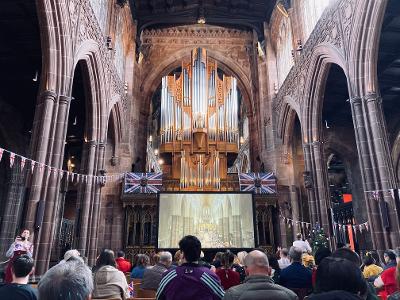
The day of the coronation of King Charles 111 was a very busy day for many folks. People from all over the country and the world flocked to London to be a part of the extravaganza. People lined the streets in London to watch the procession as the king made his way to Westminster Abbey.
I spent the morning at Manchester Cathedral to watch the broadcast and was interviewed for TV. Later I used the opportunity to reach people in the north for Christ. Over 800 people attended the Cathedral that day. Manchester is a great place for evangelism and people are open to calmly receiving the gospel.
So what then are my reflections on the coronation? I actually quite liked the symbolism and the use of Scripture. I recognised a lot of symbolism and Scriptures used. On that note the Bible Society has published a well researched article on this and you can view it here.
After the coronation I took to the streets and did the work of an evangelist, (2 Timothy 4: 5) Plenty of people were reached that day and many tracts given out. As always the day was packed with excellent and open conversations with the people who lingered around the market places.
One to one conversation is very effective, engaging and rewarding.
That’s a day to remember and let’s hope there will be a better, brighter, stronger and greener country to look forward to. Remember, if we didn’t have a monarchy, then parliament would only be answerable to parliament. What happens then?
I like many people have mixed opinions concerning the existence of monarchy but when it’s all said and done it keeps a long standing tradition going and offers our nation an identity.
Whatever a persons view is, when it comes to evangelism and the sharing of the gospel I keep things focused upon that singular event of the resurrection of Jesus Christ. I have yet to find anyone who can verifiably object to that reality.
Simon Peter Sutherland
-

 Simon Peter Sutherland