Archive for category Christianity
My new book on the Ten Commandments
Posted by simon peter sutherland in Christianity, The Bible, Theology on May 10, 2025
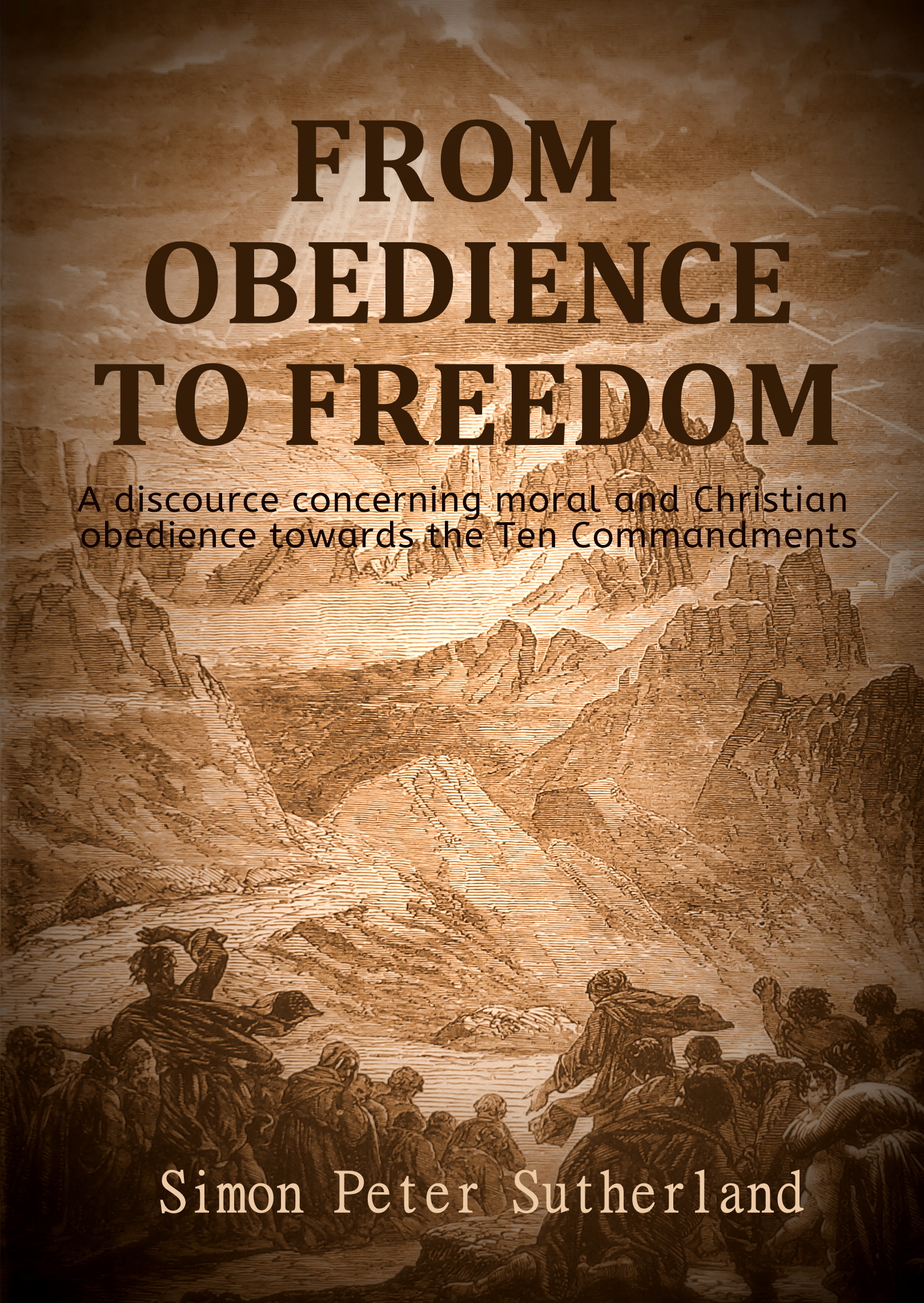
For many years I have been writing a number of books and wanting to release them. Books can take a long time to put together and they won’t write or publish themselves, so I have decided it is now time to put them out there.
As a Christian I have very deep convictions about holy living and obedience to Scripture and I am constantly writing about them. Some of these writings are reflections and others are yet to be published. One of these books includes my present discourse on the Ten Commandments and their relationship to the Christian life. This work began many years ago and I have rewritten and revised it many times. When I first wrote it, the book began as a somewhat puritanical discourse and over time, I have improved the book while remaining true to the original concept.
In “From Obedience To Freedom” I have used the King James Version and I argue there is a place of freedom in obeying the Ten Commandments in simplicity and in faith.
In our world we are caught up in society and day to day life, in doing the law of man. Our culture is constantly trying to remove us further and further away from Christ and closer to the world. Sin is forever trying to cause the Christian to obey it. But no Christian is obliged to obey the laws of sin and for this reason the Ten Commandments are very helpful in bringing us closer to God. I argue there is much more to the Ten Commandments than mere rules and regulations, there is a place of inner freedom where the human soul can find liberty in law and within ourselves.
In Christ and His commandments we can be free from this world and that freedom can be found in obedience to our Lord. This is what my book is essentially about and I have now released it through Amazon and I hope my readers find it helpful.
Was Saint Paul shipwrecked on Kefalonia?
Posted by simon peter sutherland in Bible translation, Biblical archaeology, Documentaries on August 9, 2024

In my new documentary I close the episode with a reference to the shipwreck of Paul on the island of Melite. The central theme of the documentary focuses upon the life and ministry of Saint Titus on Crete and concludes with a reference to the epic journey of Paul who was shipwrecked on his way to Rome. It’s a passionate and dynamic narrative to say the least.
I refer to the island as Melite for a distinct reason, this is the greek word Luke uses in Acts 28: 1.
Most English Bibles translate Melite as “Malta“, however for textual and geographical reasons I do not believe the translations are correct here. Malta is way off the map for the actual island Luke was writing about and is not in the Adriatic sea as Luke clearly states it was in Acts 27: 27.
However many people believe Malta is the island where Paul was shipwrecked and I have visited St Paul’s Bay myself and the little church is one of my favourite places on earth. However, over recent years and after studying old maps I have come to conclude that Malta is not the location of Acts 28 and have narrowed down two or three possible locations where the shipwreck could have taken place.
In a recent article published by Eric Metaxas it is claimed that “Paul was shipwrecked on Kefalonia, not Malta” and evidences are given to support that claim. I am familiar with the opinions that are expressed in the article and locals on Kefalonia claim Paul was shipwrecked at Pessada. This is the location in the closing scene of my film and in the photo above. It should be noted there are archaeological remains present at that place which cannot be denied.
But is it true? Was Saint Paul shipwrecked on Kefalonia? It would be great if it is true, it’s a beautiful island with a wealth of Christian history. However, it should be pointed out that if it is true and Paul was not shipwrecked on Malta, serious concerns are raised regarding the accuracy of English Bibles.
But did it really happen this way? Was Paul really shipwrecked on Cephalonia, or someplace else?
This theme has been a long endeavour for me since I first visited Malta in 2005 and I hope to explore this topic in greater detail in the future. Having visited the location of Pessada, Kefalonia, the argument is extremely stimulating and I am continuing my research.
“In Search of Saint Titus and Paul on Crete”
Posted by simon peter sutherland in Biblical archaeology, Documentaries on June 26, 2024
Great news, my long awaited documentary “In Search of Saint Titus and Paul on Crete” is now available on YouTube.
In this documentary I explore Paul’s Epistle to Titus and its connections to passages in Acts of the Apostles. I visit Fair Havens, Gortyna, and Heraklion and a few other places, all in search of Saint Titus and Paul.
This documentary marks my ten year quest to uncover St Paul’s associations with the Greek Islands and I hope it is a blessing to you.
The Resurrection of Christ did happen
Posted by simon peter sutherland in Christianity, The Bible on March 31, 2024
Over Easter I have posted a number of articles surrounding the crucifixion of Christ. These have been on the Titulus Crucis, the universal offing of Christ, and the case for Christ’s crucifixion on a Thursday.
This post on Easter Sunday relates to Paul’s statement that the resurrection of Christ was witnessed by 500 people at one time. This statement can be found in 1 Corinthians 15: 1-8 (NKJV).
“Moreover brethren, I declare to you the gospel which I preached to you, which also you received and in which you stand, by which also you are saved, if you hold fast that word which I preached to you – unless you believed in vain.
For I delivered to you first of all that which I also received: that Christ died for our sins according to the Scriptures, and that He was buried, and that He rose again the third day according to the Scriptures, and that He was seen by Cephas, then by the twelve. After that He was seen by over five hundred brethren at once, of whom the greater part remain to the present, but some have fallen asleep. After that He was seen by James, then by all the apostles. Then last of all He was seen by me also, as by one born out of due time.”
This letter is generally believed to have been written about 53-57 AD.
As I have previously stated, “This claim is extraordinary. Some may say ‘well, that’s just what the Bible says...’ as though the resurrection of Jesus is just a claim made in the Bible alone and that the Bible is just another religious book. But the problem is, even if the entire New Testament, or the individual writings were not part of the Bible, the letter of Paul to the Corinthians would still be extant. Even as a singular document, Corinthians would still stand as a historical source by itself.”
We can be certain that the resurrection of Christ is an absolute fact and the stone was rolled away, not by the Romans, or by early Christians, but by an angel of the Lord (Matthew 28: 2-4)
Wherever you are this Easter, whatever you are going through, remember that Jesus Christ died for your sin and that He rose again for your justification.
Was Jesus crucified on Good Friday?
Posted by simon peter sutherland in Christianity, The Bible on March 30, 2024
I have been very reflective lately concerning the importance of Easter and I like many have been observing this important Christian festival.
I like Good Friday, and yesterday I was minded to post an article on the topic ‘Was Jesus crucified on a Friday?’ I wanted to present my thoughts concerning the historic perspective of the crucifixion day rather than the traditional day celebrated by the church.
For many believers and unbelievers it is automatically assumed that Jesus was crucified on a Friday and I don’t want to be insensitive to believers who might want to remember Good Friday as the day our Lord was crucified. I too hold Good Friday in regard. However I have decided to mention a few reasons why I believe it is more likely that Jesus was crucified in the middle of the week either on a Wednesday or a Thursday.
Here are my reasons;
- Mark 15: 42 places the evening of the crucifixion at the beginning of preparation day, “the day before the Sabbath” (NKJV).
- Luke 23; 54 places the burial of Jesus on preparation day with the Sabbath drawing near.
- John 19: 42 also places the laying of Jesus in the tomb on preparation day.
- Matthew 27: 62 places the gathering of the chief priests and the Pharisees on “the next day” after the crucifixion on “the Day of Preparation” (NKJV).
It is important to note that the event of the crucifixion and death of Jesus had already taken place at the point we meet these verses. This means a whole day had gone by where Jesus faced a series of trials leading to His crucifixion and death, and in the Jewish calendar the day begins at sunset, as stated in Genesis 1: 5 “the evening and the morning were the first day.“.
In contrast to our western minds when a new day begins at midnight, the new day in Biblical Israel began at sunset. This means the preparation day began on Thursday evening, meaning that Jesus had been crucified earlier on that day.
Likewise, in Matthew 12: 40 Jesus prophesies that “as Jonah was three days and three nights in the belly of the great fish, so will the Son of Man be three days and three nights in the heart of the earth.” (NKJV)
I have looked at many arguments concerning this and there seems to be no way around it; no matter how we look at it, Friday to Sunday does not give us three days and three nights. On the contrary, it would be more fitting to say this;
- Thursday evening to Friday evening gives us one day and one night.
- Friday evening to Saturday evening gives us one day and one night.
- A Saturday evening to a Sunday morning gives us one night and a morning.
Thus multiplied together gives us a period of three days and three nights, leaving Jesus rising from the tomb on the third day being a Sunday morning. Luke 24: 1 places the first sighting of the resurrection of Christ on “the first day of the week, very early in the morning,”
If Jesus was crucified on a Wednesday, that would give us even more time, and perhaps too many days. However, if Jesus had been crucified on a Friday, that would only give us a Friday and Saturday evening being only two nights and would not answer the statements made that Jesus was laid in the tomb as the Preparation Day was approaching and just begun.
In order to believe that Jesus was crucified on a Friday one would have to interpret Matthew 12: 40 in a metaphorical or symbolic sense and not literal.
I hope these thoughts give you pause for reflection during this important festival when we remember what Christ has done for us.
Is the Titulus Crucis authentic?
Posted by simon peter sutherland in Biblical archaeology on March 22, 2024
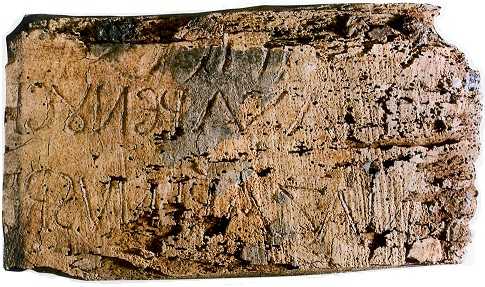
In the Church of Santa Croce in Gerusalemme, Rome, is an artefact known as the Titulus Crucis.
Titulus Crucis is Latin for title of the cross and the item in focus is a piece of wood which is claimed by some to be the actual sign placed on the cross above Jesus’ head 2000 years ago and it may well be? It certainly seems consistent with the gospels to me.
In the gospel of Luke 23: 38 this title was written in Greek, Latin and Hebrew and reads,
“THIS IS THE KING OF THE JEWS”
In the gospel of John 19: 19 the title is written in Hebrew, Greek and Latin and reads,
“JESUS OF NAZARETH, THE KING OF THE JEWS”
The Titulus Crucis is written in Hebrew, Greek and Latin. I have viewed this item a number of times and I am fascinated by it.
The story goes that in the 4th century Helena (mother of Emperor Constantine) travelled to Jerusalem to discover the items associated with the life of Christ and she famously found the true cross and the nails and the Titulus Crucis. This history is attested to by Ambrose (c. 339-397) and Chrysostom (died 407)
Likewise a pilgrim named Egeria travelled to Jerusalem about 381/2-384 and wrote about seeing this item in a chapel and the writings of Egeria are considered very reliable.
The story goes that Helena kept a section of the Titulus in her own private chapel and in later centuries the item was thought to be lost until it was rediscovered above the altar.
I have visited Helena’s chapel a number of times and I have spent considerable time looking at the Titulus Crucis in another room and even though I am not a Roman Catholic nor have any part in that religion, nor do I consider the early Roman Church to be the same religion, I view this item as sacred. I do not know of any evidence to make me consider it to be a forgery.
In contrast to the accounts in Matthew 27: 37, Mark 15: 26, Luke 23: 38 and John 19: 19 the Titulus Crucis does not read as though it has been copied from the four gospels but has its own character.
In my opinion Matthew’s gospel was originally written in Hebrew whereas a version of Luke was written to a Roman official in Latin and John in Greek. For these reasons I believe it is possible that Matthew was quoting the Hebrew line of text, Mark the Greek line of text and Luke the Latin line of text and John the Greek line of text. This accounts for the minor differences in all four gospels.
Matthew 27: 37 reads “THIS IS JESUS THE KING OF THE JEWS.”
Mark 15: 26 reads “THE KING OF THE JEWS.”
Luke 23: 38 reads “THIS IS THE KING OF THE JEWS.”
John 19: 19 reads “JESUS OF NAZARETH THE KING OF THE JEWS.”
When viewed from this perspective I believe there is no contradiction in the gospels. Each author was writing from a specific section of the title and from the perspective of their intended audience.
Likewise I am of the opinion that the original title may have been highlighted in some way to make it more readable for the passers by, and this item is believed to have been covered in white chalk and the carved out text to have been painted black.
When I have looked closely at the item it is very clear that the carved writing is rugged and unique, and to me the writing reflects the urgency and controversy of the moment as implied by the context of John 19: 19 where John writes that “Pilate wrote a title and put it on the cross.”
For me this is a very important observation.
I have returned to Zipari Kos
Posted by simon peter sutherland in Biblical archaeology, Documentaries, The Bible on July 3, 2023

Those who are familiar with my previous writings and documentary work will know how fascinated I am with Paul’s visits to the Greek islands, especially Kos. On my previous visits to the Island of Hippocrates I repeatedly travelled to an area known as Zipari.
For those who do not know, Zipari is a modern town along the highway of Kos, yet back in the 1st century it would have been quite remote.
Today Zipari is about 8.3 – 11 kilometres from the general area of Kos town, which is without question the definitive location of Acts 21: 1. Kos town harbour is the exact place where Paul and Luke landed.
Yet at Zipari the 5th century remains of St Paul’s basilica can be seen. Here Italian archaeologists have found ancient mosaics.
For some reason previously unknown to me I have been very intrigued by this place and have been unable to let it pass. The sign reads like so:
“St Paul the Apostle
visited this place during his
third missionary journey”
This exact sign can also be scene in St Paul’s Bay, Lindos. Both Rhodes and Kos are present in Acts 21: 1. Likewise both signs quote the same Scripture, “There is neither Jew nor Greek, slave nor free, male nor female, for you are all one in Christ Jesus.” (Galatians 3: 28)
But what is it about Zipari that intrigues me so? The answer is I think it possible St Paul may have visited here? as I think he visited Lindos.
Revisiting Kos once again was a new experience for me. With many things behind and a new path in front of me I wanted to explore the area from another perspective so I followed that instinct and an old wall. This gave me a lot of insight and I’m now on a journey to discover more. Where this will lead I do not know?
My aim has been to explore Acts 21: 1 from an imaginative perspective and discover more about the meaning of that verse. Making my way through the ancient sections of Kos harbour, the agora and the Western Archaeological site, I am gaining a more vivid picture of Luke’s narrative and the pieces of my puzzle are falling into place.
In my fist documentary on Kos I explored the island from the perspective of St Luke. This led me to the ancient Asklepion of Kos, yet in my previous documentary I explored the island from the perspective of St Paul and this took me on a very different voyage.
This is reflective in the closing words of that film:
“Back to the harbour, I found myself contemplating what exactly happened when Paul and Luke visited this island. But I suspect I may never truly know this side of eternity.”
It was at the location of those scenes where I began this new era of my voyage. I am content to follow on as the Lord leads. It seems my voyage to Kos may not be over after all.
Reflections on the Coronation of King Charles 111 at Manchester Cathedral and evangelism on the streets
Posted by simon peter sutherland in Christianity, Evangelism on May 8, 2023
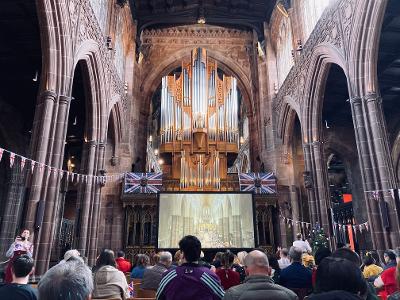
The day of the coronation of King Charles 111 was a very busy day for many folks. People from all over the country and the world flocked to London to be a part of the extravaganza. People lined the streets in London to watch the procession as the king made his way to Westminster Abbey.
I spent the morning at Manchester Cathedral to watch the broadcast and was interviewed for TV. Later I used the opportunity to reach people in the north for Christ. Over 800 people attended the Cathedral that day. Manchester is a great place for evangelism and people are open to calmly receiving the gospel.
So what then are my reflections on the coronation? I actually quite liked the symbolism and the use of Scripture. I recognised a lot of symbolism and Scriptures used. On that note the Bible Society has published a well researched article on this and you can view it here.
After the coronation I took to the streets and did the work of an evangelist, (2 Timothy 4: 5) Plenty of people were reached that day and many tracts given out. As always the day was packed with excellent and open conversations with the people who lingered around the market places.
One to one conversation is very effective, engaging and rewarding.
That’s a day to remember and let’s hope there will be a better, brighter, stronger and greener country to look forward to. Remember, if we didn’t have a monarchy, then parliament would only be answerable to parliament. What happens then?
I like many people have mixed opinions concerning the existence of monarchy but when it’s all said and done it keeps a long standing tradition going and offers our nation an identity.
Whatever a persons view is, when it comes to evangelism and the sharing of the gospel I keep things focused upon that singular event of the resurrection of Jesus Christ. I have yet to find anyone who can verifiably object to that reality.
Easter reflections on Simon Peter and the Resurrection of our Lord and Saviour Jesus Christ
Posted by simon peter sutherland in Christianity on April 6, 2023
One of my favourite modern Biblical documentaries is David Suchet’s “In the Footsteps of St. Peter”. In this film the actor traces the steps of St Peter from his early days in Israel, to his possible connections to Cappadocia and the final events of his life in Rome. Although I don’t connect St. Peter with the Vatican, I believe he was in Rome. It’s a fascinating place!
Fascinating for me, since St Peter is one of the leading figures of the New Testament and a person I can connect with. I was named after the apostle by my parents. Simon Peter is my given name. When I was growing up my father had a book called “The Big Fisherman” and it meant a lot to me. As a family we often watched “Peter and Paul” (1981) starring Anthony Hopkins, as Paul and Robert Foxworth, as Peter. I still enjoy that series and when we were in Rhodes, we visited a number of filming locations where key scenes were shot. One of these was in Rhodes Town, near St Paul’s Gate. Lindos also features as a filming location, which adds more realism to the film since Paul visited there (Acts 21: 1)
Like David Suchet’s documentary, “Peter and Paul” portrays Peter as a very strong person, and does not white wash his humans faults. In the gospels Peter is up and down, he makes mistakes and even denies knowing Jesus (John 18: 15-18) Yet in Acts 2: 14-39 Peter’s sermon is courageously outstanding. A proof of the indwelling presence of Holy Spirit.
Peter’s life can be understood to show that Christian’s are not perfect, if they were they would not need to be Christian’s. Yet his life also shows a progression from a sinful man to an apostle absolutely dedicated to Christ.
No surprise then that Simon Peter, (Shimon or Simeon) is an important figure in my Christian life. Like Peter I too have been a preacher and also a fisherman. One of my favourite pastimes are my days of sea fishing along the shores of the Atlantic Ocean and the Irish Sea. For me there would be no greater pleasure than going out on the boat, catching fish from the shore and cooking them on the beach. Mackerel never tastes so good as when it cannot be fresher.
Back in the day I was just a simple musician desperately trying to get a recording contract, but each time something to do with church would deter or call me. Sometimes independent churches pressurise church goers to minister or evangelise even when it may not be their calling. I too at times wanted to be a minister but that has not yet come to pass. For me, going about in the Biblical lands, making free documentaries without all the fuss and clutter, works well. Maybe I’ve found my place in that.
But out of all the things in life, the uncertainties, the changes, the progressions, the ups and downs, one thing remains absolutely certain and that is the resurrection of Jesus Christ. In 2 Peter 1: 16 Peter wrote; “For we did not follow cunningly devised fables when we made known to you the power and coming of our Lord Jesus Christ, but were eyewitnesses of His majesty.”
In John 20: 6 Peter witnesses the empty tomb and sees the “linen cloths lying there, and the handkerchief” that had been around the head of Christ. These were not scattered about, but folded together in a place by themselves. The eyewitnesses saw these happenings and believed. But it was not all a bundle of roses. The gospels communicate the real reactions of people. When the resurrection had happened and the body of Jesus wasn’t in the tomb, the apostles went fishing.
In John’s gospel Peter and the apostles are out on the boat and they weren’t catching anything. Then Jesus came along and told them where to fish and they caught “one hundred and fifty-three” (John 21: 11) In John Rylands Library, (my place of escape), there is a section above a stairway where the architectural dimensions are said to be built around St John’s reference. In sacred geometry 153 is apparently a sacred number communicating something of the dimensions of heaven.
In these days when Christianity is so difficult and it would seem like the whole world hates us and will not let us simply live in peace and practice our faith, there are times when I too (like Peter), withdraw and say “I’m going fishing” (John 21: 3) Then Jesus shows up and says ‘Simon, do you love Me, “Feed My sheep”.
For this reason I focus upon the truth of Christianity rather than the distortions of it. Feeding the sheep is better than arguing with wolves. I believe the proclamation of the Bible will overcome error. However, there has been many times when I have felt like walking away from Christianity and just keeping my faith to myself and simply go on living, doing my own thing. ‘Christianity’ has become so corrupt in many ways, I think. Too many churches are just exploitive money grabbing establishments of narcissism, power and people pleasing. If I focus upon them, it does no good. But then when I withdraw and keep focused upon who I am in Christ, and hold on to my Bible, I carry on and speak the truth. Christ raises me up and as one era draws to a closure, a new era opens up.
Perhaps some of you have felt this way? We are all only human after all.
Right now I do not know what the future holds for Christianity in Britain? I believe the truth will conquer in the end. Being in the Church of England I may well be seeing the final days of orthodoxy in that establishment? Glorious buildings, excellent liturgy, and when sung, Christ magnifying hymns edify the soul. Conservative evangelical Churches are growing. As for the rest, it’s not so good. Too many progressive liberal revisionists spend half their time arguing their way out of the liturgy.
Nevertheless, I wonder how you might let Christ serve you this Easter or Passover? Will you simply eat chocolate or attend a service? Or will you believe and go on believing. Will you let Christ serve you with a better breakfast than you have ever known before? Make life different this season, don’t let another year go by without doing something about it. If Jesus Christ truly rose from the dead, and I believe He did, the event cannot be anything else but earth shatteringly important and if He truly cares for you enough to die in your place, you cannot ignore Him.
No one need think that becoming a Christian means you must be perfect. Peter was not perfect, neither is any Christian. If we were we would not need a Saviour. Likewise believers need not feel over pressurised by other Christians as though imperfections make us false. We need the resurrected Saviour, without Him, humanity has no hope, and all our efforts and plans are nothing.
The Gospel and the Coronation of King Charles 111
Posted by simon peter sutherland in Christianity, Evangelism, The Bible on March 29, 2023
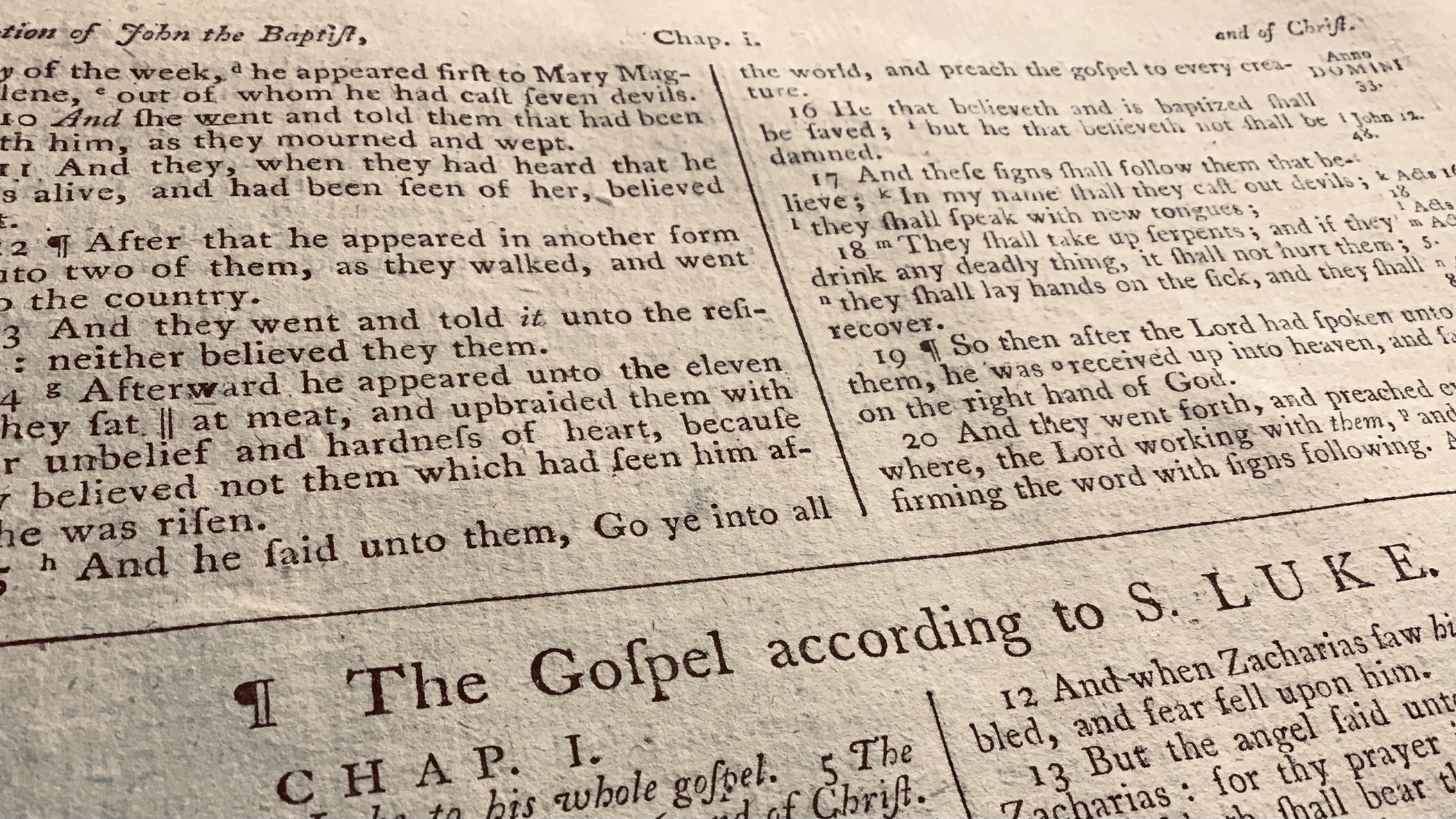
This week I received my Charles 111 Coronation gospel tracks from Living Waters. They look great! Full colour and the quality is excellent.
These tracks are basically well designed free handouts that make it easy to share the gospel with people in the events surrounding the Coronation of King Charles 111 in May, 2023. On the back of each of them you’ll find the plain gospel, 110%.
Recently the Church of England has said it plans to use the coronation to convert people to Christianity. What better way to do it? Since a majority of the bishops appear to be busy spreading confusion and division rather than converting anyone, I thought things sound ripe for the gospel. After all, people don’t need to be clergy or a bishop to evangelise. Politicians cannot change people, and bishops can’t either, it’s the evangelists who change things. And all of us have the right to share our faith.
With so much division being spread throughout the land it can never be a bad thing to invite souls into the kingdom of Christ. Never in my lifetime have I seen such a growing need for the gospel and indeed such a hunger for it. Make no mistake, people are hungry for the gospel in the uk despite what some would have you to believe. But so often, converts decrease because evangelists are few, and more often than not it is the church itself that prevents the gospel being shared. With apostasy all around us, and the Church of England in crisis, what better time than to use this opportunity to share the good news of the kingdom and win souls for Christ. There’s no need to cause offence, no need to argue with people, no need to shout on street corners, just be kind to people, share the good news of the gospel and be a light in the darkness. Let God do the rest!
Remember quality is better than quantity.
The gospel is simple, effective and when properly communicated, life changing. Keep things focused, don’t get caught up in distractions, Christ is crucified, Christ is risen, and no one is without sin, and we broke the moral law of God (contained in the Ten Commandments) “Jesus paid their fine.” so repent today and trust in Jesus Christ and God will give you eternal life.
Remember, you too can spread the gospel to a nation that has lost their way. Be you rich or poor, employed or unemployed, clergy or lay person, you too can be a powerful witness for the gospel and it’s free and available for all.
-
You are currently browsing the archives for the Christianity category.
Simon Peter Sutherland
-


