simon peter sutherland

Singer-songwriter, Christian theologian and independent documentary maker. https://simonpetersutherland.com/ http://shimeon.co.uk/
Homepage: http://enjoyingtheology.wordpress.com
Church of England and the consecration of women bishops
Posted in Issues with Christianity in England today on July 10, 2015
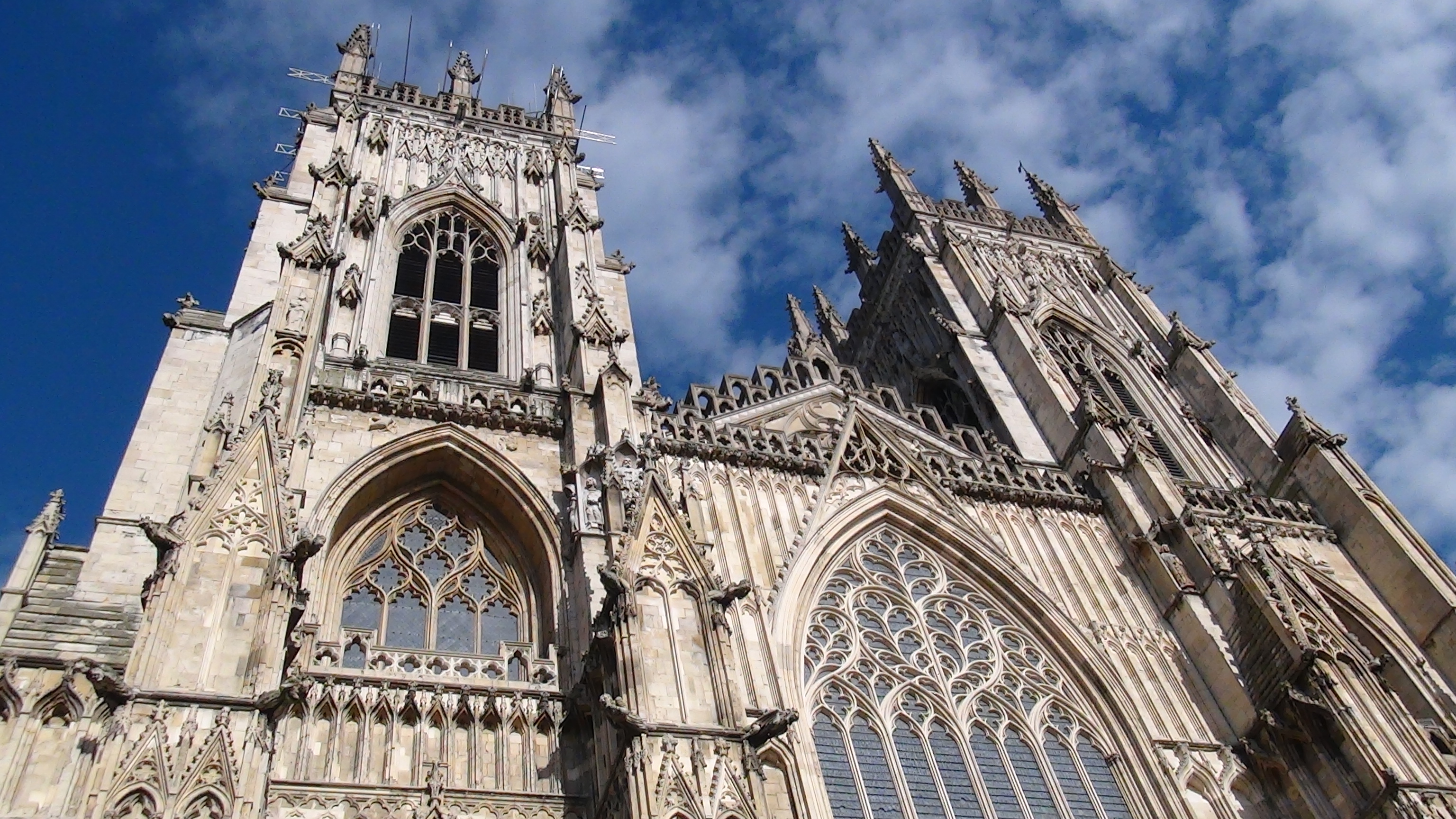
York Minister © 2015 Simon Peter Sutherland
Church leadership for women is changing. What with female activists and activist goals, the culture has been shifted by the media and many people have been persuaded by rhetorical speeches and sensuality. On 3rd July 2015 a second woman bishop was consecrated at York Minster. The Church of England remains divided upon this ‘unbiblical’ practice and during the consecration at York Minster, the Rev Stephen Holland Protested, walking through the Minster calling for the “Church of England” to “return to the Bible”. The Rev Holland is not an Anglican minister but there are many within the Church who disagree with the way things are going.
Since the 4th century AD to the 19th and 20th centuries, the Bible has been the dominant book of Western society, and in some sense, it still is. The relationship, which could be likened to a marriage between the West and the Bible has been interrupted by the gradual appearance of another lady. Society has become like a man who wants to keep parts of his wife while embracing the fancies of his sensuality. The situation we face today in the Church of England is a political structure which is attempting to re-define the Church in order to keep itself alive and financially secure. In doing this it ignores the Bible when it contradicts the liberal and feminist agenda, and merely re-interprets the rest to fit with changing times.
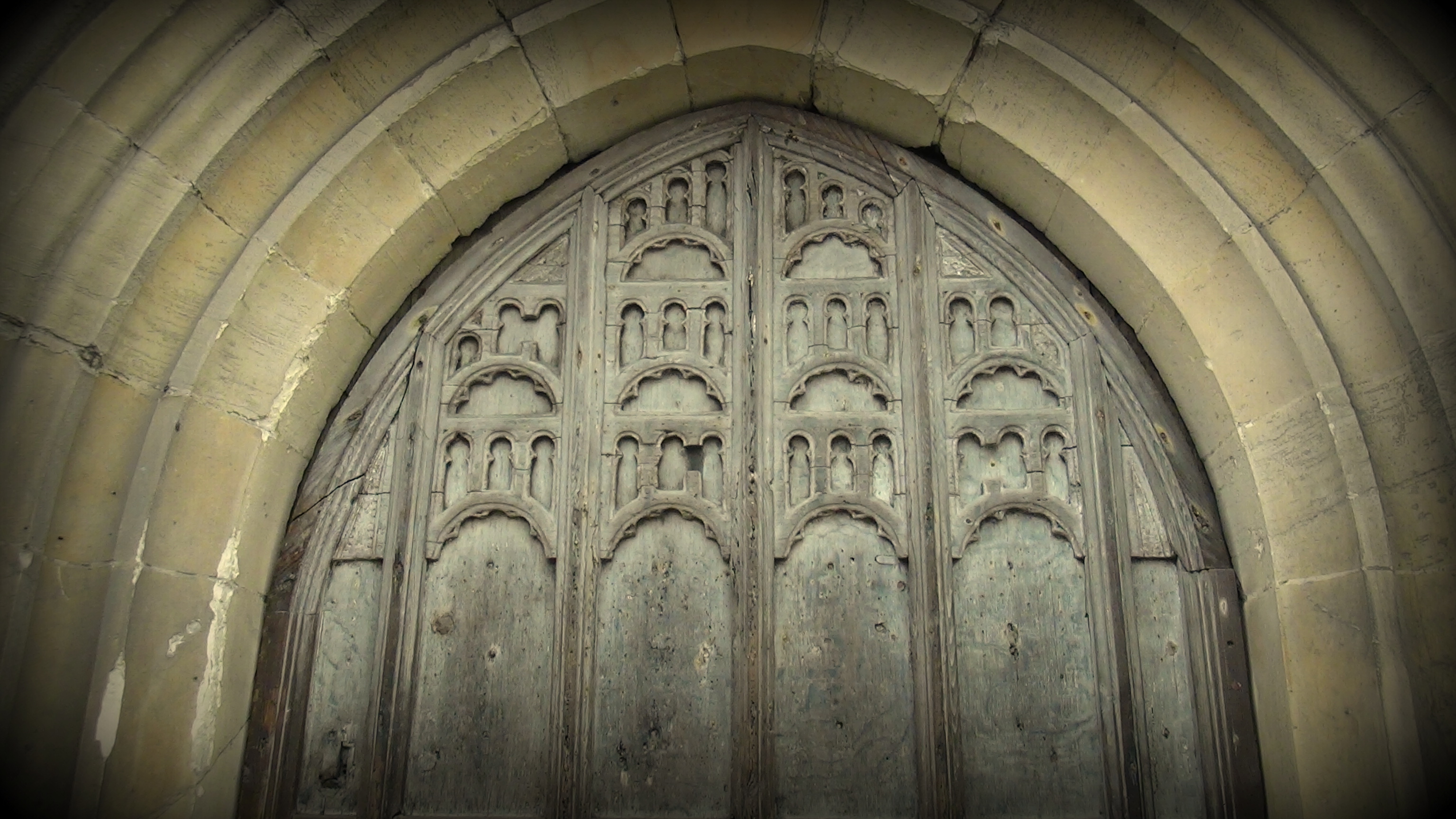
Closed Church door © 2014 Simon Peter Sutherland
The door is closed to the polemical position of women bishops. The majority C of E elite recognize Ecclesiastical history but merely look upon it as past, and claim ‘we need to move on from that now’. The problem is however, people can’t change things when there is no backbone to keep standing upright to witness the fall.
In 2008 a published study claimed that should the current decline of Anglican congregations continue, by 2050 Sunday service attendance could fall to 87,800. This seems to me the motive behind the current winds of change. By using the influence of historically significant and controversial changes and twisting them to suite the current agenda’s, the Church of England has merely lowered itself from integrity to rhetorical intellectual dishonesty. Repeatedly we hear the intellectually dishonest claims that modern liberation movements are mere continuations of great historic works such as ‘the Abolition of the Slave trade’ and those who oppose them are merely the same ‘sort’ as those who opposed freedom back then.
Intellectual dishonesty is not the way forward if you are in the right!
The facts remain that some of the greatest works the West has ever known have been established by fundamentalist Christians. And the establishment of the Church of England would do better to hold fast to its long standing historical tradition, than to have tasted Truth and turned its back upon it.
The very reason the 19th – 21st century decline of the Anglicanism came about was because of the spread of liberalism. A movement which dramatically failed to bring about evangelism to the salvation of souls thus giving people a reason to go to Church. Thus, the Church of England was swept away into irrelevance. Biblical Christians either attending or moving on to other more Biblically loyal Denominations, thus understandably bringing about more divisions for which they are not responsible.
Jesus’ command was for His disciples to “go and make disciples of all nations” not mere Church goers. The true soul winning Church has historically been anything but liberal. In fact, the Church of England was founded by people who would now be labelled ‘fanatical fundamentalists’.
The establishment of the Church of England dates back to the 6th century and was led by Augustine of Canterbury and in the 16th century when the Church broke from Rome, could either of these these foundations have been laid by anyone but ‘fanatical fundamentalists’? The facts remain that this establishment was once grounded upon the Biblical text and the historic writings of the Church fathers and ecclesiastical creeds and devout evangelical Christianity. Fair enough the Church of England/Anglican Church has many Godly people within it and has many devout Christian bishops and because of this the Church is divided on issues such as women bishops, but today, it seems that the elite ‘society for the prevention of Christianity’ has become so liberal and politically motivated, that the liberal lobby have trampled upon 2000 years worth of Ecclesiastical history and even Cannon Law. Thus making the present Church of England either irrelevant or illegitimate and guilty of intellectual dishonesty.
Cannon Law reads like so;
- “The doctrine of the Church of England is grounded in the Holy Scriptures and in the teaching of the ancient Fathers and Councils of the Church, and is particularly contained in the Thirty-nine Articles of Religion, the Book of Common Prayer, and the Ordinal.” (The Cannon Law of the Church of England. Of the Doctrine of the Church of England. V)
The Holy Scriptures read like so;
- “A bishop then must be blameless, the husband of one wife…One that ruleth well his own house, having his children in subjection with all gravity…(For if a man know not how to rule his own house, how shall he take care of the church of God?)” (1 Timothy 3: 2-5)
- “Let the woman learn in silence with all subjection.” 1 Timothy 2: 11
- “But I suffer not a woman to teach, nor to usurp authority over the man, but to be in silence.” (1 Timothy 2: 12)
- “Let your women keep silence in the churches: for it is not permitted unto them to speak; but they are commanded to be under obedience, as also saith the law.” 1 Corinthians 14: 34
The writings of the Church fathers states the following;
- “Even if it is granted to a woman to show the sign of prophecy, she is nevertheless not permitted to speak in an assembly. When Miriam the prophetess spoke, she was leading a choir of women … For [as Paul declares] “I do not permit a woman to teach,” and even less “to tell a man what to do.” (Origen, Fragmenta ex commentariis in epistulam i ad Corinthios)
- “It is not permitted to a woman to speak in church. Neither may she teach, baptize, offer, nor claim for herself any function proper to a man, least of all the sacerdotal office.” (Tertullian. On the Veiling of Virgins. 2nd century)
Finally the 39 Articles states the following;
- “And yet it is not lawful for the Church to ordain any thing that is contrary to God’s Word written, neither may it so expound one place of Scripture, that it be repugnant to another.” (39 Articles of Religion. Article XX. OF THE AUTHORITY OF THE CHURCH)
What has become clear today is that we are living in strange times. The Church has become like the world and seeking to appeal to it, which is contrary to Scripture (Romans 12: 2) But where does that leave the Church of England? In light of Scripture she paints a very bad picture of herself. As Thomas Cranmer once wrote;
- “But if the church proceed further to make any article of the faith, beside the Scripture, or direct not the form of life according to the same; then it is not the pillar of the truth, nor the church of Christ, but the synagogue of Satan, and the temple of antichrist which both erreth itself, and bringeth into error as many as do follow it.” (Archbishop Thomas Cranmer. Works of Archbishop Cranmer, Parker Society I, p 377)
So what I ask is where does this historical yet eternal reality leave the Church of England? What of our modern liberal bishops who have choked the breath of historic reliability? I can understand that some bishops are genuinely working for the survival of the Church, but they are going about it the wrong way. It was Jesus Himself who said “I will build My Church and the gates of hell will not prevail against it”. If the bishops were willing to submit to Scripture then Jesus would draw His flock to Shepherds true to His word. But in reality, too many bishops are not going to change for they are not willing. They have set themselves up as rulers and gods. They are not following any measuring line but their own ideas. The argument is not even about Scripture anymore, it has gone beyond that. They merely use Scripture to promote their own agendas. So in reality, there can be no way forward but to outnumber the liberals and win back the majority. In doing that, there needs to be an outpouring of true evangelism throughout Britain and the unbreakable power of the Holy Spirit. Then and only then will the Church be returned back to the truth, when Christians, not political spin doctors, are in the pulpits.
The Arch of Titus and Biblical Prophecy
Posted in Biblical archaeology, Biblical Scholarship on May 30, 2015
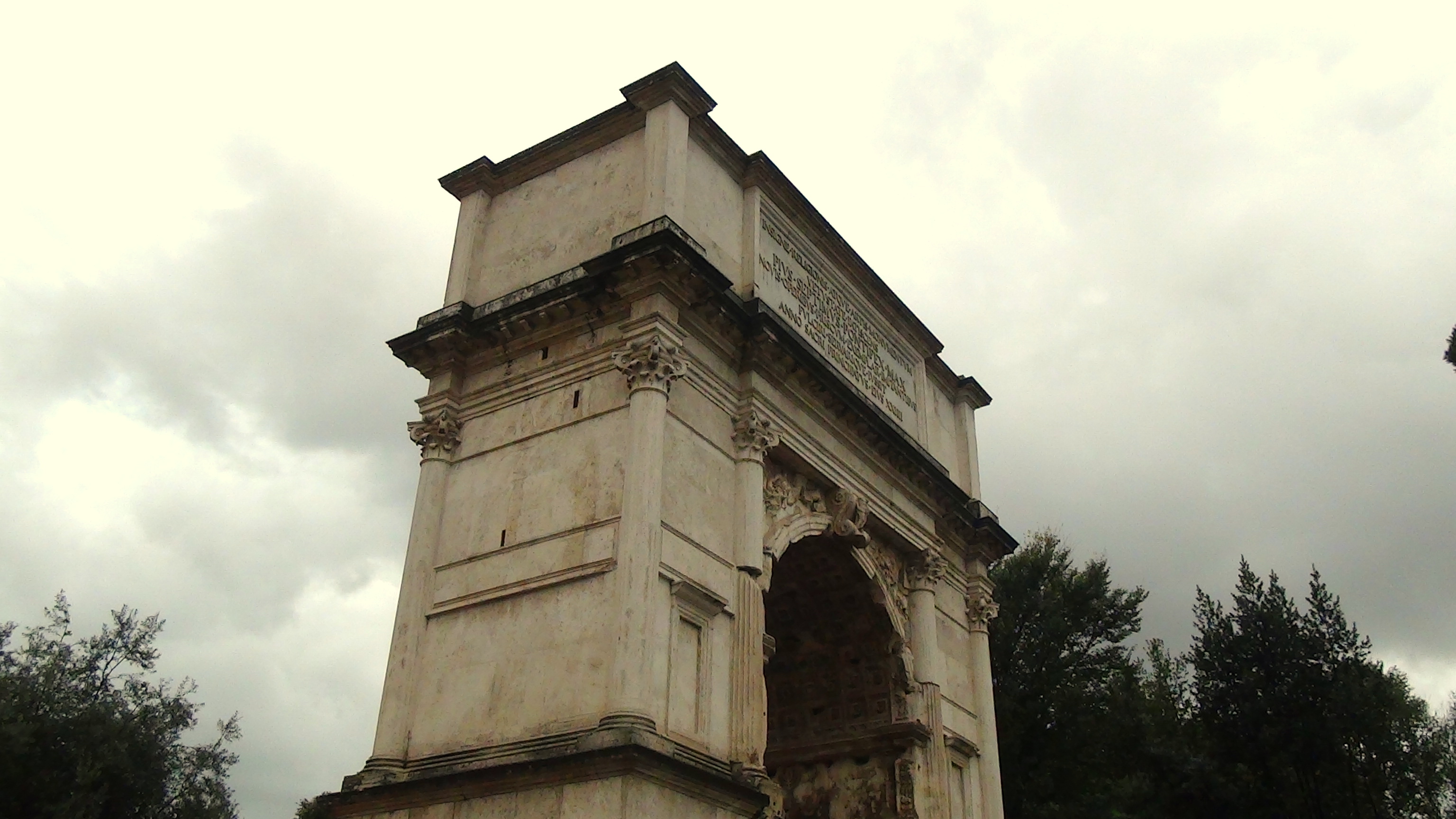
The Arch of Titus, Rome © 2015 Simon Peter Sutherland
In Rome there stands the Arch of Titus. This arch stands on the Via Sacra and was built c 82 AD to commemorate the Roman victory over Jerusalem and the Jewish people.
I had read about the Arch of Titus for many years, and during my visit to Rome it was quite a monumental moment for me to look directly at this treasure of the Biblical era.

The Arch of Titus, Rome and the Jerusalem Temple © 2015 Simon Peter Sutherland
The actual arch contains some of the few secular and historical images of the artefacts from the Herodian Temple and the siege of Jerusalem. The arch contains an image of the Menorah which was the very same Menorah that was standing in the Temple in Jerusalem when Jesus was on earth. The Arch also contains excellent representations of the gold Trumpets and the Table of Show bread as written about in the Bible.
It is claimed that the images were once coloured in gold and the background blue.
The inscription on the arch reads like so;
SENATVS
POPVLVSQVE.ROMANVS
DIVO.TITO.DIVI-VESPASIANI.F
VESPASIANO.AVGUSTO
A literal translation into English, would read something like this;
Senate
people Roman Titus divine
Vespasian son Augustus
With some emphasis on translation, it could read like this;
(The) Roman Senate and (the) people to (the) Divine Titus Vespasian son (of) Augustus.

The Arch of Titus, Rome © 2015 Simon Peter Sutherland
On another note, the situation I so often find myself in is at variance with so many modern claims of secular scholarship. I find it hard to respect certain branches of modern critical scholarship when certain claims are made against the Bible, arguing the narratives are not factual history, but merely religious fiction. These claims are at variance with me continuously, especially when I see facts such as the Arch of Titus standing before my very eyes.
The Arch of Titus strengthens the case to claim that the Synoptic Gospels of Matthew, Mark and Luke were all written well before AD 70, likewise the book of Revelation.
The following verses are affirmed by the Arch of Titus;
Matthew 24: 2
Mark 13: 2
Luke 21: 6
The thing is many modern scholars must claim the Gospels were written after AD 70 and not by eye witnesses or the truth of Biblical prophecy will be clearly seen. The Gospels claim that Jesus, during His incarnation, prophesied the destruction of the Jerusalem Temple around 40 years or more prior to the events themselves. The problem is that many modern critical scholars do not believe in prophecy and therefore approach the texts with that persuasion. Thus, if a person looks at the Biblical narrative through certain spectacles and in denial of the supernatural, that person will only see a natural explanation. Thus, the conclusion will be made that the Gospel narratives were written after the events they prophesied and not by eye witnesses.
As controversial a statement as it may seem these days, there is no actual evidence that the Gospels themselves were written after AD 70. On the contrary, the evidence of the Arch of Titus affirms the New Testament step by step and the Old Testament also.
This claim is not any new argument or contrary to Ecclesiastical history or historical Theology.
Watch “The Apostle Paul at Rhodes” on Revelation TV
Posted in Biblical archaeology, Documentaries on May 1, 2015
Since 2011 I have been producing and presenting a number of Biblical, Historical and Theologically based documentaries. I have been making films for a number of years now and my latest documentary “The Apostle Paul at Rhodes” was filmed in 2014 during my visit to the Greek Island of Rhodes. As part of a possible series and not unlike “The Apostles at Paphos” I visited the ancient sites associated with appropriate texts of Acts of the Apostles
The latest film is based upon a singular reference to Rhodes in Acts 21: 21, and somewhat explores the Apostle Paul and the theme of his mission to the Gentiles. Granted, there is no actual text that states that Paul spent time on Rhodes, but the theme is no less engaging or devoid of interest.
Local tradition on Rhodes claims that he visited Lindos, at a harbour known locally as ‘St Paul’s harbour” or ‘St Paul’s bay’ to tourists. This location is a popular destination and much of the documentary was filmed there.
I am very pleased to say that the Network premier of ‘The Apostle Paul at Rhodes’ can be viewed tomorrow (UK time) @ 2pm on RevelationTV SKY: 581, FREESAT: 692, FREEVIEW HD: 241 and Saturday 9th May 8pm, Sunday 17th May 11pm, Friday 22nd May 12: 30pm, and Saturday 30th May 6: 30pm.
Alternatively the documentary is available for viewing online at YouTube.
The Apostle Paul at Rhodes – New Documentary now on YouTube
Posted in England issues on April 5, 2015
The Nazareth Inscription and the Resurrection of Jesus Christ
Posted in Biblical archaeology, The Bible on April 2, 2015

Jesus Christ crucified from a 19th century engraving © 2013/15 Simon Peter Sutherland
During this time frame known as “Holy Week” in which Christians throughout the world of many denominations move toward Easter. In liturgical denominations, Christians remember Jesus’ triumphant entry into Jerusalem, where He was hailed as Messiah by His people who laid Palm leaves as He rode into Jerusalem on the back of a Donkey.
As the world looks on, our thoughts are on the Passion and the Resurrection of Christ.
It is with this in mind that my construct of conversation is not one which believes the many claims of our present modern scholarship, particularly those which deny the authenticity of the Bible, its claims and accuracy. Amongst the many criticisms, arguments, and speculative claims modern so-called ‘Biblical scholars’ make, I take a direct road that knows fully that the Bible is the Truth and that Jesus Christ truly died for our sins according to the Scriptures. As far as I am concerned, there is no debate: The Resurrection of Jesus Christ is a fact. However, one problem for some people is is that many modern secular scholars deny this, and present minds seeds into the unsuspecting public without really showing them the absolute information which is available.
For some reason, the ‘opinions’ of the academic elite appears to be more important to some people than the Truth itself.
One very important archaeological testament not so often presented by the so-called ‘academic elite’ is what is known as ‘The Nazareth Inscription’ or ‘The Nazareth Decree’. The tablet itself dates to the 1st century and was written in Koine Greek (The language of the New Testament) and was acquired in the 19th century from Nazareth, the home town of Jesus. This inscription is made of marble and contains a Greek edict from a Caesar.
This is a transcript of what it says:
“EDICT OF CAESAR
It is my decision [concerning] graves and tombs—whoever has made them for the religious observances of parents, or children, or household members—that these remain undisturbed forever. But if anyone legally charges that another person has destroyed, or has in any manner extracted those who have been buried, or has moved with wicked intent those who have been buried to other places, committing a crime against them, or has moved sepulcher-sealing stones, against such a person, I order that a judicial tribunal be created, just as [is done] concerning the gods in human religious observances, even more so will it be obligatory to treat with honor those who have been entombed. You are absolutely not to allow anyone to move [those who have been entombed]. But if [someone does], I wish that [violator] to suffer capital punishment under the title of tomb-breaker.”
When this edict is linked up with Matthew 28: 12-13, they match up perfectly.
George Marsh, Martyr 500th anniversary 2015
Posted in Martyr George Marsh on March 6, 2015
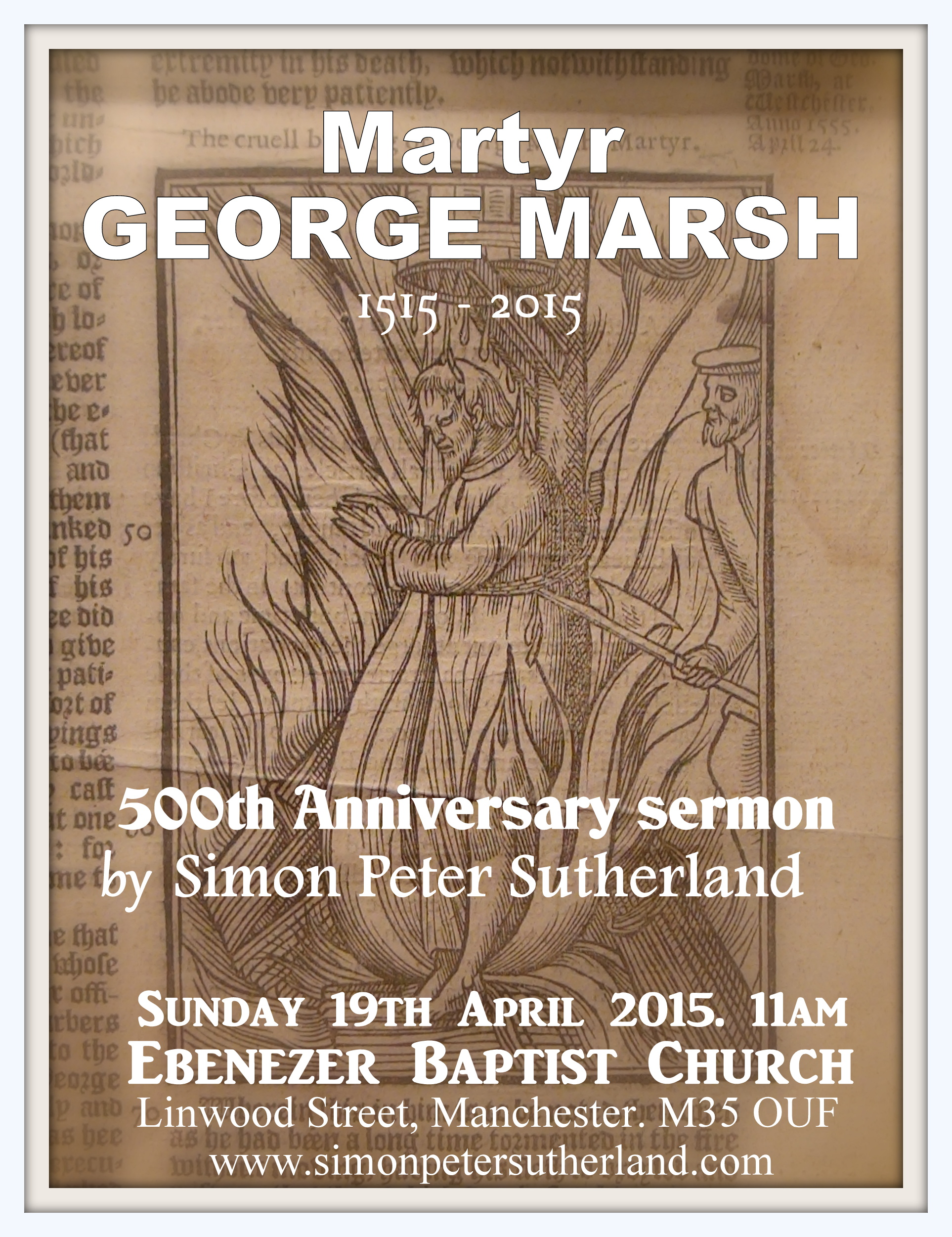
Marsh 500th anniversary sermon flyer
This year 2015 is the anniversary of the births of Scottish reformer John Knox, 17th century Puritan Richard Baxter and of the Protestant Reformed martyr, George Marsh.
Marsh was born in Deane, Bolton in 1515. He was a farmer by trade and married at the age of 25 and upon the death of his wife around 1548-49, he attended Cambridge during the English reformation and became Curate to Lawrence Saunders. He was hunted down during the reign of Mary Tudor and he handed himself in at Smithills hall, Bolton. He stood trial at Lathom House, and was imprisoned at Lancaster Castle and taken to Chester where he would stand trial at the Cathedral and where he was condemned a heretic and burned alive at the stake in Spittle Boughton on April 24th 1555.
As part of this, I think it is vital to the Christian Church that we always remember our own history and that we keep alive the memory of those who suffered for the testimony to the Word of God.
During the reign of Mary Tudor (1553-1558), at least 300 Protestant Christians were executed for their refusal to submit to the doctrines and demands of the Roman Catholic Church. They held the Bible in their hands and could not deny what is written in favour of the doctrines of men.
Today there are many political spin doctors within large Churches who seek to remember the reformation but move on from it. But the truth be told, we can’t. We see the likes of Rick Warren trying to persuade people to unite with Rome and look to what unites us rather than what divides us. But when its all said and done, the divide is made: The Roman Catholic Church has made the division and their views of Protestants are far more extreme than any fundamentalist Protestant could ever be.
In 1995 Pope John 11 apologised for the Roman Catholic Church’s role in burnings at the stake, yet in reality it was not his place to apologise in the 20th century for something that happened in the 16th century. Each man is responsible for his own actions, not for the deeds of others.
My aim is not to create more division between Protestants and Catholics, because as far as I am concerned, the divide is made. Anyone who believes what is written in the Bible cannot have unified fellowship with any Churches who forthright deny the Truth. We can talk together, debate together, reason together, and learn to live without harming anyone, but we cannot unite as one in Faith. On that we must stand strong.
The reformers of the 16th century knew this and they would not conform to false teaching no matter what the cost. George Marsh was one of them and he lost everything for the cause of the Gospel, even his own life.
My appeal to all Churches throughout the world who hold to the Reformed tradition, would you please consider remembering the life of the martyr and indeed all the martyrs at this vital time in our history. It is important to stress that this 500th anniversary will never occur again, so it is the responsibility of the Christian Church to remember our brethren in Christ.
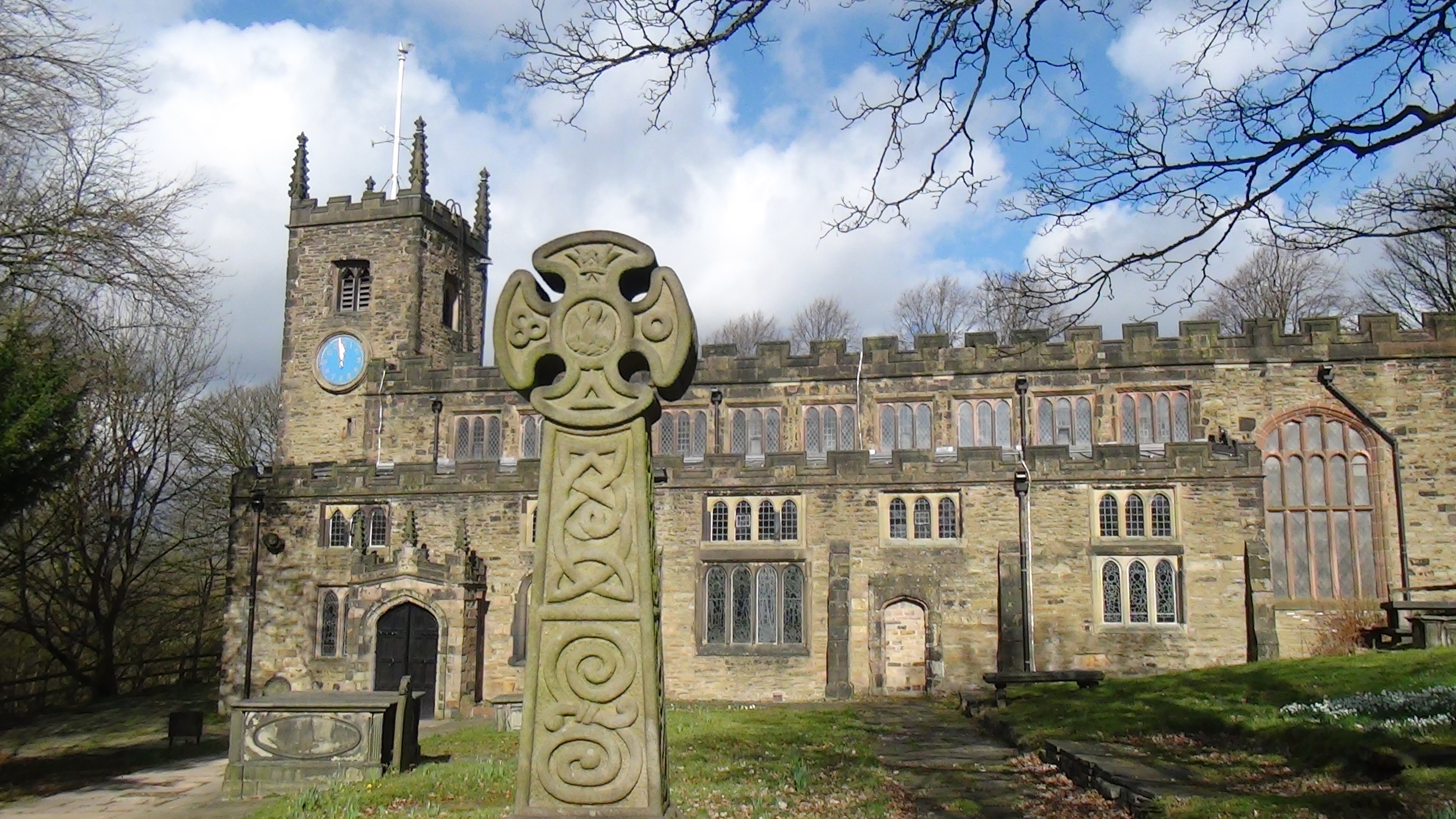
Deane Church, Bolton. Marsh’s local Church.
© 2015 Simon Peter Sutherland
If you have access to a pulpit and your a Deacon, or Dean, Curate, Priest, Elder or Pastor and are willing to tell this story at your local Church, you can find the story of George Marsh in the Foxe’s Book of Martyrs. If you do not have a copy, you can find it online or you can find sources at Deane Church’s website or if you wish, you can watch a documentary I produced on Marsh which is available free on YouTube
I will also be giving a sermon on the life of George Marsh on Sunday 19th April 2015 at Ebenezer Baptist Church, Manchester. All welcome.
Exodus: Gods and Kings and a secularisation of the Bible
Posted in new atheism, The influence of film on January 4, 2015
December 2014 saw the release of the latest rendition in the string of so-called Biblical movies. “Exodus: Gods and Kings” is director Ridley Scott’s ‘fictional retelling’ of the autobiographical historical and Biblical story of Moses and the Exodus.
The film industry’s re-telling of Biblical stories is nothing new. After all, the Bible contains the greatest narratives ever written so its no surprise when Hollywood and so forth use the stories to make a lot of money out of them. Every major cult and industry in the world has used the Bible to further their own agenda’s and no surprises, the Holy Bible is the greatest book ever written. So it comes as no surprise to me when I see secularists using the Bible to fire darts at faith.
So what then of Exodus: Gods and Kings? Well, I have a few thoughts on it, much of which echo’s what I have said a number of times.
I went to see Exodus: Gods and Kings with a fellow Christian and sadly, the film was as I expected it to be: ‘it was good… but not that good. It could have been magnificent‘.
As an actual film, Exodus: Gods and Kings was well made. Ridley Scott’s direction was mature and accomplished. The sets were magnificent. The audio and visuals superb. And so it should be, these people have been making movies for years. Likewise, the acting was excellent. Moses was played by Christian Bale, and although I do not think he portrayed Moses accurately toward the Biblical or Talmudic texts, I thought gave an excellent and dominating performance for what it was. Joel Edgerton played a brilliant characterization of Ramesses 11 and again an excellent performance. However, despite Exodus: Gods and Kings being somewhat of an accomplished film, it was like secularisation and new atheism: full of gaps.
I would like to point out that within the context of historical accuracy and Biblical and Theological insight, I thought the film positively slumped because of the script and its rejection of the grand Biblical text. The film portrayed God inconsistently according to the Bible, and even the Talmud and reason, and it insulted and attacked the foundations of Judaism and Christianity in a subtle yet obvious way.
Exodus: Gods and Kings presents a secularisation of the Bible!
I went to see this film in 3D at a screening almost devoid of people and watched the film intently. Unfortunately I left the theatre with a feeling that I hadn’t really seen anything purposeful. In other words I left the theatre wondering ‘what was all that about’? They missed a lot of the best bits out. But I guess that will happen when the Bible is in the hands of the secularists. They clearly have a problem with the Bible.
For the first half of the film, much of it worked. But there were problems right from the start, first of which was the inclusion of the Battle of Kadesh in one of the opening scenes.
These are a few of the problems.
-
The Battle of Kadesh occurred 1274 BC. In the film Moses was in the battle and saved Ramesses life. The problem is, Biblically and Historically it is doubtful that Moses was even there. The reason I say this is Battle of Kadesh took place under Ramasees 11, who could not have been the Pharaoh of the Exodus. Ramesses 11 reigned in the 19th Dynasty (1279-1213 BC) Moses lived either 1391-1271 BC, or according to Ussher Chronology Moses was born 1571 BC.
-
Thus, the Pharaoh of the Exodus was likely to have been Thutmoses 111 or Amenophis 11, certainly not Ramesses 11.
Sadly, as the film progressed it became clear that a covert Hollywood sewer was continuing to pump out its ‘Anti-Christian’ or anti-Judaic propaganda. They quite literally reversed almost everything. Continuing on in a long line of obvious messages like those found in ‘Lego movie’ and ‘Noah’, the script of Exodus: Gods and Kings presented new atheist mind seeds from an anti-religious lobby.
In fact, Christian Bale at a recent BAFTA Q & A claimed that ‘Moses and Ramesses’ were, at the start of the film “essentially, two atheists”. A claim which cannot be verified by any reliable historical source. Neither the Bible, Josephus or any Jewish historical narrative makes any such claim.
I am reminded of the words of the Psalmist: “Why do the heathen rage, and the people imagine a vain thing?The kings of the earth set themselves, and the rulers take counsel together, against the Lord, and against his anointed, saying, Let us break their bands asunder, and cast away their cords from us.” Psalm 2: 1-3
Like Noah and Lego Movie, each of these films have one thing in common: they all present their rendition of “the Creator” or “the man upstairs” or “God” as the bad guy. I think Exodus: Gods and Kings travels the same path. It presents God like a child who wants all his own way and unless he gets it, he will inflict pain upon people. This is not a correct character assessment of the God of the Bible. The God of the Bible punished people according to the law, not His emotions. The God of the Bible pleaded and pleads with people to repent, like He did with the Pharaoh who through Moses said “Let My people go” (Exodus 9: 1)
But in Exodus: Gods and Kings, Moses is the one who makes the demands and not while holding a staff, but placing a sword to Ramesses’ throat. Moses is transformed from a Prophet into one who does not believe in prophecy and, as I repeat, according to Christian Bale in the recent interview, was an atheist? In this film Moses was not a humble man, as is historically claimed, but rather one who refuses to be humbled. In Exodus: Gods and Kings the secularists have transformed Moses from what he was into a shadow of their own selves. Moses the atheist? A claim that is not supported in any historical account from either the Bible, the Talmud, Josephus or any other historical narrative.
In Exodus: Gods and Kings, God does not necessarily appear to have instigated the plagues, he merely knows they are coming and uses them to his own advantage. That is, if the film is even claiming that God actually exists? After all, apart from one fragment of a scene, where Moses is shouting at this god and yet he does not appear until Moses is walking away, I would doubt that God is portrayed at all in this film?
 Like the Noah movie, with the inclusion of Methuselah drinking tea and serving it to Noah, the god-child in Exodus: Gods and Kings was likewise serving tea from an Arabic teapot to Moses. Very odd! What point are they both making there? Could it be communicating that Moses was at Sinai in Arabia? The problem is that we have no evidence of tea drinking in those areas and the ancient Egyptians drank water, beer, milk and wine. But Tea? Tea originated in China. What’s all that about?
The scene which began the tea drinking curio, was the scene that changed the feeling and meaning of the film. Moses can be seen following three lost sheep up onto Mount Sinai and falls victim to a landslide and gets a bump upon the head, knocking him unconscious. He regains consciousness and sees a boy standing near him. The boy does not look unlike a Tibetan monk. Moses by that time is fully immersed, only his face visible, in some form of a swamp and the boy will not help him out. Moses learns that this boy claims to be God in some way and the script includes a brief “I am”. The scene cuts and Moses has a damaged leg and is seen with his wife who tells him the experience was the result of his wounds. Moses apparently received a bump upon the head and saw God? Funny enough, he receives another bump on the head when he is swimming out of the closing of the red sea. Even stranger, Moses’ wife sounds like an atheist attempting to convince him it was a delusion and asks him what kind of God would take him away from his family.
Somehow, I am not that convinced the child in the film was a depiction of God. The kid could be a mere portrayal of a delusion or just some kid from another Country? Or someone who happened to know a Tsunami was taking place 500 miles away and just used Moses to play kids games? I don’t know, but whatever it was, those scenes are weird.
Throughout the movie the Biblical narrative was replaced with a lesser script and the obvious historical changes. The film stank of a secular and atheist attempt to re-interpret the Biblical narrative. Outside of the Miriam scene and the scenes where Moses was with his wife, there was no language or terms which made impact. The outstanding Mosaic plea of “Let my people go” was not present in this version. There was no “I am the God of Abraham, Isaac and Jacob”. Aaron was was not present with Moses and they replaced Moses’ staff with a sword. They even reworked and twisted Moses killing the Egyptian and almost ignored Joshua altogether.
It is also worth noting that in this film, Moses calves out the Ten Commandments on the tablets of stone.
The film is little more than a secular attempt to play about with the Bible and plant mind seeds into a whole generation of movie goers. But somehow, I think in our heart of hearts, we know this movie is not historically or Biblically true. Its just a movie and maybe little more than that.
Although I am not criticizing Ridley Scott as a director or the actors abilities, I am pointing out these issues purely from a historical, Biblical and Theological context. I don’t think the film mocks the Bible, and it seems to have degrees of respect, but it certainly is not a faithful rendition. Altogether, outside of the fantastic settings, clothing and look of the film, it was probably one of the most UN-Biblical, Biblical films ever made. Which is a shame. It could have been magnificent. If only they would have let go of the new atheist bigotry and embraced more of the Greater narrative.
So here we stand, at the gate of the secular palace and we speak once again for those in captivity and slavery to a secularisation of the West “Let my people go”.
Jesus out of focus and Christmas with Christ
Posted in Christianity, Issues with Christianity in England today on December 23, 2014

Cross out of focus © 2014 Simon Peter Sutherland
I greatly admire Christmas and it is at this season of the rolling year that I have a few traditions of my own. One such tradition I have is my reading of ‘A Christmas Carol’ by Charles Dickens.
First published in 1843 after a visit to Manchester, Dickens clearly wrote the book with the aim of reforming the festival that was starting to fade. I think he did a good job of it. His term “humbug” was a masterly description. The problem is, Scrooge was in fact correct, Christmas was a “humbug”. A 19th century definition means ‘fraud’.
In the 21st century, Christmas is in fact a time for paying bills, acquiring heavy debts and a time where people indulge in constant spending, socialising, gluttony and alcoholism in an industrious commercial institution that focuses upon materialism and not the person of Jesus Christ. In that context Scrooge was correct; ‘Christmas sir is a humbug’.
But for me and many Christians, Christmas is not merely a time for gaining material or spending, and I certainly do not drink alcohol or indulge in gluttony. Christmas for me, is a time for remembering the birth of the Lord Jesus Christ and in that, Christmas is with me 365 days a year.
However, despite the fact that a secular Christmas has little to do with Jesus Christ, there is little doubt in my mind that many people today, Religious and none Religious would seek to abolish Christmas, and replace it with something else or nothing. In many ways, secularist culture has done just that, it has abolished the true historical meaning of Christmas.
Likewise, the use of the abbreviation “X” rather than “Christ” can be argued that the secularists have used a historic meaning. The letter “X” is from the Greek “Χριστός” which means Christ. The problem is that the majority of people, especially the secularists or average soul, has little or no knowledge of the Greek language, so “X” to them is just a letter.
Secularism has turned Christmas away from a festival where people celebrate and remember the birth of Jesus and turned it into a time of worldliness and sin and selfish gain. People are celebrating the sins that Jesus came to set us free from.

St Paul Outside the walls, Rome, Out of Focus © 2014 Simon Peter Sutherland
In the year 1647, the Puritan government in England banned Christmas and regarded it as little more than a snare of “Antichrist” and “Popery”. But today in the 21st century it is difficult to connect Christmas with the Roman Catholic Church or even as a Religious festival. We all know that for many people in the West, particularly in Britain, Christmas has little to do with the Lord Jesus Christ.
But for me as a Christian, the season is very much related to our Lord Jesus. He is everything! And even though we do not know the exact date or year when Jesus was born, we do know that the early Church made the decision to celebrate His birth at this time of year.
Because of a 4th century reference to Christmas in the calendar of 354 AD, we know that early Christians at Rome regarded the Nativity to have taken place on 25th December. However, Christians in the East celebrated the Messiahs birth on January 6th.
Moving forward in history toward the Protestant Reformation, I would think that no accurate case can be established to claim the 16th century Reformers denied Christmas. It is true that governmental 17th century English Puritans banned Christmas, but such was not the case with the 16th century Reformers. The facts remain that 16th century Lutheran, and Church of England Reformers continued to celebrate Christmas: that point is clear from history and the Book of Common Prayer.
Christmas reminds me in many ways of the Jewish season of Hanukkah, recorded by Jewish historian Josephus as “The festival of lights” (Antiquities X11) In this festival the Jewish people commemorate the establishing or rededication of the Holy Temple, and is an eight day holiday which starts on the 25th day of kislev. This can occur from late November to late December. Concluding for many on what we call ‘Christmas eve’.
It is clear to me that the things which Jewish people celebrate in Hanukkah were fulfilled in the life, death, burial and resurrection of Jesus Christ. I see that in and through Jesus, Judaism is made whole. Without Him I see little conclusion or fulfilment of the Torah and the Prophets. Not only is Jesus the “Light of the world” and not only has did He fulfil the prophecies but He has rededicated the Temple and purified it in His people. And if one desires to see Jesus in this, a good place to start would be throughout the Gospel of John, where Jesus is at the Feast of dedication during winter (John 10: 22-23) and also the book of Hebrews.
I think Christmas has been hijacked by secular culture and I think that unless peoples hearts and minds are won over to the Truth, there is little that can be done about that. Christmas for secularists merely implies faith, hope and gluttony:
- Faith in “Evolution”.
- Hope in “Science”.
- Indulgence in the flesh.
A person cannot honestly take Christ out of Christmas and continue to celebrate the festival as though He never was who He said He was, it is intellectually dishonest. And as for the mess that the world makes of Christmas, should we really expect anything else? The world would turn every celebration into a hotchpotch of drunkenness and fleshly pursuits, and entertainment. So what more can we expect? It is up to each one of us to be different, because we are different. We are not of this world, if we belong to Christ. Thus, it is up to us to know and understand what we believe and it is up to us to show the people of the world the historic Truth behind the Christmas many know and love.
Many Christians are speaking out for the Truth, but far too many Christians in Britain desperately need to start speaking out!
Simon Peter Sutherland
-

 Simon Peter Sutherland