Archive for category Biblical archaeology
Archaeology: A secret history – BBC four
Posted by simon peter sutherland in Biblical archaeology, Science and evolution, The influence of film on April 30, 2013
 Well, here we go again. More subtle anti-Creationist, anti-Biblical, evolutionary propaganda from the prejudice BBC.
It seems that every week, more or less, the BBC attempt to brainwash us Brits with more fairy tales about ‘Macro-Eveolution’ in the on going quest to corrupt the foundations of true Christianity in her fundamental reading of the Bible and make all religions equal in error and in truth?
As is said: If Britain does it first, the rest of the world might follow?
The latest quest by the BBC is entitled “Archaeology: A secret history” in which Dr Richard Miles offers us a version of history and archaeology which as it is said, began to prove Biblical truth starting in the 4th century AD with the founder of archaeology, Helena, the 1st Christian Archaeologist. The history soon moves forwards and the quest to prove the Bible got archaeologists into dangerous waters?
Permit me to say as one who has studied these matters, knows the Biblical narrative in its original languages and visited some lands of the Bible, that when the Archeology of the Bible lands is handled correctly, there is no contradition whatsoever between Archaeology and the Biblical narrative. That is unless the evindence is in the hands of the BBC or Israel Finkelstein, Bart Erhman or some other polemic or church conspiracy theorist.
It never ceases to amaze me of how prejudice and narrow minded documentaries can progress, as they work their angled agendas against something by opening rather fairly and then move rather swiftly on to debunking their opponent with a mere majority system of thought. Facts have little to do with it. Opinion more like. Majority opinion.
It so-often starts with creation does it not? With Genesis and so forth. Suddenly the archaeology slips on its own vomit and then dumps on its own dinner by confusing ‘Archaeology’ with ‘Geology’. Which are not the same thing. Similar though they are.
It seems that the misleading title “Archaeology” has now stepped onto new territory and entered into the geological field. A geological field which is often stated as a fact, but is in reality little more than a philosophy. Thats right, a philosophy. An idea. A theory. Not modern at all, but an 18th century philosophy called ‘Uniformitarianism’. In other worlds, an assumption which is believed to have started with James Huttton (1726-1797) and made popular by Darwins apostle, Charles Lyell (1797-1875). Lyells publication “Principles of Geology” (1830) was read by Darwin and thus, the rest is history.
Suddenly the Bible, ancient history, Judaism and so-forth are now proven wrong because a philosophical theory takes centre stage? For Darwinians, Creationism (their enemy) has been the support act while ‘Uniformitarianism’ is the headliner, though under a deceptive new name.
For those who are still in evolutionary ignorance and do not know, permit me to mention what Uniformitarianism is. Uniformitrianism is a philosophical concept which evolutionary science uses to claim that what the earth is doing now it has always done. That is merely an idea, a philosophy, not a fact.
The idea of Uniformitrianism is that the earth was shaped by a series of sudden and violent events is an idea which is not the only conclusion to the evidences we see before us. But it is the more common notion which people tend to follow because ‘Science’ says so. The rest of the world must bow the knee because ‘Science’ says it is a fact. The earth is billions of years old? Those who think otherwise are either uneducated or bias due to religious persuasion and fundamentalism. Wishful thinking.
It seems to me that the only facts which present themselves with documentaries such as “Archaeology: A secret history” and those commonly broadcast by the BCC these days is that they are prejudice towards the Bible and Biblical archaeology are basically uniformitarian in their concepts and believe that the present is the key to the past. How so?
It is for this very reason why the BBC have in the past laid the foundation-stone in this anti-Biblical quest by attacking the historical claims of a worldwide flood. A flood not only written about in Genesis and compiled in the Bible, but written about in Africa, Babylon, China, India, Australia, America, North America, South America and even Greece. These historical accounts cannot be ignored, neither are they going to go away. And the catastrophic consequences of the flood would mean that the present cannot be the key to the past, since the earth’s crust would have changed when the flood resided.
But clearly Dr Richard Miles has concluded otherwise and we sheeple must bow the knee to what the scholars say, because scholarship is always right, right?
Clearly by his employment of ‘Neanderthal’ in his documentary thesis, Dr Miles has concluded that Genus Homo (Neanderthal) is evidence of a common ancestor rather than a common designer. That an ancient and incomplete set of bones which have been reconstructed accordingly is evidence for macro-eveolution?
I think not. If ‘Neanderthal’ is evidence for macro-evolution then I am Jack Benny reborn.
But what does it matter what I think, I’m just some deluded religious nut case with an over literal reading and knowledge of history. I clearly have some issues with the way the world is these days. But if believing that history is history and that there was indeed an ancient flood makes me a fundamentalist nut case, then I am indeed content to be a fundamentalist nutter. But I’ll be damned before I believe in some fairy tale theories about some ancient extinct creatures being our common ancestors. And I would rather lick the dirt than believe the present is the key to understanding the past.
Thus, when history is what we know and have in writing by ancient eye witnesses, with evidence to back them up, are we really going to deny written history and vast amounts of geological evidences because of Charles Lyell’s 19th century agenda to ‘Free science from Moses?’. Are we really going to take the word of orthodox evolutionary scientists without thinking for ourselves?
I don’t know about you folks but I have never believed in fairy tales and I am not into scientific totalitarianism. Neither am I willing to put my trust in evolutionary scientists who present theories as fact, and philosophies as geology when I know they are not speaking the truth.
“The Apostles at Paphos” aired on Revelation TV
Posted by simon peter sutherland in Biblical archaeology, The Bible, Theology on March 7, 2013
 Great news!
Thanks to the folks at Revelation TV my first documentary “The Apostles at Paphos” has been aired on Revelation TV, Sky 581, Freesat 692, Freeview HD 228 on Friday 1st March at 8pm and Sunday 3rd March at 3pm and Wednesday 27th March at 10 am.
Keep posted with the Revelation TV listing for further schedule.
Revelation TV play some interesting stuff, so pass it on.
For more information on Revelation TV, visit http://www.revelationtv.com/
St Thomas bay, Malta and St Pauls shipwreck
Posted by simon peter sutherland in Biblical archaeology, The Bible on January 15, 2013
In 2005 I visited the Island of Malta in the hope of researching the events of Acts 27: 39-44, 28: 1-10. After much research and travelling on foot to various sites connected to the Biblical events, St Pauls Bay became a prominent feature, yet lacked something?

Simon Peter Sutherland at San Pawl Milqi, Malta
© 2005/2013 Simon Peter Sutherland
However, I also came upon a new claim that parts of an ancient shipwreck had been found on the seabed at St Thomas Bay, in contrast to the traditional site of the shipwreck at St Pauls bay.
If these finds are true then they yet again offer more evidence for the Bible as History. The problem is that far too many people look for evidence in the wrong places, then they critique the text they clearly do not know so well.
This video contains some information about the archaeological finds.
St Paul’s Pillar, Paphos
Posted by simon peter sutherland in Biblical archaeology, Christianity on November 22, 2012
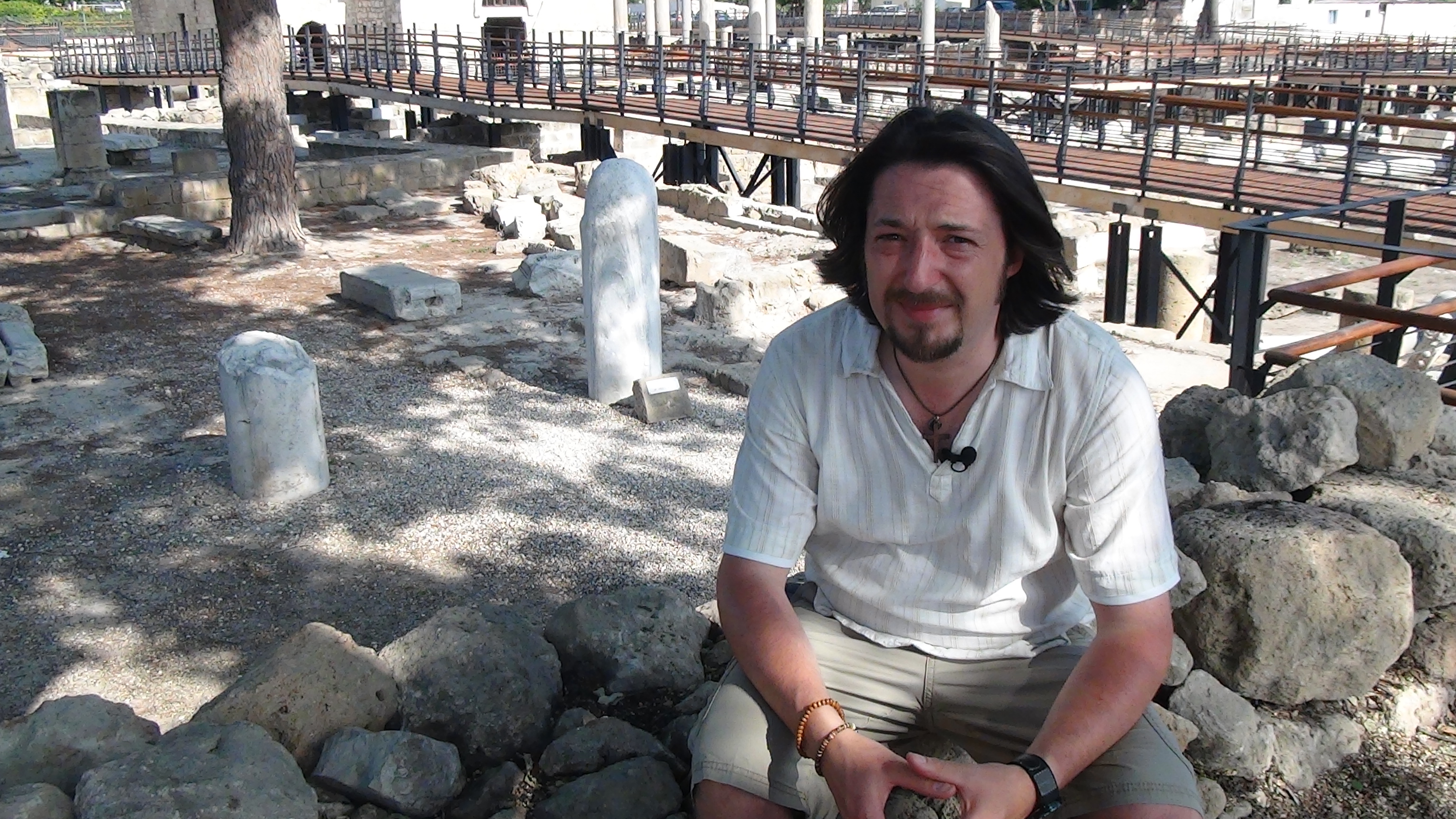 Local legend at Paphos lays claim to a Column known as St Paul’s Pillar upon which it is said that Paul was tied and given the forty lashes minus one by the Jews, in other words he was scourged with 39 lashes, according to the Judaic system.
There is no actual historical evidence for this claim and it is one of those historical legends which could be true, or could be false. However, we do have a reference to Paul being beaten and given the forty lashes minus one for a total of 5 times, according to the composition date of that letter which is believed to have been written sometime around 53-57 AD we could conclude that Paul is referring to this event and since Acts of the Apostles which concludes around the year AD 60 and was most likely written around 60-61 AD, mentions not the events written in 2 Corinthians 11: 24 in AD 53-57, we can conclude that the book of Acts does not contain everything that happened during this period but contains a brief or record of important events that took place. Thus, it is possible that the events Paul writes about 2 Corinthians 11: 24 may include the scourging event at Paphos?
However, which columns or columns that Paul was tied upon, is subject to debate, if it matters, which I think it does from a historical perspective. The problem is that H V. Morton in his 1936 book “In the steps of St Paul” records that he visited Paphos and refers to this area where the Column now stands and concludes the area to be what must have been either a Roman Temple or a market place and refers to the “Two granite columns” and also “a broken Roman pillar surrounded by a whitewashed wall and covered with iron bands to prevent people from chipping off fragments as a cure for malaria. This is called St. Paul’s pillar.” (In the footsteps of St Paul. H V, Morton. Page 140.)
The point being that he adds a photograph in the book of the two larger granite columns and labels them, “St Paul’s Pillars”. I wonder if they too are also connected?
The experience of visiting Biblical sites
Posted by simon peter sutherland in Biblical archaeology, Christianity, The Bible on October 23, 2012
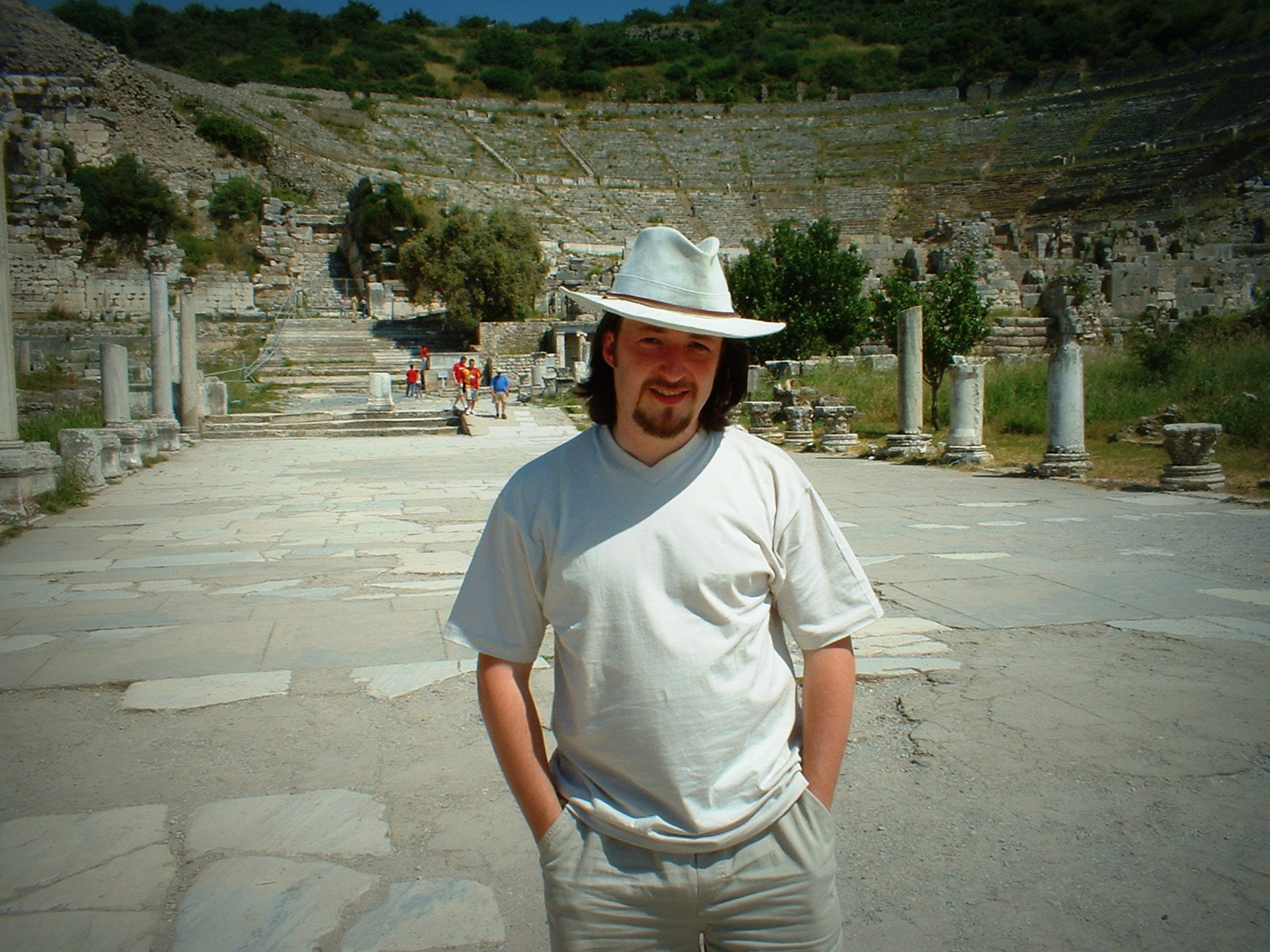 In 2003 I went to the ancient remains of Philippi in Macedonia with my wife. Travelling over from Thassos to Macedonia by ferry we landed at Neapolis (Acts 16: 11) now modern day Kavala and from there we made our way to ancient Philippi, to the Biblical sites such as the market place, as mentioned in Acts 16: 19 and the so-called prison, as mentioned in Acts 16: 24-31 and then onto the river which was just outside Philippi, where Paul baptized Lydia, as mentioned in Acts 16: 13-15.
The whole exprience astounded me and I could not but be amazed that I was actually standing in the places where the events I had read about for so many years actually took place. Places where our Sovereign Lord ordained these events to occur.
The fascination which had birthed within me when I first saw the great Arena in Ephesus on a documentary when I was a child, but I had a slight fear of flying which my wife overcame and so my ambition grew from desire to reality. The ambition within me grew and moved me so strongly that I followed our first journey to Macedonia with many more visits to sites connected with Acts of the Apostles. My wife and I would follow this journey in an adventure over the Mediterranean around Greece, and travels not only to Macedonia, Kavala and Philippi but to Turkey and Ephesus to the locations for the events of Acts 19, and the ancient city to whom Paul wrote the letter of Ephesians. Ephesus is also one of the seven Churches of Revelation.
We also travelled some time later onto Malta to the sites where the events of Acts 27: 39 may have taken place. We journeyed on foot to the sites where the events of Acts 28: 1-10 most likely took place. From then we journed also to Cyprus, and Kition in Larnaka, and then to Paphos and the events of Acts 13: 4-13.
After this glorious time my wife and I had with the Lord and His word, I became passionately drawn to the ancient reality of the original New Testament and its 1st century setting. I began to see how far Christianity had moved away from the authentic gospel and into tradition and doubted very much that Paul would be happy with modern Christianity?
If you have never visited such ancient Biblical sites, then I would highly recomend it. Being amongst the ancient locations gives the believer and critic such a more dynamic understanding of the Biblical narrative and when you are there and reading the text, its like being within the pages.
The Tombs of the Kings and early Christians
Posted by simon peter sutherland in Biblical archaeology, Christianity on October 5, 2012
 At Paphos, Cyprus there stands what is known as ‘The Tombs of the Kings’.
These tombs have a wide variety of historical facts connected to them, and although all of them are of interest, one point of this history stands out to me, that point being the fact that early Christians met in these tombs in ancient times.
At the Tombs of the Kings, early Christians from around the 1st – 4th centuries AD met for worship in singlar tombs around this location and also for protection from the persecution lashed out upon them by the Romans.
It is likely that the early Christians met in one tomb at a time.
Acts 11:19-20 tells us that after Stephen was martyred some Christians travelled to Cyprus and preached to Jews only. In Greco-Roman times Paphos was the island’s capital and it is likely that these Christians travelled there. However, it was not until Paul, Barnabus and Mark visited Paphos, Cyprus as written in Acts 13: 4-13 that the gospel was given to the Gentiles of which Paul, then Saul converted the Roman official.
Some believe that the Roman authorities were angry at Pauls conversion of the Proconsul Sergius Paulus and thus persecuted Christians at Paphos. Thus, it is for this reason that they went just outside the city walls and met in the ancient caves and tombs.
Evidence for this is found in the discoveries of crosses and Frescoes found in the burial chambers, which is regarded as proof that early Christians used these tombs during tribulations prior to the 4th century AD. Persecution of Christians was abolished by Roman Emperor Constantine who made Christianity the religion of Rome in 313 AD.
This short documentary which I made on the matter offers a more visual presentation of this subject of ‘The Tombs of the Kings and early Christians’.
‘Gospel of Jesus’ wife’ papyrus a fake. Vatican claims…
Posted by simon peter sutherland in Biblical archaeology, Christianity, The Bible on September 28, 2012
The academic debate concerning a ancient papyrus that is said may imply that Jesus had a wife has been furthered somewhat by a statement made by Vatican that the Jesus’ wife papyrus is a ‘clumsy fake’.
Although I am a Protestant theologian and rarely take the claims of Rome seriously, I think they got this one right. After all, the Vatican library does boast 75,000 ancient codices, so I think on this, they are more than qualified to make such a statement. And even if many would ignore their claim or redicule the Vatican as the home of a messy religion, such would only be a distraction from the issue at hand.
This matter is concerning the authenticity of a manuscript, not religious debate or morals for that matter, however, back to the topic, here is a link to an article;
http://www.guardian.co.uk/world/2012/sep/28/vatican-denounces-jesus-married-papyrus
Ancient Reservoir from the 1st Temple period found in Jerusalem
Posted by simon peter sutherland in Biblical archaeology on September 7, 2012
Here is a recent article I found from http://www.biblicalarchaeology.org
According to the article “The Israel Antiquities Authority (IAA) and Jerusalem archaeologist Eli Shukron announced the discovery of a large First Temple period reservoir” on 09/06/2012.
This discovery will improve our understanding of the 1st Temple period in Jerusalem.
Pontius Pilate coin found on the Shroud of Turin
Posted by simon peter sutherland in Biblical archaeology, Christianity, The Bible, The Shroud of Turin on April 24, 2012
Whatever one might think concerning the Shroud of Turin, few can deny that it is one of the most fascinating and controversial relics in Christianity.
Its origin and authenticity has been a topic of debate for centuries. We even find John Calvin debating the Shroud of Turin in the 16th century.
Today however, it is a very common to dismiss the Shroud of Turin as a proven fake, since many say that Carbon Dating has proven the Shroud cannot be the burial cloth of Christ? The problem is however, that the Carbon dating is simply not consistent with what we know about the Shroud. The carbon dating simply contradicts the overwhelming evidence found upon the Shroud which dates the cloth to 1st century Israel.
Thus, there is a vast amount of evidence found upon the Shroud that more than suggest that the cloth is from 1st century Jerusalem. The evidence itself all of which has been found upon the Shroud absolutely contradicts the carbon dating and thus puts the dating results seriously in question and when the fact becomes known that the area from which the sample of the Shroud was taken and used for the carbon dating process had been handled consistently since the 16th century, then the accuracy of the carbon dating results becomes even more seriously in question.
The problem is that there are many finds upon the Shroud of Turin which clearly date or link the burial cloth to 1st century Israel and Jerusalem combined.
These finds include Pollen and dirt from Jerusalem, Roman Flagrum and Crucifixion wounds upon the body, burial consistency with Jewish custom, fibers, blood, 1st century stitching etc which experts have all found upon the Shroud of Turin.
While these finds and are commonly known, what is less commonly known about the Shroud of Turin is that recent finds have shown that the man on the Shroud has coins upon his eyes.
Researchers Dr Robert Bucklin and Professor Alan Whanger, have 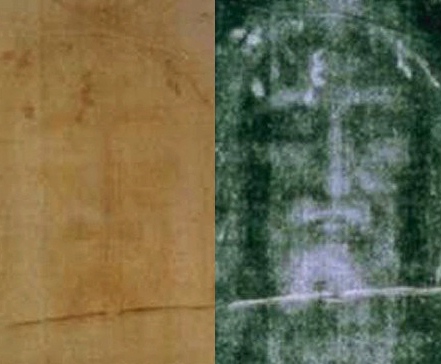 pointed out that there are round coin like objects placed over the corner of the eyes of the man on the Shroud. The coin upon the left eye is clearly visible and when the image of the Shroud is enlarged, the image reveals that one of the coins is in fact what is known as a Pontius Pilate Lepton.
These coins are only small and are almost 2000 years old and the coin seen on the left eye of the man were minted in Jerusalem in AD 30 by Pontius Pilate. These coins also confirm Pilate as Prefect, and this complies with the Biblical account that Jesus was condemned under Pontius Pilate.
It is also worth noting that it is said that it was a Jewish custom to place small coins over the eyes of a dead body to keep the eyelids closed.
Thus, the Pontius Pilate coin found upon the eyes of the man on the Shroud is an astounding find and one that cannot be ignored and not only does the Pontius Pilate coin directly link the Shroud of Turin to 1st century Jerusalem, but the coins reveal that the image was formed when the man on the Shroud was lying down. Otherwise the coins could not remain upon the dead man.
The coins found on the Shroud are consistent with the coins produced by Pilate in AD 30.
Details of the Pontius Pilate coin is as follows:
* Coin: Prutah
* Minted: Jerusalem ~ AD 30
* Identification: “Liz”
Whatever the conlusions are to this find, it cannot be rightly denied that the Shroud of Turin contains images of Poltius Pilate coins over the left eye of the man on the Shroud and no one can deny that few, had knowledge of these coins until more recent days.
The fact remains that these coins change a great deal of what we know about the Shroud of Turin and the question remains, is this the face of Jesus?
Is the Shroud evidence for the resurrection of Jesus?
Could the Shroud of Turin truly be the burial cloth of Jesus?
-
You are currently browsing the archives for the Biblical archaeology category.
Simon Peter Sutherland
-

 Simon Peter Sutherland