Posts Tagged Jesus
Martyr George Marsh 510th anniversary 2025
Posted by simon peter sutherland in Christianity, Martyr George Marsh, Reformation 2017 on June 26, 2025

2025 marks the 510th anniversary of the birth of Martyr George Marsh.
Marsh was born in Bolton, in 1515 into a family of farmers. He attended Deane Church and had a great zeal for Biblical faith and following the tragic death of his wife he became a curate in the Church of England. Serving under the reign of Edward V1 his ministry was grounded to a holt when the boy king died and Mary Tudor ascended to the throne.
Christians and leaders were hunted down and executed and on April 24th 1555 Marsh was burned alive in Boughton, Chester and his ashes were collected and laid to rest in a nearby leper colony.
His story was collected by John Foxe and included in the Foxe’s Book of Martyrs and his martyrdom became widely known for many centuries.
His story remains of significant importance since it continually reminds us of the evils of bad religion and extremism. Yet Christian’s are still persecuted around the world so mankind hasn’t properly learned the lesson yet. It is for this reason that we must never forget our own history and we must always be aware that religion in the wrong hands can be very dangerous, especially when people get hurt.
George Marsh was a good man, and the Church of England failed to protect and preserve him. They should have embraced his zeal and passion for the truth instead of falling headlong into the bondage of the Roman Catholic Church.
Contrary to popular beliefs Britain has gained an enormous benefit from the cause of the reformation, and I have covered these points in a previous article.
So let us remember George Marsh and the martyrs who gave their lives in the cause of truth.
Today a number of dedicated memorials can be found in his memory in Deane Church grounds, Smithills Hall, St John’s Cathedral and at the site of his execution in Boughton, Chester.
May the memory and legacy of Martyr George Marsh live long.
“From Obedience To Freedom” Out Now!
Posted by simon peter sutherland in Church of England, Reform, The Bible, Theology on June 12, 2025
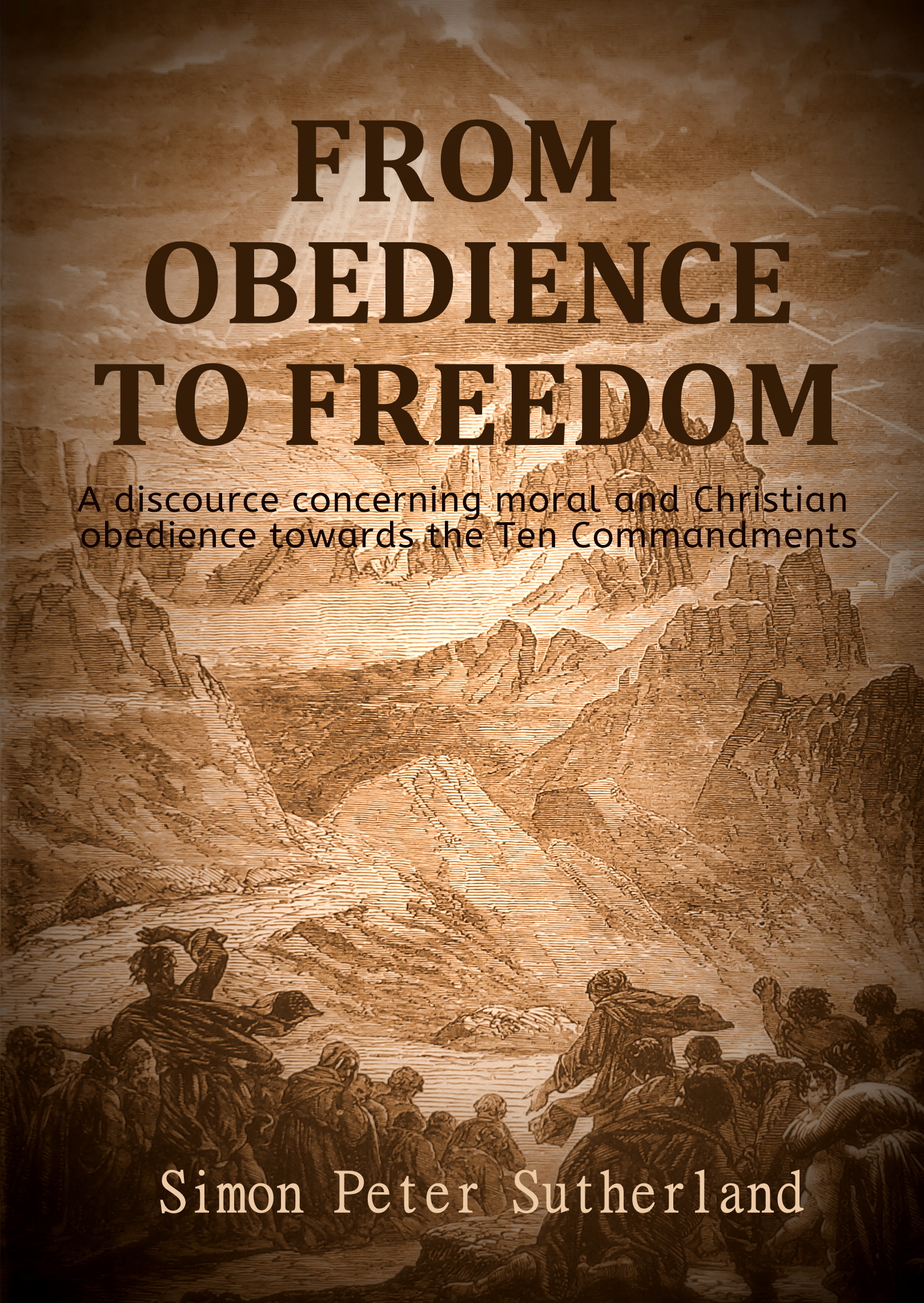
In my previous post I write about my new book on the Ten Commandments. In this book I explore the topic of the Ten Commandments from a New Testament perspective asking questions such as these: Have the Ten Commandments been abolished by the coming of Christ? Or are the two tablets mentioned in Exodus 20 the same as those found in Matthew 22: 37-40? If the answer is yes then there is no Biblical evidence to reject these commandments as irrelevant to the holy living of the Christian man.
In an original edition of this thesis, dating back to 2007, I had originally been inspired by an old Puritan book called The Ten Commandments by Thomas Watson. I loved reading the puritans back then.
Thomas Watson (1620-1686) was one of the most popular English preachers in London during the puritan era. I was certainly intrigued by this book during my earlier years of theological study. Since then however time moves on and my book has changed. It has gone through revision upon revision until I finally reached a point where I was ready to publish.
Obviously the topic is controversial on all sides. For some Christians there should be given no place whatsoever for any aspect of law in the Christian life. I disagree with that. Yet if that concept was true, then what are we left with in Christianity? Outright lawlessness or a life governed by obedience to Christ in faith. Surely there is nothing within any of the Ten Commandments to contradict what the New Testament says about holy living.
When I originally began to write this book I was much younger and I was very convicted within my soul and daily I yearned for more of Christ. My soul eagerly awaited the presence of my dear Lord and that passion can be caught within the pages of the book. However much has changed since then and I’m older. Nowadays I read Puritan books much less, however I have retained my passion for the writings of Richard Baxter. likewise the King James Bible remains my favourite translation. For this reason, I have continued to use the AV within the book and perhaps I’ll save the reasons why for some other post.
But in the meantime, I hope the Lord uses my book and that it inspires many believers to do right in the eyes of the Lord. We must love the commandments of our Lord and live them by faith in Christ. When we do this we will find inner freedom within the divine legislation.
I have experienced this freedom many times.
However, I am presently in the Church of England (in some sense) and I feel a continuous burden for the apostacy that is crippling it. Will I remain, and for how long I do not know? All I can say is that if there was ever a time for the Law of the Lord to be remembered and loved, that time is now.
The 500th Anniversary of the Tyndale New Testament
Posted by simon peter sutherland in Church of England, The Bible on March 10, 2025
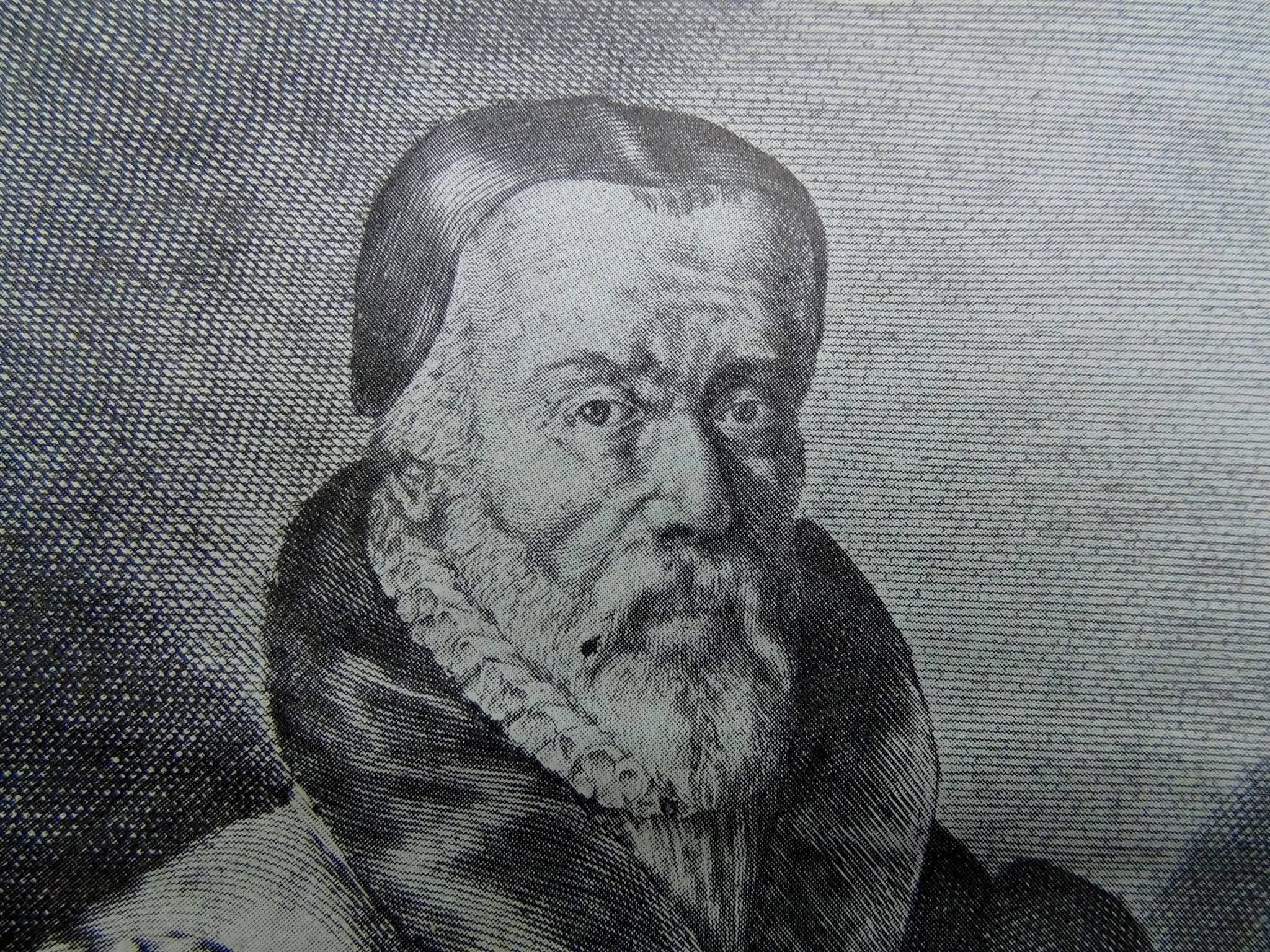
2025 marks the 500th Anniversary of the very first Tyndale New Testament to have ever been published.
In 1524 William Tyndale had been self exiled from England where he headed for Germany and began translating his New Testament into English. It was there where Peter Quentell published his groundbreaking and monumental New Testament.
For those who may not know, William Tyndale (c 1494-1536) was an English priest and scholar and the very first person to translate the New Testament into English from the original Greek. Tyndale was educated at Oxford and Cambridge and became a chaplain in Little Sudbury. There he ran into conflict with a Roman Catholic priest and Tyndale left for London and eventually for Europe and Cologne. His aim of translating the New Testament into English was fulfilled in 1525 and 1526, and his greatest revision was accomplished in 1534. In 1536 he was executed for his faith in Vilvoorde. But his work did not end there. His translation became the bedrock of all English Bibles from the 16th century and even to the present day.
The Tyndale New Testament would impact, influence and formulate the English language more than any works of English literature apart from Shakespeare.
It is still quoted even today, and for many Christians around the world his work can be appreciated through his undeniable influence in the pages of the King James Bible. A staggering 93 per cent of the New Testament (in the KJV) is the work of Tyndale. The Old Testament is about 85 per cent.
Melvyn Bragg writes, “Shakespeare quotes from the Bible about 1,350 times. These quotations are from the Bibles he heard and read – the Great Bible, the Matthew Bible and probably the Geneva Bible – all of which were Tyndale in disguise.” (William Tyndale A very brief history. Melvyn Bragg. P. 89).
In 2017 I had the pleasure of meeting Melvyn Bragg and as he handed me a copy of his biography on William Tyndale I thanked him for his documentary on “The Most Dangerous Man in Tudor England”. This was an excellent film and the BBC would do well to broadcast it again this year for the anniversary.
Likewise churches up and down the country would do well to remember Tyndale this year and start using either his New Testament or the King James Version once again.
I am not a King James onlyist but I believe the Church of England made a big mistake when it removed the King James Version from all services. It makes no sense to me that such a great and monumental translation should be abandoned and replaced with the extremely inferior NIV translation. I believe the King James Version should be regularly used, even if for special occasions or seasons. And where has the abandonment of old English translations got the Church? It has fallen into disrepair and apostasy and utter chaos, and her identity is lost. No wonder, it is because they removed the great translation.
But let us ask, what version has translated Genesis 1: 1 better than Tyndale? Read for yourselves his opening lines,
“In the beginning God created the heaven and the earth. The world was void and empty; and darkness was upon the deep and the spirit of God moved upon the water.”
And who can forget the beauty of the Lords Prayer.
19th century English hymn discovered
Posted by simon peter sutherland in Hymns, Music, Theology on January 16, 2025

The tradition of composing Christian hymns goes back centuries and back in times of antiquity ministers of local churches actually wrote their own hymns for their own congregations. For example, John Newton wrote Amazing Grace while he was minister at Olney and that hymn was first sung in that place.
Such is the case with an original handwritten hymn I have discovered.
The hymn is written in English on a small piece of paper and dates to 1842 and likely originated in Wales. Written by a minister for Sunday school teachers the author based this hymn on John 21: 17 and 1 Corinthians 9: 27. The word “castaway” is used repeatedly in the hymn and is likely based upon the King James Version of Paul’s letter. In this Scripture the apostle advocates a strict subjection of his own body, lest after preaching to others he himself “should be a castaway”.
The sad reality is that this passage of Scripture has been abused. But such is not the case with this hymn. It is a sad reflection and is written out of deep concern, by a minister, for his Sunday school teachers. The Wesleyan interpretation of Scripture implies the hymn most likely has its origins in that denomination and it is not found in any Wesleyan hymn books. So it appears to have never been published. The hymn does not have a tune, which is normal since many hymns in those days did not have accompanying melodies. Many congregations used the popular tunes of the day to sing the words. Such would have been the case with this hymn.
I’ll post more about it as time goes on and research continues, but in the meantime, if anyone knows of any hymns from this era that contain references to 1 Corinthians 9: 27, please feel free to get in touch.
The Promise of God for all mankind
Posted by simon peter sutherland in Census of Luke, Christmas, Christmas or Nisan, Documentaries, Eschatology, Theology on December 18, 2024

Many years ago, when I was a boy, I was asked what my favourite New Testament Gospel was, and I replied “Luke’s Gospel”. For me, I think that claim still stands. The Gospel According to St. Luke is still my favourite of the four Gospels.
Luke’s Gospel gives us the greatest account of Christ’s birth. I say this because I believe chapters 1 & 2 contain the actual words of Mary herself given to St Luke. Luke’s Gospel gives us the reference to the census of Quirinus. I have discussed this census in a previous article showing that it may have been referenced in the Mausoleum of Augustus on the funerary Res Gestae Divi Augusti in Rome.
Luke was a very reliable historian as my documentaries have shown. In Kos and the Gospel According to St. Luke I demonstrate elements of his accuracy by visiting the Greek island of Kos and discuss how he interviewed surviving witnesses to the life of Jesus Christ. Luke references his accuracy himself in Luke 1: 1-4 and Luke’s desire was for the Roman official (Theophilus) “to “know the certainty of those things in which you were instructed.”
Luke follows up his Gospel with part two (Acts of the Apostles) and those who know it are assured of the certainty of the events that happened.
As previously mentioned “I believe chapters 1 & 2” of Luke’s Gospel “contain the actual words of Mary herself given to Luke.” The nativity account contains elements of feminine Greek and in Mary’s account of the angelic announcement of Christ’s birth the angel says to Mary “behold you will conceive in your womb and bring forth a Son, and shall call His name Jesus. He shall be great, and will be called the Son of the Highest; and the Lord God will give Him the throne of His father David. And He will reign over the house of Jacob forever, and of His kingdom there will be no end.” (Luke 1: 31-32. NKJV)
This statement concerning the kingdom of Christ and Him being given the throne of David was not some reference to a futuristic kingdom that Jesus sets up when He returns to earth at the second coming. Luke tells us that this kingdom was established during the life, death, resurrection and ascension of Jesus Christ and was revealed to the people of Judea and Jerusalem by St Peter in his sermon contained in Acts 2: 14-39.
In Acts 2: 30-31 Peter says “Therefore, being a prophet, and knowing that God had sword with an oath to him that of the fruit of his body, according to the flesh, He would raise up the Christ to sit on his throne, he forseeing this, spoke concerning the resurrection of the Christ, that His soul was not left in Hades, nor did His flesh see corruption” and in verse 32 Peter states that the things which they saw when the Holy Spirit came on the Day of Pentecost (Acts 2: 1) is what they “now see and hear.”
The important point to note here is that the promise made to Mary in Luke 1: 32-33 has been fulfilled for all mankind. God in Christ Jesus has set up His kingdom and it has no end and as Peter stated to the people in Judea and Jerusalem, “the promise is to you and to your children, and to all who are afar off, as many as the Lord our God will call.” (Acts 2: 39)
This Christmas remember what Christ has done for us and for all mankind. Let us turn our backs upon the things of this world and whatever you do keep your eyes upon Christ, and know that He is our Saviour, and our God, if we believe in Him and receive forgiveness for our sins and make Him Lord of our lives.
I have written my first hymn
Posted by simon peter sutherland in Hymns, Music, Theology on July 30, 2024

For many years I have been a great lover of wonderful old hymns. Guide Me O, Thou Great Jehovah, The Day Thou Gavest, Lord, is ended and How Great Thou Art. All of these hymns have inspired me greatly throughout my life and I have been a worship leader a number of times and sung many great Christian worship songs.
Last year I read Keith and Kristyn Getty’s book “Sing” and it’s all about Christian music and the value of hymn writing. I was very motivated by this and while revisiting the Greek Island of Kos I wrote my first hymn.
Kos is very important to me as a Christian and I’ve made documentaries about it and explored St. Paul’s connection to the island (Acts 21: 1). It has been a long journey and this has contributed to my writing this song.
The hymn is not presently released but my wife and I have sung it. Jenny has been very instrumental in helping me make my documentaries and I’m very thankful to her and I have faith to believe that the Lord has given me this song as a nice gift and He will use it to His own glory and praise.
I believe the hymn will one day be a blessing to Christian’s everywhere, regardless of denomination or circumstances.
“In Search of Saint Titus and Paul on Crete”
Posted by simon peter sutherland in Biblical archaeology, Documentaries on June 26, 2024
Great news, my long awaited documentary “In Search of Saint Titus and Paul on Crete” is now available on YouTube.
In this documentary I explore Paul’s Epistle to Titus and its connections to passages in Acts of the Apostles. I visit Fair Havens, Gortyna, and Heraklion and a few other places, all in search of Saint Titus and Paul.
This documentary marks my ten year quest to uncover St Paul’s associations with the Greek Islands and I hope it is a blessing to you.
I believe the Virgin Mary was not sinless
Posted by simon peter sutherland in Census of Luke, Christmas, Theology on December 4, 2023

Recently I went to see the new movie Journey to Bethlehem. A musical inspired by the events surrounding the birth of Jesus.
Mary does sing in Luke 1: 46-55.
While I found the movie entertaining and enjoyable to watch, I didn’t agree with it all but I came to notice the very distinct representation of Mary as human, not sinless. As some of you may know the Roman Catholic Church upholds a doctrine that claims Mary was not subject to original sin. Although I don’t particularly have a problem with believing that Mary did not practice sin, I do have a problem with the false claim that Mary was sinless.
While there are complexities within the doctrines upheld within Roman Catholicism, Eastern and Oriental Orthodoxy, it should be stated that there is not a single verse in the Bible that claims Mary was “sinless”. In Luke 1: 47 Mary sings ‘my spirit rejoices in God my Saviour’.
If Mary was “sinless” she would not need a Saviour.
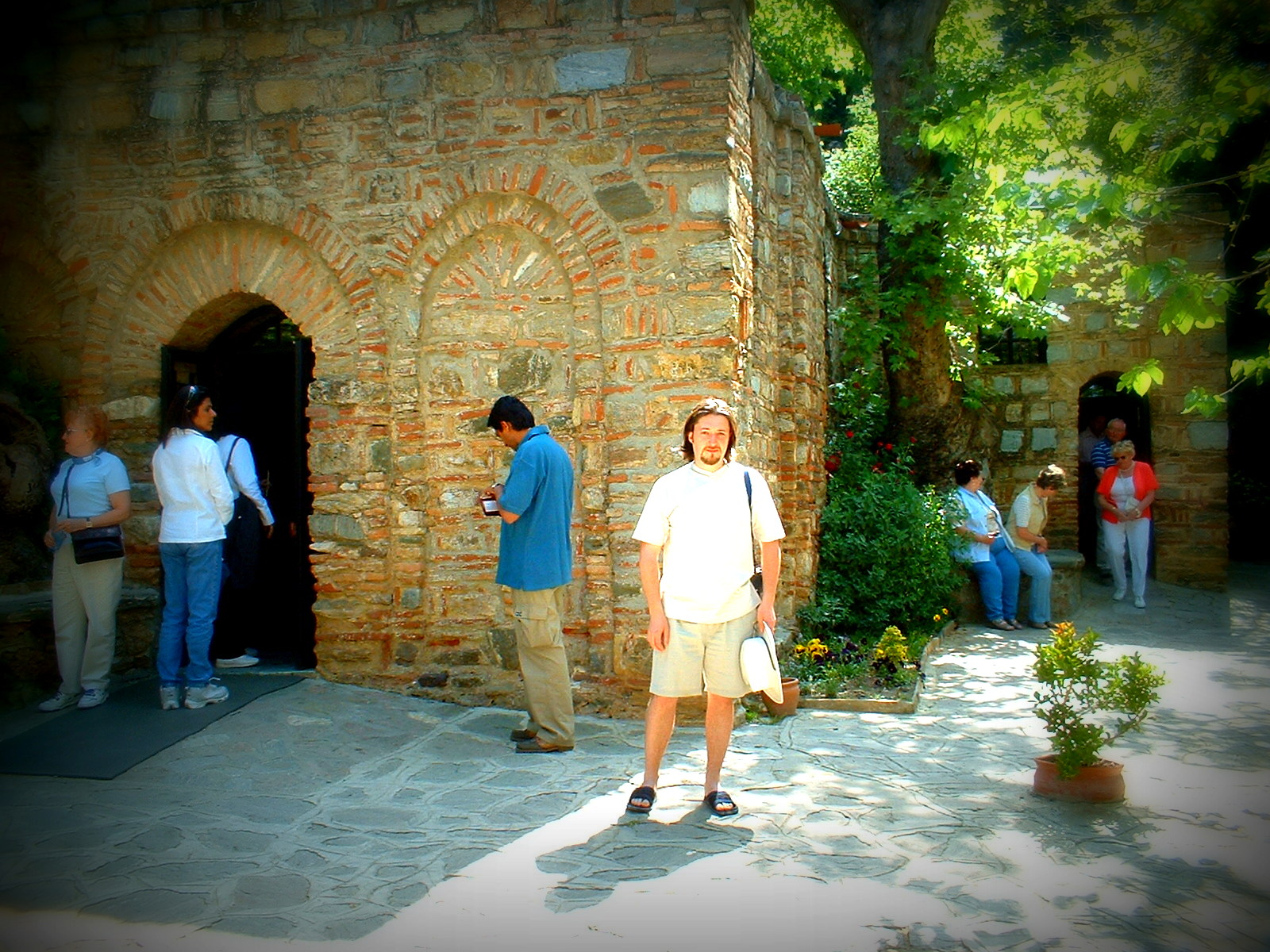
Many years ago I visited Ephesus and also the house of the virgin Mary. This house is way up in the mountains and was discovered in the 19th century and is believed to be the place where the Apostle John took Mary as instructed by Jesus in John 19: 25-27.
I like many people sat and pondered upon what the mother of Jesus may have been like. What did Mary look like, how did she talk, what stories could she tell?
Luke 2: 19 says that Mary cherished her memories and stored them in her heart, so I assume Luke’s gospel tells us all we need to know. That being said I understand the nativity texts in Luke contain feminine uses of Greek meaning that many verses could actually contain her own hand written testimony. Thus her own statement in Luke 1: 47 affirmed that Mary was not without original sin.
Likewise 1 John 1: 8 states that ‘if we say that we have no sin, we deceive ourselves and the truth is not in us‘ and that verse does not exclude Mary. After all it was written by the man who Jesus gave instructions to take Mary into his own home so Mary may have even read the letter when John wrote it. After all, John is believed to have been an older man when he wrote his letter, so Mary would have still been present with him as instructed by Christ.
I believe this point and Luke 1: 47 disproves the false claims of Roman Catholicism.
Jesus out of focus and Christmas with Christ
Posted by simon peter sutherland in Christianity, Issues with Christianity in England today on December 23, 2014

Cross out of focus © 2014 Simon Peter Sutherland
I greatly admire Christmas and it is at this season of the rolling year that I have a few traditions of my own. One such tradition I have is my reading of ‘A Christmas Carol’ by Charles Dickens.
First published in 1843 after a visit to Manchester, Dickens clearly wrote the book with the aim of reforming the festival that was starting to fade. I think he did a good job of it. His term “humbug” was a masterly description. The problem is, Scrooge was in fact correct, Christmas was a “humbug”. A 19th century definition means ‘fraud’.
In the 21st century, Christmas is in fact a time for paying bills, acquiring heavy debts and a time where people indulge in constant spending, socialising, gluttony and alcoholism in an industrious commercial institution that focuses upon materialism and not the person of Jesus Christ. In that context Scrooge was correct; ‘Christmas sir is a humbug’.
But for me and many Christians, Christmas is not merely a time for gaining material or spending, and I certainly do not drink alcohol or indulge in gluttony. Christmas for me, is a time for remembering the birth of the Lord Jesus Christ and in that, Christmas is with me 365 days a year.
However, despite the fact that a secular Christmas has little to do with Jesus Christ, there is little doubt in my mind that many people today, Religious and none Religious would seek to abolish Christmas, and replace it with something else or nothing. In many ways, secularist culture has done just that, it has abolished the true historical meaning of Christmas.
Likewise, the use of the abbreviation “X” rather than “Christ” can be argued that the secularists have used a historic meaning. The letter “X” is from the Greek “Χριστός” which means Christ. The problem is that the majority of people, especially the secularists or average soul, has little or no knowledge of the Greek language, so “X” to them is just a letter.
Secularism has turned Christmas away from a festival where people celebrate and remember the birth of Jesus and turned it into a time of worldliness and sin and selfish gain. People are celebrating the sins that Jesus came to set us free from.

St Paul Outside the walls, Rome, Out of Focus © 2014 Simon Peter Sutherland
In the year 1647, the Puritan government in England banned Christmas and regarded it as little more than a snare of “Antichrist” and “Popery”. But today in the 21st century it is difficult to connect Christmas with the Roman Catholic Church or even as a Religious festival. We all know that for many people in the West, particularly in Britain, Christmas has little to do with the Lord Jesus Christ.
But for me as a Christian, the season is very much related to our Lord Jesus. He is everything! And even though we do not know the exact date or year when Jesus was born, we do know that the early Church made the decision to celebrate His birth at this time of year.
Because of a 4th century reference to Christmas in the calendar of 354 AD, we know that early Christians at Rome regarded the Nativity to have taken place on 25th December. However, Christians in the East celebrated the Messiahs birth on January 6th.
Moving forward in history toward the Protestant Reformation, I would think that no accurate case can be established to claim the 16th century Reformers denied Christmas. It is true that governmental 17th century English Puritans banned Christmas, but such was not the case with the 16th century Reformers. The facts remain that 16th century Lutheran, and Church of England Reformers continued to celebrate Christmas: that point is clear from history and the Book of Common Prayer.
Christmas reminds me in many ways of the Jewish season of Hanukkah, recorded by Jewish historian Josephus as “The festival of lights” (Antiquities X11) In this festival the Jewish people commemorate the establishing or rededication of the Holy Temple, and is an eight day holiday which starts on the 25th day of kislev. This can occur from late November to late December. Concluding for many on what we call ‘Christmas eve’.
It is clear to me that the things which Jewish people celebrate in Hanukkah were fulfilled in the life, death, burial and resurrection of Jesus Christ. I see that in and through Jesus, Judaism is made whole. Without Him I see little conclusion or fulfilment of the Torah and the Prophets. Not only is Jesus the “Light of the world” and not only has did He fulfil the prophecies but He has rededicated the Temple and purified it in His people. And if one desires to see Jesus in this, a good place to start would be throughout the Gospel of John, where Jesus is at the Feast of dedication during winter (John 10: 22-23) and also the book of Hebrews.
I think Christmas has been hijacked by secular culture and I think that unless peoples hearts and minds are won over to the Truth, there is little that can be done about that. Christmas for secularists merely implies faith, hope and gluttony:
- Faith in “Evolution”.
- Hope in “Science”.
- Indulgence in the flesh.
A person cannot honestly take Christ out of Christmas and continue to celebrate the festival as though He never was who He said He was, it is intellectually dishonest. And as for the mess that the world makes of Christmas, should we really expect anything else? The world would turn every celebration into a hotchpotch of drunkenness and fleshly pursuits, and entertainment. So what more can we expect? It is up to each one of us to be different, because we are different. We are not of this world, if we belong to Christ. Thus, it is up to us to know and understand what we believe and it is up to us to show the people of the world the historic Truth behind the Christmas many know and love.
Many Christians are speaking out for the Truth, but far too many Christians in Britain desperately need to start speaking out!
Jesus is “Peace on earth, goodwill toward men” Christmas 2012
Posted by simon peter sutherland in Christianity, Science and evolution, The Bible on December 17, 2012
“Glory to God in the highest and on earth peace, goodwill toward men”Luke 2: 14
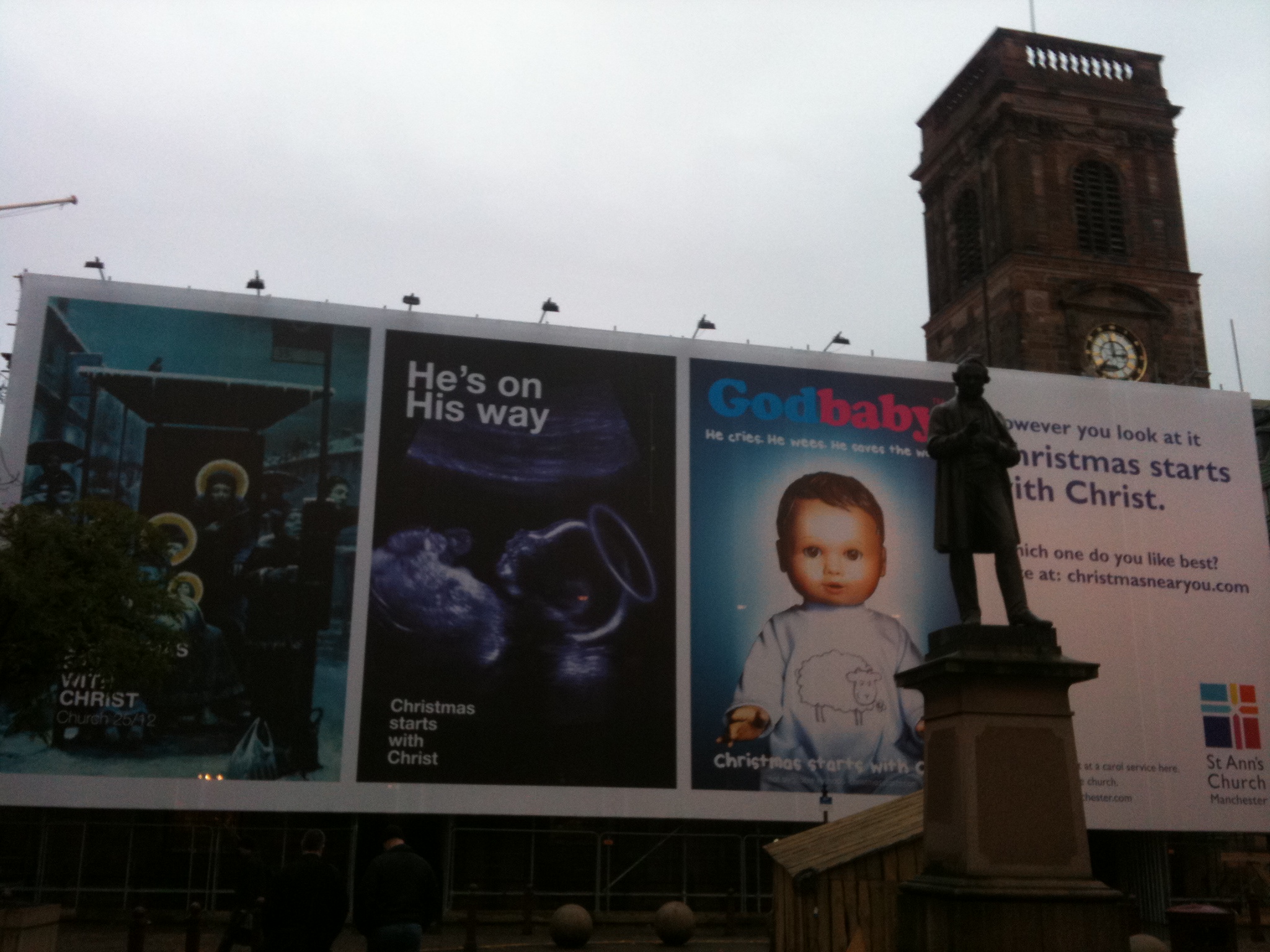 For some unknown reason to me, the so-called nativity texts of the gospels are, for the most part only explored at Christmas.
So often in England we hear the passages from Matthew and Luke read out during Christmas services, followed by traditional carols and verses from the prophet Isaiah. All very well and good but somehow I feel that much of this tradition is little more than going through the motions, a tradition rather than an understanding? A reading rather than a knowing.
It feels to me that when read in most churches in England at this time of the year, the texts of Matthew and Luke appear to lack reality and historic value. People appear to look at them as though they are just ancient myths and stories based upon some real historical events. It has become a culture to believe the Biblical narratives have been retold and edited to a persuasion by ancient spin doctors. Grand assumptions have been made by modern scholars and people have bought into it through ignorance and lack of knowledge.
The original gospels were never written to be told as fairytales or myths but actual eye witness accounts.
But still, the claims of some modern scholars dominate the minds of many. Many people seem to believe the claims, just because scholars make them.
Yet anyone who can think for themselves know that scholarship so often takes its position and defends it regardless of evidence or contrasting opinion.
I do not respectfully disagree with the many claims of modern critical scholarship which has infiltrated the church, I disagree full stop, with no respect whatsoever and I do so not without historical evidence.
Today amongst many, the knowledge of the historical reality of the gospels has become a lost goldmine of which the location is known only by the few.
I often sit within whichever church I choose to attend at Christmas listening to Christmas services, enjoying the carols and the splendour of the season, followed by a walk through the town with all its glittering lights and nativity scenes.
I am glad that the enemies of Christianity have failed in their attempts to remove the nativity scenes from our streets, even if they have corrupted much of the so-called Christian church.
But still, this year I have been pleased to see churches packed with people and an array of carol singers. I have at times, felt the Christmas spirit and the text from Luke has rung so often within my ears, “on earth peace, goodwill toward men”.
But there is no peace on earth, I say to myself. The earth is filled with horror, evil, wickedness and violence which at times is hard for the human to cope with.
This week I have read of the horrors of children murdered in a school in America. I read of wars, theft, lies, corruption, I see evil films being played on Television, filled with bloodshed and human beings slaughtering one another, treating humans like a butcher treats animals and all in the name of entertainment. I often ask the question, ‘are people stupid or what?’ do people not see that what the eyes take in, the mind conceives and what the mind conceives, the flesh gives birth to?
It is a wicked world we live in.
I see new atheists seeking to destroy Christianity with falsehood, lies, and delusions. I see corrupted sciences attempting to take God out of His creation and claiming the earth and humans are a product of chance. I hear people tell me that evolution is a fact, yet when I refute the theory I am insulted like a child by a bully in a playground. Yet in reality, the theory of evolution cannot be seen without embracing Charles Lyells “principles of geology” and philosophy that the present is key to the past. Even Darwin confessed this in chapter 9 of his famous book. It is for this very reason that modern evolutionists deny the flood, because if the flood is proven, it will disprove the theory of evolution.
I see modern evolutionists ignoring and rejecting the evidence of the ancient flood, which changed the face of the planet. I see them bombarding the media and making a culture out of believing that man evolved from ancestral creatures, so much so that people like myself who think critically and for themselves are bullied and labelled as uneducated, ignorant and deluded, just because I do not accept the word and authority of evolutionary scientists.
I hear of wars, rumours of wars, I see Israel in turmoil, I see Egypt in turmoil, I see extremist terrorist threats deep within the minds of people who are inwardly afraid. I see threat after threat and authorities seeking to silence the mouths of those who speak out openly and people cry. Tears fall down the faces of human beings throughout the world.
It is not a nice world to live in today. There is no peace. It is a wicked world. A world where a man is afraid to bring children into it.
Religion has not made this world a better place and neither has science. But for all its faults, religion has far less blood on its hands than the scientific world.
Some atheist scientists and thinkers who often attack religion, make out that science is some kind of angel or authority. Yet science is no angel.
Is science not cruel to animals?
Has science not created nuclear weapons of mass destruction?
Has science not created a new wave of warfare?
Does it not now attempt to reduce man to a mere animal creature?
Has the products of science not blown unsuspecting men, women and little children to pieces?
Do I trust you science? Not me.
O indeed, the horrors of science make religion appear an amateur by comparison.
But still, the Biblical text rings clear and remains. It speaks of a pure gospel, a beauty which is not limited by the limitations of the human mind and not governed or ruled by a scientific mad age. It is a spiritual reality, a gospel of peace for those who love the Truth. A perfect saviour who in a wicked world, came down to set things right and gave His own life doing so.
A child born to die. A child, a historical human being who grew to be a man, He healed the sick, fed the poor, clothed the naked, raised the dead and took upon Himself the infirmities of us all. He did no wrong to any man, He never lied, He never sinned, He was never selfish, nor rude, He spoke only of Truth and was a doer of good works, His message was love. Yet still, the wicked hated Him, they mocked Him, they tried to trick Him, they tried to kill Him and all His people, yet still, they were unable to do so until He gave His life.
He spoke the truth to every man and woman, and those who were not of the truth, they hated Him and wanted Him dead and when that time came, they took out their hatred of God upon Him and they spat upon Him, the beat Him, the whipped Him and the set up false witnesses against Him. Not unlike the modern scholars, atheist evolutionists and critics of today. They wanted Him dead and they did it, but God had other plans.
O indeed, it is a wicked world, and when the creator is nailed to a cross by the created, we see just how wicked this world truly is. Yet God sees. God knows. God hurts.
In days of old, Genesis 6: 6 tells us that God even repented for making man. Yet He did not destroy them in the flood, but gave forth new life and He did this because man could no more cure himself of his wretched sick condition than he could cure himself of a common cold.
It is a wicked world, but if we look to the world we will not see the true meaning of Luke 2: 14, for Jesus is not of this world and He is the true meaning of the passage, “Glory to God in the highest and on earth peace, goodwill toward men”. For if we read the text in the original Greek, we see the translation should be, “on earth peace to men on whom His favour rests”.
True peace cannot be known by anyone who remains in a state of total depravity. It is those who seek the truth who find it, and it is those who love the truth and are of the truth from the beginning on whom His favour rests.
This is why there is no peace in the world, it is because those whom Christ came to save have rejected Him yet again and only those who truly know Jesus truly know peace.
As the saying goes, “no Christ, no peace” and for those who love Jesus, no evil can overcome them. As it is written in Psalm 91: 1-16
“He that dwelleth in the secret place of the most High shall abide under the shadow of the Almighty. I will say of the Lord, He is my refuge and my fortress: my God; in him will I trust. Surely he shall deliver thee from the snare of the fowler, and from the noisome pestilence. He shall cover thee with his feathers, and under his wings shalt thou trust: his truth shall be thy shield and buckler. Thou shalt not be afraid for the terror by night; nor for the arrow that flieth by day; Nor for the pestilence that walketh in darkness; nor for the destruction that wasteth at noonday. A thousand shall fall at thy side, and ten thousand at thy right hand; but it shall not come nigh thee. Only with thine eyes shalt thou behold and see the reward of the wicked. Because thou hast made the Lord, which is my refuge, even the most High, thy habitation; There shall no evil befall thee, neither shall any plague come nigh thy dwelling. For he shall give his angels charge over thee, to keep thee in all thy ways. They shall bear thee up in their hands, lest thou dash thy foot against a stone. Thou shalt tread upon the lion and adder: the young lion and the dragon shalt thou trample under feet. Because he hath set his love upon me, therefore will I deliver him: I will set him on high, because he hath known my name. He shall call upon me, and I will answer him: I will be with him in trouble; I will deliver him, and honour him. With long life will I satisfy him, and shew him my salvation.”
Christmas 2012
Simon Peter Sutherland
-

 Simon Peter Sutherland