Posts Tagged Christianity
A terrible week for Christianity in Britain
Posted by simon peter sutherland in "Calvinism", Church of England on March 23, 2026
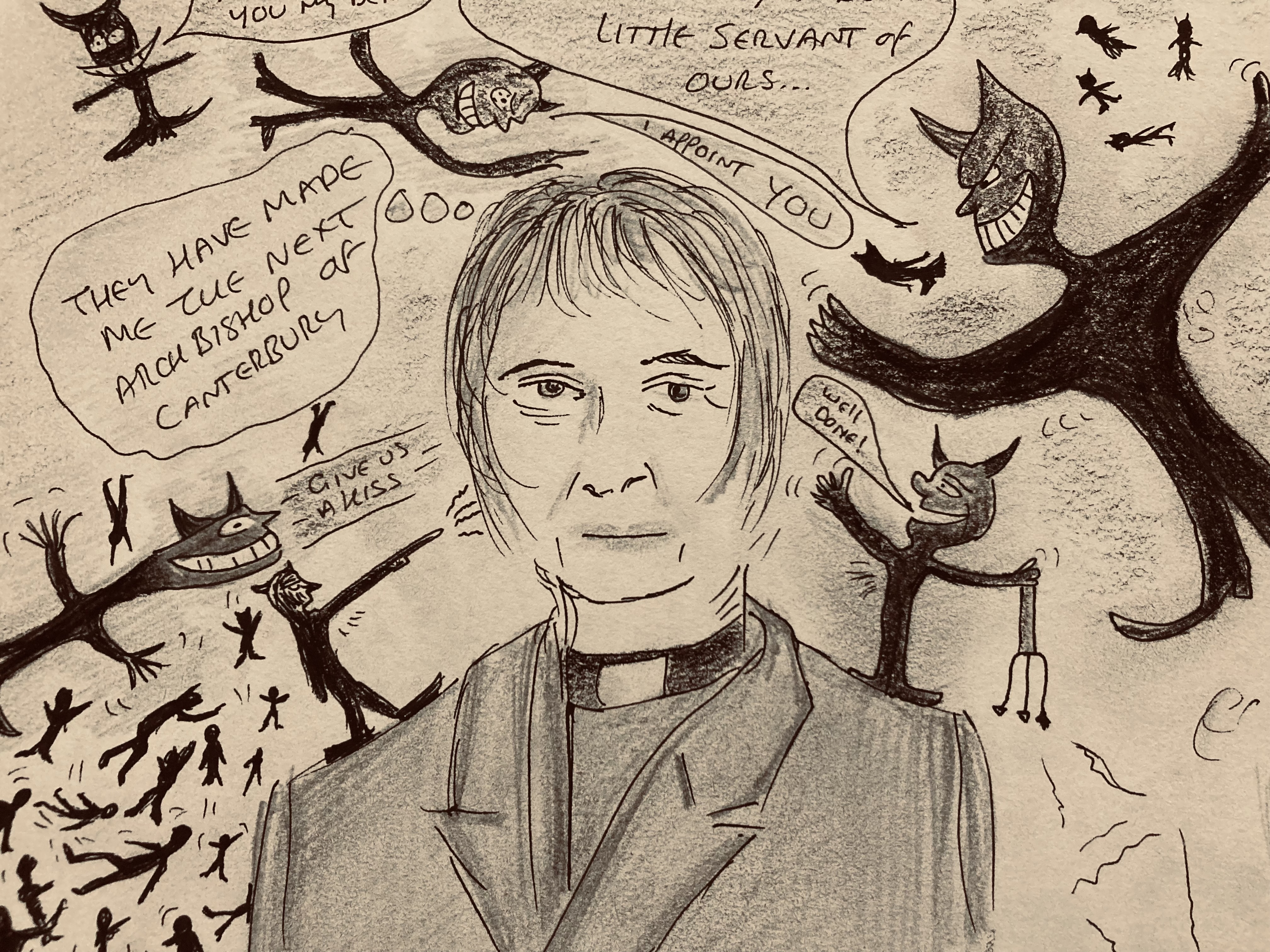
On Wednesday Sara Mullally will be enthroned as the new archbishop of Canterbury for the Church of England. A detestable act which proves the outright disdain and contentious attitudes high ranking clergy members of the C of E have for Scripture.
As many of you will know I left the Church of England in 2025 following the announcement for the first female archbishop of Canterbury.
In my previous articles I have proven that there are no women leaders in the Bible and this has been the position of the Church since Christ first established it in Jerusalem 2000 years ago. Yet the outright hypocrisy found within the Church of England cannot even sustain the severity of the punishment they now find themselves in. On the one hand the conservative evangelicals are choosing to remain and seek reform of the church from within. While on the other hand the liberals are not even happy with results they are getting from the synod. It appears that nobody or a few, apart from the self seeking bishops, appears to be happy anymore in that denomination. Now to make matters worse, they have a full on liberal as spiritual head of the establishment.
What a shameful mockery they have become of the body of Christ.
Could any of them, (unless they are open theists) deny that if God is sovereign, (in the Calvinistic determinist context) that the recent meningitis outbreak in Kent is no mere coincidence? After all, the majority of the conservative evangelicals within the C of E are in fact 5 Point Calvinists and determinists. So few could deny that such an outbreak cannot occur unless it is determined and decreed by Almighty God.
So what on earth is going on? Should the conservative evangelicals take such an outbreak as a blessing? Or should they take it as a judgement upon an apostate disobedient church? If the latter is true, why are many of them keeping silent about this terrible appointment of a woman on the seat of St Augustine? Clearly some are stuck between a rock in a hard place while others just couldn’t care less.
Yet Thomas Cranmer would be turning in his grave.
In a previous article I state, “It comes as no surprise to me how the leading bishops wrongly interpret the Bible. They squeeze their interpretation into their trajectory to preserve an establishment that goes from one extreme to the other and faithful ministers are caught like boiling frogs in a hot pan. These bishops who have brought in the same-sex blessings know the church will eventually bring in same-sex marriage, just as the ordination of women priests has now led to the ordination of the first Archbishop of Canterbury. This is the way false teaching works, it creeps in and doesn’t creep back out again. False teachers are like that too, they crawl in unawares and manipulate women and well meaning people and have no respect for authority. False teachers reject the higher authority of Scripture and have no genuine love for God in their hearts.”
I also state,
“I understand that the fabric of a state church has to flow with the winds of culture, but the problem then becomes an issue of people pleasing. Christians are not on this earth to be people pleasers, we are here to serve God. So because of this I believe it is time for separation, or even disestablishment.“
So now I state even further, when will the lesson be learned? The longer you keep silent, the worse it will become, the longer you remain, the more corrupt you will become. As St Paul states “Do not be deceived: “Evil company corrupts good habits.” (1 Corinthians 15: 33. NKJV)
Should the Church of England be disestablished?
Posted by simon peter sutherland in Church of England, England issues, Issues with Christianity in England today on March 18, 2026

As many of you will know we are fast approaching Easter, the season where many Christians celebrate the resurrection of our Lord and Saviour Jesus Christ. Easter signifies the Biblical and historical claim that Jesus truly came back to life in a bodily resurrection after He was put to death by crucifixion in Jerusalem 2000 years ago.
According to St Paul, without this resurrection, faith in Jesus Christ is useless. 1 Corinthians 15; 14.
You may say, what has all this got to do with the disestablishment of the Church of England? Well, the answer is a matter of timing since this week we heard claims that individuals from the green party are wanting to disestablish the Church of England.
Curious don’t you think that these claims should be made during the run up to Easter?
We saw this type of thing back in Easter 2018 when the archbishop of Wales made untimely claims about the resurrection and now in 2026 we are hearing claims that the Church of England could be disestablished if individuals from the green party get their way.
It’s the same old story, attack Christianity but leave the other religions alone.
It comes as no surprise to me that people are wanting to see the C of E separated from the state. Every other week we are hearing reports about false leaders in the C of E who are clearly none of Christ. It is clear to me that the Church of England has many enemies of the true gospel who are firmly planted within its man centred walls. While at the same time there are many faithful and Godly ministers who have chosen to remain. Although I am no longer part of the C of E I spent many years experiencing its reality first hand. There are clearly bishops who have unmovably fixed themselves on a trajectory to destroy the historic position of the Church of England as we have known it for many centuries. Now we are seeing further attacks upon the one established church that if brought to pass, could be either a divine judgement upon the church or simply part of a greater human agenda to bring down Christianity in England and replace it with either secularism or another religion.
Maybe secularism is a religion?
Either way, this destructive agenda is not going to stop. Jesus speaks about His enemies throughout the gospels and although I firmly believe that His Church will never come to an end and I don’t necessarily believe the New Testament agrees with any established church. The early Church of the New Testament was a house movement and I affirm with certainty that the Church which Christ established is a rock that became a mountain as mentioned in my article on the subject. Thus when Jesus said “I will build My Church, and the gates of hell will not prevail against it” (Matthew 16: 18. NKJV) I absolutely believe those words are truth. Thus, that is what the enemies of Christ do not have, be they bishops or unbelievers, they do not have truth on their side.
Likewise, the historic validity of the resurrection of Jesus Christ is as sure as the earth is real and on that matter, you can read my article here.
But the question remains, should the Church of England be disestablished? It is a matter of great intrigue to me since there is no established Church in the New Testament. But that doesn’t mean that Christ intended it to remain that way. Christianity has universally grown since it was first planted in Jerusalem 2000 years ago. Likewise, the Church will continue to grow in England regardless of the establishment.
I think back to the days of the great awakenings when the Wesley brothers John and Charles took the gospel out from within the walls of the established Church and into the fields and the streets. This could happen again in a big way. There is no supressing the divine truth of the Gospel of Jesus Christ, it will continue no matter what men may say and His church will never come to an end, with or without an established Church.
The 500th Anniversary of Tyndale’s New Testament
Posted by simon peter sutherland in Bible translation, The Bible, William Tyndale on January 8, 2026
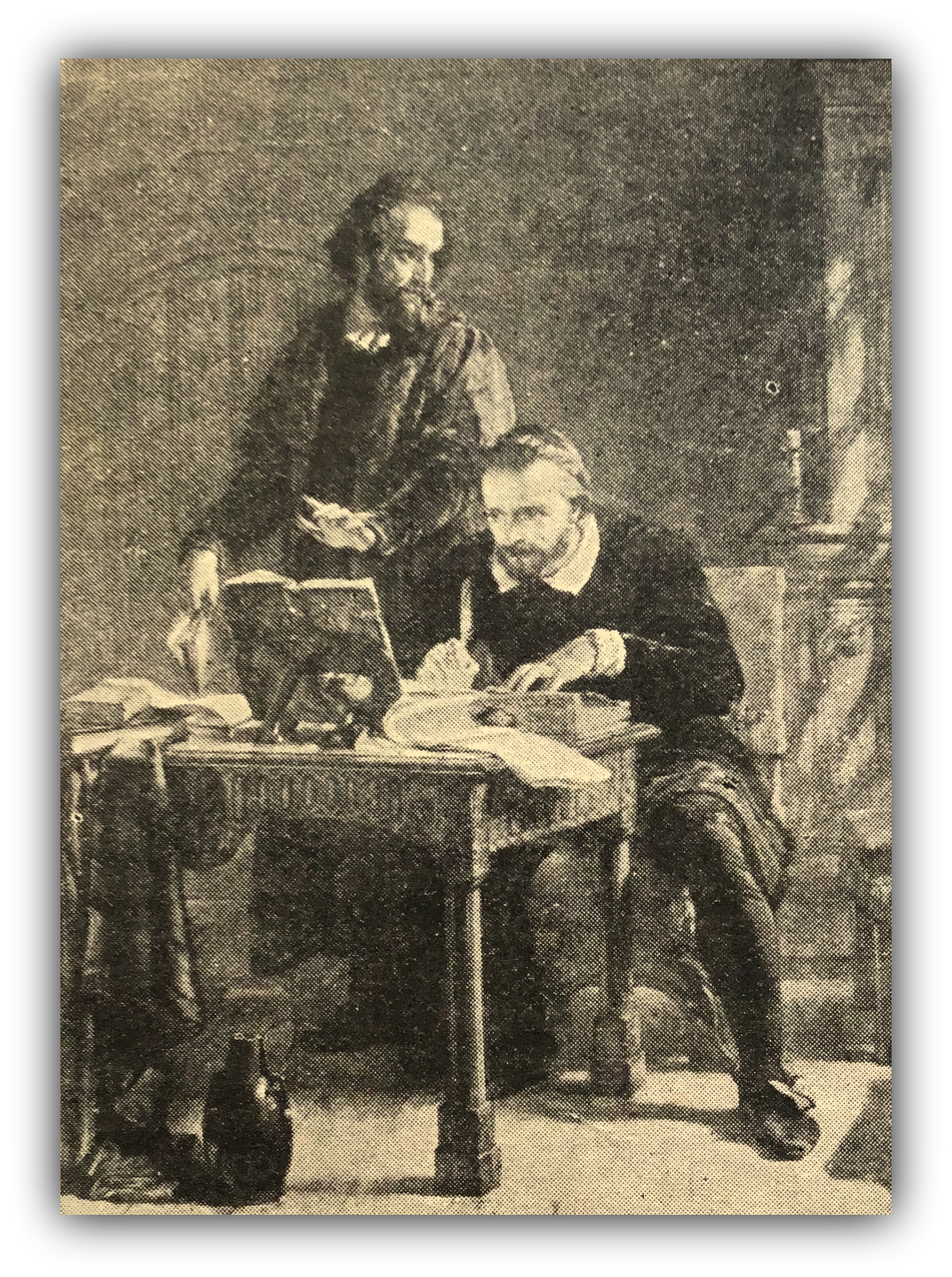
We are in a very unique era in the history of this world since this year marks the 500th Anniversary of the 1526 Tyndale New Testament.
In 2025 we saw the 500th anniversary of the 1525 version, and this year has enormous significance.
For those who may not know, William Tyndale (c 1494-1536) is a pioneer in the formation of the English language and in the translation of the Bible into English. The original 1st century apostles and gospel writers primarily wrote in Greek, with some texts being translated from Hebrew.
In 300 BC scholars from Alexandria translated the entire Old Testament into Greek and in the 4th century AD Jerome translated the New Testament into Latin.
Translation has been part of church history for centuries and is the key method by which we communicate with one another.
Tyndale was a genius and his translation work should be remembered forever. I love the Tyndale New Testament and I hope that heaven will hold them forever. Being able to read ancient English I don’t have any issues with using old English translations including the Wycliffe, Tyndale, Geneva and King James versions.
The Tyndale New Testament has certainly impacted me very deeply, from those early days when I was studying for my degree and I first held an original 1538 print in John Rylands Library, to the days when I held a 1534 edition at Chetham’s Library to the days when I walked in the footsteps of Tyndale while visiting Oxford. These were golden days and my attachment to Tyndale goes beyond sentiment to the depths of the eternal truth he proclaimed, which cost him dearly.
This year yet again I hope to know more of Tyndale and be blessed by the reading of his translation of the word of God. May that be truly said of us, and all of us. In these dreary times of confusion and upheaval, may each one of us find solace and obedience in the personal revelation of Jesus Christ.
The words of Jesus Christ will never go away
Posted by simon peter sutherland in Christmas, Church of England on December 4, 2025

In todays readings for Advent, Ryle refers to Matthew 24: 29-35 where Jesus says His words will never pass away. How Jesus knew well the unbelief of human nature and as St Peter declared that mockers would come in the last days (2 Peter 3: 3-4).
The Biblical reality is that world has been in the last days for 2000 years. The author of Hebrews makes this very clear in Hebrews 1: 1-2 that God has spoke throughout history by the prophets but in those last days, that is in the 1st century, God has spoken “by His Son, who, He has appointed heir of all things, through whom He made the worlds.” (NKJV)
Jesus’ words are enough for us to feed upon and sufficient and powerful enough for us to live by. His words “will be fulfilled in their season” and will never die or be taken away. We may well live in an unbelieving age, an age where even the church has fallen away into irrelevance and fear, and yet Christ is still with those who belong to Him, who love Him and keep His commandments.
The words of Jesus Christ are like no other. No one has ever spoken like He did and no other words can come to pass like His. No priests, no bishops, no councils or synods, can ever take away the truth of His words. They (bishops and priests) can infect them so that they do not believe His truth anymore, but it has little effect in the lifelong reality of them. Jesus’ words cannot be broken and will never pass away. He is the King of glory and the Lord of all life. No one can take Him away.
Worship the King of kings and the Lord of lords and never lay down His truth for the squeamish words of archbishops and synods who no longer believe them. Heal yourselves and your wounds from the infections that they have spread and let the Lord of all peace and justice reward and fill your hearts with gold and myrrh. For the day is coming when all the injustices of the world and the devil will be drawn away into the dismal clouds of darkness and failure.
Look now unto our gracious Lord and have confidence in the power of His true gospel to save and restore. Amen.
The second coming of the King of kings, Advent reflections with J C Ryle and Matthew 24: 29-35
Posted by simon peter sutherland in Christianity, Christmas, Eschatology, Theology on December 1, 2025

I have begun the reading of a book “The Coming King” – 25 Readings For Advent with J. C. Ryle.
Ryle was Bishop of Liverpool between 1880 and 1900 and the readings are taken from his Expository Thoughts on the Gospels, some of the best commentaries available today.
In this part he deals with “our Lord’s prophecy” from Matthew 24: 29-35 where Christ describes His own second coming. In this passage we are told that Jesus will return with great power and glory quite different to His first appearing. During His incarnation Jesus was a man of sorrows (Isaiah 53: 3) He was not some ordinary joker Man who talked a lot, and blended in, He was a quiet Man and when He spoke He spoke with power and authority. If He did speak all the time, His words would not carry the same weight, yet His words were like no other, they had weight and strength. No one ever spoke like this Man. Even the authorities could hardly refute Him, even though they tried. He was the King of kings and Lord of lords, and no one had authority over Him unless it was granted by the Father.
When He was born, He was born humbly, among the lambs reared to be offered in the temple sacrifices. As He grew, He grew in favour with both God and man, yet He took on the form of a servant, rejected by mankind. Betrayed by his friend and condemned to death of a cross. Yet it did not end there, if it did, faith would be worthless and in vain. No, Christ rose from the dead and ascended into heaven where He reigns forever more. We do not need to wait for His return to know that He reigns, He is reigning now from heaven. We do not need to wait for some futuristic kingdom to take place on earth when He returns to Jerusalem, He is reigning now from heaven on the throne of David. And one fine day He will return and men will receive the fulness of eternal life or the sentence of eternal death.
Remember this, lest you live a pointless and meaningless life. There will be no escape from anything when He returns. There will be no opportunity for people to change their minds and believe once He returns. It will be the end. No thousand year reign. No second chance. No scoffing at Him. He will return to this earth when you least expect and no one will escape Him. He will not be the same as He was at His first coming, He will not be the Jesus people mock and blaspheme, and think they can walk all over, He will be returning with all His power and glory in the clouds of heaven, and no eye will be able to escape from Him. No ear will be unable to listen to Him. No sin will be left uncovered. No one will be able to escape. It will be the end.
What a terrible day that will be.
I wonder where you will be on that day? Will you be preaching, only to find yourself lost without salvation? Will you be drinking, only to find yourself thirsty? Will you be walking only to find yourself on your knees? It doesn’t have to be that way, you can pray. You can receive Christ at any moment of the day. You don’t need a priest, He is our priest. You don’t need a pastor, prophet, or pope or mediator, Jesus is our Mediator. All you need to do is pray and receive Him and you too will be given the gift of eternal life in the arms of our Lord and Saviour Jesus Christ.
Examine yourself whether you are in the faith (2 Corinthians 13: 5) Evaluate your beliefs. Consider your actions, and see if they line up with the gospel. Test your faith and yourselves, and keep awake, so that when Christ returns, He will not find you sleeping.
“Dispensationalism Exposed” Revealing the Bad Fruit: book review part 1
Posted by simon peter sutherland in Eschatology, Theology on November 19, 2025

Last month while reflecting on bygone eras of my church life, I was rummaging through some second hand books and I happened upon a book entitled “Dispensationalism Exposed” by Dale A. Albertson. I didn’t know anything about the author but I noticed the book was self published so it was right up my street.
I have a history with Premillennialism, from my early days where the theory was projected at me, to my more recent days when this happening reoccurred. I have a distinct distaste for Premillennialism and so often it is difficult to find folks who think alike. Thankfully Dispensationalism is not a big issue in UK churches, but for many people, especially American Christians, Premillennialism is nothing more than Scripture itself.
But now things have changed. More and more people are realising that it ain’t necessarily so. Premillennialism is not the only interpretation of Matthew 24 or the Book of Revelation. But the problem for some believers are, that other views are rarely presented. At least in some circles.
So, I bought the book and I have found it to be a pleasant surprise. In it, the author presents his arguments against dispensationalism and argues the doctrine is distructive and in many cases, harmful. Dispensationalism prevents people from trying to make our world a better place, it often denies the reality of what Jesus was talking about in Matthew 24, and it creates unnessesary division and is not accurate to the early church.
The author focuses upon the 1,000 year reign of Christ and His saints and the events of AD 70 when the Jerusalem Temple was destroyed by the Romans. Yet Premillennialists often ignore what Josephus documented and prefer to promote various rapture theories as though Matthew 24: 40 refers to an event way off in the future. It does not, Jesus was talking about the Roman armies taking people into captivity when Jerusalem was about to be destroyed and it all goes back to the writings of John Nelson Darby and his incorrect hermeneutics. The Olivet discourse and a majority of the book of Revelation are all about the past, not the future.
Dispensationalism has a dark side, the author argues, “and its bad fruit” has a “negative impact-on the world today”. “Dispensationalism is a very new doctrine in the scope of church history,” the author argues, dating to the 19th century and the “Plymouth Brethren minister” (P. 12). Spurgeon was a “well-known vocal critic of Darby” the author exclaims. Darby’s ideas where adapted from Edward Irving (1792-1834) a clergyman in the Church of Scotland and Darby’s influence spread through seminaries of Europe and his tours of the United States.
Dispensationalism brings about the practice of “separatism” and causes people to fail in working towards change in our world because according to them, the decline of society and church is all part of the unfulfilled prophecies of Scripture. I have been making this point for years. I argue that the powers that be use Premillennialism as a gateway to disencourage Christians to make changes in our world, because when Dispensationalism is believed, the bad events of our day and age are all foretold.
“The indoctrination of Dispensationalism is now nearly universal in America.” and “Dispensationalism is considered unassailable by the majority of Christians in America” and “those who disagree have been called heretics,”. (P. 25)
I can relate to those claims, since one man attempted to assassinate my refutation of Premillennialism by claiming that I was denying the second coming of Christ. So for me, since Premillennialists often ignore and overlook the writings of Josephus, you can see why the real historical events of Matthew 24 are unknown to them. Because of this I think many American Dispensationalists are ‘Nuda scriptura’ rather than ‘Sola scriptura’. Personally I am Sola scriptura a position which allows for other historical sources to help us rightly divide the word of truth.
Premillennialism does not rightly divide the word of truth since it fails to recognise that a literal-historical hermeneutic of Matthew 24 would reveal that Jesus was warning His 1st century listeners about the destruction of the temple in Jerusalem, by the Roman armies under Titus. A fact which according to the author “Dispensationalism must (mostly) deny in order to justify its alternative interpretation of the great tribulation.” (P. 31)
The author continues on to argue that Dispensationalism is so bad an idea that even sceptics and Muslims use it to argue that the prophecies of Jesus were not fulfilled, then there is the credulous nature of the support for the rapture doctrine, and the secret rapture of the church, a position that the author rightly argues “is not found anywhere in scripture.” (P. 46)
Amen to that. Absolutely.
If you are looking for a good book to read over Christmas or the new year, you should get yourself a copy of this book. Self published works can oftentimes be great reads.
Is AMiE a better option than the CofE
Posted by simon peter sutherland in Christianity, Church of England, Reform on November 13, 2025

It is quite evident to most Christians now that the Church of England has fallen headlong into apostacy. A large percentage of ministers and bishops are in favour of practices and re-interpretations of Scripture which any Bible believer cannot accept.
It has been a long and tiring debate and conservative evangelical ministers are doing the best they can to uphold the church’s teaching on sexual ethics and Scriptural doctrines while at the same time holding the blanket concerning their future careers.
There are serious problems happening with the establishment and you know there is an even deeper issue on the horizon when the King prays with the pope for the first time in 500 years and now they have a very liberal catholic female archbishop about to be seated on the chair of St Augustine. An act for which Archbishop Thomas Cranmer would be turning in his grave.
The question is what to do about it?
Roman Catholic’s are being sneaky right now and are chasing in on this cradle of insecurity by trying to woo Anglicans back into their lair of popery. What’s wrong with that, people might say? Well, there is a great deal wrong with that. For a start off Roman Catholicism is not Christianity it’s Roman Catholicism. It is a religion that prays to the dead, worships a goddess, rejects justification by faith alone, condemns reformed theology and believes that the Eucharist is literally the body and blood of Jesus Christ, which is cannibalism and vampirism. On top of all they they quite literally believe that the pope is Christ’s vicar on earth, which means to be in place of Christ.
Not to mention the fact that they worship apparitions of a demon masquerading as the virgin Mary.
We live in very dangerous religious times and for this reason Paul wrote, “Take heed to yourself and to the doctrine. Continue in them, for in doing this you will save both yourself and those who hear you.” (1 Timothy 4: 16) Just because a religion claims to be Christian, does not make it so. Each one of us needs to examine claims and doctrines and do it closely with the Bible in hand. There is no need for a bishop to guide you in this, you can research and decide for yourself.
As you can tell I am a nonconformist at heart, I don’t believe things just because people preach them. I need proof.
That being said I am not the type of person who tells people what to do. Each of us must make our own choices in this life and everyone must decide for him or herself what each one of us must do. But I am going to recommend to you that if you are going to leave the Church of England, either now or in the future, do not go running off to Roman Catholicism. It is a corrupt religion with a rotten past and a future reliant upon it’s claim that the pope is a direct successor to St Peter. Such a claim in itself is useless since in Revelation 3: 16 Jesus warns a lukewarm church that He will vomit them out of His mouth unless they repent and that church in Laodicea knew John and St Paul, so if you can understand my perspective, it makes no difference if a church in history knew St Peter or John or Paul, Jesus can still remove them from His body if they apostatise like the Roman Catholic Church has done.
I assure you, there are better options for people who may be thinking of leaving the CofE, don’t go crawling off to the Roman Catholic Church, go to an independent church or why not give AMiE a try?
AMiE stands for the Anglican Mission in England and is not a state run church, it has no female bishops, no women vicars, no heresies, just basic Christianity and in the Anglican tradition.
Remember, remember the 5th of November
Posted by simon peter sutherland in Church of England, Reform on November 5, 2025

Bonfire night in the UK is traditionally known as Guy Fawkes Night and it is observed on November 5 to commemorate when Guy Fawkes was arrested while trying to blow up the house of Lords so he could establish a Roman Catholic monarch on the throne of England.
These details can be found here.
Fawkes wanted to assassinate James 1 of England and V1 of Scotland because he was a protestant king. The plan was to return the Church of England and this country back into the lair of the pope.
But it never happened.
While at a bonfire this month I reflected on how important it is that England never forgets her own history, especially the reformation and we should never bow the knee to those who seek to destroy the very Christian foundations that have made this country so great. It is true that we have many problems in the UK and I’m sure that in time those problems will be resolved by the grace of God.
Today we are seeing a peaceful revival of Christianity in this country and people are once again exploring Christianity and the Bible and even attending church.
But even though these are positive adventures, we should not ignore the fact that there are some big problems which cannot be overlooked. The established Church of England is in a real mess. Not only has a King of England prayed with the pope for the first time in 500 years, but we also have a first female Archbishop of Canterbury who is a catholic and prays the rosary.
The rosary is traditionally a Roman Catholic devotion and not a Protestant one. It cannot be found in the Bible and it places Mary before Jesus meaning you have to go to her first in order to reach out to Jesus.
Likewise, many Roman Catholics are seeking to overturn the reformation and reunite Anglicans with Rome. “Come home” they continue to say, yet the Roman Catholic Church is not home to me, I say. I am a Christian and not a Roman Catholic. I do not believe the Bible agrees with transubstantiation or Marian devotions or idolatry or prayers to the dead or prayers for the dead.
Let us not forget it was pope Leo X who excommunicated Martin Luther and now pope Leo X1V wants to restore that.
To quote an article I wrote back in 2015, I say it again; “Britain has come a long way since the glorious days of the 16th century, and in many ways both England and Britain are founded upon the principles of the Protestant reformation. Many ideals such as democracy, tolerance and human rights are rooted in the principles of the reformation and the people of Britain should never forget that.
It is a true saying ‘remember, remember, the 5th of November”.
The CEEC’s spineless response to the first female Archbishop of Canterbury
Posted by simon peter sutherland in Church of England, Is Female Leadership Biblical? on October 7, 2025

In an article published on October 3, the Church of England Evangelical Council has given a response to the recent announcement of the first female archbishop of Canterbury in the history of the CofE. They go on to say that they join Anglicans across the world in “praying” for Sara Mullally in her role.
The article goes on to say about the difficult time the Church of England is in and how it is set against a backdrop of “global conflict and instability.” Challenges and declining church attendance are sweeping their way through the CofE and the LLF process has caused division.
For no fault but their own, the CofE is an absolute mess and now they have made a woman the archbishop of Canterbury and it seems the CEEC is not very disturbed about this ordination. Regardless of how expressively clear the New Testament is concerning an all male leadership, the CofE just doesn’t seem to care. Men like N T. Wright and liberal vicars and writers spell out their outright revisionist nonsense and claim that St Paul was actually in favour of women leaders.
I was at a meeting with the CEEC during their opposition to the same-sex blessings and N T. Wright was broadcast on the screen and I stood with the CEEC in their fight for orthodoxy but over time I saw how they were claiming orthodoxy in one sense while denying it in another.
The Bishop of Lancaster, a woman, was at the meeting and a number of female vicars were present and it occurred to me that people didn’t care if 1 Timothy 2: 12 was upheld, so long as the women vicars believed in traditional marriage. This is a major fault of the conservative evangelicals, they are picking and choosing the texts they want provided you agree to disagree on the the ordination of women vicars. But what if what Paul was saying in 2 Corinthians 11: 3 that any attempt at female leadership is not a secondary issue. What if Paul was claiming that he feared the work Christ accomplished by overturning the evil the serpent in Eden was about to be attacked again by the devil.
Paul writes,
“But I am afraid that just as Eve was deceived by the serpent’s cunning, your minds may be somehow led astray from the sincere and pure devotion to Christ.” (2 Corinthians 11: 3)
I have used the NIV in this quote for the benefit of CofE members who use this translation, because I want you to see the real truth of what is going on here. If you believe that it is ok for women to be ministers you are greatly deceived.
Paul gives his reasons why women are not to be bishops or vicars and why leadership in the church is reserved for men only because Adam was formed first and “Adam was not deceived, but woman being deceived was in the transgression.” (1 Timothy 2: 14)
Paul is here leaving one of his final commissions to Timothy on how the church is to be governed after his death. There was to be no alteration. This is why Paul wrote, “But I suffer not a woman to teach, nor to usurp authority over the man, but to be in silence.” Paul’s greatest fear was that Satan was going to try and undermine what Christ achieved and overturn the restoration of Eden by deceiving women by manipulation just like he did in the garden of Eden.
Narcissists always manipulate women and Satan is the ultimate narcissist and he will not stop and cannot stop until he has tried to get anyone back of whom he has lost. That is what narcissists do. Once they have someone in their grips they never let go of them. Satan (the ultimate narcissist) is forever working to try and attack his antagonist Jesus Christ and undo everything He has accomplished. That too is what narcissists do. They hate losing.
For this reason, the CEEC has made a big mistake in letting female ministers join their stand for orthodoxy. They have lost the battle already. The ‘liberal bishops’ cannot consistently take them seriously because the conservative evangelicals once stood up against the ordination of women ministers and bishops, and now they have lowered their standards by regarding the matter as a secondary issue. It is not a secondary issue.
The officiating of the first female archbishop of Canterbury is not legitimate. Sara Mullally prays the rosary and catholic prayers to Mary and she will lead the church astray even further than you could possibly imagine. You cannot pray for that. You cannot pray for the Holy Spirit to use someone in an office that is contrary to Scripture. You invite the devil in when you do that.
You may disagree with me, you may think I’m going over the top and think I’m crazy, but I’m not, I’m warning you. Don’t fraternise with the devil. Don’t mess around with the darkness. Don’t think the Holy Spirit is guiding you if you are going against Scripture. Never forget that the darkest evil often appears as an angel of light.
The ordination of the first female archbishop of Canterbury is an act of hell and the Church of England is about to step into one of the darkest eras of it’s existence.
Turn back and repent and “Have no fellowship with the unfruitful works of darkness, but rather expose them.” (Ephesians 5: 11)
IC XC NIKA
Does Paul say Chloe was a church leader?
Posted by simon peter sutherland in Church of England, Is Female Leadership Biblical?, The Bible on September 19, 2025

Continuing on my with my series on refuting women leadership in the church, today I’m dealing with another passage of the New Testament which advocates of female leadership misuse to promote their ideas.
Liberals and revisionists use 1 Corinthians 1: 11 to claim that a 1st century woman named Chloe was a leader of a church that met in her house.
Paul writes,
“For it has been declared to me concerning you, my brethren, by those of Chloe’s household, that there are contentions among you.” (NKJV)
That’s it! This tiny verse is used by revisionists as another pawn in their chess game to promote the tiny claims that women can be leaders and ministers in the Christian church. No such thing. This verse does not say that Chloe was in any kind of leadership. Let me show you why.
Paul is writing to the 1st century church at Corinth, this is an ancient city in Greece. Corinth was a place bustling with worldwide commerce and cultures. Religion played a huge role in that place and the church was full of problems, divisions and the difficulties of living in a pagan society. Chloe (or her family) had informed apostle Paul that things in church were not going so well. Immorality, and abuse of the Lord’s supper had been going on and people were mixing the practices of Corinthian culture with church practices. Paul sets them straight in this letter and he admonishes them and pleads that they “speak the same thing” and “that there be no divisions among” them (verse 10).
People had become proud and claimed that they were worthy of note because they were of Paul, or Apollos, or Cephas or Christ (verse 12). These claims however were not related to doctrinal distinctions, since our Lord Jesus Christ, and saints Peter, Paul and Apollos all taught the same doctrines. No, the issue here was that people were claiming that they themselves were special because they were with Jesus during His lifetime or they personally knew Peter, or Paul, or Apollos. In verse 13 Paul refutes these claims and asked them a series of questions;
“Is Christ divided?
Was Paul crucified for you?
Or were you baptised in the name of Paul?”
Note that Paul does not bring Peter or Apollos into this section where he refers to crucifixion and baptism. This is because Paul himself rarely baptised anyone even though there were exceptions.
In verse 14 he says he did baptise “Crispus” and “Gaius” and didn’t baptise the others lest any of them claim that Paul baptised in his own name. Yet in verse 17 Paul makes it clear that Christ did not call him to baptise but to preach. Then in verse 16 he refers to his baptising of those from “the household of Stephanas” so he did baptise people on occasions. This brings us to an important section of the passage. By claiming that he baptised those of “the household of Stephanas” Paul is referencing a family here. The Greek refers to a family, a home. See (G3624). This sets the passage and verse 11 in the context of a family and brings us back to the verse in question, “For it has been declared to me concerning you, my brethren, by those of Chloe’s household, that there are contentions among you.”
Here Paul is in no way referencing Chloe being a leader of any church. Paul is merely stating that either Chloe or her family have reported to him that arguments and contentions have been going on at church and Paul wants this to stop. Prideful contentions, worldly practices and divisions have no place in Christianity. The church should be a place of purity and holiness, not a place where people behave like the world and the culture around them. The people of God are supposed to be different. God in Christ has given His people righteousness and redemption, and for those who know the Scripture, we have the mind of Christ (1 Corinthians 2: 16). Because of this we do not need to conform ourselves to the culture of the day.
Once again we see another Scripture twisted and misused by preachers and pastors who manipulate the Scriptures to suit their own agendas and lead the masses away into false teaching and errors.
Please don’t listen to them, they will lead you astray.
Simon Peter Sutherland
-

 Simon Peter Sutherland