Posts Tagged “Calvinism”
Calvinistic Determinism Refuted
Posted by simon peter sutherland in "Calvinism", Theology on April 29, 2025
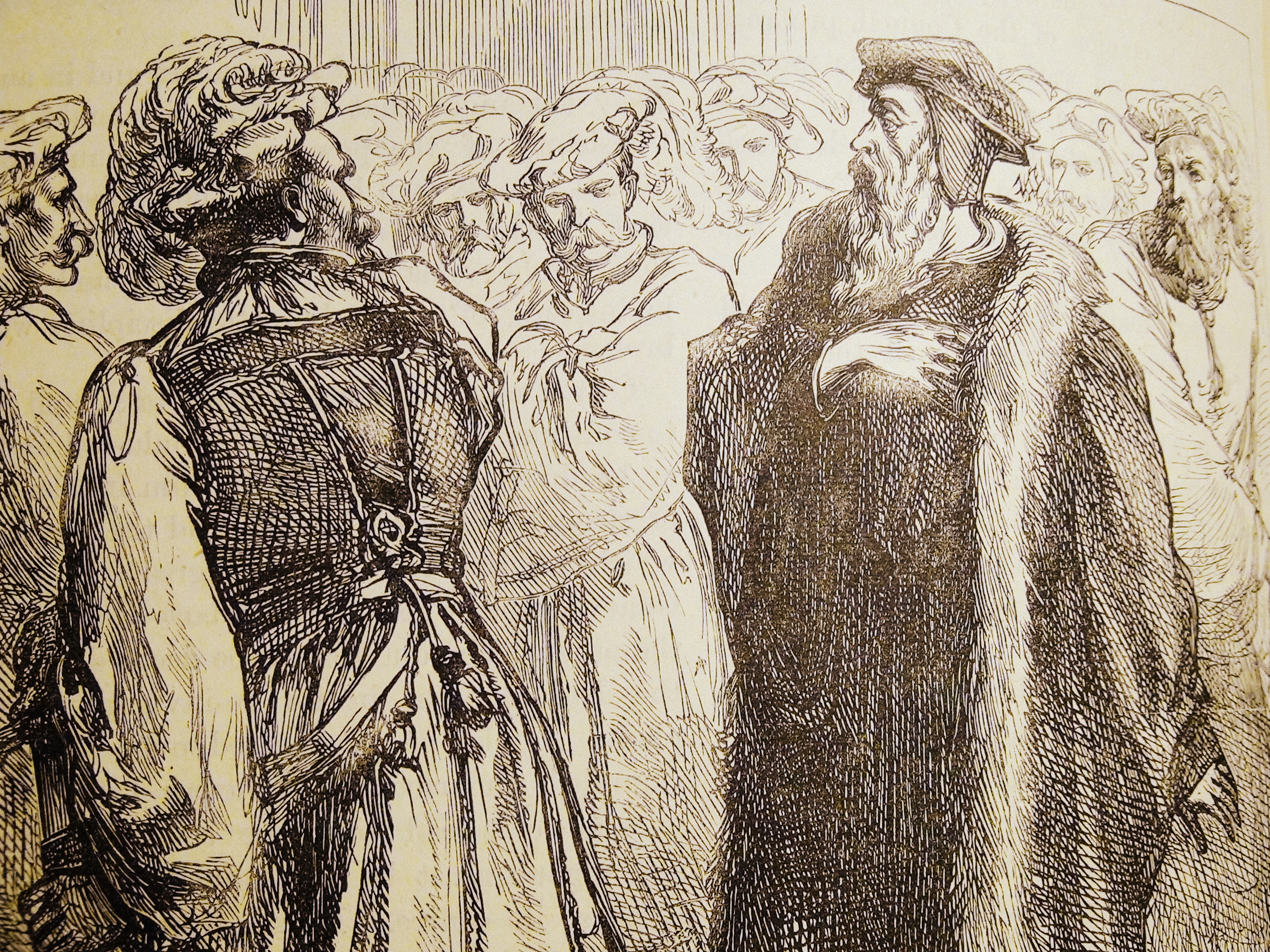
There is a doctrine gaining popularity today, known as ‘Calvinistic determinism’ or ‘theological determinism’. This concept claims that every event in the universe is predetermined by a divine will, suggesting that human actions and decisions are ultimately guided by God’s divine plan. It is often cloaked or hidden within the beliefs of many famous reformed preachers, who may emphasize God’s sovereignty and control over the universe without explicitly acknowledging the implications of their doctrine. At other times, it is plainly stated, leading to profound discussions among theologians and laypeople alike about free will, predestination, and the nature of divine foreknowledge, which raises questions about human responsibility and moral accountability in a world governed by such determinism.
In short, for those who do not know, determinism is a doctrine that claims that all human acts, both good and evil are pre-determined by God before the world began. God’s will is always done. Everything people do, be it good or bad, is all pre-determined and predestined by God before He made the world. It’s not a belief that says God knows everything you do, it’s a belief that says God determines, decrees and wills everything you do. In other words, He writes them.
It’s crazy!
But where did this doctrine come from and why are people so eager to believe it?
Well, basically, people do not always like the truth and some people are gullible and others are skilled at indoctrinating them. Some people are easily influenced by people they follow. They listen to their favourite preachers and their skilled rhetoric causes listeners to feed their views into the Bible. People assume that because a preacher strongly believes something, it makes it true. As a result, people assume the preachers beliefs are very Biblical, when in actual fact they are the exact opposite.
But are these deterministic ideas Biblical?
Well, the answer is yes and no. Yes in the sense that some Biblical events were determined by God, no in the sense that the events of Jeremiah 7: 31, 19: 5: 32: 35 and Isaiah 30: 1 and Galatians 5: 7-8 were not determined or decreed, or willed by God. In fact, in Jeremiah 18: 10 God reconsidered the good He intended to do, because Israel did not obey Him.
In order for God to determine everything that happens in this world He must decree, will and determine apostasy, the persecution and murder of Christians in Africa, false teaching, and some of the most evil acts of mankind can do, (evil acts I do not even want to mention) and then judge people for doing things that He has already determined them to do. If Calvinistic determinism were true God would be self contradictory. He would be determining people to break the commandments He has commanded them not to break.
But where do these ideas come from?
The answer is early examples originate in Augustine of Hippo, John Calvin and Jonathan Edwards. Augustine introduced theological determinism into Christianity in 412 AD and Calvin re-introduced them in the 16th century. Before that time determinism was a Gnostic and Stoic concept originated by Greek philosophers in the 7th and 6th century BC. Early Christian writers did not teach theological determinism. However, when Calvin re-introduced determinism into western Christianity (and adopted his ideas from St Augustine), his influence spread to puritans in the 17th century and Jonathan Edwards took this concept to another level, and when Banner of Truth republished a lot of old puritan books, preachers in America re-introduced their love of Jonathan Edwards and puritans to a new audience, and the so-called ‘reformed’ preachers in America began to influence a whole new generation of eager restless and reformed Christians.
Obviously not all Calvinists believe this level of determinism, but the original source is St Augustine and Calvin quotes Augustine more than any other theologian.
The reality is, it’s that same old thing again, influence. As Calvin adopted his deterministic logic from the writings of St Augustine, preachers today adopt their logic from the works of Calvin, Jonathan Edwards and their favourite preachers via podcasts, books, YouTube videos and so on.
But let us take a step further, if Calvinistic determinism were true God would not only determine everything that happens, He would have to decree and will everything that happens including these winds of doctrine. God would not only have to determine every good and evil act of mankind, but He would have to determine the podcasts and the books.
Preachers who oppose abortion would need to be opposing God because in reality God would not only be the one who wills and decrees the deaths of unborn babies who die in the womb and in infancy but He would be the one who determines them.
Do yourselves a favour and search up how many murders happen in America every year. In order for determinism to be true, God would need to have decreed, determined, and willed those horrific acts to take place down to the very number.
The Bible however does not affirm these repulsive beliefs.
In Jeremiah 32: 35 the abominations men did didn’t even enter God’s mind, so how could He determine them?
In 1 Corinthians 14: 33 Paul states that God is not the author of confusion so how could God determine and decree and will everything that happens? God would not only be the determiner of every human act but He would be the author of confusion, which is contrary to what the apostle claims.
Does that make sense?
In short, I am not even remotely interested in debating or discussing these forgone conclusions with theologians, pastors or preachers who advocate these repugnant doctrines. They are making the God I serve and love to be the author of evil and the determiner of the most disgusting and evil acts this world has ever known.
In short, I want to reach out to you, the general public, average Christians who find themselves confused and influenced by these preachers and do not know what to make of these filthy claims.
I want you to know that the God of the Bible has nothing whatsoever to do with the evil acts that men do. He gave His Ten Commandments and the commandments of Christ for people to obey not disobey. He gave us Christ to save us from our sins not determine them. He cares for you and He serves you in your times of great strife and upset and wants you to know that we live in a fallen world and in the midst of that fallen world God has given us His spirit to minister to the souls of men. Therefore, comfort each other with these words.
If you are influenced by these confused preachers who repeatedly contradict themselves and don’t know what they are talking about, do yourselves a favour, switch off from them and go and read your Bible.
Amyraldism calmly considered
Posted by simon peter sutherland in "Calvinism", Theology on October 25, 2024

Over the years I have expressed my deepest concerns relating to a doctrine known as ‘Limited Atonement’. This 5 Point Calvinist theory claims that Jesus Christ did not die for all mankind but only for the elect. If Christ died for all mankind (they say) then no one should be in hell for whom Christ died, thus He didn’t die for all, He died only for those whom the Father had given Him. Believing that Christ died for all (they say) is universalism.
I disagree with these claims entirely. There is no Scriptural proof that the sacrificial offering of Jesus Christ on the cross automatically saves anyone. No one is saved by the cross of Christ alone since believers are saved by grace alone through faith (Ephesians 2: 8) so faith is the means by which we are saved and there is no Scriptural evidence that Jesus purchased our faith at the cross.
A person can argue that faith or salvation is a gift of God (ibid) and I wouldn’t disagree but there is no suggestion that faith or salvation (as a gift) is limited only to those whom God has predestined and chosen. For me, this claim is more systematic than Scriptural and retains some serious Biblical inconsistencies. For me, and for J. C. Ryle, the doctrine of Limited Atonement is inconsistent with the Bible and some theologians who propagate it are more systematic than the Bible they represent. Yet many proponents of the ‘Calvinist’ teaching actually reverse the truth by claiming that those who don’t believe in the 5 Point Calvinist interpretation of ‘Limited Atonement’ are the ones who are inconsistent. This is untrue. For me, and for many Christians, the New Testament is extremely clear that Christ died for all mankind and to deny that fact can be dangerous. The reason I say this is because a person is putting argumentation above Scripture, thus leaving room for any persuasive argument to be believed, even if it contradicts Scripture. Yet many 5 Point Calvinists claim that their beliefs are the pure teachings of Scripture and they wait patiently for others to catch up and be persuaded.
Obviously I’m not one of those who have been persuaded and if a doctrine cannot be consistently proven by all Scripture, I’m not obligated to believe it. So for me, I have reached an opposite conclusion to the 5 Points of Calvinism. For me, I am actually very uncertain if 5 Point Calvinism is even accurate to the teachings of the man it is named after. There are times when I find it very doubtful that Calvin ever taught the same version of limited atonement that modern 5 point Calvinists teach? I haven’t found the majority of 16th century reformers affirming it either.
For me, Calvinism (as it is nicknamed today) is little more than Owenism. By “Owenism” I am referring to puritan John Owen (1616-1683). A man who, in 1648 published a book called “The Death of Death in the Death of Christ”. In this book Owen affirms the doctrine of Limited Atonement in no uncertain terms. The book blends in perfectly with the doctrines affirmed in England during the times of the Westminster Confession of Faith. Like the Westminster Confession, Owens theology offers no salvation for the none elect, they are utterly doomed. Born to be damned and to enter hell for disbelief in a Saviour who did not die for them to begin with.
It is an awfully distasteful doctrine and one that should be spat out.
Having read Calvin, and studied many other 16th reformers, I have been (over the past few years) somewhat pleasantly surprised to learn of the 17th century man named Moses Amyraut (1596-1664) a French reformed theologian who noticed the inconsistencies of Calvinist theology and propagated moderations. Like Richard Baxter, John Bunyan and Richard Horne, the believer can be blessed by the challenges presented by Moses Amyraut who find themselves troubled when ‘Calvinists’ deny the exceedingly clear Biblical statements that Christ died for the sins of the whole world.
Amyraut challenged Calvinians and presented a view that is much more conceivable than Limited Atonement and taught that Christ did in fact die for the whole world but God in His foreknowledge knew those who would believe in Jesus Christ and elected them based upon that foreknowledge. This is entirely consistent with Romans 8: 29 “For whom He foreknew, He also predestined to be conformed to the image of His Son,”. Note that St Paul presents foreknowledge prior to predestination. Thus preserving the doctrine of unconditional election while not excluding anyone from receiving Christ.
For me, if Christ died only for the elect the great commission is null and void and the gospel should not be preached or offered to “every creature” (Mark 16: 15) and Acts 17: 30-31 makes no sense. Why would God command all men to repent (as Paul proclaimed in Athens) if man was incapable of doing so because he is not elect? Why would the great commission be offered to every creature if salvation was not available for every creature?
The logical conclusion is that salvation is offered to all because it is available for all and I am very pleased to know that reformed theology does not exclusively belong to the limited atoners. Lutherans, Calvinists, Anglicans, Arminians, all fit into this broad theology labelled ‘Reformed’.
I remain convinced that if any person merely read the Bible for itself, without feeling pressured to read other books and listen to preachers rhetoric, no one would ever discover such a harsh and uncaring doctrine as Limited Atonement.
Did Martin Luther believe in Limited Atonement?
Posted by simon peter sutherland in Reform, Theology on October 15, 2024
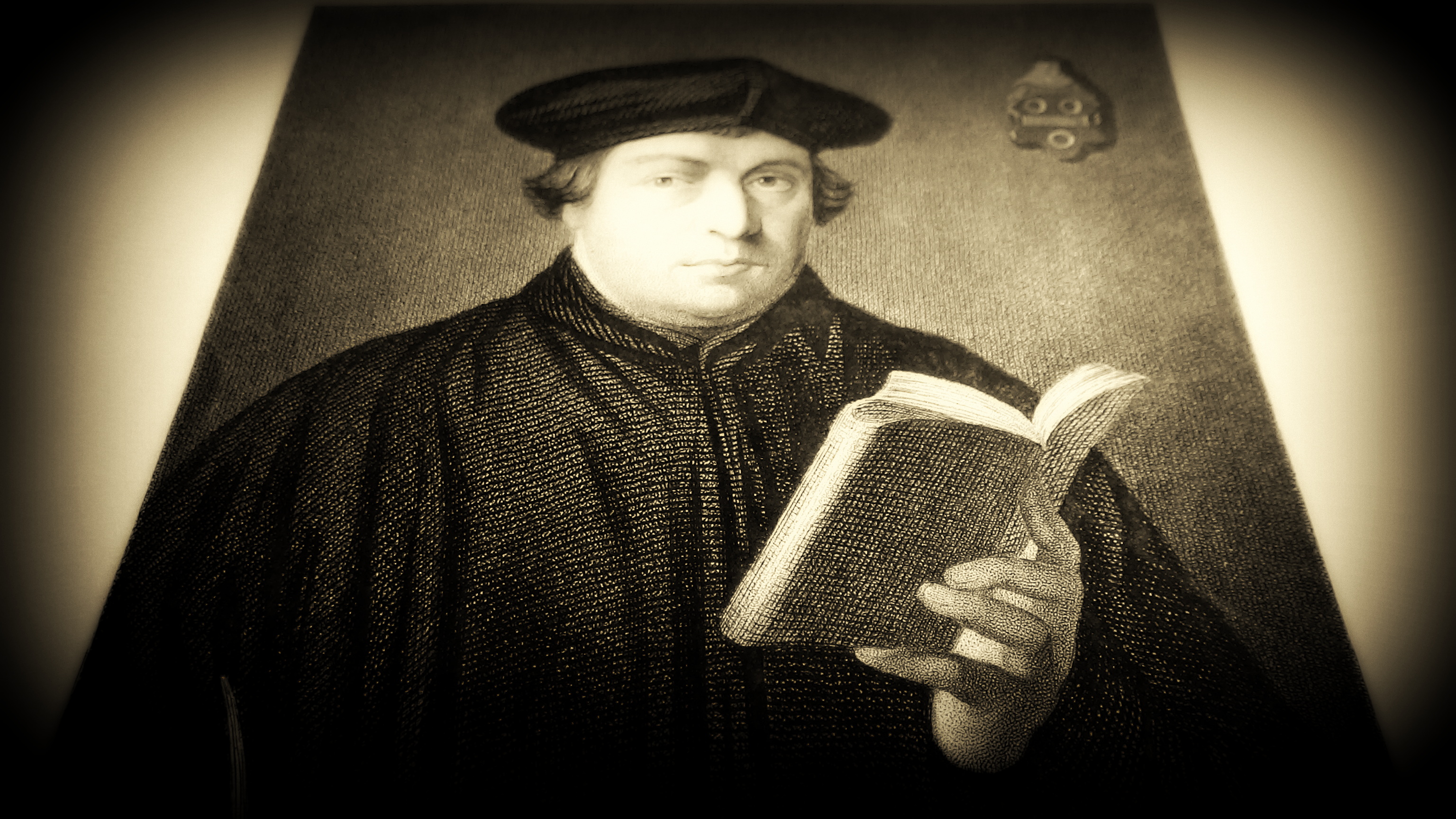
On 31st October 2024, it will be Reformation Day. This event is a public holiday in 5 states in Germany but in the UK Reformation Day is largely forgotten and replaced with Halloween. With this in mind I’m minded to write something about it.
For those who may not know Reformation Day is an anniversary of the day (October 31, 1517) when Martin Luther (1483-1546) nailed his ninety five thesis to the church door in Wittenberg. Back then the church was like our church is today, apostate and in desperate need of reform. Priests and Popes were corrupting the church and few had the nerve to stand up to them. But Luther, God bless him, stood strong and famously nailed his thesis to the church door and the sound of his hammer echoed through the chambers of the establishment.
Recently I watched the 2003 film Luther starring Joseph Fiennes and it has brought back a lot of fond memories for me. That film was very influential when I first began studying Luther and reading his books and autobiographies about him. I’d recommend people view that film and read his books rather than waste their time with all that Halloween nonsense.
But as the saying goes ‘nobody’s perfect’ and the same can be said for Luther. For me Martin was far from perfect, and that’s the point. Reformers do not need to be perfect humans they just need to have faith and believe the Bible. There are times when I really agree with Luther and think that he has been misrepresented by many people. For me, a great deal of these misunderstandings stem from cherry picking sections of Luther quotes without really considering the possibility that he might have changed his mind later on.
While in discussion recently it came up of how Luther and Calvin would have agreed with each other over doctrine and this brings me to the main point of this article. My discussion was in response to the Calvinistic interpretation of Predestination which logically affirms the doctrine of Limited Atonement. As always I make my point that there are differences of opinion concerning the meaning of Predestination and the 16th century reformers didn’t all agree with the Calvinism of that century. For me, Calvin is a little like Luther sometimes in that he might have changed his mind at times. For me, Calvin reads as though he did believe in Limited Atonement and certainly Predestination, while other times he appears to believe that Christ died for all mankind. These views can be found in Calvin’s Commentaries.
Yet there are times, (certainly in Luther’s books) where Martin appears to believe that Christ died for all, yet other times he implies all means the elect? This would imply that he didn’t believe Christ died for all, so there’s certainly conflict in understanding his position. This brings me to the answer of my own title: Did Martin Luther believe in Limited Atonement? Well, the answer is yes and no, I don’t think he did and other times I’m not so sure, here’s why.
While at Wittenburg in 1515, Martin Luther began to lecture from the New Testament and from Paul’s epistle to the Romans. It was during Luther’s studies for these lectures that he famously found that salvation is by grace alone and through faith.
In the popular modern versions of Luther’s commentary on Romans, such as J. Theodore Mueller’s translation, certain beliefs and passages have been omitted from the publications to avoid confusion with Luther’s actual beliefs. For, his beliefs often changed and improved with his knowledge of scripture. In his lectures on Romans and 9: 20-21 Luther says this:
“God will have all men to be saved” (1 Timothy 2: 4), and he gave his Son for us men, and he created man for the sake of eternal life. And likewise: Everything is there for man’s sake and he is there for God’s sake in order that he may enjoy him, etc. But this objection {to God’s sovereignty in salvation} and others like it can be just as easily be refuted as the first one: because all these sayings must be understood only with respect to the elect, as the apostle says in 2 Timothy 2: 10, “All for the elect.” Christ did not die for absolutely all, for he says: “This is my blood which is shed for you” (Luke 22: 20) and “for many” (Mark 14: 24) – he did not say: for all- “to the remission of sins” (Matthew 26: 28) (Martin Luther, Lectures on Romans, translated and edited by Wilhelm Pauck. Philadelphia: The Westminster Press, 1961. P 252)
The question remains for my readers: Did Luther believe in Limited Atonement or did he believe Jesus died for all mankind? Decide for yourselves. I think he may have originally believed in Limited Atonement (in 1515) and changed his mind later on.
Was the Reformation exclusive to Calvinism?
Posted by simon peter sutherland in 500th Anniversaries, Limited Atonement, Reformation 2017 on October 24, 2017
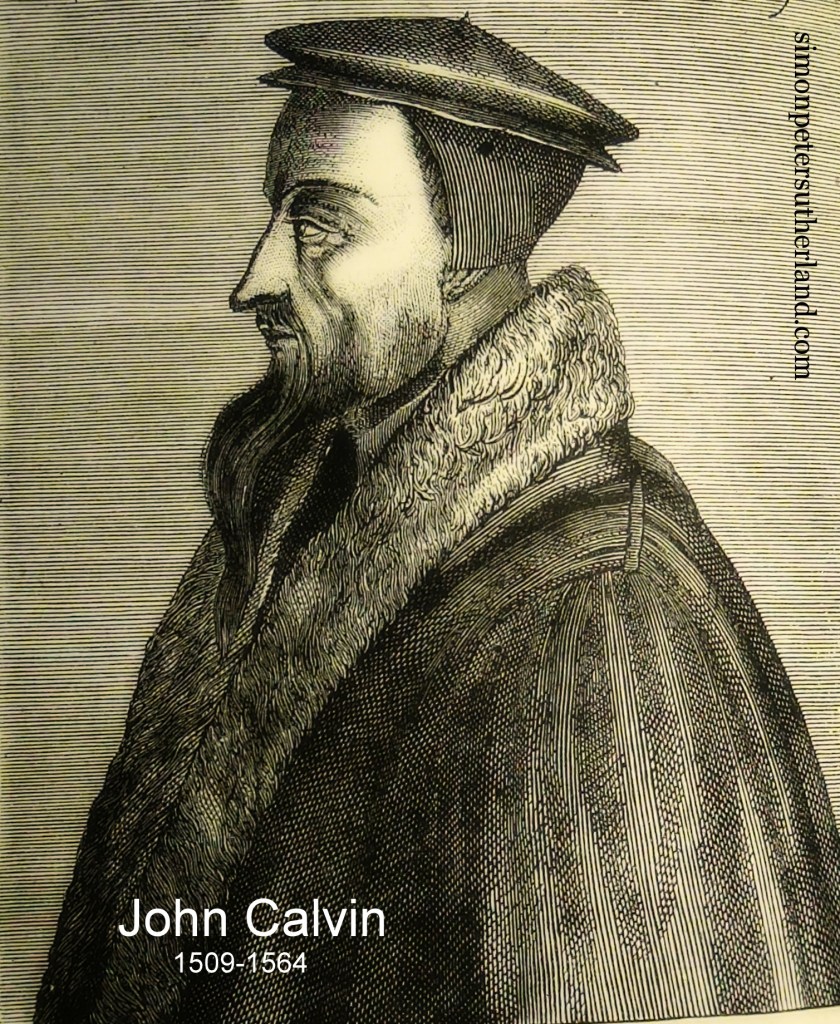
John Calvin © 2017 Simon Peter Sutherland
In only a few days now the actual 500th anniversary of the Reformation will be upon us.
31 October for me is a time that can inspire things to be straightened out. A time that inspires misconceptions to be challenged and for the voices of the people to be heard.
At this time of such a momentous anniversary, there is a common misunderstanding today that I have noticed for sometime, where popular preachers from America often associate the labelling of ‘reformed Theology’ as somewhat exclusive to Calvinism.
There are a lot of brothers in America who claim ‘reformed Theology’ is little more than Calvinism in a nutshell.
Calvinism they say, is nothing more than the pure Gospel.
These claims however are highly speculative and cannot be verified beyond doubt in the face of history and Scripture.
The facts remain that reformed theology can be divided into about four branches or positions.
- Lutheran
- Calvinist
- Anglican
- Hussite
The facts remain that when Luther nailed his 95 theses to the Castle Church door in Wittenberg in 1517, John Calvin was only eight years old.
Calvin was born 10 July 1509 in Noyon, France, which is nearly 600 miles from Wittenberg. When Luther stood at the Diet of Worms in 1521 and the outbreak of the Reformation spread, Calvin was an 11 year old boy who went on to study Philosophy in Paris. He went on to study and pursue a career in law and would not experience a conversion to Christ until 1533 when he was about 24 years old.
By that time Luther had already been excommunicated, translated the New Testament into German and his complete German translation of the Bible was close to being published. The following year Tyndale’s New Testament was in its final revision and the majority of key reformation books had been published and distributed.
By 1536 Calvin was working hard to reform the Church in Geneva and his publication of ‘the Institutes of the Christian Religion’ was in its 1st edition. And through his preaching and influence in Geneva, Calvin’s branch of the reformation spread throughout Geneva and the reformation reached its peak by 1545 and by influence continued on till about 1620. By 1545, many publications had been published and the majority position of the Reformation was Lutheran. Calvinism mainly taking root in France, Netherlands, and Scotland and remaining until after the counter reformation of 1648.
From the mid 16th century – the mid 17th century, Calvinism had taken root in England, Scotland, Greece, and Wales during the Puritan era, while Lutheranism held a majority throughout Europe, even making its way back to Rome itself. Thus, the simple facts remain that although Calvin’s influence had branches within the Reformation, it was probably not referred to as Calvinism until the 18th or 19th centuries, the majority of Calvinistic thought process at that time being the development and spread of the doctrines proclaimed in 1618 at the Synod of Dort and the Puritans who left England during the 17th century for America.

Geneva arms © 2017 Simon Peter Sutherland
John Calvin’s steadfast work and devotion to the faith is to be admired and admonished, and I value his contribution to the reformation. I regard Calvin’s commentaries on Scripture among the best available. But, I am less favourable concerning the common claims that reformed theology is nothing more than Calvinism. On the contrary, the claim is little more than a fictitious propagation of this centuries favourite American Calvinist preachers, who because of their position on believers baptism, would probably have been either imprisoned or drowned by the very same people they claim to revere.
Surely it is time now for this fallacious claim to be amended!
Absolute Sanctification?
Posted by simon peter sutherland in Theology on August 13, 2013
 “For by one offering he hath perfected forever them that are sanctified” Hebrews 10: 14
If one were to test and oppose and speak against certain doctrines now preached commonly within Christian circles, often the one or ones who speak out are closed off and rejected by congregations and those in authority of the pulpit. It can be supposed a stepladder towards heresy to question the doctrines and teachings that man has set alongside the teachings of the Bible? But what can every man do but be obedient to God rather than the ministry that is expected of him by the ideals of man and the Orthodox pigeonholed Church? So who are we to obey? Should Christians obey the God of the Bible and the teaching that stands by His word or should we obey man and his interpretations of scripture? The answer is, at least I would like it to be that Christians obey the written word of God and not the impressions of God in the mind. Wishful thinking?
If we do not test all things, we are liable to be led astray and brainwashed into all things. Indeed every singular individual in the Bible is commanded to judge and test all things. At no time is any individual in the Bible commanded to obey the doctrines of the established church regarding interpretations of the scriptures. In 1 Thessalonians 5: 21 we are commanded to “prove all things”. It is with this text that Paul employed the Greek word translated “prove” ‘dokimazō’ meaning to test, approve, discern, and examine (G1384. Strongs). Now if we do not fulfil this commandment for fear of moving away from Orthodox and established doctrines, we are not following God but Vatican type dogma, as many have done so in our past and still do to their own peril. Therefore it is not arrogant or none-humble to test the established teachings of the Church and to refute them, but it is in obedience to the God of the Bible and the love of His commandments.
BEING SANCTIFIED?
If we look at the Bible openly and honestly, we can see that God is in control of salvation and the affairs of men. He gives salvation to whomever He wishes and refuses no one who comes to Him, but gives man the ability to come to Him (John 6: 44. 12: 32). Now if man were capable of sanctifying himself, in other-words making himself holy, there would be no need of Christ. But since Christ has come, we are in need of Gods sanctification. This is a basic Biblical truth. Now, one rather common teaching I seek to mention is based around the doctrine that claims that Disciples of Christ or commonly named ‘Christians’ are not yet completely sanctified but are “being sanctified.” This teaching taught by many is not what the Bible proclaims. For such teachings are based around theological arguments and doctrines which so often today are based upon modern translations of the scriptures in which the translators may have included the teachings of men into the Bible? These teachings are not contained within the authorised King James Version and the best Hebrew and Greek texts. Translations such the NIV, NKJ, NASV all contain the teaching of “being sanctified”. This wording is inaccurate to the original Greek text of Hebrews 10: 14. The teaching of ‘being sanctified’ is an attempt, ‘in my opinion’, to moderate what Christ has done in His people and to deny the Biblical doctrine on ongoing perfection, not sanctification. As stated in Hebrews 10: 14, “For by one offering he hath perfected forever them that are sanctified”
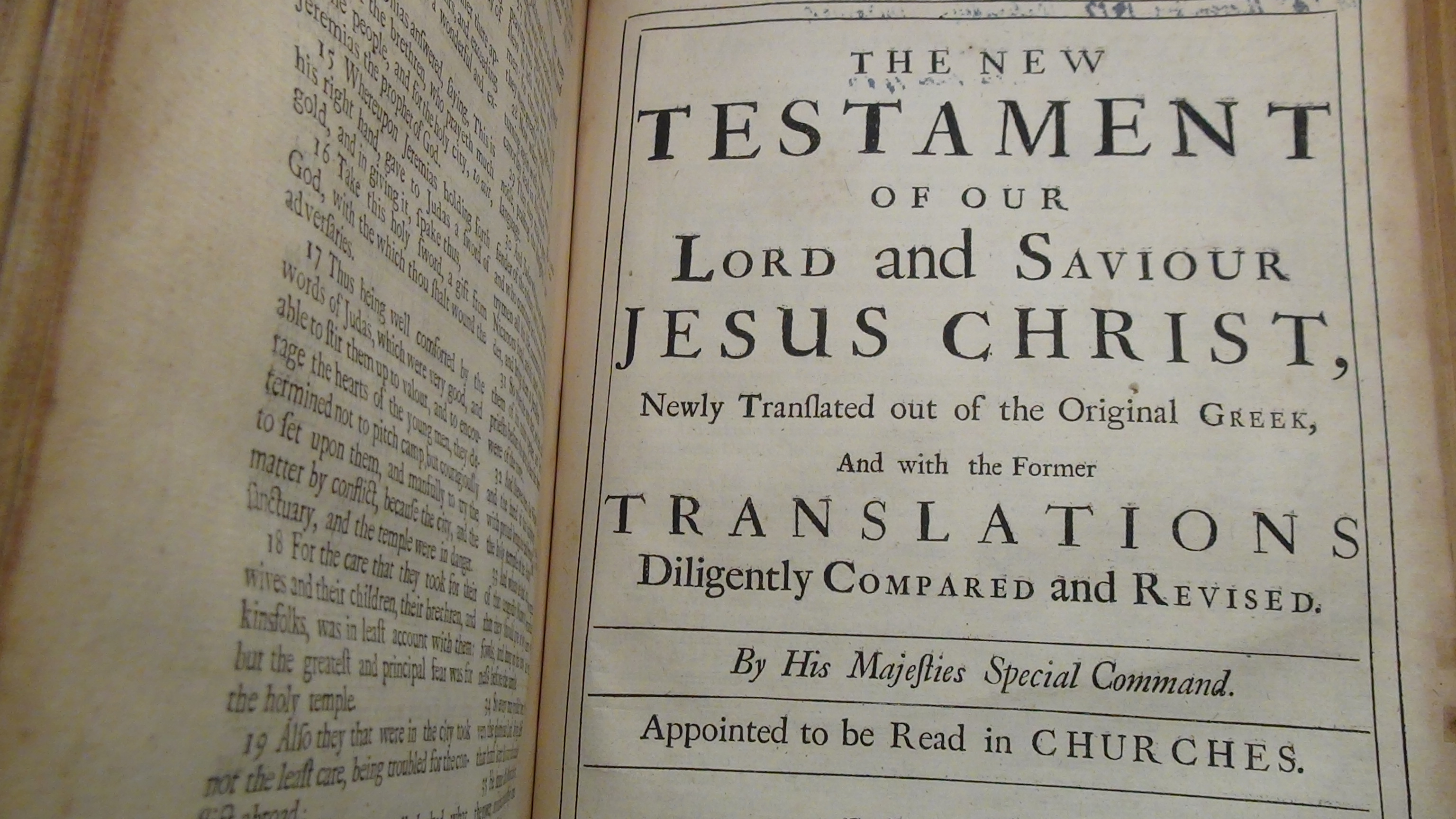 Thus, what does that mean? That He has “perfected forever them that are sanctified” Could that mean that Jesus has perfected Christians and those who are in Christ are sanctified already? Well, we must believe the truth or we will fall into the errors and traditions of men, for we can only rely upon Gods testimony for this truth and not the doctrines and teachings we hold dear. For, in all the times our sanctification is prophesied by the Old Testament prophets, the fulfilment is revealed in the New Testament. Sanctification is at no time referred to as an ongoing process. The moderation as contained in most of today’s translations are weak and therefore unacceptable as final authority. I urge you all to review the following quotations and let the scripture speak for itself.
OLD TESTAMENT
“The tabernacle shall be sanctified by my glory”. Exodus 29: 34
“Before I formed thee (Jeremiah) in the belly I knew thee; and before thou comest forth out of the womb I sanctified thee”. Jeremiah 1: 5
NEW TESTAMENT
“Unto the Church of God which is at Corinth, to them that are Sanctified”. 1 Corinthians 1: 2
“But ye are washed, but ye are sanctified…in the name of the Lord Jesus” 1 Corinthians 6: 11
“For both he that sanctifieth and they who are sanctified are all of one” Hebrews 2: 11
“We are sanctified through the offering of the body of Jesus Christ once for all” Hebrews 10: 10
“For by one offering he hath perfected forever them that are sanctified” Hebrews 10: 14
“Jude, the servant of Jesus Christ…to them that are sanctified, and preserved in Jesus Christ, and called”.
Jude 1
Why we need another ‘Reformation’
Posted by simon peter sutherland in England issues, Issues with Christianity in England today, Reform on May 7, 2013
“For the time is come that the judgement must begin at the house of God”
1 Peter 4: 17
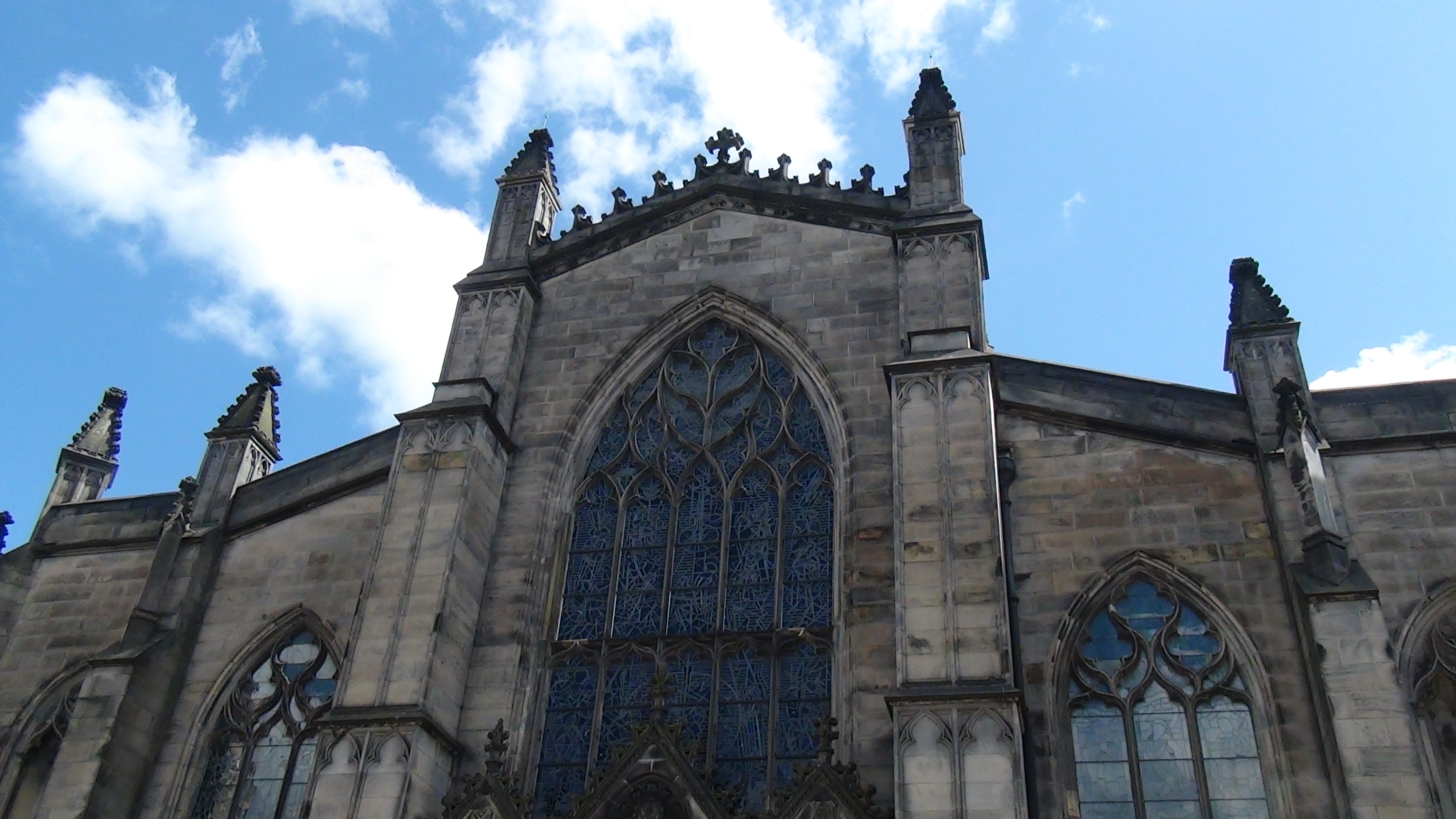
St Giles Cathedral, Edinburgh
© 2013 Simon Peter Sutherland
In the immediate context of the given passage of 1 Peter 4: 17, we can derive from the text that Peter is addressing the now historical Temple in ancient Jerusalem and the destruction which Jesus prophesied would come about upon the temple, as recorded for us in Matthew 24: 2.
This prophecy was fulfilled in AD 66-70 when prince Titus by order of Vespasian destroyed the Temple and Jerusalem with his army and not one stone of the historical Temple complext was left standing upon another. Yet, aside from the historical aspect and literal reading of the text, we can derive from the following text of 1 Peter 4 and verse 17 “and if it first begin with us, what shall the end be of them that obey not the gospel of God?” that the Lord’s aim of rebuking and judging His church is that the church might be restored so that judgement might begin upon the world so that they too may come to Him and repent. This initial context of this passage being the Jews who did not obey the gospel, but rejected Jesus as Messiah. But on a broader and wider application of the text, this can also apply to judgement falling upon Christ’s church who so often fall, as did the ancient Jews by either denying Jesus, continuing in sin or denying what is written in favour of their traditions. Jesus is the Word of God, so deny the Word, you deny Christ. Thus, Christ so often calls out for His people to repent that safe territory and good teaching may be offered them who are new to the faith. But how can this come, when the much of the church is fallen and those who stand are not teaching accurate doctrines?
We see that in the days when Jesus walked upon the earth, the established Jewish church was in an ungodly condition, they were very prosperous, critical scholars, arrogant, believing that they were chosen and others not, the pharisees were ruling by their own authority, they were wealthy and they were ‘to speak in modern terms’ the head professors of the scriptures, the literal interpreters of the scriptures, yet as common with powers up at the top, they were the ones who were actually denying the scriptures and leading others away with them in their errors.
CHRISTIANITY IN ENGLAND TODAY

Kendal Parish Church
© 2013 Simon Peter Sutherland
Now, today within the body of Christ there is much confusion and division. From a perspective viewed from England, some Protestant congregations within the UK are falling in numbers, and the many evangelical congregations who are holding to Biblical truth are forced to separate themselves and form independent gatherings of their own, these gatherings often happen in houses and other venues such as public halls and rented rooms. The churches which succeed in these areas are often flourishing in numbers.
The more established official state church such as the Church of England are largely divided and many are liberal in thinking and hold to modern ideologies and theologies and I certainly would argue are re-interpreting the Bible in favour of evolutionary science, feminism, varying times, passing winds, popular cultures and so forth.
The Church of England today certainly does not hold to its foundations and the likes of Pilkington and Cranmer would turn in their graves if they could. There can be little doubt that the Church of England is in desperate need of reform, a reform which may be happening from within. However, I fear that unless the Church of England is reformed, then Christianity in Britain will be reduced to a powder within the next 200 years and a less tolerant religion will take its place in an England that will never be the same again.
Yet, unlike the Church of England and its attempts to re-interpret Biblical truth with modern evolutionary science and feminism and so forth, some Baptist churches which are loyal to the Bible and have a good grasp of Biblical Theology are growing in numbers and God is with them. Whereas, independent Congregational and reformed gatherings in England are largely stuck in the puritan past and lack the Biblical movement and the presence of the Holy Spirit and more modern visual presentation. All too many reformed gatherings in England are greatly lacking and will not move from 20th century presentation to 21st century. Many even fail basic evangelism due to some form of hyper Calvinism.
In short and with all these denominations and people in mind, to sum the situation up with a few lines: one congregation follows one doctrine and another follows another doctrine. One Christian believes one doctrine and another believes another doctrine, both being faithful to the Biblical narrative in one way or another.
Yet many evangelical churches within England are influenced by the more leading figures of Christian teaching which is coming out of America. Today however in contrast to England, in America cults are fast growing and many Christian denominations are also popular and spreading. However, research reveals that many of the more faithful larger and modern American churches, from denominations such as Baptist, reformed and even Arminian Churches, many are moving and growing fast, much of them being reformed or Arminian in doctrine and young in their approach are multiplying. Celebrity pastors are on the rise.
Yet much division can still be seen amongst the people, and far too many genuine Christians are all too often at war with each other, un-reasonable, often slanderous and yet both sides are part of the same coin. Many being faithful in some way to what they see in the Biblical narrative.
Yet Modern Reformed Christianity, often linked with so-called ‘Calvinism’ particularly in America claims to hold firm to the ideals of the 16th century Reformation, yet many within that denomination are so systematised by their own interpretation of the scriptures that they make a heretic out of anyone who does not agree with their theology. When all the time, it may be they who need reforming!
It is my opinion that Reformed doctrine in its 16th century form is very Biblical, yet much modern reformed doctrine has moved away from its 16th century stand point, but even still, I think modern reformed doctrine is much more Biblical than the Arminian view, and I hold to much Reformed doctrine as good doctrine and agree a great deal with the principles and Theology of the 16th century reformation. However, I believe with the authority of scripture, that some modern Reformers do greatly err on doctrines such as double predestination and limited atonement. However, modern Reformers believe they are correct and often present themselves as almost exclusive to the truth and often claim that ‘Arminians do not worship the God of the Bible’. Yet at the same time many embrace John Wesley and sing Weslyan hymns. Thus, the claim that Arminians worship another God is pathetic, since some of the greatest revivals in church history came through the likes of John Wesley, so how can anyone claim that God stand not with Arminians? Likewise Arminians also fall into this pathetic argument when they battle against Calvinists and believe they are more Biblically accurate and often refer to Calvinists as worshipping another ‘god’ which is not the God of the Bible. (Note: I use the lower case ‘g’ in referrence to both arguements) However, this arguement of Calvinists and Arminians worshipping two gods, is pathetic and untrue. Differing on interpretation of certain doctrines such as predestination, election, universal offering of salvation, limited or un-limited atonement is one thing, but worshipping another god is another matter.
The question I ask is this: Is not possible that both Calvinists and Arminians could be correct in some way and what the areas which lack in Arminianism can be answered in Calvinism? And the areas which lack in Calvinism can be answered in Arminianism?
Many may laugh or hate my asking that question, yet if we look at the original Reformation teaching of Wycliffe and Tyndale, many modern Calvinistic reformers who limit the Bible to their systems would say that both Wycliffe and Tyndale were Arminians, and although Wycliffe, Tyndale and Luther believed in predestination, neither believed that anyone was predestined to hell. So which doctine is truly reformed?
It seems to me that what is said to be reformed doctrine in the 21st century, is not 100% reformed, but 5 point Calvinism, a system of thought which Calvin himself may not have actually taught and dates back to the 17th century and not 100% accurate to the original 16th century Reformation teachings which were held in 16th century England by Tyndale, Cranmer, Pilkington, Hooker and so forth. This can also be said of Luthers reformation which certainly did not agree with 5 point Calvinism.
One problem is, that many today think of the word reformed as implying Calvinism, which is untrue. That is just one branch of reformed thinking, made popular by our American brothers and the revival of Puritan books.
DIVISION
“If a kingdom be divided against itself, that kingdom cannot stand.
And if a house be divided against itself, that house cannot stand.”
Mark 3: 24-25
Jesus said a house divided cannot stand, yet Christianity today is massively divided and much of this division comes through a wide number of issues, some are loyal to the Biblical narrative, some are not. Some are honest, some are lying. Who then is correct?
Thus, I must ask: Where is the Bible and the Holy Spirit in all this muddle? Is the Holy Spirit who leads a man into all truth as found in the Biblical text itself not what the heart of the reformation was all about? That the Bible was to be in the hands of everyman, and that the Holy Spirit who reveals all truth would guide a man into the truth of God? Thus, the Spirit and the Word, the Word and the Spirit. If yes, then why is there so much doctrinal and personal division within Christianity today?
Thus, division is nothing new, we can find it throughout church history, and if we look at today’s church, we will see that many of the same errors happening in our time as what we saw during the time of the reformation.
CONCLUSION
There is little doubt to me that the church has gone around in circles and needs to return back once again to what the Bible actually teaches, and to cease from denying what is actually written in favour of personal bias, traditions, established creeds, confessions and ideas of men both from history and from the moderns.
Thus, if the church is to ever move forwards and be truly united in Christ and in His truth, then the leading sides of Arminians and Calvinists, need to cease from denying texts in re-interpreting them, to fit their doctrines and many of today’s major leaders within Christianity, who’s influence upon Christendom is vast and, must return to the actual Biblical narrative once again.
Thus, this is not a call out to dismiss all that has gone before or what God has done throughout the history of His church, but more a call out for the leaders to move on and return to the future.
In total contrast to the desire many have for revival, it will not come until the house of God is put in order first. It is reformation we need, not revival.
For, I believe the time is now that God by His Spirit is calling out for a fresh reformation of His church and her doctrine and is calling for the leaders in both England and America to whom He has given great authority and power to lead His people, to seek Him more now than ever before, and to awake and prepare for the reality of a coming reformation of Christ’s Holy Church.
Simon Peter Sutherland
-

 Simon Peter Sutherland