Posts Tagged Book of Common Prayer
Has the third Book of Mary Jones been found?
Posted by simon peter sutherland in Mary Jones, The Welsh Bible on October 9, 2024
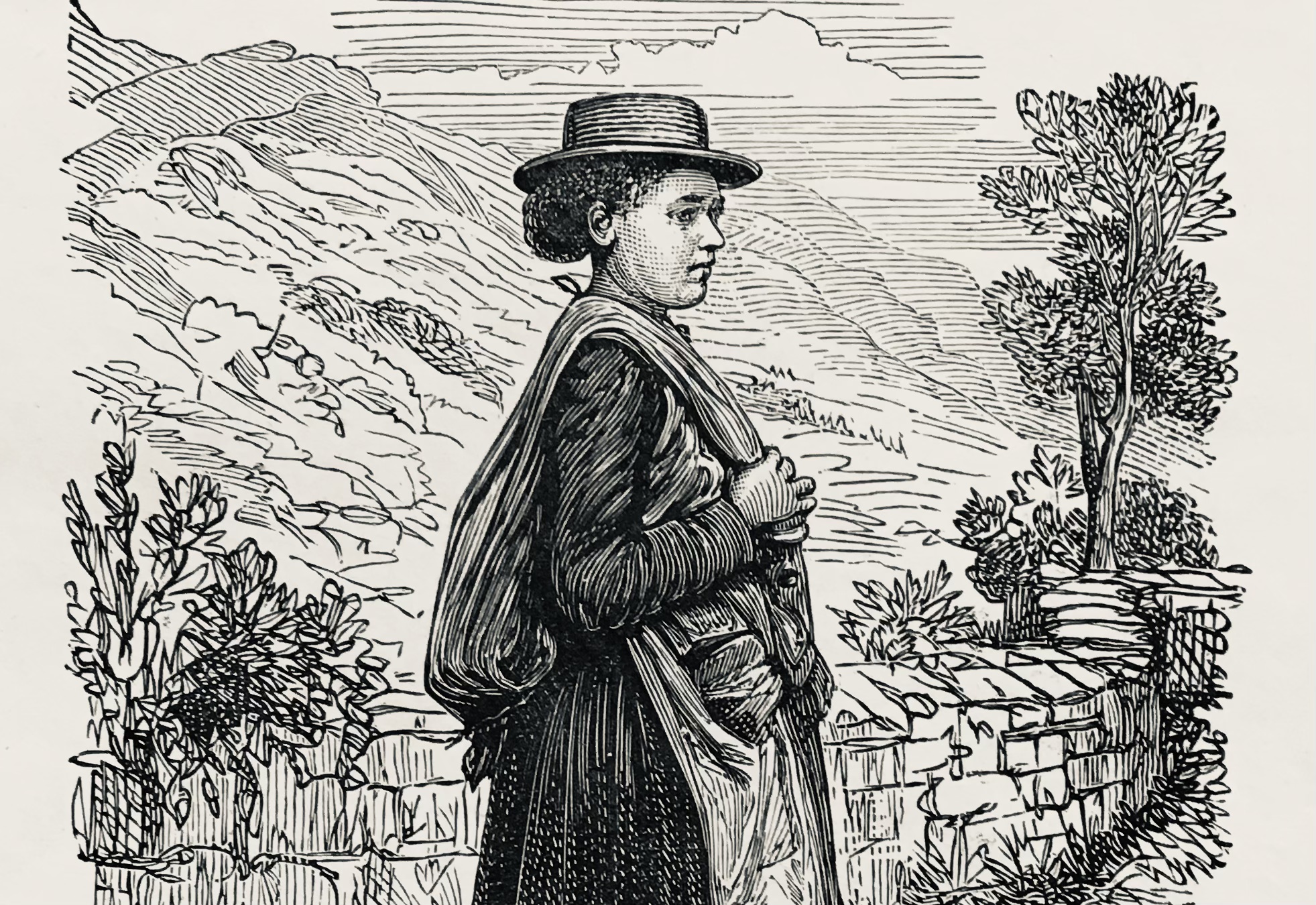
On September 21, the original Mary Jones Bible was displayed in Bala (Wales) for an anniversary event. I visited the exhibition and that Bible is one of three which Thomas Charles gave to Mary Jones on her famous walk in 1800.
For those who may not know, the Bible I’m referring to is a Welsh translation dating to 1799 and was once owned by Mary Jones (1784-1864). Mary’s story is legendary and tells how she saved pennies and farthings for six years and walked 26 miles to buy herself a Bible in her heart language. Amazingly this Bible was collected in the 19th century and is still preserved and contains her actual handwriting in English. These are the words she wrote in her Bible;
“Mary Jones was
born 16th December 1784
I bought this in the 16th year
of my age. I am daughter
of Jacob Jones and Mary Jones
his wife. The Lord May
give me grace today.
Mary Jones his the True
owner of this Bible
Bought in the Year
1800 Age 16”
Mary’s English is slightly broken in this text and demonstrates that her choice of language (at the time of writing) was in fact English. She never wrote this account in Welsh. This could be due to the fact that in those centuries the Welsh language was being suppressed and children were subject to a punishment known as the “Welsh Not”. This meant that any child who spoke Welsh in school was at risk of being beaten. It’s horrific! However there is no evidence that Mary Jones was ever subject to the “Welsh Not” since she was educated in schools run by Thomas Charles, who was an advocate of both English and Welsh languages. Bala at the time of Mary Jones was bilingual. So on the basis of that we do not need to assume that the third Book of Mary Jones had to be in Welsh. This is where the rubber hits the road.
Some think that Mary Jones only got one Bible on her trip to Bala, others claim she only got two, yet Mary Jones herself said she actually attained three Books from Thomas Charles. In her own words Mary put her story this way;
“I came to Bala and trembling, knocked on the door of Mr Charles’ house. I asked for Mr Charles and was told he was in his study at the back of the house. I was allowed to go to him and he told me the Bibles had not arrived. I started to cry because I did not know where to stay. He sent me to an old servant of his who had a house at the bottom of the garden, until the Bibles came. When they came, Mr Charles gave me three for the money that is for the price of one.” (The World of Mary Jones by Sara Eade. P. 14)
This account was written out in 1864 by Lizzie Rowlands (nee Jones) who interviewed Mary Jones when she was older. I believe the account is accurate since Mary’s use of language (in this text and the writing in her Bible) blend perfectly and you can hear her choice of wording within both accounts.
Other versions of the story, including the 1882 book “The Story of Mary Jones and her Bible” only mention one Bible but they are based upon much later traditions, and are often fictionalised versions aimed for Sunday schools. They cannot be taken as literal history. It is Mary’s own testimony which should be the basis for historical fact.
Two of these Bibles have been officially accounted for and I believe we can now compliment her story with the discovery of a third Book.
This third Book I believe is a 1787 Book of Common Prayer and Psalms twice signed by Mary Jones. Research has been done and the signatures match to those in her Bible.
But why would the third Book be a Book of Common Prayer and Psalms rather than just a standard Welsh Bible? Well, it should be noted that 18th century Bibles were not like the Bibles of today. In our tradition we open the Bible at Genesis and close it with Revelation, but the bound Bibles Mary Jones knew opened with the Book of Common Prayer, and contained the Apocrypha and also an extra version of the Psalms translated by Edmund Prys. So it is probable that Mary Jones would have viewed the Book of Common Prayer as a volume of the Bible, or at least a part of the bound versions she knew. After all the 1717 Bible she learned to read from at the farmhouse opens with the Book of Common Prayer and contains an extra version of the Psalms. I know this because I have viewed and handled it. I’ve handled them all.
Today, the original 1799 Mary Jones Bible is in Cambridge, while the second Bible is in Aberystwyth and the third has been a mystery since the 19th century. So the question remains: Has the third Book of Mary Jones been found?
Yes, I believe it has been found and characteristics match the Bible she owned. Likewise, it makes sense to me that Mary Jones would have had an English Book of Common Prayer since she loved the Psalms and Thomas Charles was an advocate of both Welsh and English languages and when Mary arrived in Bala (to buy a Bible) Mr Charles is said to have given her one of his own copies. Being an ex Church of England minister Mr Charles would have had a Book of Common Prayer in English and he was certainly an advocate of it, so for me, it seems like this part of the story contains an element of truth though it has been mixed up a little in the fictional versions. Likewise it is a fact that a majority of Bibles from the late 1600’s through to the establishment of the British and Foreign Bible Society in 1804 contained the Book of Common Prayer and Psalms. So for Mary Jones, she wouldn’t have known anything else so it would have been seen as part of the collected volume.
It seems very fitting to me that she would have had an English Book of Common Prayer and Psalms since Mary Jones loved them both.
How William Tyndale’s influence has guided the Church of England for centuries
Posted by simon peter sutherland in Church of England, William Tyndale on May 7, 2021

Central London and her city is packed with history and it was there, in 1537, where the English Bible was first printed. An early copy, dated 1537, in the John Rylands Library locates the printing at St Thomas Hospital, Southwark. This was a Bible known as the Coverdale Bible and the New Testament was based on Tyndale’s translation.
Tyndale had left London in 1525 but his influence was never far gone. From 1525, and 1526, Tyndale’s New Testament would be smuggled into London along the Thames. His 1534 translation would prove to be his finest edition. It too made it’s way back into London and would prove to influence the Church in England for hundreds of years to come. This was made possible by the the publishing of the 1535-37 Coverdale Bible. This was eventually commissioned by Henry V111 and Coverdale’s translation of the Psalms would also feature in the Book of Common Prayer for many centuries to come. It is an important bed rock in the unity and doctrine of the Anglican communion.
Throughout the 1549, 1552, and 1562 versions of the Book of Common Prayer, it is not difficult to read the influence of Tyndale’s unmistakable New Testament translation. This influence progressed through the inclusion of the King James Version.
Research reveals that 84% of the New Testament in the AV is the work of Tyndale. These passages were printed word for word in the Book of Common Prayer and guided Christians throughout the year and the seasons of the calendar.
A number of these passages have been posted on my The Life and Teachings of William Tyndale facebook page. Here is one example.
“Every good gift, and every perfect gift, is from above and cometh down from the father of light, with whom is no variableness, neither is he changed unto darkness. Of his own will begat he us with the word of life, that we should be the first fruits of his creatures. Wherefore dear brethren, let every man be swift to hear, slow to speak, and slow to wrath. For the wrath of man worketh not that which is righteous before God. Wherefore lay apart all filthiness, all superfluity of maliciousness, and receive with meekness the word that is grafted in you, which is able to save your souls.”
Tyndale’s New Testament, 1534
The Epistle of St James
Chapter One
Compare this with the reading for the Fourth Sunday After Easter, from the Book of Common Prayer and see for yourself. This book has been such a blessing to me and has helped guide me during the Coronavirus lockdowns, and also many more Christians both in and beyond the Anglican communion.
Simon Peter Sutherland
-

 Simon Peter Sutherland