Posts Tagged bible
The 500th Anniversary of the Tyndale New Testament
Posted by simon peter sutherland in Church of England, The Bible on March 10, 2025
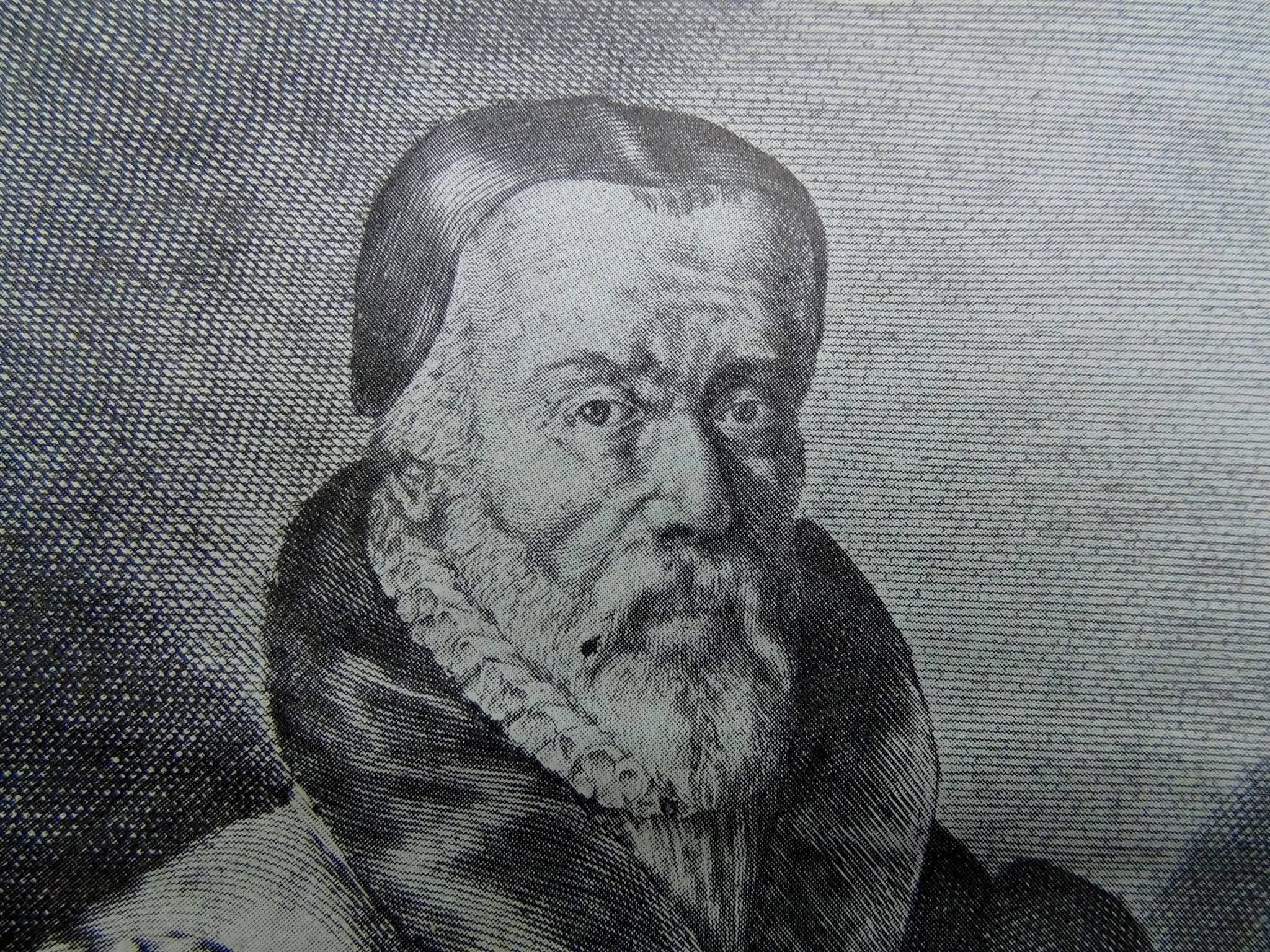
2025 marks the 500th Anniversary of the very first Tyndale New Testament to have ever been published.
In 1524 William Tyndale had been self exiled from England where he headed for Germany and began translating his New Testament into English. It was there where Peter Quentell published his groundbreaking and monumental New Testament.
For those who may not know, William Tyndale (c 1494-1536) was an English priest and scholar and the very first person to translate the New Testament into English from the original Greek. Tyndale was educated at Oxford and Cambridge and became a chaplain in Little Sudbury. There he ran into conflict with a Roman Catholic priest and Tyndale left for London and eventually for Europe and Cologne. His aim of translating the New Testament into English was fulfilled in 1525 and 1526, and his greatest revision was accomplished in 1534. In 1536 he was executed for his faith in Vilvoorde. But his work did not end there. His translation became the bedrock of all English Bibles from the 16th century and even to the present day.
The Tyndale New Testament would impact, influence and formulate the English language more than any works of English literature apart from Shakespeare.
It is still quoted even today, and for many Christians around the world his work can be appreciated through his undeniable influence in the pages of the King James Bible. A staggering 93 per cent of the New Testament (in the KJV) is the work of Tyndale. The Old Testament is about 85 per cent.
Melvyn Bragg writes, “Shakespeare quotes from the Bible about 1,350 times. These quotations are from the Bibles he heard and read – the Great Bible, the Matthew Bible and probably the Geneva Bible – all of which were Tyndale in disguise.” (William Tyndale A very brief history. Melvyn Bragg. P. 89).
In 2017 I had the pleasure of meeting Melvyn Bragg and as he handed me a copy of his biography on William Tyndale I thanked him for his documentary on “The Most Dangerous Man in Tudor England”. This was an excellent film and the BBC would do well to broadcast it again this year for the anniversary.
Likewise churches up and down the country would do well to remember Tyndale this year and start using either his New Testament or the King James Version once again.
I am not a King James onlyist but I believe the Church of England made a big mistake when it removed the King James Version from all services. It makes no sense to me that such a great and monumental translation should be abandoned and replaced with the extremely inferior NIV translation. I believe the King James Version should be regularly used, even if for special occasions or seasons. And where has the abandonment of old English translations got the Church? It has fallen into disrepair and apostasy and utter chaos, and her identity is lost. No wonder, it is because they removed the great translation.
But let us ask, what version has translated Genesis 1: 1 better than Tyndale? Read for yourselves his opening lines,
“In the beginning God created the heaven and the earth. The world was void and empty; and darkness was upon the deep and the spirit of God moved upon the water.”
And who can forget the beauty of the Lords Prayer.
The Promise of God for all mankind
Posted by simon peter sutherland in Census of Luke, Christmas, Christmas or Nisan, Documentaries, Eschatology, Theology on December 18, 2024

Many years ago, when I was a boy, I was asked what my favourite New Testament Gospel was, and I replied “Luke’s Gospel”. For me, I think that claim still stands. The Gospel According to St. Luke is still my favourite of the four Gospels.
Luke’s Gospel gives us the greatest account of Christ’s birth. I say this because I believe chapters 1 & 2 contain the actual words of Mary herself given to St Luke. Luke’s Gospel gives us the reference to the census of Quirinus. I have discussed this census in a previous article showing that it may have been referenced in the Mausoleum of Augustus on the funerary Res Gestae Divi Augusti in Rome.
Luke was a very reliable historian as my documentaries have shown. In Kos and the Gospel According to St. Luke I demonstrate elements of his accuracy by visiting the Greek island of Kos and discuss how he interviewed surviving witnesses to the life of Jesus Christ. Luke references his accuracy himself in Luke 1: 1-4 and Luke’s desire was for the Roman official (Theophilus) “to “know the certainty of those things in which you were instructed.”
Luke follows up his Gospel with part two (Acts of the Apostles) and those who know it are assured of the certainty of the events that happened.
As previously mentioned “I believe chapters 1 & 2” of Luke’s Gospel “contain the actual words of Mary herself given to Luke.” The nativity account contains elements of feminine Greek and in Mary’s account of the angelic announcement of Christ’s birth the angel says to Mary “behold you will conceive in your womb and bring forth a Son, and shall call His name Jesus. He shall be great, and will be called the Son of the Highest; and the Lord God will give Him the throne of His father David. And He will reign over the house of Jacob forever, and of His kingdom there will be no end.” (Luke 1: 31-32. NKJV)
This statement concerning the kingdom of Christ and Him being given the throne of David was not some reference to a futuristic kingdom that Jesus sets up when He returns to earth at the second coming. Luke tells us that this kingdom was established during the life, death, resurrection and ascension of Jesus Christ and was revealed to the people of Judea and Jerusalem by St Peter in his sermon contained in Acts 2: 14-39.
In Acts 2: 30-31 Peter says “Therefore, being a prophet, and knowing that God had sword with an oath to him that of the fruit of his body, according to the flesh, He would raise up the Christ to sit on his throne, he forseeing this, spoke concerning the resurrection of the Christ, that His soul was not left in Hades, nor did His flesh see corruption” and in verse 32 Peter states that the things which they saw when the Holy Spirit came on the Day of Pentecost (Acts 2: 1) is what they “now see and hear.”
The important point to note here is that the promise made to Mary in Luke 1: 32-33 has been fulfilled for all mankind. God in Christ Jesus has set up His kingdom and it has no end and as Peter stated to the people in Judea and Jerusalem, “the promise is to you and to your children, and to all who are afar off, as many as the Lord our God will call.” (Acts 2: 39)
This Christmas remember what Christ has done for us and for all mankind. Let us turn our backs upon the things of this world and whatever you do keep your eyes upon Christ, and know that He is our Saviour, and our God, if we believe in Him and receive forgiveness for our sins and make Him Lord of our lives.
This is Reformation day 2024
Posted by simon peter sutherland in Church of England, Reform, Reformation 2017, The Bible on October 31, 2024
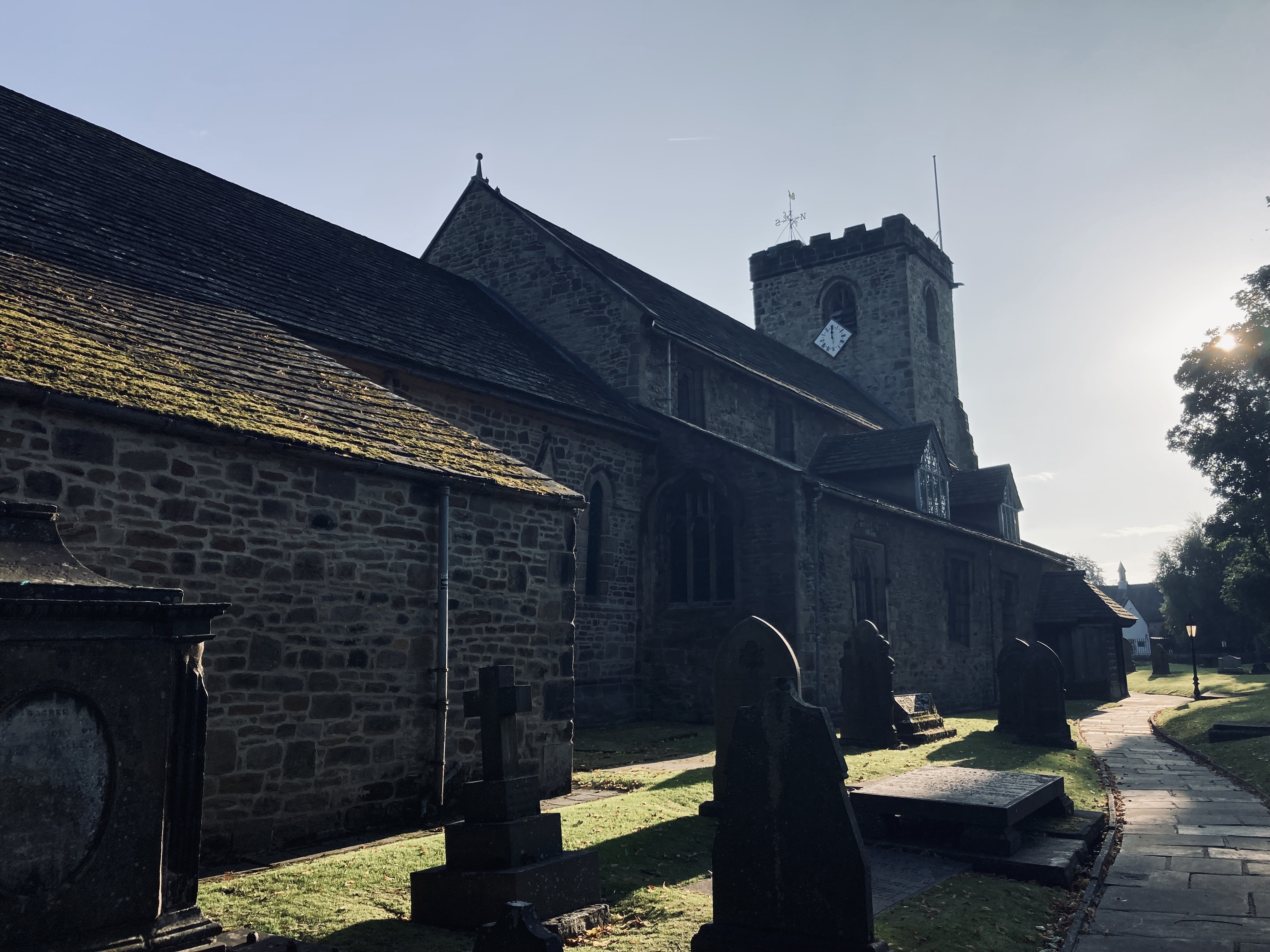 In a previous article back in 2017 I wrote about what the reformation has given us. I listed the reformation benefits we have received in society and in the church and these include the New Testament in Greek, the English New Testament, the complete English Bible including chapter and verse numbers, the freedom to interpret the Bible for ourselves. Freedom to challenge tyranny. The establishment of hymnbooks, Christian music, religious liberty, freedom of speech, and since many abolitionists were theologically reformed we have received the abolition of the slave trade. The list could go on to reveal 100 facts associated with the reformation. This is because the idea of reform is very Biblical. The Bible gives us accounts of how God has been making His plan for this world throughout history and in the Bible we read of those happenings unfolding. It is simply the greatest Book that has ever been written.
Throughout Scripture we see the Lord speaking through His people to bring about change and reformation among those who professed to be the children of God. We read of how the original plan for man in Eden was to dwell in paradise, but Adam chose his own way and fell, because of sin and the story continues of how God was bringing about a restoration of His original plan but man failed almost every time. Because of this God sent His prophets to bring about a reformation to inspire the people of God to repent and turn back to Him because they have lost the way.
In Jeremiah 7: 2 we read of how the prophet says “Hear the word of the Lord” and in verse 3 “Amend your ways and your doings, and I will cause you to dwell in this place.” (NKJV) Here the prophet was talking to the people of ancient Israel and his words speak just as powerfully today as they did back then. In verses 4 and 8 he warns the people that they are trusting in lying words that cannot profit them. The prophet said all this because people were living lives that were contrary to the Will of the God they claimed to believe in and follow (verse 9) and then they would go to the temple and say they were delivered to do abominations (verse 10).
As the Biblical stories continue the prophets foretell the coming of Christ who is the way to restoration and eternal life and without Him there is no hope.
Fast forward hundreds of years throughout church history (not the Bible) and we see the same scenario, man falls and continues in his sinful ways. Man fails to live up to the standards of the Almighty, and God (by His Holy Spirit) stirs His obedient people to speak out and stand fast for the faith.
In the 16th century, a German priest by the name of Martin Luther had been stirred up by the corruption he had seen in the church of that time, and he was absolutely appalled when the priests were selling indulgences to the poor to raise money for the building of St Peter’s Basilica in Rome. Luther saw how crooked this practice was and on October 31, 1517 he is believed to have nailed his 95 thesis on the door of the castle church in Wittenberg. In this document Luther addressed his points of concern and wanted to debate them. Luther’s protest was genuine and the document didn’t stay nailed to the door for very long, locals got hold of the document and it was printed and circulated. Word got back to Rome and Luther would be summoned and eventually stand trial and be excommunicated. Although it affected him mentally Luther spent his time in isolation while translating the New Testament into German. It was a powerful act of defiance to the established church that then existed. This translation would impact the German language in the same way Tyndale’s New Testament would impact the English language. But it would not stop there, church after church would eventually spring up and Luther’s daringly powerful act had started a reformation that could not be undone. It inspired generations all over the world.
Luther’s actions would change the face of history forever. This is because the word reformation is by definition the act of bringing about improvement and change for the better in political, religious or social matters. This is what Luther did. Because of Martin Luther millions of people worship in churches inspired by his reformation. Oddly enough, the Church of England is one of them. I say oddly enough because Henry V111 was opposed to Luther and Tyndale yet still the reformed influence spread.
The Church of England was founded in 597 AD however in 1534 there was a big split and the church separated from Rome and the Pope. This move was undoubtedly the right and Biblical thing to do since Rome was denying the text of the Bible in favour of the authority of the Pope. Not much has changed. Today if not for the reformation few would have the nerve to change or challenge anything or progress our nation to becoming a more decent, fair and just society.
Yet today, it doesn’t feel like the world is becoming any better since we are living in perilous times. The world appears to have become a very dark and cynical place. The church appears to be no better. At least when you look to the bishops for guidance. Few know which way to turn and our nation (here in England) has forgotten the reformation. Rather than celebrate the very act of reformation day, many people choose to promote halloween and follow evil and death rather than life, it seems more commercial than right. Likewise, the church has fallen further into apostasy in an attempt to appease and please the world and keep itself relevant.
Yet we should not be surprised at this, the Bible got it right all along, as it is written, “This is the judgement: the light has come into the world, but men loved darkness rather than light” (John 3: 19)
But for all the church’s attempts to please men, it is not working. Reform is ongoing and will continue and no matter which way people turn the Bible will never cease to be the final authority for all genuine Christians.
There are no two ways about it, if you follow Christ you will live for eternity and if you sow corruption you will reap it. So too will those who profess Christ in one breath while denying Him in another, those leaders will not escape the judgement. They too will pay a much higher price and receive a greater judgement than those they have lead astray (James 3: 1)
It has been said if you marry the spirit of the age, you will soon find yourself divorced by it. So too will the church that follows the world rather than the text of the Bible. If you fail to stand as Luther did in good conscience and Godly conviction, God will never use you in the future and your memory will be forgotten. Darkness will follow you all the days of your life. You will return to the dust from which you came.
Amyraldism calmly considered
Posted by simon peter sutherland in "Calvinism", Theology on October 25, 2024

Over the years I have expressed my deepest concerns relating to a doctrine known as ‘Limited Atonement’. This 5 Point Calvinist theory claims that Jesus Christ did not die for all mankind but only for the elect. If Christ died for all mankind (they say) then no one should be in hell for whom Christ died, thus He didn’t die for all, He died only for those whom the Father had given Him. Believing that Christ died for all (they say) is universalism.
I disagree with these claims entirely. There is no Scriptural proof that the sacrificial offering of Jesus Christ on the cross automatically saves anyone. No one is saved by the cross of Christ alone since believers are saved by grace alone through faith (Ephesians 2: 8) so faith is the means by which we are saved and there is no Scriptural evidence that Jesus purchased our faith at the cross.
A person can argue that faith or salvation is a gift of God (ibid) and I wouldn’t disagree but there is no suggestion that faith or salvation (as a gift) is limited only to those whom God has predestined and chosen. For me, this claim is more systematic than Scriptural and retains some serious Biblical inconsistencies. For me, and for J. C. Ryle, the doctrine of Limited Atonement is inconsistent with the Bible and some theologians who propagate it are more systematic than the Bible they represent. Yet many proponents of the ‘Calvinist’ teaching actually reverse the truth by claiming that those who don’t believe in the 5 Point Calvinist interpretation of ‘Limited Atonement’ are the ones who are inconsistent. This is untrue. For me, and for many Christians, the New Testament is extremely clear that Christ died for all mankind and to deny that fact can be dangerous. The reason I say this is because a person is putting argumentation above Scripture, thus leaving room for any persuasive argument to be believed, even if it contradicts Scripture. Yet many 5 Point Calvinists claim that their beliefs are the pure teachings of Scripture and they wait patiently for others to catch up and be persuaded.
Obviously I’m not one of those who have been persuaded and if a doctrine cannot be consistently proven by all Scripture, I’m not obligated to believe it. So for me, I have reached an opposite conclusion to the 5 Points of Calvinism. For me, I am actually very uncertain if 5 Point Calvinism is even accurate to the teachings of the man it is named after. There are times when I find it very doubtful that Calvin ever taught the same version of limited atonement that modern 5 point Calvinists teach? I haven’t found the majority of 16th century reformers affirming it either.
For me, Calvinism (as it is nicknamed today) is little more than Owenism. By “Owenism” I am referring to puritan John Owen (1616-1683). A man who, in 1648 published a book called “The Death of Death in the Death of Christ”. In this book Owen affirms the doctrine of Limited Atonement in no uncertain terms. The book blends in perfectly with the doctrines affirmed in England during the times of the Westminster Confession of Faith. Like the Westminster Confession, Owens theology offers no salvation for the none elect, they are utterly doomed. Born to be damned and to enter hell for disbelief in a Saviour who did not die for them to begin with.
It is an awfully distasteful doctrine and one that should be spat out.
Having read Calvin, and studied many other 16th reformers, I have been (over the past few years) somewhat pleasantly surprised to learn of the 17th century man named Moses Amyraut (1596-1664) a French reformed theologian who noticed the inconsistencies of Calvinist theology and propagated moderations. Like Richard Baxter, John Bunyan and Richard Horne, the believer can be blessed by the challenges presented by Moses Amyraut who find themselves troubled when ‘Calvinists’ deny the exceedingly clear Biblical statements that Christ died for the sins of the whole world.
Amyraut challenged Calvinians and presented a view that is much more conceivable than Limited Atonement and taught that Christ did in fact die for the whole world but God in His foreknowledge knew those who would believe in Jesus Christ and elected them based upon that foreknowledge. This is entirely consistent with Romans 8: 29 “For whom He foreknew, He also predestined to be conformed to the image of His Son,”. Note that St Paul presents foreknowledge prior to predestination. Thus preserving the doctrine of unconditional election while not excluding anyone from receiving Christ.
For me, if Christ died only for the elect the great commission is null and void and the gospel should not be preached or offered to “every creature” (Mark 16: 15) and Acts 17: 30-31 makes no sense. Why would God command all men to repent (as Paul proclaimed in Athens) if man was incapable of doing so because he is not elect? Why would the great commission be offered to every creature if salvation was not available for every creature?
The logical conclusion is that salvation is offered to all because it is available for all and I am very pleased to know that reformed theology does not exclusively belong to the limited atoners. Lutherans, Calvinists, Anglicans, Arminians, all fit into this broad theology labelled ‘Reformed’.
I remain convinced that if any person merely read the Bible for itself, without feeling pressured to read other books and listen to preachers rhetoric, no one would ever discover such a harsh and uncaring doctrine as Limited Atonement.
William Tyndale’s military translation of Luke 2: 13
Posted by simon peter sutherland in Christmas, Church of England, The Bible, Theology on December 23, 2023
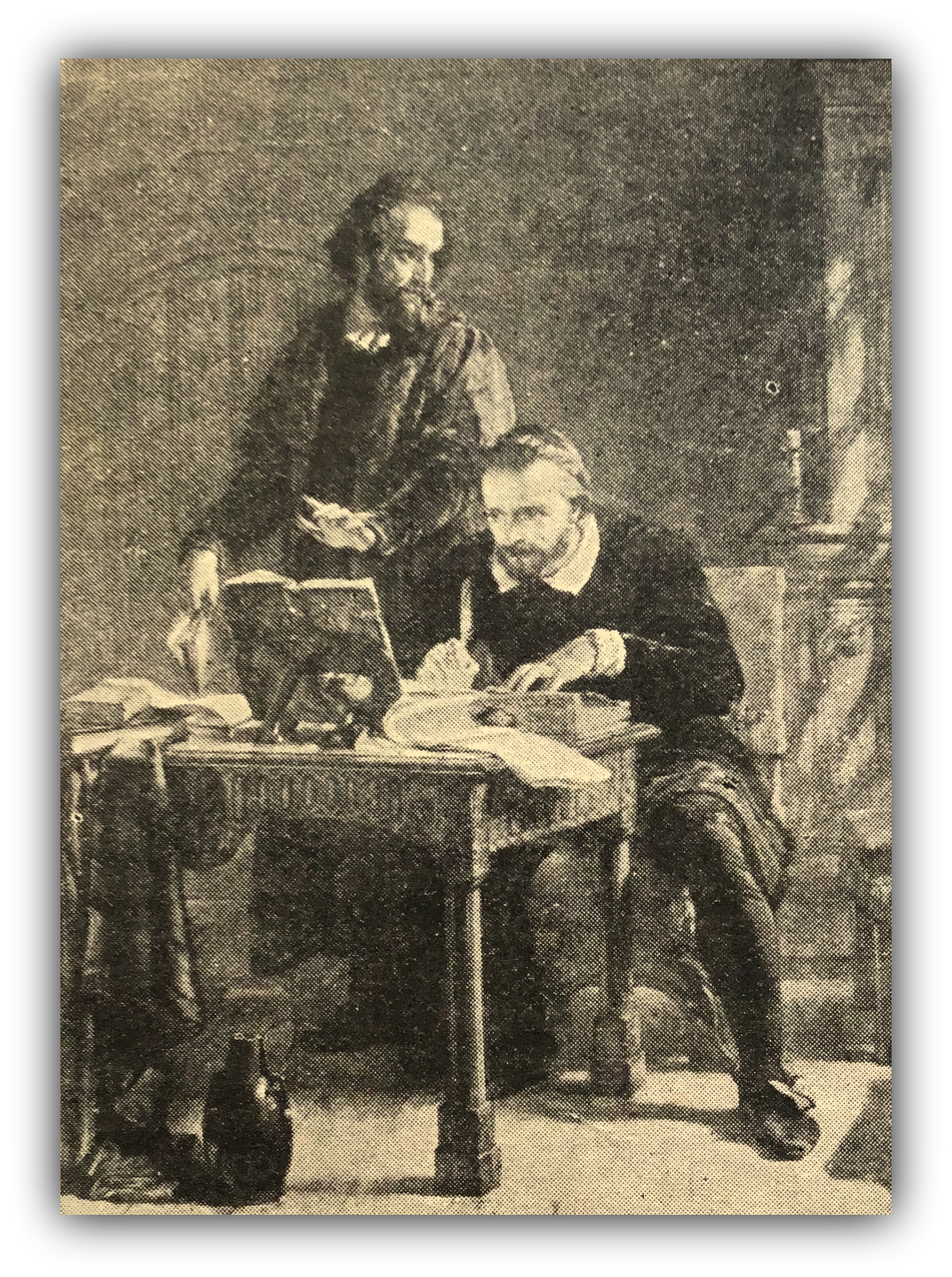
At this time of year it is a regular feature to hear passages from Luke’s gospel read aloud. Most of the time these days it is read from the NIV, ESV or some other modern translation. Yet with these translations we often miss so much.
For me personally, I’m traditional I like old Bible translations. For me, few modern translations read like authoritative Scripture. Tyndale’s 16th century translation however is a whole different ball game. It is one of the greatest English translations ever produced. No other translation has so impacted the English language as his.
And in his 1534 New Testament, Tyndale translates Luke 2: 8-13 this way,
“And there were in the same region shepherds abiding in the field and watching their flock by night. And lo: the angel of the Lord stood hard by them, and the brightness of the Lord shone round about them, and they were sore afraid. But the angel said unto them: Be not afraid. For behold, I bring you tidings of great joy that shall come to all people: for unto you is born this day in the city of David, a saviour which is Christ the Lord. And take this for a sign: ye shall find the child swaddled and laid in a manger. And straightway there was with angel a multitude of heavenly soldiers, lauding God and saying: Glory to God on high, and peace on the earth: and unto men rejoicing.”
(TYNDALE’S NEW TESTAMENT, 1534. The Gospel of St Luke. Chapter Two. A modern-spelling edition by David Daniell)
Note here something very distinct. In verse 13 Tyndale employs a military translation of the word normally translated “host”. Tyndale uses the English word “soldiers”.
This word is also used in the 1599 Geneva Bible, no doubt borrowing the idea from Tyndale. This is very interesting because it can be verified by the Greek.
According to Strongs (G4756) the Greek word means “an army; from the base of G4766, as encamped”. This is intriguing since the angelic reference is figuratively used. According to John Gill, the size of the multitude could be “innumerable; there are thousands, ten thousands, and ten thousand times ten thousand of them.”
It is quite spectacular to imagine thousands of soldiers declaring “peace on earth”, and good will.
Translations such as the KJV, RSV, NIV, ESV, ASV, use the word “host” which I think is found wanting. Tyndale’s military imagery is much more profound and demonstrative of the conflict between man and God being resolved in the life, death and resurrection of Jesus Christ. This is the heart of the Christmas story and although we often see the nativity story in a sweet fashion it is not so sweet. Jesus Christ was born to die and His enemies would one day take those hands and feet and pierce them with Roman nails.
What began with good news, of peace on earth and good will to all men concluded with Christ’s death making permanent satisfaction for sin and justification by His resurrection.
Recently while reflecting on the permanency of the gospel I was standing looking out at the vast open sky. The clouds, stars and the moon were all clearly visible. Down on earth people were going about there busy business and doing their thing, but the moon remained, unmoveable and unchanged. The gospel is like that, it does not and cannot change. It abides. The world changes, people change but the word of the Lord does not change. Likewise, the God who inspired it does not change either. He remains, He will not break His promises and regardless of the whims and babblings of this world, the Scripture cannot be broken.
This Christmas, remember the truth of the gospel and if you follow Christ remember that there is a multitude of heavenly soldiers on your side and if God is with you who can be against you?
I believe the Virgin Mary was not sinless
Posted by simon peter sutherland in Census of Luke, Christmas, Theology on December 4, 2023

Recently I went to see the new movie Journey to Bethlehem. A musical inspired by the events surrounding the birth of Jesus.
Mary does sing in Luke 1: 46-55.
While I found the movie entertaining and enjoyable to watch, I didn’t agree with it all but I came to notice the very distinct representation of Mary as human, not sinless. As some of you may know the Roman Catholic Church upholds a doctrine that claims Mary was not subject to original sin. Although I don’t particularly have a problem with believing that Mary did not practice sin, I do have a problem with the false claim that Mary was sinless.
While there are complexities within the doctrines upheld within Roman Catholicism, Eastern and Oriental Orthodoxy, it should be stated that there is not a single verse in the Bible that claims Mary was “sinless”. In Luke 1: 47 Mary sings ‘my spirit rejoices in God my Saviour’.
If Mary was “sinless” she would not need a Saviour.
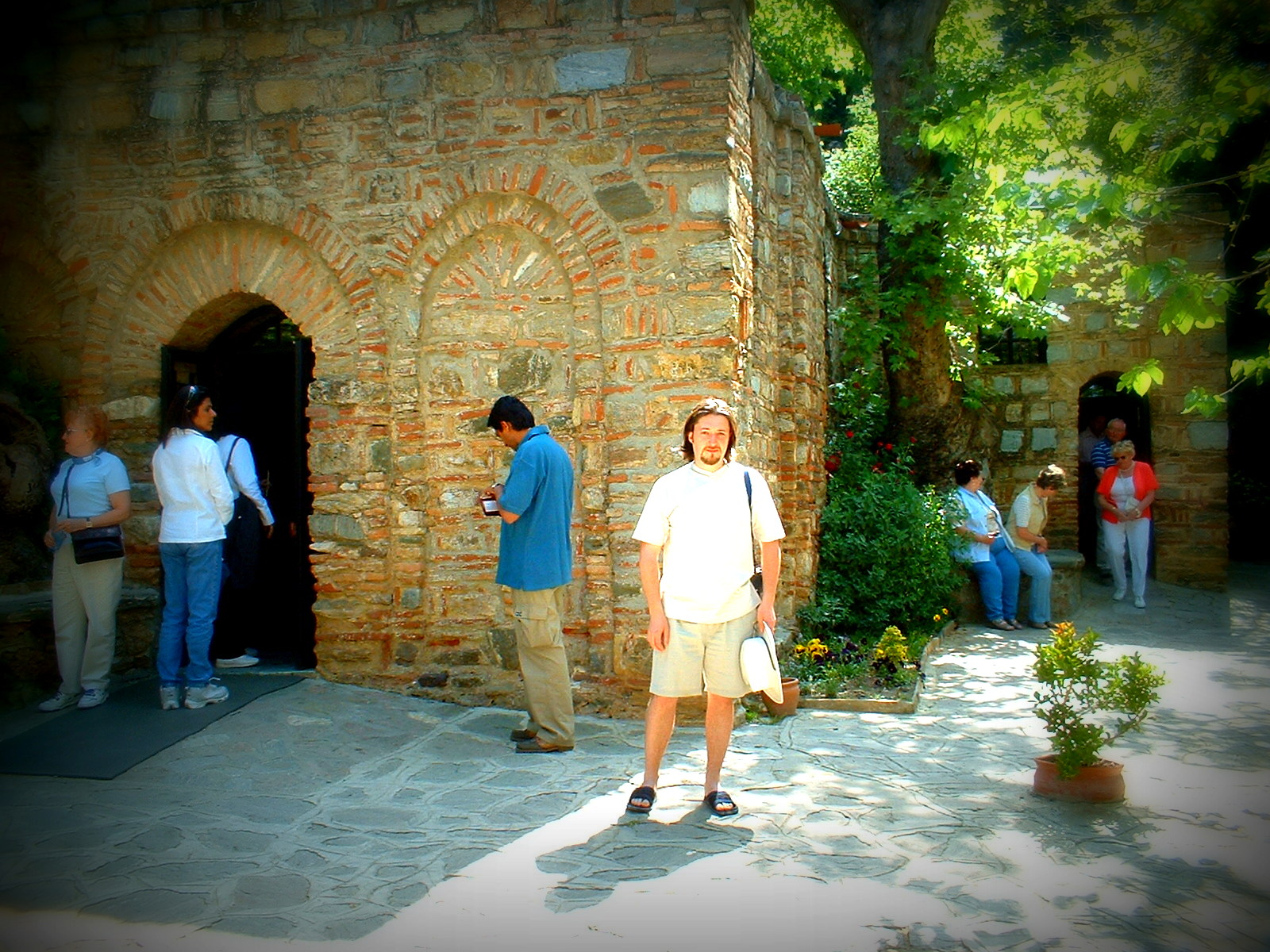
Many years ago I visited Ephesus and also the house of the virgin Mary. This house is way up in the mountains and was discovered in the 19th century and is believed to be the place where the Apostle John took Mary as instructed by Jesus in John 19: 25-27.
I like many people sat and pondered upon what the mother of Jesus may have been like. What did Mary look like, how did she talk, what stories could she tell?
Luke 2: 19 says that Mary cherished her memories and stored them in her heart, so I assume Luke’s gospel tells us all we need to know. That being said I understand the nativity texts in Luke contain feminine uses of Greek meaning that many verses could actually contain her own hand written testimony. Thus her own statement in Luke 1: 47 affirmed that Mary was not without original sin.
Likewise 1 John 1: 8 states that ‘if we say that we have no sin, we deceive ourselves and the truth is not in us‘ and that verse does not exclude Mary. After all it was written by the man who Jesus gave instructions to take Mary into his own home so Mary may have even read the letter when John wrote it. After all, John is believed to have been an older man when he wrote his letter, so Mary would have still been present with him as instructed by Christ.
I believe this point and Luke 1: 47 disproves the false claims of Roman Catholicism.
The importance of Theology and the problem of religion
Posted by simon peter sutherland in Christianity, Theology on November 9, 2011
 The importance of Theology is and has always been needed within the walls of the Christian life. If we sit outside the walls or on the walls we do very little but watch the sun go down and the sunrise. In other words it’s like sitting on the fence, or guiding sheep into a field where there is no grass. They don’t eat and the work does not get done. We and they, are wasting time and energy. Now suppose we do not sit on the fence or outside the walls but rather stand within the walls and not only take in the scenic views, but internalise them and embrace them, as one would do when he or she returns or marries the love of his or her life. We kiss, we hold each other, we embrace. We become one.
Now if we do not make the first move we will never know what lay before us or what we could have had or known if only we would make the move and ask the question, just as a nervous teenager asks a girl for a date. If he never asked, he would never know and that plaque would haunt him for the rest of his life. Now suppose he asked the girl, ‘would you like to come out with me for a date sometime?’ and she replied, ‘Sure, I’d love to’. Would he not be the better for it than if he had never taken the step to ask the question? Of course he would and the same can be said of understanding ‘Biblical Theology’. Asking questions is vital, but more than that, we need to listen to the answer or answers and take them on board. Remember the movie, ‘It’s a wonderful life’ where James Stewart and Donna Reed are challenged by an elderly guy sat on his porch, and he says, ‘Why don’t you just kiss her instead of talking her to death’. James Stewart could talk the ears of a wooden Indian and yet despite his true feelings, he hesitated to act upon them. But little did he know that in time he would marry the girl and raise a family. Thus we do not always know where we are going when we follow impulses but destiny and providence is working its hand in all our lives. There was a time when I was compelled to purchase books, yet all the time a war was going on within me to reject the books and buy something else rather than a book that inspires thought towards the truth of God. The human will would have you follow the world and feel the impulse of the human will, ‘go sin some more’, whereas Christ would say, “Go and sin no more”. Thus the war is underway in the search to find a Theology that can find us and place us where God would have us be. This Theology is the means appointed to us for eternal life. We need it, we should love it, and we should always apply it to every moment of life. But there are times when we don’t. We are men and women and we fail. But that does not mean that we cannot and should not continue to try. We should look at our human nature and say, ‘Wait a minute…if I don’t drink coffee for two weeks, I won’t have the desire to drink anywhere near what I did before’. Thus the nature of the will can be lessened by the practice of a Theology that is both vital and important for everyday living. Not a Theology that can often lead nowhere, but a Theology that can hold us, sustain us, keep us, watch over us, comfort us, bind us and keep us so near to Christ that we can hardly stand a brief minute being away from it. Its something that is practised and enjoyed. Like a Theology of the attributes of God. Who is He? What is He like? What does He talk like or what does He like? What offends Him and do I offend Him knowingly or unknowingly? And if so what can I do about it? This is what I would love to hear belted out from the heart and the mouth of every preacher in every nation. Truth, a Theology of Truth. A Theology that sustains and sticks to every word of the Bible like glue and does not ignore a single text that either contradicts or compliments a single Theology or a single creed. I’m talking about holding on to the word of God in every corner and every last syllable and every last text that our eyes and hearts embrace. Not ignoring a text or pulling out the old context or Greek interpretation ploy whenever its convenient. But asking God and ourselves, ‘What does this truly mean? Have I erred?’ If only humans would truly say to themselves, ‘I don’t care if I contradict a creed or a leader by not swaying from a single text of the Bible’. Or as Luther said, ‘My conscience is captive to the Word of God, and to go against conscience is neither right nor safe’. Thus, a Theology that is put into practice before God, ourselves and man, is far greater than a theology put down on paper or belched out from the pulpit but not lived. There’s only one thing to do with such theoretic blasts of wind and that is to strike a match and burn the stench.
God gives warnings to His people, ‘get it right’ and we only have this life to do it in and then comes the judgement. Not judgement for indwelling sin, but being neither cold or hot. God would have us be one or the other. Same to can be said of our Theologies, are they cold or are they hot. I don’t know about you but I prefer the hot days rather than the freezing cold ones. I’d rather be in the blazing heat than in the dusty old cold cellar where there is little light or beauty. The beauty is in the light of the sun and the light magnifies the beauty of all things good. Thus when we open the pages of the Bible, what good would it be to open them in the dark and attempt to read it? Why not call out for a light as the jailer in Acts 16: 25-31 and fall to our knees and believe? That’s what Salvation is all about, believing and asking “What must I do?” (Acts 16: 30) It’s not a salvation that requires a man or women to sit and simply read or do nothing, it’s a salvation that at first requires belief and second beliefs to good works. Just as the Phipippian jailer believed and then washed the stripes of Paul and Silas and after the event of his baptism continued in good works and made Paul and Silas a meal (Acts 16: 33-34). In other words the Theology I am speaking of is a Theology that is put into practice and one that says, ‘Let’s talk about it over dinner’ and more than that, ‘I will cook the food for you’.
In other words Paul never spoke of a faith that is idle or so stable that it can hardly move. No it’s a faith that is so strong and active that there is little room for inactivity. Paul’s Theology was like a lion, it works best when you turn it loose. It’s not something that can be caged or contained within the limitation of words, books and preaching. It’s something that requires a person to get up off their backsides and do something about. It’s not a Theology that once learned stays behind closed doors or stained glass windows. It something life changing, threatening to authorities and governments, leaders and control freaks. It’s something that once turned loose, can cause a whole City to turn into uproar. This is what we have read about in the journals of Wesley, and the Foxes book of Martyrs. It’s a total uproar, a Theology that once learned must be practised and lived to the point of death. It is something so strong, so powerful, so addictive, so un-measurable that once tasted can never be erased from the taste-buds of our hearts and minds. It captivates people, arrests them and throws them into the prison and binds them in the chains and stocks of Christ. We must hear the word of God, believe all that is written and be astonished at the doctrine of The Lord.
A PROBLEM OF RELIGION, NO JOY
Many people dislike “religion” and view “religious people” as often miserable and tense, extreme and strange. Of course this is not always the case for many people admire others who have faith in something because they often fail to have any true faith themselves. Many find in their own characters and conduct a sustaining faith that influences their own selves, many say to me, “I believe in myself” and “I cannot believe in a God that I cannot see”. And although I can understand and identify with such people, it must be pointed out that such is not the case with “true religion”. One common view is that many people blame the many world religions as the one of the many problems that often provokes world wars? And although there is some if not a very lot of truth in that fact, I must state that true religion is not the cause of world wars. It is the power trips of certain evil dictators that cause war, it is not true religion. There would have been no wars in the Bible times if evil did not wage war upon goodness, therefore we cannot be blinded to true religion because of war. True religion is not a mystical faith that is nothing more than a leap in the dark, and a voyage to nowhere. “True religion” is true faith and true faith is an eye opener and a joy to behold. True faith is not a leap in the dark but is a leap from the dark into the light. It opens our eyes to who we are and who God really is. The problem we face with “religion” today is the many self appointed religious leaders who attempt to lead men to themselves or to God as though they are a necessary channel or mediator to the heavens. We see this with men like the Pope who are presented to the public as messianic type figures who claim to have the authority to anathematise people or bless them. False religions promote a threat that unless you join the certain church you are going to end up in hell. But true religion does not attempt to ensnare the individual into becoming a member of “the denomination church” but invites them to be reconciled unto God and to be at peace with Him through Christ. Religions such as Islam and Roman Catholicism all teach that unless you join the certain denominational church you cannot enter heaven. While on the other extreme some Religions claim that everyone will go to heaven with or without Christ or God. Yet Jesus did not teach this. On the contrary He said, “accept a man be born again, he cannot enter the kingdom of God” John 3: 3. And no where does the Bible state that a man can only be born again when he or she is part of the denominational Christian Church. Christ said, “come to me, all you that labour and are heavy laden, and I will give you rest” Matthew 11: 28. “The truth shall make you free” John 8: 32. You see that Christ pointed people to Himself and not the denominational Church, and offered peace and rest for the individual in Him and not dismal church sacraments and dull services. While on the other hand Christ stated that without Him, there can be no hope of salvation for anyone. Christ did not say, “Come to the church” or “Come and receive the sacraments at your local church and inherit heaven through the church”. On the contrary, if one is truly saved and born of God, he or she will want to join other people of like mind and be blessed and built up by their company. That is what the Bible says is the true church. Thus, the distracting claims that religion promotes often clouds the eyes of many people and the actions of the church distract people from the personal conduct and salvation freely offered to the individual.
All such religions as Roman Catholicism, Islam, Buddhism, and many branches of so-called Christianity including the Church of England, Mormonism and Jehovah’s Witnesses all have one thing in common. They all promote the individual religious and sacramental workings of a man as a necessity of inheriting eternal life with God. But the problem is that true religion should promote the fact that God Himself came down to earth in order to reach man and reason with him concerning righteousness and heaven. God Himself came down onto earth and reasoned with Abraham, (Genesis 18: 16-33) God Himself came down onto mount Sinai and gave Moses the tablets containing Ten Commandments (Exodus 19-20: 17). God came down to earth and said “Come now, and let us reason together” Isaiah 1: 18. God Himself came down to earth in the form of Christ and offered mankind the opportunity to reason with Himself and receive the free and unconditional gift of salvation. All man had to do was receive the gift and believe that God has made a way for him to inherit a gift that he was unable to achieve by human efforts. All those who believe in Jesus are saved to good works not by good works. This for me demonstrates that real God given Christianity is the true religion and the most powerful. For all other religions teach a certain way for man to find the truth and not the truth finding him. Jesus said “I am the way the truth and the life” (John 14: 6). But Mohamed came along over 500 years after Jesus and based all his ideas upon what was already written by Moses centuries earlier. He could not say that he was the truth and neither could Buddha’s The sayings of Buddha for such writings only attempt to point people to human wisdom being nothing more than a form of the truth taught by Solomon in the book of Proverbs and Moses many years previous.
It has to be said that the problem we face today with our current religious and none religious generation is that there is no healthy fear of God and no healthy fear of authority, for religion has blinded many peoples eyes to the truth. In my opinion much responsibility for this is to be blamed upon the theory of evolution as a presentation and enticement that creation account recorded in Genesis is just a myth and evolution is factual religion. But such evolutionists fail to inform their hearers that the scientific world is 50-50 regarding the creation account and the Darwinian theory.
If only man would embrace the God given gift of eternal salvation and eternal freedom and wash away the clouds that religion blows in front of their eyes he would hear and know that what the Bible states is the truth of all hope and pleasure in the glory and beauty of almighty God. Therefore the problem of religion is that it blinds peoples eyes and blocks the ears to the actual text of the Bible beyond disputes concerning, the creation account or the Lords prayer or the virgin birth. Religion never finds the treasure because it never looks up from the map. If only the public of today would know that true religion is a joy to hold, it is an honour and a delight to embrace. It is filled with the spiritual truths, joy, pleasure and insights and unimaginable truths. But religion without joy is like a spare tyre with no jack and a spare tyre without a jack is like a Church without Jesus.
Simon Peter Sutherland
-

 Simon Peter Sutherland