Posts Tagged “Reformation”
This is Reformation day 2024
Posted by simon peter sutherland in Church of England, Reform, Reformation 2017, The Bible on October 31, 2024
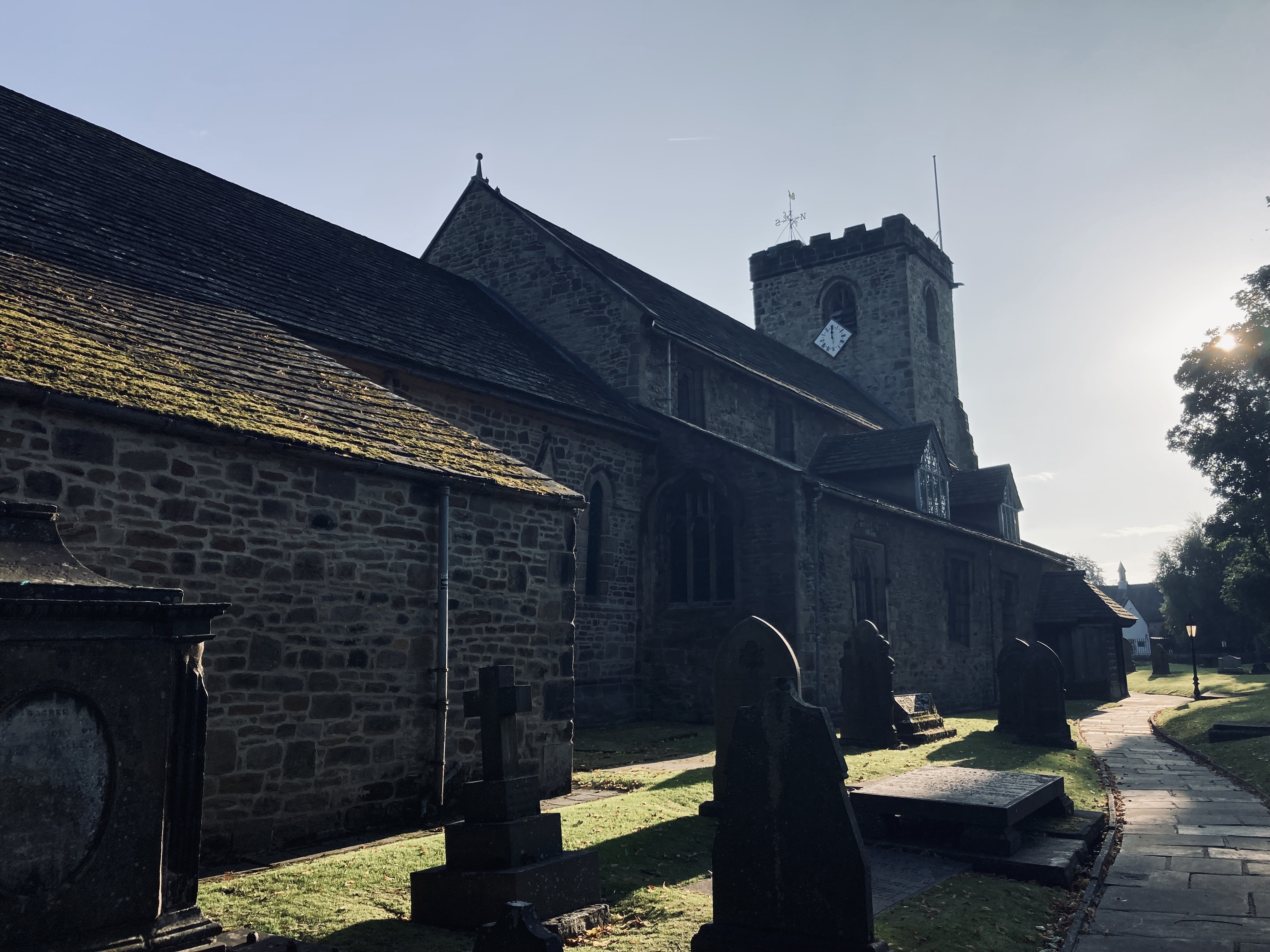 In a previous article back in 2017 I wrote about what the reformation has given us. I listed the reformation benefits we have received in society and in the church and these include the New Testament in Greek, the English New Testament, the complete English Bible including chapter and verse numbers, the freedom to interpret the Bible for ourselves. Freedom to challenge tyranny. The establishment of hymnbooks, Christian music, religious liberty, freedom of speech, and since many abolitionists were theologically reformed we have received the abolition of the slave trade. The list could go on to reveal 100 facts associated with the reformation. This is because the idea of reform is very Biblical. The Bible gives us accounts of how God has been making His plan for this world throughout history and in the Bible we read of those happenings unfolding. It is simply the greatest Book that has ever been written.
Throughout Scripture we see the Lord speaking through His people to bring about change and reformation among those who professed to be the children of God. We read of how the original plan for man in Eden was to dwell in paradise, but Adam chose his own way and fell, because of sin and the story continues of how God was bringing about a restoration of His original plan but man failed almost every time. Because of this God sent His prophets to bring about a reformation to inspire the people of God to repent and turn back to Him because they have lost the way.
In Jeremiah 7: 2 we read of how the prophet says “Hear the word of the Lord” and in verse 3 “Amend your ways and your doings, and I will cause you to dwell in this place.” (NKJV) Here the prophet was talking to the people of ancient Israel and his words speak just as powerfully today as they did back then. In verses 4 and 8 he warns the people that they are trusting in lying words that cannot profit them. The prophet said all this because people were living lives that were contrary to the Will of the God they claimed to believe in and follow (verse 9) and then they would go to the temple and say they were delivered to do abominations (verse 10).
As the Biblical stories continue the prophets foretell the coming of Christ who is the way to restoration and eternal life and without Him there is no hope.
Fast forward hundreds of years throughout church history (not the Bible) and we see the same scenario, man falls and continues in his sinful ways. Man fails to live up to the standards of the Almighty, and God (by His Holy Spirit) stirs His obedient people to speak out and stand fast for the faith.
In the 16th century, a German priest by the name of Martin Luther had been stirred up by the corruption he had seen in the church of that time, and he was absolutely appalled when the priests were selling indulgences to the poor to raise money for the building of St Peter’s Basilica in Rome. Luther saw how crooked this practice was and on October 31, 1517 he is believed to have nailed his 95 thesis on the door of the castle church in Wittenberg. In this document Luther addressed his points of concern and wanted to debate them. Luther’s protest was genuine and the document didn’t stay nailed to the door for very long, locals got hold of the document and it was printed and circulated. Word got back to Rome and Luther would be summoned and eventually stand trial and be excommunicated. Although it affected him mentally Luther spent his time in isolation while translating the New Testament into German. It was a powerful act of defiance to the established church that then existed. This translation would impact the German language in the same way Tyndale’s New Testament would impact the English language. But it would not stop there, church after church would eventually spring up and Luther’s daringly powerful act had started a reformation that could not be undone. It inspired generations all over the world.
Luther’s actions would change the face of history forever. This is because the word reformation is by definition the act of bringing about improvement and change for the better in political, religious or social matters. This is what Luther did. Because of Martin Luther millions of people worship in churches inspired by his reformation. Oddly enough, the Church of England is one of them. I say oddly enough because Henry V111 was opposed to Luther and Tyndale yet still the reformed influence spread.
The Church of England was founded in 597 AD however in 1534 there was a big split and the church separated from Rome and the Pope. This move was undoubtedly the right and Biblical thing to do since Rome was denying the text of the Bible in favour of the authority of the Pope. Not much has changed. Today if not for the reformation few would have the nerve to change or challenge anything or progress our nation to becoming a more decent, fair and just society.
Yet today, it doesn’t feel like the world is becoming any better since we are living in perilous times. The world appears to have become a very dark and cynical place. The church appears to be no better. At least when you look to the bishops for guidance. Few know which way to turn and our nation (here in England) has forgotten the reformation. Rather than celebrate the very act of reformation day, many people choose to promote halloween and follow evil and death rather than life, it seems more commercial than right. Likewise, the church has fallen further into apostasy in an attempt to appease and please the world and keep itself relevant.
Yet we should not be surprised at this, the Bible got it right all along, as it is written, “This is the judgement: the light has come into the world, but men loved darkness rather than light” (John 3: 19)
But for all the church’s attempts to please men, it is not working. Reform is ongoing and will continue and no matter which way people turn the Bible will never cease to be the final authority for all genuine Christians.
There are no two ways about it, if you follow Christ you will live for eternity and if you sow corruption you will reap it. So too will those who profess Christ in one breath while denying Him in another, those leaders will not escape the judgement. They too will pay a much higher price and receive a greater judgement than those they have lead astray (James 3: 1)
It has been said if you marry the spirit of the age, you will soon find yourself divorced by it. So too will the church that follows the world rather than the text of the Bible. If you fail to stand as Luther did in good conscience and Godly conviction, God will never use you in the future and your memory will be forgotten. Darkness will follow you all the days of your life. You will return to the dust from which you came.
Did Martin Luther believe in Limited Atonement?
Posted by simon peter sutherland in Reform, Theology on October 15, 2024
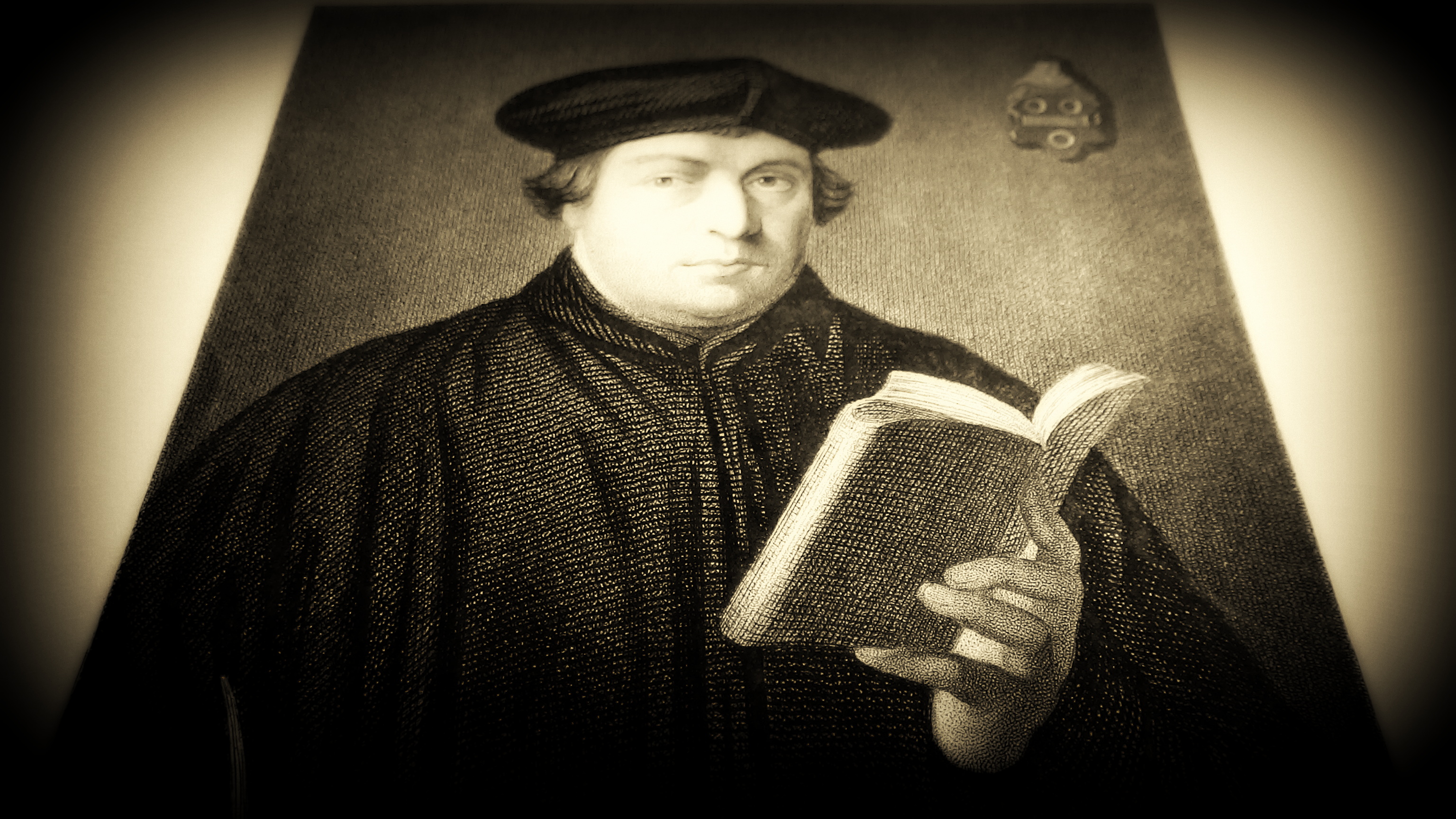
On 31st October 2024, it will be Reformation Day. This event is a public holiday in 5 states in Germany but in the UK Reformation Day is largely forgotten and replaced with Halloween. With this in mind I’m minded to write something about it.
For those who may not know Reformation Day is an anniversary of the day (October 31, 1517) when Martin Luther (1483-1546) nailed his ninety five thesis to the church door in Wittenberg. Back then the church was like our church is today, apostate and in desperate need of reform. Priests and Popes were corrupting the church and few had the nerve to stand up to them. But Luther, God bless him, stood strong and famously nailed his thesis to the church door and the sound of his hammer echoed through the chambers of the establishment.
Recently I watched the 2003 film Luther starring Joseph Fiennes and it has brought back a lot of fond memories for me. That film was very influential when I first began studying Luther and reading his books and autobiographies about him. I’d recommend people view that film and read his books rather than waste their time with all that Halloween nonsense.
But as the saying goes ‘nobody’s perfect’ and the same can be said for Luther. For me Martin was far from perfect, and that’s the point. Reformers do not need to be perfect humans they just need to have faith and believe the Bible. There are times when I really agree with Luther and think that he has been misrepresented by many people. For me, a great deal of these misunderstandings stem from cherry picking sections of Luther quotes without really considering the possibility that he might have changed his mind later on.
While in discussion recently it came up of how Luther and Calvin would have agreed with each other over doctrine and this brings me to the main point of this article. My discussion was in response to the Calvinistic interpretation of Predestination which logically affirms the doctrine of Limited Atonement. As always I make my point that there are differences of opinion concerning the meaning of Predestination and the 16th century reformers didn’t all agree with the Calvinism of that century. For me, Calvin is a little like Luther sometimes in that he might have changed his mind at times. For me, Calvin reads as though he did believe in Limited Atonement and certainly Predestination, while other times he appears to believe that Christ died for all mankind. These views can be found in Calvin’s Commentaries.
Yet there are times, (certainly in Luther’s books) where Martin appears to believe that Christ died for all, yet other times he implies all means the elect? This would imply that he didn’t believe Christ died for all, so there’s certainly conflict in understanding his position. This brings me to the answer of my own title: Did Martin Luther believe in Limited Atonement? Well, the answer is yes and no, I don’t think he did and other times I’m not so sure, here’s why.
While at Wittenburg in 1515, Martin Luther began to lecture from the New Testament and from Paul’s epistle to the Romans. It was during Luther’s studies for these lectures that he famously found that salvation is by grace alone and through faith.
In the popular modern versions of Luther’s commentary on Romans, such as J. Theodore Mueller’s translation, certain beliefs and passages have been omitted from the publications to avoid confusion with Luther’s actual beliefs. For, his beliefs often changed and improved with his knowledge of scripture. In his lectures on Romans and 9: 20-21 Luther says this:
“God will have all men to be saved” (1 Timothy 2: 4), and he gave his Son for us men, and he created man for the sake of eternal life. And likewise: Everything is there for man’s sake and he is there for God’s sake in order that he may enjoy him, etc. But this objection {to God’s sovereignty in salvation} and others like it can be just as easily be refuted as the first one: because all these sayings must be understood only with respect to the elect, as the apostle says in 2 Timothy 2: 10, “All for the elect.” Christ did not die for absolutely all, for he says: “This is my blood which is shed for you” (Luke 22: 20) and “for many” (Mark 14: 24) – he did not say: for all- “to the remission of sins” (Matthew 26: 28) (Martin Luther, Lectures on Romans, translated and edited by Wilhelm Pauck. Philadelphia: The Westminster Press, 1961. P 252)
The question remains for my readers: Did Luther believe in Limited Atonement or did he believe Jesus died for all mankind? Decide for yourselves. I think he may have originally believed in Limited Atonement (in 1515) and changed his mind later on.
Was the Reformation exclusive to Calvinism?
Posted by simon peter sutherland in 500th Anniversaries, Limited Atonement, Reformation 2017 on October 24, 2017
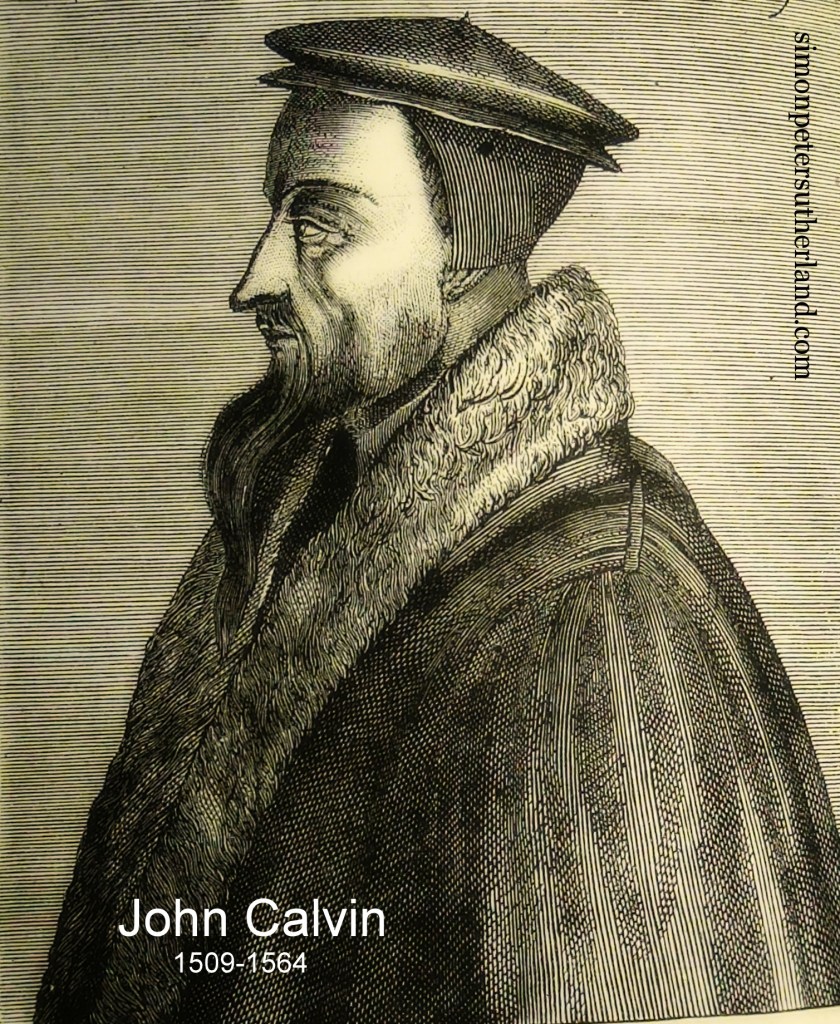
John Calvin © 2017 Simon Peter Sutherland
In only a few days now the actual 500th anniversary of the Reformation will be upon us.
31 October for me is a time that can inspire things to be straightened out. A time that inspires misconceptions to be challenged and for the voices of the people to be heard.
At this time of such a momentous anniversary, there is a common misunderstanding today that I have noticed for sometime, where popular preachers from America often associate the labelling of ‘reformed Theology’ as somewhat exclusive to Calvinism.
There are a lot of brothers in America who claim ‘reformed Theology’ is little more than Calvinism in a nutshell.
Calvinism they say, is nothing more than the pure Gospel.
These claims however are highly speculative and cannot be verified beyond doubt in the face of history and Scripture.
The facts remain that reformed theology can be divided into about four branches or positions.
- Lutheran
- Calvinist
- Anglican
- Hussite
The facts remain that when Luther nailed his 95 theses to the Castle Church door in Wittenberg in 1517, John Calvin was only eight years old.
Calvin was born 10 July 1509 in Noyon, France, which is nearly 600 miles from Wittenberg. When Luther stood at the Diet of Worms in 1521 and the outbreak of the Reformation spread, Calvin was an 11 year old boy who went on to study Philosophy in Paris. He went on to study and pursue a career in law and would not experience a conversion to Christ until 1533 when he was about 24 years old.
By that time Luther had already been excommunicated, translated the New Testament into German and his complete German translation of the Bible was close to being published. The following year Tyndale’s New Testament was in its final revision and the majority of key reformation books had been published and distributed.
By 1536 Calvin was working hard to reform the Church in Geneva and his publication of ‘the Institutes of the Christian Religion’ was in its 1st edition. And through his preaching and influence in Geneva, Calvin’s branch of the reformation spread throughout Geneva and the reformation reached its peak by 1545 and by influence continued on till about 1620. By 1545, many publications had been published and the majority position of the Reformation was Lutheran. Calvinism mainly taking root in France, Netherlands, and Scotland and remaining until after the counter reformation of 1648.
From the mid 16th century – the mid 17th century, Calvinism had taken root in England, Scotland, Greece, and Wales during the Puritan era, while Lutheranism held a majority throughout Europe, even making its way back to Rome itself. Thus, the simple facts remain that although Calvin’s influence had branches within the Reformation, it was probably not referred to as Calvinism until the 18th or 19th centuries, the majority of Calvinistic thought process at that time being the development and spread of the doctrines proclaimed in 1618 at the Synod of Dort and the Puritans who left England during the 17th century for America.
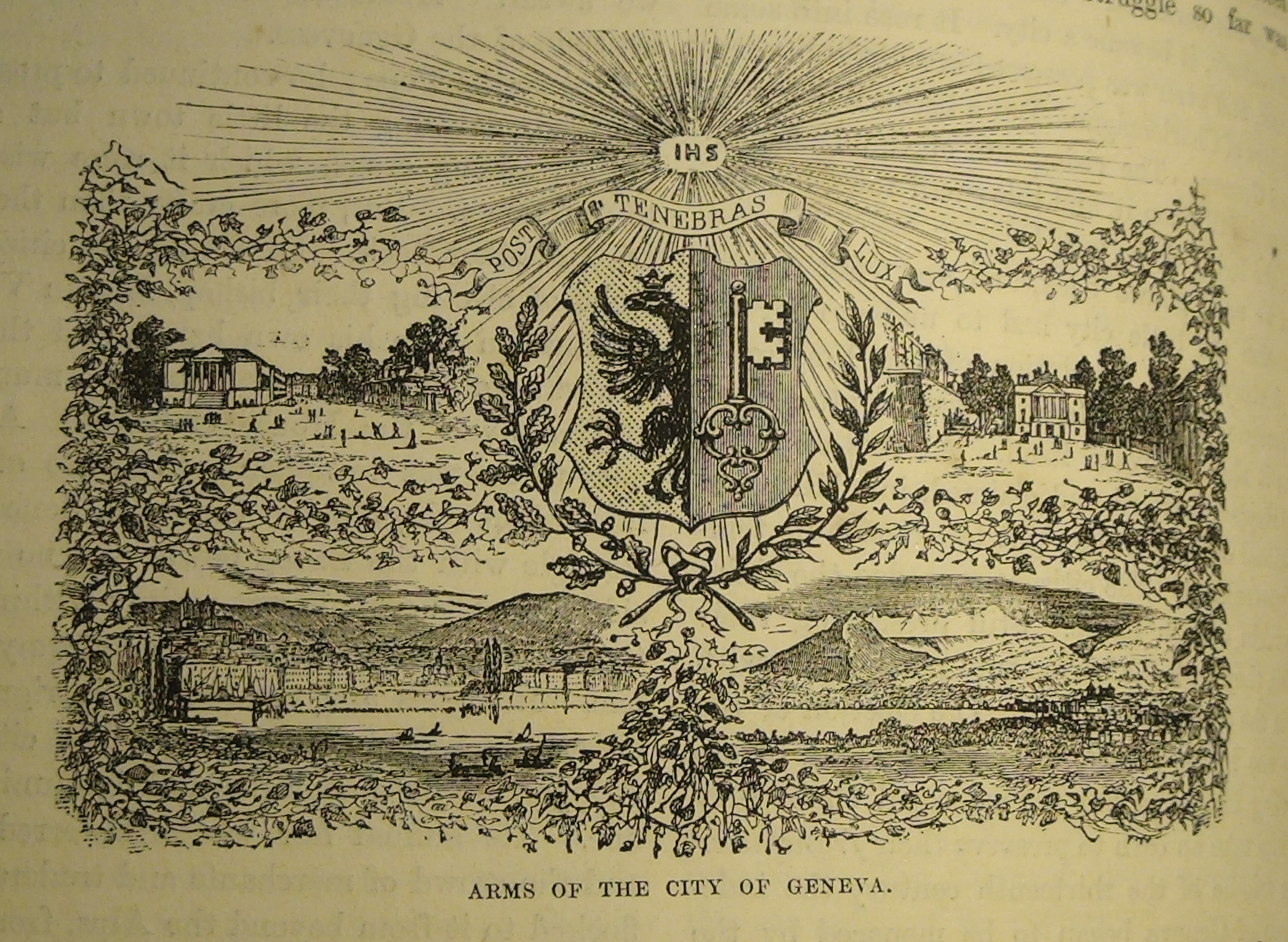
Geneva arms © 2017 Simon Peter Sutherland
John Calvin’s steadfast work and devotion to the faith is to be admired and admonished, and I value his contribution to the reformation. I regard Calvin’s commentaries on Scripture among the best available. But, I am less favourable concerning the common claims that reformed theology is nothing more than Calvinism. On the contrary, the claim is little more than a fictitious propagation of this centuries favourite American Calvinist preachers, who because of their position on believers baptism, would probably have been either imprisoned or drowned by the very same people they claim to revere.
Surely it is time now for this fallacious claim to be amended!
And so this is ‘Reformation Day’, and what have you done?
Posted by simon peter sutherland in Issues with Christianity in England today, Reform on October 31, 2013

Church cross © 2013 Simon Peter Sutherland
Every Christmas I hear John Lennon’s voice singing “And so this is Christmas, and what have you done…” It saddens me almost every time.
Today, I thought of that line and turned things around a little. I was thinking about this tonight, that today is reformation day, 31st October 2013, the religious holiday where some reformed congregations remember that day when Martin Luther posted what is known as “The 95 thesis” on 31st October 1517.
Back then the church was a bit of a mess. People did not believe that salvation was by Gods grace alone, and the essentials of the Christian faith were either not presented or had become muddled up and fuzzy due to the unscriptural claims of church leadership.
Not much has changed. Today in England, 2013, we still see the same old mess and many leaders of the Christian church being the very people who somewhat decronstruct the church and turn it into either a social gathering or a self centred platform for ear pleasing, man made doctrines. The Word of God is so often denied for the word of man.
If it was not for God Himself, His Holy Spirit and His Word of Truth, I would, apart from Christian history, I confess it, be ashamed to be called a Christian and not because of the message or the claims of Christian creeds, but because of what Christianity has become in Britain. And what do Christians do to see things change? Do they even see the need for change? Or are they so busy building their own lives and founding their own careers, being so steeped in that that they see little need for church restoration?
Luther did not nail his thesis to the church door so that this statement could be trodden under foot. Jesus did not say He would build His church so that Christians could sit back and let Him do all the work. No. He said He would build His church upon His chosen people and does that exclude you in this very generation?
If Jesus Christ was truly God and truly man, and He was born of a virgin and truly raised the dead to life and was crucified, dead and buried and rose from the dead, then He is the singularly most important person this world has ever known or will know. And if He said, “I will build my church”then the church is the singular most important establishment on the face of the earth.
Thus, with this in mind, I ask you all, what is more important; your own lives, your own wealth, your own homes and careers or the church of Christ?
Thus, I say it again, and so this is reformation day, and what have you done? Are you going to sit and watch the church fall and fail and say ‘it is not my calling’ and leave the work for other men to do or are you going to do something about it?
The choice is yours, but from this day forwards, you can never again say that you were unaware of this urgent need!
William Tyndale on the trade of the clergy
Posted by simon peter sutherland in Reform on March 11, 2013
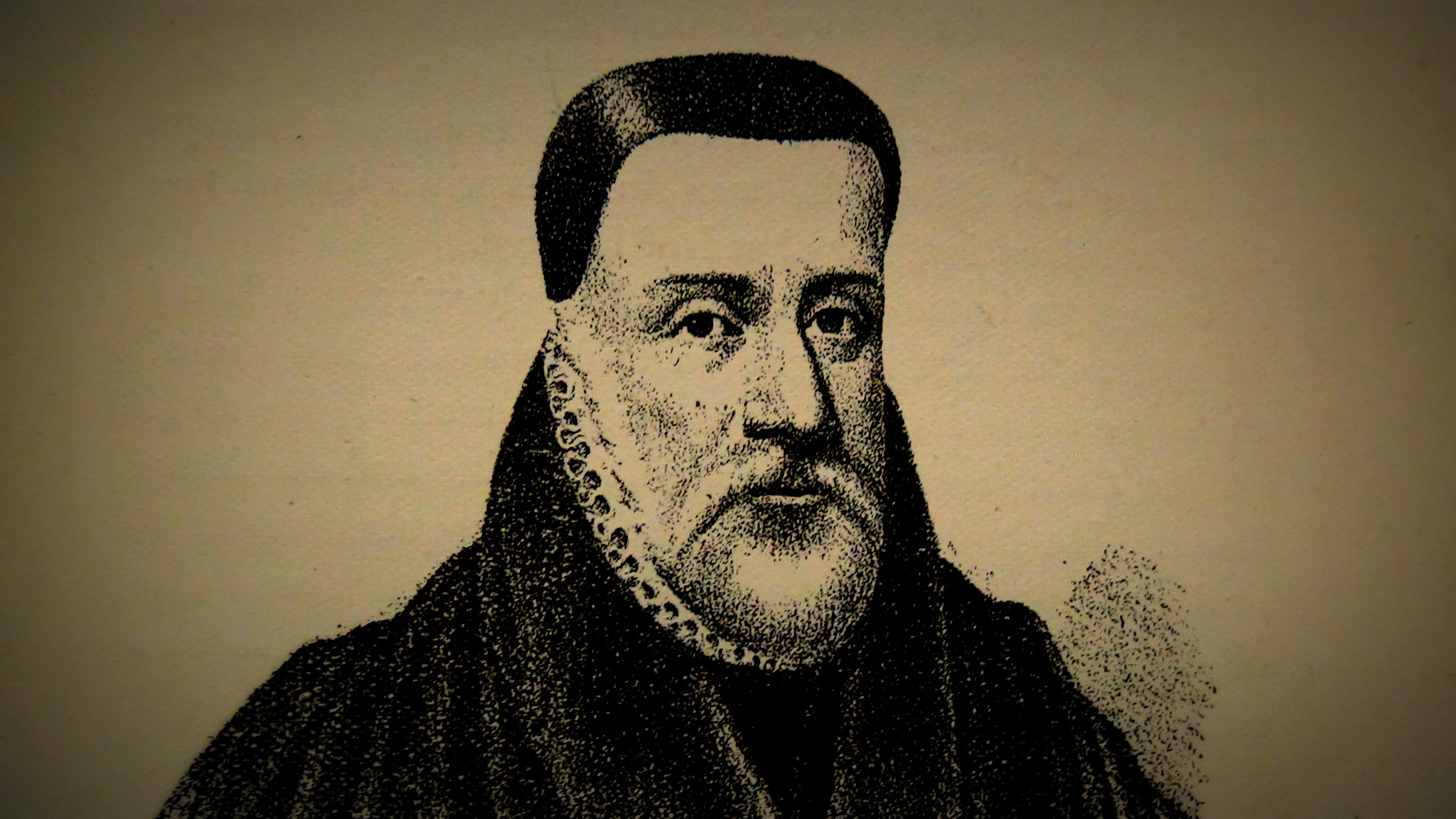
William Tyndale
© 2013 Simon Peter Sutherland
“What a trade is that of the priests. They want money for every thing: money for baptism, money for churchings, for weddings, for buryings, for images, brotherhoods, penances, soul-masses, bells, organs, chalices, copes, surplices, ewers, censors, and all manner of ornaments. Poor sheep! The parson shears, the vicar shaves, the parish priest polls, the friar scrapes, the indulgence seller pares ….. all that you want is a butcher to flay you and take away your skin”
William Tyndale
(Obedience of a Christian Man)
David Cameron: “Revival of Christian Values”
Posted by simon peter sutherland in England issues, Issues with Christianity in England today, Reform on December 19, 2011
 David Cameron while giving a speech at Christ Church Cathedral in Oxford has attacked the moral decline of Britain and has openly called for a revival of Christian values in England and stated that people should openly proclaim explicit values of Christianity.
He also presented critique of the ideas that claim that by standing up for Christian values, we do somehow put down other “faiths”.
He also hailed the King James Bible.
Despite the distinctive observation that the word “faiths” is a historical fallacy concocted by political minds, the word ‘Religions’ is a better description, Cameron rightly spoke against Islamic extremism and claimed that an “almost fearful, passive tolerance of religious extremism” has resulted in Islamic Extremism to remain unchallenged.
One of the things which stands out regarding Cameron’s speech is that he spoke of a “revival” of Christian values and England certainly needs reform and a Christian awakening.
England is forgetting her own history.
Reform is certainly in the air and would involve a new Reformation and a restoration of Truth. But before a reformation of this nature could begin, the Church must get her own house in order first. And since Cameron said this to the Church of England, that is the context and this would call for reform within the Church of England, who has neglected the Bible in favour of passing trends, cultural pursuasions and theological windrushes.
It would be hypocrisy and a burying of ones head in the sand to imagine that the Church of England is in a good way, but there is always hope of reform.
Likewise there is always hope of a Christian awakening within the hearts of the people, but the Church and Parliament must get their own house in order first and remove the plank of wood that is in their own eye, before they can attempt to even suggest that their are splinters within anothers eye. In other words, you cannot expect the people to respect or embrace Christianity and Parliament, if much of Christianity and Parliament has become a harlot. People will not listen to anyone if they do not practice what they preach and the Church and the houses of Parliament of today have not presented themselves without fault.
However there is hope that things can change and it is out of hope that charity is born for without love and charity, ministers and politicians can give speeches all day long, but if they have not charity, they “become as sounding brass, or a tinkling cymbal.” 1 Corinthians 13: 1
And as Paul says, “And though I bestow all my goods to feed the poor, and though I give my body to be burned, and have not charity, it profiteth me nothing. Charity suffereth long, and is kind; charity envieth not; charity vaunteth not itself, is not puffed up, Doth not behave itself unseemly, seeketh not her own, is not easily provoked, thinketh no evil; Rejoiceth not in iniquity, but rejoiceth in the truth; Beareth all things, believeth all things, hopeth all things, endureth all things. Charity never faileth” 1 Corinthians 13: 1-8
Will Parliament be willing to seek a restoration of Christian values within England while at the same time feeding the poor of England? Or will it offer a restoration of certain morals only? Is Cameron being genuine at all, or is he just playing a voting game, using Christianity to gain popularity?
If he is being genuine in then I humbly suggest that we must go all the way with this or not at all.
However, regarding Camerons speech, it is interesting to note that in this very same Cathedral that he gave this speech, Archbishop Thomas Cranmer was publicly “degraded” in 1556 and in the 1720’s John and Charles Wesley were ordained as Priests in the Church of England.
Thus, just as great awakenings and reform did come in times past through the church, they can also do so once again in the future.
Thus, these three remain, “Faith, hope and charity” 1 Corinthians 13: 13.
Simon Peter Sutherland
17th December 2011
Simon Peter Sutherland
-

 Simon Peter Sutherland