Archive for category Biblical archaeology
“The Divine Saviour in the Dark Light of Modern Critical and Sceptical Scholarship” coming soon
Posted by simon peter sutherland in Biblical archaeology, Biblical Scholarship, Theology on March 21, 2026
“Over the last two thousand years or so, the Christian faith has had more than its fair share of enemies.” I write “When Jesus was born, whatever date that may have been, Herod sought to have the Christ-child put to death. In the Gospels, the authors record how many attempts were made on Jesus’ life, only one was granted. All Four Gospels agree that Jesus was crucified and died. From the human perspective, Jesus had been executed for proclaiming Himself King. All other accusations against Him failed. In Jerusalem, at an ancient execution site outside the city walls, Jesus of Nazareth was nailed to a cross and died. This is historical fact.
To all intents and purposes, the story should have ended there, but it didn’t. The Gospels claim that Jesus came alive again and remained on earth for a period of forty days.”
The above words are a quote from my new upcoming book “The Divine Saviour in the Dark Light of Modern Critical and Sceptical Scholarship” a book that objects to the many speculative criticisms made by sceptical scholars over recent years. For those who do not know, sceptical and critical scholars are those who doubt the authenticity of the Bible and are often very vocal about it.
In my book I explore the history of the Bible and offer proofs in defence of the historicity of the Scriptures and I believe the work can be a valuable resource for many Christians who believe in the infallibility of the divine word.
Now that I have completed my documentary series on St Paul and the Greek Islands, “The Divine Saviour in the Dark Light of Modern Critical and Sceptical Scholarship” will be available soon.
Does Acts 18:24-26 say Priscilla was a preacher?
Posted by simon peter sutherland in Biblical archaeology, Church of England, Is Female Leadership Biblical? on September 3, 2025
In my previous articles on Phoebe (Romans 19: 9) and Junia (Romans 16: 7), I demonstrate my reasons for rejecting the modern revisionist claims that women can be leaders in the Christian church.
In this post I will be discussing another Scripture used by revisionists who argue in favour of female leadership. Revisionists like to claim that Luke in Acts mentions a woman named Priscilla as though she was a woman of Christian leadership. Yet nothing could be further from the truth. Let me show you why.
In Acts 18: 24-26 St. Luke mentions a man named Apollos who met a Christian couple in Ephesus by the names of Priscilla and Aquila and at that time Luke claims that Apollos only knew the baptism of John the baptist.
Luke writes,
“Now a certain Jew named Apollos, born at Alexandria, an eloquent man and mighty in the scriptures, came to Ephesus. This man was instructed in the way of the Lord; and being fervent in the spirit, he spoke and taught accurately the things of the Lord, though he knew only the baptism of John.
So he began to speak boldly in the synagogue. When Aquila and Priscilla heard him, they took him aside and explained to him the way of God more accurately.” (Acts 18: 24-26. NKJV)
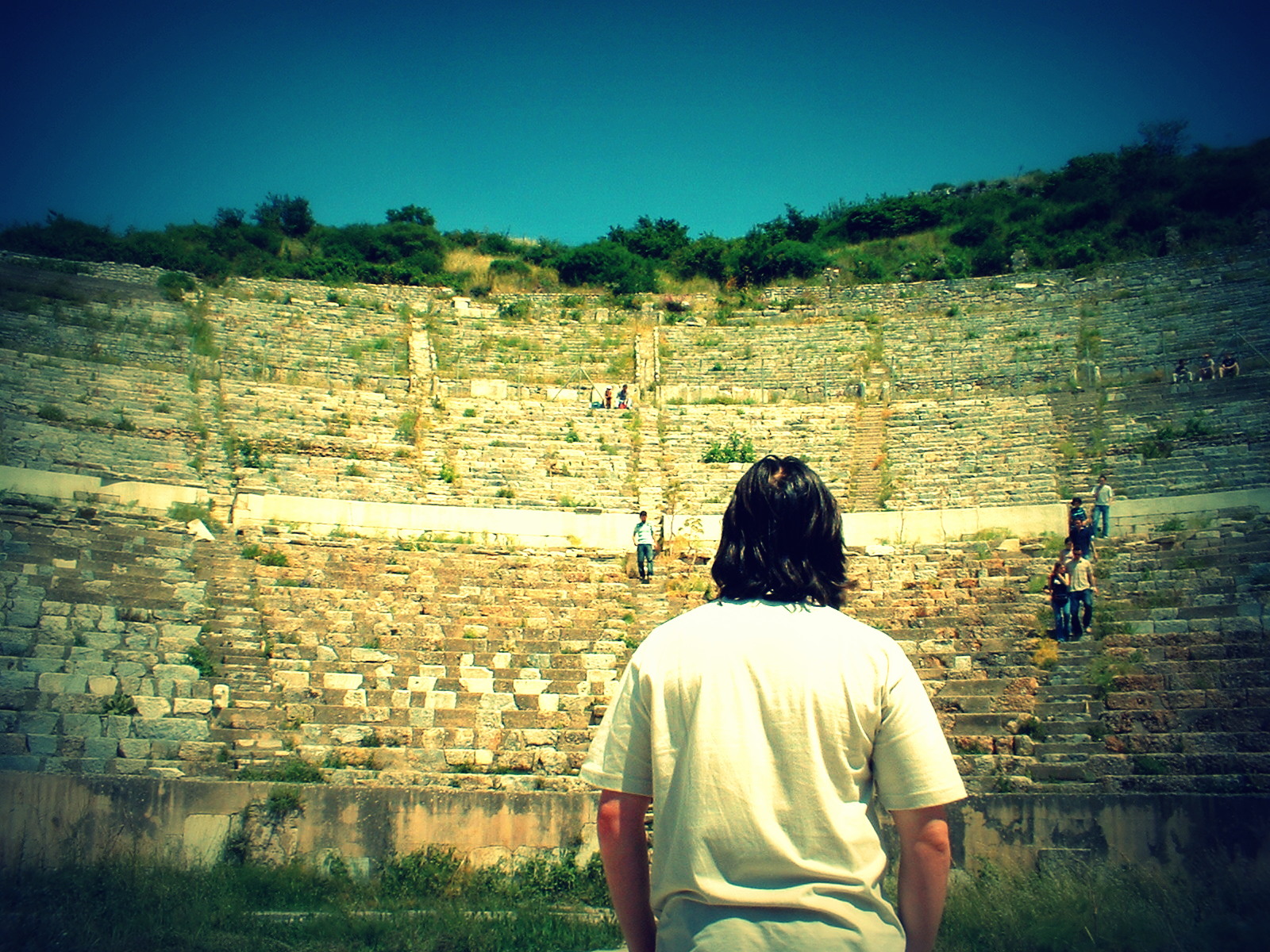
Ancient Ephesus is no longer part of civilization, it’s a historical landmark and an archaeological site. My wife and I visited Ephesus many years ago and walked the streets where this event happened. At that time I was involved in a great deal of church work. People knew my wife and I as a Christian couple and we had many discussions with people about the Bible and what it all means. Often times we would have discussions with believers who were not seeing Scripture rightly and engaging conversations would happen to show Christ more clearly. Yet neither of us believe in women leadership.
That is what I see going on here in this passage. Luke communicates how the man named Apollos was in Ephesus and he was very knowledgeable but didn’t yet know all he needed to know about Christ. Apollos only knew the baptism of John the baptist and had been teaching in the synagogue at Ephesus. The very fact that Luke states he taught in the synagogues and only knew the baptism of John sets this whole passage in its proper context. This is what happened.
When Aquila and Priscilla heard about him and how he was Jewish man who didn’t know about Christ, they delivered the truth to him about the Messiah. Some years earlier Apollos had likely returned to Alexandria after receiving the baptism of John and never fully knew that Jesus had fully come and had been crucified, risen and ascended. So the Christian couple explained what had happened and Apollos believed and received this truth.
Luke is communicating that Aquila and Priscilla evangelised to Apollos which they did in the ancient city of Ephesus. Please do not let modern revisionists distort the meaning of this two thousand year old text. Luke does not say that Priscilla was in any kind of church leadership, he merely communicates that the godly couple witnessed about Christ in the context of evangelism.
In short, all that happened in this passage of Scripture is that a married Christian couple witnessed Jesus Christ to a Jewish man from Alexandria. That’s all.
Was Saint Paul shipwrecked on Kefalonia?
Posted by simon peter sutherland in Bible translation, Biblical archaeology, Documentaries on August 9, 2024

In my new documentary I close the episode with a reference to the shipwreck of Paul on the island of Melite. The central theme of the documentary focuses upon the life and ministry of Saint Titus on Crete and concludes with a reference to the epic journey of Paul who was shipwrecked on his way to Rome. It’s a passionate and dynamic narrative to say the least.
I refer to the island as Melite for a distinct reason, this is the greek word Luke uses in Acts 28: 1.
Most English Bibles translate Melite as “Malta“, however for textual and geographical reasons I do not believe the translations are correct here. Malta is way off the map for the actual island Luke was writing about and is not in the Adriatic sea as Luke clearly states it was in Acts 27: 27.
However many people believe Malta is the island where Paul was shipwrecked and I have visited St Paul’s Bay myself and the little church is one of my favourite places on earth. However, over recent years and after studying old maps I have come to conclude that Malta is not the location of Acts 28 and have narrowed down two or three possible locations where the shipwreck could have taken place.
In a recent article published by Eric Metaxas it is claimed that “Paul was shipwrecked on Kefalonia, not Malta” and evidences are given to support that claim. I am familiar with the opinions that are expressed in the article and locals on Kefalonia claim Paul was shipwrecked at Pessada. This is the location in the closing scene of my film and in the photo above. It should be noted there are archaeological remains present at that place which cannot be denied.
But is it true? Was Saint Paul shipwrecked on Kefalonia? It would be great if it is true, it’s a beautiful island with a wealth of Christian history. However, it should be pointed out that if it is true and Paul was not shipwrecked on Malta, serious concerns are raised regarding the accuracy of English Bibles.
But did it really happen this way? Was Paul really shipwrecked on Cephalonia, or someplace else?
This theme has been a long endeavour for me since I first visited Malta in 2005 and I hope to explore this topic in greater detail in the future. Having visited the location of Pessada, Kefalonia, the argument is extremely stimulating and I am continuing my research.
“In Search of Saint Titus and Paul on Crete”
Posted by simon peter sutherland in Biblical archaeology, Documentaries on June 26, 2024
Great news, my long awaited documentary “In Search of Saint Titus and Paul on Crete” is now available on YouTube.
In this documentary I explore Paul’s Epistle to Titus and its connections to passages in Acts of the Apostles. I visit Fair Havens, Gortyna, and Heraklion and a few other places, all in search of Saint Titus and Paul.
This documentary marks my ten year quest to uncover St Paul’s associations with the Greek Islands and I hope it is a blessing to you.
Is the Titulus Crucis authentic?
Posted by simon peter sutherland in Biblical archaeology on March 22, 2024
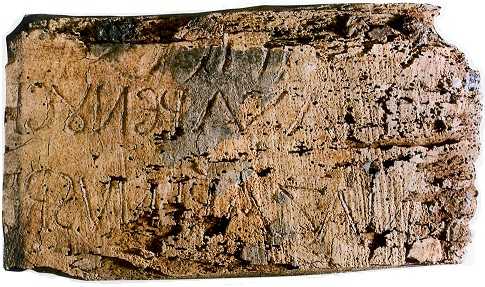
In the Church of Santa Croce in Gerusalemme, Rome, is an artefact known as the Titulus Crucis.
Titulus Crucis is Latin for title of the cross and the item in focus is a piece of wood which is claimed by some to be the actual sign placed on the cross above Jesus’ head 2000 years ago and it may well be? It certainly seems consistent with the gospels to me.
In the gospel of Luke 23: 38 this title was written in Greek, Latin and Hebrew and reads,
“THIS IS THE KING OF THE JEWS”
In the gospel of John 19: 19 the title is written in Hebrew, Greek and Latin and reads,
“JESUS OF NAZARETH, THE KING OF THE JEWS”
The Titulus Crucis is written in Hebrew, Greek and Latin. I have viewed this item a number of times and I am fascinated by it.
The story goes that in the 4th century Helena (mother of Emperor Constantine) travelled to Jerusalem to discover the items associated with the life of Christ and she famously found the true cross and the nails and the Titulus Crucis. This history is attested to by Ambrose (c. 339-397) and Chrysostom (died 407)
Likewise a pilgrim named Egeria travelled to Jerusalem about 381/2-384 and wrote about seeing this item in a chapel and the writings of Egeria are considered very reliable.
The story goes that Helena kept a section of the Titulus in her own private chapel and in later centuries the item was thought to be lost until it was rediscovered above the altar.
I have visited Helena’s chapel a number of times and I have spent considerable time looking at the Titulus Crucis in another room and even though I am not a Roman Catholic nor have any part in that religion, nor do I consider the early Roman Church to be the same religion, I view this item as sacred. I do not know of any evidence to make me consider it to be a forgery.
In contrast to the accounts in Matthew 27: 37, Mark 15: 26, Luke 23: 38 and John 19: 19 the Titulus Crucis does not read as though it has been copied from the four gospels but has its own character.
In my opinion Matthew’s gospel was originally written in Hebrew whereas a version of Luke was written to a Roman official in Latin and John in Greek. For these reasons I believe it is possible that Matthew was quoting the Hebrew line of text, Mark the Greek line of text and Luke the Latin line of text and John the Greek line of text. This accounts for the minor differences in all four gospels.
Matthew 27: 37 reads “THIS IS JESUS THE KING OF THE JEWS.”
Mark 15: 26 reads “THE KING OF THE JEWS.”
Luke 23: 38 reads “THIS IS THE KING OF THE JEWS.”
John 19: 19 reads “JESUS OF NAZARETH THE KING OF THE JEWS.”
When viewed from this perspective I believe there is no contradiction in the gospels. Each author was writing from a specific section of the title and from the perspective of their intended audience.
Likewise I am of the opinion that the original title may have been highlighted in some way to make it more readable for the passers by, and this item is believed to have been covered in white chalk and the carved out text to have been painted black.
When I have looked closely at the item it is very clear that the carved writing is rugged and unique, and to me the writing reflects the urgency and controversy of the moment as implied by the context of John 19: 19 where John writes that “Pilate wrote a title and put it on the cross.”
For me this is a very important observation.
I have returned to Zipari Kos
Posted by simon peter sutherland in Biblical archaeology, Documentaries, The Bible on July 3, 2023

Those who are familiar with my previous writings and documentary work will know how fascinated I am with Paul’s visits to the Greek islands, especially Kos. On my previous visits to the Island of Hippocrates I repeatedly travelled to an area known as Zipari.
For those who do not know, Zipari is a modern town along the highway of Kos, yet back in the 1st century it would have been quite remote.
Today Zipari is about 8.3 – 11 kilometres from the general area of Kos town, which is without question the definitive location of Acts 21: 1. Kos town harbour is the exact place where Paul and Luke landed.
Yet at Zipari the 5th century remains of St Paul’s basilica can be seen. Here Italian archaeologists have found ancient mosaics.
For some reason previously unknown to me I have been very intrigued by this place and have been unable to let it pass. The sign reads like so:
“St Paul the Apostle
visited this place during his
third missionary journey”
This exact sign can also be scene in St Paul’s Bay, Lindos. Both Rhodes and Kos are present in Acts 21: 1. Likewise both signs quote the same Scripture, “There is neither Jew nor Greek, slave nor free, male nor female, for you are all one in Christ Jesus.” (Galatians 3: 28)
But what is it about Zipari that intrigues me so? The answer is I think it possible St Paul may have visited here? as I think he visited Lindos.
Revisiting Kos once again was a new experience for me. With many things behind and a new path in front of me I wanted to explore the area from another perspective so I followed that instinct and an old wall. This gave me a lot of insight and I’m now on a journey to discover more. Where this will lead I do not know?
My aim has been to explore Acts 21: 1 from an imaginative perspective and discover more about the meaning of that verse. Making my way through the ancient sections of Kos harbour, the agora and the Western Archaeological site, I am gaining a more vivid picture of Luke’s narrative and the pieces of my puzzle are falling into place.
In my fist documentary on Kos I explored the island from the perspective of St Luke. This led me to the ancient Asklepion of Kos, yet in my previous documentary I explored the island from the perspective of St Paul and this took me on a very different voyage.
This is reflective in the closing words of that film:
“Back to the harbour, I found myself contemplating what exactly happened when Paul and Luke visited this island. But I suspect I may never truly know this side of eternity.”
It was at the location of those scenes where I began this new era of my voyage. I am content to follow on as the Lord leads. It seems my voyage to Kos may not be over after all.
Biblical ‘curse tablet’ found on Mount Ebal
Posted by simon peter sutherland in Biblical archaeology, The Bible on April 10, 2022

Biblical Archaeologists have uncovered an ancient tablet containing what could be the earliest known example of the Hebrew name name of God, Yahweh.
The Tablet was found on Mount Ebal mentioned in Deuteronomy 11: 26, 29.
The ‘curse tablet’ is an extraordinary discovery because it was found on a site believed to be the altar of Joshua. If proven beyond doubt it could be the most significant Biblical find since the discovery of the Dead Sea Scrolls in 1946/47.
The use of Hebrew would also predate the Dead Sea Scrolls by 1,350 years. Meaning the ancient Israelites had a much more advanced knowledge of Hebrew than modern scholars have thought.
If true the ‘curse tablet’ could prove the Books of Moses were written earlier than modern scholars have claimed. I say this because in recent years many modern sceptics have sought to challenge the claim that Moses was the author of the Pentateuch. The use of Hebrew, they say, is too advanced. Yet Jesus said “If you had believed Moses, you would be Me: because he wrote about Me.” (John 5: 46). Clearly Jesus believed Moses was the author of the Torah.
I believe people today have to live with one of the biggest problems in history, they have lost confidence in the Bible. Secularists and revisionist modernisers have sought to drive away peoples trust in the Bible. But God is forever drawing them back.
The gospel of Jesus Christ is yet to be discovered by many people and for believers, telling people the truth about Christ is a little like doing archaeology, we must remove centuries of layers to uncover the truth.
The ‘curse tablet’ is great news in a world hell bent on destroying itself. If proven to be true, it is an excellent discovery. But don’t take my word for it. Look it up, see for yourselves! Have faith and be assured the Bible is true from cover to cover. Go tell someone about Jesus Christ today.
Apostle Paul and the Island of Hippocrates
Posted by simon peter sutherland in Biblical archaeology, Documentaries, The influence of film on October 3, 2021

A 15th century image on St. Paul’s Gate, Rhodes
Posted by simon peter sutherland in Biblical archaeology, The Bible on June 18, 2019
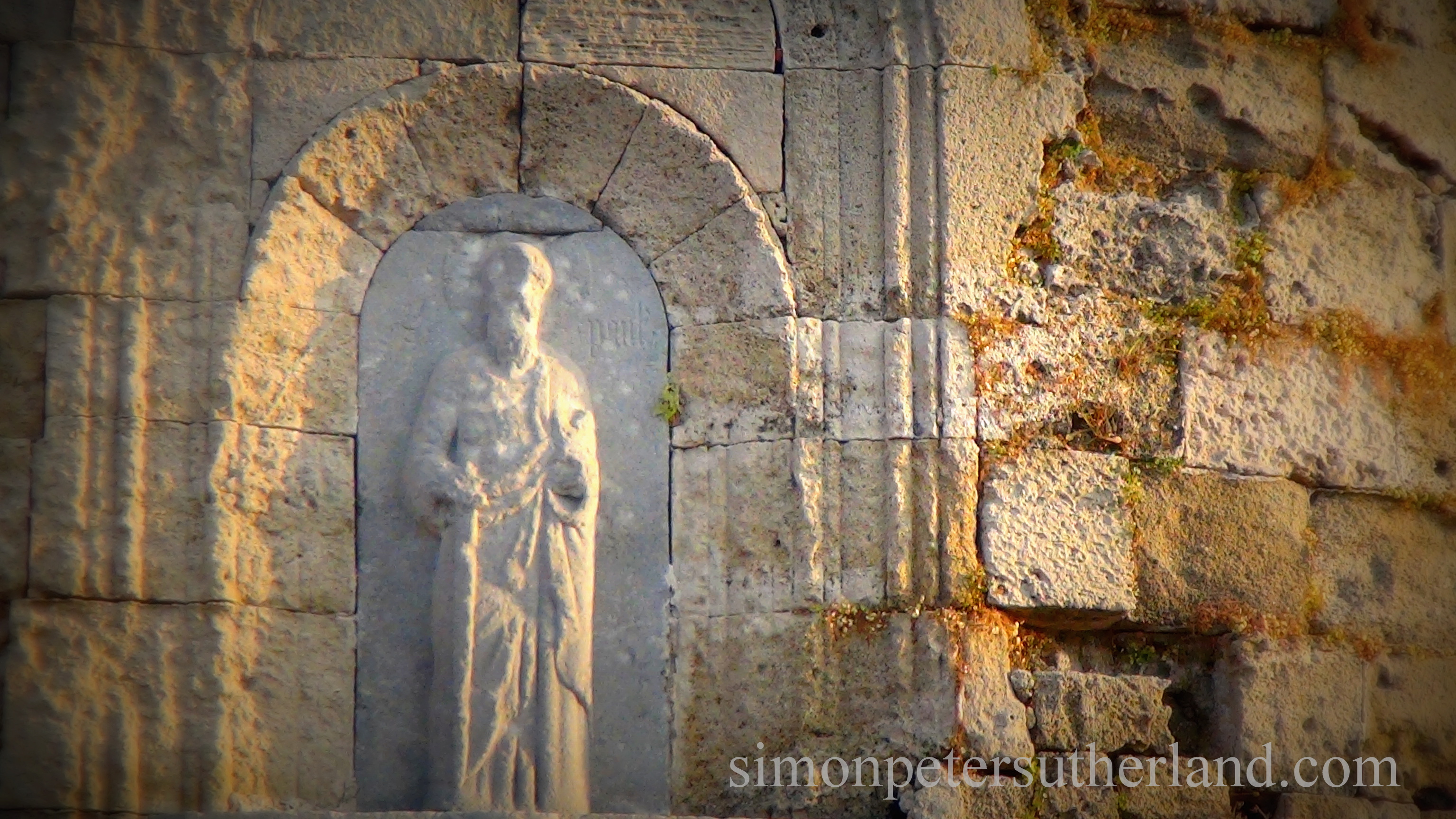
Apostle Paul on Rhodes © 2019 Simon Peter Sutherland
While on the Greek island of Rhodes, I revisited the site of Acts 21: 1. This location is Rhodes Town, the site of the Colossus of Rhodes and St. Paul’s Gate. Here Paul and Luke landed in the 50’s AD.
It is quite easy to miss but within the walls surrounding the Gate of St. Paul, there is a 15th century image of the Apostle high up on the wall.
The image itself is faded and undefined. But it represents the familiar image of the Paul we know.
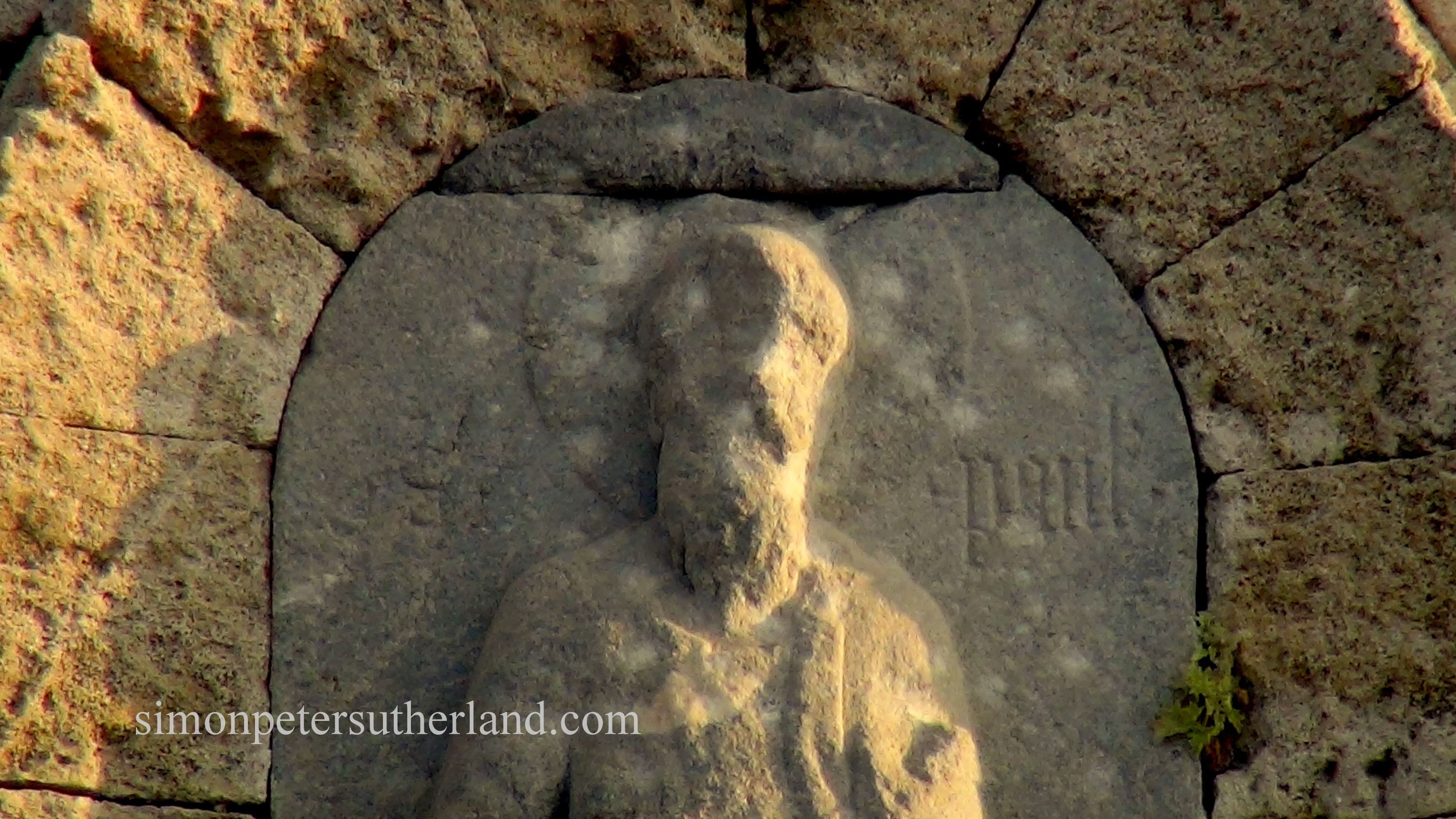
St. Paul, Rhodes Town © 2019 Simon Peter Sutherland
This is Paul the elderly and powerful. His left arm is raised. His right arm is carrying a sword. Representing the sword of the Spirit. His head is leaning to the left.
The Gate of St. Paul was constructed during the 15th century and fortifies an area of the harbour known as the Kolona Harbour. The locals of Rhodes town generally accept that this was the precise location where Paul and Luke landed. This location satisfies me as the site of Acts 21: 1.
Once again, as always, it was wonderful to stand in the places written about in the Bible. The message is clear, keep our eyes fixed upon the Apostles’ doctrine (Acts 2: 42).
Recent discoveries in the Mamertine Prison, Rome
Posted by simon peter sutherland in Biblical archaeology on August 6, 2018
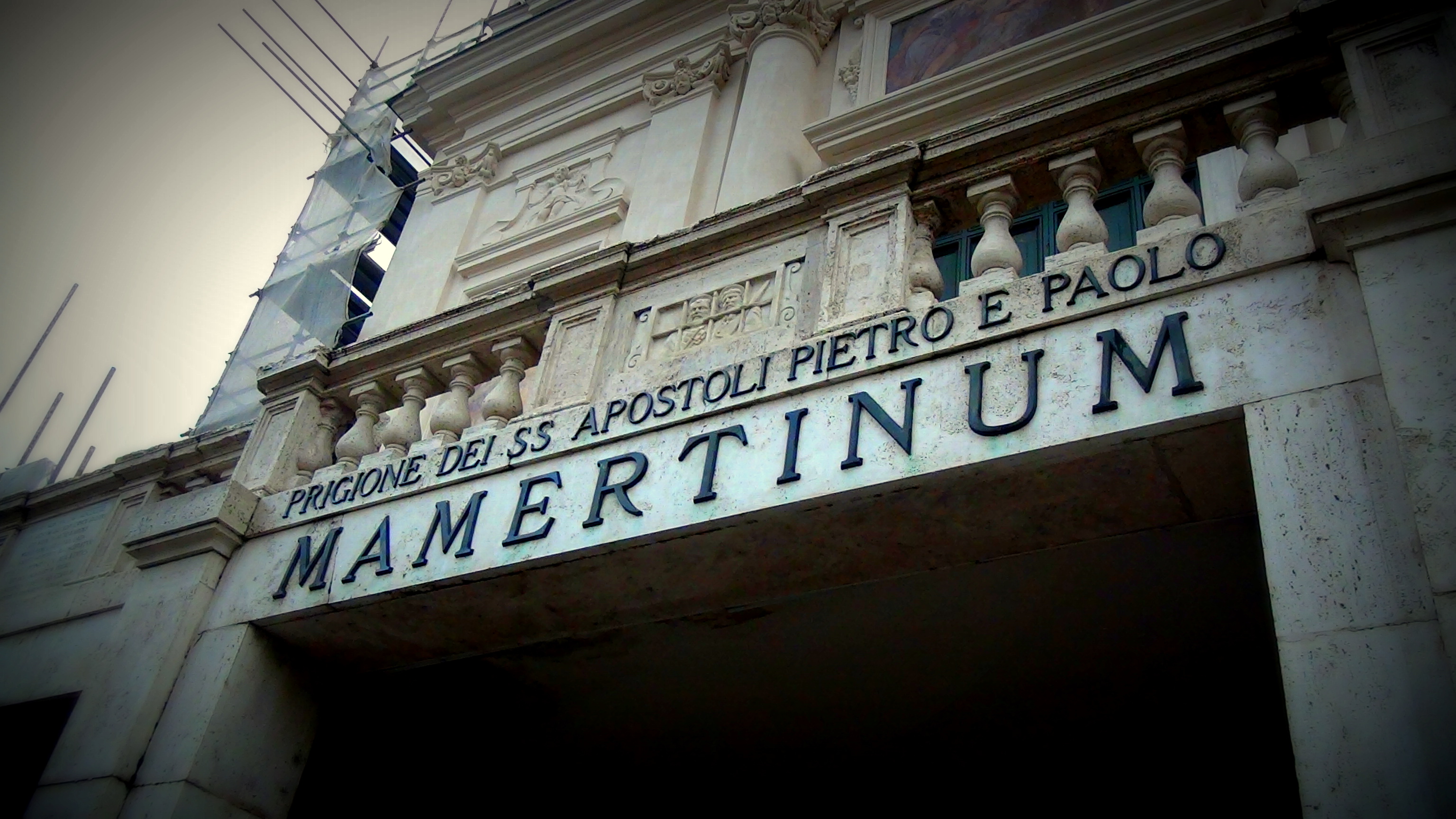
Mamertine Prison, Rome © 2018 Simon Peter Sutherland
“In 2017 I revisited the Mamertine prison, and forum, Rome and explored a number of new discoveries made at the Mamertine the previous year. I believe Paul wrote 2 Timothy from that prison. I also think it possible that 2 Peter and Acts of the Apostles was written from here.
The Mamerine Prison is one of my favorite Biblical places in the world. I have visited the proposed cell of St. Paul at Philippi, I have visited St. Paul’s Grotto, Rabat, Malta, but the Mamertine has won me. It is or was, a cold, damp, dark and dingy place, and such is what I love about it. It is highly primitive. Ancient. Biblical!
In the Basilica of St. Paul outside the walls, Rome, there is an ancient ‘chain’ reputed to have been used to bind St. Paul during his time in Rome. The chain was found in the ancient tomb of St. Paul over which the Basilica was built. When I visited the basilica in 2014, I noticed in 2 Timothy 1: 16 Paul referred to his “chain”. This in the Greek and the English is in the singular. For me, it perfectly matched the description given by Paul. It also fit perfectly with the type of chain that would have been used to bind Paul at the Mamertine.
Having read through an excellent series of books entitled “The Book of Acts in its first century setting” Volume 3, Paul in Roman Custody by Brian Rapske, it is explicitly clear that the Apostolic era was a time of great suffering. Here at the Mamertine, Paul suffered greatly and wrote to Timothy about his departure being at hand (2 Timothy 4: 6). He had stood trial before Casear, probably at the Curia and Eusebius in Ecclesiastical history 2: 22, informs us it was on Paul’s second visit to Rome that he was martyred under Nero.
At the Mamertine when Paul was held there about 60 AD and later, the 2016 excavations revealed that the cell did not have an upper floor like we see today. The upper floor is only about 500 years old and was constructed into the building when it was used as a Church. The original cells were more in the format of a cave rather than a fixed upper and lower level structure. Visitors for many years have believed that Paul was lowered into the lower dungeon via the circled hole in the upper cell floor. But the 2016 excavations revealed that the entrance to the lower cell area came from the upper roof, not the upper floor. When Paul was incarcerated here before his execution, he would have been lowered into the lower dungeon from the upper roof.
This practice often left prisoners physically damaged. Sometimes the broke a leg or an arm. We do not know of the level of damage Paul suffered here, but we know that his time at the jail, within the cell, would have been to face death. Once prisoners were put in here, it was to await execution.
The excavations revealed areas not seen by the public for centuries. These areas were around the main cell, and raised somewhat. If Peter was ever held here, he would have been held in the upper cells until his trial, and when condemned, dropped into the lower cell from the upper roof to await his death.
As I previously mentioned, it is also possible that 2 Peter was written in this cell. Although some modern scholars claim that Peter never wrote 2 Peter, I disagree entirely. While in Rome I attempted to view the letter from the perspective of the ancient city. Upon my return to England I researched the letter internally and found hints of ancient Rome in the text. One of which involved the great fire of Rome, of whom Nero, by tradition, is believed to have blamed the Christians. If Peter was in Rome at the time, he too would have been accused of either arson or inciting it. This could reveal insight into his references to “fire” in 2 Peter 3: 7, 12. He may well have been using the ‘fire’ reference to provoke believers to remember that a coming judgment will bring about the destruction of the world, by “fire”. There can be little doubt from this perspective that the great fire of Rome, would have been the fresh and current hot topic of the city. If Peter was being held in the Mamertine while the great fire was fresh in the minds of the Roman people, it is not difficult to see why he used this reference to remind people of the coming greater judgment at the end of the world. This would place the composition date toward the summer/autumn of 64 AD, because the fire took place in July of that year.”
Excerpt from upcoming book by Simon Peter Sutherland
© 2018 Simon Peter Sutherland
-
You are currently browsing the archives for the Biblical archaeology category.
Simon Peter Sutherland
-

 Simon Peter Sutherland