Archive for category The Bible
“The Divine Saviour in the Dark Light of Modern Critical and Sceptical Scholarship” coming soon
Posted by simon peter sutherland in Biblical archaeology, Biblical Scholarship, Theology on March 21, 2026

“Over the last two thousand years or so, the Christian faith has had more than its fair share of enemies.” I write “When Jesus was born, whatever date that may have been, Herod sought to have the Christ-child put to death. In the Gospels, the authors record how many attempts were made on Jesus’ life, only one was granted. All Four Gospels agree that Jesus was crucified and died. From the human perspective, Jesus had been executed for proclaiming Himself King. All other accusations against Him failed. In Jerusalem, at an ancient execution site outside the city walls, Jesus of Nazareth was nailed to a cross and died. This is historical fact.
To all intents and purposes, the story should have ended there, but it didn’t. The Gospels claim that Jesus came alive again and remained on earth for a period of forty days.”
The above words are a quote from my new upcoming book “The Divine Saviour in the Dark Light of Modern Critical and Sceptical Scholarship” a book that objects to the many speculative criticisms made by sceptical scholars over recent years. For those who do not know, sceptical and critical scholars are those who doubt the authenticity of the Bible and are often very vocal about it.
In my book I explore the history of the Bible and offer proofs in defence of the historicity of the Scriptures and I believe the work can be a valuable resource for many Christians who believe in the infallibility of the divine word.
Now that I have completed my documentary series on St Paul and the Greek Islands, “The Divine Saviour in the Dark Light of Modern Critical and Sceptical Scholarship” will be available soon.
The 500th Anniversary of Tyndale’s New Testament
Posted by simon peter sutherland in Bible translation, The Bible, William Tyndale on January 8, 2026
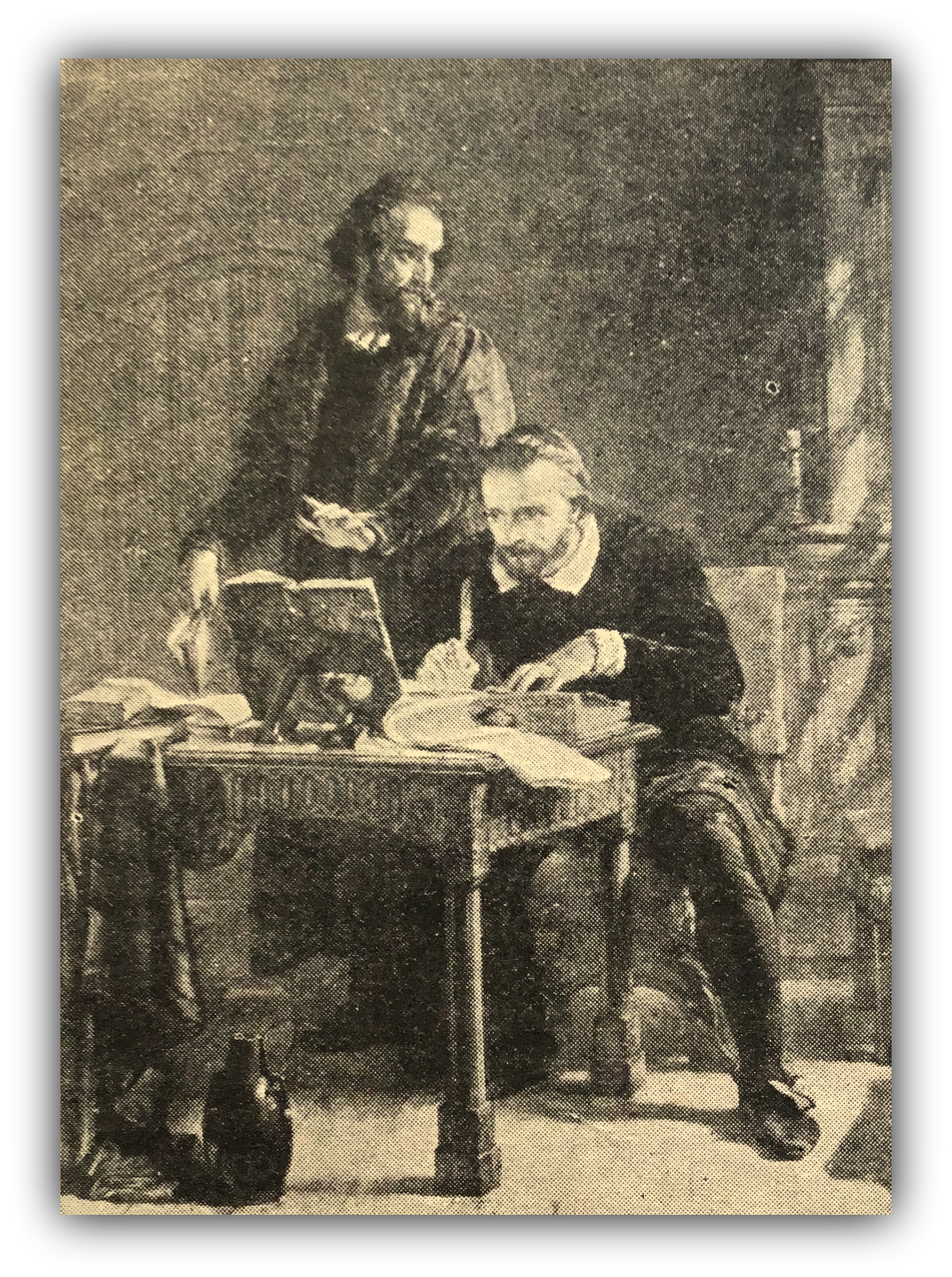
We are in a very unique era in the history of this world since this year marks the 500th Anniversary of the 1526 Tyndale New Testament.
In 2025 we saw the 500th anniversary of the 1525 version, and this year has enormous significance.
For those who may not know, William Tyndale (c 1494-1536) is a pioneer in the formation of the English language and in the translation of the Bible into English. The original 1st century apostles and gospel writers primarily wrote in Greek, with some texts being translated from Hebrew.
In 300 BC scholars from Alexandria translated the entire Old Testament into Greek and in the 4th century AD Jerome translated the New Testament into Latin.
Translation has been part of church history for centuries and is the key method by which we communicate with one another.
Tyndale was a genius and his translation work should be remembered forever. I love the Tyndale New Testament and I hope that heaven will hold them forever. Being able to read ancient English I don’t have any issues with using old English translations including the Wycliffe, Tyndale, Geneva and King James versions.
The Tyndale New Testament has certainly impacted me very deeply, from those early days when I was studying for my degree and I first held an original 1538 print in John Rylands Library, to the days when I held a 1534 edition at Chetham’s Library to the days when I walked in the footsteps of Tyndale while visiting Oxford. These were golden days and my attachment to Tyndale goes beyond sentiment to the depths of the eternal truth he proclaimed, which cost him dearly.
This year yet again I hope to know more of Tyndale and be blessed by the reading of his translation of the word of God. May that be truly said of us, and all of us. In these dreary times of confusion and upheaval, may each one of us find solace and obedience in the personal revelation of Jesus Christ.
The real Virgin Mary was the Lord’s servant
Posted by simon peter sutherland in Census of Luke, Christmas, Christmas or Nisan, Theology on December 16, 2025

In J C. Ryle’s readings for advent, he chooses Luke 1: 34-38 for todays text. This text is about how the Virgin Mary received news that she would conceive by the Holy Spirit and give birth to a Son, the Lord Jesus Christ. Mary responded to the angel, “Let it be to me according to your word.” (Luke 1: 38)
We see from this text that the Virgin Mary was a real servant of God and even though she knew what controversy would face her once news of her conception came about she obeyed the word of the Lord perfectly.
Ryle writes how this act did “present no small danger to Mary’s reputation and no small trial to Mary’s faith.” And when you consider the danger she would have to potentially face, it’s not difficult to understand why. Mary could have been stoned to death for conceiving outside of marriage. But we know, because of Scripture that Mary was indeed innocent and had not conceived outside of wedlock (Luke 1: 34). Mary was a Virgin and betrothed to Joseph who only knew her intimately after Jesus was born.
It is here in these passages where we see the true Virgin Mary, not the false version worshipped by the Roman Catholic Church as mediator. Mary points us to Christ she does not replace Him or cause us to pray to her in order to get to Jesus. Mary is no mediator. There is only one mediator between God and men, the Man Christ Jesus (1 Timothy 2: 5)
A number of years ago a scholar claimed that the nativity account in Luke’s gospel contains feminine uses of Greek. This implies that the words contained in these few verses in Luke are the actual eyewitness testimony of Mary herself, incorporated into the gospel by Luke. This little known observation can inspire us all to know that Scripture is reliable and trustworthy.
Our society seeks to play down Scripture and inspire people to doubt what is written, but no one need let this happen. The Bible is true and historically accurate and the more people believe by faith, the stronger your belief will be.
Please don’t be fooled by Roman Catholicism or her prophets and proponents. If you want to find the true Mary don’t pray to her, read Scripture and her own words.
Believe the Bible this day and trust in Jesus Christ till the end of your life and He will never leave you or forsake you. Amen.
The second coming of the King of kings, Advent reflections with J C Ryle and Matthew 24: 29-35
Posted by simon peter sutherland in Christianity, Christmas, Eschatology, Theology on December 1, 2025

I have begun the reading of a book “The Coming King” – 25 Readings For Advent with J. C. Ryle.
Ryle was Bishop of Liverpool between 1880 and 1900 and the readings are taken from his Expository Thoughts on the Gospels, some of the best commentaries available today.
In this part he deals with “our Lord’s prophecy” from Matthew 24: 29-35 where Christ describes His own second coming. In this passage we are told that Jesus will return with great power and glory quite different to His first appearing. During His incarnation Jesus was a man of sorrows (Isaiah 53: 3) He was not some ordinary joker Man who talked a lot, and blended in, He was a quiet Man and when He spoke He spoke with power and authority. If He did speak all the time, His words would not carry the same weight, yet His words were like no other, they had weight and strength. No one ever spoke like this Man. Even the authorities could hardly refute Him, even though they tried. He was the King of kings and Lord of lords, and no one had authority over Him unless it was granted by the Father.
When He was born, He was born humbly, among the lambs reared to be offered in the temple sacrifices. As He grew, He grew in favour with both God and man, yet He took on the form of a servant, rejected by mankind. Betrayed by his friend and condemned to death of a cross. Yet it did not end there, if it did, faith would be worthless and in vain. No, Christ rose from the dead and ascended into heaven where He reigns forever more. We do not need to wait for His return to know that He reigns, He is reigning now from heaven. We do not need to wait for some futuristic kingdom to take place on earth when He returns to Jerusalem, He is reigning now from heaven on the throne of David. And one fine day He will return and men will receive the fulness of eternal life or the sentence of eternal death.
Remember this, lest you live a pointless and meaningless life. There will be no escape from anything when He returns. There will be no opportunity for people to change their minds and believe once He returns. It will be the end. No thousand year reign. No second chance. No scoffing at Him. He will return to this earth when you least expect and no one will escape Him. He will not be the same as He was at His first coming, He will not be the Jesus people mock and blaspheme, and think they can walk all over, He will be returning with all His power and glory in the clouds of heaven, and no eye will be able to escape from Him. No ear will be unable to listen to Him. No sin will be left uncovered. No one will be able to escape. It will be the end.
What a terrible day that will be.
I wonder where you will be on that day? Will you be preaching, only to find yourself lost without salvation? Will you be drinking, only to find yourself thirsty? Will you be walking only to find yourself on your knees? It doesn’t have to be that way, you can pray. You can receive Christ at any moment of the day. You don’t need a priest, He is our priest. You don’t need a pastor, prophet, or pope or mediator, Jesus is our Mediator. All you need to do is pray and receive Him and you too will be given the gift of eternal life in the arms of our Lord and Saviour Jesus Christ.
Examine yourself whether you are in the faith (2 Corinthians 13: 5) Evaluate your beliefs. Consider your actions, and see if they line up with the gospel. Test your faith and yourselves, and keep awake, so that when Christ returns, He will not find you sleeping.
“Dispensationalism Exposed” Revealing the Bad Fruit: book review part 1
Posted by simon peter sutherland in Eschatology, Theology on November 19, 2025

Last month while reflecting on bygone eras of my church life, I was rummaging through some second hand books and I happened upon a book entitled “Dispensationalism Exposed” by Dale A. Albertson. I didn’t know anything about the author but I noticed the book was self published so it was right up my street.
I have a history with Premillennialism, from my early days where the theory was projected at me, to my more recent days when this happening reoccurred. I have a distinct distaste for Premillennialism and so often it is difficult to find folks who think alike. Thankfully Dispensationalism is not a big issue in UK churches, but for many people, especially American Christians, Premillennialism is nothing more than Scripture itself.
But now things have changed. More and more people are realising that it ain’t necessarily so. Premillennialism is not the only interpretation of Matthew 24 or the Book of Revelation. But the problem for some believers are, that other views are rarely presented. At least in some circles.
So, I bought the book and I have found it to be a pleasant surprise. In it, the author presents his arguments against dispensationalism and argues the doctrine is distructive and in many cases, harmful. Dispensationalism prevents people from trying to make our world a better place, it often denies the reality of what Jesus was talking about in Matthew 24, and it creates unnessesary division and is not accurate to the early church.
The author focuses upon the 1,000 year reign of Christ and His saints and the events of AD 70 when the Jerusalem Temple was destroyed by the Romans. Yet Premillennialists often ignore what Josephus documented and prefer to promote various rapture theories as though Matthew 24: 40 refers to an event way off in the future. It does not, Jesus was talking about the Roman armies taking people into captivity when Jerusalem was about to be destroyed and it all goes back to the writings of John Nelson Darby and his incorrect hermeneutics. The Olivet discourse and a majority of the book of Revelation are all about the past, not the future.
Dispensationalism has a dark side, the author argues, “and its bad fruit” has a “negative impact-on the world today”. “Dispensationalism is a very new doctrine in the scope of church history,” the author argues, dating to the 19th century and the “Plymouth Brethren minister” (P. 12). Spurgeon was a “well-known vocal critic of Darby” the author exclaims. Darby’s ideas where adapted from Edward Irving (1792-1834) a clergyman in the Church of Scotland and Darby’s influence spread through seminaries of Europe and his tours of the United States.
Dispensationalism brings about the practice of “separatism” and causes people to fail in working towards change in our world because according to them, the decline of society and church is all part of the unfulfilled prophecies of Scripture. I have been making this point for years. I argue that the powers that be use Premillennialism as a gateway to disencourage Christians to make changes in our world, because when Dispensationalism is believed, the bad events of our day and age are all foretold.
“The indoctrination of Dispensationalism is now nearly universal in America.” and “Dispensationalism is considered unassailable by the majority of Christians in America” and “those who disagree have been called heretics,”. (P. 25)
I can relate to those claims, since one man attempted to assassinate my refutation of Premillennialism by claiming that I was denying the second coming of Christ. So for me, since Premillennialists often ignore and overlook the writings of Josephus, you can see why the real historical events of Matthew 24 are unknown to them. Because of this I think many American Dispensationalists are ‘Nuda scriptura’ rather than ‘Sola scriptura’. Personally I am Sola scriptura a position which allows for other historical sources to help us rightly divide the word of truth.
Premillennialism does not rightly divide the word of truth since it fails to recognise that a literal-historical hermeneutic of Matthew 24 would reveal that Jesus was warning His 1st century listeners about the destruction of the temple in Jerusalem, by the Roman armies under Titus. A fact which according to the author “Dispensationalism must (mostly) deny in order to justify its alternative interpretation of the great tribulation.” (P. 31)
The author continues on to argue that Dispensationalism is so bad an idea that even sceptics and Muslims use it to argue that the prophecies of Jesus were not fulfilled, then there is the credulous nature of the support for the rapture doctrine, and the secret rapture of the church, a position that the author rightly argues “is not found anywhere in scripture.” (P. 46)
Amen to that. Absolutely.
If you are looking for a good book to read over Christmas or the new year, you should get yourself a copy of this book. Self published works can oftentimes be great reads.
Is AMiE a better option than the CofE
Posted by simon peter sutherland in Christianity, Church of England, Reform on November 13, 2025

It is quite evident to most Christians now that the Church of England has fallen headlong into apostacy. A large percentage of ministers and bishops are in favour of practices and re-interpretations of Scripture which any Bible believer cannot accept.
It has been a long and tiring debate and conservative evangelical ministers are doing the best they can to uphold the church’s teaching on sexual ethics and Scriptural doctrines while at the same time holding the blanket concerning their future careers.
There are serious problems happening with the establishment and you know there is an even deeper issue on the horizon when the King prays with the pope for the first time in 500 years and now they have a very liberal catholic female archbishop about to be seated on the chair of St Augustine. An act for which Archbishop Thomas Cranmer would be turning in his grave.
The question is what to do about it?
Roman Catholic’s are being sneaky right now and are chasing in on this cradle of insecurity by trying to woo Anglicans back into their lair of popery. What’s wrong with that, people might say? Well, there is a great deal wrong with that. For a start off Roman Catholicism is not Christianity it’s Roman Catholicism. It is a religion that prays to the dead, worships a goddess, rejects justification by faith alone, condemns reformed theology and believes that the Eucharist is literally the body and blood of Jesus Christ, which is cannibalism and vampirism. On top of all they they quite literally believe that the pope is Christ’s vicar on earth, which means to be in place of Christ.
Not to mention the fact that they worship apparitions of a demon masquerading as the virgin Mary.
We live in very dangerous religious times and for this reason Paul wrote, “Take heed to yourself and to the doctrine. Continue in them, for in doing this you will save both yourself and those who hear you.” (1 Timothy 4: 16) Just because a religion claims to be Christian, does not make it so. Each one of us needs to examine claims and doctrines and do it closely with the Bible in hand. There is no need for a bishop to guide you in this, you can research and decide for yourself.
As you can tell I am a nonconformist at heart, I don’t believe things just because people preach them. I need proof.
That being said I am not the type of person who tells people what to do. Each of us must make our own choices in this life and everyone must decide for him or herself what each one of us must do. But I am going to recommend to you that if you are going to leave the Church of England, either now or in the future, do not go running off to Roman Catholicism. It is a corrupt religion with a rotten past and a future reliant upon it’s claim that the pope is a direct successor to St Peter. Such a claim in itself is useless since in Revelation 3: 16 Jesus warns a lukewarm church that He will vomit them out of His mouth unless they repent and that church in Laodicea knew John and St Paul, so if you can understand my perspective, it makes no difference if a church in history knew St Peter or John or Paul, Jesus can still remove them from His body if they apostatise like the Roman Catholic Church has done.
I assure you, there are better options for people who may be thinking of leaving the CofE, don’t go crawling off to the Roman Catholic Church, go to an independent church or why not give AMiE a try?
AMiE stands for the Anglican Mission in England and is not a state run church, it has no female bishops, no women vicars, no heresies, just basic Christianity and in the Anglican tradition.
Does Paul say Chloe was a church leader?
Posted by simon peter sutherland in Church of England, Is Female Leadership Biblical?, The Bible on September 19, 2025

Continuing on my with my series on refuting women leadership in the church, today I’m dealing with another passage of the New Testament which advocates of female leadership misuse to promote their ideas.
Liberals and revisionists use 1 Corinthians 1: 11 to claim that a 1st century woman named Chloe was a leader of a church that met in her house.
Paul writes,
“For it has been declared to me concerning you, my brethren, by those of Chloe’s household, that there are contentions among you.” (NKJV)
That’s it! This tiny verse is used by revisionists as another pawn in their chess game to promote the tiny claims that women can be leaders and ministers in the Christian church. No such thing. This verse does not say that Chloe was in any kind of leadership. Let me show you why.
Paul is writing to the 1st century church at Corinth, this is an ancient city in Greece. Corinth was a place bustling with worldwide commerce and cultures. Religion played a huge role in that place and the church was full of problems, divisions and the difficulties of living in a pagan society. Chloe (or her family) had informed apostle Paul that things in church were not going so well. Immorality, and abuse of the Lord’s supper had been going on and people were mixing the practices of Corinthian culture with church practices. Paul sets them straight in this letter and he admonishes them and pleads that they “speak the same thing” and “that there be no divisions among” them (verse 10).
People had become proud and claimed that they were worthy of note because they were of Paul, or Apollos, or Cephas or Christ (verse 12). These claims however were not related to doctrinal distinctions, since our Lord Jesus Christ, and saints Peter, Paul and Apollos all taught the same doctrines. No, the issue here was that people were claiming that they themselves were special because they were with Jesus during His lifetime or they personally knew Peter, or Paul, or Apollos. In verse 13 Paul refutes these claims and asked them a series of questions;
“Is Christ divided?
Was Paul crucified for you?
Or were you baptised in the name of Paul?”
Note that Paul does not bring Peter or Apollos into this section where he refers to crucifixion and baptism. This is because Paul himself rarely baptised anyone even though there were exceptions.
In verse 14 he says he did baptise “Crispus” and “Gaius” and didn’t baptise the others lest any of them claim that Paul baptised in his own name. Yet in verse 17 Paul makes it clear that Christ did not call him to baptise but to preach. Then in verse 16 he refers to his baptising of those from “the household of Stephanas” so he did baptise people on occasions. This brings us to an important section of the passage. By claiming that he baptised those of “the household of Stephanas” Paul is referencing a family here. The Greek refers to a family, a home. See (G3624). This sets the passage and verse 11 in the context of a family and brings us back to the verse in question, “For it has been declared to me concerning you, my brethren, by those of Chloe’s household, that there are contentions among you.”
Here Paul is in no way referencing Chloe being a leader of any church. Paul is merely stating that either Chloe or her family have reported to him that arguments and contentions have been going on at church and Paul wants this to stop. Prideful contentions, worldly practices and divisions have no place in Christianity. The church should be a place of purity and holiness, not a place where people behave like the world and the culture around them. The people of God are supposed to be different. God in Christ has given His people righteousness and redemption, and for those who know the Scripture, we have the mind of Christ (1 Corinthians 2: 16). Because of this we do not need to conform ourselves to the culture of the day.
Once again we see another Scripture twisted and misused by preachers and pastors who manipulate the Scriptures to suit their own agendas and lead the masses away into false teaching and errors.
Please don’t listen to them, they will lead you astray.
Were Aquila and Priscilla joint church leaders?
Posted by simon peter sutherland in Christianity, Church of England, Is Female Leadership Biblical?, The Bible on September 8, 2025

Continuing on with my previous article on Priscilla, and my continued articles on Junia and Phoebe and we come to a passage of Scripture again used by liberal revisionists to usurp the unbiblical position of women leadership. This time we are looking at 1 Corinthians 16: 19.
Paul writes,
“The churches of Asia greet you. Aquila and Priscilla greet you heartily in the Lord, with the church that is in their house.” (1 Corinthians 16: 19. NKJV)
Revisionists liberals use this passage to claim that women can be leaders in the Christian church. But the passage doesn’t say very much does it. It certainly does not say that a woman can be an archbishop, rector or pastor. In fact all it says is that a 1st century Christian couple sent their greetings to other believers in Corinth.
So what is all the fuss about?
The answer is, there isn’t any fuss. The passage says nothing about joint leadership as the modern revisionist liberals claim. Paul was simply writing to an early 1st century church and says, “The churches of Asia greet you”. That is the churches that existed in the 1st century in Asia Minor, on the western shore, now modern Turkey. Paul writes, “Aquila and Priscilla greet you heartily in the Lord” by which he offers a warm greetings along with “the church that is in their house.”. This was a congregation that met in the house of this Christian couple and the apostle is being courteous to them. Paul is not writing about a state church or an institution or denomination. There were no chapels at that time. No church buildings. No cathedrals. No paid clergy. No archbishops earning a salary of £85,000 per year. These good 1st century Christians opened up their family homes for assembly’s of fellow Christians to worship together in.
Perhaps when this is considered we can understand why Paul is mentioning this Godly married couple. They were clearly wonderful Christians and perhaps that is how we should view this passage. Paul is just being very courteous to a couple who have been of great service to him in his missionary purpose.
Aquila and Priscilla were tentmakers by trade who had been expelled from Rome (Acts 18: 2) and accompanied Paul from Corinth to Ephesus (Acts 18: 18) They played a significant role in bringing Apollos to faith in Christ (Acts 18: 26) as my previous article demonstrates. In Romans 16: 3 Paul refers to them as “fellow workers”. There is no mention of preaching or teaching and certainly no hint whatsoever that any woman could be a bishop, archbishop or pastor. and the greek word translated workers does not denote ministry. Thus, I see nothing in these passages of Scripture to cause me to agree that women should be ministers in the Christian church.
Paul mentions Aquila and Priscilla (or Priscilla and Aquilla) together in six passages, and in 1 Timothy 4: 19, John Gill argues the Latin Vulgate adds “with whom also I lodge“. Thus demonstrating the generosity of the Godly couple.
Thus, if we look at 1 Corinthians 16: 19 in an open light we see there is nothing in this passage to cause any of us to believe Aquila and Priscilla were joint church leaders. Paul was simply informing his 1st century readers that a growing congregation was meeting at that time in their home and since Paul mentions Aquila first, we should assume he was the leader of this house group.
If you doubt what I am saying and have been persuaded by corrupted church leaders and revisionist liberals, ask yourself a question: wouldn’t you have the courtesy to mention the names of a married couple who let you have a house group or church meeting in their home?
If the answer is yes, then perhaps you can see why Paul mentions them.
Does Acts 18:24-26 say Priscilla was a preacher?
Posted by simon peter sutherland in Biblical archaeology, Church of England, Is Female Leadership Biblical? on September 3, 2025
In my previous articles on Phoebe (Romans 19: 9) and Junia (Romans 16: 7), I demonstrate my reasons for rejecting the modern revisionist claims that women can be leaders in the Christian church.
In this post I will be discussing another Scripture used by revisionists who argue in favour of female leadership. Revisionists like to claim that Luke in Acts mentions a woman named Priscilla as though she was a woman of Christian leadership. Yet nothing could be further from the truth. Let me show you why.
In Acts 18: 24-26 St. Luke mentions a man named Apollos who met a Christian couple in Ephesus by the names of Priscilla and Aquila and at that time Luke claims that Apollos only knew the baptism of John the baptist.
Luke writes,
“Now a certain Jew named Apollos, born at Alexandria, an eloquent man and mighty in the scriptures, came to Ephesus. This man was instructed in the way of the Lord; and being fervent in the spirit, he spoke and taught accurately the things of the Lord, though he knew only the baptism of John.
So he began to speak boldly in the synagogue. When Aquila and Priscilla heard him, they took him aside and explained to him the way of God more accurately.” (Acts 18: 24-26. NKJV)
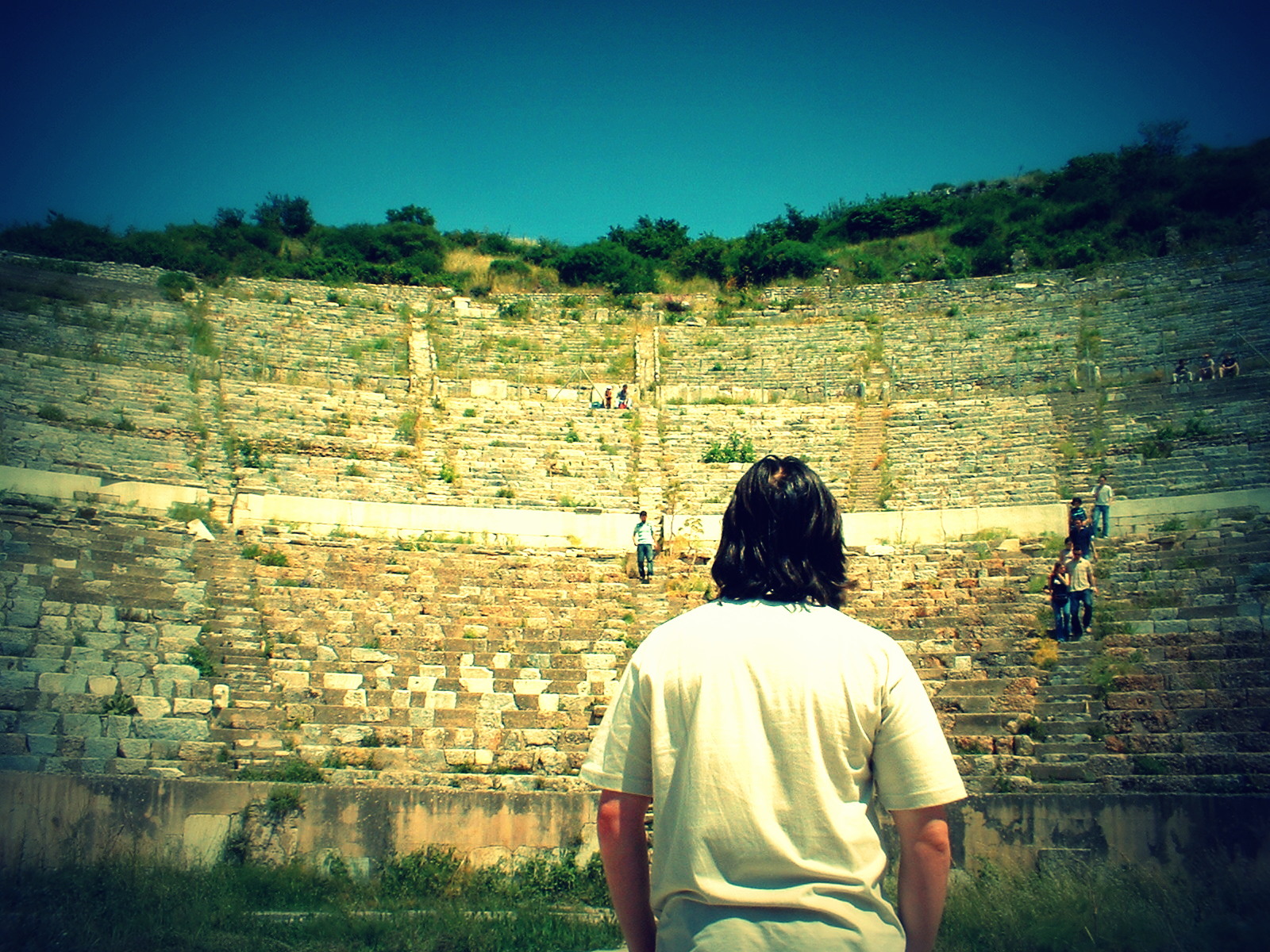
Ancient Ephesus is no longer part of civilization, it’s a historical landmark and an archaeological site. My wife and I visited Ephesus many years ago and walked the streets where this event happened. At that time I was involved in a great deal of church work. People knew my wife and I as a Christian couple and we had many discussions with people about the Bible and what it all means. Often times we would have discussions with believers who were not seeing Scripture rightly and engaging conversations would happen to show Christ more clearly. Yet neither of us believe in women leadership.
That is what I see going on here in this passage. Luke communicates how the man named Apollos was in Ephesus and he was very knowledgeable but didn’t yet know all he needed to know about Christ. Apollos only knew the baptism of John the baptist and had been teaching in the synagogue at Ephesus. The very fact that Luke states he taught in the synagogues and only knew the baptism of John sets this whole passage in its proper context. This is what happened.
When Aquila and Priscilla heard about him and how he was Jewish man who didn’t know about Christ, they delivered the truth to him about the Messiah. Some years earlier Apollos had likely returned to Alexandria after receiving the baptism of John and never fully knew that Jesus had fully come and had been crucified, risen and ascended. So the Christian couple explained what had happened and Apollos believed and received this truth.
Luke is communicating that Aquila and Priscilla evangelised to Apollos which they did in the ancient city of Ephesus. Please do not let modern revisionists distort the meaning of this two thousand year old text. Luke does not say that Priscilla was in any kind of church leadership, he merely communicates that the godly couple witnessed about Christ in the context of evangelism.
In short, all that happened in this passage of Scripture is that a married Christian couple witnessed Jesus Christ to a Jewish man from Alexandria. That’s all.
Does Romans 16: 7 say Junia was an apostle?
Posted by simon peter sutherland in Church of England, Is Female Leadership Biblical?, The Bible, Theology on August 28, 2025
In my previous article I mention why Phoebe of Romans 16: 9 was not a deacon of the church in the sense of being a minister or preacher. Phoebe delivered a letter of Paul, and was a servant, and nothing more should be made of that.
In this article however I am continuing to explore the claims of revisionists who argue in favour of female leadership and I will show that Scripture does not affirm female leadership in the Christian church.
On Sunday I attended a CofE church and it was very unbalanced, women were leading the whole service, and there was hardly a male leader in sight. This is very unscriptural and leaves nothing for men who seek a male minister to talk to. Not only are there female reverends but female bishops too and there is not a single Scripture to support this. However, revisionists like to use Romans 16: 7 to claim that Junia (a woman mentioned by Paul) was an apostle.
Paul writes,
“Greet Andronicus and Junia, my countrymen and my fellow prisoners, who are of note among the apostles, who also were in Christ before me.” (Romans 16: 7)
In order to understand the Scripture we need to get behind the text and understand it from a contextual viewpoint. Here it is important to acknowledge that as with Paul’s reference to Phoebe (verse 1) the apostle is writing to a house church in Rome. We know this because in verse 5 Paul references the congregation that met in the house of Priscilla and Aquila. Interestingly enough Paul speaks about the congregation not the place they assembled in, and since Paul previously mentions “Priscilla and Aquila” who were a married couple, it is probable that “Andronicus and Junia”were a married couple also. Ancient Christians recognised that Junia was a woman, however very little else is known about her. However modern revisionists like to boldly claim that Junia was an apostle yet there is not a scrap of evidence to re-enforce that claim. In all probability Junia was simply the wife of Andronicus and the both of them were known by the apostles.
When Paul wrote about “Andronicus and Junia” he used the term “my countrymen” or kinsmen. Paul uses this term elsewhere in Romans 9: 3 and this is within the context of fellow Jew’s so it is likely that Junia was Jewish or even a relative of the apostle. This is where the rubber hits the road, there is no way any Jewish woman could be regarded as an apostle in the 1st century.
When Paul writes Andronicus and Junia “are of note among the apostles” he is merely saying they were known by the apostles. Paul’s proceeding words affirm this when he says “who also were in Christ before me.” Here Paul is saying that they had been Christians longer than he had, and in order for a person to have been an apostle that person had to have known Christ and witnessed His resurrection (Acts 1: 21, 22, Luke 24: 48) and we have no record whatsoever of Junia witnessing that.
Commenting on this passage Albert Barns writes,
“it by no means implies that they were apostles All that the expression fairly implies is, that they were known to the other apostles; that they were regarded by them as worthy of their affection and confidence; that they had been known by them, as Paul immediately adds, before “he” was himself converted. They had been converted “before” he was, and were distinguished in Jerusalem among the early Christians, and honored with the friendship of the other apostles.”
This view is entirely consistent with Scripture and is contrary to the false claims of revisionists who claim Junia was an apostle.
Once again, there is no evidence for female church leadership in the Bible.
-
You are currently browsing the archives for the The Bible category.
Simon Peter Sutherland
-

 Simon Peter Sutherland