Archive for category Reform
Is AMiE a better option than the CofE
Posted by simon peter sutherland in Christianity, Church of England, Reform on November 13, 2025

It is quite evident to most Christians now that the Church of England has fallen headlong into apostacy. A large percentage of ministers and bishops are in favour of practices and re-interpretations of Scripture which any Bible believer cannot accept.
It has been a long and tiring debate and conservative evangelical ministers are doing the best they can to uphold the church’s teaching on sexual ethics and Scriptural doctrines while at the same time holding the blanket concerning their future careers.
There are serious problems happening with the establishment and you know there is an even deeper issue on the horizon when the King prays with the pope for the first time in 500 years and now they have a very liberal catholic female archbishop about to be seated on the chair of St Augustine. An act for which Archbishop Thomas Cranmer would be turning in his grave.
The question is what to do about it?
Roman Catholic’s are being sneaky right now and are chasing in on this cradle of insecurity by trying to woo Anglicans back into their lair of popery. What’s wrong with that, people might say? Well, there is a great deal wrong with that. For a start off Roman Catholicism is not Christianity it’s Roman Catholicism. It is a religion that prays to the dead, worships a goddess, rejects justification by faith alone, condemns reformed theology and believes that the Eucharist is literally the body and blood of Jesus Christ, which is cannibalism and vampirism. On top of all they they quite literally believe that the pope is Christ’s vicar on earth, which means to be in place of Christ.
Not to mention the fact that they worship apparitions of a demon masquerading as the virgin Mary.
We live in very dangerous religious times and for this reason Paul wrote, “Take heed to yourself and to the doctrine. Continue in them, for in doing this you will save both yourself and those who hear you.” (1 Timothy 4: 16) Just because a religion claims to be Christian, does not make it so. Each one of us needs to examine claims and doctrines and do it closely with the Bible in hand. There is no need for a bishop to guide you in this, you can research and decide for yourself.
As you can tell I am a nonconformist at heart, I don’t believe things just because people preach them. I need proof.
That being said I am not the type of person who tells people what to do. Each of us must make our own choices in this life and everyone must decide for him or herself what each one of us must do. But I am going to recommend to you that if you are going to leave the Church of England, either now or in the future, do not go running off to Roman Catholicism. It is a corrupt religion with a rotten past and a future reliant upon it’s claim that the pope is a direct successor to St Peter. Such a claim in itself is useless since in Revelation 3: 16 Jesus warns a lukewarm church that He will vomit them out of His mouth unless they repent and that church in Laodicea knew John and St Paul, so if you can understand my perspective, it makes no difference if a church in history knew St Peter or John or Paul, Jesus can still remove them from His body if they apostatise like the Roman Catholic Church has done.
I assure you, there are better options for people who may be thinking of leaving the CofE, don’t go crawling off to the Roman Catholic Church, go to an independent church or why not give AMiE a try?
AMiE stands for the Anglican Mission in England and is not a state run church, it has no female bishops, no women vicars, no heresies, just basic Christianity and in the Anglican tradition.
Remember, remember the 5th of November
Posted by simon peter sutherland in Church of England, Reform on November 5, 2025

Bonfire night in the UK is traditionally known as Guy Fawkes Night and it is observed on November 5 to commemorate when Guy Fawkes was arrested while trying to blow up the house of Lords so he could establish a Roman Catholic monarch on the throne of England.
These details can be found here.
Fawkes wanted to assassinate James 1 of England and V1 of Scotland because he was a protestant king. The plan was to return the Church of England and this country back into the lair of the pope.
But it never happened.
While at a bonfire this month I reflected on how important it is that England never forgets her own history, especially the reformation and we should never bow the knee to those who seek to destroy the very Christian foundations that have made this country so great. It is true that we have many problems in the UK and I’m sure that in time those problems will be resolved by the grace of God.
Today we are seeing a peaceful revival of Christianity in this country and people are once again exploring Christianity and the Bible and even attending church.
But even though these are positive adventures, we should not ignore the fact that there are some big problems which cannot be overlooked. The established Church of England is in a real mess. Not only has a King of England prayed with the pope for the first time in 500 years, but we also have a first female Archbishop of Canterbury who is a catholic and prays the rosary.
The rosary is traditionally a Roman Catholic devotion and not a Protestant one. It cannot be found in the Bible and it places Mary before Jesus meaning you have to go to her first in order to reach out to Jesus.
Likewise, many Roman Catholics are seeking to overturn the reformation and reunite Anglicans with Rome. “Come home” they continue to say, yet the Roman Catholic Church is not home to me, I say. I am a Christian and not a Roman Catholic. I do not believe the Bible agrees with transubstantiation or Marian devotions or idolatry or prayers to the dead or prayers for the dead.
Let us not forget it was pope Leo X who excommunicated Martin Luther and now pope Leo X1V wants to restore that.
To quote an article I wrote back in 2015, I say it again; “Britain has come a long way since the glorious days of the 16th century, and in many ways both England and Britain are founded upon the principles of the Protestant reformation. Many ideals such as democracy, tolerance and human rights are rooted in the principles of the reformation and the people of Britain should never forget that.
It is a true saying ‘remember, remember, the 5th of November”.
Stop the liberalisation of the Church of England
Posted by simon peter sutherland in Church of England, Reform on November 2, 2025
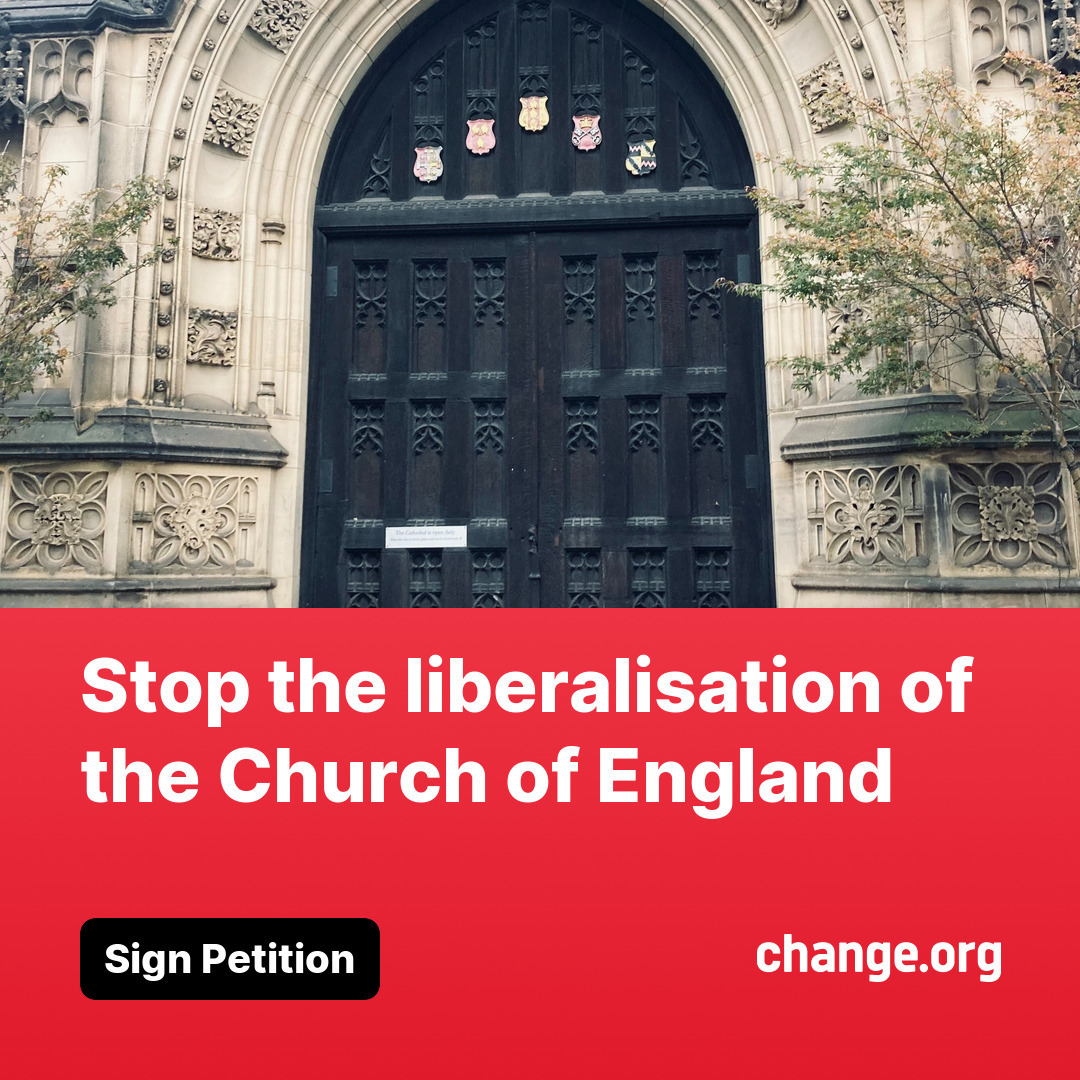
I have been in the Church of England since 2019 and have I have signed documents to oppose the same-sex blessings, and in October 2025 I left the Church of England following the announcement of the first female Archbishop of Canterbury.
I have no objection to returning to the CofE if they end the corruption and liberalisation of this denomination and return the church back to Biblical doctrine, authentic Anglicanism and the 39 Articles of Religion (1562) and male leadership.
If you are disturbed by the revisionist trajectory of the bishops, the desecration of historic church buildings, and you want to preserve our historic Christian church, now is the time to make your voice heard. Let’s end this corruption together and say no to the liberalisation of the Church of England!
Sign my petition now!
Visiting the grave of J C. Ryle during the biggest split in Anglican history
Posted by simon peter sutherland in Church of England, Reform on October 23, 2025

This month following the announcement of the first female Archbishop of Canterbury, it is said that over 40 million Anglicans have left the Church of England.
Is this the death of the Church of England I ask myself? I’m not sure?
J C. Ryle was Bishop of Liverpool between 1880 – 1900 and was an outstanding minister and his Expository Thoughts on the Gospels are among my favourite commentaries on the market. Ryle was born in Macclesfield in 1816 and died in Liverpool aged 84. He held to a Calvinistic tradition however he firmly believed that Jesus Christ died for the sins of the whole world. A belief that is entirely consistent with the New Testament and Biblical exposition.
Ryle was a great admirer of the 16th century reformers, and he wrote a book on Five English Reformers. These included Hugh Latimer, John Bradford and Nicolas Ridley.
On the anniversary of the burning of Hugh Latimer and Nicolas Ridley (October 16) GAFCON made an announcement that The Future Has Arrived. GAFCON has removed any reference to being in communion with the see of Canterbury and the Church of England.
The CofE has brought this upon itself. Years upon years of liberalism and corruption has brought about the biggest shift since the Reformation.
As I too have left the Church of England, I find myself reflecting upon a once great denomination in Christianity. Is this the end of the Church of England I ask myself? I don’t think it is. I think the tide could turn in time.
In his chapters on John Bradford: Martyr, Ryle closes with the following words,
“Let us thank God that the foundations of the Reformed Church of England were laid by such men as John Bradford. Let us clearly understand what kind of men our martyred Reformers were, what kind of doctrines they held, and what kind of lives they lived. Let us pray that the work they did for the Church of England may never be despised or underrated. Above all, let us pray that there never may be wanting among us a continual succession of English clergy, who shall keep the martyrs’ candle burning brightly, and shall hand down true Reformation principles to our children’s children.“
Ryle’s grave is very touching, it reads,
“I have fought a good fight, I have finished my course; I have kept the faith.” 2 Tim. 1V. 7.
May that be said of all those who belong to Christ and as Latimer famously said, “Be of good comfort, Master Ridley, and play the man. We shall this day light such a candle, by God’s grace, in England, as I trust shall never be put out.”
Will the next Archbishop of Canterbury be a woman?
Posted by simon peter sutherland in Church of England, Is Female Leadership Biblical?, Reform, Theology on July 25, 2025
It has been six years now since I returned to the Church of England and during that time I have witnessed a very controversial era within the history of Anglicanism.
In February 2023 a majority of the synod chose to pass the unorthodox motions of the liberal revisionist bishops concerning the blessings of ‘same-sex unions’.
Since then the CofE has remained divided.
Personally I have been through great turmoil being in this denomination. Being very fond of the history of the Church of England, the early English Bibles, the Book of Common Prayer, the great hymns and the lives of the 16th century reformers who were ministers within the Church of England, there is no doubt to me that the present CofE (on the whole) is no longer the same church. After years and years of revisionist liberalism, scandals and corruption, each moment has slowly demolished the denomination brick by brick, and it seems likely that we yet again face another bigger problem that will not go away.
For the first time in history, the next archbishop of Canterbury could be a woman. With very few conservative evangelicals disagreeing with women leadership, it appears that many could embrace this choice and few will oppose it.
This could be an even bigger problem than upholding a Biblical view of marriage.
The reason I say this is because the Biblical view of marriage is plain and obvious. All religions generally agree that marriage is a union between one man and one woman. However when it comes to the issue of women leadership, even the conservative evangelicals have gone astray and many have played the hypocrite by embracing woman bishops who agree with traditional marriage, to their own advantage.
I say this because conservative evangelicals (within the CofE) speak against the liberal bishops and the synod for going against Scripture concerning ‘same-sex marriage’ and ‘the blessing of same-sex unions’ yet they themselves go against Scripture when they embrace and promote female leaders.
Yet the Bible does not support female leadership and in the New Testament there are no female leaders in the Christian church. Yet revisionists pull out text after text and radically re-interpret them and the CofE embraces their claims because fewer and fewer men are putting themselves forward for ministry. So they play a legal game and use the Scriptures to create loopholes that allow for women to become curates, vicars and bishops. Pheobe was a Deacon they say, Priscilla was a co-leader, they say and apparently Junia was an apostle. It’s absolute nonsense.
The reality is that Pheobe (Romans 16: 1) was just a servant of the church who delivered a letter and judging by the context Pheobe was probably the widow of a deacon. Priscilla was simply the wife of Aquilla they had a church in their house (1 Corinthians 16: 19) so that doesn’t prove she was a leader, and Junia was known by the apostles, (Romans 16: 7) and there is nothing in Paul’s text to say that Junia was an apostle. Thus, despite the revisionists claims, these verses do not affirm woman leadership at all and in reality if Paul did affirm female leadership he would be totally contradicting himself.
On the contrary, Paul does not contradict himself and a majority of the Bible is crystal clear that leadership in the Christian church is reserved for men. If you don’t believe me ask yourself why Jesus chose twelve men to be His disciples and then read Paul’s letters to Timothy and Titus. Read them for yourselves and let the Bible speak. Don’t turn to revisionist teachers who promote their agendas and use you as tools for their rhetoric. Paul is very clear to Timothy that the reason men alone are to be leaders in the Church is because man was formed first then Eve and Adam was not deceived but the woman was deceived and fell into transgression (1 Timothy 2: 13-14)
It is clear from 2 Corinthians 11: 3 that Paul was afraid that as the devil deceived Eve so also the Christians in Corinth would also be led astray by the same cunningness. Now imagine what St. Paul would say if he was writing to the Church of England today. They would probably reject his initial application for ministry and try and indoctrinate him with a series of sermons led by woman curates and liberal vicars and then hope and pray that he changes his mind when they’ve finished.
In Colossians 1: 18 Paul explicitly states that Christ is the head of the church and as far as I am concerned if Christ is not the head of this church then the body does not belong to Him.
Since the CofE has been attempting to liberalise practically every Biblical viewpoint in history and distance itself from the great reformers of the past, it has been anything but stable and I think their decision to make woman leaders will eventually be their ultimate downfall. Whether the decision to make the Archbishop of Canterbury a woman comes into effect this year or the next time around, it is only a matter of time before we witness yet again another great apostasy within the CofE.
“From Obedience To Freedom” Out Now!
Posted by simon peter sutherland in Church of England, Reform, The Bible, Theology on June 12, 2025
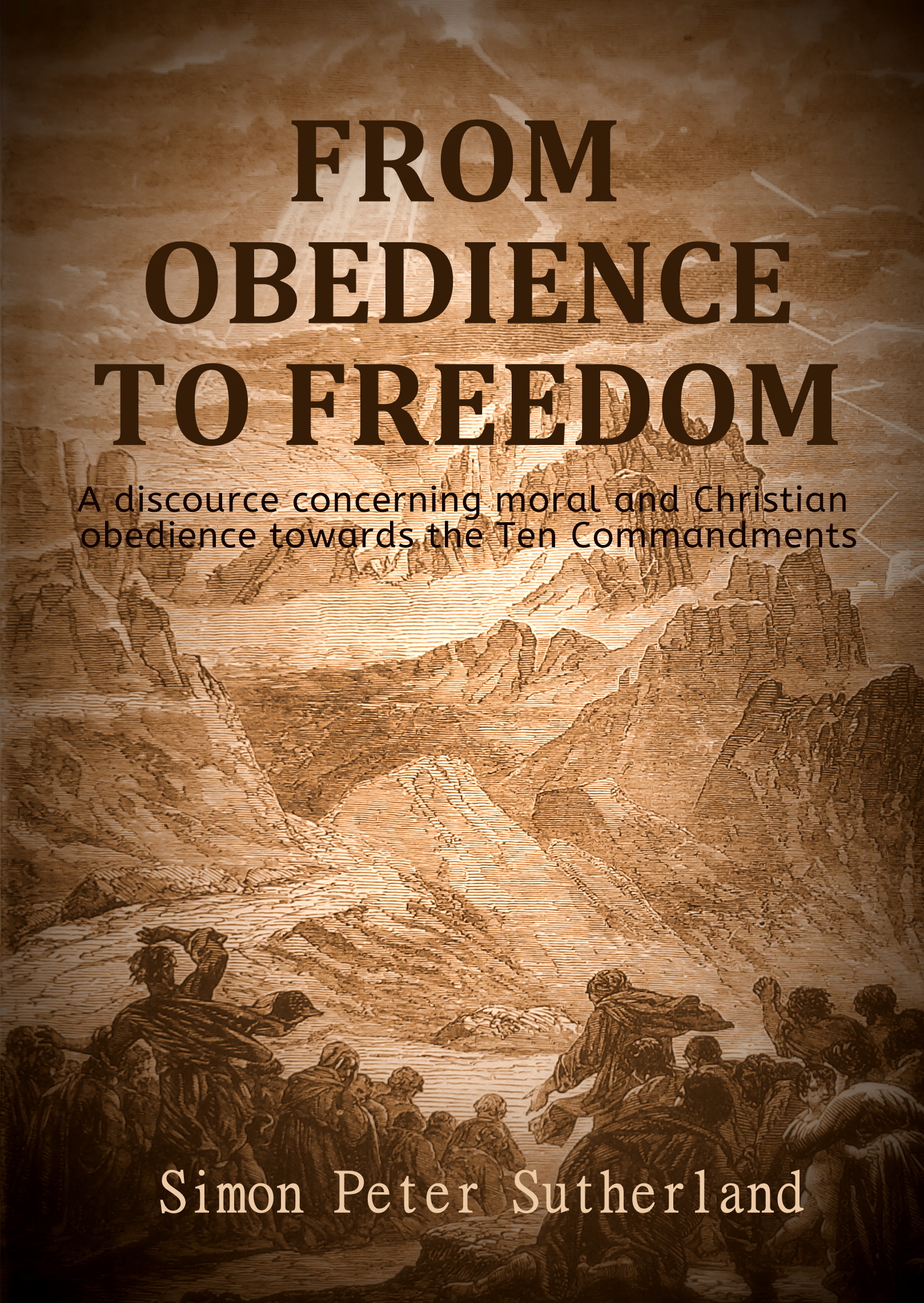
In my previous post I write about my new book on the Ten Commandments. In this book I explore the topic of the Ten Commandments from a New Testament perspective asking questions such as these: Have the Ten Commandments been abolished by the coming of Christ? Or are the two tablets mentioned in Exodus 20 the same as those found in Matthew 22: 37-40? If the answer is yes then there is no Biblical evidence to reject these commandments as irrelevant to the holy living of the Christian man.
In an original edition of this thesis, dating back to 2007, I had originally been inspired by an old Puritan book called The Ten Commandments by Thomas Watson. I loved reading the puritans back then.
Thomas Watson (1620-1686) was one of the most popular English preachers in London during the puritan era. I was certainly intrigued by this book during my earlier years of theological study. Since then however time moves on and my book has changed. It has gone through revision upon revision until I finally reached a point where I was ready to publish.
Obviously the topic is controversial on all sides. For some Christians there should be given no place whatsoever for any aspect of law in the Christian life. I disagree with that. Yet if that concept was true, then what are we left with in Christianity? Outright lawlessness or a life governed by obedience to Christ in faith. Surely there is nothing within any of the Ten Commandments to contradict what the New Testament says about holy living.
When I originally began to write this book I was much younger and I was very convicted within my soul and daily I yearned for more of Christ. My soul eagerly awaited the presence of my dear Lord and that passion can be caught within the pages of the book. However much has changed since then and I’m older. Nowadays I read Puritan books much less, however I have retained my passion for the writings of Richard Baxter. likewise the King James Bible remains my favourite translation. For this reason, I have continued to use the AV within the book and perhaps I’ll save the reasons why for some other post.
But in the meantime, I hope the Lord uses my book and that it inspires many believers to do right in the eyes of the Lord. We must love the commandments of our Lord and live them by faith in Christ. When we do this we will find inner freedom within the divine legislation.
I have experienced this freedom many times.
However, I am presently in the Church of England (in some sense) and I feel a continuous burden for the apostacy that is crippling it. Will I remain, and for how long I do not know? All I can say is that if there was ever a time for the Law of the Lord to be remembered and loved, that time is now.
This is Reformation day 2024
Posted by simon peter sutherland in Church of England, Reform, Reformation 2017, The Bible on October 31, 2024
 In a previous article back in 2017 I wrote about what the reformation has given us. I listed the reformation benefits we have received in society and in the church and these include the New Testament in Greek, the English New Testament, the complete English Bible including chapter and verse numbers, the freedom to interpret the Bible for ourselves. Freedom to challenge tyranny. The establishment of hymnbooks, Christian music, religious liberty, freedom of speech, and since many abolitionists were theologically reformed we have received the abolition of the slave trade. The list could go on to reveal 100 facts associated with the reformation. This is because the idea of reform is very Biblical. The Bible gives us accounts of how God has been making His plan for this world throughout history and in the Bible we read of those happenings unfolding. It is simply the greatest Book that has ever been written.
Throughout Scripture we see the Lord speaking through His people to bring about change and reformation among those who professed to be the children of God. We read of how the original plan for man in Eden was to dwell in paradise, but Adam chose his own way and fell, because of sin and the story continues of how God was bringing about a restoration of His original plan but man failed almost every time. Because of this God sent His prophets to bring about a reformation to inspire the people of God to repent and turn back to Him because they have lost the way.
In Jeremiah 7: 2 we read of how the prophet says “Hear the word of the Lord” and in verse 3 “Amend your ways and your doings, and I will cause you to dwell in this place.” (NKJV) Here the prophet was talking to the people of ancient Israel and his words speak just as powerfully today as they did back then. In verses 4 and 8 he warns the people that they are trusting in lying words that cannot profit them. The prophet said all this because people were living lives that were contrary to the Will of the God they claimed to believe in and follow (verse 9) and then they would go to the temple and say they were delivered to do abominations (verse 10).
As the Biblical stories continue the prophets foretell the coming of Christ who is the way to restoration and eternal life and without Him there is no hope.
Fast forward hundreds of years throughout church history (not the Bible) and we see the same scenario, man falls and continues in his sinful ways. Man fails to live up to the standards of the Almighty, and God (by His Holy Spirit) stirs His obedient people to speak out and stand fast for the faith.
In the 16th century, a German priest by the name of Martin Luther had been stirred up by the corruption he had seen in the church of that time, and he was absolutely appalled when the priests were selling indulgences to the poor to raise money for the building of St Peter’s Basilica in Rome. Luther saw how crooked this practice was and on October 31, 1517 he is believed to have nailed his 95 thesis on the door of the castle church in Wittenberg. In this document Luther addressed his points of concern and wanted to debate them. Luther’s protest was genuine and the document didn’t stay nailed to the door for very long, locals got hold of the document and it was printed and circulated. Word got back to Rome and Luther would be summoned and eventually stand trial and be excommunicated. Although it affected him mentally Luther spent his time in isolation while translating the New Testament into German. It was a powerful act of defiance to the established church that then existed. This translation would impact the German language in the same way Tyndale’s New Testament would impact the English language. But it would not stop there, church after church would eventually spring up and Luther’s daringly powerful act had started a reformation that could not be undone. It inspired generations all over the world.
Luther’s actions would change the face of history forever. This is because the word reformation is by definition the act of bringing about improvement and change for the better in political, religious or social matters. This is what Luther did. Because of Martin Luther millions of people worship in churches inspired by his reformation. Oddly enough, the Church of England is one of them. I say oddly enough because Henry V111 was opposed to Luther and Tyndale yet still the reformed influence spread.
The Church of England was founded in 597 AD however in 1534 there was a big split and the church separated from Rome and the Pope. This move was undoubtedly the right and Biblical thing to do since Rome was denying the text of the Bible in favour of the authority of the Pope. Not much has changed. Today if not for the reformation few would have the nerve to change or challenge anything or progress our nation to becoming a more decent, fair and just society.
Yet today, it doesn’t feel like the world is becoming any better since we are living in perilous times. The world appears to have become a very dark and cynical place. The church appears to be no better. At least when you look to the bishops for guidance. Few know which way to turn and our nation (here in England) has forgotten the reformation. Rather than celebrate the very act of reformation day, many people choose to promote halloween and follow evil and death rather than life, it seems more commercial than right. Likewise, the church has fallen further into apostasy in an attempt to appease and please the world and keep itself relevant.
Yet we should not be surprised at this, the Bible got it right all along, as it is written, “This is the judgement: the light has come into the world, but men loved darkness rather than light” (John 3: 19)
But for all the church’s attempts to please men, it is not working. Reform is ongoing and will continue and no matter which way people turn the Bible will never cease to be the final authority for all genuine Christians.
There are no two ways about it, if you follow Christ you will live for eternity and if you sow corruption you will reap it. So too will those who profess Christ in one breath while denying Him in another, those leaders will not escape the judgement. They too will pay a much higher price and receive a greater judgement than those they have lead astray (James 3: 1)
It has been said if you marry the spirit of the age, you will soon find yourself divorced by it. So too will the church that follows the world rather than the text of the Bible. If you fail to stand as Luther did in good conscience and Godly conviction, God will never use you in the future and your memory will be forgotten. Darkness will follow you all the days of your life. You will return to the dust from which you came.
Did Martin Luther believe in Limited Atonement?
Posted by simon peter sutherland in Reform, Theology on October 15, 2024
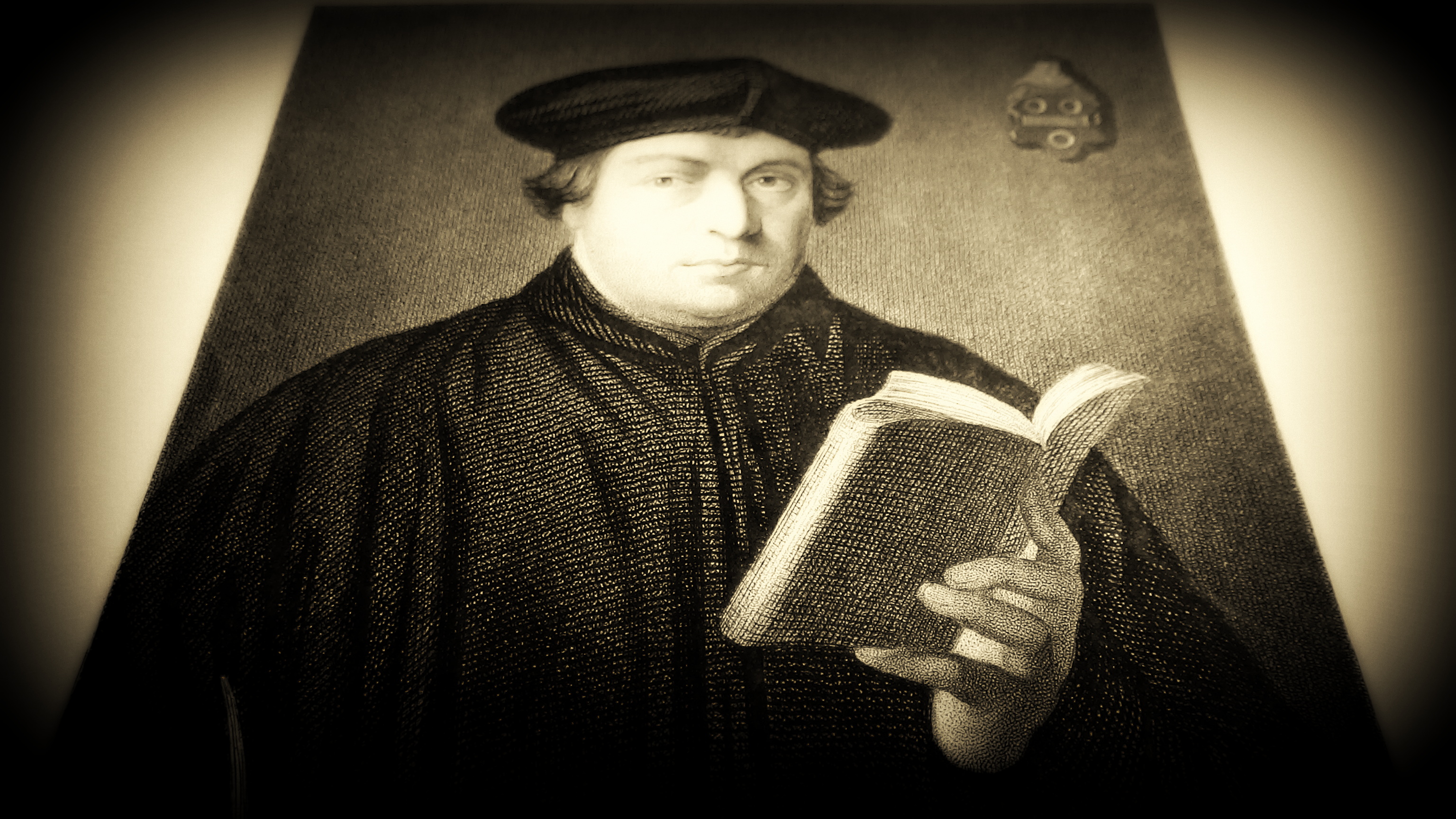
On 31st October 2024, it will be Reformation Day. This event is a public holiday in 5 states in Germany but in the UK Reformation Day is largely forgotten and replaced with Halloween. With this in mind I’m minded to write something about it.
For those who may not know Reformation Day is an anniversary of the day (October 31, 1517) when Martin Luther (1483-1546) nailed his ninety five thesis to the church door in Wittenberg. Back then the church was like our church is today, apostate and in desperate need of reform. Priests and Popes were corrupting the church and few had the nerve to stand up to them. But Luther, God bless him, stood strong and famously nailed his thesis to the church door and the sound of his hammer echoed through the chambers of the establishment.
Recently I watched the 2003 film Luther starring Joseph Fiennes and it has brought back a lot of fond memories for me. That film was very influential when I first began studying Luther and reading his books and autobiographies about him. I’d recommend people view that film and read his books rather than waste their time with all that Halloween nonsense.
But as the saying goes ‘nobody’s perfect’ and the same can be said for Luther. For me Martin was far from perfect, and that’s the point. Reformers do not need to be perfect humans they just need to have faith and believe the Bible. There are times when I really agree with Luther and think that he has been misrepresented by many people. For me, a great deal of these misunderstandings stem from cherry picking sections of Luther quotes without really considering the possibility that he might have changed his mind later on.
While in discussion recently it came up of how Luther and Calvin would have agreed with each other over doctrine and this brings me to the main point of this article. My discussion was in response to the Calvinistic interpretation of Predestination which logically affirms the doctrine of Limited Atonement. As always I make my point that there are differences of opinion concerning the meaning of Predestination and the 16th century reformers didn’t all agree with the Calvinism of that century. For me, Calvin is a little like Luther sometimes in that he might have changed his mind at times. For me, Calvin reads as though he did believe in Limited Atonement and certainly Predestination, while other times he appears to believe that Christ died for all mankind. These views can be found in Calvin’s Commentaries.
Yet there are times, (certainly in Luther’s books) where Martin appears to believe that Christ died for all, yet other times he implies all means the elect? This would imply that he didn’t believe Christ died for all, so there’s certainly conflict in understanding his position. This brings me to the answer of my own title: Did Martin Luther believe in Limited Atonement? Well, the answer is yes and no, I don’t think he did and other times I’m not so sure, here’s why.
While at Wittenburg in 1515, Martin Luther began to lecture from the New Testament and from Paul’s epistle to the Romans. It was during Luther’s studies for these lectures that he famously found that salvation is by grace alone and through faith.
In the popular modern versions of Luther’s commentary on Romans, such as J. Theodore Mueller’s translation, certain beliefs and passages have been omitted from the publications to avoid confusion with Luther’s actual beliefs. For, his beliefs often changed and improved with his knowledge of scripture. In his lectures on Romans and 9: 20-21 Luther says this:
“God will have all men to be saved” (1 Timothy 2: 4), and he gave his Son for us men, and he created man for the sake of eternal life. And likewise: Everything is there for man’s sake and he is there for God’s sake in order that he may enjoy him, etc. But this objection {to God’s sovereignty in salvation} and others like it can be just as easily be refuted as the first one: because all these sayings must be understood only with respect to the elect, as the apostle says in 2 Timothy 2: 10, “All for the elect.” Christ did not die for absolutely all, for he says: “This is my blood which is shed for you” (Luke 22: 20) and “for many” (Mark 14: 24) – he did not say: for all- “to the remission of sins” (Matthew 26: 28) (Martin Luther, Lectures on Romans, translated and edited by Wilhelm Pauck. Philadelphia: The Westminster Press, 1961. P 252)
The question remains for my readers: Did Luther believe in Limited Atonement or did he believe Jesus died for all mankind? Decide for yourselves. I think he may have originally believed in Limited Atonement (in 1515) and changed his mind later on.
Remember the Great Ejection
Posted by simon peter sutherland in Church of England, Reform on November 11, 2020
In 1662, the Church of England ejected thousands of ministers from their ministerial positions. At that point, the civil war was over and England had seen the restoration of Charles 11.
Back in those days the dispute was concerning the nature of the faith when contrasted with the new revisions of the Book of Common Prayer. Today these revisions would be seen as unimportant, but maybe they were.
Outstanding ministers, preachers, thinkers and writers such as Richard Baxter, John Flavel, Thomas Watson, Simeon Ashe, Thomas Brooks and thousands more were forced out of the Church by revisionists, who wanted to sway the church with the flow of the wind.
In Albert Square Manchester, a 19th century building called “Memorial Hall” stands to commemorate this important history.
This unnecessary historic division caused the C of E to lose the very people it needed to keep. Of which the Bishop of Liverpool, J. C. Ryle, rightly commented that the great ejection was “an injury to the cause of true religion in England which will probably never be repaired.”
This Bishop of Liverpool was correct and I hope the present Church of England remembers this.
Why I have returned to the Church of England
Posted by simon peter sutherland in Church of England, Reform on April 30, 2019

© 2019 Simon Peter Sutherland
Over the last few years I had been attending a Baptist Church. However, due to a recent unnecessary, unorthodox, sectarian practice of ‘re-baptism‘ I have left the Baptist church and have returned to the Church of England.
For some, this decision may seem unhealthy. Liberalism, it seems, has corrupted the Anglican communion. Such views would not be entirely wrong.
However, things are not as simple as that. The Anglican communion is a very complicated establishment, and is deeply divided. Liberalism and a false gospel has indeed corrupted the establishment but it has not corrupted the true conservative evangelical wing of the Church of England. This conservative evangelical branch, I argue, is the true Church of England. The liberal, revisionist branch is a false distortion. I believe it has forsaken the Bible.
Because of changing times, liberalism and church corruption, many churches are closing. Yet the many parishes that remain true to the Gospel, are in fact flourishing. It is to this conservative evangelical wing of the Church of England that I abide.

© 2014 Simon Peter Sutherland
In the 16th century, many reformed Christians died for the faith. Tyndale, Frith, Latimer, Cranmer, Ridley, Bradford and George Marsh, were all Church of England men. Yet it was a fight even back then. Today, over four hundred years later, there is still a continuous movement to reform the Church of England from within. Organisations such as Reform and Church Society all continue to abide in loyalty to the Bible and the principles of the doctrines of the reformation.
For me, the true Church of England is the way forward. As a churchwarden of Deane once said to me, ‘I truly believe the Church of England is “the best boat to fish from”. I believe this is true. For me, Cathedrals are some of the most inspiring monuments a person can ever visit and I am in the historic presence of some of the greatest men Christianity has ever known. Unlike many independent churches, which are often self governing and separatist, the Congregation Christ spoke of in Matthew 16: 18 was one. It was not divided into denominations. It was simply the Congregation of believers.
I have faith that Christ will continue to build His Congregation, and the gates of hell will not prevail against it.
Being in the Baptist church, was not all bad. I still have many fond memories and those memories will remain. But the Lord would not leave me there. There is a path that I must take. For me, my Christian journey has simply reached a new era. It is simply unacceptable that the Church of England has been robbed of the Gospel. We ought not to forsake her. Something needs to be done. There must be reformation.
-
You are currently browsing the archives for the Reform category.
Simon Peter Sutherland
-

 Simon Peter Sutherland