Archive for category new atheism
On Derren Brown: Fear and faith – Channel 4
Posted by simon peter sutherland in new atheism, The influence of film on November 22, 2012
Last night for some reason, I viewed some of Derren Brown’s “fear and faith” on channel 4. Not one of the better channels on British television.
After watching a little bit, I found it of no real surprise to see him yet again manipulating undefined people with his mind games and tricks of the brain.
As is common and typical of modern atheists, I watched him play his game which begins in one area, wins over his audience, then moves towards the direction of Christianity, which if he is honest, is what his whole game is about demolishing.
Somehow, I think all his efforts are merely a support act to warm up his audience to get them ready for the headliner.
Don’t forget Mr Brown, I’ve been in showbusiness for a long time. I know the ropes!
He moves onto his predictable thought or question, “Is God the ultimate placebo”?
Its not a question on his part, since he has already concluded his answer.
However, not content with verbally inviting a man to sell his soul to the devil, via an ancient “satanic rite”, the British illusionist, mentalist and hypnotist thus attempted to emulate a “Religious conversion” with his atheist guinea pig.
He met with an atheist woman and gave her a ‘religious conversion’? If that is the right term to use?
Whatever his game was, it was certainly not a ‘religious conversion’. I say this by knowledge, history and experience that the true and accurate Christian evangelist need not use finger tapping motions or emotional games to win over a convert. He need only preach Jesus Christ and Him crucified.
It is true that many use games and tricks within so-called Christianity, but we know that there are always true and false ones in all, but the one who is faithful and relies upon the assistance of Grace need not use methods of men and workings of the devil to win people over.
He need only preach Jesus Christ, and Him crucified, under Pontius Pilate and who died, was buried and rose again on the third day.
As it is written. And “The scripture CANNOT be broken” John 10: 35
I suppose this game he plays opens up the floodgates for the question of whether or not these people and others, inculding scientists and the media can use these games to manipulate the average human brain so much that they can even persuade a nation to believe that Darwin’s theory is actually a fact?
Let us not forget that ‘Brown and Dawkins’ are familiar with each other.
Nevertheless, “The scripture CANNOT be broken” John 10: 35
Darwins autobiography: Further evidence that Charles Darwin was not an atheist
Posted by simon peter sutherland in new atheism, Science and evolution on October 7, 2012
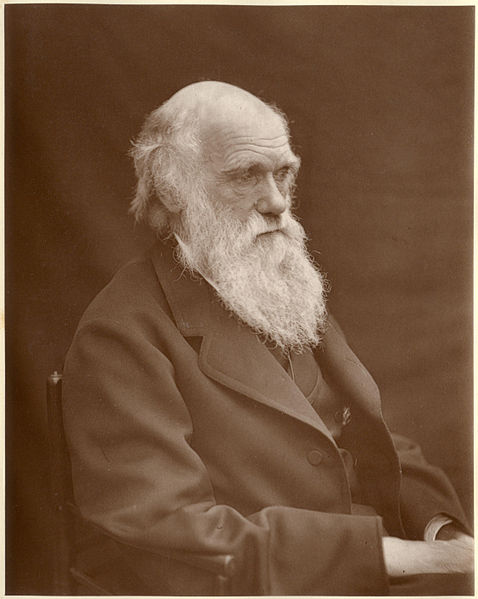 In his own words!
“Another source of conviction in the existence of God, connected with the reason and not with the feelings, impresses me as having much more weight. This follows from the extreme difficulty or rather impossibility of conceiving this immense and wonderful universe, including man with his capacity of looking far backwards and far into futurity, as the result of blind chance or necessity. When thus reflecting I feel compelled to look to a First Cause having an intelligent mind in some degree analogous to that of man; and I deserve to be called a Theist.”
Charles Darwin
Autobiography. Page 92-93.
Evidence that Charles Darwin was not an atheist!
Posted by simon peter sutherland in new atheism, Science and evolution on October 6, 2012
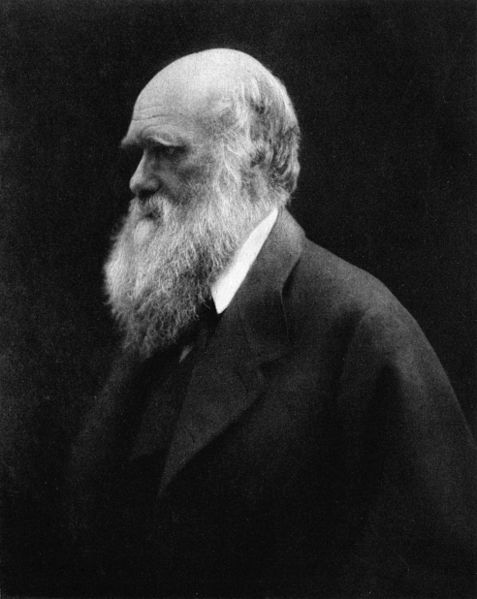 In his own words, Charles Darwin did not reject belief in a god!
“It seems to me absurd to doubt that a man may be an ardent Theist & an evolutionist. … In my most extreme fluctuations I have never been an atheist in the sense of denying the existence of a God. I think that generally (& more and more so as I grow older) but not always, that an agnostic would be the most correct description of my state of mind.”
Charles Darwin
Letter to John Fordyce, 7 May 1879
Christopher Hitchens errors concerning the deaths of John Wycliffe and Myles Coverdale
Posted by simon peter sutherland in England issues, new atheism on July 28, 2012

The late and somewhat outspoken atheist Christopher Hitchens in his popular book “God is not great” made many claims from both history and the present and from historical texts, religious texts and books regarded as sacred by many, out of which he attempted to dismatle the walls of religion brick by brick by applying the written content towards his criticism based upon his logic and interpretation of which his claims towards history. It is clear that his understanding of religious narratives have impacted the lives of many modern atheists and religious folk today.
Hitchens certainly wrote a book in which he attempted to grind his axe against all things religious and Christian. Yet the problem is that many folks regard this book as somewhat dynamic and excellent, yet many of them are ignorant of the clear cut errors of Hitchens work.
One such error is in his claim that devout Christian men such as John Wycliffe, Myles Coverdale and Tyndale were all burned alive at the stake.
In his book, “God is not great” Hitchens writes the following, quote; “Devout men like Wycliffe, Coverdale, and Tyndale were burned alive…”
This is simply not accurate at all. Although he was correct that Tyndale was burned, he was not burned alive, on the contrary, Tyndale was strangled first, then his body was burned and the facts remain that early English Bible translator John Wycliffe was not burned alive at all, but suffered a stroke on 28 December 1384 during a service at Lutterworth Church and died the last day of that month. Wycliife was not burned alive at the stake.
Likewise, early Bible translator Myles Coverdale was not burned alive as Hitchens claimed but died on 20th January 1569 at London of natural causes.
What is clear to me is that Hitchens was so intent on lashing out in a war of words against all thing religious, that his own bitterness towards Christianity is demonstrated by his total lack of ability to even present accurate research into the historical facts behind one of the religions which he was so vehemently attacking.
Richard Dawkins on “infanticide”
Posted by simon peter sutherland in England issues, new atheism on April 26, 2012
Atheist Richard Dawkins is widely known or said to support moral living. Moral living is a consistent claim made by modern atheists, who arguable do live somewhat moral lives. However, the question I would like to ask is what is the standard of morality offered by modern atheists?
What is the measuring line of their morals?
In a recorded interview, atheist Richard Dawkins stated that he supports infanticide and can see no moral objection to that at all. Quote
“What about infanticide? Morally, Strickly morally I can see no objection to that at all. I would be in favour of infanticide.” Richard Dawkins
Obviously we have to take the context of the infantide he is speaking about into consideration, but in reality, this is totally depraved of him to make such a claim.
The problem with this type of so-called morality and logic which discerns this so-called morality is that it is based upon the opinions of men, who, by themselves are depraved, according to the natural depravity of man. Thus, when morality is discerned by men, then it moves downhill and has in fact, moved downhil and it is only a matter of time before it hits rockbottom.
Thus, I post the video of Dawkins in my comment box and leave his words for you to judge for yourself.
Remember the past!
Sherlock – BBC – Series 2 – Why so much Blasphemy my dear Watson?
Posted by simon peter sutherland in new atheism, The influence of film on January 26, 2012
 During my childhood I grew up watching the classic black and white Sherlock Holmes movies starring Basil Rathbone as Sherlock Holmes and Nigel Bruce as Dr Watson. In a series of 14 movies released between 1939 – 1946, these familiar films contain various adaptations and re-inventions of the original Conan Doyle stories of which 12 movies were set in the 1940’s. Sadly this series did not portray Watson quite accurately.
In the 1980’s – 1990’s we saw an excellent return of Holmes and Watson in the series made for TV starring Jeremy Brett. For me, and from a viewpoint of the acting alone, the Jeremy Brett series is the cream of Conan Doyle adaptations and is greatly admired by many who know and have read the original stories.
However, what we find today with the more recent Sherlock Holmes adaptations is a somewhat confused re-interpretation of Holmes which is about as accurate to Conan Doyle as Braveheart was to William Wallace.
Over the last 2 years or so there has been a number of modern re-interpretations of Sir Arthur Conan Doyle’s private consulting detective, Sherlock Holmes on both cinema and television.
In 2009 the cinema was hit with a blockbuster version of Sherlock Holmes re-interpreted as played by Robert Downey Jnr. Downey played Sherlock as a somewhat comical, messy Chaplinesque type character. In 2011 the screen was hit yet again with a Downey playing a Sherlock who was this time more like ‘Iron Man’ than Holmes. Thus, Sherlock moved from Chaplinesque to Iron Man.
In the recent BBC series, ‘Sherlock’, and distinctly throughout series 2, we saw a Sherlock who is somewhat cold and aggressive and lacks the quality of respect of the character within the original writings. Though well acted and well made, the stories moved a little and were often unclear and a little more far fetched than the original Conan Doyle stories, likewise we also find a Watson who is now distinctly and repeatedly guilty of blasphemy against the name of Jesus Christ.
This blasphemy can be found in all three episodes of series 2.
Likewise, in episode 1 of series 2, “A Scandal in Belgravia” we find a distinct atheist influenced statement from the script, in which Watson while in conversation with a very odd interpretation of Irene Adler, made a distinct atheist statement. In a response to a comment concerning mobile phone texts, we heard Watson say, “Sherlock always replies to everything. He’s mister punchline, he will outlive God trying to have the last word”.
This statement is odd, since Sherlock does not actually exist so how can he outlive God?
The series concluded with episode 3 “The Reichenbach fall” which contained an out of character portrayal of a suicidal Moriarty who near ruins Sherlock and then commits suicide by putting a gun in his mouth and firing it without any sign of armed police showing up? But still, a surprising event concluded with Sherlock appearing to commit suicide by jumping off a building and crashing to the floor, yet within moments and yet again another blasphemous use of the name of Jesus, it became apparently clear that Sherlock had actually faked his own death.
I watched the episode and compared it with the original Conan Doyle ending and I could not help but regard the original ending far better and more realistic than the modern. However, I noticed from the modern version a distinct paralleled mind game complete with a simulative subliminal reference to the death of Jesus, which in this case Sherlock appears to have died and is soon resurrected and stands watching his closest friends visit his grave. This comparison was also made a little more evident when ‘Radio Times’ published a review by David Brown on 15th January 2012, in which Brown said, quote, “Even Jesus took three days before His miraculous resurrection”. Thus containing a very immature and distinctly poor reference to the resurrection of Jesus as though it took Jesus 3 days to rise again and thus Sherlock rose from the grave quicker than Christ. The difference is that Jesus did actually die as history proves and He did raise Himself from the dead which is also a historical fact. He did not merely appear to make a careful plan to jump off a building with restricted landing view and apparently into a padded parked van on the road?
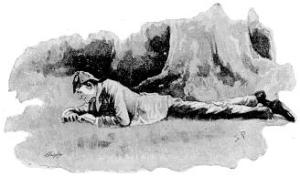
However, the problem is that the Sherlock BBC TV series was created by two modern atheist screenwriters, Steven Moffat and Mark Gatiss and it is apparent when considering modern atheism in Britain that the screen writers are inwardly using Sherlock as a spokesman for modern atheism and I am curious to know if there is a larger game afoot? After all, Conan Doyle was a spiritualist and not an atheist.
Likewise we not only did we hear the Watson of this series make such a dogmatic atheist statement that Sherlock will outlive God, but we also hear Watson blaspheme the name of Jesus more times than I care to mention.
Which begs the question; how is it that we hear so much blasphemy these days and why is so much of this blasphemy directed against the name of the Christian God?
Why is blasphemy against Jesus Christ permitted on screen yet we do not hear the same for Mohammed or Allah?
Is this fair?
Is this right?
Is this moral?
Is this acceptable?
Don’t take me wrongly, for my faith is very strong and I am not offended by blasphemy, for people merely bring destruction upon themselves, and likewise, I am good with re-interpretations of classic stories but maybe the BBC should stop playing the coward and maybe next time the scriptwriters for Sherlock series 3 should try adding the name of ‘Allah’ or ‘Mohammed’ in their long list of blasphemies, if they dare!
We like Sherlock and maybe people may make more accurate versions once again, but until then the question remains; is Sherlock now being made a spokesman for modern atheism which thinks it will outlive God?
I leave the matter for the moment in Conan Doyle’s own words from the familiar and intellegent Sherlock we all know;
“There’s an east wind coming all the same, such a wind as never blew on England yet. It will be cold and bitter, Watson, and a good many of us may wither before its blast. But it’s God’s own wind none the less, and a cleaner, better, stronger land will lie in the sunshine when the storm has cleared.”
Sherlock Holmes
His last bow
David Cameron criticised by Richard Dawkins
Posted by simon peter sutherland in Issues with Christianity in England today, new atheism on December 20, 2011
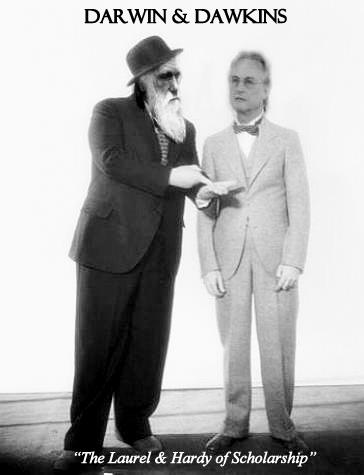 Richard Dawkins offered critique of David Cameron’s speech which was given on Friday 16th December 2011 at Christ Church Oxford, that Britain needs to return to Christian ideals. Dawkins, as typical, lashed out with verbal hand grenades at this claim by saying the Bible is, “an appalling moral compass”.
Dawkins also said, “The Christian bible will help us with our literature,” and “It should therefore be taught in schools in literature classes, but it’s not going to help us with our morals, far from it.”
Dawkins also said; “The bible is a terrible moral compass, if you think about it. Of course, you can cherry pick the verses that you like, which means the verses that happen to coincide with our modern secular consensus, but then you need to have a rationale for leaving out the ones that say stone people to death if they break the Sabbath, or if they commit adultery. It’s an appalling moral compass.”
Dawkins is correct that people cherry pick the verses they like, but clearly he is more guilty of this than the average Christian. The problem with Dawkins is that he has a very poor Theological understanding and a surface level interpretation of the Biblical narrative. He seems to willfully ignore context and historical settings.
He seems to think that when the Law of Moses commands stoning for adultery, that that command is somehow absent of any abrogation.
Dawkins stated in his criticism; “you can cherry pick the verses that you like, which means the verses that happen to coincide with our modern secular consensus, but then you need to have a rationale for leaving out the ones that say stone people to death if they break the Sabbath, or if they commit adultery.”
How long must we put up with this credulous argument?
When Jesus stood before Pontius Pilate and Pilate spoke to the Jewish people, they wanted to crucify Jesus and Pilate said to them; “Take ye Him, and judge Him according to your law. The Jews therefore said unto him, It is not lawful for us to put any man to death” John 18: 31.
Clearly John 18: 31 states that the Jews in the time of Christ were subject to Roman law and not Mosaic law.
The question is why does Dawkins continue to claim that stoning people to death for breaking the Sabbath or for adultery is part of the Christian faith? Did Christ not say to those who wanted to stone the woman caught in adultery; “he who is without sin among you let him cast a first stone at her” John 8: 7
Who then is without sin?
What is clear to anyone who knows the Bible chronologically, is that the books which Dawkins likes to refer to are part of the Torah, the Pentateuch, being the first 5 books of Moses, which contain the ancient Law of Moses. This law which Dawkins often quotes was an ancient law given to the historical nation of Israel. It was not a law written or given to the Gentiles.
The historical Law of Moses was divided into three sections:
1) The Commandments
2) The ordainances
3) The judgement
The context of the Law suggests the following;
1) We must distinguish between the Ten Commandments and the Law of Moses. For the ‘moralia’ or ‘the 10 Commandments’ were not written by Moses but by God Himself. This means that the moral code of the Ten Commandments have not been abrogated.
2) The Law and ordainances were given to ancient Israel only. Exodus 19:3, Leviticus 26:46 and Romans 3:19, 9:4 clearly states this. Deuteronomy 4:8, Romans 2:12-14 clearly states that the Law of Moses was not given to the Gentiles but to Israel. Acts 15:5-24, Romans 6:14 and Galatians 2:19 likewise confirm this. This includes the ceremonies and rituals, of which is at no time are they imposed upon the Gentile Church (Acts 15:5 – 24).
3) Christ stated in Matttew 5: 17 that He fulfilled the Law, that is to take the punishment of it upon Himself. Paul confirms this when he states in Romans 10:4 that Christ is the end of the Law for righteousness. From this it is clear that the Bible states that righteousness does not come through the law but through Christ alone.
What is clear from correct study of the scriptures is that the judgement and penalties for breaking the Law of Moses was abolished in and through the life death and resurrection of Jesus. In other words, the wrath and harsh judgement of the Law was poured out upon Jesus.
The problem with atheists like Dawkins is that they are clearly ignorant of the Bible they freely critique.
Perhaps Mr Dawkins would care to give me an example of Christians who stone people to death? Or perhaps Mr Dawkins would care to join me in Biblical research or maybe he would care to read a book of Systematic Theology or evangelical Theology? Or better still, maybe Mr Dawkins would be better to leave the Theology to the Theologians and spend the next ten years in Biblical research and until then, cease from slandering a book he clearly does not understand.
It is clear to me that Dawkins has an agenda and his agenda is to slander Christianity and to abolish faith schools, because in reality, Dawkins appears to be a mere scientist, but inwardly he is a ferocious wolf who is part of a pack that seeks to spiritually devour Christ’s sheep and any lambs who may come to Him. But in reality, they cannot overcome the good Shepherd. For He cares for His sheep of which Richard Dawkins is not one of them (John 10: 25-29).
Simon Peter Sutherland
20th December 2011
On the death of Christopher Hitchens
Posted by simon peter sutherland in Issues with Christianity in England today, new atheism on December 16, 2011
“Blessed are those who die in the Lord…” Revelation 14: 13
When someone dies who is a popular figure, I find it a little obvious that so many people would write an article concerning them. Likewise, I find it a little obvious that when a heretic dies or gets ill many Christians conclude that it is a judgement? Yet in reality, all people be they heretic or Christian die sooner or later, some young, some old. Death is something that comes to all people. But the scripture I have above quoted speaks of a blessing when a person dies while in Christ. But if authority over life and faith were placed within the hands of many modern atheists, there would be no one on earth who dies in the hands of the Lord.
Modern atheism seeks to destroy Christianity.
Sadly, Christianity today is in a poor condition and deserves criticism and the reason, I think, this time has come about is because much of Christianity does not hold to the word of God anymore, but holds more to the opinions and ideas of men.
I see Christianity today being rather like a temple which is being attacked by many outsiders while so many Christians merely sit behind closed doors and watch and keep silent through either spiritual slumber or fear.
But the thing which strikes me about the scriptures is the prophetic nature of so many passages, while other religions would promote believers to keep the faith alive, the Bible states that it is God who will keep the faith alive and that it is He who will bring about a great falling away and a great delusion. We see this in 2 Thessalonians 2: 11-12. “…God shall send them strong delusion, that they should believe a lie: That they all might be damned who believed not the truth, but had pleasure in unrighteousness.”
In reality, the scriptures teach that it is God who is the boss and it is He who is in control, not man.
Yet still, Jesus warned believers that false teachers would come. Likewise, Peter, John, Luke, Jude, and Paul all warned that heretics would come speaking lies. The warnings are clearly visible in Scripture so that Christians must not fall for the slippery persuasive words of men. This is consistent throughout the New Testament. Yet like all lies, there is a fraction of truth within a lie, if only here and there.
We see this in the writings and talks that Christopher Hitchens gave. Hitchens mixed the truth with a lie, he claimed to love Thomas Cranmer’s prayer book (The Book of Common Prayer) and the King James Bible and stated that they will be with him till the very last hour, yet at the same time he attacked the very foundations of the faith and the things contained in both Cranmers prayer book and the Bible.
In one quote Hitchens said this; (Christianity) “is a wicked cult, and its high time we left it behind“.
How untrue!
In reality, what Hitchens did during much of his lifetime was to feed the many issues and possible doubts which even the average Christian has concerning God and His character and conduct and used them to promote his ideas. He picked out and explored selective Biblical texts which even the average Christian was not aware of, ignoring the context while at the same time promoting a twisted logic as though his interpretation of the narrative was actually final. He used many selective errors from Christian history and yet at the same time created an almost twisted logic to interpret them. However, I certainly would argue that much of his logic came through depression and the influence of alcohol.
Yet, having said this, there can be no doubt in my mind that Hitchens was a devout heretic who even crept into the Church at times and was given the time of day.
The problem is that alcohol merely brings out what is in the heart and clearly by listening to the words which Hitchens spewed out, we know what was in his heart.
However, although I confess that Hitchens did make people think and did even open many eyes to issues and ideas, and also spoke against many issues which I myself struggle with concerning modern day Christianity, I also confess that one of the many problems with Hitchens is that his logic was both human and demonic, based upon human philosophy and lies.
I say this because I am sure that if satan himself did preach, he would open many eyes to things they never thought about before. The thing is that, Satan is old and has been around for eight thousand or so years. He has much experience and thousands of years worth of practice at causing people to doubt the word of God.
It is clear to me through the text of Genesis 3: 1 that doubt is satans calling card and whenever I hear anyone leading people into doubting the word of God, I know satan is near.
It is also clear to me that Hitchens was a thinker, but his thinking was merely humanistic and not spiritual. I don’t see how any man can understand spiritual truths through human logic, its like trying to ask a child to understand what it is like to be an older man, experience can only teach such things.
I think the New Testament is clear that heretics come and go and that they will always be on the earth until Christ returns. But one thing I think Christians should grasp is that there are some men who were for ordained a long time ago, as Jude says; “…these filthy dreamers defile the flesh, despise dominion, and speak evil of dignities…these speak evil of those things which they know not: but what they know naturally, as brute beasts, in those things they corrupt themselves.” (Jude 1: 8-9)
Jude also says this; “beloved, remember ye the words which were spoken before of the apostles of our Lord Jesus Christ; How that they told you there should be mockers in the last time, who should walk after their own ungodly lusts. These be they who separate themselves, sensual, having not the Spirit. But ye, beloved, building up yourselves on your most holy faith, praying in the Holy Ghost, Keep yourselves in the love of God, looking for the mercy of our Lord Jesus Christ unto eternal life.” (Jude 1: 17-21)
I could say more, but Jude does well.
I think in closing, I would like to say that I can have little sorrow in my heart concerning the death of a man who set out to destroy Christ’s church. Hitchens did mock God, he denied the Holy Spirit, he denied Christ, he denied and mocked Christ’s church and he spoke evil of God’s word and the character of God.
The problem is that although he has gone, his influence remains and I often ask myself, what or who is coming next?
Thus, in conclusion, I would like to leave you with some thoughts from the scriptures.
“Be not deceived; God is not mocked: for whatsoever a man soweth, that shall he also reap. For he that soweth to his flesh shall of the flesh reap corruption; but he that soweth to the Spirit shall of the Spirit reap life everlasting.” (Galatians 6: 7-8)
“Keep the faith”
Simon Peter Sutherland
16th December 2011
Richard Dawkins is wrong: Martin Luther was not against “Reason” or “Logical correctness”
Posted by simon peter sutherland in England issues, new atheism, Theology on December 9, 2011
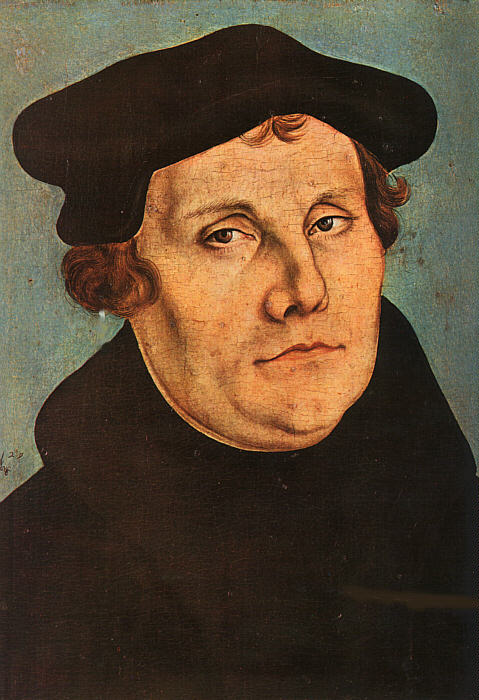 Richard Dawkins in his book “The God delusion” demonstrates a very poor understanding of Theology and matters of religion. This can be understood in part through his references to the Protestant Reformer, ‘Martin Luther’.
In his chapter “The roots of religion” (Page 190) Dawkins appears to argue that Christianity is against logical reasoning, which is a fallacy in itself and something that any decent Theological faculty would certainly disagree with Dawkins on and prove it by their works. Dawkins apparently quotes Martin Luther and offers a certain quote; “Reason is the greatest enemy that faith has; it never comes to the aid of the divine Word, treating with contempt all that emanates from God”
Luther wrote in Latin and German and it is hard to define the quote itself due to variant translations and Dawkins offers no confirmation of which translation of Luther he is using, but it most likely comes from ‘Table Talk’ which was not actually written by Luther himself, but was written by students of Luther who are said to have written down what Luther said to them. But anyone who knows about the life and character of Luther will know that Luther’ views often changed. However, it is clear from the context of this passage that Luther is referring to ‘Faith alone’ being sufficient for salvation and not coming to believe in Jesus as savior through human reasoning. It is ‘faith alone’ and when human reasoning stands before the initial response of faith towards Jesus, it becomes an enemy of faith, for it prevents a soul coming to faith. Thus, Luther is not saying for one moment that when a person comes to faith, that reasoning through issues of faith and religion is an enemy of faith, but that when it stands before the coming to the cross, it then becomes an enemy of faith.
What Luther is saying can be explained in simple terms of illustration; I could say that the mind is the worst enemy of swimming, for a child learning to swim often does not want to swim through fear, which is from the mind. For a child who will not learn how to swim does so because he or she is afraid to get into the water through fear in the mind, thus you could say that ‘the mind is the greatest enemy that swimming has, even though we know that when a person learns how to swim, the mind is the greatest asset the swimmer has. Thus, if we take this understanding and apply it to Luther’s quote, we see that reason which stands in the way of taking the step of faith towards believing in Jesus, is in fact the enemy of faith, for it prevents people from believing in Jesus as savior, because of doubt and human reasoning.
Thus, the quote given by Dawkins is problematic when used wrongly in his argument, since Dawkins offers no real footnote in his work or any advice on contextual issues regarding Luther’s theology. It must be interpreted according to what Luther believed and not what Dawkins thinks Luther believed. One other problem which indicates a lack of research on Dawkins behalf is that he refers to a website which is not authoritative and thus he cannot even claim to have researched such a basic Lutheran book as ‘Table Talk’. Thus, it is clear that Dawkins has not read Luther correctly or understood Luther’s theology, if he had he would review what Luther meant by that statement and he would give a book source from either the complete works of Luther in German or in English or a single volume of Luther’s works, which Dawkins does not.
The problem is that Richard Dawkins is quoting a selective passage, not presenting any context or reason why or if this was said by Luther. Luther certainly stood at the Diet of Worms in 1521 and said, “Unless I am convinced by scripture and by plain reason…I cannot and I will not recant”. Note the words, “plain reason” thus, we must conclude that Luther was not against ‘Plain reason’.
This is also confirmed in Luther’s book, “The Bondage of the will” which was written against the views of the humanist and Oxford scholar Desiderius Erasmus. Luther states on (P 138) “We should speak according to a definite rule, in sober and proper terms; for what is wanted in teaching is simplicity and logical correctness, not the high-flown figures of a rhetorical persuasive.” (The Bondage of the will. Martin Luther. 1V. (i) P 138. Translated by J.I.Packer & O.R.Johnston)
This begs the question; Is Richard Dawkins an accurate scholar or able to deal with Theological matters?
I must state that after 2 degrees in Theology I see Richard Dawkins and his ideas about Theology akin to that of a primary school child to that of a University graduate and really, his fundamental error is that he has stepped over from science to Theology, thus he is dealing with Theological issues which I have proved he is not capable of doing.
Simon Peter Sutherland
-
You are currently browsing the archives for the new atheism category.
Simon Peter Sutherland
-

 Simon Peter Sutherland