Posts Tagged ‘Martin Luther’
This is Reformation day 2024
Posted by simon peter sutherland in Church of England, Reform, Reformation 2017, The Bible on October 31, 2024
 In a previous article back in 2017 I wrote about what the reformation has given us. I listed the reformation benefits we have received in society and in the church and these include the New Testament in Greek, the English New Testament, the complete English Bible including chapter and verse numbers, the freedom to interpret the Bible for ourselves. Freedom to challenge tyranny. The establishment of hymnbooks, Christian music, religious liberty, freedom of speech, and since many abolitionists were theologically reformed we have received the abolition of the slave trade. The list could go on to reveal 100 facts associated with the reformation. This is because the idea of reform is very Biblical. The Bible gives us accounts of how God has been making His plan for this world throughout history and in the Bible we read of those happenings unfolding. It is simply the greatest Book that has ever been written.
Throughout Scripture we see the Lord speaking through His people to bring about change and reformation among those who professed to be the children of God. We read of how the original plan for man in Eden was to dwell in paradise, but Adam chose his own way and fell, because of sin and the story continues of how God was bringing about a restoration of His original plan but man failed almost every time. Because of this God sent His prophets to bring about a reformation to inspire the people of God to repent and turn back to Him because they have lost the way.
In Jeremiah 7: 2 we read of how the prophet says “Hear the word of the Lord” and in verse 3 “Amend your ways and your doings, and I will cause you to dwell in this place.” (NKJV) Here the prophet was talking to the people of ancient Israel and his words speak just as powerfully today as they did back then. In verses 4 and 8 he warns the people that they are trusting in lying words that cannot profit them. The prophet said all this because people were living lives that were contrary to the Will of the God they claimed to believe in and follow (verse 9) and then they would go to the temple and say they were delivered to do abominations (verse 10).
As the Biblical stories continue the prophets foretell the coming of Christ who is the way to restoration and eternal life and without Him there is no hope.
Fast forward hundreds of years throughout church history (not the Bible) and we see the same scenario, man falls and continues in his sinful ways. Man fails to live up to the standards of the Almighty, and God (by His Holy Spirit) stirs His obedient people to speak out and stand fast for the faith.
In the 16th century, a German priest by the name of Martin Luther had been stirred up by the corruption he had seen in the church of that time, and he was absolutely appalled when the priests were selling indulgences to the poor to raise money for the building of St Peter’s Basilica in Rome. Luther saw how crooked this practice was and on October 31, 1517 he is believed to have nailed his 95 thesis on the door of the castle church in Wittenberg. In this document Luther addressed his points of concern and wanted to debate them. Luther’s protest was genuine and the document didn’t stay nailed to the door for very long, locals got hold of the document and it was printed and circulated. Word got back to Rome and Luther would be summoned and eventually stand trial and be excommunicated. Although it affected him mentally Luther spent his time in isolation while translating the New Testament into German. It was a powerful act of defiance to the established church that then existed. This translation would impact the German language in the same way Tyndale’s New Testament would impact the English language. But it would not stop there, church after church would eventually spring up and Luther’s daringly powerful act had started a reformation that could not be undone. It inspired generations all over the world.
Luther’s actions would change the face of history forever. This is because the word reformation is by definition the act of bringing about improvement and change for the better in political, religious or social matters. This is what Luther did. Because of Martin Luther millions of people worship in churches inspired by his reformation. Oddly enough, the Church of England is one of them. I say oddly enough because Henry V111 was opposed to Luther and Tyndale yet still the reformed influence spread.
The Church of England was founded in 597 AD however in 1534 there was a big split and the church separated from Rome and the Pope. This move was undoubtedly the right and Biblical thing to do since Rome was denying the text of the Bible in favour of the authority of the Pope. Not much has changed. Today if not for the reformation few would have the nerve to change or challenge anything or progress our nation to becoming a more decent, fair and just society.
Yet today, it doesn’t feel like the world is becoming any better since we are living in perilous times. The world appears to have become a very dark and cynical place. The church appears to be no better. At least when you look to the bishops for guidance. Few know which way to turn and our nation (here in England) has forgotten the reformation. Rather than celebrate the very act of reformation day, many people choose to promote halloween and follow evil and death rather than life, it seems more commercial than right. Likewise, the church has fallen further into apostasy in an attempt to appease and please the world and keep itself relevant.
Yet we should not be surprised at this, the Bible got it right all along, as it is written, “This is the judgement: the light has come into the world, but men loved darkness rather than light” (John 3: 19)
But for all the church’s attempts to please men, it is not working. Reform is ongoing and will continue and no matter which way people turn the Bible will never cease to be the final authority for all genuine Christians.
There are no two ways about it, if you follow Christ you will live for eternity and if you sow corruption you will reap it. So too will those who profess Christ in one breath while denying Him in another, those leaders will not escape the judgement. They too will pay a much higher price and receive a greater judgement than those they have lead astray (James 3: 1)
It has been said if you marry the spirit of the age, you will soon find yourself divorced by it. So too will the church that follows the world rather than the text of the Bible. If you fail to stand as Luther did in good conscience and Godly conviction, God will never use you in the future and your memory will be forgotten. Darkness will follow you all the days of your life. You will return to the dust from which you came.
Did Martin Luther believe in Limited Atonement?
Posted by simon peter sutherland in Reform, Theology on October 15, 2024
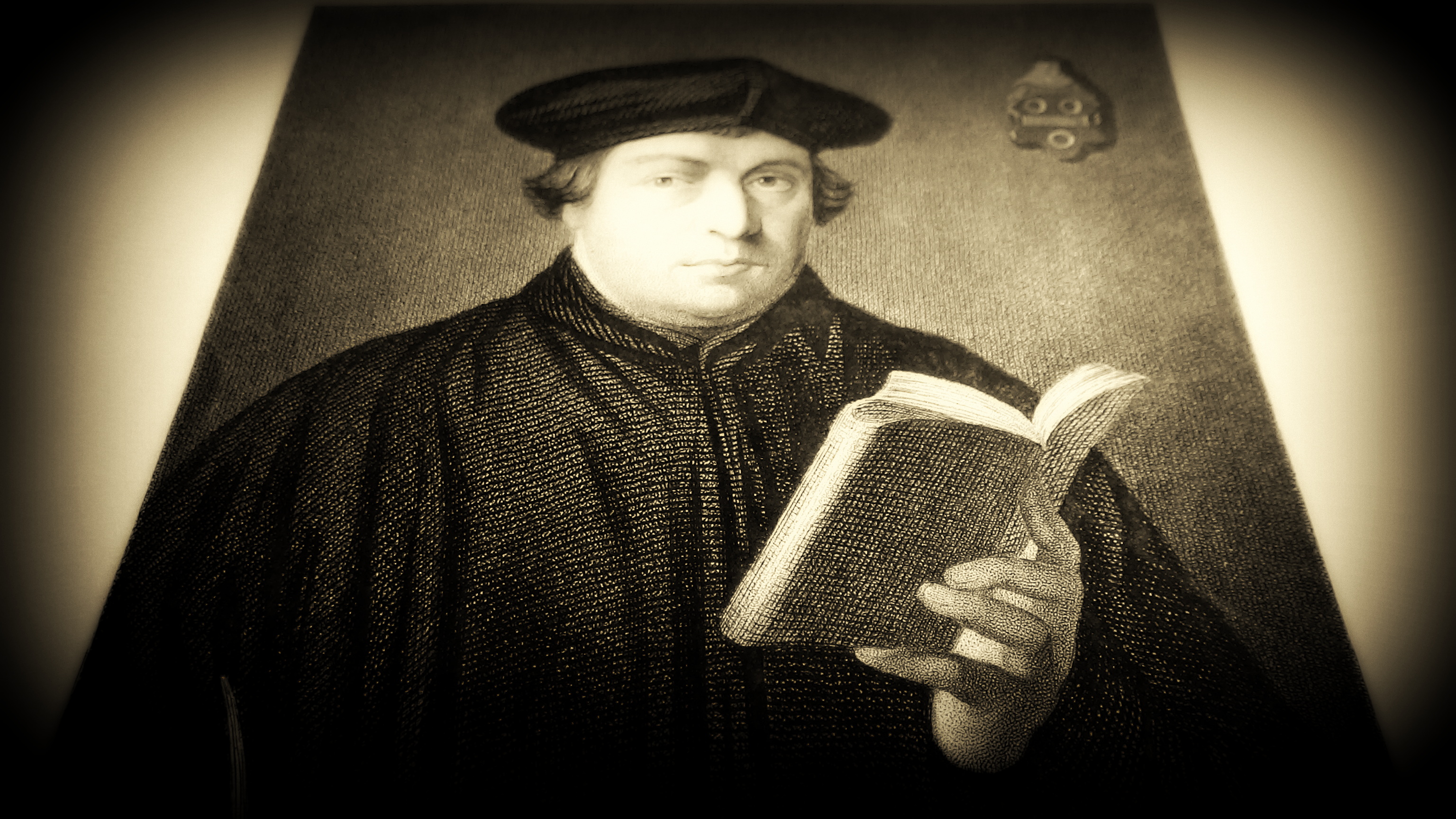
On 31st October 2024, it will be Reformation Day. This event is a public holiday in 5 states in Germany but in the UK Reformation Day is largely forgotten and replaced with Halloween. With this in mind I’m minded to write something about it.
For those who may not know Reformation Day is an anniversary of the day (October 31, 1517) when Martin Luther (1483-1546) nailed his ninety five thesis to the church door in Wittenberg. Back then the church was like our church is today, apostate and in desperate need of reform. Priests and Popes were corrupting the church and few had the nerve to stand up to them. But Luther, God bless him, stood strong and famously nailed his thesis to the church door and the sound of his hammer echoed through the chambers of the establishment.
Recently I watched the 2003 film Luther starring Joseph Fiennes and it has brought back a lot of fond memories for me. That film was very influential when I first began studying Luther and reading his books and autobiographies about him. I’d recommend people view that film and read his books rather than waste their time with all that Halloween nonsense.
But as the saying goes ‘nobody’s perfect’ and the same can be said for Luther. For me Martin was far from perfect, and that’s the point. Reformers do not need to be perfect humans they just need to have faith and believe the Bible. There are times when I really agree with Luther and think that he has been misrepresented by many people. For me, a great deal of these misunderstandings stem from cherry picking sections of Luther quotes without really considering the possibility that he might have changed his mind later on.
While in discussion recently it came up of how Luther and Calvin would have agreed with each other over doctrine and this brings me to the main point of this article. My discussion was in response to the Calvinistic interpretation of Predestination which logically affirms the doctrine of Limited Atonement. As always I make my point that there are differences of opinion concerning the meaning of Predestination and the 16th century reformers didn’t all agree with the Calvinism of that century. For me, Calvin is a little like Luther sometimes in that he might have changed his mind at times. For me, Calvin reads as though he did believe in Limited Atonement and certainly Predestination, while other times he appears to believe that Christ died for all mankind. These views can be found in Calvin’s Commentaries.
Yet there are times, (certainly in Luther’s books) where Martin appears to believe that Christ died for all, yet other times he implies all means the elect? This would imply that he didn’t believe Christ died for all, so there’s certainly conflict in understanding his position. This brings me to the answer of my own title: Did Martin Luther believe in Limited Atonement? Well, the answer is yes and no, I don’t think he did and other times I’m not so sure, here’s why.
While at Wittenburg in 1515, Martin Luther began to lecture from the New Testament and from Paul’s epistle to the Romans. It was during Luther’s studies for these lectures that he famously found that salvation is by grace alone and through faith.
In the popular modern versions of Luther’s commentary on Romans, such as J. Theodore Mueller’s translation, certain beliefs and passages have been omitted from the publications to avoid confusion with Luther’s actual beliefs. For, his beliefs often changed and improved with his knowledge of scripture. In his lectures on Romans and 9: 20-21 Luther says this:
“God will have all men to be saved” (1 Timothy 2: 4), and he gave his Son for us men, and he created man for the sake of eternal life. And likewise: Everything is there for man’s sake and he is there for God’s sake in order that he may enjoy him, etc. But this objection {to God’s sovereignty in salvation} and others like it can be just as easily be refuted as the first one: because all these sayings must be understood only with respect to the elect, as the apostle says in 2 Timothy 2: 10, “All for the elect.” Christ did not die for absolutely all, for he says: “This is my blood which is shed for you” (Luke 22: 20) and “for many” (Mark 14: 24) – he did not say: for all- “to the remission of sins” (Matthew 26: 28) (Martin Luther, Lectures on Romans, translated and edited by Wilhelm Pauck. Philadelphia: The Westminster Press, 1961. P 252)
The question remains for my readers: Did Luther believe in Limited Atonement or did he believe Jesus died for all mankind? Decide for yourselves. I think he may have originally believed in Limited Atonement (in 1515) and changed his mind later on.
Richard Dawkins is wrong: Martin Luther was not against “Reason” or “Logical correctness”
Posted by simon peter sutherland in England issues, new atheism, Theology on December 9, 2011
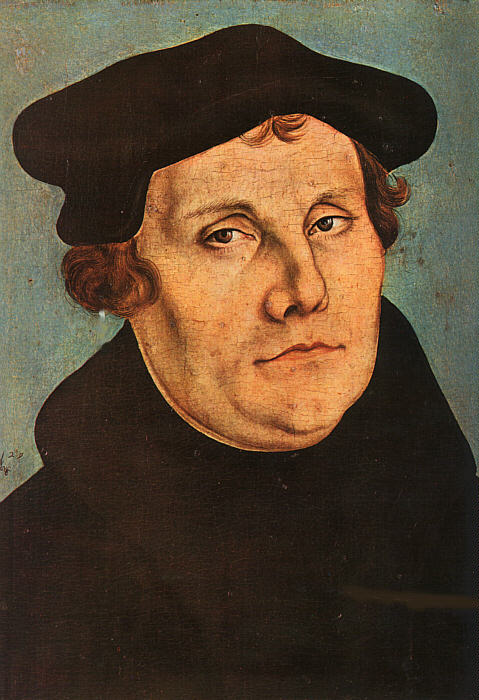 Richard Dawkins in his book “The God delusion” demonstrates a very poor understanding of Theology and matters of religion. This can be understood in part through his references to the Protestant Reformer, ‘Martin Luther’.
In his chapter “The roots of religion” (Page 190) Dawkins appears to argue that Christianity is against logical reasoning, which is a fallacy in itself and something that any decent Theological faculty would certainly disagree with Dawkins on and prove it by their works. Dawkins apparently quotes Martin Luther and offers a certain quote; “Reason is the greatest enemy that faith has; it never comes to the aid of the divine Word, treating with contempt all that emanates from God”
Luther wrote in Latin and German and it is hard to define the quote itself due to variant translations and Dawkins offers no confirmation of which translation of Luther he is using, but it most likely comes from ‘Table Talk’ which was not actually written by Luther himself, but was written by students of Luther who are said to have written down what Luther said to them. But anyone who knows about the life and character of Luther will know that Luther’ views often changed. However, it is clear from the context of this passage that Luther is referring to ‘Faith alone’ being sufficient for salvation and not coming to believe in Jesus as savior through human reasoning. It is ‘faith alone’ and when human reasoning stands before the initial response of faith towards Jesus, it becomes an enemy of faith, for it prevents a soul coming to faith. Thus, Luther is not saying for one moment that when a person comes to faith, that reasoning through issues of faith and religion is an enemy of faith, but that when it stands before the coming to the cross, it then becomes an enemy of faith.
What Luther is saying can be explained in simple terms of illustration; I could say that the mind is the worst enemy of swimming, for a child learning to swim often does not want to swim through fear, which is from the mind. For a child who will not learn how to swim does so because he or she is afraid to get into the water through fear in the mind, thus you could say that ‘the mind is the greatest enemy that swimming has, even though we know that when a person learns how to swim, the mind is the greatest asset the swimmer has. Thus, if we take this understanding and apply it to Luther’s quote, we see that reason which stands in the way of taking the step of faith towards believing in Jesus, is in fact the enemy of faith, for it prevents people from believing in Jesus as savior, because of doubt and human reasoning.
Thus, the quote given by Dawkins is problematic when used wrongly in his argument, since Dawkins offers no real footnote in his work or any advice on contextual issues regarding Luther’s theology. It must be interpreted according to what Luther believed and not what Dawkins thinks Luther believed. One other problem which indicates a lack of research on Dawkins behalf is that he refers to a website which is not authoritative and thus he cannot even claim to have researched such a basic Lutheran book as ‘Table Talk’. Thus, it is clear that Dawkins has not read Luther correctly or understood Luther’s theology, if he had he would review what Luther meant by that statement and he would give a book source from either the complete works of Luther in German or in English or a single volume of Luther’s works, which Dawkins does not.
The problem is that Richard Dawkins is quoting a selective passage, not presenting any context or reason why or if this was said by Luther. Luther certainly stood at the Diet of Worms in 1521 and said, “Unless I am convinced by scripture and by plain reason…I cannot and I will not recant”. Note the words, “plain reason” thus, we must conclude that Luther was not against ‘Plain reason’.
This is also confirmed in Luther’s book, “The Bondage of the will” which was written against the views of the humanist and Oxford scholar Desiderius Erasmus. Luther states on (P 138) “We should speak according to a definite rule, in sober and proper terms; for what is wanted in teaching is simplicity and logical correctness, not the high-flown figures of a rhetorical persuasive.” (The Bondage of the will. Martin Luther. 1V. (i) P 138. Translated by J.I.Packer & O.R.Johnston)
This begs the question; Is Richard Dawkins an accurate scholar or able to deal with Theological matters?
I must state that after 2 degrees in Theology I see Richard Dawkins and his ideas about Theology akin to that of a primary school child to that of a University graduate and really, his fundamental error is that he has stepped over from science to Theology, thus he is dealing with Theological issues which I have proved he is not capable of doing.
Simon Peter Sutherland
Simon Peter Sutherland
-

 Simon Peter Sutherland