Posts Tagged god
Will the next Archbishop of Canterbury be a woman?
Posted by simon peter sutherland in Church of England, Is Female Leadership Biblical?, Reform, Theology on July 25, 2025
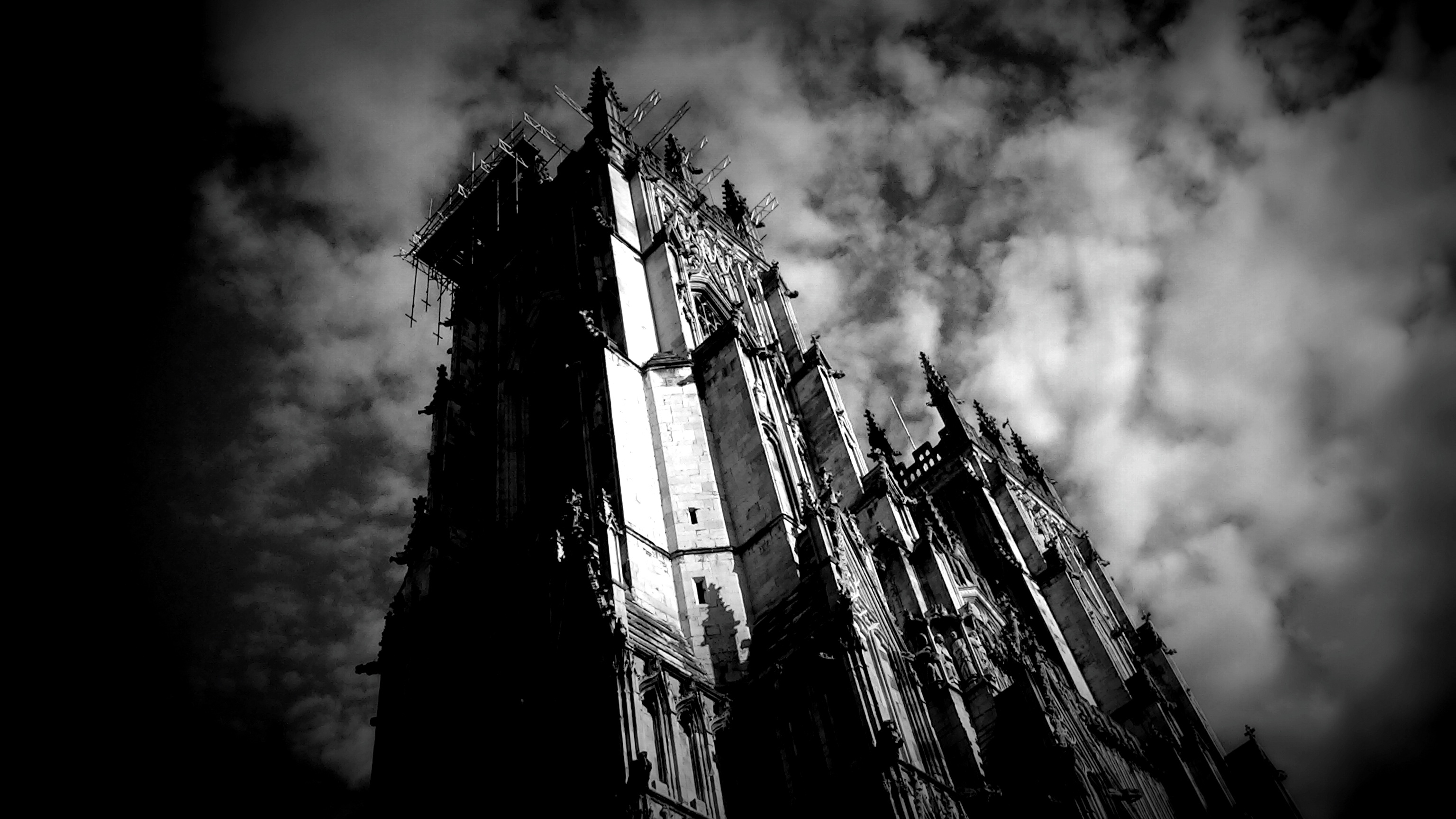
It has been six years now since I returned to the Church of England and during that time I have witnessed a very controversial era within the history of Anglicanism.
In February 2023 a majority of the synod chose to pass the unorthodox motions of the liberal revisionist bishops concerning the blessings of ‘same-sex unions’.
Since then the CofE has remained divided.
Personally I have been through great turmoil being in this denomination. Being very fond of the history of the Church of England, the early English Bibles, the Book of Common Prayer, the great hymns and the lives of the 16th century reformers who were ministers within the Church of England, there is no doubt to me that the present CofE (on the whole) is no longer the same church. After years and years of revisionist liberalism, scandals and corruption, each moment has slowly demolished the denomination brick by brick, and it seems likely that we yet again face another bigger problem that will not go away.
For the first time in history, the next archbishop of Canterbury could be a woman. With very few conservative evangelicals disagreeing with women leadership, it appears that many could embrace this choice and few will oppose it.
This could be an even bigger problem than upholding a Biblical view of marriage.
The reason I say this is because the Biblical view of marriage is plain and obvious. All religions generally agree that marriage is a union between one man and one woman. However when it comes to the issue of women leadership, even the conservative evangelicals have gone astray and many have played the hypocrite by embracing woman bishops who agree with traditional marriage, to their own advantage.
I say this because conservative evangelicals (within the CofE) speak against the liberal bishops and the synod for going against Scripture concerning ‘same-sex marriage’ and ‘the blessing of same-sex unions’ yet they themselves go against Scripture when they embrace and promote female leaders.
Yet the Bible does not support female leadership and in the New Testament there are no female leaders in the Christian church. Yet revisionists pull out text after text and radically re-interpret them and the CofE embraces their claims because fewer and fewer men are putting themselves forward for ministry. So they play a legal game and use the Scriptures to create loopholes that allow for women to become curates, vicars and bishops. Pheobe was a Deacon they say, Priscilla was a co-leader, they say and apparently Junia was an apostle. It’s absolute nonsense.
The reality is that Pheobe (Romans 16: 1) was just a servant of the church who delivered a letter and judging by the context Pheobe was probably the widow of a deacon. Priscilla was simply the wife of Aquilla they had a church in their house (1 Corinthians 16: 19) so that doesn’t prove she was a leader, and Junia was known by the apostles, (Romans 16: 7) and there is nothing in Paul’s text to say that Junia was an apostle. Thus, despite the revisionists claims, these verses do not affirm woman leadership at all and in reality if Paul did affirm female leadership he would be totally contradicting himself.
On the contrary, Paul does not contradict himself and a majority of the Bible is crystal clear that leadership in the Christian church is reserved for men. If you don’t believe me ask yourself why Jesus chose twelve men to be His disciples and then read Paul’s letters to Timothy and Titus. Read them for yourselves and let the Bible speak. Don’t turn to revisionist teachers who promote their agendas and use you as tools for their rhetoric. Paul is very clear to Timothy that the reason men alone are to be leaders in the Church is because man was formed first then Eve and Adam was not deceived but the woman was deceived and fell into transgression (1 Timothy 2: 13-14)
It is clear from 2 Corinthians 11: 3 that Paul was afraid that as the devil deceived Eve so also the Christians in Corinth would also be led astray by the same cunningness. Now imagine what St. Paul would say if he was writing to the Church of England today. They would probably reject his initial application for ministry and try and indoctrinate him with a series of sermons led by woman curates and liberal vicars and then hope and pray that he changes his mind when they’ve finished.
In Colossians 1: 18 Paul explicitly states that Christ is the head of the church and as far as I am concerned if Christ is not the head of this church then the body does not belong to Him.
Since the CofE has been attempting to liberalise practically every Biblical viewpoint in history and distance itself from the great reformers of the past, it has been anything but stable and I think their decision to make woman leaders will eventually be their ultimate downfall. Whether the decision to make the Archbishop of Canterbury a woman comes into effect this year or the next time around, it is only a matter of time before we witness yet again another great apostasy within the CofE.
“From Obedience To Freedom” Out Now!
Posted by simon peter sutherland in Church of England, Reform, The Bible, Theology on June 12, 2025
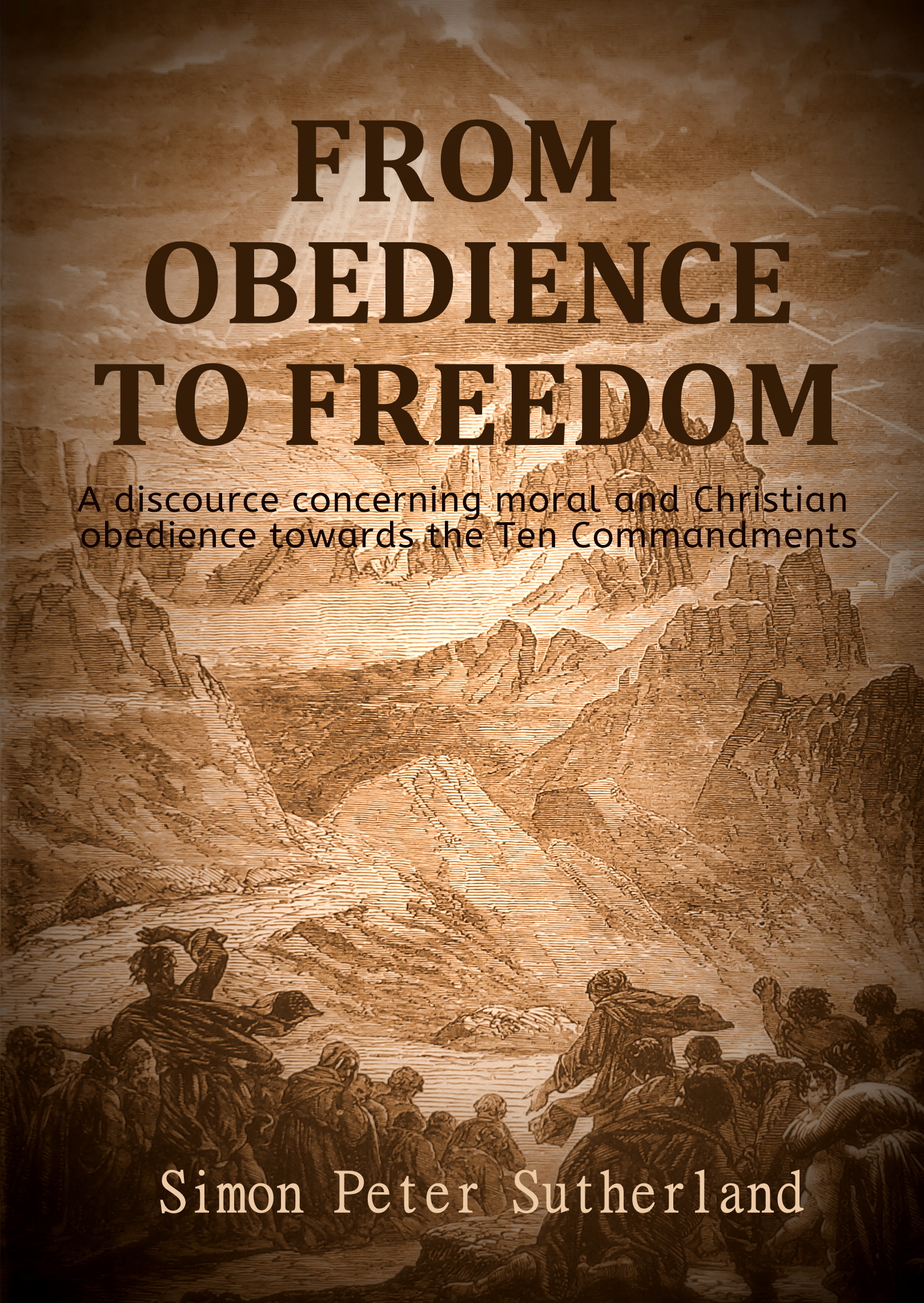
In my previous post I write about my new book on the Ten Commandments. In this book I explore the topic of the Ten Commandments from a New Testament perspective asking questions such as these: Have the Ten Commandments been abolished by the coming of Christ? Or are the two tablets mentioned in Exodus 20 the same as those found in Matthew 22: 37-40? If the answer is yes then there is no Biblical evidence to reject these commandments as irrelevant to the holy living of the Christian man.
In an original edition of this thesis, dating back to 2007, I had originally been inspired by an old Puritan book called The Ten Commandments by Thomas Watson. I loved reading the puritans back then.
Thomas Watson (1620-1686) was one of the most popular English preachers in London during the puritan era. I was certainly intrigued by this book during my earlier years of theological study. Since then however time moves on and my book has changed. It has gone through revision upon revision until I finally reached a point where I was ready to publish.
Obviously the topic is controversial on all sides. For some Christians there should be given no place whatsoever for any aspect of law in the Christian life. I disagree with that. Yet if that concept was true, then what are we left with in Christianity? Outright lawlessness or a life governed by obedience to Christ in faith. Surely there is nothing within any of the Ten Commandments to contradict what the New Testament says about holy living.
When I originally began to write this book I was much younger and I was very convicted within my soul and daily I yearned for more of Christ. My soul eagerly awaited the presence of my dear Lord and that passion can be caught within the pages of the book. However much has changed since then and I’m older. Nowadays I read Puritan books much less, however I have retained my passion for the writings of Richard Baxter. likewise the King James Bible remains my favourite translation. For this reason, I have continued to use the AV within the book and perhaps I’ll save the reasons why for some other post.
But in the meantime, I hope the Lord uses my book and that it inspires many believers to do right in the eyes of the Lord. We must love the commandments of our Lord and live them by faith in Christ. When we do this we will find inner freedom within the divine legislation.
I have experienced this freedom many times.
However, I am presently in the Church of England (in some sense) and I feel a continuous burden for the apostacy that is crippling it. Will I remain, and for how long I do not know? All I can say is that if there was ever a time for the Law of the Lord to be remembered and loved, that time is now.
The Promise of God for all mankind
Posted by simon peter sutherland in Census of Luke, Christmas, Christmas or Nisan, Documentaries, Eschatology, Theology on December 18, 2024

Many years ago, when I was a boy, I was asked what my favourite New Testament Gospel was, and I replied “Luke’s Gospel”. For me, I think that claim still stands. The Gospel According to St. Luke is still my favourite of the four Gospels.
Luke’s Gospel gives us the greatest account of Christ’s birth. I say this because I believe chapters 1 & 2 contain the actual words of Mary herself given to St Luke. Luke’s Gospel gives us the reference to the census of Quirinus. I have discussed this census in a previous article showing that it may have been referenced in the Mausoleum of Augustus on the funerary Res Gestae Divi Augusti in Rome.
Luke was a very reliable historian as my documentaries have shown. In Kos and the Gospel According to St. Luke I demonstrate elements of his accuracy by visiting the Greek island of Kos and discuss how he interviewed surviving witnesses to the life of Jesus Christ. Luke references his accuracy himself in Luke 1: 1-4 and Luke’s desire was for the Roman official (Theophilus) “to “know the certainty of those things in which you were instructed.”
Luke follows up his Gospel with part two (Acts of the Apostles) and those who know it are assured of the certainty of the events that happened.
As previously mentioned “I believe chapters 1 & 2” of Luke’s Gospel “contain the actual words of Mary herself given to Luke.” The nativity account contains elements of feminine Greek and in Mary’s account of the angelic announcement of Christ’s birth the angel says to Mary “behold you will conceive in your womb and bring forth a Son, and shall call His name Jesus. He shall be great, and will be called the Son of the Highest; and the Lord God will give Him the throne of His father David. And He will reign over the house of Jacob forever, and of His kingdom there will be no end.” (Luke 1: 31-32. NKJV)
This statement concerning the kingdom of Christ and Him being given the throne of David was not some reference to a futuristic kingdom that Jesus sets up when He returns to earth at the second coming. Luke tells us that this kingdom was established during the life, death, resurrection and ascension of Jesus Christ and was revealed to the people of Judea and Jerusalem by St Peter in his sermon contained in Acts 2: 14-39.
In Acts 2: 30-31 Peter says “Therefore, being a prophet, and knowing that God had sword with an oath to him that of the fruit of his body, according to the flesh, He would raise up the Christ to sit on his throne, he forseeing this, spoke concerning the resurrection of the Christ, that His soul was not left in Hades, nor did His flesh see corruption” and in verse 32 Peter states that the things which they saw when the Holy Spirit came on the Day of Pentecost (Acts 2: 1) is what they “now see and hear.”
The important point to note here is that the promise made to Mary in Luke 1: 32-33 has been fulfilled for all mankind. God in Christ Jesus has set up His kingdom and it has no end and as Peter stated to the people in Judea and Jerusalem, “the promise is to you and to your children, and to all who are afar off, as many as the Lord our God will call.” (Acts 2: 39)
This Christmas remember what Christ has done for us and for all mankind. Let us turn our backs upon the things of this world and whatever you do keep your eyes upon Christ, and know that He is our Saviour, and our God, if we believe in Him and receive forgiveness for our sins and make Him Lord of our lives.
Hymn stories: All Hail the Power of Jesus’ Name
Posted by simon peter sutherland in Hymns, Theology on October 3, 2024

Way back in 1838 a railway man James Ellor (1819-1899) brought his local choir a tune. This was called “Diadem” and he had written the tune to be sung with the Edward Perronet hymn “All Hail the Power of Jesus’ Name”.
James Ellor was born in a place called Droylsden in Manchester and was choirmaster at his local Methodist Wesleyan Chapel and is also said to have worked in the hat industry.
Over the last few months I have been fascinated by this great old hymn and have sought to find the location where the hymn tune of this great hymn was first sung. Lo and behold I have found it. After looking through old maps and studying the location and all the related churches in the area I have narrowed the original location down to a site on Market St, Droylsden.
Today the original building is long gone but back in the 1830’s a chapel stood near and in between the location where a Co-operative Hall Wharf (dating to 1876) and an industrial building (dating to 1911) now stand. Thankfully, a local church meet very close to precise location so someone is still doing the Lords work there and there’s a tram stop near should anyone wish to visit. After all it is a very special hymn and should never be forgotten.
Today a number of versions of the hymn continue to be sung, and especially in America. This seems very fitting since James Ellor emigrated to America in 1843 where he returned to his trade a hat maker. So let us remember the words of this great hymn from the Methodist Hymn Book,
”Let every tribe and every tongue before Him prostrate fall, And shout in universal song The crowned Lord of all.
O that with yonder sacred throng We at His feet may fall, Join in the everlasting song, And crown Him Lord of all!”
I think all Christians everywhere, can agree with those great words. I know I can.
Simon Peter Sutherland
-

 Simon Peter Sutherland