Archive for category Theology
The Chair of St Augustine is now officially vacant
Posted by simon peter sutherland in Theology on March 27, 2026
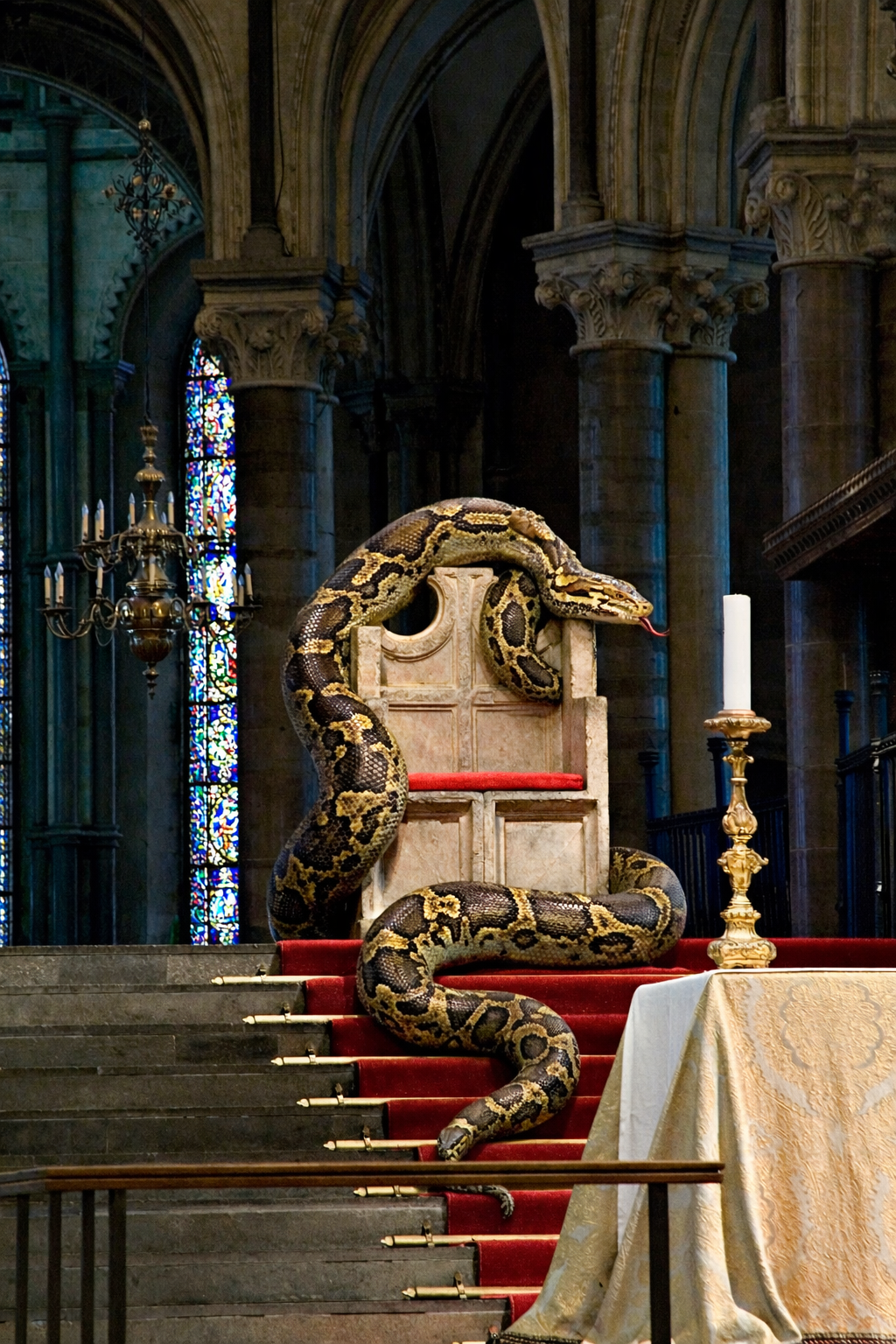
“The Divine Saviour in the Dark Light of Modern Critical and Sceptical Scholarship” coming soon
Posted by simon peter sutherland in Biblical archaeology, Biblical Scholarship, Theology on March 21, 2026
“Over the last two thousand years or so, the Christian faith has had more than its fair share of enemies.” I write “When Jesus was born, whatever date that may have been, Herod sought to have the Christ-child put to death. In the Gospels, the authors record how many attempts were made on Jesus’ life, only one was granted. All Four Gospels agree that Jesus was crucified and died. From the human perspective, Jesus had been executed for proclaiming Himself King. All other accusations against Him failed. In Jerusalem, at an ancient execution site outside the city walls, Jesus of Nazareth was nailed to a cross and died. This is historical fact.
To all intents and purposes, the story should have ended there, but it didn’t. The Gospels claim that Jesus came alive again and remained on earth for a period of forty days.”
The above words are a quote from my new upcoming book “The Divine Saviour in the Dark Light of Modern Critical and Sceptical Scholarship” a book that objects to the many speculative criticisms made by sceptical scholars over recent years. For those who do not know, sceptical and critical scholars are those who doubt the authenticity of the Bible and are often very vocal about it.
In my book I explore the history of the Bible and offer proofs in defence of the historicity of the Scriptures and I believe the work can be a valuable resource for many Christians who believe in the infallibility of the divine word.
Now that I have completed my documentary series on St Paul and the Greek Islands, “The Divine Saviour in the Dark Light of Modern Critical and Sceptical Scholarship” will be available soon.
The real Virgin Mary was the Lord’s servant
Posted by simon peter sutherland in Census of Luke, Christmas, Christmas or Nisan, Theology on December 16, 2025

In J C. Ryle’s readings for advent, he chooses Luke 1: 34-38 for todays text. This text is about how the Virgin Mary received news that she would conceive by the Holy Spirit and give birth to a Son, the Lord Jesus Christ. Mary responded to the angel, “Let it be to me according to your word.” (Luke 1: 38)
We see from this text that the Virgin Mary was a real servant of God and even though she knew what controversy would face her once news of her conception came about she obeyed the word of the Lord perfectly.
Ryle writes how this act did “present no small danger to Mary’s reputation and no small trial to Mary’s faith.” And when you consider the danger she would have to potentially face, it’s not difficult to understand why. Mary could have been stoned to death for conceiving outside of marriage. But we know, because of Scripture that Mary was indeed innocent and had not conceived outside of wedlock (Luke 1: 34). Mary was a Virgin and betrothed to Joseph who only knew her intimately after Jesus was born.
It is here in these passages where we see the true Virgin Mary, not the false version worshipped by the Roman Catholic Church as mediator. Mary points us to Christ she does not replace Him or cause us to pray to her in order to get to Jesus. Mary is no mediator. There is only one mediator between God and men, the Man Christ Jesus (1 Timothy 2: 5)
A number of years ago a scholar claimed that the nativity account in Luke’s gospel contains feminine uses of Greek. This implies that the words contained in these few verses in Luke are the actual eyewitness testimony of Mary herself, incorporated into the gospel by Luke. This little known observation can inspire us all to know that Scripture is reliable and trustworthy.
Our society seeks to play down Scripture and inspire people to doubt what is written, but no one need let this happen. The Bible is true and historically accurate and the more people believe by faith, the stronger your belief will be.
Please don’t be fooled by Roman Catholicism or her prophets and proponents. If you want to find the true Mary don’t pray to her, read Scripture and her own words.
Believe the Bible this day and trust in Jesus Christ till the end of your life and He will never leave you or forsake you. Amen.
The second coming of the King of kings, Advent reflections with J C Ryle and Matthew 24: 29-35
Posted by simon peter sutherland in Christianity, Christmas, Eschatology, Theology on December 1, 2025

I have begun the reading of a book “The Coming King” – 25 Readings For Advent with J. C. Ryle.
Ryle was Bishop of Liverpool between 1880 and 1900 and the readings are taken from his Expository Thoughts on the Gospels, some of the best commentaries available today.
In this part he deals with “our Lord’s prophecy” from Matthew 24: 29-35 where Christ describes His own second coming. In this passage we are told that Jesus will return with great power and glory quite different to His first appearing. During His incarnation Jesus was a man of sorrows (Isaiah 53: 3) He was not some ordinary joker Man who talked a lot, and blended in, He was a quiet Man and when He spoke He spoke with power and authority. If He did speak all the time, His words would not carry the same weight, yet His words were like no other, they had weight and strength. No one ever spoke like this Man. Even the authorities could hardly refute Him, even though they tried. He was the King of kings and Lord of lords, and no one had authority over Him unless it was granted by the Father.
When He was born, He was born humbly, among the lambs reared to be offered in the temple sacrifices. As He grew, He grew in favour with both God and man, yet He took on the form of a servant, rejected by mankind. Betrayed by his friend and condemned to death of a cross. Yet it did not end there, if it did, faith would be worthless and in vain. No, Christ rose from the dead and ascended into heaven where He reigns forever more. We do not need to wait for His return to know that He reigns, He is reigning now from heaven. We do not need to wait for some futuristic kingdom to take place on earth when He returns to Jerusalem, He is reigning now from heaven on the throne of David. And one fine day He will return and men will receive the fulness of eternal life or the sentence of eternal death.
Remember this, lest you live a pointless and meaningless life. There will be no escape from anything when He returns. There will be no opportunity for people to change their minds and believe once He returns. It will be the end. No thousand year reign. No second chance. No scoffing at Him. He will return to this earth when you least expect and no one will escape Him. He will not be the same as He was at His first coming, He will not be the Jesus people mock and blaspheme, and think they can walk all over, He will be returning with all His power and glory in the clouds of heaven, and no eye will be able to escape from Him. No ear will be unable to listen to Him. No sin will be left uncovered. No one will be able to escape. It will be the end.
What a terrible day that will be.
I wonder where you will be on that day? Will you be preaching, only to find yourself lost without salvation? Will you be drinking, only to find yourself thirsty? Will you be walking only to find yourself on your knees? It doesn’t have to be that way, you can pray. You can receive Christ at any moment of the day. You don’t need a priest, He is our priest. You don’t need a pastor, prophet, or pope or mediator, Jesus is our Mediator. All you need to do is pray and receive Him and you too will be given the gift of eternal life in the arms of our Lord and Saviour Jesus Christ.
Examine yourself whether you are in the faith (2 Corinthians 13: 5) Evaluate your beliefs. Consider your actions, and see if they line up with the gospel. Test your faith and yourselves, and keep awake, so that when Christ returns, He will not find you sleeping.
“Dispensationalism Exposed” Revealing the Bad Fruit: book review part 1
Posted by simon peter sutherland in Eschatology, Theology on November 19, 2025

Last month while reflecting on bygone eras of my church life, I was rummaging through some second hand books and I happened upon a book entitled “Dispensationalism Exposed” by Dale A. Albertson. I didn’t know anything about the author but I noticed the book was self published so it was right up my street.
I have a history with Premillennialism, from my early days where the theory was projected at me, to my more recent days when this happening reoccurred. I have a distinct distaste for Premillennialism and so often it is difficult to find folks who think alike. Thankfully Dispensationalism is not a big issue in UK churches, but for many people, especially American Christians, Premillennialism is nothing more than Scripture itself.
But now things have changed. More and more people are realising that it ain’t necessarily so. Premillennialism is not the only interpretation of Matthew 24 or the Book of Revelation. But the problem for some believers are, that other views are rarely presented. At least in some circles.
So, I bought the book and I have found it to be a pleasant surprise. In it, the author presents his arguments against dispensationalism and argues the doctrine is distructive and in many cases, harmful. Dispensationalism prevents people from trying to make our world a better place, it often denies the reality of what Jesus was talking about in Matthew 24, and it creates unnessesary division and is not accurate to the early church.
The author focuses upon the 1,000 year reign of Christ and His saints and the events of AD 70 when the Jerusalem Temple was destroyed by the Romans. Yet Premillennialists often ignore what Josephus documented and prefer to promote various rapture theories as though Matthew 24: 40 refers to an event way off in the future. It does not, Jesus was talking about the Roman armies taking people into captivity when Jerusalem was about to be destroyed and it all goes back to the writings of John Nelson Darby and his incorrect hermeneutics. The Olivet discourse and a majority of the book of Revelation are all about the past, not the future.
Dispensationalism has a dark side, the author argues, “and its bad fruit” has a “negative impact-on the world today”. “Dispensationalism is a very new doctrine in the scope of church history,” the author argues, dating to the 19th century and the “Plymouth Brethren minister” (P. 12). Spurgeon was a “well-known vocal critic of Darby” the author exclaims. Darby’s ideas where adapted from Edward Irving (1792-1834) a clergyman in the Church of Scotland and Darby’s influence spread through seminaries of Europe and his tours of the United States.
Dispensationalism brings about the practice of “separatism” and causes people to fail in working towards change in our world because according to them, the decline of society and church is all part of the unfulfilled prophecies of Scripture. I have been making this point for years. I argue that the powers that be use Premillennialism as a gateway to disencourage Christians to make changes in our world, because when Dispensationalism is believed, the bad events of our day and age are all foretold.
“The indoctrination of Dispensationalism is now nearly universal in America.” and “Dispensationalism is considered unassailable by the majority of Christians in America” and “those who disagree have been called heretics,”. (P. 25)
I can relate to those claims, since one man attempted to assassinate my refutation of Premillennialism by claiming that I was denying the second coming of Christ. So for me, since Premillennialists often ignore and overlook the writings of Josephus, you can see why the real historical events of Matthew 24 are unknown to them. Because of this I think many American Dispensationalists are ‘Nuda scriptura’ rather than ‘Sola scriptura’. Personally I am Sola scriptura a position which allows for other historical sources to help us rightly divide the word of truth.
Premillennialism does not rightly divide the word of truth since it fails to recognise that a literal-historical hermeneutic of Matthew 24 would reveal that Jesus was warning His 1st century listeners about the destruction of the temple in Jerusalem, by the Roman armies under Titus. A fact which according to the author “Dispensationalism must (mostly) deny in order to justify its alternative interpretation of the great tribulation.” (P. 31)
The author continues on to argue that Dispensationalism is so bad an idea that even sceptics and Muslims use it to argue that the prophecies of Jesus were not fulfilled, then there is the credulous nature of the support for the rapture doctrine, and the secret rapture of the church, a position that the author rightly argues “is not found anywhere in scripture.” (P. 46)
Amen to that. Absolutely.
If you are looking for a good book to read over Christmas or the new year, you should get yourself a copy of this book. Self published works can oftentimes be great reads.
Does Romans 16: 7 say Junia was an apostle?
Posted by simon peter sutherland in Church of England, Is Female Leadership Biblical?, The Bible, Theology on August 28, 2025
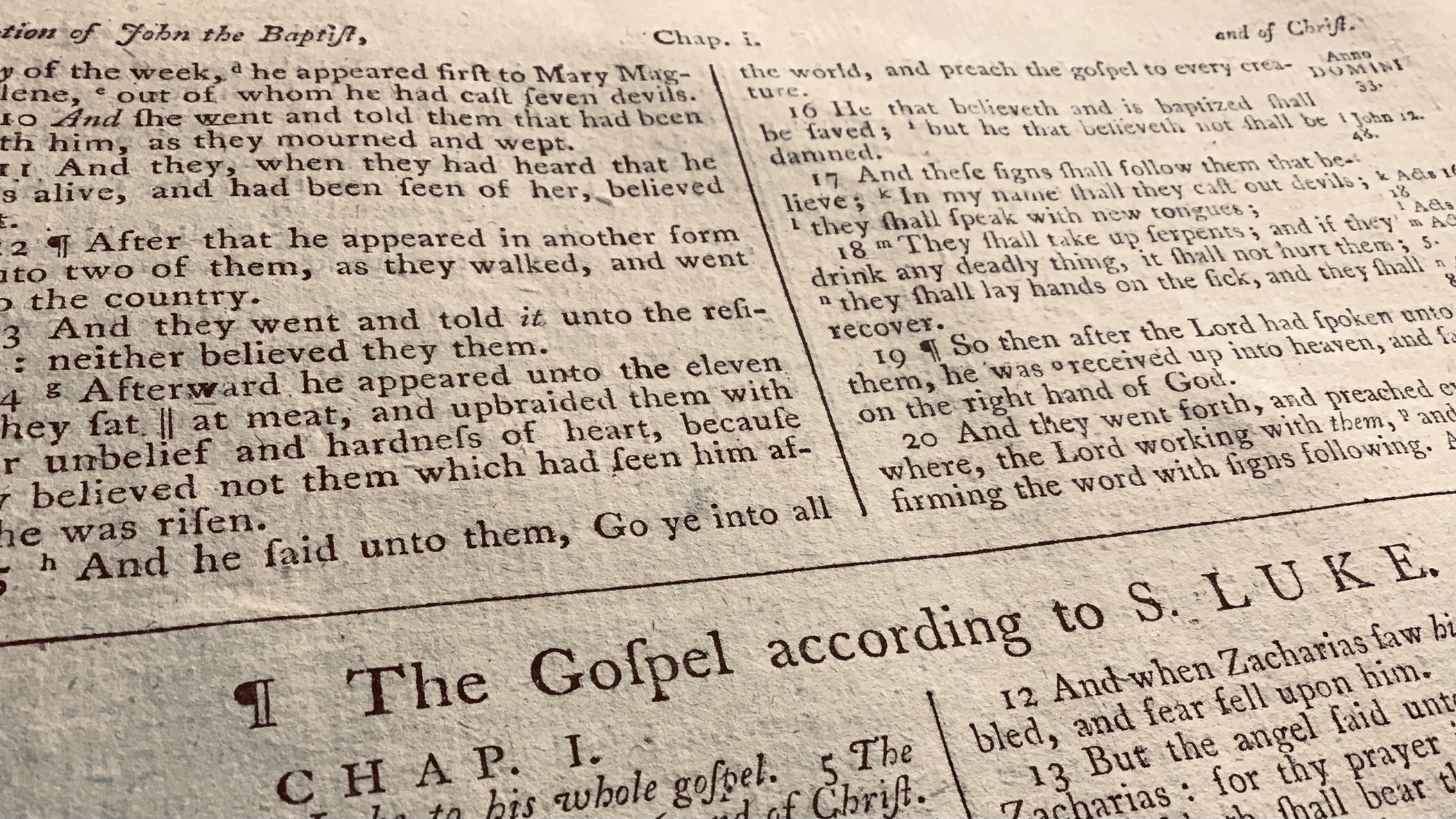
In my previous article I mention why Phoebe of Romans 16: 9 was not a deacon of the church in the sense of being a minister or preacher. Phoebe delivered a letter of Paul, and was a servant, and nothing more should be made of that.
In this article however I am continuing to explore the claims of revisionists who argue in favour of female leadership and I will show that Scripture does not affirm female leadership in the Christian church.
On Sunday I attended a CofE church and it was very unbalanced, women were leading the whole service, and there was hardly a male leader in sight. This is very unscriptural and leaves nothing for men who seek a male minister to talk to. Not only are there female reverends but female bishops too and there is not a single Scripture to support this. However, revisionists like to use Romans 16: 7 to claim that Junia (a woman mentioned by Paul) was an apostle.
Paul writes,
“Greet Andronicus and Junia, my countrymen and my fellow prisoners, who are of note among the apostles, who also were in Christ before me.” (Romans 16: 7)
In order to understand the Scripture we need to get behind the text and understand it from a contextual viewpoint. Here it is important to acknowledge that as with Paul’s reference to Phoebe (verse 1) the apostle is writing to a house church in Rome. We know this because in verse 5 Paul references the congregation that met in the house of Priscilla and Aquila. Interestingly enough Paul speaks about the congregation not the place they assembled in, and since Paul previously mentions “Priscilla and Aquila” who were a married couple, it is probable that “Andronicus and Junia”were a married couple also. Ancient Christians recognised that Junia was a woman, however very little else is known about her. However modern revisionists like to boldly claim that Junia was an apostle yet there is not a scrap of evidence to re-enforce that claim. In all probability Junia was simply the wife of Andronicus and the both of them were known by the apostles.
When Paul wrote about “Andronicus and Junia” he used the term “my countrymen” or kinsmen. Paul uses this term elsewhere in Romans 9: 3 and this is within the context of fellow Jew’s so it is likely that Junia was Jewish or even a relative of the apostle. This is where the rubber hits the road, there is no way any Jewish woman could be regarded as an apostle in the 1st century.
When Paul writes Andronicus and Junia “are of note among the apostles” he is merely saying they were known by the apostles. Paul’s proceeding words affirm this when he says “who also were in Christ before me.” Here Paul is saying that they had been Christians longer than he had, and in order for a person to have been an apostle that person had to have known Christ and witnessed His resurrection (Acts 1: 21, 22, Luke 24: 48) and we have no record whatsoever of Junia witnessing that.
Commenting on this passage Albert Barns writes,
“it by no means implies that they were apostles All that the expression fairly implies is, that they were known to the other apostles; that they were regarded by them as worthy of their affection and confidence; that they had been known by them, as Paul immediately adds, before “he” was himself converted. They had been converted “before” he was, and were distinguished in Jerusalem among the early Christians, and honored with the friendship of the other apostles.”
This view is entirely consistent with Scripture and is contrary to the false claims of revisionists who claim Junia was an apostle.
Once again, there is no evidence for female church leadership in the Bible.
“From Obedience To Freedom” free book offer
Posted by simon peter sutherland in Christianity, The Bible, Theology on August 7, 2025
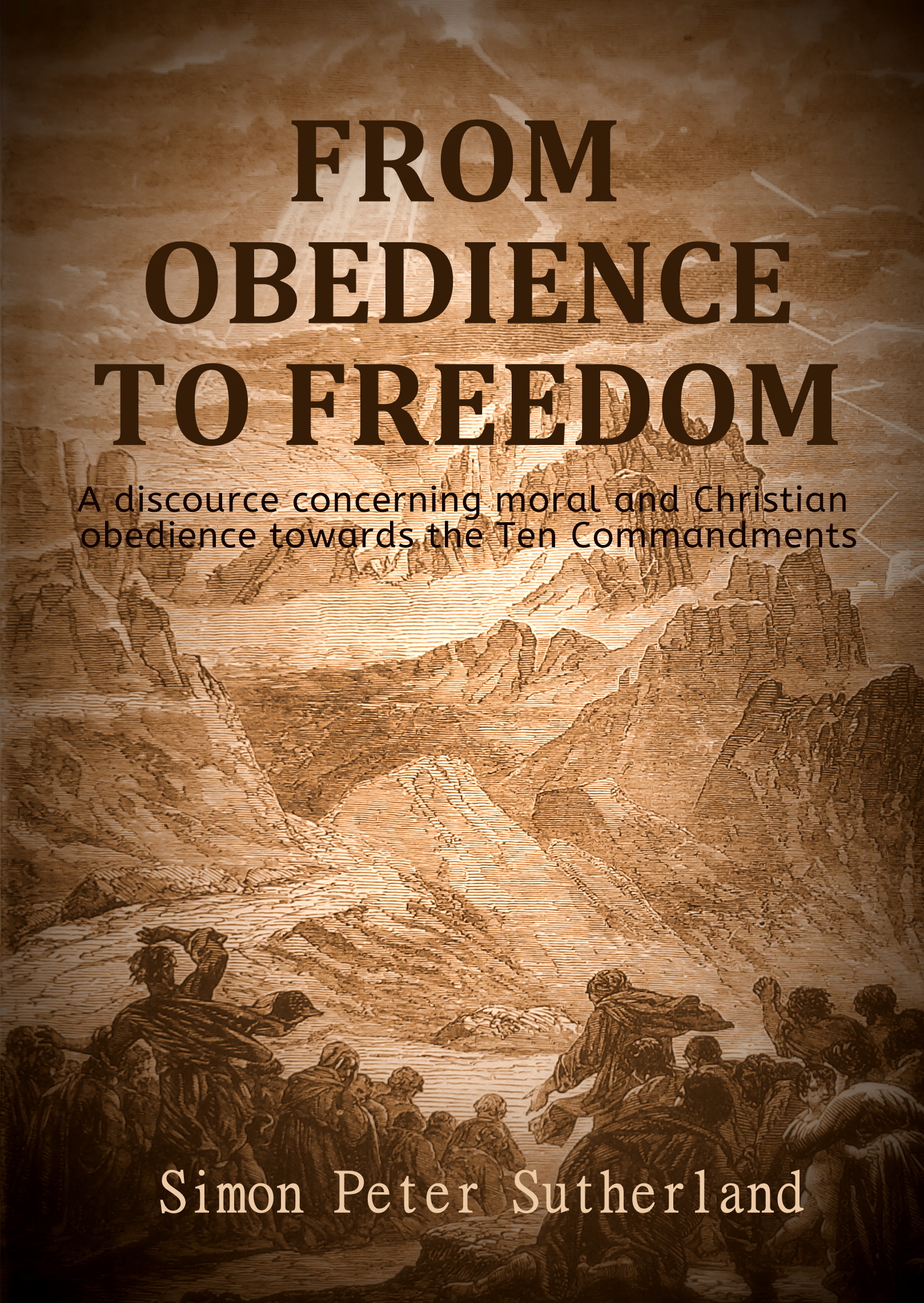
In May I published my first book “From Obedience To Freedom” A discourse concerning moral and Christian obedience towards the Ten Commandments.
In this book I discuss the Christian’s voluntary service towards Christ and His commandments. The book has taken me many years to write and in it I discuss a variety of opinions and I also present the historical views of reformers and other persons and use the King James Version. I discuss how voluntary obedience to the Ten Commandments is not a works based gospel, and how Paul delighted in the commandments and how they contain the very heart of Christ and the New Testament.
I also give brief expositions on each of the Ten Commandments.
From tomorrow I have made my book available for free for a limited time on Amazon. So please get yourselves a copy and share it with your friends and on social media outlets.
Will the next Archbishop of Canterbury be a woman?
Posted by simon peter sutherland in Church of England, Is Female Leadership Biblical?, Reform, Theology on July 25, 2025
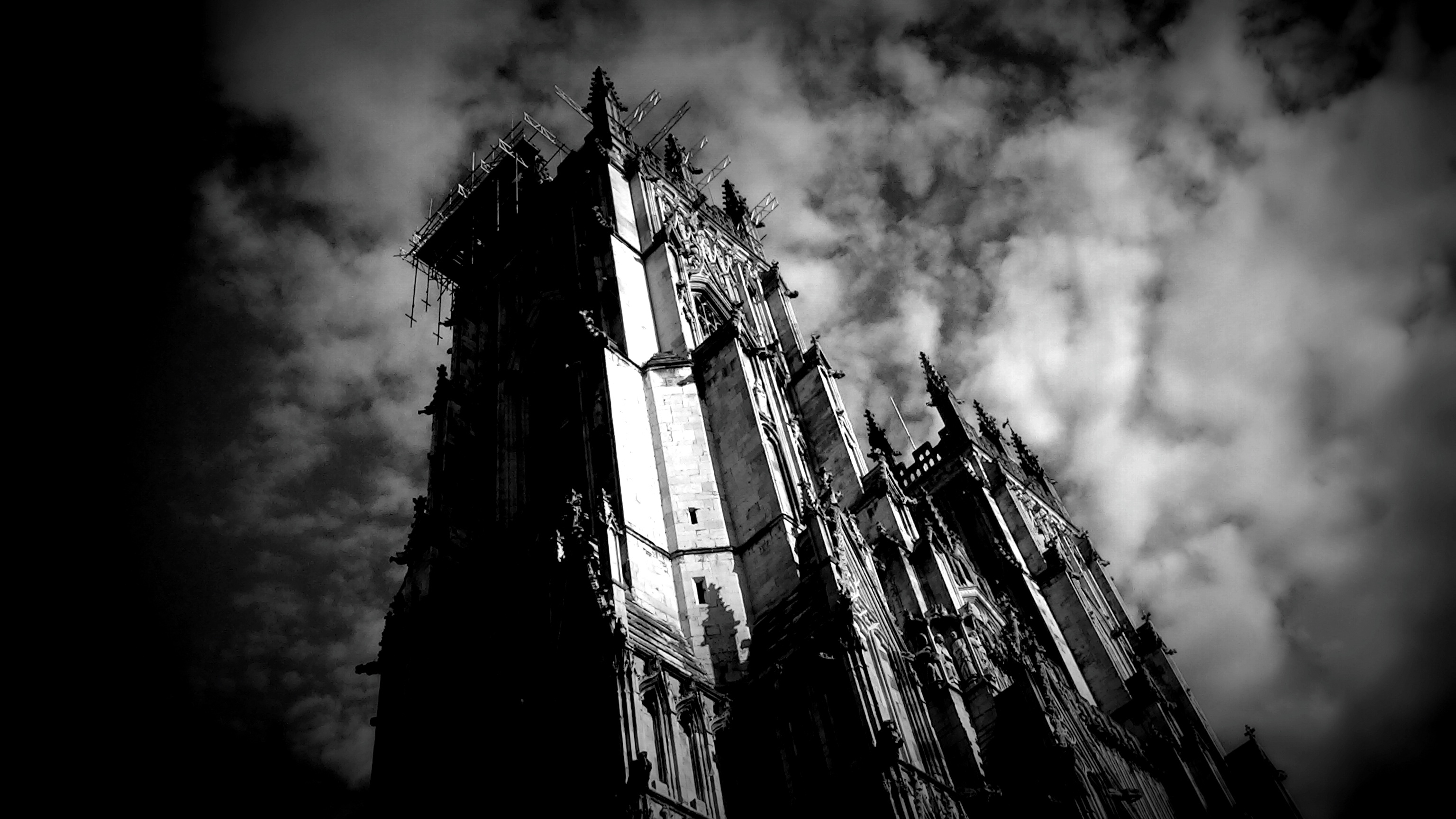
It has been six years now since I returned to the Church of England and during that time I have witnessed a very controversial era within the history of Anglicanism.
In February 2023 a majority of the synod chose to pass the unorthodox motions of the liberal revisionist bishops concerning the blessings of ‘same-sex unions’.
Since then the CofE has remained divided.
Personally I have been through great turmoil being in this denomination. Being very fond of the history of the Church of England, the early English Bibles, the Book of Common Prayer, the great hymns and the lives of the 16th century reformers who were ministers within the Church of England, there is no doubt to me that the present CofE (on the whole) is no longer the same church. After years and years of revisionist liberalism, scandals and corruption, each moment has slowly demolished the denomination brick by brick, and it seems likely that we yet again face another bigger problem that will not go away.
For the first time in history, the next archbishop of Canterbury could be a woman. With very few conservative evangelicals disagreeing with women leadership, it appears that many could embrace this choice and few will oppose it.
This could be an even bigger problem than upholding a Biblical view of marriage.
The reason I say this is because the Biblical view of marriage is plain and obvious. All religions generally agree that marriage is a union between one man and one woman. However when it comes to the issue of women leadership, even the conservative evangelicals have gone astray and many have played the hypocrite by embracing woman bishops who agree with traditional marriage, to their own advantage.
I say this because conservative evangelicals (within the CofE) speak against the liberal bishops and the synod for going against Scripture concerning ‘same-sex marriage’ and ‘the blessing of same-sex unions’ yet they themselves go against Scripture when they embrace and promote female leaders.
Yet the Bible does not support female leadership and in the New Testament there are no female leaders in the Christian church. Yet revisionists pull out text after text and radically re-interpret them and the CofE embraces their claims because fewer and fewer men are putting themselves forward for ministry. So they play a legal game and use the Scriptures to create loopholes that allow for women to become curates, vicars and bishops. Pheobe was a Deacon they say, Priscilla was a co-leader, they say and apparently Junia was an apostle. It’s absolute nonsense.
The reality is that Pheobe (Romans 16: 1) was just a servant of the church who delivered a letter and judging by the context Pheobe was probably the widow of a deacon. Priscilla was simply the wife of Aquilla they had a church in their house (1 Corinthians 16: 19) so that doesn’t prove she was a leader, and Junia was known by the apostles, (Romans 16: 7) and there is nothing in Paul’s text to say that Junia was an apostle. Thus, despite the revisionists claims, these verses do not affirm woman leadership at all and in reality if Paul did affirm female leadership he would be totally contradicting himself.
On the contrary, Paul does not contradict himself and a majority of the Bible is crystal clear that leadership in the Christian church is reserved for men. If you don’t believe me ask yourself why Jesus chose twelve men to be His disciples and then read Paul’s letters to Timothy and Titus. Read them for yourselves and let the Bible speak. Don’t turn to revisionist teachers who promote their agendas and use you as tools for their rhetoric. Paul is very clear to Timothy that the reason men alone are to be leaders in the Church is because man was formed first then Eve and Adam was not deceived but the woman was deceived and fell into transgression (1 Timothy 2: 13-14)
It is clear from 2 Corinthians 11: 3 that Paul was afraid that as the devil deceived Eve so also the Christians in Corinth would also be led astray by the same cunningness. Now imagine what St. Paul would say if he was writing to the Church of England today. They would probably reject his initial application for ministry and try and indoctrinate him with a series of sermons led by woman curates and liberal vicars and then hope and pray that he changes his mind when they’ve finished.
In Colossians 1: 18 Paul explicitly states that Christ is the head of the church and as far as I am concerned if Christ is not the head of this church then the body does not belong to Him.
Since the CofE has been attempting to liberalise practically every Biblical viewpoint in history and distance itself from the great reformers of the past, it has been anything but stable and I think their decision to make woman leaders will eventually be their ultimate downfall. Whether the decision to make the Archbishop of Canterbury a woman comes into effect this year or the next time around, it is only a matter of time before we witness yet again another great apostasy within the CofE.
“From Obedience To Freedom” Out Now!
Posted by simon peter sutherland in Church of England, Reform, The Bible, Theology on June 12, 2025
In my previous post I write about my new book on the Ten Commandments. In this book I explore the topic of the Ten Commandments from a New Testament perspective asking questions such as these: Have the Ten Commandments been abolished by the coming of Christ? Or are the two tablets mentioned in Exodus 20 the same as those found in Matthew 22: 37-40? If the answer is yes then there is no Biblical evidence to reject these commandments as irrelevant to the holy living of the Christian man.
In an original edition of this thesis, dating back to 2007, I had originally been inspired by an old Puritan book called The Ten Commandments by Thomas Watson. I loved reading the puritans back then.
Thomas Watson (1620-1686) was one of the most popular English preachers in London during the puritan era. I was certainly intrigued by this book during my earlier years of theological study. Since then however time moves on and my book has changed. It has gone through revision upon revision until I finally reached a point where I was ready to publish.
Obviously the topic is controversial on all sides. For some Christians there should be given no place whatsoever for any aspect of law in the Christian life. I disagree with that. Yet if that concept was true, then what are we left with in Christianity? Outright lawlessness or a life governed by obedience to Christ in faith. Surely there is nothing within any of the Ten Commandments to contradict what the New Testament says about holy living.
When I originally began to write this book I was much younger and I was very convicted within my soul and daily I yearned for more of Christ. My soul eagerly awaited the presence of my dear Lord and that passion can be caught within the pages of the book. However much has changed since then and I’m older. Nowadays I read Puritan books much less, however I have retained my passion for the writings of Richard Baxter. likewise the King James Bible remains my favourite translation. For this reason, I have continued to use the AV within the book and perhaps I’ll save the reasons why for some other post.
But in the meantime, I hope the Lord uses my book and that it inspires many believers to do right in the eyes of the Lord. We must love the commandments of our Lord and live them by faith in Christ. When we do this we will find inner freedom within the divine legislation.
I have experienced this freedom many times.
However, I am presently in the Church of England (in some sense) and I feel a continuous burden for the apostacy that is crippling it. Will I remain, and for how long I do not know? All I can say is that if there was ever a time for the Law of the Lord to be remembered and loved, that time is now.
My new book on the Ten Commandments
Posted by simon peter sutherland in Christianity, The Bible, Theology on May 10, 2025
For many years I have been writing a number of books and wanting to release them. Books can take a long time to put together and they won’t write or publish themselves, so I have decided it is now time to put them out there.
As a Christian I have very deep convictions about holy living and obedience to Scripture and I am constantly writing about them. Some of these writings are reflections and others are yet to be published. One of these books includes my present discourse on the Ten Commandments and their relationship to the Christian life. This work began many years ago and I have rewritten and revised it many times. When I first wrote it, the book began as a somewhat puritanical discourse and over time, I have improved the book while remaining true to the original concept.
In “From Obedience To Freedom” I have used the King James Version and I argue there is a place of freedom in obeying the Ten Commandments in simplicity and in faith.
In our world we are caught up in society and day to day life, in doing the law of man. Our culture is constantly trying to remove us further and further away from Christ and closer to the world. Sin is forever trying to cause the Christian to obey it. But no Christian is obliged to obey the laws of sin and for this reason the Ten Commandments are very helpful in bringing us closer to God. I argue there is much more to the Ten Commandments than mere rules and regulations, there is a place of inner freedom where the human soul can find liberty in law and within ourselves.
In Christ and His commandments we can be free from this world and that freedom can be found in obedience to our Lord. This is what my book is essentially about and I have now released it through Amazon and I hope my readers find it helpful.
-
You are currently browsing the archives for the Theology category.
Simon Peter Sutherland
-

 Simon Peter Sutherland