Archive for category The Bible
Christ died for all mankind, even Judas!
Posted by simon peter sutherland in "Calvinism", Limited Atonement, Theology on March 28, 2024

Over the last 20 years I have been in a continuous and sporadic confrontation with the 5 Point Calvinist view of Limited Atonement. I have read books, articles, listened to sermons, debates and had many conversations with a number of believers who hold to the the view that Christ did not die for the whole world but only for His elect.
I reject that viewpoint.
In the Bible there many verses that state that Jesus Christ died for all, yet according to many 5 Point Calvinists, this word all, does not always mean all. Fair point, there are times when all does not mean all. Does that observation however mean that Jesus Christ did not die for the whole of mankind? No, it does not.
At this stage, there is little point my listing the considerable amount of New Testament verses which are believed to affirm that Jesus died for all mankind, since 5 Point Calvinists differ to the plain interpretation of these passages. So I will focus upon one passage and work my way from there.
In Matthew 26: 17-30 Jesus celebrates the Passover with His disciples and institutes the Lord’s supper. Those who were present were the 12 disciples. This includes, Peter, James, John, Andrew, Philip, Judas Iscariot, Judas Thaddeus, Matthew, Thomas, James (son of Alpheus), Bartholomew, and Simon the zealot.
The feast took place on the evening of the first day of the feast of Unleavened Bread (Matthew 26: 17). Verse 20 says “When evening had come, He sat down with the twelve.” Then Jesus refers to the one who will betray Him (verse 21) and the disciples are exceedingly sorrowful and they ask the question “Lord, is it I?” (verse 22) Then Jesus responds by saying “He who dipped his hand with Me in the dish will betray Me.” (verse 23) He then goes on to say “woe to that man by whom the Son of Man is betrayed! It would have been good for that man if he had not been born.” (verse 24)
Then Jesus takes the bread, blesses and breaks it and gives it to His disciples saying “Take, eat; this is My body.” (verse 26) We assume all 12 disciples ate the bread at this point. Then in verses 27-28 Jesus takes the cup and says “Drink from it, all of you. For this is My blood of the new covenant, which is shed for many for the remission of sins.“
This word translated many is is described by Greek scholars as meaning what it says on the tin, a large number. There is basically no limitation to that word. The word “shed” describes a pouring out in a sacrificial sense and is steeped in Old Testament knowledge. He means that without this shedding of blood there is no remission of sin or sins.
When you consider the unmoveable fact that Judas was present when Jesus said that and when He offered all 12 disciples to eat and drink this Passover, we cannot but assume that He said this to all 12 disciples including Judas.
Thus, if Limited Atonement were true as is stated in the 5 Points of Calvinism, then Christ only died for His elect who would believe in Him and be saved. This would exclude Judas. Yet here in Matthew 26: 17-30 we see the exact opposite. We see Jesus offering Himself to all 12 disciples, including Judas, yet Judas betrayed Him.
It is my belief that had Judas repented, He may have been saved? But he did not. This however does not mean that Christ did not die for him or for the rest of mankind, it merely means that all do not receive Him.
Dwell upon these thoughts this Easter as we remember what Christ has done for us and all who believe in Him and keep His commandments.
Is the Titulus Crucis authentic?
Posted by simon peter sutherland in Biblical archaeology on March 22, 2024
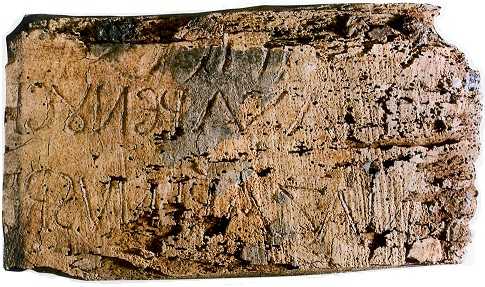
In the Church of Santa Croce in Gerusalemme, Rome, is an artefact known as the Titulus Crucis.
Titulus Crucis is Latin for title of the cross and the item in focus is a piece of wood which is claimed by some to be the actual sign placed on the cross above Jesus’ head 2000 years ago and it may well be? It certainly seems consistent with the gospels to me.
In the gospel of Luke 23: 38 this title was written in Greek, Latin and Hebrew and reads,
“THIS IS THE KING OF THE JEWS”
In the gospel of John 19: 19 the title is written in Hebrew, Greek and Latin and reads,
“JESUS OF NAZARETH, THE KING OF THE JEWS”
The Titulus Crucis is written in Hebrew, Greek and Latin. I have viewed this item a number of times and I am fascinated by it.
The story goes that in the 4th century Helena (mother of Emperor Constantine) travelled to Jerusalem to discover the items associated with the life of Christ and she famously found the true cross and the nails and the Titulus Crucis. This history is attested to by Ambrose (c. 339-397) and Chrysostom (died 407)
Likewise a pilgrim named Egeria travelled to Jerusalem about 381/2-384 and wrote about seeing this item in a chapel and the writings of Egeria are considered very reliable.
The story goes that Helena kept a section of the Titulus in her own private chapel and in later centuries the item was thought to be lost until it was rediscovered above the altar.
I have visited Helena’s chapel a number of times and I have spent considerable time looking at the Titulus Crucis in another room and even though I am not a Roman Catholic nor have any part in that religion, nor do I consider the early Roman Church to be the same religion, I view this item as sacred. I do not know of any evidence to make me consider it to be a forgery.
In contrast to the accounts in Matthew 27: 37, Mark 15: 26, Luke 23: 38 and John 19: 19 the Titulus Crucis does not read as though it has been copied from the four gospels but has its own character.
In my opinion Matthew’s gospel was originally written in Hebrew whereas a version of Luke was written to a Roman official in Latin and John in Greek. For these reasons I believe it is possible that Matthew was quoting the Hebrew line of text, Mark the Greek line of text and Luke the Latin line of text and John the Greek line of text. This accounts for the minor differences in all four gospels.
Matthew 27: 37 reads “THIS IS JESUS THE KING OF THE JEWS.”
Mark 15: 26 reads “THE KING OF THE JEWS.”
Luke 23: 38 reads “THIS IS THE KING OF THE JEWS.”
John 19: 19 reads “JESUS OF NAZARETH THE KING OF THE JEWS.”
When viewed from this perspective I believe there is no contradiction in the gospels. Each author was writing from a specific section of the title and from the perspective of their intended audience.
Likewise I am of the opinion that the original title may have been highlighted in some way to make it more readable for the passers by, and this item is believed to have been covered in white chalk and the carved out text to have been painted black.
When I have looked closely at the item it is very clear that the carved writing is rugged and unique, and to me the writing reflects the urgency and controversy of the moment as implied by the context of John 19: 19 where John writes that “Pilate wrote a title and put it on the cross.”
For me this is a very important observation.
The rock that became a mountain
Posted by simon peter sutherland in Theology on January 31, 2024

Over recent times it is difficult for many people to see what is happening to Christianity and faith all around the world. For many it seems like Christianity is under attack.
We read of Christians being persecuted around the world. We read news of a Christian singer being told she could not sing Christian music in public. We read of controversy surrounding street preachers. We read of Churches closing, and we know of the difficulties that the Church of England is facing. It is quite probable that Christianity is the most persecuted religion in the world.
So what on earth is going on?
The simple answer is that I believe God is doing a great work in our time.
I believe the Bible teaches that persecution often brings widespread apostasy and at the same time persecution is a sure sign that the Kingdom of Christ is growing.
In the book of Daniel 2: 35 we read a prophecy concerning the Kingdom of Christ and how a stone that smote an image “became a great mountain”. That rock that became a mountain is the Kingdom of Christ who promised He would build His Church and the gates of hell will not prevail against it (Matthew 16: 18)
When Jesus promised He would build His church He did not claim it would always be a towering structure. When He used the word build, He implied a continuing structure that can be extended. As a CofE minister said a while ago, ‘The Kingdom grows one soul at a time’.
I believe the Christian church in the uk has hit one of the most challenging times in the history of Christianity and I believe we will get through it.
As John Gill rightly stated in his commentary on Daniel 2: 35 “Christ’s kingdom, from small beginnings, has increased, and will more and more, until the whole earth is subject to it: this began to have its accomplishment in the first times of the Gospel, especially when the Roman empire, as Pagan, was destroyed by Constantine, and the kingdom of Christ was set up in it; and it received a further accomplishment at the time of the Reformation, when Rome Papal had a deadly blow given it, and the Gospel of Christ was spread in several nations and kingdoms; but it will receive its full accomplishment when both the eastern and western antichrists shall be destroyed, and the kingdoms of this world shall become the Lord’s and his Christ’s, Rev 11:15.”
In Isaiah 2: 2 the prophet wrote these words, “it shall come to pass in the last days, that the mountain of the Lord’s house shall be established in the top of the mountains, and shall be exalted above the hills; and all the nations shall flow unto it.”
Be strong and the next time you see a tiny rock, turn around, lift up your eyes unto the hills and remember the rock that became a mountain. The implication is, it’s unmoveable.
William Tyndale’s military translation of Luke 2: 13
Posted by simon peter sutherland in Christmas, Church of England, The Bible, Theology on December 23, 2023
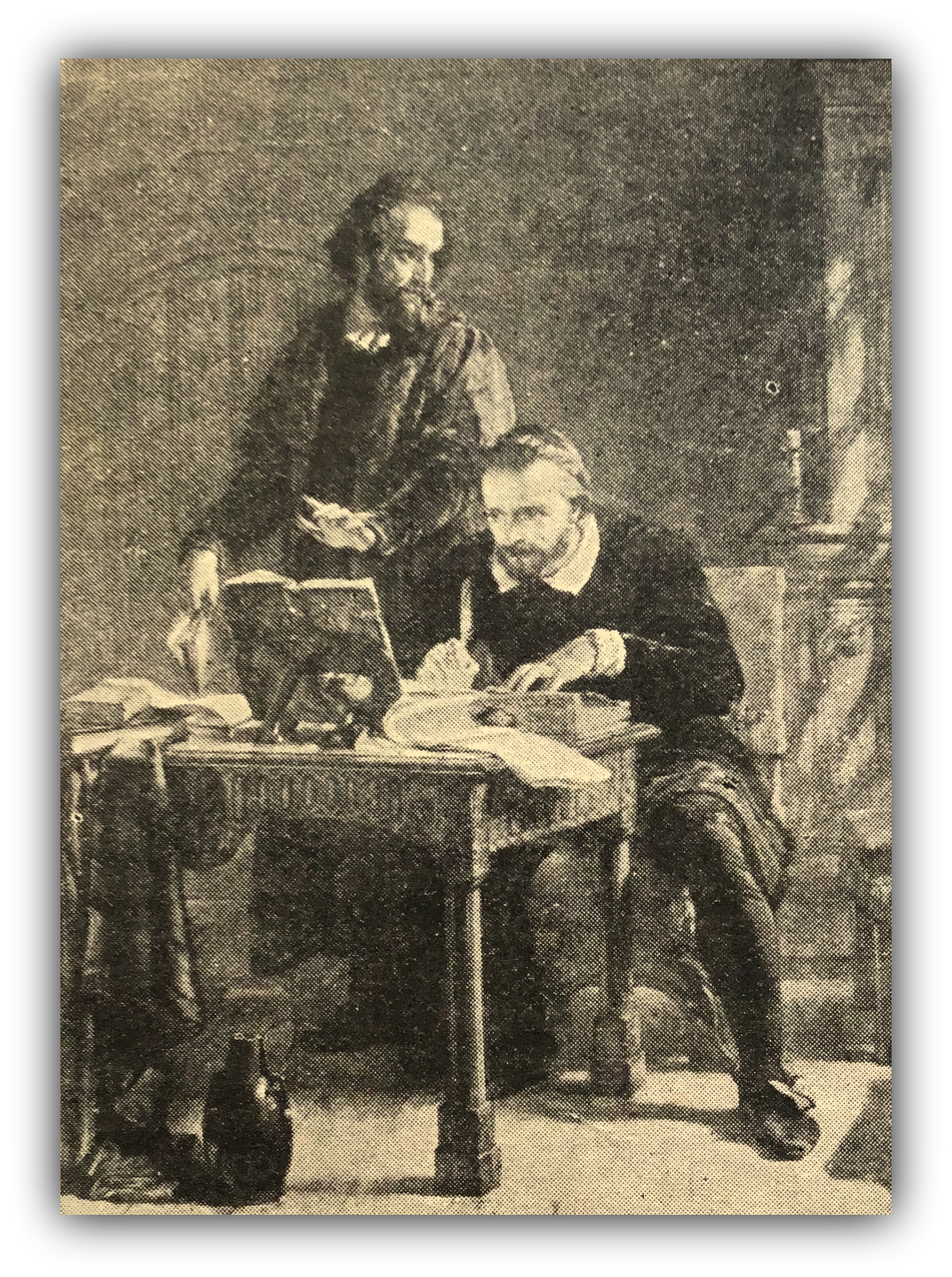
At this time of year it is a regular feature to hear passages from Luke’s gospel read aloud. Most of the time these days it is read from the NIV, ESV or some other modern translation. Yet with these translations we often miss so much.
For me personally, I’m traditional I like old Bible translations. For me, few modern translations read like authoritative Scripture. Tyndale’s 16th century translation however is a whole different ball game. It is one of the greatest English translations ever produced. No other translation has so impacted the English language as his.
And in his 1534 New Testament, Tyndale translates Luke 2: 8-13 this way,
“And there were in the same region shepherds abiding in the field and watching their flock by night. And lo: the angel of the Lord stood hard by them, and the brightness of the Lord shone round about them, and they were sore afraid. But the angel said unto them: Be not afraid. For behold, I bring you tidings of great joy that shall come to all people: for unto you is born this day in the city of David, a saviour which is Christ the Lord. And take this for a sign: ye shall find the child swaddled and laid in a manger. And straightway there was with angel a multitude of heavenly soldiers, lauding God and saying: Glory to God on high, and peace on the earth: and unto men rejoicing.”
(TYNDALE’S NEW TESTAMENT, 1534. The Gospel of St Luke. Chapter Two. A modern-spelling edition by David Daniell)
Note here something very distinct. In verse 13 Tyndale employs a military translation of the word normally translated “host”. Tyndale uses the English word “soldiers”.
This word is also used in the 1599 Geneva Bible, no doubt borrowing the idea from Tyndale. This is very interesting because it can be verified by the Greek.
According to Strongs (G4756) the Greek word means “an army; from the base of G4766, as encamped”. This is intriguing since the angelic reference is figuratively used. According to John Gill, the size of the multitude could be “innumerable; there are thousands, ten thousands, and ten thousand times ten thousand of them.”
It is quite spectacular to imagine thousands of soldiers declaring “peace on earth”, and good will.
Translations such as the KJV, RSV, NIV, ESV, ASV, use the word “host” which I think is found wanting. Tyndale’s military imagery is much more profound and demonstrative of the conflict between man and God being resolved in the life, death and resurrection of Jesus Christ. This is the heart of the Christmas story and although we often see the nativity story in a sweet fashion it is not so sweet. Jesus Christ was born to die and His enemies would one day take those hands and feet and pierce them with Roman nails.
What began with good news, of peace on earth and good will to all men concluded with Christ’s death making permanent satisfaction for sin and justification by His resurrection.
Recently while reflecting on the permanency of the gospel I was standing looking out at the vast open sky. The clouds, stars and the moon were all clearly visible. Down on earth people were going about there busy business and doing their thing, but the moon remained, unmoveable and unchanged. The gospel is like that, it does not and cannot change. It abides. The world changes, people change but the word of the Lord does not change. Likewise, the God who inspired it does not change either. He remains, He will not break His promises and regardless of the whims and babblings of this world, the Scripture cannot be broken.
This Christmas, remember the truth of the gospel and if you follow Christ remember that there is a multitude of heavenly soldiers on your side and if God is with you who can be against you?
I believe the Virgin Mary was not sinless
Posted by simon peter sutherland in Census of Luke, Christmas, Theology on December 4, 2023

Recently I went to see the new movie Journey to Bethlehem. A musical inspired by the events surrounding the birth of Jesus.
Mary does sing in Luke 1: 46-55.
While I found the movie entertaining and enjoyable to watch, I didn’t agree with it all but I came to notice the very distinct representation of Mary as human, not sinless. As some of you may know the Roman Catholic Church upholds a doctrine that claims Mary was not subject to original sin. Although I don’t particularly have a problem with believing that Mary did not practice sin, I do have a problem with the false claim that Mary was sinless.
While there are complexities within the doctrines upheld within Roman Catholicism, Eastern and Oriental Orthodoxy, it should be stated that there is not a single verse in the Bible that claims Mary was “sinless”. In Luke 1: 47 Mary sings ‘my spirit rejoices in God my Saviour’.
If Mary was “sinless” she would not need a Saviour.
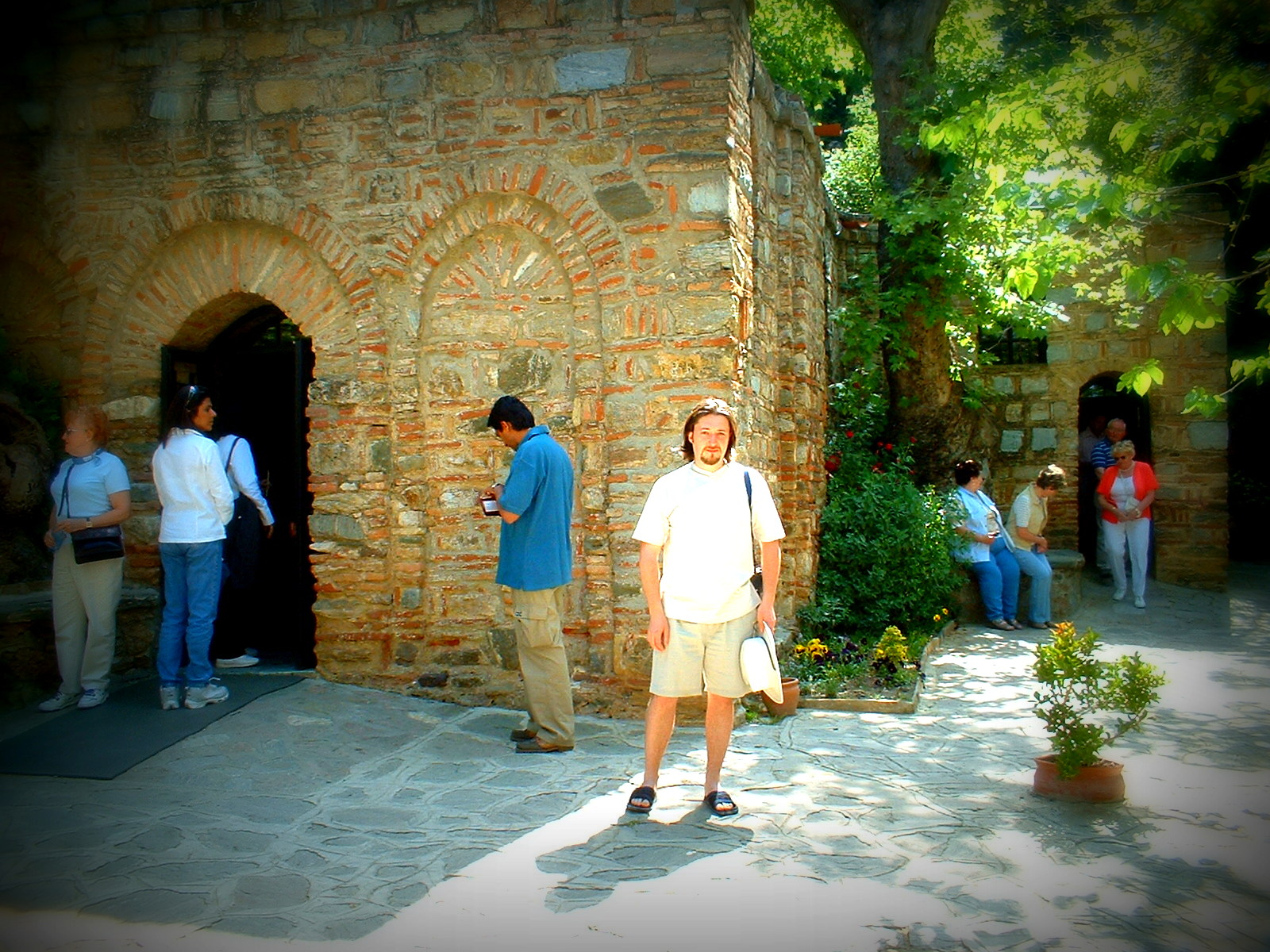
Many years ago I visited Ephesus and also the house of the virgin Mary. This house is way up in the mountains and was discovered in the 19th century and is believed to be the place where the Apostle John took Mary as instructed by Jesus in John 19: 25-27.
I like many people sat and pondered upon what the mother of Jesus may have been like. What did Mary look like, how did she talk, what stories could she tell?
Luke 2: 19 says that Mary cherished her memories and stored them in her heart, so I assume Luke’s gospel tells us all we need to know. That being said I understand the nativity texts in Luke contain feminine uses of Greek meaning that many verses could actually contain her own hand written testimony. Thus her own statement in Luke 1: 47 affirmed that Mary was not without original sin.
Likewise 1 John 1: 8 states that ‘if we say that we have no sin, we deceive ourselves and the truth is not in us‘ and that verse does not exclude Mary. After all it was written by the man who Jesus gave instructions to take Mary into his own home so Mary may have even read the letter when John wrote it. After all, John is believed to have been an older man when he wrote his letter, so Mary would have still been present with him as instructed by Christ.
I believe this point and Luke 1: 47 disproves the false claims of Roman Catholicism.
Why are false teachers “twice dead” in Jude?
Posted by simon peter sutherland in "Calvinism", Church of England, Theology on November 16, 2023

The Epistle of Jude is one of the most important New Testament letters to read during times of great apostasy. Jude gives a strong message to believers that we are compelled to contend for the faith. When false teachers usurp their own authority and the Spirit of truth is attacked, never fear, the Epistle of Jude will always be there to help you out.
The Epistle was traditionally written by Jude the half brother of Jesus, who found himself in a situation where men were professing the faith but their lifestyles were not measuring up with scriptural morals. As a result Jude labels these men as ungodly because they were abusing the grace of God as a licence to sin. Jude became a sharp opponent even though they descended from the same religious tradition as he.
In his introduction the Jude refers to himself as a brother of James, and swiftly presents Old Testament examples of men who had fallen from grace. Jude does not want his readers to be deceived by these men so he informs the readers that they were ordained to condemnation long ago (verse 4). In verses 7-16 he writes about sin and judgment as a reminder that actions have consequences.
It is here in verse 12 where the words “twice dead” become intriguing. But what does it mean to be twice dead?
Essentially the context is that these false teachers were once dead in sin but had (at some point) been made alive in Christ, but now because they have fallen away and apostatised, they are dead again, thus “twice dead“. Essentially, these people fell away from the faith, abandoned good doctrine and became dead in sin again. Jude 12 is a proof text that affirms people can indeed walk away from their salvation, abandon the truth and be eternally lost.
According to Strongs (G1364) the Greek word translated twice means ‘again‘. It speaks of a repeated occurance.
Reading Luther’s commentary here can be useful since he rightly understood this passage to symbolically refer to false teachers as fruitless trees, “they make the claim and show as if they were Christian bishops, while neither the word nor the work of Christian bishops is there, but all dead at the root.”
Very fitting to our present age!
Adam Clarke’s commentary is also useful since he understood this term to refer to believers who had apostatised and lost the grace they had received and became fruitless and twice dead,
“First, naturally and practically dead in sin, from which they had been revived by the preaching and grace of the Gospel. Secondly, dead by backsliding or apostasy from the true faith, by which they lost the grace they had before received; and now likely to continue in that death, because plucked up from the roots, their roots of faith and love being no longer fixed in Christ Jesus.”
Again, very fitting!
As John Wesley rightly stated, “These are spots – Blemishes. In your feasts of love – Anciently observed in all the churches. Feeding themselves without fear – Without any fear of God, or jealousy over themselves. Twice dead – In sin, first by nature, and afterwards by apostasy. Plucked up by the roots – And so incapable of ever reviving.”
The lesson is this, if like me you are a Christian who is devastated by the level of widespread apostasy that we are all having to face, don’t lose heart and don’t waste your time talking to dead people who won’t listen to the things that you are saying, they can’t hear you. They may be twice dead.
Instead listen to the Word of God and let the Text speak to you. Remember, if a sermoniser or bishop says anything that is contrary to the Bible those words have no authority whatsoever. The bishop, or priest is merely echo chambering his own words into the air.
The wrecking ball of Premillennialism
Posted by simon peter sutherland in Eschatology, Theology on October 17, 2023

In 2020 I published an article concerning my moving toward the eschatological challenge and in my previous article I mentioned that I am a “free thinking Amillennialist”. For some that statement may leave some unanswered questions in mind? So I thought I’d give a little backstory.
When I was a boy, growing up in church, we didn’t hear much about the end times. I knew about the book of Revelation but I left it alone. Often images would provoke fear and I would see publications of Billy Graham and other preachers saying the end is nigh.
Growing up in the Salvation Army there was no mention of eschatology until my family went to an evangelical church and were suddenly presented with premillennialism. We were told about the rapture and the Antichrist and often fearful things would escape any pause for freedom of thought. Preachers would say Antichrist is going to come and sign a peace treaty in Israel and a great tribulation would begin. We will all be raptured they would say.
There was never any explanation of the complexities of interpreting Scripture or any reference to different views, it was all presented as though all Christian’s are obligated to believe this.
Some years later I read the book of Revelation for myself and I began to enquire what it was all about. Who were the seven churches John was writing to? Where was Patmos? Where is Ephesus? In 2004 I visited Ephesus for myself and by that time I had already begun to see that the seven churches of Revelation were actual historic 1st century churches. None of which exist today. Then I asked myself, why would a man on Patmos write to people in seven churches 2000 years ago about events that were to happen thousands of years later after they were all dead?
Revelation 1: 1 was a wrecking ball for me and here John already lays the foundation, “The revelation of Jesus Christ, which God gave him, to show His servants things which must shortly come to pass;”
Note how he says “things which must shortly come to pass” a clear reference to the 1st century when Revelation was first written.
Then I read Revelation 1: 19, “Write the things which you have seen, and the things which are, and things which will take place after this.”
To me, these verses were a wrecking ball for all I had been taught and showed me that John was not writing to 1st century people about events that would take place thousands of years off in the future but about events that would ‘shortly take place’ at the time of writing.
John was writing to 1st century Christian’s warning them about events that they would have to face in their own lifetime.
Imagine if you were in a war and writing to fellow Christians to warn them about events that were about to shortly come to pass, would you want them to think you were writing about future events that would occur thousands of years later? What would be the point of that? The warning would make no sense.
As I explored I learned that the ancient world loved puzzles and used a lot of symbolism and references to the Old Testament. Then I learned that there are different interpretations of the book of Revelation but I had only been presented with one view. Every Christian I knew was a Premillennialist and they all told me that there would be a rapture and one person would be taken and the other left. Yet as I began to explore I found that the very idea of a premillennial rapture was an 18th-19th century invention and the passages used to justify these rapture theories are more contextually related to the destruction of Jerusalem in AD 70 rather than the end of the world. Paul in 1 Thessalonians 4: 13-18 was writing about an entirely different subject than Jesus was communicating in Matthew 24: 40. When Jesus said “Then two men will be in the field: one will be taken and the other left.” He was talking about Jews being taken into Roman captivity in AD70 and not individuals being raptured up into heaven thousands of years later. The reason many people fail to recognise that is because the preachers already read the rapture into it.
In my opinion, Premillennialism is not a solid contextually verifiable interpretation of the Bible passages it claims to represent. It often takes scriptures way out of context and assumes an interpretation of them as the passages are being read. It ignores the basic meaning of Scripture and fails to reconsider what those passages would have meant to the original writers and 1st century readers.
For this and numerous historic and contextual reasons I have, over this lengthy journey, decided that the A-millennial position is the most reliable and historically correct interpretation of the book of Revelation. The title isn’t perfect and doesn’t perfectly communicate my understanding 100% but unlike premillennialism it realises the implications of Acts 2: 32-36 correctly and does not assume the reign of Christ to begin after His glorious return, but realises that He is reigning from heaven now and has been since His incarnation on earth. Peters sermon in Acts 2 is explicitly clear on that and his words leave nowhere for the premillennial to go.
Though I respect that many godly Christians believe wholeheartedly in premillennialism, I am content to say that I do not. I am happy to know that after such a long and often conflicting journey, I am content to say that I have arrived at my destination and am in good company.
There will be peace in Israel, someday
Posted by simon peter sutherland in Eschatology, Theology on October 14, 2023

Over these last few days the Middle East has been weighing heavy on many minds. The holy lands are literally the very landscape of the Bible, so as a Christian, Jerusalem and Galilee are very dear to me. Yet I have never been there.
I have wanted to visit the holy lands for many years, but somehow it has never happened for me. Nevertheless, I have nearly taken that adventurous journey a number of times.
When I was in Cyprus and filming for the Apostles at Paphos, I had no idea if my film project would ever be completed. It was my first documentary and Jerusalem was weighing continuously on my mind. I was very close to taking a voyage over to Israel but I decided I would rather continue filming. So I sat in Paphos and wrote down how Jerusalem holds me captive, and I am in chains to her.
Continuously visiting the site of St Paul’s Pillar was a series of wonderful experiences and as I sat in Agia Kyriaki church, I was met by an elderly lady who was sweeping the floor. She was full of character and was very kind to me and while sweeping the lady began quoting “Our Father, who is in heaven…” and was clearly troubled by world events and said that the Lord’s Prayer means “we have a father, that God is our Father, and people say there is only One God, and yet everyone is fighting and killing one another. If there is One God, why do people fight?”
“Religion” she said “Religion, that’s the problem!”
It was one of those moments that can be remembered for a lifetime.
Someday I know there will be peace in Jerusalem, someday they will lay down their arms and there will be no more wars, no more trouble, no more killings. I know this is true because I am a Christian and it is in the Bible.
In the Book of Revelation John was on the Isle of Patmos and wrote to seven churches in Asia Minor, Ephesus, Smyrna, Pergamos, Thyatira, Sardis, Philadelphia, and Laodicea. All of these congregations were 1st century churches and no longer exist. But John wrote to them during a time of Roman persecution and in chapter 21 mentions his vision of the New Jerusalem. It was a very striking and hopeful thing to do.
As a free thinking Amillennialist I believe the millennial reign of Christ began at the Life, death, resurrection and ascension of Jesus Christ and continued on through the church age. There may be golden eras of Christianity in the future and therein peace may be found. However, I believe there will never be absolute universal peace on this earth until Christ returns when the last enemy to be destroyed is death (1 Corinthians 15: 20-28) Meanwhile peace can be attained individually for those who believe in Jesus Christ and outside of Him no true peace can be found.
In Revelation 21: 1-4 John wrote:
“I saw a new heaven and a new earth: for the first heaven and the first earth were passed away; and there was no more sea. And I John saw the holy city, new Jerusalem, coming down from God out of heaven, prepared as a bride adorned for her husband. And I heard a great voice out of heaven saying, Behold, the tabernacle of God is with men, and he will dwell with them, and they shall be his people, and God himself shall be with them, and be their God. And God shall wipe away all tears from their eyes; and there shall be no more death, neither sorrow, nor crying, neither shall there be any more pain: for the former things are passed away.”
Those who do not believe in Jesus Christ have no hope in anything but themselves. Kings, rulers, politicians, cannot effect global world peace. All of us who know and trust in Jesus Christ recognise our human limitations and know that someday, somehow, by the power of God, there will be absolute peace on earth. But until that day comes, we strive for peace, we hope for peace, we work for peace, we live for peace, we pray for peace and we say as did John “Amen. Come Lord, Jesus” (Revelation 22: 20)
Visiting the home of Mary Jones
Posted by simon peter sutherland in Mary Jones, The Bible, The Welsh Bible on September 29, 2023
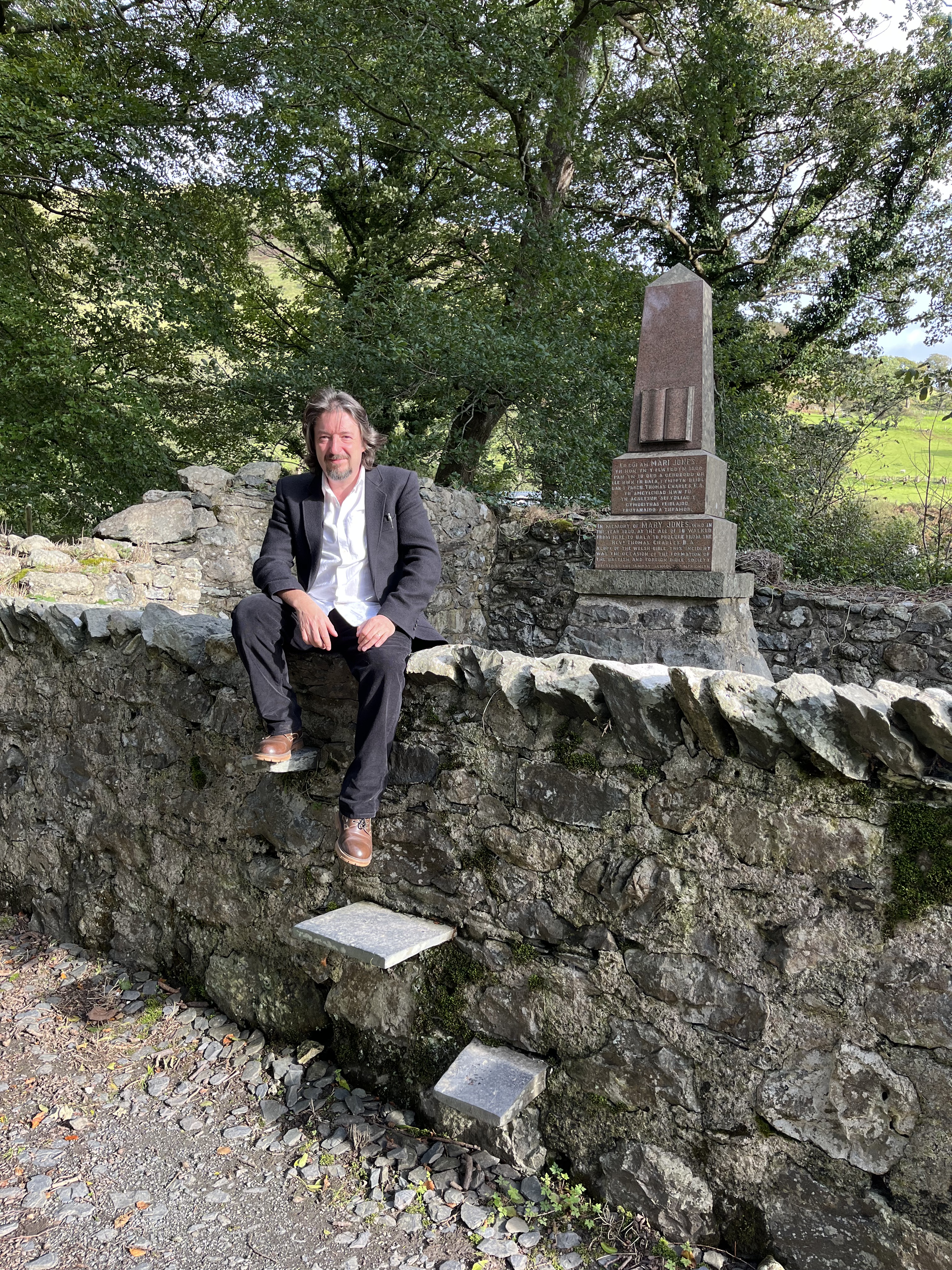
Recently I visited the home of Mary Jones (1784-1864) in Llanfihangel-y-Pennant, Wales.
As mentioned in a previous post I have visited places associated with the story of Mary Jones and her Bible over the past few years.
My intrigue in this historic story is continuing to broaden.
On this leg of my journey we returned to Bala and to the grave of Thomas Charles eventually making our way to the home of Mary Jones.
It was from Llanfihangel-y-Pennant that Mary worked and saved for around six years to buy her Bible. From this house (known locally as Tyn-y-ddol) Mary set off on her voyage to walk around 26 miles across the Welsh countryside to get her Welsh Bible from Thomas Charles. The story is legendary!
For me however, visiting this house is like being on a Protestant pilgrimage. It’s a beautiful little place and there’s a local church where the parents of Mary Jones are buried. Contrary to the published Sunday school versions of the story Mary’s father had died long before she got her Bible. Jacob Jones died in “1789” and his gravestone confirms this. At that time Mary Jones would have been about 4 years old.
Nevertheless the story is true in it’s essence and it’s impact on history is incredible.
Hymn stories: Here is Love Vast as the Ocean
Posted by simon peter sutherland in Hymns, The Welsh Bible, Theology on August 22, 2023

Here is Love Vast as the Ocean is undoubtedly one of the greatest hymns ever written. For many Christians it communicates the essence of Christianity perfectly.
But what’s the story behind the hymn? And when was it written? Let’s look at some of the lyrics and explore. The hymn begins with these words;
“Here is love, vast as the ocean,
loving kindness as the flood:
when the Prince of Life, our Ransom,
shed for us His precious blood.
Who His love will not remember?
Who can cease to sing His praise?
He can never be forgotten
throughout heav’n’s eternal days.”
The above lyrics are an English translation by William Edwards. The original hymn was written by welsh poet, and minister William Rees of Llansannan. Rees was born in 1802 and today a memorial stands near the village church.
In his hometown William Rees was raised a Calvinistic Methodist and as a boy he worked as a shepherd on a farm. He was educated at the local village school during the winter months and he would also educated himself. Later he became involved in a local independent chapel and began preaching and was appointed minister at Mostyn in 1831 and Swan Lane in 1837. He became quite famous for his preaching, and in 1847 his hymn “Dyma gariad fel y moroed” (Here is Love) and was first published. Amidst growing popularity Rees moved to Liverpool and eventually to Chester where he died on 8 November, 1883.
Rees was not only a preacher but a very influential person in welsh politics. He was also the publisher of Yr Amserau (“The Times”) a journal printed in Liverpool. Rees was also in favour of the disestablishment of the church in Wales, views which no doubt contributed to the popularity of his hymn in during the welsh revivals of 1904-1905.
I have visited Llansannan many times and I find it a pleasant yet unsophisticated rural area. I also filmed in the area for my documentary on William Salesbury. Both Salesbury and Rees have Llansannan in common and for this reason I included my instrumental version of the hymn among the opening scenes of my film. For me, the lyrical depths of his hymn demonstrate how accurately he understood the message of Christianity. God is love and His love is vast as the ocean. Yet it cannot be ignored, his use of the ocean as a metaphor has many implications to it. To describe the love of God as being vast as the ocean, is to imply there is something to be feared. As great and vast as the ocean is many have perished in its waves. I have spent many days and hours of years in Wales and it is dominated by its glorious coastline. As a singer-songwriter I am aware how composers interpret the world they live into a lyrical art flow of poetic splendour. I believe the North Wales coast served as the source of illustration for this great hymn and have no doubt that Rees sat along the seafront and reimagined what it all means in light of the love of God. As vast as the ocean is, to journey upon it has been the destruction of many. Yet at the same time, it provides great pleasure, and food for all and helps nation meet nation.
Back in the Biblical times the ocean was one of main ways St Paul reached the gentiles. Yet like so many in the ancient Greco Roman world, he too faced shipwreck. He suffered a great deal for the cause of the gospel. There is no escaping it, life in Christ is both a joy and a conflict at the same time. Rather like the ocean, I admire its breathtaking eternity, yet I do not deny its power. I do not deny that many have taken a voyage upon the ocean, only to find themselves shipwrecked and lifeless at the bottom of the abyss.
I wonder if you think that love vast as the ocean means that because God loves us all, life is all smooth sailing from now on? In his hymn Rees makes a number of references to the “flood” and “fountains open deep and wide”, “floodgates” and “mighty rivers” all of which reflect North Wales in some sense. Likewise he also mentions the pain God in Christ endured to save us “on the mount of crucifixion”. Probably the most horrific and torturous method of execution in the Roman world.
These lyrics reflect the mystery of suffering. Of which some take the viewpoint that if God exists and cares for us, why does suffering exist? I would respond that it is because suffering exists God exists. We cannot have joy without pain. We cannot have goodness without evil. We cannot have light without darkness. As the sea exists so shipwrecks must exist. Suffering is love vast as the ocean, and I say this because God demonstrated His love by sending Christ to suffer and die for us, in our place. As the hymn says,
“Here is love, vast as the ocean,
loving kindness as the flood:
when the Prince of Life, our Ransom,
shed for us His precious blood.”
-
You are currently browsing the archives for the The Bible category.
Simon Peter Sutherland
-

 Simon Peter Sutherland