Archive for category Biblical archaeology
Revisiting Kos
Posted by simon peter sutherland in Biblical archaeology, Documentaries on June 25, 2017
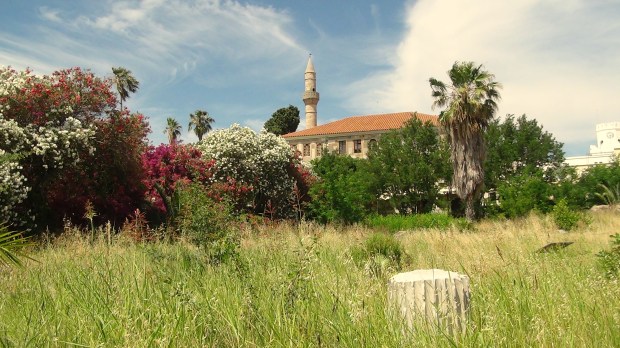
The ancient remains of the Harbour Stoa at Kos town © 2017 Simon Peter Sutherland
On my last visit to the Greek island of Kos I largely explored the island from the perspective of St. Luke, and the impression the Island of Hippocrates might of had on him as a physician. I made a film about it which you can be viewed here
Recently I revisited the island and explored it from the perspective of St. Paul and his mission as recorded in Acts 21: 1. I also took the refreshing perspective of early Church history and how Paul’s visit impacted the island during the early centuries of Christianity.
As always, it was refreshing to me to walk once again in the Apostles footsteps because I regretfully wrestle so deeply with many claims of so many modern ‘Churches’ that a swim in the ancient waters brings me back home. There is nothing quite like washing off the filth of half-truths and misconceptions with a dip in the ocean of Scripture followed with a drink of historic Christianity at the local cafe of consistency.
Kos town and the ancient city of Kefalos are two of those places. My prime locations are the ancient Agora and harbour Stoa of Kos town and Ayios Stefanos near Kefalos. The latter for its ecclesiastical archaeology and the former for its Biblical locations and insights.
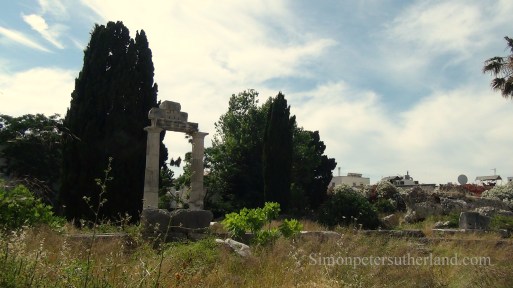
Ancient Agora of Kos town © 2017 Simon Peter Sutherland
We can be certain that Paul and Luke visited the ancient Agora of Kos and although the majority of it now lies in ruins, the discoveries of archaeology provide some very insightful things concerning the cults and cultures the Apostle faced when he and Luke visited the area.
On first entry to the town Paul and Luke would have entered into the Agora (marketplace) from the harbour stoa, from here they would have met with the influence of the ancient Greek gods of Aphrodite and Dionysos.
It is true that these ancient sites are just historic ruins, but when a believer is walking through them with presence of the Holy Spirit, the Lord Jesus Christ and a Bible, they are anything but ruins.
Researching Titus 1: 5 on Crete
Posted by simon peter sutherland in Biblical archaeology, Documentaries on June 17, 2016
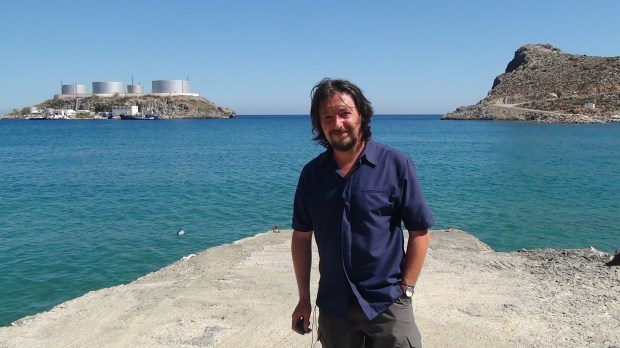
Kaloi Limenes, Crete © 2016 Simon Peter Sutherland
I have recently returned to England from my visit to the Greek island of Crete.
Travelling thousands of miles across Biblical landscape is always insightful and my primary goal on Crete was to seek out the historic locations written about in Acts 27 and Paul’s letter to Titus. My desire was to gain a more historic understanding of Titus 3: 5;
“for this reason I left you in Crete, that you should set in order the things that are wanting”.
2000 years ago Paul gave commission to Titus to appoint elders in every city on Crete. My aim in visiting Crete was to discover those ancient cities and gain an historic understanding of the work Titus did on Crete. Along the way standing face to face with the ancient law code of Gortyna, the mysteries of the Phaistos disc, ancient Minoan culture, and in some cases frustration at the sheer amount of unexcavated sites, leading to a general lack of information.
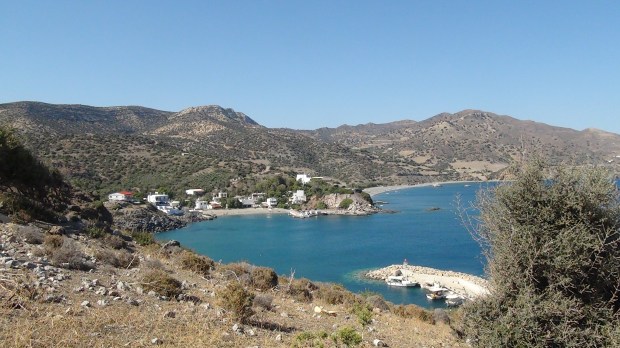
Kaloi Limenes ‘Fair Havens’ Crete © 2016 Simon Peter Sutherland
However, travelling over 100 miles across the island, visiting the ancient cities of Heraklion, Gortyna, Lasea and the spectacular mountains to port of ‘Kalio Limenes’ (fair havens) proved insightful to the Biblical narrative yet left many unanswered questions.
Part of the reason for this is that much of the history of ancient Crete has little connection to the New Testament era. Ancient cities such as Knossos have connections but they were long gone by the 1st century AD. But Gortyna and Kalio Limenes are key locations.

The Church of St. Titus, Gortyna © 2016 Simon Peter Sutherland
“Revealing the buried secrets of the Temple mount”
Posted by simon peter sutherland in Biblical archaeology on September 3, 2015
The Arch of Titus and Biblical Prophecy
Posted by simon peter sutherland in Biblical archaeology, Biblical Scholarship on May 30, 2015
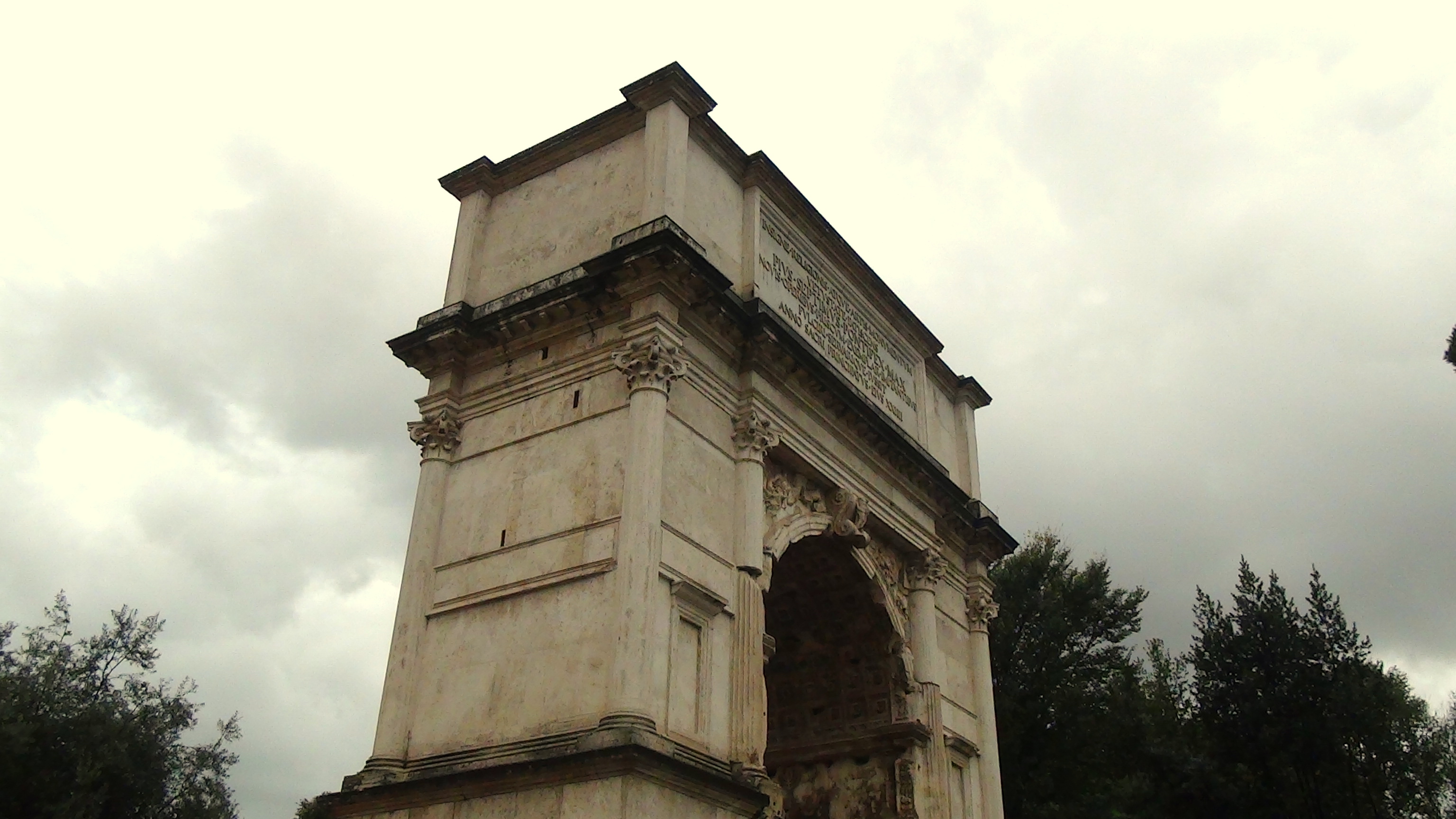
The Arch of Titus, Rome © 2015 Simon Peter Sutherland
In Rome there stands the Arch of Titus. This arch stands on the Via Sacra and was built c 82 AD to commemorate the Roman victory over Jerusalem and the Jewish people.
I had read about the Arch of Titus for many years, and during my visit to Rome it was quite a monumental moment for me to look directly at this treasure of the Biblical era.

The Arch of Titus, Rome and the Jerusalem Temple © 2015 Simon Peter Sutherland
The actual arch contains some of the few secular and historical images of the artefacts from the Herodian Temple and the siege of Jerusalem. The arch contains an image of the Menorah which was the very same Menorah that was standing in the Temple in Jerusalem when Jesus was on earth. The Arch also contains excellent representations of the gold Trumpets and the Table of Show bread as written about in the Bible.
It is claimed that the images were once coloured in gold and the background blue.
The inscription on the arch reads like so;
SENATVS
POPVLVSQVE.ROMANVS
DIVO.TITO.DIVI-VESPASIANI.F
VESPASIANO.AVGUSTO
A literal translation into English, would read something like this;
Senate
people Roman Titus divine
Vespasian son Augustus
With some emphasis on translation, it could read like this;
(The) Roman Senate and (the) people to (the) Divine Titus Vespasian son (of) Augustus.

The Arch of Titus, Rome © 2015 Simon Peter Sutherland
On another note, the situation I so often find myself in is at variance with so many modern claims of secular scholarship. I find it hard to respect certain branches of modern critical scholarship when certain claims are made against the Bible, arguing the narratives are not factual history, but merely religious fiction. These claims are at variance with me continuously, especially when I see facts such as the Arch of Titus standing before my very eyes.
The Arch of Titus strengthens the case to claim that the Synoptic Gospels of Matthew, Mark and Luke were all written well before AD 70, likewise the book of Revelation.
The following verses are affirmed by the Arch of Titus;
Matthew 24: 2
Mark 13: 2
Luke 21: 6
The thing is many modern scholars must claim the Gospels were written after AD 70 and not by eye witnesses or the truth of Biblical prophecy will be clearly seen. The Gospels claim that Jesus, during His incarnation, prophesied the destruction of the Jerusalem Temple around 40 years or more prior to the events themselves. The problem is that many modern critical scholars do not believe in prophecy and therefore approach the texts with that persuasion. Thus, if a person looks at the Biblical narrative through certain spectacles and in denial of the supernatural, that person will only see a natural explanation. Thus, the conclusion will be made that the Gospel narratives were written after the events they prophesied and not by eye witnesses.
As controversial a statement as it may seem these days, there is no actual evidence that the Gospels themselves were written after AD 70. On the contrary, the evidence of the Arch of Titus affirms the New Testament step by step and the Old Testament also.
This claim is not any new argument or contrary to Ecclesiastical history or historical Theology.
Watch “The Apostle Paul at Rhodes” on Revelation TV
Posted by simon peter sutherland in Biblical archaeology, Documentaries on May 1, 2015
Since 2011 I have been producing and presenting a number of Biblical, Historical and Theologically based documentaries. I have been making films for a number of years now and my latest documentary “The Apostle Paul at Rhodes” was filmed in 2014 during my visit to the Greek Island of Rhodes. As part of a possible series and not unlike “The Apostles at Paphos” I visited the ancient sites associated with appropriate texts of Acts of the Apostles
The latest film is based upon a singular reference to Rhodes in Acts 21: 21, and somewhat explores the Apostle Paul and the theme of his mission to the Gentiles. Granted, there is no actual text that states that Paul spent time on Rhodes, but the theme is no less engaging or devoid of interest.
Local tradition on Rhodes claims that he visited Lindos, at a harbour known locally as ‘St Paul’s harbour” or ‘St Paul’s bay’ to tourists. This location is a popular destination and much of the documentary was filmed there.
I am very pleased to say that the Network premier of ‘The Apostle Paul at Rhodes’ can be viewed tomorrow (UK time) @ 2pm on RevelationTV SKY: 581, FREESAT: 692, FREEVIEW HD: 241 and Saturday 9th May 8pm, Sunday 17th May 11pm, Friday 22nd May 12: 30pm, and Saturday 30th May 6: 30pm.
Alternatively the documentary is available for viewing online at YouTube.
The Nazareth Inscription and the Resurrection of Jesus Christ
Posted by simon peter sutherland in Biblical archaeology, The Bible on April 2, 2015

Jesus Christ crucified from a 19th century engraving © 2013/15 Simon Peter Sutherland
During this time frame known as “Holy Week” in which Christians throughout the world of many denominations move toward Easter. In liturgical denominations, Christians remember Jesus’ triumphant entry into Jerusalem, where He was hailed as Messiah by His people who laid Palm leaves as He rode into Jerusalem on the back of a Donkey.
As the world looks on, our thoughts are on the Passion and the Resurrection of Christ.
It is with this in mind that my construct of conversation is not one which believes the many claims of our present modern scholarship, particularly those which deny the authenticity of the Bible, its claims and accuracy. Amongst the many criticisms, arguments, and speculative claims modern so-called ‘Biblical scholars’ make, I take a direct road that knows fully that the Bible is the Truth and that Jesus Christ truly died for our sins according to the Scriptures. As far as I am concerned, there is no debate: The Resurrection of Jesus Christ is a fact. However, one problem for some people is is that many modern secular scholars deny this, and present minds seeds into the unsuspecting public without really showing them the absolute information which is available.
For some reason, the ‘opinions’ of the academic elite appears to be more important to some people than the Truth itself.
One very important archaeological testament not so often presented by the so-called ‘academic elite’ is what is known as ‘The Nazareth Inscription’ or ‘The Nazareth Decree’. The tablet itself dates to the 1st century and was written in Koine Greek (The language of the New Testament) and was acquired in the 19th century from Nazareth, the home town of Jesus. This inscription is made of marble and contains a Greek edict from a Caesar.
This is a transcript of what it says:
“EDICT OF CAESAR
It is my decision [concerning] graves and tombs—whoever has made them for the religious observances of parents, or children, or household members—that these remain undisturbed forever. But if anyone legally charges that another person has destroyed, or has in any manner extracted those who have been buried, or has moved with wicked intent those who have been buried to other places, committing a crime against them, or has moved sepulcher-sealing stones, against such a person, I order that a judicial tribunal be created, just as [is done] concerning the gods in human religious observances, even more so will it be obligatory to treat with honor those who have been entombed. You are absolutely not to allow anyone to move [those who have been entombed]. But if [someone does], I wish that [violator] to suffer capital punishment under the title of tomb-breaker.”
When this edict is linked up with Matthew 28: 12-13, they match up perfectly.
Visit to Rome: The Mamertine Prison
Posted by simon peter sutherland in Biblical archaeology on December 1, 2014
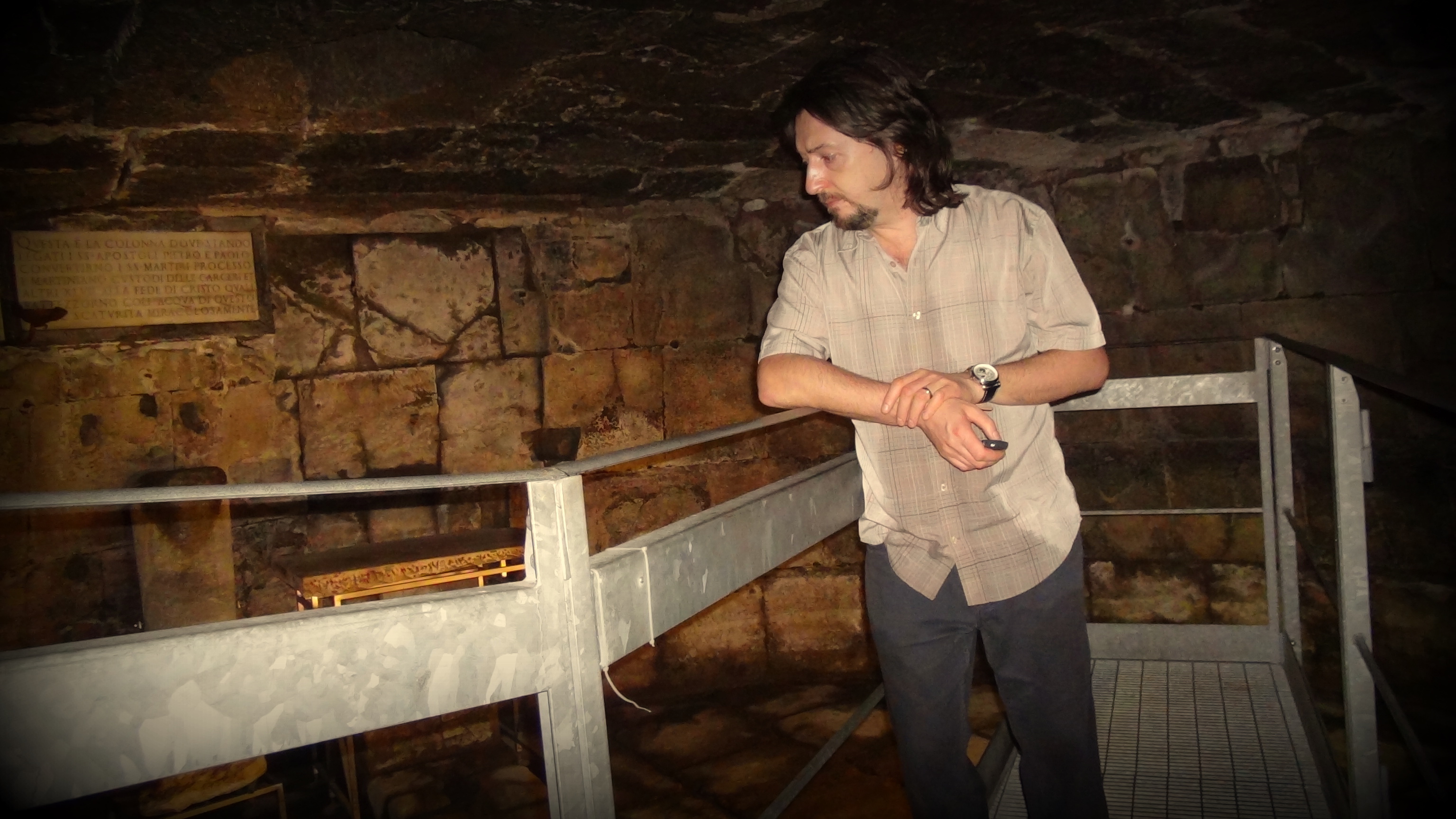
Simon Peter Sutherland at the Mamertine Prison, Rome © 2014
Visiting ancient Biblical sites in the Mediterranean is always an experience for me and is something I find second to none. Although I like some of the wonders of modernity, I regard our present world as unappealing, noisy and somewhat shallow. Because of that, I prefer history rather than the present
Last month, I travelled to Rome, the ancient and modern city known for being somewhat of an open air museum. Being a history fanatic myself and absolutely intrigued by the Bible, as always I was in inner rapture.
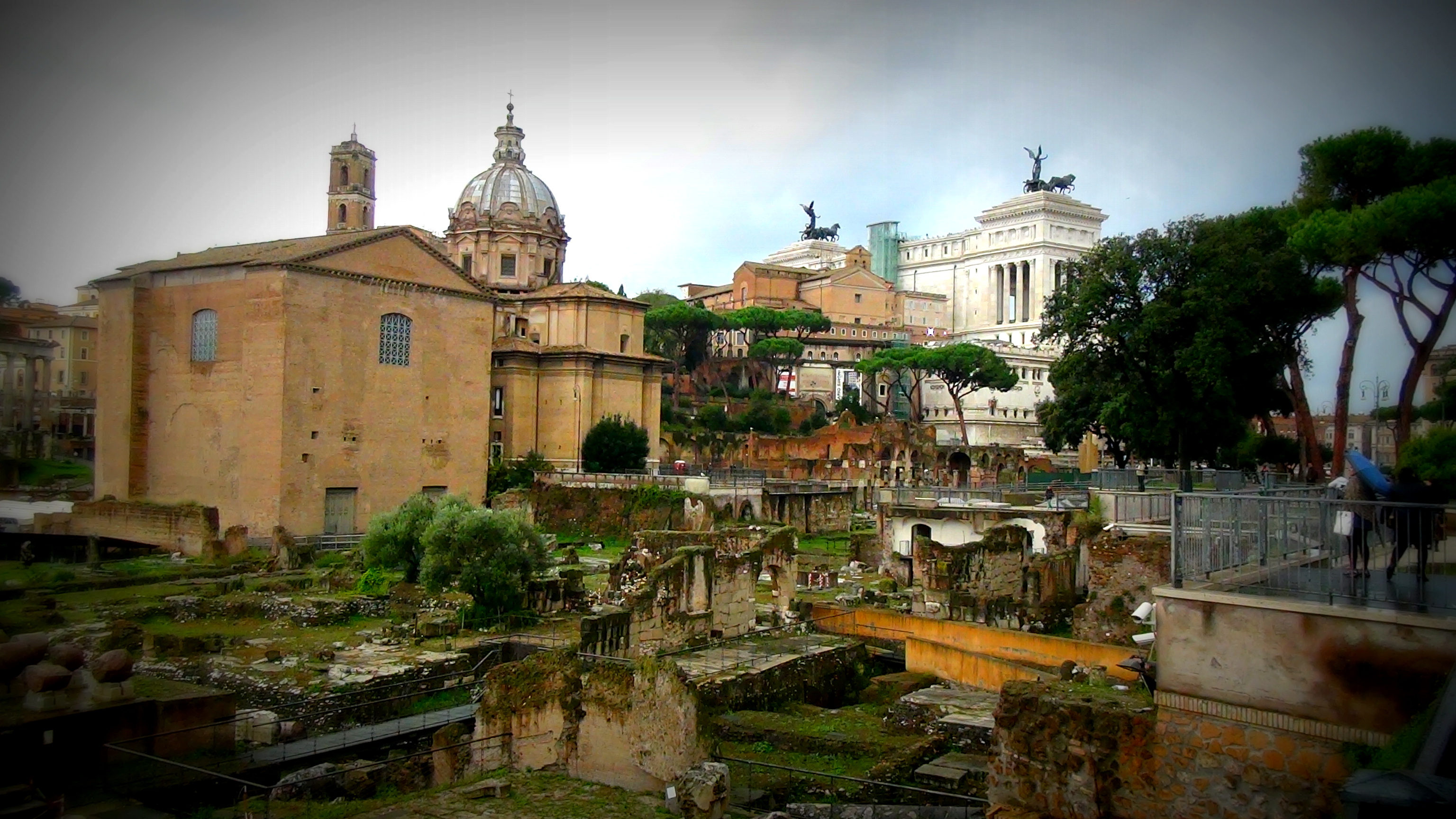
Forum, Rome © 2014 Simon Peter Sutherland
During the afternoon of the first day I visited the ancient area of the Forum leading to a place known as “Mamertinum”or the Mamertine Prison. This ancient prison is within a stones throw of the ancient forum, a Comitium which once felt the feet of the Apostles Peter and Paul and also of Luke and of Aquila and Priscilla.
The Gospel of Luke and Acts of the Apostles were probably written while Luke was in Rome. We also know that Luke was with Paul during his time in prison. This is understood from 2 Timothy 4: 11.
The Mamertine prison, known historically as the “Tullianum”, was probably constructed between 640-616 BC and was likely a cistern. The amazing thing for me was that scripture was written from this damp dark cell.
In 2 Timothy 1: 16 Paul referred to his “chain” this chain now resides at ‘St Paul outside the walls’ which was build on his ancient tomb. Writing from the Mamertine, in 2 Timothy 2: 7-9 Paul wrote: “Consider what I say; and the Lord give thee understanding in all things. Remember that Jesus Christ of the seed of David was raised from the dead according to my gospel: Wherein I suffer trouble, as an evil doer, even unto bonds; but the word of God is not bound.”
On entry down the stairs to the upper level of the complex, I saw ancient Frescos. These can be found on the walls and show Christians depicted with the arms and hands held out. Over recent years Archaeologists have uncovered evidence that have connections to St Peter as early as 7th century. The evidence also suggesting the Mamertine was used as a Church by the 8th century.
The claim that St Peter was in Rome goes all the way back to the 1st century from his probable coded use of the word “Babylon” for Rome in 1 Peter 5: 13, 2 Peter 5: 13, and his crucifixion linked to John 21: 18 where Jesus foretold him of his future suffering. The claim of his crucifixion in Rome comes from the 1st or 2nd century “Acts of Peter” which we know was in circulation in the 2nd century. The “Acts of Peter” claims that Peter was crucified upside down in Rome at his own request. This claim is also affirmed by Clement between AD 80-98 in his letter to the Corinthians (chapter 5). An event which probably took place near where St Peter’s Basilica now stands around AD 64 during the reign of Emperor Nero.

Mamertine Prison © 2014 Simon Peter Sutherland
There was a time when condemned prisoners were held in this cell before execution. We know for certain that 2 Timothy was written from the Mamertine and it is possible that Philippians was also written here too. If Peter was in fact executed in Rome then he most certainly was held in the Mamertine, as a strong tradition affirms. If that be true which I think it is, 2 Peter may also have been written in this dungeon.
Other Biblical texts possibly written from the Mamertine or nearby, include Philemon, Ephesians, Colossians and possibly Galatians. It is one of the most outstanding thoughts and realities of life that the Truth of the Gospel is that suffering produces great things. Persecution never destroys the Church, on the contrary it enhances it. It is truly amazing to think that such a light as Scripture itself could come from such a dark damp cell. That such a light could truly shine from such a dark place.
I love this little prison.
An Israeli archaeologist discovers King David’s Citadel
Posted by simon peter sutherland in Biblical archaeology on May 6, 2014
“The kings of the earth set themselves, and the rulers take counsel together, against the LORD, and against his anointed, saying, Let us break their bands asunder, and cast away their cords from us. He that sitteth in the heavens shall laugh: the Lord shall have them in derision.” Psalm 2: 2-4
For quite a while now, some modern archaeologists and scholars have been mocking the historical claims of the Bible and propagating their theories that it is an unreliable source. But their Political agenda stricken claims are repeatedly proven wrong, as recent discoveries consistently prove. There is no doubt to the historical authority of the Scriptures.
Israel belongs to the Jews!
CNN: Noah’s Ark discovery in the British Museum 2014
Posted by simon peter sutherland in Biblical archaeology, The Bible on January 31, 2014
In an article on CCN, it is reported that Irving Finkel, a British Scholar has discovered a 4,000-year old tablet from Iraq which contains an account similar to the Mosaic account of Noah’s Ark.
Link to CNN article; http://newday.blogs.cnn.com/2014/01/28/noahs-ark-discovery-raises-flood-of-questions/
Were the four Gospels eye witness testimony?
Posted by simon peter sutherland in Biblical archaeology, Biblical Scholarship, The Bible on January 13, 2014
Ancient handwriting
© 2014 Simon Peter Sutherland
One common notion people are presented with today is the claim that scholars now know the four Gospels of the New Testament were not written by eye witnesses or people who actually knew Jesus of Nazareth.
This type of claim is quite a common place today. We read it in books, hear it on the BBC radio, see and hear it on television and in countless documentaries. Likewise within the world of scholarship I continuously run into a head on collision with this argument by people who, when it is all said and done, know more about this argument than the narratives themselves.
One problem I see is that many of the people who make these claims do not make them off their own back, neither did they originate them. The claims themselves go back quite a while to the dawn of modern scholarship and one can easily find the early church disputing who wrote the Gospels.
In the 19th century, a fine Biblical commentator and Anglican Bishop of Liverpool J. C. Ryle wrote concerning this issue in his exposition of John 5: 2 and said the following;
“These words, it is thought, show that Jerusalem was yet standing, and not taken and destroyed by the Romans, when John wrote his Gospel. Otherwise, it is argued, he would have said, “There was at Jerusalem.”. J. C. Ryle. (Expository Thoughts on the Gospels. Volume 3. P 269)
At the time when Ryle wrote this there was no evidence for the exact location of this pool, but it was discovered in the 19th century and now sits within the Muslim Quarter of Jerusalem. Thus, demonstrating that although evidence for this pool had not been found until around nineteen hundred years or so after the text was written, the Bible was correct all along. And today it is widely recognised and visitors to Jerusalem can visit the site.
The text of John 5: 2 reads like so; “Now there is at Jerusalem by the sheep market (or pool) a pool, which is called in the Hebrew tongue Beth-es-da, having five porches”.
In this text John is clearly communicating that, not only was John writing for Gentiles and not Jews, which confirms the position of Eusebius in his ecclesiastical history that John wrote this Gospel from Ephesus to expand on things not previously written by Matthew and Mark, but that he wrote in the way that is communicating that Jerusalem was still standing at the time.
There is ample evidence that John had already read Matthew, Mark and Luke by the time he was to write his Gospel and noticed that there was other points concerning Jesus’ life that the Synoptic writers did not mention. For this reason, John wrote concerning the final year of Jesus’ ministry. This is just one of many reasons to claim historically and textually that the Gospels were written by eye witnesses and based upon eye witness testimonies.
Eusebius claimed Irenaeus wrote in Against Heresies, 111.1.2 that Matthew published his Gospel first in the Hebrew tongue and Mark recorded the words of Peter from his preaching. He connects Luke’s Gospel to Paul, which could be confirmed by Luke’s opening passage in his Gospel. (Eusubius. The History of the Church. 8)
Thus, if Eusebius was correct, then this places the date of authorship for Matthew and Mark to well before AD 50’s and not anywhere the proposed dates that modern academic communities claim.
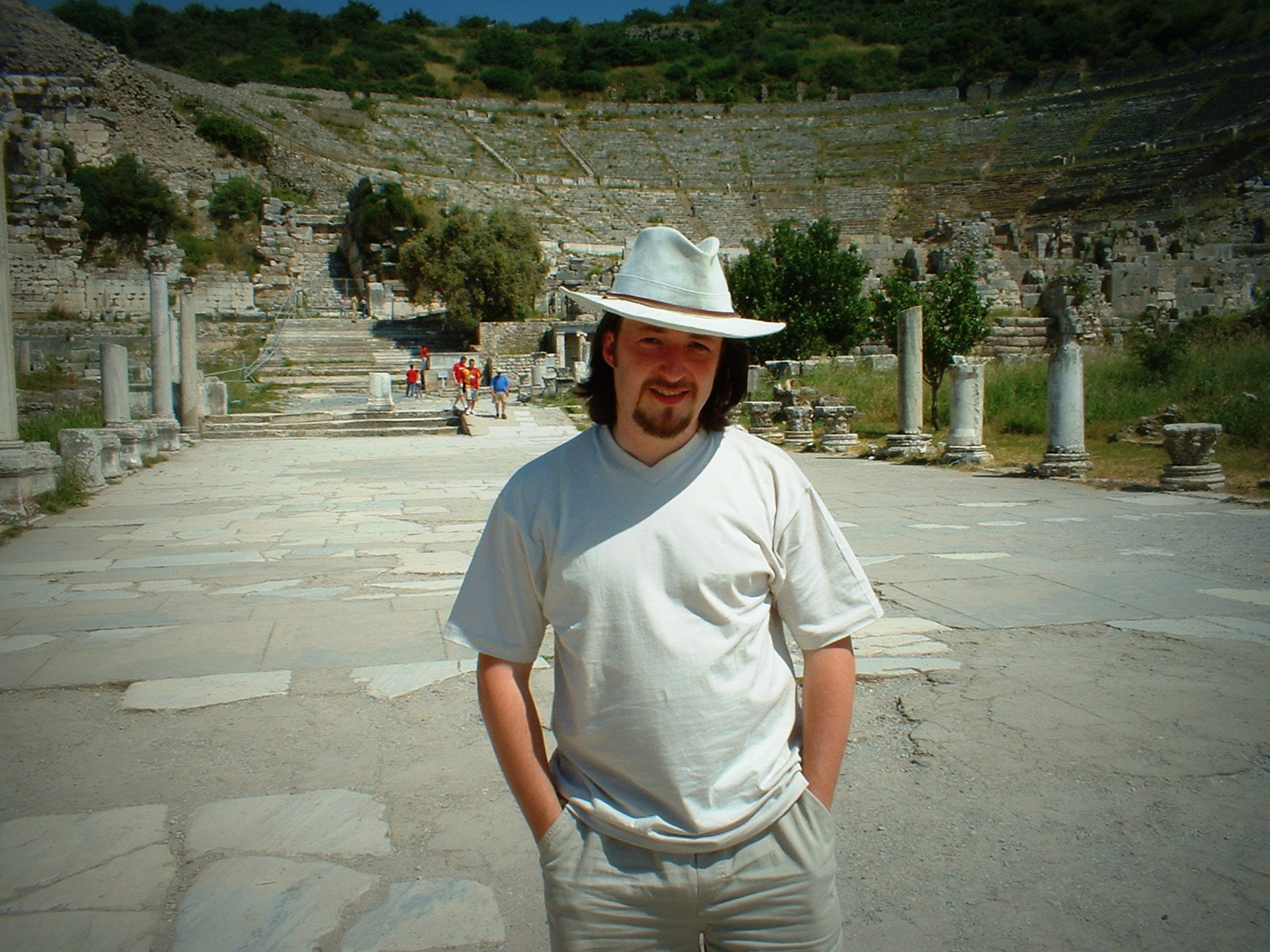
Simon Peter Sutherland at Ephesus
© 2013 Simon Peter Sutherland
From my own research into the Gospels, I have found them to date no later than this era, even as early as AD 30’s for Matthew and as late as AD 60 for Luke. The problem is that modern scholars claim that Matthew could not have been written prior to the events of AD 70 and the destruction of Jerusalem, since they think it not plausible that Jesus could have prophesied the destruction of Jerusalem as He did. Thus, the Gospel of Matthew must have been written after these events. The problem then grows because people would rather believe the negative suggestion rather than think and research for themselves. People are often fooled into thinking that they are researching something when in reality all they are doing is reading other peoples opinions.
Thus, John 5: 2 is just one of many Biblical texts which leave me wondering what on earth so many of these modern scholars are thinking when they date the gospels? What are they up to? I suspect it is a legal game like those in a court of law who look for contradictions in eye witness accounts, thus if they find them, they argue the texts as void.
But I have not found contradictions in the Gospels, the only contradictions I find are the interpretations of those passages by Western thinkers. The Gospels and the entire Bible was written by Jewish people, and when it is all said and done, the critics for the most part, know very little of ancient Judaism.
But concerning John 5: 2, the problem with the academic communities dating methods for the Gospels is that they are not consistent when one understands that John was here stating the sheep gate or market was still standing at the time of his composition. But the problem is, if this text was written when these scholars claim it was then to anyone who knows what the text claims, it is impossible to believe them. The reason being that the sheep gate or market in Jerusalem was destroyed in AD 70 by prince Titus. Thus, internal evidence from John’s Gospel gives us a composition date of AD 50’s at the very latest. And examples like this can be found throughout the Gospels and the New Testament.
Thus, concerning John’s Gospel, J. C. Ryle was certainly correct and he was not afraid or fooled into believing that because scholars say so, it must be true. He had the character and strength enough to disagree with what scholars and critics of his day claimed. Ryle let the text speak for itself and then explored it, that is what makes his expository thoughts on the Gospels so good. But the problem which happens today is that scholars such as Francesca Stravrakopoulou often make wild assumptions concerning the Bible and then publishes what she thinks the text is saying and then judges it according to that thinking. But Francesca Stravrakopoulou is not original in her thinking and neither is she convincing, in fact she in a long line of scholars who often leave both myself and others baffled at their claims.
People are swift to believe the documentary hypothesis of modern scholars, yet they are not so swift to research the actual text for themselves. If they were, the world would be full of people who do not agree with the speculative claims of the academic communities.
In this, I never fail to tire at hearing them, especially when the single minded media barons give those people all the air time. not singularly as an issue of truth or the quest for truth, but something far more earthly and possessive. We are living in a time where all but the sinful depraved nature of man is uncertain. Our age lacks identity and absolutes. Scientists are single minded in presenting their ideas alongside Theology and history, as though everything should be judged scientifically. Regardless of the fact that science merely means ‘knowledge’ people think of science as some kind of test tube analysis, which when it is all said and done is not a method used to judge history.
A person cannot put a historical document in a test tube and measure it according the that method, you have to find some other way of testing things. Each method is an interpretation only and not factual.
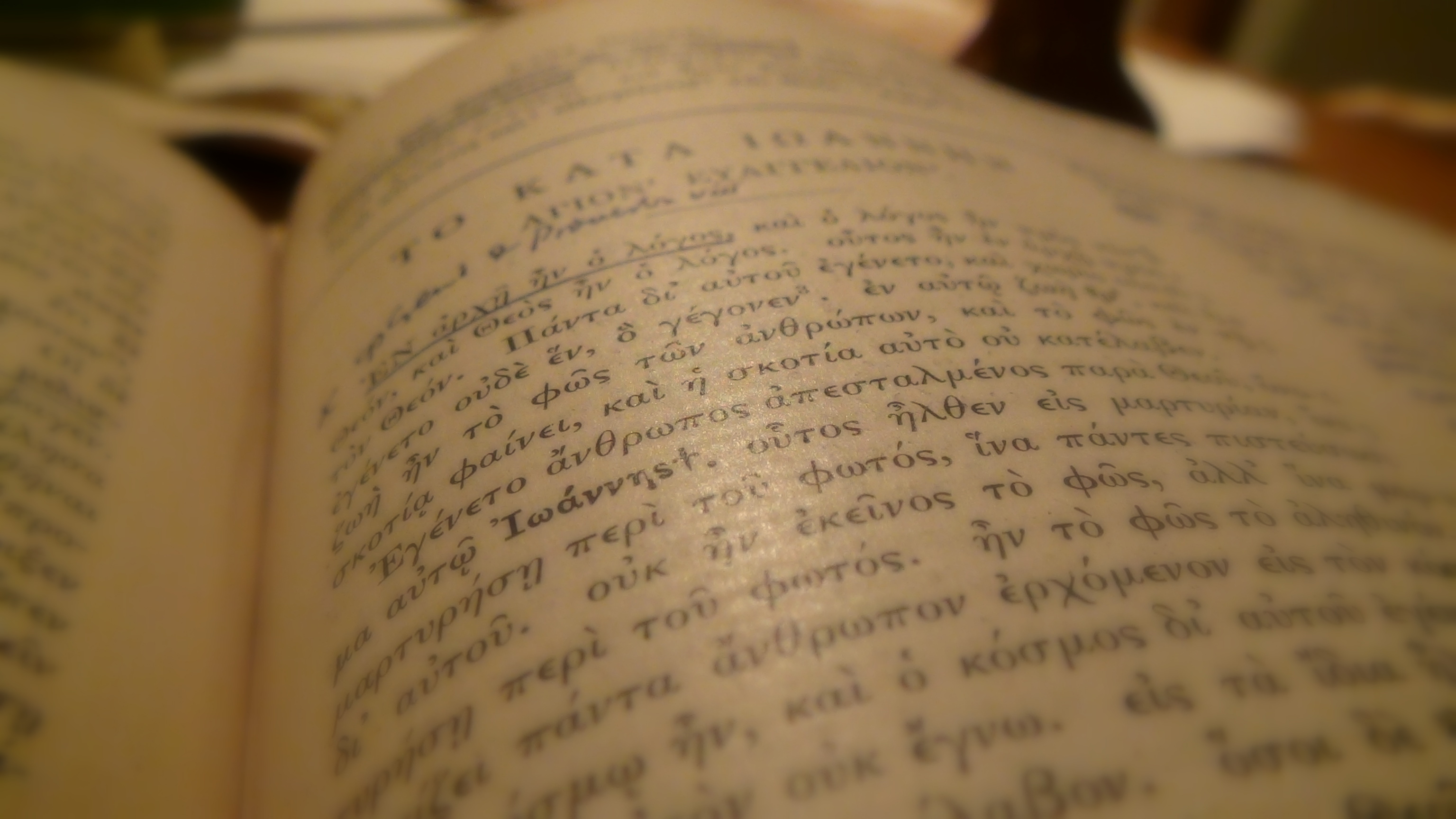
The Gospel of John in Greek
© 2014 Simon Peter Sutherland
For example, if I were to measure the Gospels, I would look at them internally and measure their claims. I would never go along with what state education claims, but would measure the claims according to what I know. For this reason, I absolutely disagree with many claims made by modern scholars who take a text, a verse, a claim, a science, a majority vote and so one and measure the texts through those eyes. Thus, whatever one makes of that, it is certainly not the method used by the early church through to the reformation and beyond, where devotion and Theological insight must first be established in order to see the text clearly. In other words, a person cannot measure a text and judge it if they have failed to understand what the text is saying.
Let us take Biblical archaeology for example; if I go to Jerusalem, I can find plenty of evidence for the Bible there, the reason being, because that is the central location for the majority of Biblical events. So if I go and search for evidence of King Solomon’s temple in Babylon, I’m not going to find very much, but if I first look at what the text says, interpret it correctly, then see where the Biblical narrative is leading me, I will find it. I suppose what I am saying is that people should first find out what the Bible is saying before they critique it.
-
You are currently browsing the archives for the Biblical archaeology category.
Simon Peter Sutherland
-

 Simon Peter Sutherland