Archive for category “Calvinism”
Calvinistic Determinism Refuted
Posted by simon peter sutherland in "Calvinism", Theology on April 29, 2025
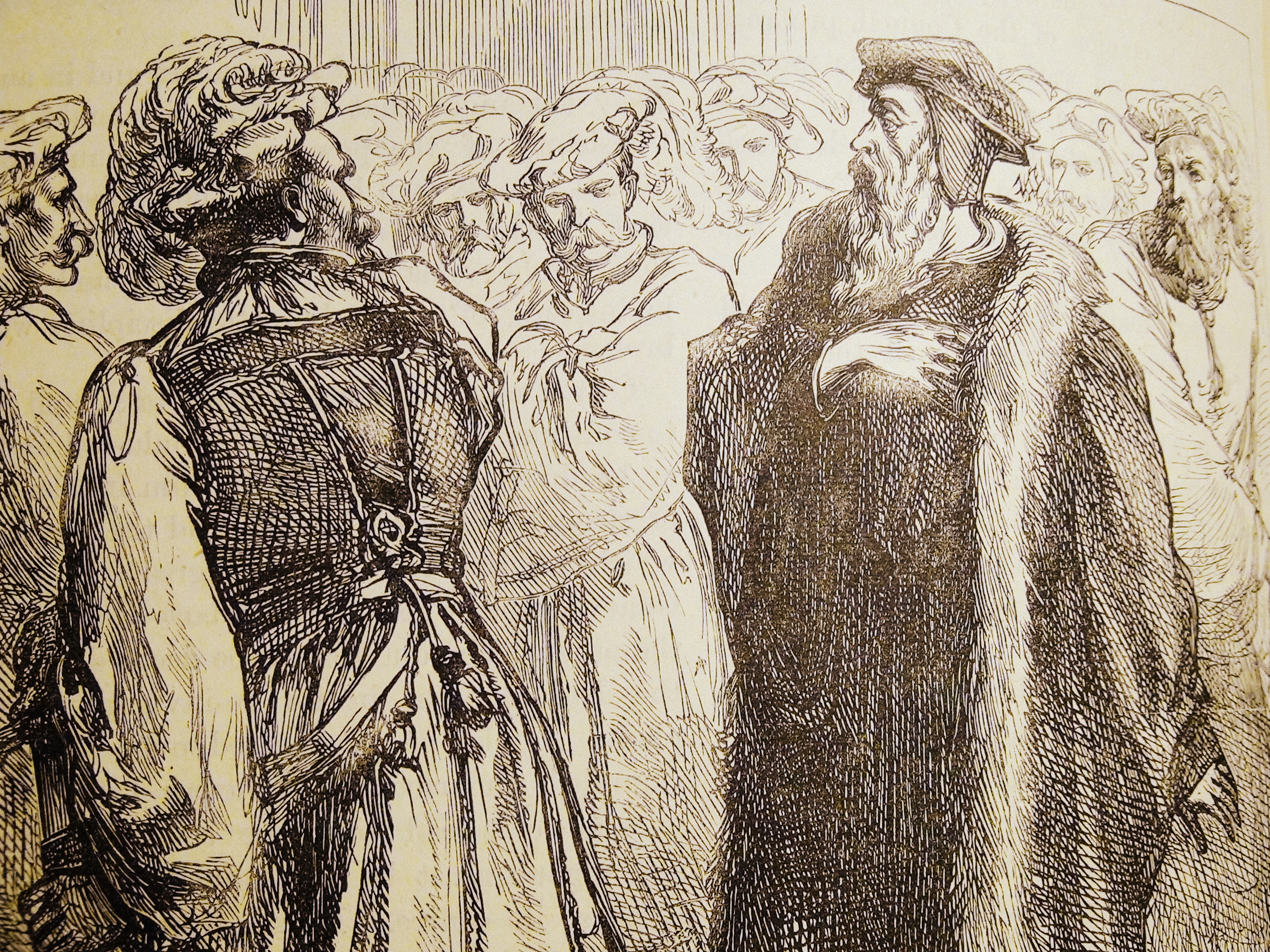
There is a doctrine gaining popularity today, known as ‘Calvinistic determinism’ or ‘theological determinism’. This concept claims that every event in the universe is predetermined by a divine will, suggesting that human actions and decisions are ultimately guided by God’s divine plan. It is often cloaked or hidden within the beliefs of many famous reformed preachers, who may emphasize God’s sovereignty and control over the universe without explicitly acknowledging the implications of their doctrine. At other times, it is plainly stated, leading to profound discussions among theologians and laypeople alike about free will, predestination, and the nature of divine foreknowledge, which raises questions about human responsibility and moral accountability in a world governed by such determinism.
In short, for those who do not know, determinism is a doctrine that claims that all human acts, both good and evil are pre-determined by God before the world began. God’s will is always done. Everything people do, be it good or bad, is all pre-determined and predestined by God before He made the world. It’s not a belief that says God knows everything you do, it’s a belief that says God determines, decrees and wills everything you do. In other words, He writes them.
It’s crazy!
But where did this doctrine come from and why are people so eager to believe it?
Well, basically, people do not always like the truth and some people are gullible and others are skilled at indoctrinating them. Some people are easily influenced by people they follow. They listen to their favourite preachers and their skilled rhetoric causes listeners to feed their views into the Bible. People assume that because a preacher strongly believes something, it makes it true. As a result, people assume the preachers beliefs are very Biblical, when in actual fact they are the exact opposite.
But are these deterministic ideas Biblical?
Well, the answer is yes and no. Yes in the sense that some Biblical events were determined by God, no in the sense that the events of Jeremiah 7: 31, 19: 5: 32: 35 and Isaiah 30: 1 and Galatians 5: 7-8 were not determined or decreed, or willed by God. In fact, in Jeremiah 18: 10 God reconsidered the good He intended to do, because Israel did not obey Him.
In order for God to determine everything that happens in this world He must decree, will and determine apostasy, the persecution and murder of Christians in Africa, false teaching, and some of the most evil acts of mankind can do, (evil acts I do not even want to mention) and then judge people for doing things that He has already determined them to do. If Calvinistic determinism were true God would be self contradictory. He would be determining people to break the commandments He has commanded them not to break.
But where do these ideas come from?
The answer is early examples originate in Augustine of Hippo, John Calvin and Jonathan Edwards. Augustine introduced theological determinism into Christianity in 412 AD and Calvin re-introduced them in the 16th century. Before that time determinism was a Gnostic and Stoic concept originated by Greek philosophers in the 7th and 6th century BC. Early Christian writers did not teach theological determinism. However, when Calvin re-introduced determinism into western Christianity (and adopted his ideas from St Augustine), his influence spread to puritans in the 17th century and Jonathan Edwards took this concept to another level, and when Banner of Truth republished a lot of old puritan books, preachers in America re-introduced their love of Jonathan Edwards and puritans to a new audience, and the so-called ‘reformed’ preachers in America began to influence a whole new generation of eager restless and reformed Christians.
Obviously not all Calvinists believe this level of determinism, but the original source is St Augustine and Calvin quotes Augustine more than any other theologian.
The reality is, it’s that same old thing again, influence. As Calvin adopted his deterministic logic from the writings of St Augustine, preachers today adopt their logic from the works of Calvin, Jonathan Edwards and their favourite preachers via podcasts, books, YouTube videos and so on.
But let us take a step further, if Calvinistic determinism were true God would not only determine everything that happens, He would have to decree and will everything that happens including these winds of doctrine. God would not only have to determine every good and evil act of mankind, but He would have to determine the podcasts and the books.
Preachers who oppose abortion would need to be opposing God because in reality God would not only be the one who wills and decrees the deaths of unborn babies who die in the womb and in infancy but He would be the one who determines them.
Do yourselves a favour and search up how many murders happen in America every year. In order for determinism to be true, God would need to have decreed, determined, and willed those horrific acts to take place down to the very number.
The Bible however does not affirm these repulsive beliefs.
In Jeremiah 32: 35 the abominations men did didn’t even enter God’s mind, so how could He determine them?
In 1 Corinthians 14: 33 Paul states that God is not the author of confusion so how could God determine and decree and will everything that happens? God would not only be the determiner of every human act but He would be the author of confusion, which is contrary to what the apostle claims.
Does that make sense?
In short, I am not even remotely interested in debating or discussing these forgone conclusions with theologians, pastors or preachers who advocate these repugnant doctrines. They are making the God I serve and love to be the author of evil and the determiner of the most disgusting and evil acts this world has ever known.
In short, I want to reach out to you, the general public, average Christians who find themselves confused and influenced by these preachers and do not know what to make of these filthy claims.
I want you to know that the God of the Bible has nothing whatsoever to do with the evil acts that men do. He gave His Ten Commandments and the commandments of Christ for people to obey not disobey. He gave us Christ to save us from our sins not determine them. He cares for you and He serves you in your times of great strife and upset and wants you to know that we live in a fallen world and in the midst of that fallen world God has given us His spirit to minister to the souls of men. Therefore, comfort each other with these words.
If you are influenced by these confused preachers who repeatedly contradict themselves and don’t know what they are talking about, do yourselves a favour, switch off from them and go and read your Bible.
Amyraldism calmly considered
Posted by simon peter sutherland in "Calvinism", Theology on October 25, 2024

Over the years I have expressed my deepest concerns relating to a doctrine known as ‘Limited Atonement’. This 5 Point Calvinist theory claims that Jesus Christ did not die for all mankind but only for the elect. If Christ died for all mankind (they say) then no one should be in hell for whom Christ died, thus He didn’t die for all, He died only for those whom the Father had given Him. Believing that Christ died for all (they say) is universalism.
I disagree with these claims entirely. There is no Scriptural proof that the sacrificial offering of Jesus Christ on the cross automatically saves anyone. No one is saved by the cross of Christ alone since believers are saved by grace alone through faith (Ephesians 2: 8) so faith is the means by which we are saved and there is no Scriptural evidence that Jesus purchased our faith at the cross.
A person can argue that faith or salvation is a gift of God (ibid) and I wouldn’t disagree but there is no suggestion that faith or salvation (as a gift) is limited only to those whom God has predestined and chosen. For me, this claim is more systematic than Scriptural and retains some serious Biblical inconsistencies. For me, and for J. C. Ryle, the doctrine of Limited Atonement is inconsistent with the Bible and some theologians who propagate it are more systematic than the Bible they represent. Yet many proponents of the ‘Calvinist’ teaching actually reverse the truth by claiming that those who don’t believe in the 5 Point Calvinist interpretation of ‘Limited Atonement’ are the ones who are inconsistent. This is untrue. For me, and for many Christians, the New Testament is extremely clear that Christ died for all mankind and to deny that fact can be dangerous. The reason I say this is because a person is putting argumentation above Scripture, thus leaving room for any persuasive argument to be believed, even if it contradicts Scripture. Yet many 5 Point Calvinists claim that their beliefs are the pure teachings of Scripture and they wait patiently for others to catch up and be persuaded.
Obviously I’m not one of those who have been persuaded and if a doctrine cannot be consistently proven by all Scripture, I’m not obligated to believe it. So for me, I have reached an opposite conclusion to the 5 Points of Calvinism. For me, I am actually very uncertain if 5 Point Calvinism is even accurate to the teachings of the man it is named after. There are times when I find it very doubtful that Calvin ever taught the same version of limited atonement that modern 5 point Calvinists teach? I haven’t found the majority of 16th century reformers affirming it either.
For me, Calvinism (as it is nicknamed today) is little more than Owenism. By “Owenism” I am referring to puritan John Owen (1616-1683). A man who, in 1648 published a book called “The Death of Death in the Death of Christ”. In this book Owen affirms the doctrine of Limited Atonement in no uncertain terms. The book blends in perfectly with the doctrines affirmed in England during the times of the Westminster Confession of Faith. Like the Westminster Confession, Owens theology offers no salvation for the none elect, they are utterly doomed. Born to be damned and to enter hell for disbelief in a Saviour who did not die for them to begin with.
It is an awfully distasteful doctrine and one that should be spat out.
Having read Calvin, and studied many other 16th reformers, I have been (over the past few years) somewhat pleasantly surprised to learn of the 17th century man named Moses Amyraut (1596-1664) a French reformed theologian who noticed the inconsistencies of Calvinist theology and propagated moderations. Like Richard Baxter, John Bunyan and Richard Horne, the believer can be blessed by the challenges presented by Moses Amyraut who find themselves troubled when ‘Calvinists’ deny the exceedingly clear Biblical statements that Christ died for the sins of the whole world.
Amyraut challenged Calvinians and presented a view that is much more conceivable than Limited Atonement and taught that Christ did in fact die for the whole world but God in His foreknowledge knew those who would believe in Jesus Christ and elected them based upon that foreknowledge. This is entirely consistent with Romans 8: 29 “For whom He foreknew, He also predestined to be conformed to the image of His Son,”. Note that St Paul presents foreknowledge prior to predestination. Thus preserving the doctrine of unconditional election while not excluding anyone from receiving Christ.
For me, if Christ died only for the elect the great commission is null and void and the gospel should not be preached or offered to “every creature” (Mark 16: 15) and Acts 17: 30-31 makes no sense. Why would God command all men to repent (as Paul proclaimed in Athens) if man was incapable of doing so because he is not elect? Why would the great commission be offered to every creature if salvation was not available for every creature?
The logical conclusion is that salvation is offered to all because it is available for all and I am very pleased to know that reformed theology does not exclusively belong to the limited atoners. Lutherans, Calvinists, Anglicans, Arminians, all fit into this broad theology labelled ‘Reformed’.
I remain convinced that if any person merely read the Bible for itself, without feeling pressured to read other books and listen to preachers rhetoric, no one would ever discover such a harsh and uncaring doctrine as Limited Atonement.
Christ died for all mankind, even Judas!
Posted by simon peter sutherland in "Calvinism", Limited Atonement, Theology on March 28, 2024

Over the last 20 years I have been in a continuous and sporadic confrontation with the 5 Point Calvinist view of Limited Atonement. I have read books, articles, listened to sermons, debates and had many conversations with a number of believers who hold to the the view that Christ did not die for the whole world but only for His elect.
I reject that viewpoint.
In the Bible there many verses that state that Jesus Christ died for all, yet according to many 5 Point Calvinists, this word all, does not always mean all. Fair point, there are times when all does not mean all. Does that observation however mean that Jesus Christ did not die for the whole of mankind? No, it does not.
At this stage, there is little point my listing the considerable amount of New Testament verses which are believed to affirm that Jesus died for all mankind, since 5 Point Calvinists differ to the plain interpretation of these passages. So I will focus upon one passage and work my way from there.
In Matthew 26: 17-30 Jesus celebrates the Passover with His disciples and institutes the Lord’s supper. Those who were present were the 12 disciples. This includes, Peter, James, John, Andrew, Philip, Judas Iscariot, Judas Thaddeus, Matthew, Thomas, James (son of Alpheus), Bartholomew, and Simon the zealot.
The feast took place on the evening of the first day of the feast of Unleavened Bread (Matthew 26: 17). Verse 20 says “When evening had come, He sat down with the twelve.” Then Jesus refers to the one who will betray Him (verse 21) and the disciples are exceedingly sorrowful and they ask the question “Lord, is it I?” (verse 22) Then Jesus responds by saying “He who dipped his hand with Me in the dish will betray Me.” (verse 23) He then goes on to say “woe to that man by whom the Son of Man is betrayed! It would have been good for that man if he had not been born.” (verse 24)
Then Jesus takes the bread, blesses and breaks it and gives it to His disciples saying “Take, eat; this is My body.” (verse 26) We assume all 12 disciples ate the bread at this point. Then in verses 27-28 Jesus takes the cup and says “Drink from it, all of you. For this is My blood of the new covenant, which is shed for many for the remission of sins.“
This word translated many is is described by Greek scholars as meaning what it says on the tin, a large number. There is basically no limitation to that word. The word “shed” describes a pouring out in a sacrificial sense and is steeped in Old Testament knowledge. He means that without this shedding of blood there is no remission of sin or sins.
When you consider the unmoveable fact that Judas was present when Jesus said that and when He offered all 12 disciples to eat and drink this Passover, we cannot but assume that He said this to all 12 disciples including Judas.
Thus, if Limited Atonement were true as is stated in the 5 Points of Calvinism, then Christ only died for His elect who would believe in Him and be saved. This would exclude Judas. Yet here in Matthew 26: 17-30 we see the exact opposite. We see Jesus offering Himself to all 12 disciples, including Judas, yet Judas betrayed Him.
It is my belief that had Judas repented, He may have been saved? But he did not. This however does not mean that Christ did not die for him or for the rest of mankind, it merely means that all do not receive Him.
Dwell upon these thoughts this Easter as we remember what Christ has done for us and all who believe in Him and keep His commandments.
Why are false teachers “twice dead” in Jude?
Posted by simon peter sutherland in "Calvinism", Church of England, Theology on November 16, 2023

The Epistle of Jude is one of the most important New Testament letters to read during times of great apostasy. Jude gives a strong message to believers that we are compelled to contend for the faith. When false teachers usurp their own authority and the Spirit of truth is attacked, never fear, the Epistle of Jude will always be there to help you out.
The Epistle was traditionally written by Jude the half brother of Jesus, who found himself in a situation where men were professing the faith but their lifestyles were not measuring up with scriptural morals. As a result Jude labels these men as ungodly because they were abusing the grace of God as a licence to sin. Jude became a sharp opponent even though they descended from the same religious tradition as he.
In his introduction the Jude refers to himself as a brother of James, and swiftly presents Old Testament examples of men who had fallen from grace. Jude does not want his readers to be deceived by these men so he informs the readers that they were ordained to condemnation long ago (verse 4). In verses 7-16 he writes about sin and judgment as a reminder that actions have consequences.
It is here in verse 12 where the words “twice dead” become intriguing. But what does it mean to be twice dead?
Essentially the context is that these false teachers were once dead in sin but had (at some point) been made alive in Christ, but now because they have fallen away and apostatised, they are dead again, thus “twice dead“. Essentially, these people fell away from the faith, abandoned good doctrine and became dead in sin again. Jude 12 is a proof text that affirms people can indeed walk away from their salvation, abandon the truth and be eternally lost.
According to Strongs (G1364) the Greek word translated twice means ‘again‘. It speaks of a repeated occurance.
Reading Luther’s commentary here can be useful since he rightly understood this passage to symbolically refer to false teachers as fruitless trees, “they make the claim and show as if they were Christian bishops, while neither the word nor the work of Christian bishops is there, but all dead at the root.”
Very fitting to our present age!
Adam Clarke’s commentary is also useful since he understood this term to refer to believers who had apostatised and lost the grace they had received and became fruitless and twice dead,
“First, naturally and practically dead in sin, from which they had been revived by the preaching and grace of the Gospel. Secondly, dead by backsliding or apostasy from the true faith, by which they lost the grace they had before received; and now likely to continue in that death, because plucked up from the roots, their roots of faith and love being no longer fixed in Christ Jesus.”
Again, very fitting!
As John Wesley rightly stated, “These are spots – Blemishes. In your feasts of love – Anciently observed in all the churches. Feeding themselves without fear – Without any fear of God, or jealousy over themselves. Twice dead – In sin, first by nature, and afterwards by apostasy. Plucked up by the roots – And so incapable of ever reviving.”
The lesson is this, if like me you are a Christian who is devastated by the level of widespread apostasy that we are all having to face, don’t lose heart and don’t waste your time talking to dead people who won’t listen to the things that you are saying, they can’t hear you. They may be twice dead.
Instead listen to the Word of God and let the Text speak to you. Remember, if a sermoniser or bishop says anything that is contrary to the Bible those words have no authority whatsoever. The bishop, or priest is merely echo chambering his own words into the air.
Did Christ Descend into Hell? In his 1549 sermon before King Edward sixth, Hugh Latimer says He did.
Posted by simon peter sutherland in "Calvinism", The Bible, Theology on April 18, 2023

Hugh Latimer (1487-1555) was one of the truly great reformers. He was a Cambridge scholar and Bishop of Worcester and during the English reformation he was Church of England chaplain to King Edward sixth. He became one of the Oxford martyrs and during the reign of Mary Tudor, he was burned at the stake in Oxford in 1555.
Previously, in Latimer’s sermon before King Edward sixth, the reformer preached concerning a doctrine known as the Harrowing of Hell or the Descent of Christ into Hell. In Christian theology there is a belief that the soul of Christ went down into hell (or hades) during the three days between His death and resurrection.
I agree with this teaching. However, today many reformed and Calvinistic theologians and ministers have differences of opinions concerning the Harrowing of Hell. For some, the idea is unscriptural and even heresy. While others interpreted the belief to mean that Christ went only to the place of the dead, he did not go to hell. This is the view that many American reformers present to the younger generation who are new to reformed theology. The Scriptures however do not give us a great amount of detail, so it is not an open and shut case. Matthew 12: 40, Acts 2: 24, 31. Ephesians 4: 9, Colossians 1: 18, 1 Peter 3: 18, 4: 6, are all believed by some to affirm the Harrowing of Hell while others disagree. I however do believe that Christ did in fact go down to hell and I am not ashamed of that. The earliest creeds can be understood to communicate something quite different to the number of modern revisions.
For example the Apostles Creed, believed by some to be as early as 2nd century, affirms Christ’s descent into hell. Early English versions read that way. However the present Church of England version reads “he descended to the dead.” which is quite a significant variation. The place of the dead or hades can imply a place of waiting or a place where certain souls descended after death. Whereas hell implies the place of torment where the souls of unrepentant sinners will go.
The 39 Articles of Religion, 1562, (Article 111) affirms Christ’s descent into hell. However, for many people, the idea of this contradicts the finished work of Christ on the cross (John 19: 30). However I don’t agree with that claim.
There are however differences of opinion throughout Christianity concerning this matter and I am not going to cover all of them in this article. However what I do present is a view defended by Hugh Latimer before King Edward sixth in 1549. In this sermon Latimer affirms his agreement with the Harrowing of Hell in the face of the disagreements of his day.
In his own words Latimer says thus:
“There be some great clerks that take my part, and I perceive not what evil can come of it, in saying, that our Saviour Christ did not only in soul descend into hell, but also that he suffered in hell such pains as the damned spirits did suffer there. Surely, I believe verily, for my part, that he suffered the pains of hell proportionably, as it corresponds and answers to the whole sin of the world. He would not suffer only bodily in the garden and upon the cross, but also in his soul when it was from the body; which was a pain due for our sin.”
Latimer also stated the following,
“I see no inconvenience to say, that Christ suffered in soul in hell. I singularly commend the exceeding great charity of Christ, that for our sakes would suffer in hell in his soul. It sets out the unspeakable hatred that God hath to sin. I perceive not that it doth derogate anything from the dignity of Christ’s death; as in the garden, when he suffered, it derogates nothing from that he suffered on the cross.”
(Sermons by Hugh Latimer. The Seventh Sermon of M. Latimer preached before King Edward, April Nineteenth, (1549) P. 234-235. The Parker Society, Cambridge. M. DCCC.XLIV)
A person can disagree with the interpretations of the Scriptures I have presented here, but let it be not said that the Harrowing of Hell is not true reformed doctrine. It is difficult to find a truer reformer than Hugh Latimer. He was a brilliant 1st generation beacon light of the reformation.
Whatever your belief, I do believe that hell exists and is a very real place where unrepentant souls will go for eternity (Revelation 20: 10). I do not believe in universalism or annihilationism. I do however believe it makes sense Biblically to say that Christ went to hell in the place of those who would follow Him and believe.
I wonder, does that include you?
Does the 1549 Book of Common Prayer teach ‘Limited Atonement’?
Posted by simon peter sutherland in "Calvinism", Church of England, Limited Atonement on October 17, 2020
 The original 1549 Book of Common Prayer by Thomas Cranmer is a wonderful and historically significant Christian book. In Rylands Library I have had the honour of reviewing and researching ancient original copies of this work, in the original prints and wording.
The original Book of Common Prayer supports the claim to universal redemption as a consistent Christian truth. The text of reads as follows;
Answere:
“First, I Leanne to believe in God the father, who hathe made me and the worlde.
Secondly, in God the sonne, who hath redeemed me and all mankind.
Thirdly, I God the Holy Ghost, who sanctifieth me, and all the electe people of God” (The Book of Common Prayer. 1549. A Cathechisme.)
The proposed questions which I set forth are these;
Q. does this article consider the possibility that the world does not mean ‘the entire world’? That is the entire human race?
A. No it does not. The text clearly states in clear basic terms for simple Christians in England during the 16th century, not to view the world as meaning only the elect or the people from within the world, but all the world. If God made all the world and this means ‘all’, then it follows that when the passage speaks of redeeming “all mankind”, that it means ‘all’ and not only some.
Q. Does this imply universalism? Or does this imply universal offering of redemption?
A. I think the word “redemption” states that the passage refers to universal redemption, that is in the sense of Christ regaining possession of mankind, in the context of a payment. It does not imply universalism. I think there is not even a hint of limited atonement within this article.
Q. But does not the text say “sanctifieth me, and all the elect”? Yes, it does. That those whom have the Holy Spirit are elect and are sanctified by Him and when the Holy Spirit is given, His work is effectual for those who believe. But that belief must be present, active and continuous. A person need not be understood as ‘elect’ because he or she has been determined by God to be elect in order to believe, but that he or she is elect because they believe.
Once again we see further proofs in favor of my claim that the Calvinistic doctrine of ‘Limited Atonement’ need not be understood as pure reformed teaching.
We must consider that if Christ has died for all, He must have made a way for all to receive Him, as communicated throughout the New Testament. But Calvinism cruelly offers salvation to people when in reality it knows all too well that unless a person is determined to believe, he or she cannot receive the grace of God unless that soul has been predestined and elected to salvation by the deterministic power of ‘God’. It offers a man bread only to give him a stone.
It is a very cruel doctrine that is somewhat deceptively diluted by many modern Calvinist preachers and presented as reformed. Yet the 39 Articles of Religion (1562) do not teach it. On the contrary, Article XXX1 (31) states the following;
“The Offering of Christ once made it that perfect redemption, propitiation, and satisfaction, for all the sins of the whole world, both original and actual; and there is none other satisfaction for sin, but that alone.”
A 20th century revival of 17th century Tulip Mania
Posted by simon peter sutherland in "Calvinism", Limited Atonement on May 16, 2018

Tulip © 2018 Simon Peter Sutherland
The Tulip as a flower first came to England in 1578. The very same year the complete Geneva Bible was first printed in England.
In those days there was such a thing as “Tulip Mania”. This began in 1594 in the Netherlands when the first Tulips were planted. It was a harmless move when it started but the craze for Tulips later became a status symbol and one tulip bulb could be worth as much as a house build beside one of the top canals in Amsterdam.
It was in this very same country, the Netherlands, where the Synod of Dordt was held in 1618. This synod was the first to declare the doctrinal position now known as ‘the five points of Calvinism‘.
In later centuries this doctrinal position earned the title “Tulip”. As far as I know, it is a term that is not found in writings prior to the 20th century?
Tulip stands for the following;
- T – Total Depravity
- U – Unconditional Election
- L – Limited Atonement
- I – Irresistible Grace
- P – Preservation or Perseverance of the Saints
IS TULIP FOUNDATIONAL?
Dr Charles Matthew McMahon in his book “A puritans mind” says the following; “The essential doctrines concerning salvation, which the puritans and all good Christians cling to, are summed up in the acronym T.U.L.IP”
These words are problematic, especially when a reading Christian could be told in writing that he or she may not be a good Christian after all, and perhaps even an unbelieving one, lacking in faith, as he suggests in his book, quote; “There are two views concerning the Gospel of Jesus Christ. First, there is what we call Calvinism. Then, there are varying degrees of unbelief” Dr C Matthew McMahon. A Puritans Mind.
The above words are cruel and intellectually dishonest. They appear to read like some form of guilt based emotional blackmail. It seems that for so many 5 point Calvinists or new Calvinists, that T.U.L.I.P is the actual gospel of Jesus Christ in a nutshell?
This same idea, though more genuine, is made somewhat clear by 19th century English particular Baptist preacher Charles Haddon Spurgeon who said the following; “It is a nickname to call it Calvinism; Calvinism is the gospel, and nothing else”
Spurgeon also said the following; “I have my own private opinion that there is no such thing as preaching Christ and Him crucified, unless we preach what nowadays is called Calvinism. It is a nickname to call it Calvinism; Calvinism is the gospel, and nothing else.” (C. H. Spurgeon. The early years. Autobiography 1. The early years. Page 168. Banner of Truth Trust)
Spurgeon stated that his beliefs were his “own private opinion“. I respect that. But he did not here stoop so low as to send his readers on an emotional guilt trip and accuse them of having a lack of faith and belief for differing with his beliefs.
I personally deny that ‘Tulip’ is in any way foundational to the Christian faith. It is a simple observation of mine that T.U.L.I.P cannot be a foundation to preaching Christ alone or the plain truth of the Gospel, or Christian doctrine, since T.U.L.I.P makes no direct references to the Virgin birth of Jesus, the Life and miracles of Jesus or the Death and Resurrection of Jesus. Neither is there reference to His return or His judging of the quick and the dead. In many ways, T.U.L.I.P has a man centred focus.
No Christian is guilty of unbelief for denying, questioning or refuting Tulip, and should never be emotionally bullied or abused into thinking so! In my own opinion, I think Calvinism is unnecessarily lowered when it is reduced by individuals to making claims like those I have mentioned above. I don’t want to put all Calvinists in the same category but wouldn’t it be better if people learned how to reason and openly debate more. I want to encourage ‘all believers’ to feel absolutely free to measure all teachings and doctrines with careful analysis of the entire Bible and not be afraid of the implications of the text. To learn to live alongside other believers who differ. But never fall foul of emotional mind games of those who desire you to follow their favourite interpretations of the same Bible.
-
You are currently browsing the archives for the “Calvinism” category.
Simon Peter Sutherland
-

 Simon Peter Sutherland