Archive for August, 2025
Does Romans 16: 7 say Junia was an apostle?
Posted by simon peter sutherland in Church of England, Is Female Leadership Biblical?, The Bible, Theology on August 28, 2025
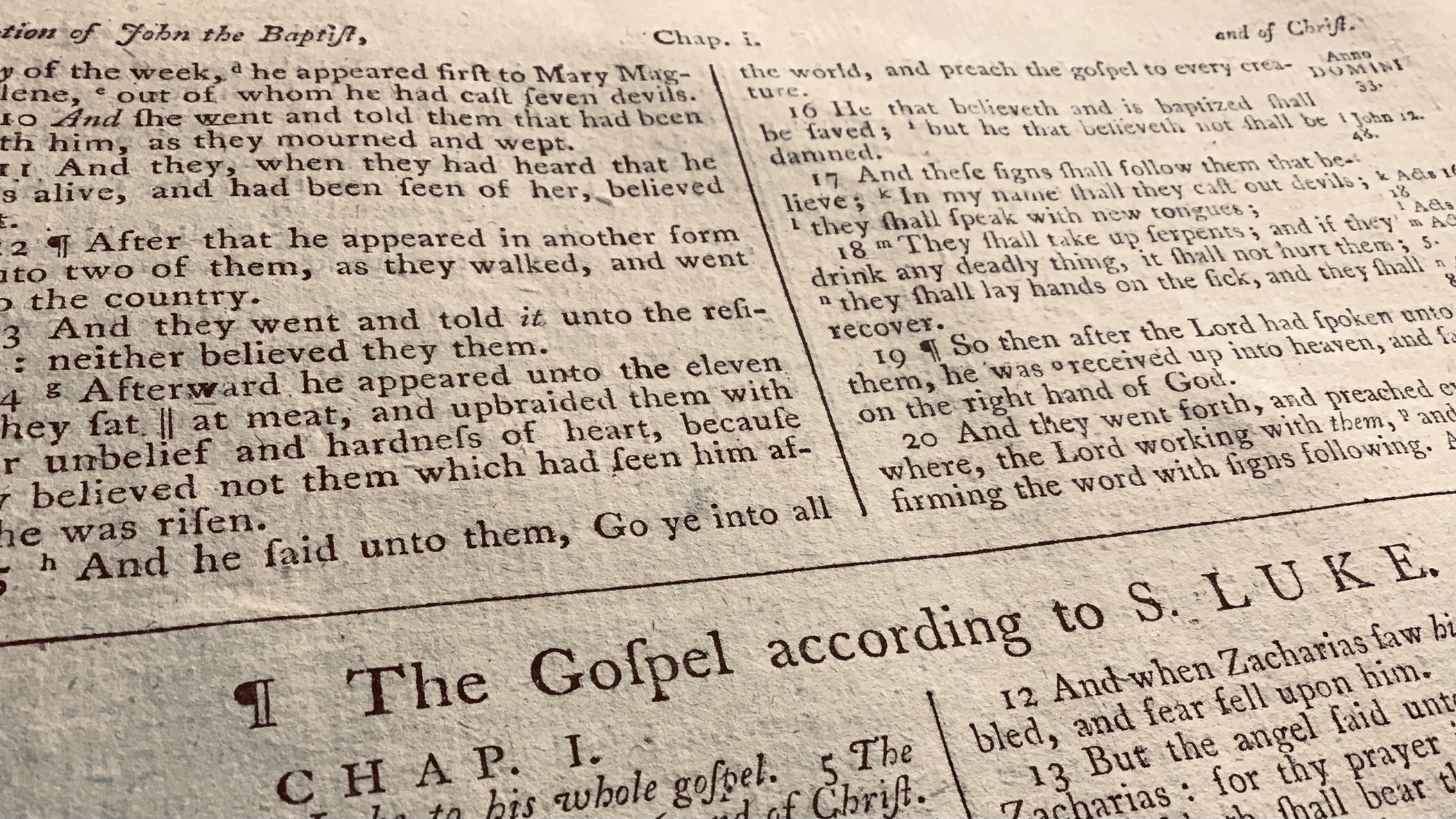
In my previous article I mention why Phoebe of Romans 16: 9 was not a deacon of the church in the sense of being a minister or preacher. Phoebe delivered a letter of Paul, and was a servant, and nothing more should be made of that.
In this article however I am continuing to explore the claims of revisionists who argue in favour of female leadership and I will show that Scripture does not affirm female leadership in the Christian church.
On Sunday I attended a CofE church and it was very unbalanced, women were leading the whole service, and there was hardly a male leader in sight. This is very unscriptural and leaves nothing for men who seek a male minister to talk to. Not only are there female reverends but female bishops too and there is not a single Scripture to support this. However, revisionists like to use Romans 16: 7 to claim that Junia (a woman mentioned by Paul) was an apostle.
Paul writes,
“Greet Andronicus and Junia, my countrymen and my fellow prisoners, who are of note among the apostles, who also were in Christ before me.” (Romans 16: 7)
In order to understand the Scripture we need to get behind the text and understand it from a contextual viewpoint. Here it is important to acknowledge that as with Paul’s reference to Phoebe (verse 1) the apostle is writing to a house church in Rome. We know this because in verse 5 Paul references the congregation that met in the house of Priscilla and Aquila. Interestingly enough Paul speaks about the congregation not the place they assembled in, and since Paul previously mentions “Priscilla and Aquila” who were a married couple, it is probable that “Andronicus and Junia”were a married couple also. Ancient Christians recognised that Junia was a woman, however very little else is known about her. However modern revisionists like to boldly claim that Junia was an apostle yet there is not a scrap of evidence to re-enforce that claim. In all probability Junia was simply the wife of Andronicus and the both of them were known by the apostles.
When Paul wrote about “Andronicus and Junia” he used the term “my countrymen” or kinsmen. Paul uses this term elsewhere in Romans 9: 3 and this is within the context of fellow Jew’s so it is likely that Junia was Jewish or even a relative of the apostle. This is where the rubber hits the road, there is no way any Jewish woman could be regarded as an apostle in the 1st century.
When Paul writes Andronicus and Junia “are of note among the apostles” he is merely saying they were known by the apostles. Paul’s proceeding words affirm this when he says “who also were in Christ before me.” Here Paul is saying that they had been Christians longer than he had, and in order for a person to have been an apostle that person had to have known Christ and witnessed His resurrection (Acts 1: 21, 22, Luke 24: 48) and we have no record whatsoever of Junia witnessing that.
Commenting on this passage Albert Barns writes,
“it by no means implies that they were apostles All that the expression fairly implies is, that they were known to the other apostles; that they were regarded by them as worthy of their affection and confidence; that they had been known by them, as Paul immediately adds, before “he” was himself converted. They had been converted “before” he was, and were distinguished in Jerusalem among the early Christians, and honored with the friendship of the other apostles.”
This view is entirely consistent with Scripture and is contrary to the false claims of revisionists who claim Junia was an apostle.
Once again, there is no evidence for female church leadership in the Bible.
Does Romans 16: 1-2 say Phoebe was a minister?
Posted by simon peter sutherland in Biblical Scholarship, Church of England, Is Female Leadership Biblical? on August 23, 2025

Throughout Christianity today we see many Christian’s believing that women can be leaders in the church. Although a number of Scriptures are used to argue that point, some don’t even want to discuss the subject. They say female leadership is now established and it’s a secondary issue. We need to lay aside our differences and work together for the cause of the gospel.
But I can’t do that. I do not believe the idea of women in leadership is Biblical or a secondary issue. The New Testament is clear on the matter and I have not been persuaded to believe otherwise. In the Bible God always chose men to be religious leaders. Noah, Abraham, Moses, Samuel, Elijah, Peter, James, John, Paul, Barnabus, Timothy and Titus were all men chosen by God. In order for a woman to be a minister, she too would have to be chosen by God and we do not find that in Scripture.
Yet today many leaders claim the church has been wrong for 2000 years and they seem to pull New Testament passages out of thin air to support their weak claim of women leadership.
Now before I continue, I want to clarify that I am not writing against women leaders in a secular sense, neither am I supporting misogyny I am talking purely about church leadership, ministry and preaching within the complimentarian perspective. The opposite viewpoint does not agree with the Bible so it seeks to revise it to make the church fit in with a changing world. The Church of England is one such establishment. Revisionists make claim upon claim and hardly any of them are legitimate.
One such claim primarily begins with a 1st century woman by the name of Phoebe, who revisionists claim was a deacon in office in the early apostolic church. Yet very little is known about her and the singular reference does not provide enough certainty to make such a significant claim. All we have are two verses.
St. Paul writes,
“I commend to you Phoebe our sister, who is a servant of the church in Cenchrea, that you may receive her in the Lord in a manner worthy of the saints, and assist her in whatever business she has need of you; for indeed she has been a helper of many and myself also.” (Romans 16: 1-2. NKJV)
According to some, Phoebe is described by Paul as a deaconess and in a regular order which implies she held the office of leadership in the church at Cenchrea. This I argue is a false claim and unsupported by Scripture. Let me show you why.
Firstly, in the Epistle to the Romans the apostle was not speaking to a modern 21st century church, neither was he writing to the church where Phoebe was from, he was writing to a congregation in Rome (Romans 1: 7). This congregation probably met in a Roman house church and Paul “commends” Phoebe to them. This act of commending someone is significant and should not be overlooked. In 2 Corinthians 3: 11 Paul uses the same custom of commendation, but if Phoebe was already known for being in office as a deacon Paul would not need to commend her. The very fact that Paul commended her implies that she was not acquainted with the congregation at Rome, or she would have already be assumed a deacon by them. This implies that Paul’s request to make her welcome was that the Roman Christian’s would receive her, why? Why would he need to make such a request if she was already a known preacher and teacher?
Paul follows this important point by using the word “servant” “diakonos” which does mean deacon and can also mean “to run on errands” (G1249 Strongs) This word is used in a variety of places in the New Testament and is used in around thirty contexts, including John 2: 5 where Mary (the mother of Jesus) calls for the servants. The greek word used in John 2: 5 is also “diakonos” yet the servants mentioned in this passage were not leaders in the church, they were simply servants. John also uses this word in 2: 9.
Likewise, we also find “diakonos” in Matthew 22: 13, which does not imply a position of leadership. This means that New Testament Greek has a limited vocabulary that uses words in a broad spectrum.
When Paul refers to deacons in office he does not always use ‘diakonos‘ but rather“diakoneo” (G1247 Strongs) which means a minister, or teacher or a deacon in office. When Paul uses “diakonos” he places deacons and bishops in the same sentence (Philippians 1: 1) and makes it very clear that deacons are to be the husbands of one wife (Timothy 3: 12) thus, if he was affirming that Phoebe was a deacon in office he would be totally contradicting himself. There is no way that Phoebe could be the husband of one wife.
When Paul uses diakonos in Romans 16: 1-2 he is simply presenting a position compatible with a ‘complimentarian view’ teaching that some women in the apostolic church were appointed to visit the sick, mainly women, and to help out. Paul is not implying that women were to teach or have the pastoral office of a deacon. He is merely using a general word to communicate a servant of the church.
John Wesley in his commentary on this passage wrote this,
“In the apostolic age, some grave and pious women were appointed deaconesses in every church. It was their office, not to teach publicly, but to visit the sick, the women in particular, and to minister to them both in their temporal and spiritual necessities.”
Obviously modern churches can and do disagree with a correct understanding of Paul’s use of diakonos but people should also consider that if Scripture interprets Scripture Acts 6: 3 affirms how the apostles gave instruction for seven men to be chosen as deacons, not seven women. The Biblical criteria is very clear and although many are now persuaded against this, the institution of women leaders in the church is just one of many signs of national apostasy and these revisions have caused the very foundations of church leadership to be weakened.
In Romans 19: 2 Paul affirms that the people of Rome should “assist her (Phoebe) in whatever business she has need of you”. The Greek word translated “business” (G4229) is used 11 times in the New Testament and does not mean preaching or teaching, it only means a task or a legal process. In fact Paul mentions nothing about Phoebe teaching or preaching but rather that she has helped many people including himself. This is within the context of a servant to run on errands or have some kind of business to attend to rather than an ordained ministry of preaching and teaching. If Phoebe were to be here today she would be a clerical worker in the church.
Thus, to claim Romans 16: 1-2 proves Phoebe was an acting deacon in office is a far fetched claim and makes the Bible out to be self contradictory. The Bible does not support the idea that Phoebe was a deacon in office, and if Scripture interprets Scripture Phoebe was merely a servant, and possibly the widow of a deacon. She helped many people and Paul out and delivered his letter, that’s all. There is no mention of preaching or teaching and certainly no hint whatsoever that any woman could be a bishop, archbishop or pastor.
I will address the other Scriptures in due course as time moves on.
“From Obedience To Freedom” free book offer
Posted by simon peter sutherland in Christianity, The Bible, Theology on August 7, 2025
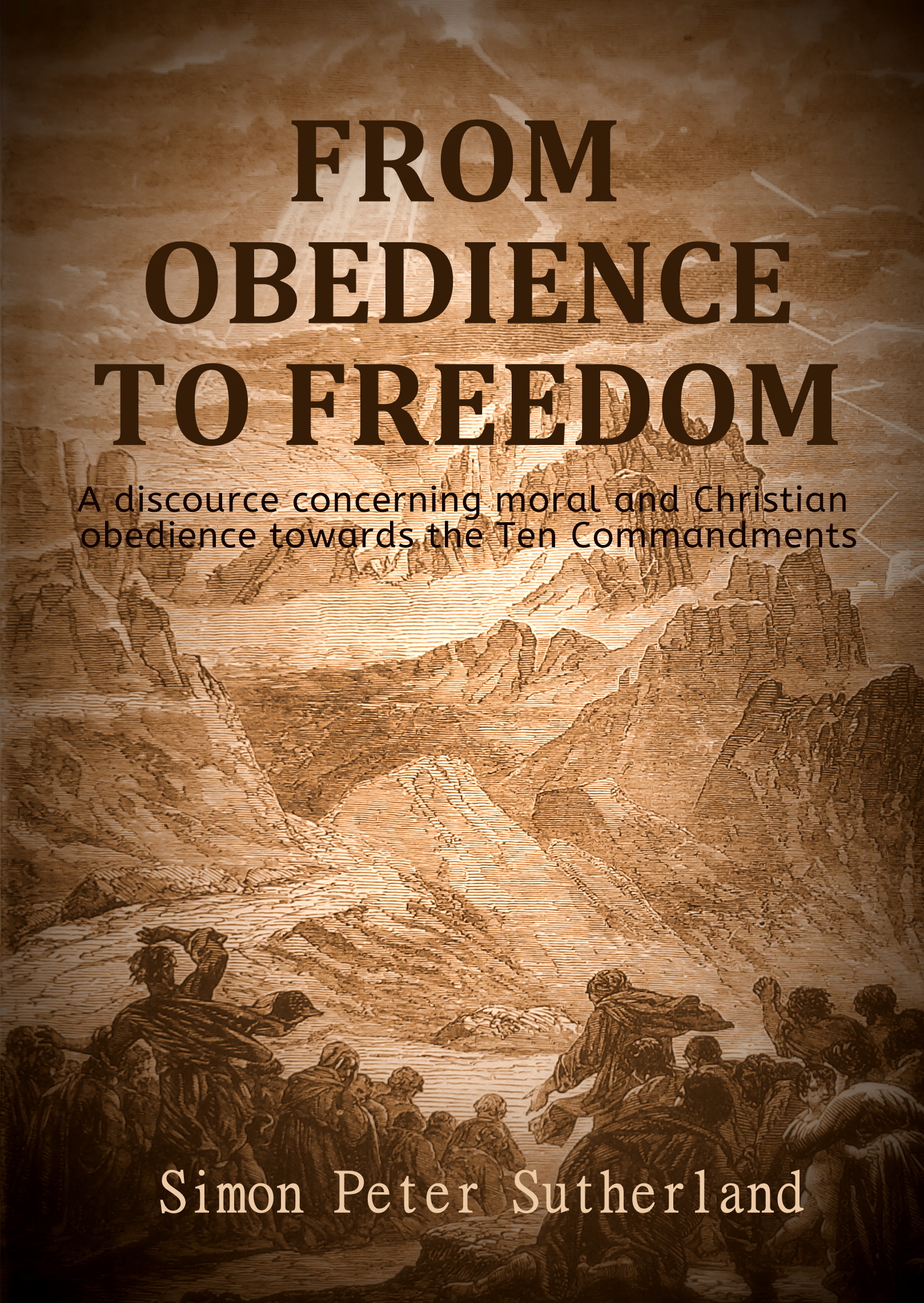
In May I published my first book “From Obedience To Freedom” A discourse concerning moral and Christian obedience towards the Ten Commandments.
In this book I discuss the Christian’s voluntary service towards Christ and His commandments. The book has taken me many years to write and in it I discuss a variety of opinions and I also present the historical views of reformers and other persons and use the King James Version. I discuss how voluntary obedience to the Ten Commandments is not a works based gospel, and how Paul delighted in the commandments and how they contain the very heart of Christ and the New Testament.
I also give brief expositions on each of the Ten Commandments.
From tomorrow I have made my book available for free for a limited time on Amazon. So please get yourselves a copy and share it with your friends and on social media outlets.
-
You are currently browsing the archives for August, 2025
Simon Peter Sutherland
-

 Simon Peter Sutherland