Archive for category Eschatology
The second coming of the King of kings, Advent reflections with J C Ryle and Matthew 24: 29-35
Posted by simon peter sutherland in Christianity, Christmas, Eschatology, Theology on December 1, 2025

I have begun the reading of a book “The Coming King” – 25 Readings For Advent with J. C. Ryle.
Ryle was Bishop of Liverpool between 1880 and 1900 and the readings are taken from his Expository Thoughts on the Gospels, some of the best commentaries available today.
In this part he deals with “our Lord’s prophecy” from Matthew 24: 29-35 where Christ describes His own second coming. In this passage we are told that Jesus will return with great power and glory quite different to His first appearing. During His incarnation Jesus was a man of sorrows (Isaiah 53: 3) He was not some ordinary joker Man who talked a lot, and blended in, He was a quiet Man and when He spoke He spoke with power and authority. If He did speak all the time, His words would not carry the same weight, yet His words were like no other, they had weight and strength. No one ever spoke like this Man. Even the authorities could hardly refute Him, even though they tried. He was the King of kings and Lord of lords, and no one had authority over Him unless it was granted by the Father.
When He was born, He was born humbly, among the lambs reared to be offered in the temple sacrifices. As He grew, He grew in favour with both God and man, yet He took on the form of a servant, rejected by mankind. Betrayed by his friend and condemned to death of a cross. Yet it did not end there, if it did, faith would be worthless and in vain. No, Christ rose from the dead and ascended into heaven where He reigns forever more. We do not need to wait for His return to know that He reigns, He is reigning now from heaven. We do not need to wait for some futuristic kingdom to take place on earth when He returns to Jerusalem, He is reigning now from heaven on the throne of David. And one fine day He will return and men will receive the fulness of eternal life or the sentence of eternal death.
Remember this, lest you live a pointless and meaningless life. There will be no escape from anything when He returns. There will be no opportunity for people to change their minds and believe once He returns. It will be the end. No thousand year reign. No second chance. No scoffing at Him. He will return to this earth when you least expect and no one will escape Him. He will not be the same as He was at His first coming, He will not be the Jesus people mock and blaspheme, and think they can walk all over, He will be returning with all His power and glory in the clouds of heaven, and no eye will be able to escape from Him. No ear will be unable to listen to Him. No sin will be left uncovered. No one will be able to escape. It will be the end.
What a terrible day that will be.
I wonder where you will be on that day? Will you be preaching, only to find yourself lost without salvation? Will you be drinking, only to find yourself thirsty? Will you be walking only to find yourself on your knees? It doesn’t have to be that way, you can pray. You can receive Christ at any moment of the day. You don’t need a priest, He is our priest. You don’t need a pastor, prophet, or pope or mediator, Jesus is our Mediator. All you need to do is pray and receive Him and you too will be given the gift of eternal life in the arms of our Lord and Saviour Jesus Christ.
Examine yourself whether you are in the faith (2 Corinthians 13: 5) Evaluate your beliefs. Consider your actions, and see if they line up with the gospel. Test your faith and yourselves, and keep awake, so that when Christ returns, He will not find you sleeping.
“Dispensationalism Exposed” Revealing the Bad Fruit: book review part 1
Posted by simon peter sutherland in Eschatology, Theology on November 19, 2025
Last month while reflecting on bygone eras of my church life, I was rummaging through some second hand books and I happened upon a book entitled “Dispensationalism Exposed” by Dale A. Albertson. I didn’t know anything about the author but I noticed the book was self published so it was right up my street.
I have a history with Premillennialism, from my early days where the theory was projected at me, to my more recent days when this happening reoccurred. I have a distinct distaste for Premillennialism and so often it is difficult to find folks who think alike. Thankfully Dispensationalism is not a big issue in UK churches, but for many people, especially American Christians, Premillennialism is nothing more than Scripture itself.
But now things have changed. More and more people are realising that it ain’t necessarily so. Premillennialism is not the only interpretation of Matthew 24 or the Book of Revelation. But the problem for some believers are, that other views are rarely presented. At least in some circles.
So, I bought the book and I have found it to be a pleasant surprise. In it, the author presents his arguments against dispensationalism and argues the doctrine is distructive and in many cases, harmful. Dispensationalism prevents people from trying to make our world a better place, it often denies the reality of what Jesus was talking about in Matthew 24, and it creates unnessesary division and is not accurate to the early church.
The author focuses upon the 1,000 year reign of Christ and His saints and the events of AD 70 when the Jerusalem Temple was destroyed by the Romans. Yet Premillennialists often ignore what Josephus documented and prefer to promote various rapture theories as though Matthew 24: 40 refers to an event way off in the future. It does not, Jesus was talking about the Roman armies taking people into captivity when Jerusalem was about to be destroyed and it all goes back to the writings of John Nelson Darby and his incorrect hermeneutics. The Olivet discourse and a majority of the book of Revelation are all about the past, not the future.
Dispensationalism has a dark side, the author argues, “and its bad fruit” has a “negative impact-on the world today”. “Dispensationalism is a very new doctrine in the scope of church history,” the author argues, dating to the 19th century and the “Plymouth Brethren minister” (P. 12). Spurgeon was a “well-known vocal critic of Darby” the author exclaims. Darby’s ideas where adapted from Edward Irving (1792-1834) a clergyman in the Church of Scotland and Darby’s influence spread through seminaries of Europe and his tours of the United States.
Dispensationalism brings about the practice of “separatism” and causes people to fail in working towards change in our world because according to them, the decline of society and church is all part of the unfulfilled prophecies of Scripture. I have been making this point for years. I argue that the powers that be use Premillennialism as a gateway to disencourage Christians to make changes in our world, because when Dispensationalism is believed, the bad events of our day and age are all foretold.
“The indoctrination of Dispensationalism is now nearly universal in America.” and “Dispensationalism is considered unassailable by the majority of Christians in America” and “those who disagree have been called heretics,”. (P. 25)
I can relate to those claims, since one man attempted to assassinate my refutation of Premillennialism by claiming that I was denying the second coming of Christ. So for me, since Premillennialists often ignore and overlook the writings of Josephus, you can see why the real historical events of Matthew 24 are unknown to them. Because of this I think many American Dispensationalists are ‘Nuda scriptura’ rather than ‘Sola scriptura’. Personally I am Sola scriptura a position which allows for other historical sources to help us rightly divide the word of truth.
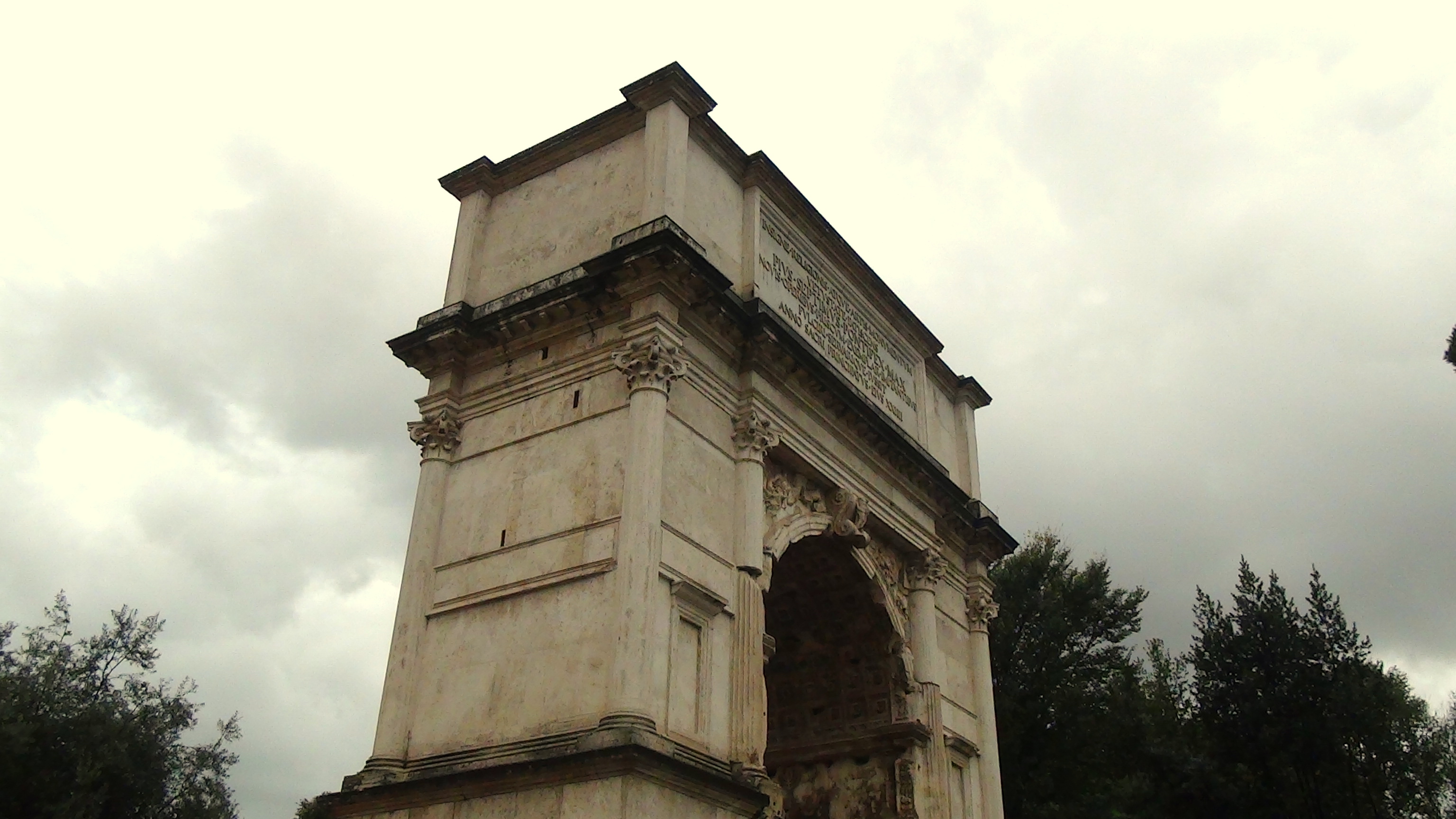
Premillennialism does not rightly divide the word of truth since it fails to recognise that a literal-historical hermeneutic of Matthew 24 would reveal that Jesus was warning His 1st century listeners about the destruction of the temple in Jerusalem, by the Roman armies under Titus. A fact which according to the author “Dispensationalism must (mostly) deny in order to justify its alternative interpretation of the great tribulation.” (P. 31)
The author continues on to argue that Dispensationalism is so bad an idea that even sceptics and Muslims use it to argue that the prophecies of Jesus were not fulfilled, then there is the credulous nature of the support for the rapture doctrine, and the secret rapture of the church, a position that the author rightly argues “is not found anywhere in scripture.” (P. 46)
Amen to that. Absolutely.
If you are looking for a good book to read over Christmas or the new year, you should get yourself a copy of this book. Self published works can oftentimes be great reads.
The Promise of God for all mankind
Posted by simon peter sutherland in Census of Luke, Christmas, Christmas or Nisan, Documentaries, Eschatology, Theology on December 18, 2024

Many years ago, when I was a boy, I was asked what my favourite New Testament Gospel was, and I replied “Luke’s Gospel”. For me, I think that claim still stands. The Gospel According to St. Luke is still my favourite of the four Gospels.
Luke’s Gospel gives us the greatest account of Christ’s birth. I say this because I believe chapters 1 & 2 contain the actual words of Mary herself given to St Luke. Luke’s Gospel gives us the reference to the census of Quirinus. I have discussed this census in a previous article showing that it may have been referenced in the Mausoleum of Augustus on the funerary Res Gestae Divi Augusti in Rome.
Luke was a very reliable historian as my documentaries have shown. In Kos and the Gospel According to St. Luke I demonstrate elements of his accuracy by visiting the Greek island of Kos and discuss how he interviewed surviving witnesses to the life of Jesus Christ. Luke references his accuracy himself in Luke 1: 1-4 and Luke’s desire was for the Roman official (Theophilus) “to “know the certainty of those things in which you were instructed.”
Luke follows up his Gospel with part two (Acts of the Apostles) and those who know it are assured of the certainty of the events that happened.
As previously mentioned “I believe chapters 1 & 2” of Luke’s Gospel “contain the actual words of Mary herself given to Luke.” The nativity account contains elements of feminine Greek and in Mary’s account of the angelic announcement of Christ’s birth the angel says to Mary “behold you will conceive in your womb and bring forth a Son, and shall call His name Jesus. He shall be great, and will be called the Son of the Highest; and the Lord God will give Him the throne of His father David. And He will reign over the house of Jacob forever, and of His kingdom there will be no end.” (Luke 1: 31-32. NKJV)
This statement concerning the kingdom of Christ and Him being given the throne of David was not some reference to a futuristic kingdom that Jesus sets up when He returns to earth at the second coming. Luke tells us that this kingdom was established during the life, death, resurrection and ascension of Jesus Christ and was revealed to the people of Judea and Jerusalem by St Peter in his sermon contained in Acts 2: 14-39.
In Acts 2: 30-31 Peter says “Therefore, being a prophet, and knowing that God had sword with an oath to him that of the fruit of his body, according to the flesh, He would raise up the Christ to sit on his throne, he forseeing this, spoke concerning the resurrection of the Christ, that His soul was not left in Hades, nor did His flesh see corruption” and in verse 32 Peter states that the things which they saw when the Holy Spirit came on the Day of Pentecost (Acts 2: 1) is what they “now see and hear.”
The important point to note here is that the promise made to Mary in Luke 1: 32-33 has been fulfilled for all mankind. God in Christ Jesus has set up His kingdom and it has no end and as Peter stated to the people in Judea and Jerusalem, “the promise is to you and to your children, and to all who are afar off, as many as the Lord our God will call.” (Acts 2: 39)
This Christmas remember what Christ has done for us and for all mankind. Let us turn our backs upon the things of this world and whatever you do keep your eyes upon Christ, and know that He is our Saviour, and our God, if we believe in Him and receive forgiveness for our sins and make Him Lord of our lives.
The wrecking ball of Premillennialism
Posted by simon peter sutherland in Eschatology, Theology on October 17, 2023

In 2020 I published an article concerning my moving toward the eschatological challenge and in my previous article I mentioned that I am a “free thinking Amillennialist”. For some that statement may leave some unanswered questions in mind? So I thought I’d give a little backstory.
When I was a boy, growing up in church, we didn’t hear much about the end times. I knew about the book of Revelation but I left it alone. Often images would provoke fear and I would see publications of Billy Graham and other preachers saying the end is nigh.
Growing up in the Salvation Army there was no mention of eschatology until my family went to an evangelical church and were suddenly presented with premillennialism. We were told about the rapture and the Antichrist and often fearful things would escape any pause for freedom of thought. Preachers would say Antichrist is going to come and sign a peace treaty in Israel and a great tribulation would begin. We will all be raptured they would say.
There was never any explanation of the complexities of interpreting Scripture or any reference to different views, it was all presented as though all Christian’s are obligated to believe this.
Some years later I read the book of Revelation for myself and I began to enquire what it was all about. Who were the seven churches John was writing to? Where was Patmos? Where is Ephesus? In 2004 I visited Ephesus for myself and by that time I had already begun to see that the seven churches of Revelation were actual historic 1st century churches. None of which exist today. Then I asked myself, why would a man on Patmos write to people in seven churches 2000 years ago about events that were to happen thousands of years later after they were all dead?
Revelation 1: 1 was a wrecking ball for me and here John already lays the foundation, “The revelation of Jesus Christ, which God gave him, to show His servants things which must shortly come to pass;”
Note how he says “things which must shortly come to pass” a clear reference to the 1st century when Revelation was first written.
Then I read Revelation 1: 19, “Write the things which you have seen, and the things which are, and things which will take place after this.”
To me, these verses were a wrecking ball for all I had been taught and showed me that John was not writing to 1st century people about events that would take place thousands of years off in the future but about events that would ‘shortly take place’ at the time of writing.
John was writing to 1st century Christian’s warning them about events that they would have to face in their own lifetime.
Imagine if you were in a war and writing to fellow Christians to warn them about events that were about to shortly come to pass, would you want them to think you were writing about future events that would occur thousands of years later? What would be the point of that? The warning would make no sense.
As I explored I learned that the ancient world loved puzzles and used a lot of symbolism and references to the Old Testament. Then I learned that there are different interpretations of the book of Revelation but I had only been presented with one view. Every Christian I knew was a Premillennialist and they all told me that there would be a rapture and one person would be taken and the other left. Yet as I began to explore I found that the very idea of a premillennial rapture was an 18th-19th century invention and the passages used to justify these rapture theories are more contextually related to the destruction of Jerusalem in AD 70 rather than the end of the world. Paul in 1 Thessalonians 4: 13-18 was writing about an entirely different subject than Jesus was communicating in Matthew 24: 40. When Jesus said “Then two men will be in the field: one will be taken and the other left.” He was talking about Jews being taken into Roman captivity in AD70 and not individuals being raptured up into heaven thousands of years later. The reason many people fail to recognise that is because the preachers already read the rapture into it.
In my opinion, Premillennialism is not a solid contextually verifiable interpretation of the Bible passages it claims to represent. It often takes scriptures way out of context and assumes an interpretation of them as the passages are being read. It ignores the basic meaning of Scripture and fails to reconsider what those passages would have meant to the original writers and 1st century readers.
For this and numerous historic and contextual reasons I have, over this lengthy journey, decided that the A-millennial position is the most reliable and historically correct interpretation of the book of Revelation. The title isn’t perfect and doesn’t perfectly communicate my understanding 100% but unlike premillennialism it realises the implications of Acts 2: 32-36 correctly and does not assume the reign of Christ to begin after His glorious return, but realises that He is reigning from heaven now and has been since His incarnation on earth. Peters sermon in Acts 2 is explicitly clear on that and his words leave nowhere for the premillennial to go.
Though I respect that many godly Christians believe wholeheartedly in premillennialism, I am content to say that I do not. I am happy to know that after such a long and often conflicting journey, I am content to say that I have arrived at my destination and am in good company.
There will be peace in Israel, someday
Posted by simon peter sutherland in Eschatology, Theology on October 14, 2023

Over these last few days the Middle East has been weighing heavy on many minds. The holy lands are literally the very landscape of the Bible, so as a Christian, Jerusalem and Galilee are very dear to me. Yet I have never been there.
I have wanted to visit the holy lands for many years, but somehow it has never happened for me. Nevertheless, I have nearly taken that adventurous journey a number of times.
When I was in Cyprus and filming for the Apostles at Paphos, I had no idea if my film project would ever be completed. It was my first documentary and Jerusalem was weighing continuously on my mind. I was very close to taking a voyage over to Israel but I decided I would rather continue filming. So I sat in Paphos and wrote down how Jerusalem holds me captive, and I am in chains to her.
Continuously visiting the site of St Paul’s Pillar was a series of wonderful experiences and as I sat in Agia Kyriaki church, I was met by an elderly lady who was sweeping the floor. She was full of character and was very kind to me and while sweeping the lady began quoting “Our Father, who is in heaven…” and was clearly troubled by world events and said that the Lord’s Prayer means “we have a father, that God is our Father, and people say there is only One God, and yet everyone is fighting and killing one another. If there is One God, why do people fight?”
“Religion” she said “Religion, that’s the problem!”
It was one of those moments that can be remembered for a lifetime.
Someday I know there will be peace in Jerusalem, someday they will lay down their arms and there will be no more wars, no more trouble, no more killings. I know this is true because I am a Christian and it is in the Bible.
In the Book of Revelation John was on the Isle of Patmos and wrote to seven churches in Asia Minor, Ephesus, Smyrna, Pergamos, Thyatira, Sardis, Philadelphia, and Laodicea. All of these congregations were 1st century churches and no longer exist. But John wrote to them during a time of Roman persecution and in chapter 21 mentions his vision of the New Jerusalem. It was a very striking and hopeful thing to do.
As a free thinking Amillennialist I believe the millennial reign of Christ began at the Life, death, resurrection and ascension of Jesus Christ and continued on through the church age. There may be golden eras of Christianity in the future and therein peace may be found. However, I believe there will never be absolute universal peace on this earth until Christ returns when the last enemy to be destroyed is death (1 Corinthians 15: 20-28) Meanwhile peace can be attained individually for those who believe in Jesus Christ and outside of Him no true peace can be found.
In Revelation 21: 1-4 John wrote:
“I saw a new heaven and a new earth: for the first heaven and the first earth were passed away; and there was no more sea. And I John saw the holy city, new Jerusalem, coming down from God out of heaven, prepared as a bride adorned for her husband. And I heard a great voice out of heaven saying, Behold, the tabernacle of God is with men, and he will dwell with them, and they shall be his people, and God himself shall be with them, and be their God. And God shall wipe away all tears from their eyes; and there shall be no more death, neither sorrow, nor crying, neither shall there be any more pain: for the former things are passed away.”
Those who do not believe in Jesus Christ have no hope in anything but themselves. Kings, rulers, politicians, cannot effect global world peace. All of us who know and trust in Jesus Christ recognise our human limitations and know that someday, somehow, by the power of God, there will be absolute peace on earth. But until that day comes, we strive for peace, we hope for peace, we work for peace, we live for peace, we pray for peace and we say as did John “Amen. Come Lord, Jesus” (Revelation 22: 20)
Moving toward the eschatological challenge
Posted by simon peter sutherland in Eschatology, Theology on August 18, 2020
 During the Coronavirus Pandemic, a lot of people, Christians and none believers, have been asking a lot of questions. Many Christian spokesmen, leaders and organisations have been expressing their views concerning Covid-19 and its relation to the Christian worldview.
As is common, some views I have agreed with others not. However, it appears that eschatology has become quite topical and many take the viewpoint that we are in the ‘end times’. And in some sense, I would agree.
However, the New Testament is clear that this world has been in the “Last days” (ages, aeons) since the time of Christ. This is stated very clearly in Hebrews 1: 1-2.
God, who at various times and in various ways spoke in time past to the fathers by the prophets, has in these last days spoken to us by His Son, who He has appointed heir of all things, through whom also He made the worlds.
The Epistle of Hebrews was written prior to the events of AD 70 and the destruction of the Jerusalem Temple by Titus. This means that the original author of Hebrews, understood the “last days” as an age that had already begun in his day. However, this right understanding is not always mentioned by dispensationalist thinkers. On the contrary, many Christians understand the “last days” as though it either specifically relates to now or our future, but rarely as a period that began 2000 years ago and could span thousands of years.
When I was a young Christian, the majority eschatological opinion, more often than not, conditioned that term ‘last days’ as expressively related to a time in the distant future when the antichrist would sign a peace treaty and a seven year tribulation would follow. This interpretation is taken from Daniel 9: 27.
But not everybody has subscribed to that interpretation.
When I was a young Christian and newly baptised, I was often presented with a then recent publication called ‘Approaching Hoofbeats’ by Billy Graham. The book was popular back then and the dramatic title intrigued me and although I never read it, I often left the Book of Revelation alone through some form of unease.
Well meaning Christians would say ‘We are in the last days’ and read passages to me relating to ‘antichrist’ and a ‘rapture’. “One will be taken, one will be left” (Matthew 24: 40-41) Yet no one ever referenced any other viewpoint, or mentioned the many contrasting interpretations of those passages.
Eager to read the Bible for myself, I grew up, and after reading the Bible from start to finish, I eventually reached an opposite view. I read the Gospel of Matthew in its original context and could not see any reason why our Lord Jesus Christ would warn, or inform, 1st century believers about events that would happen in Jerusalem thousands of years later when they would be no longer on earth.
This is also true of the Book of Revelation. I still see no reason why John would write to Seven Churches in Asia Minor about events that would happen thousands of years later after those original readers were all dead.
It was then that I realised that this common ‘end times’ theology radically took the original 1st century readers out of the equation.
To cut a long story short, I can now comfortable state that I reject Premillennial and Dispensational eschatology. I view this theological system as incredibly inconsistent with the original meaning of many Bible passages and what Scripture reveals Christ achieved during His Life, Death, Burial, Resurrection and Ascension.
Now days being in the Conservative Evangelical wing of the Church of England, I need not listen to ‘Premillennialism’ since the majority view, (if it is ever discussed) is ‘Amillennial’.
I have now reached a point in life where I am ready to engage in the eschatological debate and challenge this idea of ‘Premillennialism’ with Scriptural and historical facts.
Having said that, I accept that eschatology is in no way a salvation issue and I do not look down upon other Christians as half Christians for believing something different than I. But I have no doubts that many other Christians will not offer me the same in return.
-
You are currently browsing the archives for the Eschatology category.
Simon Peter Sutherland
-

 Simon Peter Sutherland