Archive for category Christmas or Nisan
The real Virgin Mary was the Lord’s servant
Posted by simon peter sutherland in Census of Luke, Christmas, Christmas or Nisan, Theology on December 16, 2025

In J C. Ryle’s readings for advent, he chooses Luke 1: 34-38 for todays text. This text is about how the Virgin Mary received news that she would conceive by the Holy Spirit and give birth to a Son, the Lord Jesus Christ. Mary responded to the angel, “Let it be to me according to your word.” (Luke 1: 38)
We see from this text that the Virgin Mary was a real servant of God and even though she knew what controversy would face her once news of her conception came about she obeyed the word of the Lord perfectly.
Ryle writes how this act did “present no small danger to Mary’s reputation and no small trial to Mary’s faith.” And when you consider the danger she would have to potentially face, it’s not difficult to understand why. Mary could have been stoned to death for conceiving outside of marriage. But we know, because of Scripture that Mary was indeed innocent and had not conceived outside of wedlock (Luke 1: 34). Mary was a Virgin and betrothed to Joseph who only knew her intimately after Jesus was born.
It is here in these passages where we see the true Virgin Mary, not the false version worshipped by the Roman Catholic Church as mediator. Mary points us to Christ she does not replace Him or cause us to pray to her in order to get to Jesus. Mary is no mediator. There is only one mediator between God and men, the Man Christ Jesus (1 Timothy 2: 5)
A number of years ago a scholar claimed that the nativity account in Luke’s gospel contains feminine uses of Greek. This implies that the words contained in these few verses in Luke are the actual eyewitness testimony of Mary herself, incorporated into the gospel by Luke. This little known observation can inspire us all to know that Scripture is reliable and trustworthy.
Our society seeks to play down Scripture and inspire people to doubt what is written, but no one need let this happen. The Bible is true and historically accurate and the more people believe by faith, the stronger your belief will be.
Please don’t be fooled by Roman Catholicism or her prophets and proponents. If you want to find the true Mary don’t pray to her, read Scripture and her own words.
Believe the Bible this day and trust in Jesus Christ till the end of your life and He will never leave you or forsake you. Amen.
Is Jeremiah 10: 1-10 about the Christmas tree?
Posted by simon peter sutherland in Christmas, Christmas or Nisan on November 27, 2025

A number of years ago I wrote an article about Martin Luther and the Christmas tree. In this post I mention how some believers have claimed that the prophet Jeremiah wrote against the use of Christmas trees in Jeremiah 10: 1-10. I wrote “I doubt that the text is speaking of anything like that, for the context of Jeremiah’s passage speaks more against the idol worship that then existed and cannot rightly be connected to a mere celebration of Christmas which did not begin until many centuries later.”
In this post I would like to share a little more information on that claim.
Jeremiah’s ministry took place between 627 B.C. until the fall of Jerusalem in 586 B.C. He is my favourite Old Testament prophet. I see Christ in him. He was accused wrongly, as was Christ, he was tried, persecuted and imprisoned because of the things he said. Like Christ he also foretold the destruction of Jerusalem and the temple (Jeremiah 22: 5-7, Matthew 23: 37-39) and was rejected by his own people.
The book of Jeremiah was essentially written about 605 B.C. and chapter 1 describes his call, chapter 2 describes his call for Israel to repent, chapter describes their unfaithfulness, in chapter 4 he calls Israel to return to God, in chapter 5 the sins of Jerusalem and Judah are exposed, while chapter 6 speaks about the siege of Jerusalem and in chapter 7 Jeremiah preaches. You can at times hear his voice and his sorrow. As Jerusalem cries out for help (chapter 9) and in chapter 10: 1 Jeremiah calls on ancient Israel to “Hear the word which the Lord speaketh unto you” meaning them, his original audience.
I am struck by some words in the footnotes of my dad’s Thompsons Chain Reference Study Bible relating to “Palm-trees” and “Idol Making“. My dad used to preach from this Bible. In it Jeremiah speaks against people cutting down a tree in a forest and then they deck it with silver and gold, fastening it with nails so that it won’t move (Jeremiah 10: 3-4) But then in verse 5 we read about these palm trees. The prophet writes the “customs of the people are vain” meaning they are founded upon nonsense, idolatry and folly. Jeremiah ridicules them. The people must have been nailing these trees to a pedestal or a pillar. All the while Jeremiah is speaking from the living God but these people were making dumb idols out of palm trees and fastening them up like pillars.
Calvin comments “We now see what the Prophet meant to teach us, – that the wisdom of the Chaldeans, and also of the Egyptians, was celebrated throughout the world, and also so blinded the Jews, or so enraptured them...” (Calvin’s Commentaries on Jeremiah, Chap. X. 4, 5)
Here we do not see Jeremiah speaking against Christmas trees put up to remember Jesus Christ, the light of the world, we see ancient Israel following the ways of the Egyptians from whom GOD had delivered them from in the Exodus. But never the less, they are returning to the ways of the world and not continuing on in the ways of the Lord.
It is true that people can make gods of anything, be it wood or stone. But for people to remember and honour the birth of Christ by placing up a work of art in the form of a Christmas tree is in no way spoken against by Jeremiah.
If you in your heart are honouring Christ and remembering His birth then your Christmas tree is very right and proper, and in no way spoken against by the prophet Jeremiah. Remember that when Jesus was hailed as king the people honoured Him with palm trees (John 12: 13). This was a symbolic act and the gospels do not speak against that. So again, if you are honouring Christ and are not bowing down to a Christmas tree or worshipping it as a god, then you are doing nothing wrong.
Jeremiah 10: 1-10 is nothing to do with the Christmas tree.
The Promise of God for all mankind
Posted by simon peter sutherland in Census of Luke, Christmas, Christmas or Nisan, Documentaries, Eschatology, Theology on December 18, 2024

Many years ago, when I was a boy, I was asked what my favourite New Testament Gospel was, and I replied “Luke’s Gospel”. For me, I think that claim still stands. The Gospel According to St. Luke is still my favourite of the four Gospels.
Luke’s Gospel gives us the greatest account of Christ’s birth. I say this because I believe chapters 1 & 2 contain the actual words of Mary herself given to St Luke. Luke’s Gospel gives us the reference to the census of Quirinus. I have discussed this census in a previous article showing that it may have been referenced in the Mausoleum of Augustus on the funerary Res Gestae Divi Augusti in Rome.
Luke was a very reliable historian as my documentaries have shown. In Kos and the Gospel According to St. Luke I demonstrate elements of his accuracy by visiting the Greek island of Kos and discuss how he interviewed surviving witnesses to the life of Jesus Christ. Luke references his accuracy himself in Luke 1: 1-4 and Luke’s desire was for the Roman official (Theophilus) “to “know the certainty of those things in which you were instructed.”
Luke follows up his Gospel with part two (Acts of the Apostles) and those who know it are assured of the certainty of the events that happened.
As previously mentioned “I believe chapters 1 & 2” of Luke’s Gospel “contain the actual words of Mary herself given to Luke.” The nativity account contains elements of feminine Greek and in Mary’s account of the angelic announcement of Christ’s birth the angel says to Mary “behold you will conceive in your womb and bring forth a Son, and shall call His name Jesus. He shall be great, and will be called the Son of the Highest; and the Lord God will give Him the throne of His father David. And He will reign over the house of Jacob forever, and of His kingdom there will be no end.” (Luke 1: 31-32. NKJV)
This statement concerning the kingdom of Christ and Him being given the throne of David was not some reference to a futuristic kingdom that Jesus sets up when He returns to earth at the second coming. Luke tells us that this kingdom was established during the life, death, resurrection and ascension of Jesus Christ and was revealed to the people of Judea and Jerusalem by St Peter in his sermon contained in Acts 2: 14-39.
In Acts 2: 30-31 Peter says “Therefore, being a prophet, and knowing that God had sword with an oath to him that of the fruit of his body, according to the flesh, He would raise up the Christ to sit on his throne, he forseeing this, spoke concerning the resurrection of the Christ, that His soul was not left in Hades, nor did His flesh see corruption” and in verse 32 Peter states that the things which they saw when the Holy Spirit came on the Day of Pentecost (Acts 2: 1) is what they “now see and hear.”
The important point to note here is that the promise made to Mary in Luke 1: 32-33 has been fulfilled for all mankind. God in Christ Jesus has set up His kingdom and it has no end and as Peter stated to the people in Judea and Jerusalem, “the promise is to you and to your children, and to all who are afar off, as many as the Lord our God will call.” (Acts 2: 39)
This Christmas remember what Christ has done for us and for all mankind. Let us turn our backs upon the things of this world and whatever you do keep your eyes upon Christ, and know that He is our Saviour, and our God, if we believe in Him and receive forgiveness for our sins and make Him Lord of our lives.
Hymn stories: Hark the Herald Angels Sing
Posted by simon peter sutherland in Christmas, Christmas or Nisan, Music on November 24, 2022

Christianity has in its favour the greatest hymns ever written.
There is no denomination in Christendom that has more superb catalogue to its credit than Anglicanism. So it is with the timeless Christmas classic “Hark the Herald Angels Sing.”
Originally published as a Christmas Day hymn by Charles Wesley (1707-1788), it was included in John Wesley’s Collection “Hymns and Sacred Poems” in 1739. The previous year Charles had experienced a conversion in London on 21 May, 1738 and felt renewed in his faith. Soon he began to spread the good news of the Gospel and write the great hymns he is known for. “Hark the Herald Angels Sing” displays that now bygone era and captures Wesley’s new found zeal. It is a glorious hymn.
When I was a boy I used to love listening to it on the opening credits of the 1951 version of Scrooge with Alistair Sim. It has never left me to this day. Unlike many of the shallow and theologically bland chorus’s sung in many independent congregations around the world, “Hark The Herald Angels Sing” upholds the fabulous dignity of Biblical splendour. It presents in a glorious array the celebratory narrative of the Incarnate Christ. Inspired largely by the King James Version, Charles Wesley’s original lyrics read like so:
“HARK how all the Welkin rings
“Glory to the King of Kings,
“Peace on Earth, and Mercy mild,
“GOD and Sinners reconcil’d!
Joyful all ye Nations rise,
Join the Triumph of the Skies,
Universal Nature say
“CHRIST the LORD is born to Day!”
These words were adapted in 1758 by George Whitefield (1714-1770), and read like so:
“HARK! the Herald Angels sing
Glory to the new-born King!
Peace on Earth, and Mercy mild,
God and Sinners reconcil’d.
Joyful all ye Nations rise,
Join the Triumphs of the Skies;
Nature rise and worship him,
Who is born at Bethlehem.“
Whitefield’s version was published in 1782 in Tate and Brady’s New Version of the Psalms of David. But the story doesn’t end there. In 1855 musician William Hayman Cummings (1831-1915) gave the song a new lease of life by adding music by Mendelssohn (1809-1847). This is generally the hymn tune we sing today.
Wesley wrote, “Peace on Earth, and Mercy mild, “GOD and Sinners reconcil’d!“. Those original words by Charles Wesley proclaim the pure truth of the Gospel and rightness of the One and only person of Jesus Christ. The only peace that can ever be attained on this earth is in Christ Jesus our Lord.
Remember this and never forget, works that have begun, do not always end there. They can go on to future generations and never be forgotten.
This season, go and find yourself a great carol service and sing your heart out until the place becomes unglued. Let the false teachers commence. Let them argue their way into apostacy. Let the world turn in on itself. Let the weak try and rule the strong by fear. Let them try and take away your freedom and right to think. But you, keep yourself unspotted from the world and know that they can never take away your right to sing!
Keep warm this Christmas and sing!
Light In The Darkness
Posted by simon peter sutherland in Census of Luke, Christmas, Christmas or Nisan on December 20, 2020

2020 has been a very difficult year. I’m sure by now many people are tired and weary. 2020 has been a disruptive year and I’m sure many will be glad to see the back of it. But we should never assume 2021 will be any better. Times do not change because Big Ben strikes twelve. Time is a flat circle and evil, fanaticism and sins are forever busy.
In my opinion, we do not live in a good era. Attacks and destruction are becoming too common. Massive earthquakes, floods, homelessness, deadly pandemics are slowly becoming over familiar. There is a lot of suffering out there and I would rather live in the past. Although there are some things of modernity that I am fond of, the world has become a very dark and cruel place, where people are trapped in a marred lens of imposing worldviews. Governments are proposing a Covid-19 vaccine, yet there is a continuous air of mistrust. Times are sneaky and untrustworthy. Everything is up for grabs. People are starving, while grab and greed are running amok.
Although England is an intrinsically peaceful country, things are changing and nowadays, she too seems to be running amok. Political chaos, and division. Riots, protests, lockdowns, corruption and deceptive conceit. It seems that everybody has an opinion yet few want to be challenged. Everyone is right in their own eyes. Many people are becoming aggressive toward any challenge of their beliefs and discussions are being restrained. Many fear that ‘freedom of speech’ is under attack. Maybe it is.
I’ll not rant, but it seems as the saying goes, the world has gone mad and I’m inclined to agree.
The ancient Greco Roman world was, (in my opinion), a much more safer world to live in. I say this because things were much quieter back then and the air was clean. For certain, dictators existed, and the powers that be, but they were fewer in number. People thought more and spoke slower. Communities were proper. Although I admire past times, I am fully aware the ancient worlds were not without their troubles and monstrous evils. If we focus upon the ancient Biblical lands, King Herod was by all accounts a wicked person. History purports, ‘Better to be one of Herod’s pigs than his son‘. Matthew 2: 16-18 claims it was Herod who ordered the slaughter of the innocents around the birth of Christ. This, by all accounts is entirely accurate and the type of thing that Herod was capable of ordering. Josephus records that Herod ordered ‘nobles’ executed at his death to ensure mourning.
The ancients didn’t celebrate Christmas as we do today. Studies show that it is very unlikely that Jesus was actually born on December 25. In a previous article I demonstrate how the Messiah was probably born at Nissan. In another previous article I have offered discussion concerning the historic possibilities of St. Luke’s references to the Census of Augustus and its whereabouts in his ancient world. These studies offer more insight for us to consider and can present a very real view of a very real world that once existed. The world of the New Testament was as real for the Gospel writers (and the Apostles) as today is for us. Consciousness was no less real for ancient persons than it is for each one of us. Evil has always been a very real existence. Yet Matthew and Luke’s Gospels communicate that as the Christ-child was born God was doing a great thing. The world was being redeemed and the Saviour was born to bring peace on earth and goodwill to mankind (Luke 2: 14). This is in the context of mankind being offered peace with God. But all around, things were all but peaceful. Matthew’s Gospel references the story of the wise men and the Massacre of the Innocents (by order of Herod) of all new born babies up to the age of two. Justin Martyr (c. 100 – c. 165 AD) claimed these wise men (Magi) were from Arabia (c. 160, E, 1.237). Matthew claims the wise men were warned in a dream that they “should not return to Herod” (Matthew 2: 12). Herod then viciously ordered a Massacre of all the male children and this evil happening was an angry response (from a wicked ruler) to the wise men who had deceived him.
Matthew puts it this way:
“Then Herod, when he saw that he was deceived by the wise men, was exceedingly angry; and he sent forth and put to death all the male children who were in Bethlehem and all its districts, from two years old and under, according to the time which he had determined from the wise men.” (Matthew 2: 16. NKJV)
Yet although things seemed dark, God was at work. Matthew records the famous “star” that appeared around the Messiah’s birth was seen in the East. In a previous article I discuss what this star could have been? Whatever it was, be it an actual star or the glory of the Lord, this light shone in the darkness and the darkness comprehended it not. Herod did not see beyond the narrow limits of his own mind and his own self-governed materialistic worldview.
Today, historians and astrologers know full well this star was not a tale of fiction. Ancient Greco Roman coins from Antioch, Syria from the time of Augustus affirm the star was a historically verifiable event.
Ignatius writes:
“How, then, was He manifested to the world? A star shone forth in heaven above all the other stars. The light from this star was inexpressible, and its uniqueness struck men with astonishment.” (Ignatius. c. 105, E, 1.57)
What is clear is that the world is, and always has been a mess. Ever since Cain murdered Abel, this wretched world awaits a day of reckoning. That day will come, and although I confess, there are a lot of good and nice things in this world, (and I paint a dim picture), can you not see that evil is and always will be. Light cannot exist without darkness. Just as evil needs exist in order for good to triumph and yet through it all, God is speaking.
Regardless of the enemies of Christianity, or coronavirus, politics, cancel culture, or dates, times or seasons, Christmas exists in the heart. It is not a time, it is a state of being. Nothing can take that away from you. So regardless of what this world throws at you, be good to one another and remember that Jesus said “but be of good cheer, I have overcome the world.” (John 16: 33)
Can you not hear His voice?
Clement of Alexandria on the birth of Jesus at Nisan
Posted by simon peter sutherland in Christmas or Nisan, Theology on March 9, 2017
Gauffered edged Bible © 2017 Simon Peter Sutherland
“Therefore, from the birth of Christ to the death of Commodus are a total of one hundred ninety-four years, one month, and thirteen days. There are those who have calculated not only the year of our Lord’s birth, but also the day. They say that it took place in the twenty-eighth year of Augustus, on the twenty-fifth day of Pachon [May 20] … Others say that He was born on the twenty-fourth or twenty-fifth day of Pharmuthi [April 19 or 20]”
Clement of Alexandria (c. 195)
Following on from my previous post concerning the birth of Jesus and my expressive doubts that the Bible even remotely claims that Jesus was born on December 25th, I continue on with this polemical theme, and in this post, consider a historic claim made by Clement of Alexandria in the 2nd century AD.
For those readers who may never have heard or read anything of Clement of Alexandria, his life is worth looking into. With that in mind permit me to spend a few moments relaying some things concerning his life and work.
Clement of Alexandria was born c. 150 AD in Athens, Greece and is believed to have died in Jerusalem c. 215 or 220 AD. He was a Christian Theologian and is venerated as a ‘Church father’ and his writings provide us with important source material concerning the beliefs and claims of the ante-Nicene Church fathers.

Clement of Alexandria book © 2017 Simon Peter Sutherland
He wrote on such varied ethical topics as eating, drinking, laughter, filthy speaking, clothes, true beauty, ear rings, hair, Government, and behaviour in public baths. He also wrote concerning human arts, the necessity of understanding the Scriptures and Greek Philosophy. Clement wrote concerning the Septuagint and the comparison between the ancient Greeks with the Hebrews. Indeed, much of our understanding of early Christianity and the views of early Christians comes directly from the writings of the early ante-Nicene Church fathers.
A number of Clement’s works have fully survived. Here is a list of three of them.
- The Protrepticus
- The Paedagogus
- The Stromata
On embracing Christianity, Clement travelled extensively over Greece, Italy, and Jerusalem seeking instructions and teaching from “the most eminent teachers” of his day. He was recommended by Alexander, the Bishop of Jerusalem and Origen was one of his pupils. Church historian Eusebius also speaks well of him. Clement taught that Jesus Christ was the personal saviour of men and the living Word of God and he affirmed the Inspiration of the Holy Scriptures.
As part of Clement’s research and historic record of his day, the claim he made that “Others say that He (Jesus) was born on the twenty-fourth or twenty-fifth day of Pharmuthi [April 19 or 20]” may well be the earliest known reference to the actual birth date of Jesus?
It is with all this in mind that when a historic Church father of this calibre made such a historic claim that Jesus was not believed in his day to have been born on December 25th or anywhere near that date but in either April or May, I feel I must point out; it really is irrelevant whether a modern person agrees with Clement or not. He wrote what he wrote regardless!
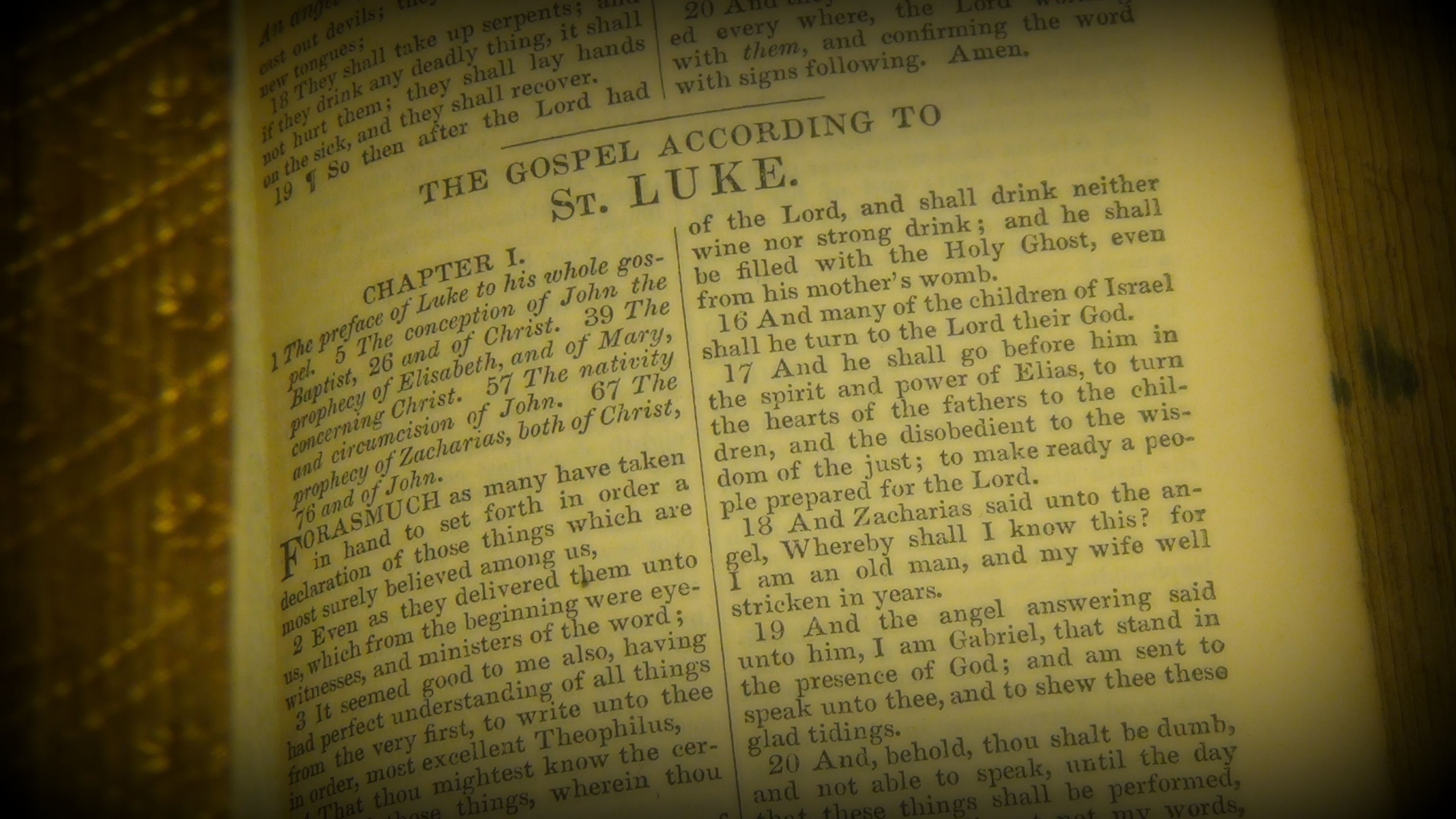
The Gospel of Luke KJV © 2017 Simon Peter Sutherland
With this in mind it is certainly clear we need no emphasis on ‘historic revisionism’ since it may well be more historically consistent to claim Nisan as Jesus’ birth date rather than December and we can be certain that neither Matthew or Luke made any references to the birth of Jesus as taking place in winter. On the contrary, as I stated in my previous article, “it is more probable that He was born at Nisan which took place in the spring”. And it seems by all accounts that Ecclesiastical history may well affirm this too!
Nisan falls in March-April, and Clement claims Jesus’ birth date as either April 19th or 20th which is almost upon us. So, since this really is not a divisive issue, may I humbly suggest that believers and followers of Jesus Christ consider this history as we approach the coming months and the season of Nisan.
Was Christ born in December or Spring?
Posted by simon peter sutherland in Christmas or Nisan, Theology on December 23, 2016
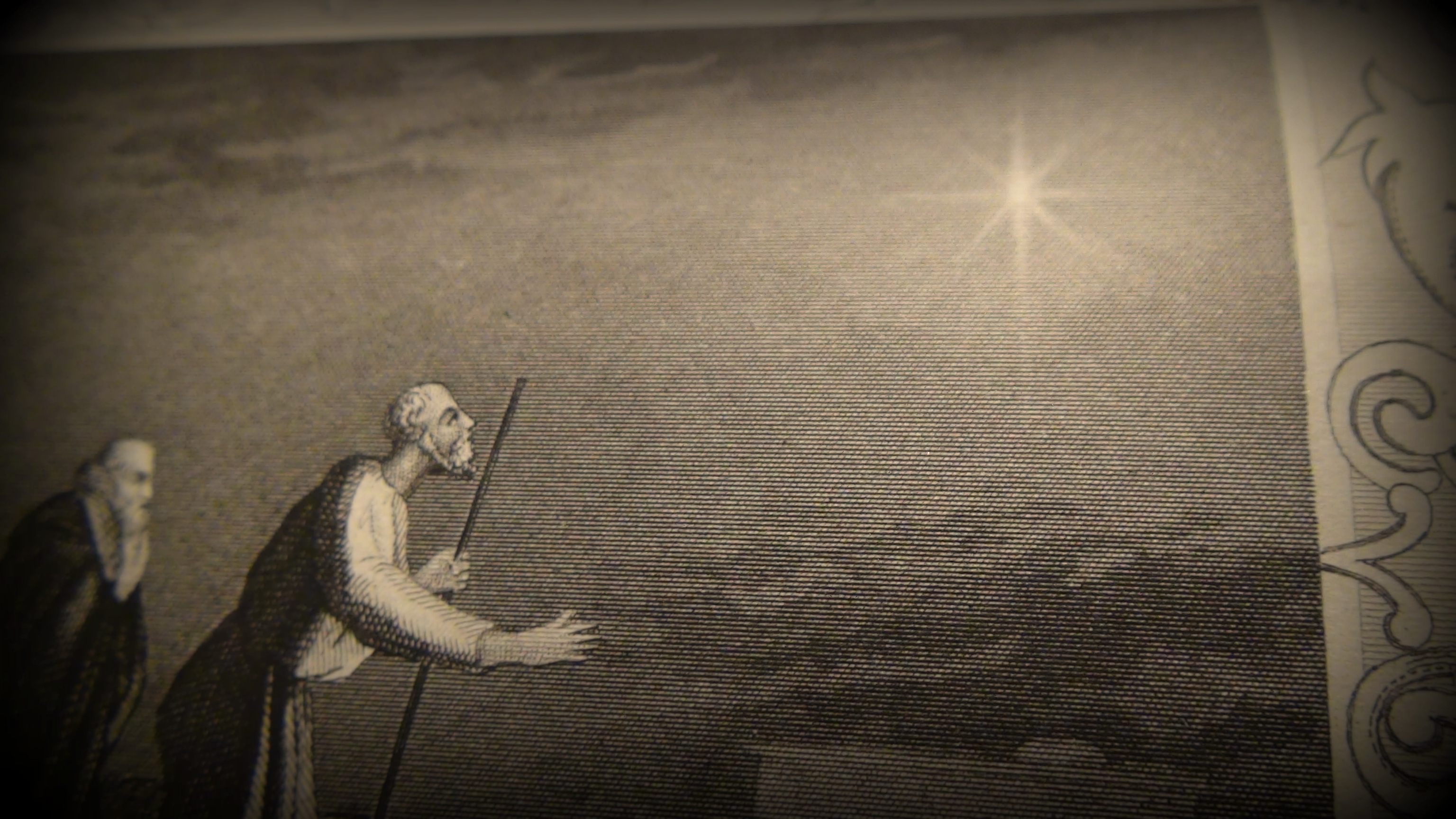
The wise men and the star over Bethlehem © 2016 Simon Peter Sutherland
Every year over the Christmas season I focus my mind distinctly upon the incarnate life of Christ as written in the Gospels. I often read Matthew and Luke’s narrative concerning the birth of Jesus at Bethlehem in the ancient Kingdom of Judah.
Many studies have been done to draw insights out from the Gospels to uncover the facts that surrounded Jesus’ birth. Questions are often asked: was Jesus really born on December 25th? Was He really born in a stable?
Over the many years of my being a Christian and desiring to know more about the incarnate life of Christ, I have approached the narratives from many perspectives and over recent years I have focused on His life from the perspective of Jesus as “the lamb of God” (John 1: 29).
From this perspective everything that Jesus did had to be a complete fulfilment of the requirements laid down by God concerning the sacrificial lambs offered up in the Temple. Lambs were to be perfect and without blemish (Exodus 12: 5, 1 Peter 1: 19) Jesus was perfect being without sin (1 John 3: 5, 2 Corinthians 5: 21, Hebrews 4: 15)
Likewise, the lambs which were reared to be offered up as Temple sacrifices were born in Bethlehem and sure enough, when they were firstborn were ‘wrapped up in swaddling cloths’ as Jesus was for a sign (Luke 2: 12). Yes, Jesus was born with the sacrificial Lambs.
Sadly for many, these points and necessities concerning the sacrificial lambs do not point to Jesus being born in December, but it is more probable that He was born at Nisan which took place in the spring.
Nisan is by far a more significant time since 14 Nisan marks the Fast of the firstborn, Jesus being the ‘firstborn among many brethren’ (Romans 8: 29, Colossians 1: 15) and 15 Nisan marks the birth of Isaac, whom demonstrates as a type or shadow of Christ. 15-21 Nisan marks the Passover when Jesus was crucified as the Passover lamb and 15 marks the Exodus from Egypt, which again was a foreshadow of Christ who delivered His people from the bondage of sin.
Obviously none of this proves that Jesus Christ wasn’t born in December, however if indeed He was born in Nisan it would be far more fitting with Scripture to consider it, since it is also on 17 Nisan that the ark of Noah came to rest upon the mountains of Ararat, which again speaks of Christ who is our eternal rest.
Christmas tree light © 2016 Simon Peter Sutherland
I like and enjoy Christmas and I too have my own traditions. These traditions include reading a fresh the nativity story from the Gospels, putting up the Christmas tree early while watching a Christmas movie and also reading ‘A Christmas Carol’ by Charles Dickens.
Yet even though I like tradition, I refuse to let it override Scripture.
-
You are currently browsing the archives for the Christmas or Nisan category.
Simon Peter Sutherland
-

 Simon Peter Sutherland